Tag Archives: James Bradley

2026 NSW Literary Awards night

It’s been a long time since I’ve attended a NSW Literary Awards Night in person, but I like to give an account of them if I can, based on the video of the streamed event.

If you like, you can skip this blog post and watch the video yourself. (When I watched it, nothing happens for the first 30 minutes.)

If you’re still here (and I hope you are), here’s my version of the evening. (I’ve added only two links to elsewhere in his blog.)

Uncle Brendan Kerin did the Welcome to Country. He addressed the recent Anzac Day booing at the Welcome. He said there were two kinds of people who objected to Welcomes to Country: ignorant people and racists. He’d explain, he said, and if there were still people who objected he’d know which they were, and (he said with a friendly smile) he’d offer further explanation out in the car park after the event. ‘All we’ve ever done is walk with a hand out: come!’ He played a welcome song, urged us to stop calling his instrument a didgeridoo. ‘There are 59 words in language for this instrument, and none of them is didgeridoo,’ he said and then, anticipating a theme of the evening, ‘We’ve lost control of our own narrative.’

The State Librarian Caroline Butler-Bowdon did a Welcome to the Library. Library Council President Bob Debus reminded the audience of Neville Wran’s initial statement of the aims of the awards: to uphold the writer’s place in a free society; to raise and preserve the standards of our literature, and to confirm the community’s respect for a free and flourishing literary culture. He referred explicitly to the book-banning we see in the USA, and obliquely to the disinviting of writers in this country of writers. And he spoke warmly of David Malouf, who won four awards over the decades. The Minister for Arts John Graham reminded us of the ALP’s record as supporter of writers. (A side comment: in the past, Labor Premiers have graced this occasion with their presence, and appeared to be genuinely interested – Neville Wran, Bob Carr, Kristina Keneally, and Nathan Rees come to mind. It’s only recently that the Premier dropped out of the awards’ title.)

James Bradley, in his capacity of Senior Judge, did some more thank yous and contextualising, and then we moved on to the awards.

UTS Glenda Adams Award for New Writing

Find Me at the Jaffa Gate, Micaela Sahhar (NewSouth Publishing) 

Micaela Sahhar thanked Sweatshop in Western Sydney, and was the first speaker to refer to the genocide in Gaza. In particular she spoke in support of the people who protested at the visit of Isaac Herzog in February this year. As a Palestinian person she thanked people who protest.

Multicultural NSW Award

Gather Up Your World in One Long Breath, S. Shakthidharan (Powerhouse Publishing)

‘This book is an act of vulnerability for me,’ he said, and spoke about love across difference as at the heart of multiculturalism. I’m half way through reading this book and am delighted that it won.

Indigenous Writers’ Prize

Apron-Sorrow / Sovereign-Tea, Natalie Harkin (Wakefield Press)

Natalie Harkin, wearing a ‘Readers and Writers Against Genocide’ T-shirt, described the book as ‘a collaborative mixed media project with many amazing and generous women in my community to document South Australian women’s stories’. She said, ‘There can be no truth-telling in this country without access to our archives and our records,’ and spoke of ‘the strength, the love, the strategic resilience and refusal’ of the women whose words she found in the archives.

Betty Roland Prize for Scriptwriting

The Narrow Road to the Deep North, Episode 4, Shaun Grant (Curio Pictures, Screen Australia, Amazon MGM Studios)

‘Our baby-sitter fell through and I have a seven-month-old at the back of the auditorium who should probably go to bed,’ Shaun Grant said by way of explaining that he would be brief, and also perhaps explaining why he looked uncomfortable in suit and tie.

Nick Enright Prize for Playwriting

The Black Woman of Gippsland, Andrea James (Melbourne Theatre Company/Currency Press)

Andrea James said, ‘Theatre-making is very much a collaborative art form.’ And in her thank-yous she demonstrated that First Nations story telling is also very much a collaborative, multi-faceted, relational art form. ‘The cash is going to be great,’ she said, ‘but the biggest prize for me would be the immediate removal or at least reinterpretation of the three memorials to the so-called founder of Gippsland, Angus McMillan, who we actually know as the Butcher of Gippsland.’

Ethel Turner Prize for Young People’s Literature

Desert Tracks, Marly Wells and Linda Wells (Magabala Books)

The mother and daughter award winners appeared on video link from Alice Springs / Mparntwe. Marly: ‘Colonisation caused and continues to cause chaos for all of us. One of its powerful tools is controlling the narrative, so the more that we can contradict those dominant colonial narratives through truth-telling the better off we’ll all be.’ I love that ‘all’: Linda, Marly’s mother, is non-Indigenous; Marly is Warlpiri.

Patricia Wrightson Prize for Children’s Literature

Gone, Michel Streich (Thames & Hudson Australia)

Gone is a story about dying, grief and memory,’ Michel Streich said, ‘and bizarrely … it was almost published posthumously.’ He didn’t elaborate on his near death experience.

Kenneth Slessor Prize for Poetry

How To Emerge, Jill Jones (Vagabond Press)

Jill Jones said she’s probably the only person who has been a judge on these awards, has won one of them and has also administered them. About the book, she said, ‘I was wanting to pay attention to both the infinitesimal and the cosmological – I’m quoting some of the words that the judges used about the book, why not? – the resonance between sky, asphalt, weed, wharf, vulnerability and memory and many, many other things.’ And she quoted William Blake.

Douglas Stewart Prize for Non-Fiction

Näku Dhäruk The Bark Petitions, Clare Wright (Text Publishing)

Clare Wright invoked the Yolŋu name she has been given, meaning ‘special tree’. She spoke of ‘the writing cave, battling the dragon’, and thanked many many people. ‘This is a book about a people speaking truth to power. It’s a story about respect, consultation and consent, values and practices we have seen demolished in recent decisions by publishers, universities and other cultural organisations and boards around First Nations knowledges, cultural representation and freedom of speech.’

Christina Stead Prize for Fiction

The Immigrants, Moreno Giovannoni (Black Inc)

Moreno Giovannoni is mostly a translator. His parents bought him a typewriter when he was 12 because he wanted to be a writer – it took him 51 years to write his first book, The Fireflies of Autumn (my blog post here), and another six years to write this one. Migrants are in the news again – this is a book about migrants.

The University of Sydney People’s Choice Award

Rapture, Emily Maguire (Allen & Unwin) – my blog post here

Emily Maguire described the idea for the book as ‘a weird little mediaeval girl pope story’.

Book of the Year

Näku Dhäruk The Bark Petitions, Clare Wright (Text Publishing)

Wearing a Star of David, Clare Wright confessed that though she didn’t expect to win this award she had written something just in case. And the speeches ended as they had begun with a call to stand up for Palestine:

One of the particularly powerful connected elements of Näku Dhäruk is the way it demonstrates how a strong and sovereign Indigenous people resisted the Australian government’s attempt at erasure and silencing of their voice, of their very existential right to belong on and to their land and their law.
The story told in this book through both documentary archival, and eyewitness oral sources also speaks to the potency of allyship, of defending basic human, civil and democratic rights, even when your own quotidian existence is not directly threatened. At this time of Israel’s genocide in Gaza and resultant moves both in Australia and globally to suppress legitimate criticism of the death, dispossession, and destruction of sovereign people, by Palestinians and their allies, the weight and fortune of this book’s dhäruk, its message, could not be more opportune.
As an academic historian, a Jewish Australian, and a human being, I stand here tonight grateful for the opportunity to participate in the global and timeless struggle for justice and equality under the law, resisting the mounting pressure from governments, universities, funding bodies, and publishing companies to stay quiet, timid, and submissive at a time of patent poly crisis.

And it was all over bar the final thanks from the Head Librarian.


I am an Australian man of settler heritage. I’ve written this blog post on the land of Gadigal and Wangal of the Eora nation. I acknowledge Elders past and present of those clans, and welcome any First Nations readers. I thank Uncle Brendan Kerin for explicitly acknowledging non-Indigenous Elders in his Welcome to Country.

2025 NSW [Premier’s] Literary Awards night

I almost missed the NSW Premier’s Literary Awards this year. I missed the announcement of the short lists altogether, and only realised that the awards were last night because the Sydney Writers’ Festival is about to start and I think of the NSWPLAs as the first cab off the festival rank.

Here I am making up for the omission. Sadly I’ve read only one of the books, and seen a production of only one script, none of the winners.

Last night, the awards ceremony was live streamed. As always on a Monday, I was busy being grandfather, so I tuned in late. It’s all on YouTube and you can even watch it by clicking the image below. The ceremony begins with didjeridoo and Welcome to Country by Uncle Brendan Kerin, who spoke eloquently about the meaning of the word ‘Country’ in this context. After introductory speeches from librarians and politicians, the presentation of awards by Senior Judge Bernadette Brennan and Library Chair Bob Debus begins at about 29 minutes.

Here are the shortlists in the order of announcements, with links to the judges’ comments. The winners are first in each list, in bold:

UTS Glenda Adam’s Award for New Writing ($10,000)

Dr Tracy Westerman appeared on video, speaking from Perth: ‘As someone who doesn’t consider themselves to be a real writer, as a kid from the Pilbara who had a pretty unorthodox education through distance education, being awarded for my writing feels, frankly, a little bit surreal.’ She went on to talk about mental wellbeing: it ‘should never be just for the privileged, and Jilya sheds light on the reality that it continues to be … because of a one-size-fits-all, monocultural approach to mental health.’

Multicultural NSW Award ($30,000)

Nam Le, also on video, spoke against a background of a bookshelf piled high with books. He thanked many people and dedicated the award to his father, who ‘has been an engine of multiculturalism in this country’.

Indigenous Writers’ Prize ($30,000)

Lorraine Coppin, CEO of Juluwarlu Group, also spoke on video. She and her husband have spent years documenting Yindjibarndi stories – the graphic novel format is a way of making the history accessible to young people.

Nick Enright Prize for Playwriting ($30,000)

Glenn Shea appeared in person! He is a member of the Stolen Generations. The play’s story comes from community. The question it asks is how do we plant seeds for our young people to shift and shape their decision-making about work lives and community. He shouted out La Mama theatre among many others.

Betty Roland Prize for Scriptwriting ($30,000)

Charles Williams was also in the room. He started out with a remark that must have struck a chord with many people in the movie industry: ‘I usually identify as a director more than as a writer, but I spend a lot of my life writing and not much directing.’ He quoted Charlie Kaufman: ‘A writer is someone for whom writing is harder than it is for other people,’ and noted in passing that Kaufman stole the line from Thomas Mann.

Patricia Wrightson Prize for Children’s Literature ($30,000)

Katrina Nannestad thanked all the right people, but in particular her mother, whose story is in the book.

Ethel Turner Prize for Young People’s Literature ($30,000)

Emma Lord said among other things that everything she writes is for her daughter, even though she is too young for the books. She acknowledged the courage of her publishers who accepted a book with a pandemic in it during a pandemic. Following a developing theme of the evening, she said her mother shared the award.

Translation Prize ($30,000)

Elizabeth Bryer accepted by video. She said she had decided to wind back her translation practice because she couldn’t see a way to make it viable. This award changes that, and means she can take on a project she had been thinking about – to set up a mentorship wth an emerging translator who is a person of colour or a heritage speaker.

Kenneth Slessor Prize for Poetry ($30,000)

Hasib Hourani described rock flight as intended to explore both historical and speculative acts of liberation in Palestine. ‘Throwing a rock is one kind of protest. A book is another.’

Douglas Stewart Prize for Non-fiction ($40, 000)

James Bradley revealed that winners had been instructed to speak for less than a minute. Among the many thankyous, he thanked Ashley Hay who read every draft. With a nod to W. H. Auden, he said that though it seems like books don’t make anything happen, his experience with this book has shown that this isn’t actually the case: ‘Books change minds, and by changing minds they can change the world, and at the moment that matters more than it has ever mattered before.’

Christina Stead Prize for Fiction ($40,000)

Fiona McFarlane is on the road, so Alex Craig from her publishers Allen & Unwin read a speech on her behalf.

The University of Sydney People’s Choice Award ($10,000)

The Lasting Harm, Lucia Osborne-Crowley (Allen & Unwin)

Lucia Osborne-Crowley was another video appearance. Before she made the necessary thankyous she noted the importance of writers speaking up for Palestinians who are being subjected to genocide and war crimes. She thanked the survivor community who voted for her – the book is for and about and by survivors of sexual violence and child sexual violence.

Special Award

This award went to Liminal. The award was accepted by founding editor Leah Jing McIntosh. Evidently aware than many people watching the awards or reading about them might not have herd of Liminal, she began by explaining that it is ‘a project driven by the desire to make visible the unacknowledged structures of racism that so dehumanise all of us.’ She went on, ‘We work towards new ways of thinking, of seeing, of being in the world. That is to say, we work together towards a better future. We know we cannot do it alone.’

Book of the Year ($10,000)

36 Ways of Writing a Vietnamese Poem, Nam Le (Scribner Australia). Ben Ball from Scribner Australia read a speech written by Nam Le. He expanded on his earlier dedication to his father, and spoke interestingly and powerfully about multiculturalism. I won’t try to summarise his speech here out of respect for his intellectual property. I hope it’s published somewhere. At heart it was a warning against complacency.

The twin shadows of Gaza and Trump were never far from the stage, and repudiations of all they stood for were frequent. And what a reading list has emerged from the evening, even if only of the winners.

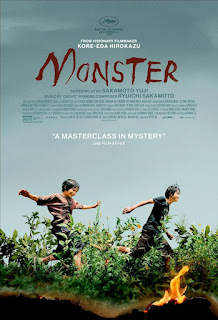
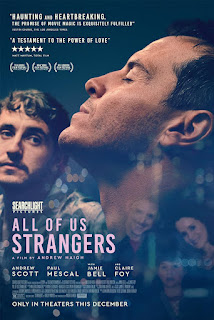
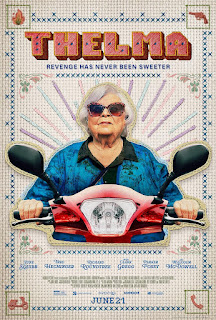
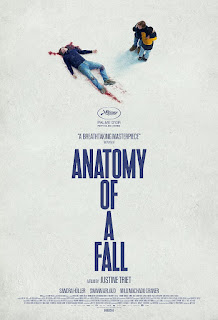
2024 End of Year List 1: Movies

The Emerging Artist and I are drawing up our Best of 2023 lists. Spreading the lists over two or three posts seemed to work well last year, so here goes again

Movies

We saw about 60 movies, including streaming and TV. Here are the ones we both put at the top of our viewing year, excluding old movies we’ve rewatched.

The image captions are linked to either an IMDB page or a review by my favourite movie critic, Mark Kermode.

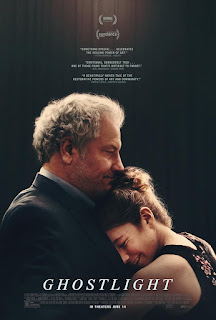
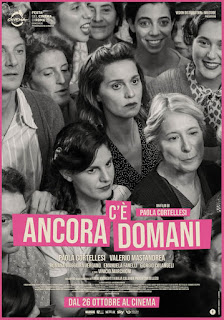
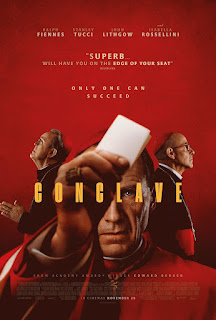
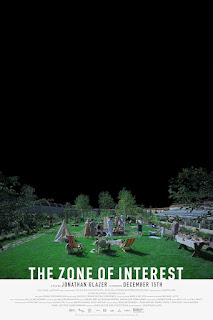
Three documentaries, all seen at the Sydney Film Festival. One had audience members variously in tears and yelling at each other, another sent us on a pilgrimage to the Bundeena art trail, and the third shed wonderful light on the workings of a rock band:

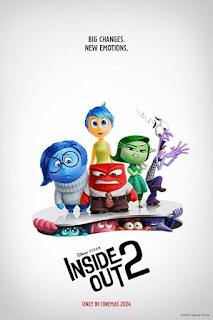
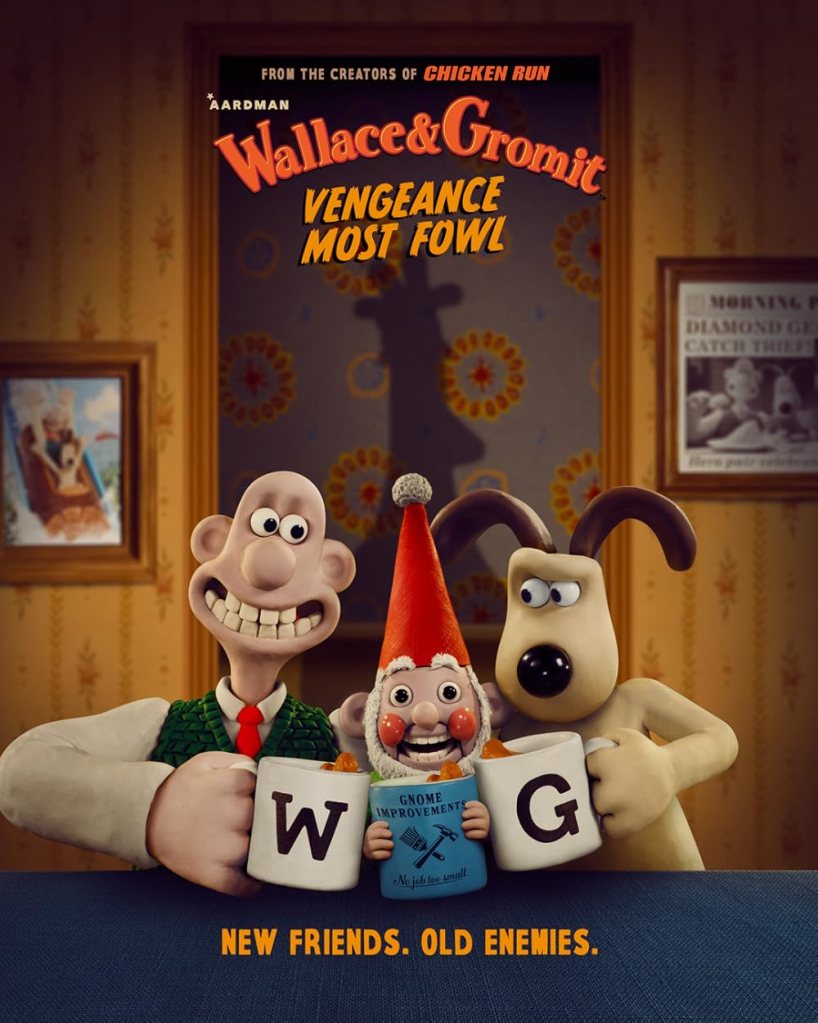
Two children’s movies, or at least movies seen in the company of small children:

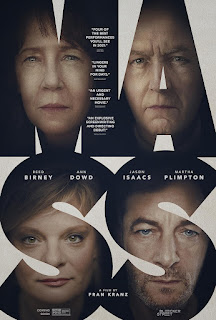
Five features that we agreed on:

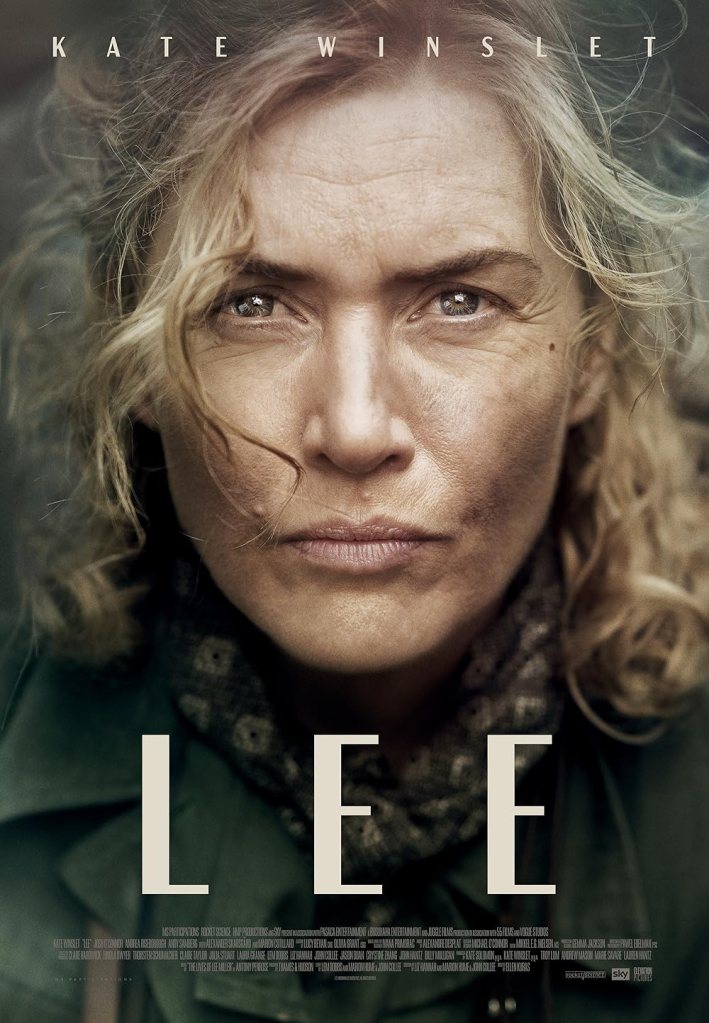
And then, three films that I loved that I saw by muyself:

So then fairness required that The EA got to name three more as well. She chose these:

And we didn’t even get to mention The Teacher Who Promised teh Sea or The Seed of the Sacred Fig or … we saw so many wonderful movies in 2024.

We did see a couple of stinkers, but it would serve no purpose to name the one we both chose unhesitatingly. We saw it at the Sydney Film Festival and it will never have a general release.

Coming soon, our favourite TV series of the year.

SWF 2020, Post 3

The Sydney Writers’ Festival 2020 didn’t happen, but it’s still going. I’ve now listened to five more sessions: rich conversations between authors none of whose books I’ve read (though I have read shorter pieces by some of them), sometimes about other authors whose books I haven’t read.

Philippe Sands: The Ratline 27 May

Otto von Wächter was one of Nazi Germany’s mass murderers. In 1945 he disappeared from public view and turned up dead in a Roman hospital four and a half years later. Philippe Sands, barrister and author of other books about Nazi leaders, gained possession of a huge trove of the papers of von Wächter and his wife Charlotte, and set about rediscovering the story of this almost forgotten Nazi. He produced a podcast and radio series and now a book: The Ratline: Love, Lies and Justice on the Trail of a Nazi Fugitive.

This is a terrific conversation between Sands and SBS World News presenter Janice Petersen. Because of his access to private papers – given to him by von Wächter’s son Horst – Sands has been able to give an account of Wächter’s personal life and relationships.

At the end of the conversation, Janice Petersen asked why he thinks there is such a continuing interest in the Nazis. He confirmed her premise: if you put the word ‘Nazi’ in a book’s title or subtitle, he said, its sales in the UK increase by 50 percent, though it’s probably not the same in other parts of the world, including the US.

For the British in part it’s a reminder of what is seen as a glorious episode, the vanquishing of evil, and it is also the fact that the people we are dealing with were highly educated, highly cultured, highly intelligent, highly organised and they left behind a wealth of detail. …
I think what’s different in this case is Charlotte. Charlotte is the beating heart of this story because Otto was not alone. Otto had a close, loving, dutiful, intelligent, articulate, literate wife who recorded the totality and so we’re able to get another perspective, and that enables us to think a little bit more about the question, ‘How is it possible?’ and the related question that any reasonable person might ask themselves, ‘Could I do it?’ …
In our own countries, we cross lines. In Britain as in Australia, the treatment of refugees and of certain minorities is a very very big issue. Some of the conditions, for example, in which women refugees are being held in Britain and of course the treatment in Australia of the refugee community, parts of it, parking them on faraway islands, raise very serious questions. It raises to my mind a most serious question which is evoked indirectly in The Ratline, ‘What happens when we commit ourselves as a society to cross a line?’ The lesson of Otto Wächter is that once you’ve crossed one line it becomes a lot easier to cross another line.


James Bradley: Ghost Species 1 June

I hope to read one of James Bradley’s books one day. But as I’ve heard quite a lot of him on the radio recently, I skipped through this conversation with Cassie McCullagh of ABC Radio’s The Bookshelf about his most recent book, Ghost Species, in which there is a project to resurrect extinct species, including Neanderthal humans. In my skipping, I heard some fascinating tidbits, including this about the role of CliFi, as someone is calling fiction about climate change:

We inhabit this weird space where we know what’s going on but we don’t let ourselves know.
One of the things fiction can do is let you sit in that space for a while and let you actually let go of having to keep that other stuff at bay. You can encounter your anxieties, think about them. …
One of the things that fiction helps people do is to find their way to a space of acceptance, that space of recognising the reality of things, which seems to me to be a good place to get to, because if people get there then we can start having honest conversations about where we are.


Cassandra Pybus: Truganini 3 June

Truganini is on my TBR shelf. This is a brilliant conversation about it. It’s by Cassandra Pybus, white historian, whose family ‘owned’ land on Bruny Island, Truganini’s country, land that Truganini visited often in her last years. By all accounts, including the account given in this podcast, the book reclaims Truganini’s memory from the prevailing image of her as the archetypical victim of colonial violence, ‘the last Tasmanian’, and presents her as a woman who was never colonised, who was resourceful and strategic and ultimately in important ways successful.

Here she talks with Jakelin Troy, a Ngarigu woman from south-eastern Australia and professor at the University of Sydney, who clearly loves the book, and loves that Cassandra Pybus has written it:

For me, as an Aboriginal woman, it’s so important to have this story told, and by somebody who is an expert at interrogating the historical record but who can bring out the reality of the story. It’s obviously something that has become part of your own story. I love when you say that Truganini inhabits you now. I’m sure that’s what she intended to do by continuing to walk across your family’s country, which was her family’s country. She was making the point, I’m sure she was making the point, that this was still her country and that she’s there, and even if they didn’t think deeply about the fact that it was her family’s country, I think that in reality you can’t avoid that that’s what it is.


Kay Kerr: Please Don’t Hug Me 3 June

This is a conversation between two neurodivergent women from southern Queensland, both of whom have young-adult novels appearing at about the time of the conversation. The focus is on Kay Kerr’s epistolary novel Please Don’t Hug Me, but there is frequent reference to Peta Lyre’s Rating Normal by Anna Whateley, her interlocutor.

Both women are smart, charming and have interesting things to say, especially about autism and prevalent misconceptions about people living with autism.

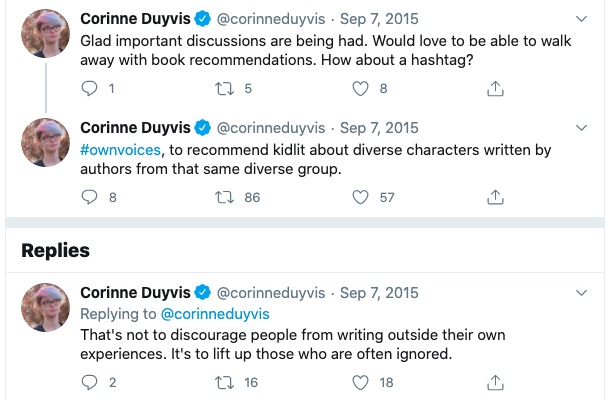
If this had been a live event, I would have been hoping someone would ask about ‘own voices’, a term they used to describe their books. The term is close to self-explanatory, and I’d heard it vaguely in the past, but it sounded as if there was history attached to it. In the absence of a Q&A session, I went online, and found that #OwnVoices is a hashtag originated in 2015 by a Dutch writer of young adult science fiction and fantasy novels, Corinne Duyvis (a longish interview with her about the hashtag is at this link).

A quick look around Young Adult publishers’ sites shows that the hashtag has taken off and, though sometimes used as a weapon by call-out warriors, it represents a powerful movement to recognise that the best people to write about a marginalised group are those who experience that marginalisation. Both participants in this conversation are #ownvoices authors about characters on the autism spectrum.


Eimear McBride: Strange Hotel 9 Jun, 2020

I heard Eimear McBride read, beautifully, from her first novel, A Girl is a Half-formed Thing at the 2014 Sydney Writers’ Festival. Here she talks to Heather Rose (whose books are on my TBR list) abut her third novel, Strange Hotel. I enjoyed the conversation. Unlike A Girl Is a Half-Formed Thing, the new novel is punctuated conventionally, but the author says she doesn’t think it’s any easier to understand (she’s a big fan of Joyce and Beckett). She read an excerpt, which was beautifully written, but – and that ‘but’ says more about me than her – it’s a scene where the protagonist is in a hotel in Auckland, and thinks of herself as being at the very edge of the earth, about to go over the edge. This raised my antipodean hackles. I was reminded of a British writer who visited my student household in the early 1970s and treated us to a stoned fantasy about how the edge of the world lay just outside the heads of Sydney Harbour. Too easy, and too unaware of the audience.


Coming when I’ve listened to them: Bob Brown and some interesting-sounding genre fiction, but still no books I’ve read.

Overland 206

Jeff Sparrow (editor), Overland 206, Autumn 2012

I’ve just realised that this blog is largely about the vastness of my ignorance. In the years since I left full time work I’ve been reading widely and unsystematically on subjects in which I’m either uneducated,  misinformed or wildly out of date, hoping something will stick – and then blogging about it, sometimes in a shamelessly opinionated way.

Take this issue of Overland for instance.

I’ve never studied economics or political science or 20th century history, but I’ll tell you confidently that Richard Seymour’s ‘The European meltdown: Crisis across the continent‘ talks sense about the current economic crisis in Europe. He describes the European Community as ‘a project that, from inception to denouement, has evinced an extraordinary distrust of the masses’. The crisis, he argues, is brought on not so much by the fecklessness or other failings of the Greeks, Irish, Spanish and Portuguese, as by the inherent instability of a system built to give France and Germany dominance over the less powerful nations, and to foster profit over the interests of the working class (he says it much better than that). And Mike Beggs’s ‘Occupy abundance: On whether Australians are too rich to protest‘ does a similarly enlightening job of unpicking the current Australian affluence. It’s true that since mid-1997 there’s been a 10 per cent increase in purchasing power ‘over the whole consumer basket’, but:

The average hour’s pay now buys 59 per cent more clothing and footwear, 71 per cent more household appliances, and an incredible 1066 per cent more audio, visual and computing power than in 1997.

But such goods make up only around a fifth of the average household’s expenditure. Much of the rest of the consumer basket has actually become less affordable. Compared with 1997, the average hours work earns enough to buy 2 per cent less food, 8 per cent less housing, 26 per cent less water, electricity and gas, 18 per cent less petrol, 5 per cent less healthcare and 21 per cent less education.

That may not be news to people who understand economics, but it is to me.

What do I know about life as an immigrant targeted by racism? Yet I can tell you that Michael Green’s ‘Between two oceans: The life and death of Michael Atakelt‘ and ‘The dangers of a single story: On acting and identity‘ by Tariro Mavondo are brilliantly complementary explorations of the subject. In the former (of which an edited excerpt was reprinted in the Fairfax Age, which either takes the sheen off Overland‘s back-cover boast that it is of the loopy-Left or justifies the Australian‘s nickname for the Age, Pravda on the Yarra – you be the judge!), the writer is in touch with Footscray’s Ethiopian community as they struggle to come to terms with the drowning of a young man shortly after his release from police custody, and the extraordinarily long wait for any cause of death to be made public: ‘This has become a story about a community’s right to exist – its need to understand and to be understood – but it is also a story of grief,’ Green writes. I would add that it’s also a story of an amazingly resilient community. Tariro Mavondo is about to become one of the first African-born acting graduates of the Victorian College of the Arts: from a relatively privileged background (‘the higher echelon of Zimbabwean society’), she is up against a different face of racism – but this article too is about the right of a community to exist – ‘”6 billion stories and counting.” But where is mine?’

What do I know about the history of sexuality? I spent the prime of my youth in a monastery, and working as a children’s editor for fifteen didn’t send much writing about sex my way. So Robert Darby’s ‘Another other Victorian: George Drysdale, a forgotten sex pioneer‘ was even more news to me than it will be to people who’ve read The Other Victorians. Drysdale’s tome, The Elements of Social Science: Physical, Sexual and Natural Religion, published anonymously in the 1850s, was never mentioned by name in mainstream writing and is generally ignored or misreported even today, but it ran through 35 editions and sold some 100 000 copies in 50 years. The book ‘argued for a new religion of reverence for the human body, condemned abstinence as unhealthy and productive of misery, called for an unfettered right to intercourse among the unmarried, and recommended regular use of contraception to guard against pregnancy and condoms to avoid venereal disease’. Sex wasn’t invented in 1963 (or in my case 1970) after all. The article is seriously interesting

Now, poetry. I did study Eng Lit and have a BA (Hons) to show for it. But I got my piece of paper before postmodernism broke upon the world. I’m not quite the guy who puts his hand up at the Writers’ Festival and asks why modern poetry doesn’t have rhyme or rhythm any more, and why are modern poets so deliberately obscure. My own poetry, such as it is, probably wouldn’t please that guy. But sometimes I feel as if I’m almost as much in the dark as he is. So I was very glad that Peter Minter took a full two pages for his Judge’s report on  the 2011 Overland Judith Wright Poetry Prize for New and Emerging Poets. Sadly, if I was hoping his notes on the winning poem, rock candy by Joel Ephraims, would be a guide to reading it, my hopes were dashed. But I could tell there was thought there, and a world of knowledge that’s yet to become open to me. Having said all that, it will probably not be received as a compliment if I say that I enjoyed the night-time flâneurism of ‘Constant companion‘ by the late Kerry Leves (who occasionally graced the School Magazine, with both his presence and his poetry) and ‘Sunday poem‘, an impressionistic take on a visit home by Fiona Wright.

And then there’s genre fiction. Overland doesn’t go in for it much, and nor do I, though I’m doing my best to pick up where I left off when I was 14. It’s probably fair to say that James Bradley’s ‘The inconvenient dead‘ is a zombie story for people who don’t read zombie stories. Anyhow, it worked wonderfully well for me.

The whole contents of the magazine are readable online. All the links except the one to the Age will take you to the Overland web site.