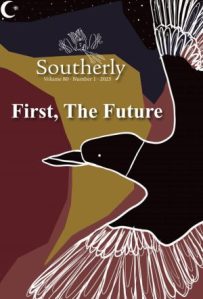
After pestilence, after pain, after wholeness, after emptiness, after life, after death, after a long hiatus, Southerly is back. (Page 6)
It has indeed been a long hiatus. Soon after Volume 79 Number 1 appeared in 2019 (my blog post here), the editors started a Go Fund Me page. Vol 79, Nos 2 and 3 were squeezed out by guest editors – one devoted to writing by refugees in 2021 (my post here), and an online-only issue of Covid-related work in 2022 (my blog post here). And then silence!
So welcome back, Southerly! And how good that Roanna Gonsalves is the new editor. I’ve heard her speak a number of times on Writers’ Festival panels, where she has been smart, generous, and always interesting.
There’s lots of good stuff in this re-birth issue:
a brief intellectual memoir from Barry Corr, a self-described ‘grumpy old man, highly averse to writing about himself’, who doesn’t mentiopn that his daughter is brilliant poet Evelyn Araluen
a wonderful conversation on First Nations poetics, interspersed with actual poems, featuring Natalie Harkin, Kirli Saunders, Elfie Shiosaki and Ellen van Neerven
a poem by John Kinsella in which he reveals that he has read Lord of the Rings well over 30 times
a poem by Omar Sakr whose title, ‘Walking to day-care in the genocide’ captures its piercing grief
a wonderful family memoir by Angelo Loukakis about growing up in a Greek migrant family in Sydney
Louise Adler on the implications of recent political interference in the arts – a speech given long before such interference led to her resignation as director of Adelaide Writers’ Week
a prose poem by Eileen Chong incorporating myriad internet memes
and more, much more, making up 172 rich pages.
There is more passion in these pages than you might expect in a literary journal. So much so that it feels at times like a group therapy session for very real pain, rage and despair created by the Israeli genocide in Gaza, and the ongoing genocidal treatment of First Nations people on this continent. It’s a rough ride at times, but a necessary one, and one that there are powerful forces in this country and elsewhere doing their best to prevent.
Not everything is rage and grief. There’s also a powerful thread laying out work that needs to be done. Elfie Shiosaki for example, has done a lot of work the archives of Noongar country. She says on page 91:
During the [Referendum] campaign, I was reflecting on research I had done at the State Records archives in Western Australia, which included reading letters written by Noongar women calling for representation for Aboriginal people in Parliament since the 1930s and earlier. Their calls have remained unanswered for almost a century. I want to live in a community that rsponds to what we have been calling for, for such a long time … The aftermath of the referendum, I wanted to re-envision First Nations poetry as a practice of peacemaking. Regardless of the outcome of institutional processes, poetry continues to contribute to conflict resolution by healing unreconciled relationships in the present and unreconciled narratives of the past as well as imagining futures of peace.
Literature without truth-telling would be rubbish. Truth-telling without discomfort is bull. Three cheers for Southerly, first now, then the future.
No blog post by me on Southerly would be complete without mentioning that, as is only right in a university-based literary journal, there are one or two densely academic pieces that I tried and failed to read. But lest that be taken as me feeling inferior, I will also mention that, embarrassingly, Gandhi’s name is misspelled on page 64.
I am an Australian man of settler heritage. I’ve written this blog post on the land of Gadigal and Wangal of the Eora Nation. I acknowledge Elders past and present of those clans, and welcome any First Nations readers and commenters.
It’s been a long time since I’ve attended a NSW Literary Awards Night in person, but I like to give an account of them if I can, based on the video of the streamed event.
If you like, you can skip this blog post and watch the video yourself. (When I watched it, nothing happens for the first 30 minutes.)
If you’re still here (and I hope you are), here’s my version of the evening. (I’ve added only two links to elsewhere in his blog.)
Uncle Brendan Kerin did the Welcome to Country. He addressed the recent Anzac Day booing at the Welcome. He said there were two kinds of people who objected to Welcomes to Country: ignorant people and racists. He’d explain, he said, and if there were still people who objected he’d know which they were, and (he said with a friendly smile) he’d offer further explanation out in the car park after the event. ‘All we’ve ever done is walk with a hand out: come!’ He played a welcome song, urged us to stop calling his instrument a didgeridoo. ‘There are 59 words in language for this instrument, and none of them is didgeridoo,’ he said and then, anticipating a theme of the evening, ‘We’ve lost control of our own narrative.’
The State Librarian Caroline Butler-Bowdon did a Welcome to the Library. Library Council President Bob Debus reminded the audience of Neville Wran’s initial statement of the aims of the awards: to uphold the writer’s place in a free society; to raise and preserve the standards of our literature, and to confirm the community’s respect for a free and flourishing literary culture. He referred explicitly to the book-banning we see in the USA, and obliquely to the disinviting of writers in this country of writers. And he spoke warmly of David Malouf, who won four awards over the decades. The Minister for Arts John Graham reminded us of the ALP’s record as supporter of writers. (A side comment: in the past, Labor Premiers have graced this occasion with their presence, and appeared to be genuinely interested – Neville Wran, Bob Carr, Kristina Keneally, and Nathan Rees come to mind. It’s only recently that the Premier dropped out of the awards’ title.)
James Bradley, in his capacity of Senior Judge, did some more thank yous and contextualising, and then we moved on to the awards.
Micaela Sahhar thanked Sweatshop in Western Sydney, and was the first speaker to refer to the genocide in Gaza. In particular she spoke in support of the people who protested at the visit of Isaac Herzog in February this year. As a Palestinian person she thanked people who protest.
‘This book is an act of vulnerability for me,’ he said, and spoke about love across difference as at the heart of multiculturalism. I’m half way through reading this book and am delighted that it won.
Natalie Harkin, wearing a ‘Readers and Writers Against Genocide’ T-shirt, described the book as ‘a collaborative mixed media project with many amazing and generous women in my community to document South Australian women’s stories’. She said, ‘There can be no truth-telling in this country without access to our archives and our records,’ and spoke of ‘the strength, the love, the strategic resilience and refusal’ of the women whose words she found in the archives.
‘Our baby-sitter fell through and I have a seven-month-old at the back of the auditorium who should probably go to bed,’ Shaun Grant said by way of explaining that he would be brief, and also perhaps explaining why he looked uncomfortable in suit and tie.
Andrea James said, ‘Theatre-making is very much a collaborative art form.’ And in her thank-yous she demonstrated that First Nations story telling is also very much a collaborative, multi-faceted, relational art form. ‘The cash is going to be great,’ she said, ‘but the biggest prize for me would be the immediate removal or at least reinterpretation of the three memorials to the so-called founder of Gippsland, Angus McMillan, who we actually know as the Butcher of Gippsland.’
Desert Tracks, Marly Wells and Linda Wells (Magabala Books)
The mother and daughter award winners appeared on video link from Alice Springs / Mparntwe. Marly: ‘Colonisation caused and continues to cause chaos for all of us. One of its powerful tools is controlling the narrative, so the more that we can contradict those dominant colonial narratives through truth-telling the better off we’ll all be.’ I love that ‘all’: Linda, Marly’s mother, is non-Indigenous; Marly is Warlpiri.
‘Gone is a story about dying, grief and memory,’ Michel Streich said, ‘and bizarrely … it was almost published posthumously.’ He didn’t elaborate on his near death experience.
Jill Jones said she’s probably the only person who has been a judge on these awards, has won one of them and has also administered them. About the book, she said, ‘I was wanting to pay attention to both the infinitesimal and the cosmological – I’m quoting some of the words that the judges used about the book, why not? – the resonance between sky, asphalt, weed, wharf, vulnerability and memory and many, many other things.’ And she quoted William Blake.
Clare Wright invoked the Yolŋu name she has been given, meaning ‘special tree’. She spoke of ‘the writing cave, battling the dragon’, and thanked many many people. ‘This is a book about a people speaking truth to power. It’s a story about respect, consultation and consent, values and practices we have seen demolished in recent decisions by publishers, universities and other cultural organisations and boards around First Nations knowledges, cultural representation and freedom of speech.’
Moreno Giovannoni is mostly a translator. His parents bought him a typewriter when he was 12 because he wanted to be a writer – it took him 51 years to write his first book, The Fireflies of Autumn (my blog post here), and another six years to write this one. Migrants are in the news again – this is a book about migrants.
Wearing a Star of David, Clare Wright confessed that though she didn’t expect to win this award she had written something just in case. And the speeches ended as they had begun with a call to stand up for Palestine:
One of the particularly powerful connected elements of Näku Dhäruk is the way it demonstrates how a strong and sovereign Indigenous people resisted the Australian government’s attempt at erasure and silencing of their voice, of their very existential right to belong on and to their land and their law. The story told in this book through both documentary archival, and eyewitness oral sources also speaks to the potency of allyship, of defending basic human, civil and democratic rights, even when your own quotidian existence is not directly threatened. At this time of Israel’s genocide in Gaza and resultant moves both in Australia and globally to suppress legitimate criticism of the death, dispossession, and destruction of sovereign people, by Palestinians and their allies, the weight and fortune of this book’s dhäruk, its message, could not be more opportune. As an academic historian, a Jewish Australian, and a human being, I stand here tonight grateful for the opportunity to participate in the global and timeless struggle for justice and equality under the law, resisting the mounting pressure from governments, universities, funding bodies, and publishing companies to stay quiet, timid, and submissive at a time of patent poly crisis.
And it was all over bar the final thanks from the Head Librarian.
I am an Australian man of settler heritage. I’ve written this blog post on the land of Gadigal and Wangal of the Eora nation. I acknowledge Elders past and present of those clans, and welcome any First Nations readers. I thank Uncle Brendan Kerin for explicitly acknowledging non-Indigenous Elders in his Welcome to Country.
This is an extraordinary book. To quote from the eloquent and accurate cover blurb:
Archival-Poetics is an embodied reckoning with the State’s colonial archive and those traumatic, contested and buried episodes of history that inevitably return to haunt … Family records at the heart of this work highlight policy measures targeting Aboriginal girls from removal into indentured domestic labour
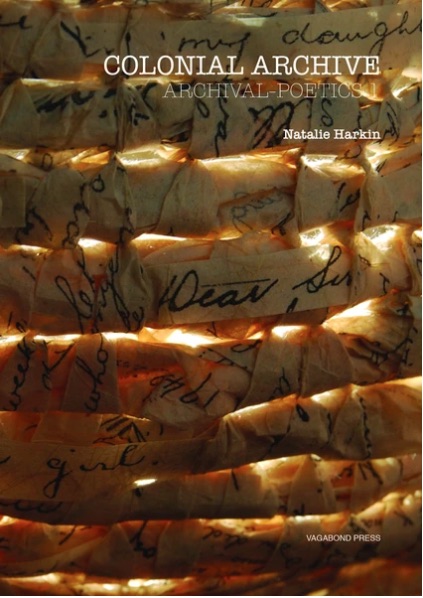
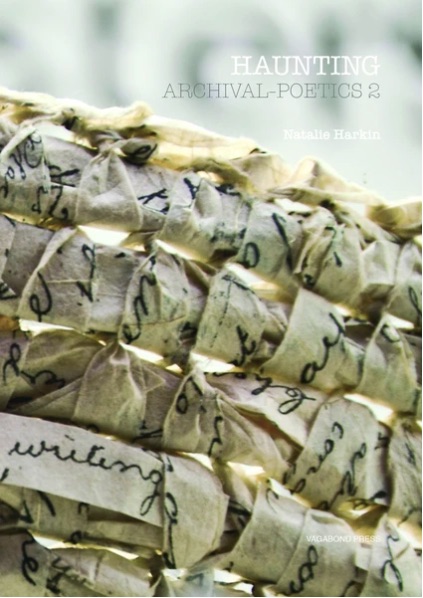
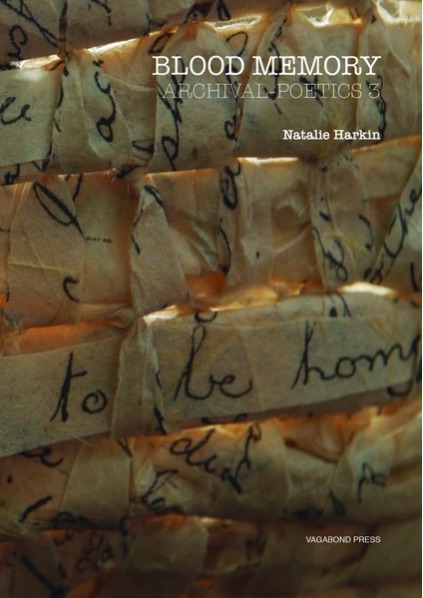
I like that word ’embodied’. There have been many books that are based on archival research, and more than a few that describe the process of archival research, including research into the history of the stolen generations and stolen wages. This book – actually three very slim books in a slipcase – takes the reader into the experience. The titles of the three books – ‘Colonial Archive’, Haunting’ and ‘Blood Memory’ – indicate the process of increasing immersion into the poet’s family history: first there are narratives to be read and decoded, then as the imagination engages further it is as if those young women are returning like ghosts from the past, and finally, a realisation that there is a deeper richer connection, a sense of belonging.
Archival-Poetics is categorised as poetry, and has deservedly won or been shortlisted for a number of poetry prizes. But, like African-American Claudia Rankine’s Pulitzer-winning Citizen, it pushes well past the generally understood boundaries of that category. There’s a lot of straightforward prose. Natalie Harkin writes of ‘an unassuming warehouse holding the State’s Aboriginal Records archives’ – the State, in this case, being South Australia, in Kaurna country. She reflects on the nature of memory, official records and oral history. There are excerpts from government documents, Aboriginal people’s personal letters, newspapers and women’s magazines. There are brilliantly apposite quotes from other Aboriginal artists (Julie Gough, Judy Watson, Vernon Ah Kee). French theory is invoked – and for what it’s worth, this is the first time I’ve read a Jacques Derrida quote that makes me want to read its source. And there are images of artworks, including the three cover photographs of a basket woven from torn up photocopies of letters from the archives.
A lot of the poetry lies in the juxtaposition of these elements. For example, page 28 of the second book, gives two would-be amusing anecdotes from The Australian Woman’s Mirror in the 1920s: vile, condescending references to Aboriginal girl servants. At the top of page 29, there’s a brief quote from the Australian Aborigines Progressive Association from the same time beginning ‘… girls of tender age and years are torn away from their parents’, and beneath that, this poem, as if a song is wrung from the archive reader’s heart:
APRON SORROWapron-folds and pockets --- keep secrets--pinned--- tucked-- hidden------they whisper into linen-shadows-- that flicker-float with the sun ------------– hung ---------- limp on the breeze they sway------------------------------------- a rhythmic sorrow.
There are ‘odes’ – rhyming poems, but laid out without line breaks, so that the reader is invited to slow down and unearth the verse form, in a process analogous to the way a researcher has to unearth information from impersonal bureaucratic language. Three austerely modern sonnets in ‘Hauntings’ tell three girls’ stories.
A series of prose poems, ‘Memory Lessons’, form a kind of philosophical backbone, with almost Proustian reflections on the nature of memory. The third book ends with a letter that begins, ‘Dear Nana’.
I hope that gives you some idea of this book. It contains hard truths about Australia’s history, and the conveys pain of unearthing them in their particularity. The form isn’t always easy for people not at ease with contemporary poetics, but it’s not difficult for its own cryptic-crossword-like sake. And it’s physically gorgeous – hats off to Michael Brennan of Vagabond Books for a brilliant design.
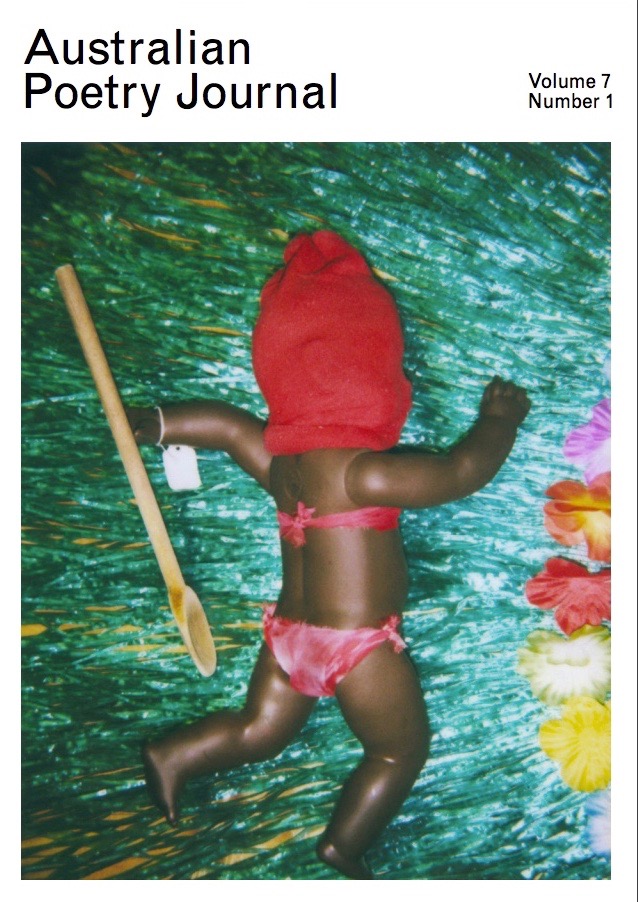
The cover of this issue of Australian Poetry Journal features a brilliantly eye-grabbing Destiny Deacon photograph, Escape from the Whacking Spoon (2007). As the first issue covered by the new policy of having different guest editors for each issue, this one is edited by two leading Aboriginal poets, which ensures that it follows through on the cover’s promise.
There are three sections:
Skin 1: 34 poems by 25 Indigenous writers
Skin 2: 16 poems by 13 non-Indigenous writers
Transforming My Country (edited by Toby Fitch): 12 poems responding to Dorothea Mackellar’s ‘My Country’,
The selection is very rich, for many of the individual poems and for the extraordinarily valuable dialogue created by placing them between one set of covers. I dog-eared the pages with these poems from the first two sections in my copy (your mileage will very – I recommend you get hold of your own copy via Australian Poetry Pty Ltd’sweb site):
Claire G Coleman, ‘Strawberry Juice’: starting from the image of spots of strawberry juice staining her writing paper, the poet plays with the notion that directions for colonial killings and records of them were written on paper. Ink stains, like blood stains, can’t be removed, and the lines that bring it home: _ __Notice how paper covers rock __Covers __My country, my people are one __Notice how easily paper tears _
Aunty Kerry Reed-Gilbert, ‘Love comes in many colours’ The poet greets her granddaughter: _ Her blonde hair cool against my black skin her whiteness grabs my heart a new day dawning for this land Australia as we dance to the sounds of the oldest culture in the world. Love comes in many colours. _
Kate Adler, ‘Sorry’. A non-Indigenous person at a Sorry Camp: _ __Hard to witness wounds like these __but love is deeper than skin.
The third section includes work by some heavy hitters of Australian poetry, including brilliant poems by the editors of this issue, Ali Cobby Eckermann and Ellen van Neerven. Eileen Chong (‘My music is wrong – nothing / has been written down right’) and Hani Abdile (‘Opal-hearted country / I’m now one of your unwanted beings / I’ve come to love you sunburnt’) write from immigrant and refugee perspectives. The poem is deconstructed, thesaurised and anagrammatised. Toby Fitch’s introduction describes Lisa Gorton’s conceptually and concretely thrilling poem as an ‘almost-epic’ that ‘explores in microscopic detail the history of the grounds of Royal Park, Melbourne’. I’ll end with some lines from each of the Indigenous takes on the Mackellar poem:
Alison Whittaker (‘A love like Dorothea’s’):
I’m sorry, sweet Mackellar, that it famished all your cows,
y’paddock’s yellow-thirsty-sudden-green; no telling how.
That the gold-hush-rainy-drum hard to your violence and your plow.
Natalie Harkin (‘Heart’s Core Lament’, which is hard to represent accurately here, as it depends on justifying the text on the page, and includes quotes from colonisers’ texts in the margin, but here goes):
Ellen van Neerven (‘My Country’):
my country
is between two rivers
two ribs
two hip bones
Ali Cobby Eckermann (‘Transforming My Country’, which plays with Mackellar’s words to produce radically different meanings):
Who pays back to Earth?
Not she and soft-hearted love
What a hush of her heart, and her
I have her share, her jewel
Though not her land
Your love of my land is tragic
——-
(I won’t repeat my own favourite anecdote about ‘My Country’ and Dame Mary Gilmore, If you’re interested you can read it here.)
• the results of at least one literary competition: Peter Minter asks in his judge’s report on the 2015 Overland Judith Wright Poetry Prize, ‘Isn’t nurturing the penniless avant-garde something we should all embrace?’ As well as the poetry prize, this issue announces the Neilma Sidney Short Story Prize.
• the regular columnists: I always enjoy Alison Croggon, who here takes issue with the idea of art as therapy, and Giovanni Tiso, who airs his ambivalence about his preference for old books. Natalie Harkin, a Narungga woman, poet and academic, makes her debut, reflecting on the importance of sharing personal narratives.
• at least one intelligently provocative article: Stephanie Convery in Get your hands off my sister sounds a forceful warning against ‘activism centred on an unshakeable faith in women’s accusations of sexual assault’. The whole essay is worth reading, but I was struck by her point that harsher penalties for sexual assault don’t prevent it, but move it to a different location, ie, especially in the USA, to prisons.
• an excerpt from a work in progress: This is usually my least favourite thing in a magazine, especially when not clearly labelled, because the reader tends to be left hanging. Maxine Beneba Clarke’s The current inhabitants of the island is an exception. It’s a sharp stand-alone story of encountering racism in her childhood that make me look forward to her memoir, The Hate Race, later this year.
• high level journalism: Antony Loewenstein’s After independence throws light on the state of South Sudan four years after gaining its independence. Loewenstein had been living in Juba, the capital, for most of the year before the anniversary, and what he reports isn’t pretty.
• a literature report: Ben Brooker’s article on vegetarianism and the left cites sources from Marx to Anna Krien, including books with titles like Brutal: Manhood and the Exploitation of Animals and The Sexual Politics of Meat, on the links between vegetarianism and progressive social movements (Marx wasn’t convinced). I met the term ‘carnism’ here for the first time, and learned that vegetarian scholarship is a thing. Incidentally, he mentions Hitler, but not that Hitler was vegetarian.
• cultural studies. Dean Brandum and Andrew Nette give a workmanlike account of the Crawfords dramas Homicide, Division 4 and Matlock Police, with emphasis on their function as at times ‘a kind of entertainment auxiliary in the fight against crime’. It’s oddly comforting to see the TV shows one deliberately didn’t watch in one’s 20s become the stuff of cultural history.
• debate: Well, not exactly a debate this issue, but Four perspectives on race & racism in Australian poetry by AJ Carruthers, Lia Incognita, Samuel Wagan Watson and Elena Gomez presents four strikingly different takes on their given subject and they do strike some sparks off each other. Racism and neo-orientalism run deep in Australian culture in general and Australian poetry in particular, but it depends where you look. Spoken word, conceptual poetry, radically experimental writing are thriving sites for non-white poets. The ‘narrowly expressive “I-poem”‘ may or may not be part of the problem. Sam Wagan Watson has the best single sentence: ‘There is no clinical evidence to suggest that racism is a by-product of mental illness, although I’ve heard many try to argue the fact.’
• fiction: five short stories in this issue, including the Neilma Sidney Prize winner. It’s a grim lot, featuring anti-Muslim nastiness in the suburbs (the prize-winner, by Lauren Foley), a refugee school teacher who (not really a spoiler) kills himself (Ashleigh Synnott), a young, possibly Aboriginal woman entering a situation of sexual exploitation (Jack Latimore), a dystopian future where birds and insects are mechanical (Elizabeth Tan), and a woman who remains painfully silent when her boyfriend jokes about violence against women (Jo Langdon). All good stories, but not a lot of laughs and no real twists in the tail.
• poetry: Toby Fitch takes over from Peter Minter as poetry editor with this issue. They judged the poetry prize together, and the three place-getters are the full poetry content, making this in effect a hand-over issue. Apart from writing his own poetry, Toby runs the poetry nights at Sappho’s in Glebe and is poetry reviews editor on Southerly. I look forward to his Overland regime.