Tag Archives: André Dao

Journal Catch-up 24

As I have mentioned before, I once had a substantial collection of Meanjins. I parted company with them in the course of moving house, probably forty years ago or so, and I haven’t kept up with Meanjin‘s changing identity since. In 2021 I toyed with the idea of resubscribing, but I may have been daunted by the sheer size of each issue. I have now bitten the bullet.


Esther Anatolitis (ediitor), Meanjin Vol 83 Nº 1 (Autumn 2024)
(links are to the Meanjin website: some but not all of them are available to non-subscribers)
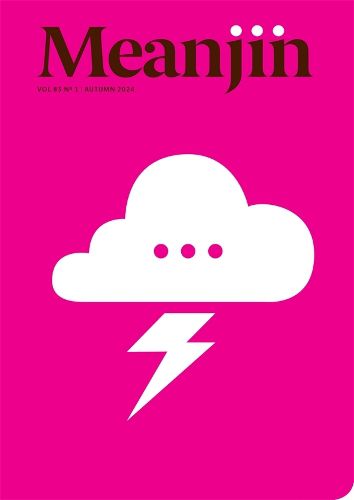
This issue is a doozie!

It’s as engaged with current social and political issues as Overland. There are a number of essays on aspects of the Israeli invasion of Gaza, including Sarah M Saleh’s brilliant argument for the importance of Palestinian solidarity movements to the political wellbeing of Australia as a whole. There’s a concise summary article by father and daughter team Stephen Charles and Lucy Hamilton on the role of lies and disinformation in the Voice referendum. There’s a portrait by Jack Nicholls of eco-warrior CoCo Violet. There’s Amy Remeikis on the significance of the (first) Bruce Lehrmann rape case. And more.

It’s as culturally diverse as Heat in its heyday. Editor Esther Anatolitis (Σταθία Ανατολίτη) interviews Peter Polites. André Dao gives the 2023 State of the (Writing) Nation Oration. And more.

It’s as academically challenging as Southerly. See Dan Disney’s esoteric discussion of a Korean verse form and the fraughtness (impossibility?) of translating it, or imitating it, without subsuming it into the linguistic dominance of the English language; or Ianto Ware’s account of the challenges he fac ed in writing about his mother’s life and death.

First Nations writing has a strong presence. Among other things, ‘Ilkakelheme akngakelheme—resisting assimilation‘, a powerful essay by Theresa Penangke Alice, has pride of place before the contents page, and the new poetry editor is Wiradjuri woman Janine Leane.

I learned a lot – from Renata Grossi about the law concerning wills and what happens when they are contested; from Tom Doig about the long shadow of the 2014 Hazelwood disaster; from Marcus Westbury about the possibilities of something like a Universal Basic Income.

There are memoirs, including a brief snippet by Clare Wright, which starts out from an elaborate piece of costumery in the Powerhouse Museum and takes the reader to an unexpected ugly teenage encounter.

There are book reviews, and poetry. I was delighted to read, ‘Thread‘ a new poem by Eileen Chong. Two very different poems, ‘Oomarri—coming home‘ by Traudl Tan with Kwini Elder Ambrose Mungala Chalarimeri, and ‘Dreaming in Bourke‘ Paul Magee, talk to each other across the pages about the importance of country for First Nations people.

I picked up a couple of new words. My favourite is::

  • pipikism, a term coined by Philip Roth, who defined it as ‘the antitragic force that deconsequentalises everything – farcicalises everything, trivialises everything, superficialises everything’. Naomi Klein revisits the term in Doppelganger, her book reviewed in this Meanjin by Sam Elkin.

I’ll give the last word of this post to Peter Polities, whose words on page 77* in some ways speak to the journal as a whole:

I remember when I was in art school … this guy said to me: ‘I’m not political.’ And I was like: What did you say?!?’ I was just so shocked the first time I heard it, but then by the second time, I was so sarcastic: I said, ‘Yeah, what’s political about making goods for a luxury market?’ So this is what these kids wanted to be: to create work that you hang above a fucking couch for rich people. My interest in art is as a site for intervention, a site for politics, and culture is one of the most political things that we have.


I finished writing this blog post in stunningly beautiful Kuku Yalanji country, to the tune of parrots, curlews and the calls of other birds I don’t recognise.


* My blogging practice for some time has been to focus arbitrarily on the page of a book or journal that coincides with my age.
2024 NSW Premier’s Literary Awards night

The NSW Premier’s Literary Awards, as we are often reminded, are Australia’s richest and longest running state-based literary awards. This year, in a break with tradition, I didn’t do a blog post when the shortlist was announced. I was happy to read a consolidated list on Lisa Hill’s blog at this link.

At that time, had read two of the Christina Stead Prize contenders. I’d seen two of the plays shortlisted for the Nick Enright Prize. I did better on the Betty Roland Prize, having seen seen three of the movies. I had read none of the poetry, none of the children’s or young people’s books, none of the non-fiction. And it turns out I have read or seen none of the winners.

Last night, the awards ceremony was live streamed. I was busy with family, so tuned in late. It’s all on YouTube and you can even watch it here, The actual video begins at 8 minutes, 40 seconds with the Welcome to Country by Uncle Brendan Kerin from the Metropolitan Lands Council, who reminds us that we have a shared history, and manages to make comedy out of his experience as a member of the Stolen Generations. After introductory speeches from librarians and the Minister for Arts, the presentation of awards by the senior judge, Bernadette Brennan, begins at 40 minutes. The video is worth watching as – in the midst of much charming humility and gratitude – person after person refers to the unfolding disaster in Gaza, explicitly or implicitly responding to recent media attacks on the judging panel.

The winners (with links to the judges’ comments):

UTS Glenda Adam’s Award for New Writing (at 40 minutes)

Anam, André Dao

Multicultural NSW Award (at 43 minutes)

Stay for Dinner, Sandhya Parappukkaaran and Michelle Pereira

Indigenous Writers’ Prize (at 48 minutes)

She Is the Earth, Ali Cobby Eckermann

Nick Enright Prize for Playwriting (at 52 minutes)

Sex Magick, Nicholas Brown (Griffin Theatre Company & Currency Press)

Betty Roland Prize for Scriptwriting (at 56 minutes)

Safe Home, Episode 1, Anna Barnes

NSW Premier’s Translation Prize (at minutes)

Patricia Wrightson Prize for Children’s Literature (at 60 minutes)

Paradise Sands: A Story of Enchantment, Levi Pinfold

Ethel Turner Prize for Young People’s Literature (at 1 hour, 2 minutes)

The Quiet and the Loud, Helena Fox

Kenneth Slessor Prize for Poetry (at 1 hour, 6 minutes)

Riverbed Sky Songs, Tae Rose Wae

Douglas Stewart Prize for Non-fiction (at 1 hour, 10 minutes)

Ghosts of the Orphanage: A Story of Mysterious Deaths, A Conspiracy of Silence, and a Search for Justice, Christine Keneally

Christina Stead Prize for Fiction (at 1 hour, 13 minutes)

    The Sitter, Angela O’Keeffe

    The People’s Choice Award (at 1 hour, 16 minutes)

    The God of No Good, Sita Walker

    Book of the Year (at 1 hour, 20 minutes)

    She Is the Earth, Ali Cobby Eckermann

    The presentations ended, as they began, with eloquent words about the lasting impact of the Stolen Generations.

    There was no special award this year.

    Asia Literary Review 28

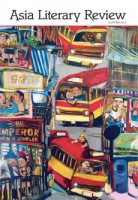
    Martin Alexander (editor) Asia Literary Review 28, [Northern] Summer 2015

    This issue of Asia Literary Review was part of a collaboration with Australia’s Griffith Review. I subscribe to ALR (actually I have a complimentary sub, for which I am grateful) but have only read one or two issues of the GR, which I guess makes me an atypical Australian reader of this joint publication.

    Because the ALR is an English-language journal, every issue engages with cultural complexities: inter-generational stories, post-colonial hybridity, expat and emigrant writing, and some translation. In this issue, Australia is the non-Asian pole of much of the interaction. As always, the Asian presence is nothing if not diverse, including writing from or about mainland China, Hong Kong, India, Indonesia, Japan, Kashmir, Malaysia, Myanmar, Nepal, North Korea (a defector), the Philippines, Singapore, Thailand, and Vietnam.

    Among the Australian contributors, Omar Musa – rapper from Deniliquin, spoken-worder and author of Here Come the Dogs – strikes a different tone in ‘Supernova’, a sober, reflective story about an older emigrant who has returned to Malaysia and takes part in the political process there; Ellen van Neerven’s ‘Half a Butterfly’ reports on a visit to Goa as part of a cultural exchange between Aboriginal Australian writers and Dalit writers; and Jessie Cole’s ‘The Asian Invasion’ is, among other things, a memoir of her childhood in Hippie Nimbin that challenges the received version of that community as drug-fuelled, self-indulgent and delusional, offering instead a recollections of one that was diverse, open to new experiences and other cultures.

    One or two articles seem to be written with Australian readers in mind: Keane Shum’s marvellous ‘Ripple from Hong Kong’ tells a history of that island from the perspective of a Hong-Konger whose people were there long before the Chinese ceded it to Britain; in ‘All for the People, without the People’, André Dao starts from his own experience of voting in Melbourne, complete with sausage sizzle, and goes on to consider what democracy and ‘human rights’ might mean in Vietnam, a familiar subject presented through a personal prism; Miguel Syjuco’s ‘Beating Dickheads’, an argument for mockery as a form of resistance to tyranny, invites Australian readers to consider their own practice of mocking those in power (‘Every nation has its unfair share of dickheads, douchebags, dingleberries and degenerates. But my country, the Philippines, bests most in democratic tomfoolery.’); when Prodita Sabarini’s ‘Let Bygones Be Bygones‘ discusses the great Indonesian silence about the 1965 massacres, her main non-Indonesian reference point is Joshua Oppenheimer’s movies The Act of Killing and The Look of Silence – Oppenheimer is a USer, but his films have made a big splash in festivals here, as, evidently, they have in parts of Indonesia.

    I don’t want to give the impression that everything is geared towards Australian readers. Far from it. The pleasure of encountering the unfamiliar, of being an invited eavesdropper, is as strong here as in any other issue. A number of pieces, for instance, discuss the role of humour, which notoriously travels poorly. Apart from ‘Beating Dickheads’, there’s Murong Xuecun unpromisingly titled ‘Chinese Thinking the Age of the Internet’. ‘If President Xi Jinping is clearheaded,’ he writes, ‘he will understand that although he may be able to seal people’s mouths, he can never stop them sniggering.’ Fair enough, one thinks, but the essay becomes really interesting when it gives examples of the subversive humour that the Internet allows to spread:

    New English words with Chinese characteristics are popping up: Chinese citizens become shitizens; Chinese democracy begat democrazy; secretaries with Chinese characteristics (especially the female secretaries of high officials) are sexcretaries. Political jokes are also spreading. Here’s one I encountered recently: Xi Jinping went into the Qingfeng Dumpling Shop and asked what the fillings were. The waitress answered, ‘This one is cabbage and pork; this one is pork and cabbage; this one is pork with added cabbage. Which do you want?’ Xi thought about it for a moment and said, ‘They’re all the same, there’s no choice.’ The waitress responded, ‘Aren’t you forgetting, that’s how we chose you?’

    You have to love the people who make these jokes, even if you don’t laugh. And though the essay doesn’t mention Ai Wei Wei, it changes the way one sees what some critics describe as his self-promoting poseurdom (and incidentally, I recommend the Ai Wei Wei / Andy Warhol exhibition that’s currently at the National Art Gallery of Victoria).

    I also recommend Asia Literary Review. This blog post has barely skimmed the riches of this issue.

    Going Down Swinging 33

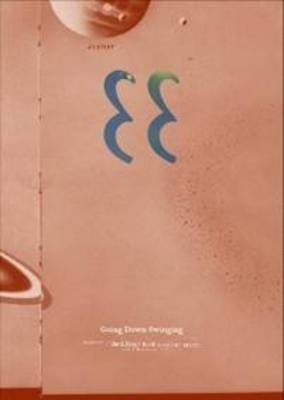
    Going Down Swinging 33 (edited Geoff Lemon and Bhakthi Puvananthiran 2012)

    20130222-211751.jpgGeoff Lemon, co-editor, was surely tempting fate and the critics when, as soon as the 32nd issue of GDS was complete, he nicknamed the impending No 33 the Jesus Issue. Wasn’t that like predicting the journal’s death, or at least inviting a crucifixion? Well, maybe, but after all it’s Going Down Swinging we’re talking about, whose title has been cheerfully proclaiming its imminent demise from the very start. Perhaps, then, the nickname was intimating that the physical object made of ink and dead trees was about to be resurrected, transformed into an incorporeal, wholly digital being. But no, though there is The Blue Corner online and a CD comes as part of the thing itself, the fabulous design of No 33, by Elise Santangelo and Stuart Hall, draws dramatic attention to its materiality, with tabs, die-cuts, a range of stocks, and clever use of showthrough – without, I say with heartfelt appreciation, detracting from legibility.

    It looks as if the only actual consequence of the nickname was a number of Jesus-related submissions, enough of which made the cut to constitute a 38-page Jesus section. Like the rest of the magazine, these are predominantly hip inner-city Melbourne, the one surprise being ‘Out of the Kitchen Since 30 AD’, Elizabeth Redman’s straightforward personal essay reclaiming Christian faith from the reactionary fundamentalism and dubious institutional politics that tends to dominate public discussion of it.

    Two other pieces stood out for me as admirably plain-speaking. André Dao’s ‘Out of Our Bodies’ is a memoir about Catholicism, atheism and mortality. He could have been describing a scene from Michael Haneke’s Amour in his final image of his grandparents singing together at his grandfather’s deathbed:

    … My grandfather seemed finally to hear her, and then they were both singing, falling in and out of tune. For a moment they seemed lifted out of their slumped, brittle bodies, and their wrinkled faces were crumpled in concentration and remembered pleasure.

    And Fiona Wright’s short poem ‘Consider the Camel’ feels as if it should always have been there, and manages to use the word ‘platyclades’ without missing a beat.

    For the rest, there’s hardly a dud in the lot of them. ‘Atlas Dharma’, a commissioned by Cate Kennedy with watercolour illustrations by Simon MacEwan, recalls and recreates a childhood fascination with the Reader’s Digest atlas. Eric Yoshiaki Dando’s The Novel Teacher has fictional (I hope) fun with creative writing courses. Una Cruickshank gives us some memorable travel writing in ‘Varanasi’. I skipped an essay that begins with a quote from Lacan and a story that starts out, ‘Long, long ago, afore a-coming of the dust, the mani-lands were a-crowdening with mani-folk’, but that tells you more about me than them.

    When I mentioned an inner-Melbourne sensibility, I wasn’t implying parochialism – quite the contrary, the feel is urbane, cosmopolitan. But I was struck by the way a number of pieces from oversea, and even interstate, stood out. You’d expect that of the stories from Russia and India (one each). It was contributions from the USA that prompted me, in the absence of an ‘About the Contributors’ section, to go Googling the authors – not because of a proofreaderish irritation at US spellings, though there was that, but because the voices were noticeably different in ways that are hard to specify – louder, more confident of their own centrality, something like that. When I think of the gigantic magazine that downloads to my RSS feeder, I’d guess that most of what I read there is from the US, and increasingly I live in a global culture. Here, where the proportion is roughly reversed, I’m surprised and reassured to feel a sense that local minds are engaging in locally inflected ways with issues that range from the intensely local to the cosmic.