Tag Archives: Australian Women Writers Challenge

Ruby Reads (4)

At this rate I’ll be doing a weekly post about books Ruby and I enjoy – or at least experience – together for quite some time to come. Here goes this a selection of this week’s discoveries and rediscoveries.

Jan Pienkowski & David Walser, Meg and the Dragon (Puffin 2015)
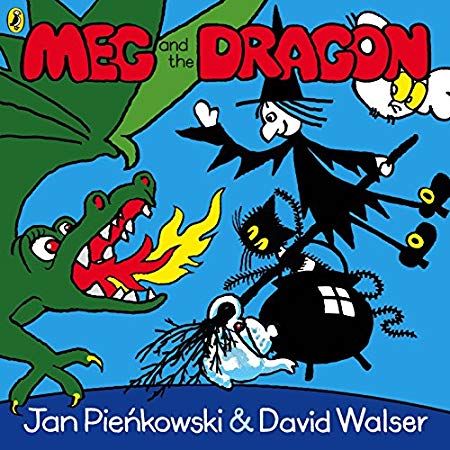
A library book, this is part of the series that began with Meg and Mog all that time ago. Mog the cat is still on the scene; she’s just been nudged from the title. Meg the witch, whom I first met close to 40 years ago, still hasn’t got her spells completely under control, but everything turns out all right in the end. It’s a Halloween story. For anyone who thinks of the writer of a picture book as the main creator and the artist as an illustrator, the Meg and Mog series is a challenge, as artist Jan Pienkowski has been the constant. The first so many books were written, beautifully, by Helen Nicholl. David Walser seems to have been supplying words since about 2014. I doubt if the target audience notice the difference. I certainly have no complaints.

Oliver Jeffers, Up and Down (HarperCollins 2011)
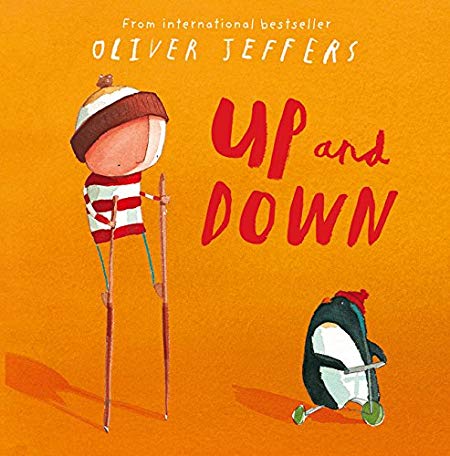
This is a sweet book (borrowed from the library), but seen vicariously through the eyes of a 14-month-old reader it’s car too complex: it’s about a boy and a penguin, inseparable friends who have a falling out and are reunited in the end, raising questions on the way about why penguins can’t fly and should they want to, and how does one support a friend who has ambitions one knows will be destructive in the end.

Pamela Allen, Who Sank the Boat (1982)

Isn’t it brilliant how books survive the decades. We loved this in the early 80s. I still love it. One by one, five animals get into a boat which eventually sinks. The repeated question is ‘Who Sank the Boat?’ I guess you could see it as teaching a lesson about buoyancy, but I think of it more as gently mocking the idea of such a lesson. Ruby asked for it four tomes in a row yesterday.

Craig Smith & Katz Cowley, The Wonky Donkey (2009)
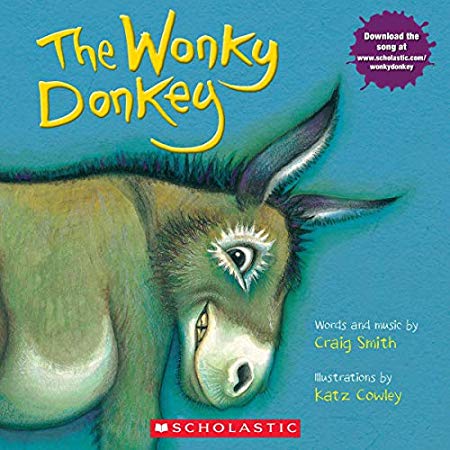
This was read to us by the splendidly showy Lisa at Leichhardt Library Rhyme Time. Evidently it started life as a song, and the wordplay is certainly brilliant. I don’t care for the somewhat grotesque illustrations when seen through my grandparenting lenses, and was relieved to discover that they are not the work of Australian artist Craig Smith. This is a different Craig Smith, possibly a New Zealander, and he did the words.

To be continued.

Who Sank the Boat? is the ninth book I’ve read for the 2019 Australian Women Writers Challenge.
Ruby Reads III

Though Ruby likes to have the same book read to her over and over, she has still managed to accumulate quite a library, and casts her reading net wide. Here are some more titles from her bookshelf (and floor).

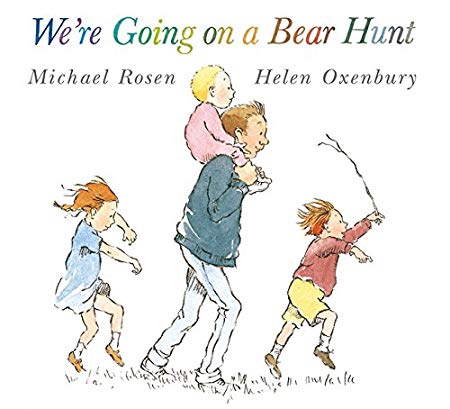
Michael Rosen & Helen Oxenbury, We’re Going on a Bear Hunt (Walker Books 1989)

Many people, in Australia at least, might be forgiven for thinking this is a spin-off from the Play School song with the same words, but I think I’m right in saying that the book came first. It’s a brilliant ear-worm of a read-aloud, complete with sound effects of grass, mud, forest and other obstacles that must be gone – not over, or under, or around, but through.

Jill McDonald, Hello World! Birds (Doubleday 2017)

I promise I’m not going to mention in my log every board book in Ruby’s collection. Let this one stand in for a dozen, including Cats and Kittens (a favourite).

It’s a thrill to be with a small child as she learns to turn the pages of a book, and to indicate which images excite her attention. This is a book that allows that to happen. (And there are plenty of board books that don’t judge their readership as well as this one.)

Julia Donaldson and Axel Scheffler, Monkey Puzzle (Alison Green 2009)

Here’s a terrific ‘onion book’ (thanks to Ann Knight Bell in the comments for the term). I love the fabulous drawings of the little monkey who goes looking for his mother, and the range of animals who don’t make the grade, and the wit of the text as each candidate has some feature of the mother, but none of the essential quality, finally revealed, that she must look like the little monkey. Ruby loves the book, but turns the page once that page’s candidate has been named.

Matthew Van Fleet, with photographs by Brian Stanton, Moo (Simon & Schuster/Paula Wiseman Books (2011)

Matthew Van Fleet has a whole string of beautifully produced, hefty picture books with pop-ups and moveable parts. This is the first one I encountered. There are also Dance, and Dog (in which a cat appears under the very last flap, and certain presenters of the book make sure it’s a very noisy appearance.)

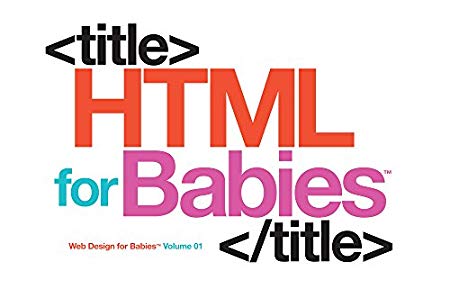
HTML for Babies (Sterling Children’s Books, 2016)

I really don’t get this. The web description website says, ‘These concept books will familiarize young ones with the kind of shapes and colors that make up web-based programming language and give them the head start they need.’ (It seemed appropriate to leave the US spelling unchanged.) It’s impossible to read aloud, as nothing in it makes sense. I guess it’s for browsing and taking in the visuals

Margaret Wild and Ann James, Lucy Goosey (Little Hare Books 2008)

Oooh! Another perfect picture book. Ann James’s little geese (goslings doesn’t seem the right word) are very sweet, and the story about Lucy, who is enjoying her life but doesn’t want to go flying because it’s so scary, is suitably reassuring: in the end she finds the courage because her mother reassures her she will always be there. So far Ruby seems to like pointing at the pictures most, but I like the word ‘whiffling’, for the sound made by the wings of grown-up geese.

Lucy Goosey is the eighth book I’ve read for the 2019 Australian Women Writers Challenge.

More Ruby reads

So many books in Ruby’s house, so little time. I may be doing a weekly blog post for a while to come. Given that the projected life of a children’s book is alarmingly short, it’s heartening to see so many relatively ancient books here.

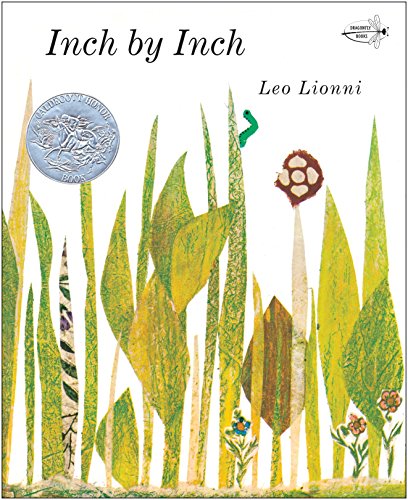
Leo Leonni, Inch by Inch (1962)

This was Leo Lionni’s first picture book. Not as spectacular as Swimmy, perhaps, it’s still splendid. The tiny inch worm saves itself from being eaten by offering to measure parts of various birds, and finally by rising to the challenge of measuring the nightingale’s song. For small readers, there’s a bit of a Where’s Wally thing going on as the tiny worm appears in every spread. For big ones (including grandparents) there are more sophisticated joys in the spare text and elegant paintings.

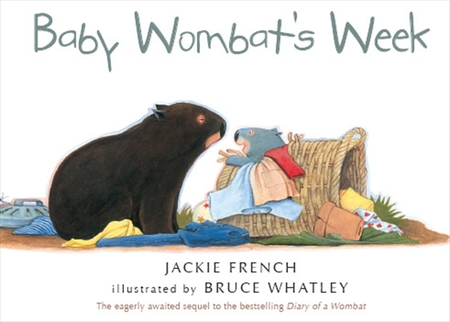
Jackie French and Bruce Whatley, Baby Wombat’s Week (Angus & Robertson 2009)

This is a sequel to Diary of a Wombat that won hearts and prizes all over the place in 2002. Who doesn’t love a wombat? And this one’s a baby. Again, the images are probably too complex and the humour too sly for tiny people. But this is wonderful.

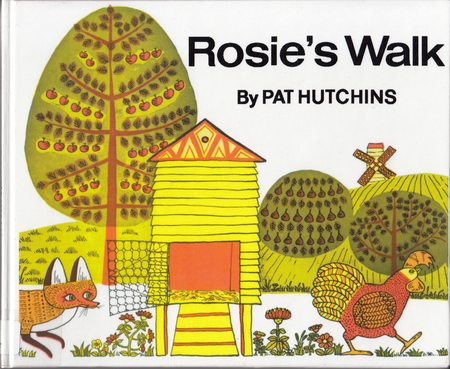
Pat Hutchins, Rosie’s Walk (Macmillan 1967)

This is a board book supplied by us grandparents. Its place in our affections is at least as firmly established as The Very Hungry Caterpillar‘s. It’s a classic example of illustrations telling a story of which the verbal text pretends to be oblivious. The bright, patterned illustrations are, of course, gorgeous.

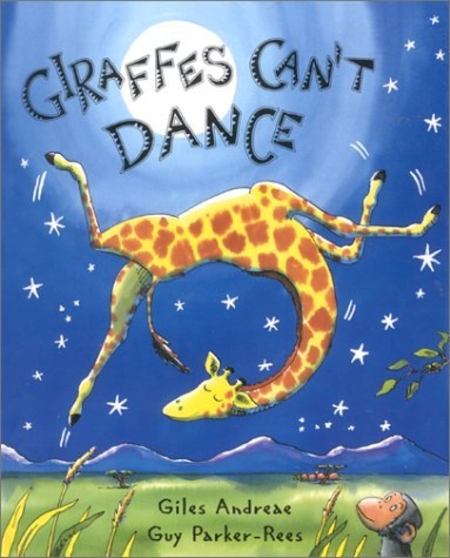
Giles Andreae and Guy Parker-Rees, Giraffes Can’t Dance (2001)

This one doesn’t appeal to me so much, but it’s on high demand in Ruby land, possibly because one of her favourite toys has been a squeaky giraffe named Sophie. The Giraffe in the book is mocked by the other animals because it can’t dance. It wanders off a communes with the moon and the wind, and soon is dancing spectacularly: given how very ungainly the giraffe is in the first part of the boo, there’s something dispiritingly unrealistic in the moral is that everyone can dance if the music is right.

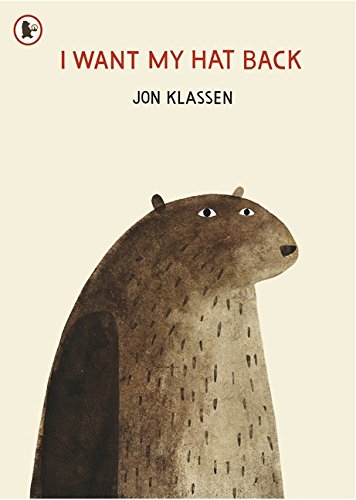
John Klassen, I Want My Hat Back (Walker 2011)

Jon Klassen is a Canadian minimalist picturebook maker. As far as I can tell this is the first of a trilogy about a bear and his beloved hat. The bear, who doesn’t change much from page to page, asks a number of other animals, some of them of indeterminate species, if they’ve seen his hat. We see the hat long before he does (another example of an illustration alerting the reader to something the text is unaware of), and there’s a bloodthirsty and punitive but funny twist in the tale, which I hope young readers generally miss.

Bob Graham, Vanilla Ice Cream (Walker 2014)

Bob Graham! Evidently he’s even more popular in France than in his native Australia. This picture book is the work of an assured master – possibly in his Late Style. A sparrow accidentally hides away in a bag of rice loaded onto a ship in an Indian port. When the ship arrives in a southern land (a non-specific Australian city), the sparrow emerges and flies to a nearby park. There, a dog leaps up towards him and knocks an ice cream out of someone’s hands. The ice cream lands in the lap of a baby in a stroller, and that’s the first time that baby tastes vanilla ice cream. A weird non-plot, you might say. But he pulls it off!

Julia Donaldson and Axel Scheffler, The Snail and the Whale (Puffin 2006)

A strange tail of a snail with an itchy foot who hitches a ride to exotic places on the tail of a whale and comes back to inspire the other snails to go adventuring, having saved the whale’s life by writing a message in slime on a classroom blackboard. Surrealism is alive and well in children’s picture books. This one is way too old for Ruby, but she has two copies, one in the profusion of books and toys in a corner of the living room and one beside her cot.

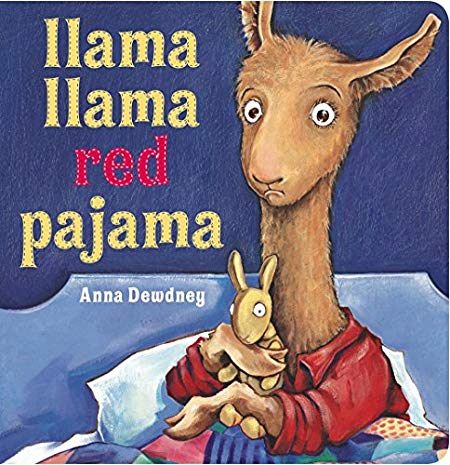
Anna Dewdney, Llama Llama Red Pajama (2005)

A gauge of the success of this book is that Mr Blue Pencil didn’t notice the US spelling in its title until I wrote it for this bog post. It’s a bedtime story with bright colours, bouncy rhymes (as long as you pronounce mama to rhyme with llama). There’s a fear-of-the-dark moment that might be a bit suggestive for some children. But the relationship between ht young llama and the llama mama is warm and loving, even if she does answer the phone when the young one needs her desperately at the bedside.

Baby Wombat’s Week is the seventh book I’ve read for the 2019 Australian Women Writers Challenge.

Ruby reads

My granddaughter, Ruby, is now nearly 14 months old, and I have re-entered the world of books for very young people. This is a catch-up on books I’ve read to her or listened to while someone else read to her – some fondly remembered, some new to me. Ruby’s parents and the people who give them books have very good taste. I mean no disrespect to the many brilliant board books featuring photos of African animals, sometimes with rudimentary rhymes, whose pages she loves to turn, but I’ve only included books that give me pleasure as well. In no particular order, then:

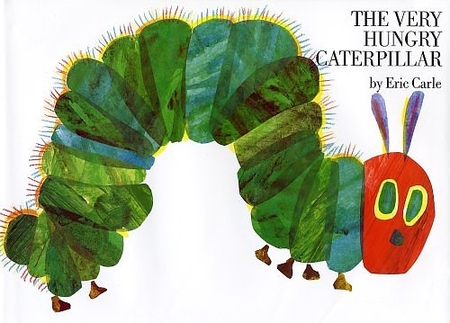
Eric Carle, The Very Hungry Caterpillar (1969)

This book is 50 years old this year, and its place in the canon is firmly established. I know the last page when the caterpillar is transformed into a butterfly is supposed to be the great visual thrill, but I love the transformation before that into a very big, round caterpillar.

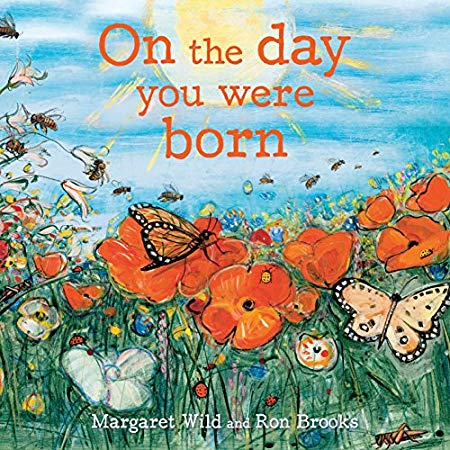
Margaret Wild and Ron Brooks, On the Day You Were Born (Allen & Unwin 2018)

Margaret Wild is one of the greats of Australian children’s literature, and her collaborations with Ron Brooks are legendary. The title of this book might lead you expect a story of mother and baby cuddling in bed, but no, here the baby’s father takes ‘you’ on a walk out into the wonders of the world, and returns in the last words to the mother. None of the humans is seen – just the gorgeous world.

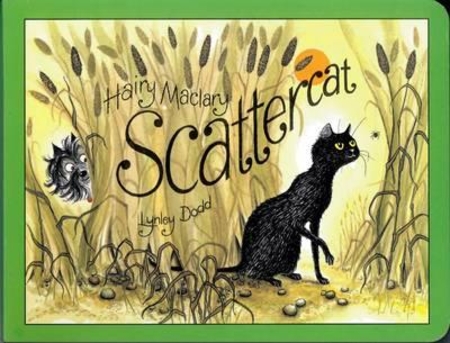
Hairy Maclary Scattercat (Puffin 1983), and other brilliant books by Lynley Dodd.

This book first appeared the year Ruby’s father was born. In case you don’t know, Hairy Maclary from Donaldson’s Dairy is a scruffy and scrappy little New Zealand dog whose adventures are told in rollicking rhymes. Here he monsters a series of cats until finally the tables are turned by Scarface Claw, whose name says it all. Dachshund Schnitzel von Krumm isn’t in this book, but he’s in at least one of the others we get to read.

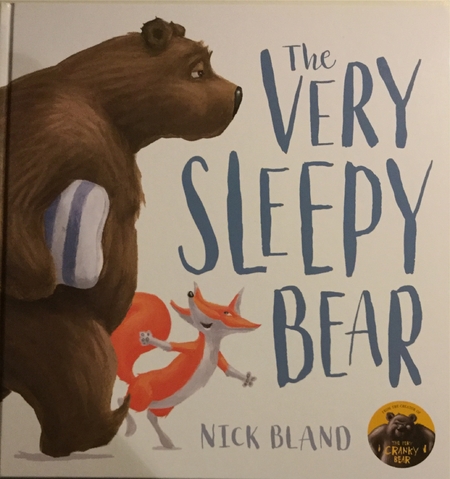
Nick Bland, The Very Sleepy Bear (Scholastic Australia 2017)

 This bear has a series of books, in which he is variously Very Cranky, Itchy, Brave, and so on. This one is a kind of trickster tale – a fox tricks the bear into leaving his cave with a promise of somewhere better to sleep. After inspecting a series of unsatisfactory possibilities, the bear insists on returning to his home, where he discovers the fox has installed a gang of his friends. Particularly relevant to adults who are trying to manage a baby’s sleep.

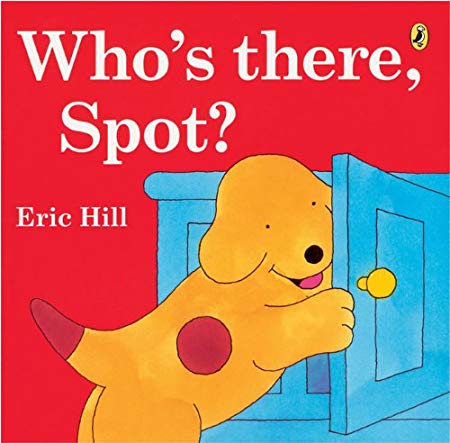
Eric Hill’s Spot series, in particular Who’s There, Spot? (Puffin 2013)

Along with the mouthless Miffy (whom I haven’t seen on Ruby’s bookshelves), Spot is a standout memory from my own early parenting days. The original was the lift-a-flap book Where’s Spot (1980). Who’s There, Spot, complete with flaps under which lurk a series of animals, is one of a vast number of sequels. Every baby I know has loved lifting the flaps on Eric Hill’s books, and as an adult, I’ve always enjoyed giving the hissing, trumpeting, barking, meowing hints beforehand.

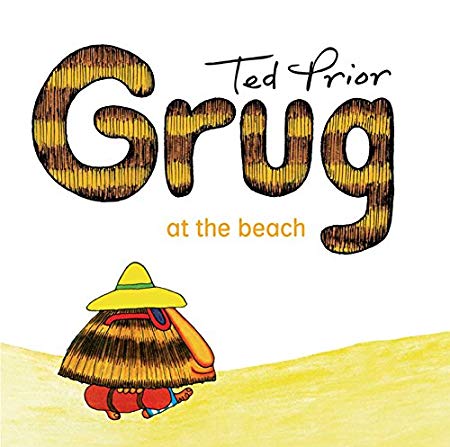
Ted Prior, Grug at the Beach (Simon & Shuster 2009)

Grug is the animated grass-tree hero of his own series of 26 tiny books (I just found that out from Wikipedia, where I also learned that he may not be a grass tree after all, but I’m sticking to my story). The first book, Grug, appeared in 1979, and though the series finished in 1982, he lives on in treasured old copies and new editions. Grug at the Beach is charming propaganda for sunscreen, but don’t let that put you off.

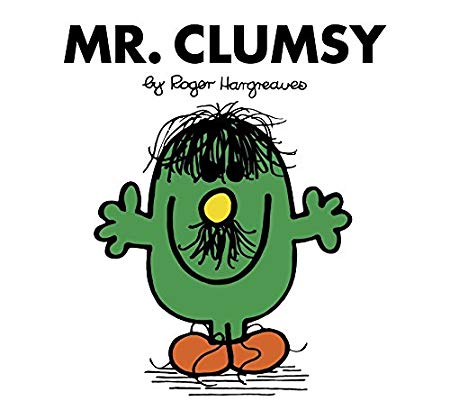
Roger Hargreaves’ Mr Men series, in particular Mr Clumsy (Budget Books 1987)

I’m not all that keen on the Mr Men series, but there’s no doubting their appeal and longevity. Maybe the cheerful acceptance of idiosyncrasy and imperfection is the secret of their success. The gender specificity is a bit problematic, and was only made worse, in my opinion, by the Little Miss series. Girls can be clumsy too! Like the Grug books, these have the advantage of being small enough to fit very young hands.

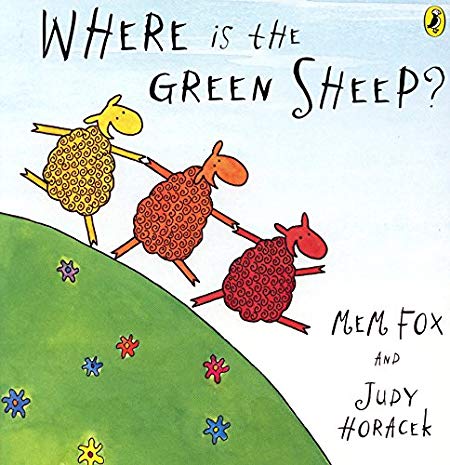
Mem Fox and Judy Horacek, Where Is the Green Sheep? (Puffin 2006)

The text, which otherwise might be mistaken for a didactic exercise in naming colours, provides a perfect platform for Judy Horacek’s brilliantly silly illustrations. We haven’t got to Mem Fox and Julie Vivas’s great classic, Possum Magic, yet. In fact, no Julie Vivas at all – a gap that will definitely be closed before too long.

That’s enough for now. I’ll save Leo Lionni and others for another post.

I wasn’t going to mention any of these texts in relation to the Australian Women Writers’ Challenge, but then I remembered how children’s literature, especially picture books for the very young, tends to be seen as lesser creations than even the most lackadaisical work for older people, even while some picture books and books for very young people are works of genius. So here you are: On the Day You Were Born and Where Is the Green Sheep? are the fifth and sixth books I’ve read for the 2019 Australian Women Writers Challenge.
Katharine Margot Toohey’s Vera Rudner

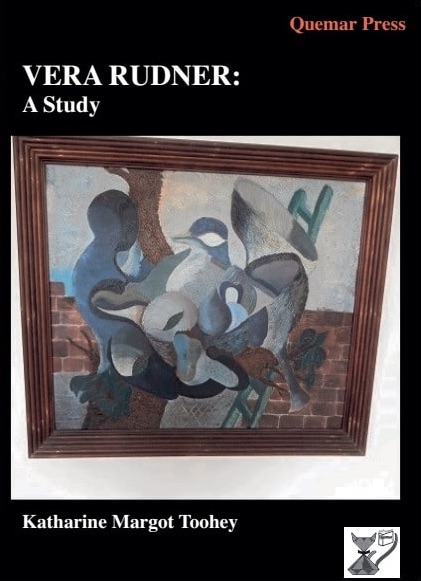
Katharine Margot Toohey, Vera Rudner: A Study (Quemar Press 2018)

A friend of mine (and no, this isn’t urban legend) recently attended a lecture on Australian modernist art at a mainstream tertiary institution in Sydney. The lecturer managed not to mention a single woman. When my friend protested, and rattled off a list of women who were crucial to the history, the lecturer was unapologetic.

Early this year at a prestigious Melbourne gallery, the same friend was lamenting the almost complete absence of women painters in a large exhibition of 20th century Australian art. Then we walked into one of the smaller rooms, and there they were, scores of them, crowded onto the walls four or five high without space for so much as a descriptive label: if you wanted to see who painted that sock knitter or that bridge in curve you had to consult an iPad chained to a seat in the middle of the room and scroll through the list. So the ladies had a room to themselves, all hugger mugger, and the real male artists, were shown as individuals.

It seems our institutions may have some trouble giving Australian women artists their due.

This tiny, almost zine-like book from Quemar Press is doing its bit to kick against the trend.

Vera Rudner, born in Berlin in 1922, fled the Nazis with her Jewish family and arrived in Australia in 1938. She studied painting at the aforementioned Sydney tertiary institution, among others, and painted a number of striking surrealist works before she stopped painting in 1948.

Two of her paintings are held in the National Gallery of Australia. Four are in the artist’s possession. One is known to have been destroyed – actually burned – because, according to the woman who inherited it, it ‘scared her grandchildren’. She hasn’t been completely ignored in the literature of Australian art, but she remained in relative – almost complete – obscurity until Jennifer Maiden’s poem ‘Sacrilege’ appeared in her collection, Appalachian Fall (Quemar 2017, link is to my blog post). It introduces Vera as a friend of some decades, and focuses on her painting for which the poem is named. It begins:

                I fear not doing her justice; however,
for a long time I've wanted to write a poem about Vera
Rudner.

That poem, and ‘Be Back in the Morning or Diary Poem: Uses of Toys’, named for another of Rudner’s paintings and published in Maiden’s brookings: the noun (Quemar 2019), are reprinted in this book, evocative amplifications of Katharine Margot Toohey’s prose.

The text of the book is in three parts. First is a brief biography presented as an extended captions to a series of photos – snaps of Rudner as a child movie actor (the movies were all destroyed by the Nazis), of a framed wedding photo; an exhibition catalogue; the cover of a book that mentions her work; and a recent shot of her with Jennifer Maiden. The second is a short general essay, and the third an explication of the six paintings that Katharine Margot Toohey has access to.

There are two colour photographs of each of the paintings, and a number of details in black and white. These are enough to whet the appetite to see the actual paintings, but because of the perennial problem of reproducing paintings as tiny illustrations and getting the colour right, it’s hard to feel they do much more than that. For example, the cover photograph of Suburbia (1945) has a predominantly blue-grey pallet; both internal reproductions are mainly warm yellows and oranges.

Some sections of the book are available online at Quemar’s website (click here), where the images seem much less problematic. If, like me, you’re vaguely aware of an ache in your brain where the history of women artists should be stored, I recommend you have a look.

Vera Rudner: A Study is the fourth book I’ve read for the 2019 Australian Women Writers Challenge. I’m grateful to Quemar Press for my copy.

Eileen Chong’s Uncommon Feast

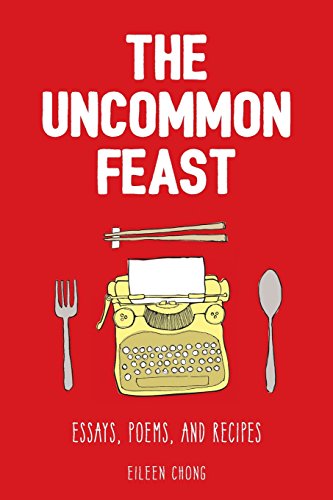
Eileen Chong, The Uncommon Feast: Essays, Poems and Recipes (Recent Work Press 2018)

In 2017, Eileen Chong’s third book of poetry, Painting Red Orchids, was shortlisted for the Australian Prime Minister’s Literary Awards. At the awards ceremony, a senior poet told her that many of her poems were like recipes, and if she collected them into a book she might have some success with it. She writes about this comment, and her reaction to it, in the first essay of The Uncommon Feast. ‘I am speechless,’ she says. ‘I feel put in my place, and ashamed.’

Happily, the shame didn’t last. The Uncommon Feast is a beautiful, generous, delightful response to that comment. It contains poems that are like recipes, as well as actual recipes. And it is much richer and more rewarding to culinary and non-culinary readers alike than anything her fellow poet presumably had in mind.

As Judith Beveridge says in her Introduction, the poems are at the heart of the book, but the prose essays and recipes, and the line drawings by Chong’s husband Colin Cassidy, are what transform it from a slim vol of poetry to a feast of a book. ‘The Common Table’, a short essay first published in Meanjin, which includes the account of the awards evening, also gives us the wonderful (food-related) moment when Chong’s mother understood that she was a writer; and ‘Eating and Telling: A Personal Food History’, is a quick autobiography told in terms of food – the school canteens (Singapore’s version so much more interesting than North Queensland’s), family meals, dining with partners, the bliss of cooking and eating with her husband. If we needed instructions on how to read Chong’s food poems, they are there:

Food, for me, is representative of family, culture, nourishment and love. I’ve learned how to cook from my grandmother, my mother, my friends’ mothers, and my partners over the years. The dishes I prepare are a palimpsest of experiences and cultures, new and old.

I’m surrounded by people who say they don’t get poetry – they feel intimidated by it, or see it as lost up its own wazoo. If any one book could convert them to poetry lovers, this would be it. There are many wonderful moments. For example, ‘Chinese Ginseng’ is a very fine poem in which the poet’s mother offers ginseng as a traditional cure for what the daughter knows to be irremediable. It ends:

--------------------------------------There is no point
in telling my mother what she doesn't want to hear:
------polycystic ovaries,
endometriosis, infertility. Instead, I just listen – I can
------almost taste

her soup, sweet dates and wolfberries, smoky angelica
------and lilybulb,
but above all, the unmistakeable bitter-sweetness of
------Chinese ginseng.

Such a great moment! Ginseng may not be a cure for the physical ailment, but it becomes a sacrament of the mother’s love. Facing the poem is Colin Cassidy’s drawing of a ginseng root, inscribed with the words ‘panacea, tonic, necessity’ Then you turn the page to a recipe for Chinese Ginseng Chicken Soup, and you’re invited to join the moment with your own soup-making, soup drinking body.

The book is full of segues, and juxtapositions like that. I laughed out loud a number of times for sheer joy.

The Uncommon Feast is the third book I’ve read for the 2019 Australian Women Writers Challenge.
Phillipa McGuinness’s Year Everything Changed

Phillipa McGuinness, The Year Everything Changed: 2001 (2018)

Phillipa McGuinness reminds us in her preface to The Year Everything Changed that in 1988, the bicentenary of James Cook’s visit to Australia’s east coast, a number of substantial books called ‘slice histories’ were published: each of them dealt with a single year, a slice of Australian life taken every 50 years starting with 1788. ‘You take a single year,’ McGuinness writes, ‘and interrogate the bejesus out of it.’ This book interrogates the bejesus out of 2001.

The Australian Bicentenary project isn’t the only precursor. Elisabeth Åsbrink’s 1947: When Now Begins, which I read last year in Fiona Graham’s translation, is a brilliant example. Pip McGuinness’s book is also brilliant, but in a very different register: more intimate for one thing, given that one of the key events of her year is intensely personal, and the events she describes, and has researched prodigiously, are part of her living memory, whereas Elisabeth Åsbrink wasn’t yet born in her chosen year.

The book’s structure looks straightforward: a chapter for each month. But actually, at least at first, each chapter takes an event from its month and uses it as a springboard to a general theme. So:

  •  January has great fun with the fizzer celebration of the Centenary of Federation, and its more sombre in its account of the inauguration of George W Bush and dick Cheney. Both events allow for quick sketches of the Story So Far.
  • February saw the death of Don Bradman and the divorce of Nicole Kidman. There’s a delicious exploration of the differences between the historical Bradman and the way his image was used to represent something about Australia – the icon Bradman. And there’s a list of heroes and icons that were big that year, most of whom are now forgotten.
  • In March the iPod came into existence, and OMG how all that has changed!
  • April saw the first edition of Black Inc’s Quarterly Essay, Robert Manne’s The Stolen Generations and the Right, and the chapter ranges over the policies and debates around human rights. In Australia that means the treatment of Aboriginal people and asylum seekers. Elsewhere in the world, same-sex marriage, euthanasia and the death penalty were in the news. Later in the year, the US would officially sanction torture, kidnapping and indefinite detention.
  • In May, George Pell became Archbishop of Sydney. The chapter deals mainly with the connection between religion and politics, clerical child abuse in Australia and, inevitably, Islam and violence (including violence against Muslims) everywhere.
  • June is the money chapter. ‘Were it not for Tampa and 9/11, in Australia we might remember the year as one of corporate catastrophe.’ One.Tel, insurance company HIH and Ansett all collapsed. Elsewhere Bill Clinton cleared the legislative way for the Global Financial Crisis, and Enron, the seventh largest corporation in the US, went bust. I was reminded that I went to the US that year when the exchange rate was down to just over 48 US cents to our dollar. 
  • July was the Australian census, and McGuinness and her family went to live in Singapore. The chapter deals with Australia’s changing demographics, the expat experience, and the twentieth anniversary of AIDS, in 2001 the number one cause of death by infectious disease in the developing world.

I had approached the book expecting a Before and After narrative, with turning points of Tampa, 9/11, and the devastating event in McGuinness’s personal life flagged in the Preface. By the end of July, I was engrossed enough to be no longer reading it that way. Then comes the opening of the August chapter:

We’ve come to the part of 2001 where so much happens that were it a novel, its author would be criticised for over-plotting. Cut out one terrorist attack, one election, one war, one maritime crisis, please, pleads her overwhelmed editor. There are so many villains, where are your heroes? And why don’t you consider a happier ending? But, I counter, facts lined up on my side, all this happened. It’s part of the story. I too wish I could rewrite events, tweak history, even – especially – my own. But I can’t so, cue the high-drama chart-stoppers of 2001. We know the words to the chorus, but let’s pay more attention to the verses.

(Page 173)

And so it goes: the August–November chapters pretty much draw our attention to the verses of songs we kind of know: in August it’s the Tampa, in September 9/11, in October the invasion of Afghanistan, and in November elections – especially those that were won by John Howard and George W Bush.

These chapters are fine examples of narrative history, telling the story in terms of what people knew, suspected or feared at the time and illuminating it with later knowledge only as needed. Although they tell stories that have been told many times, it’s a very personal telling, with odd facts and interesting angles, and oddly refreshing to be reminded of what it looked like back then – before Trump, Iraq, Manus Island and Nauru, but well on the way to all of them.

December is a harrowing account of giving birth to a baby who has died in utero. It might seem that such a chapter belongs in a different book. But in a way it’s what brings this whole book together. Big picture events can make the lives of individual people seem trivial, but that’s an illusion created by distance. All of who lived through those times had big things happen in our personal lives, some connected to the big events (like the casualties of war and terrorism or sacked employees of Ansett, whose voices we hear in their chapters), others not so much, but equally weighty. And anyway, the whole book feels personal – which is no mean achievement given the enormous amount of research that went into it. I don’t know Phillipa McGuinness, but as I’ve been writing this blog post, I’ve had to struggle every time I’ve written a version of her name: I want to call her Pip, which is how she refers to herself in one wry aside, not because I have trouble with the spelling of her personal name, but because by the time I reached the list of friends on page 326 I felt as if I belonged there.

The Year Everything Changed is the second book I’ve read for the 2019 Australian Women Writers Challenge. It was a loan from the Book(-swap) Club.
Alexis Wright’s Tracker

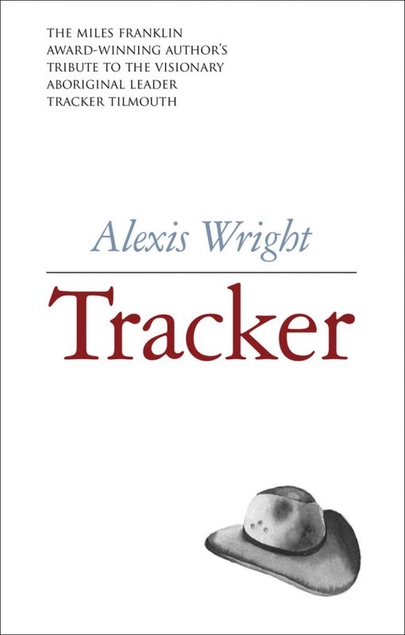
Alexis Wright, Tracker: Stories of Tracker Tilmouth (Giramondo 2017)

This is a book of yarns. I’ll start this blog post with one of them.

In the mid 1990s at the Gulf of Carpentaria, Murrandoo Yanner was involved in negotiations with Ian Williams, the general manager of a major mining company. Recently introduced Native Title legislation required that the mining company negotiate with traditional owners about plans for a zinc mine. One of the issues under discussion was the proposed mine’s proximity to sacred sites in the Lawn Hills–Boodjamulla National Park. The Queensland Premier, Wayne Goss, had given assurances about the National Park, but word was that he had reneged. Just before Yanner’s scheduled meeting with Williams, Tracker Tilmouth suggested a strategy for using the meeting, where there would be no government representative, to influence the government. Here’s Yanner’s account of what happened:

So we go through hours of negotiations and I hear [Tracker] suddenly cough, bloody when I least expected it – it was in something interesting that I wanted to listen to, so I go, Ian, by the way, what happened with Lawn Hills National Park? Do you know if Goss has gazetted it yet? There was a big silence, and things were going so well and Williams did not want to tell me, and then he said, Actually he made a decision not to. And Tracker, I was still trying to get him to play bad cop but he had me play it, and when Williams tells me that I jump up and I bang the table. Tracker made me do all this, and bang the table. He had said: Make it bloody genuine or they won’t believe you. They have seen a lot of blokes put acts on. So I bang the table and say, Fucking ridiculous, you can’t trust you bastards. I told you, Tracker, you can’t trust these bastards. I go outside and Tracker told me the next part later. I jump in my car and do big figure eights and spinning gravel, and off I go swearing. Ian Williams shits himself and the mob too because everything was going so great, and he says, Oh! Well! Shit what are we going to do? Tracker says, This is what you do. State parliament was sitting that day and he says, Ring Gossy now, get him out of parliament for a second. Boom, boom, boom.

And bugger me, there is a historical fact. If you go to the transcript or Hansard or whatever of the state parliament, you’ll see it was gazetted that afternoon, late afternoon, that day. That very day Goss got pulled out of parliament, got spoken to on the phone from Burketown by Ian Williams, and went straight back into parliament and gazetted it after publicly saying he wouldn’t. And I was blown away, not just the fact that it was done, but the fact that they really do run the state government at times, and that his mad trick worked.

(Pages 207–208)

If that doesn’t grab your attention, then you’d probably be impervious to the charms of this book.

Tracker Tilmouth was a member of the Stolen Generations of Aboriginal children. The picture that emerges from this book is of a big thinker, a man of entrepreneurial spirit, committed to the project of establishing economic independence to the Aboriginal peoples of central and northern. He was a significant figure in the history of the Central Land Council, and enormously influential beyond there. He came close to standing for the Australian Senate as a member of the ALP, and had friendly and mutually respectful relationships with Bob Katter. His sense of humour was legendary, and not always diplomatic (when he met Jenny Macklin for the first time shortly after she had failed to end the Intervention in the Northern Territory, he called her ‘Genocide Jenny’), but he was a frequent presence in Parliament House in Canberra, and regularly visited the United Nations in New York. He could rub people up the wrong way, and the book doesn’t completely dispel the charges of misogyny, but the overwhelming impression created here is that he was a great Australian.

The book includes a photo of the front page of Murdoch’s NT News for 13 March 2015: a photo of the man himself with the huge headline ‘TERRITORY FAREWELLS ‘TRACKER” and nothing else except a line across the bottom about football.

Alexis Wright has done a brilliant job of capturing dozens of voices (all chosen by Tracker himself) and organising them: Tracker’s own voice, the voices of his brothers, of Aboriginal people who worked with him or benefited from his wisdom, of whitefellas who fell under his sway, of politicians, pastoralists, mine managers. There are some glaring absences – people whose names occur often, but whose stories would probably take a very different hue. I’ll mention only Tony Abbott, but not all these absences are whitefellas.

Having learned to be suspicious of hagiographies, I asked a friend who had lived in the Northern Territory for decades what he thought of the book. He hadn’t read it, but he said, ‘I know some whitefellas who worked with him, and they worshipped him.’

The result is not a biography: the first chapter gives wonderful accounts of his childhood on Croker Island Mission, where his ‘house mother’ Lois Bartram read Alan Paton’s Cry the Beloved Country to the children, but, though his wife Kathy is mentioned often, she remains hardly more than a name – there is no account of how they met or of their wedding. What we do get is a compelling mosaic portrait.

Alexis Wright’s own voice is heard only in her Introduction, that is if you leave aside the couple of instances where one of her questions makes it onto the page. Some people have found the introduction hard going; at least one person I know gave up on the book part way through it. I think the reason is that Wright struggles to justify her decision not to write a conventional biography, and to somehow summarise something that the book itself demonstrates cannot be easily summarised.

The book’s longest section (more than 150 pages), ‘The Vision Splendid’, is dominated by the voice of Tracker himself spelling out his analysis of the situation of Aboriginal peoples, arguing about priorities, lamenting the lack of unity among Aboriginal leadership (while being harsh about other Aboriginal leaders), mapping out future directions. I imagine it would repay careful rereading, but it assumes so much prior knowledge (and my ignorance was only partly countered by Alexis Wright’s occasional footnotes) and spins off in so many directions – like the rest of the book, it captures the feel of the spoken word, of a mind that is thinking, revising, repeating, contradicting itself as it goes – that it is hard to follow.

But that’s not even a complaint. I became increasingly aware of my own whiteness as I read this extraordinarily generous, multifaceted book – at times hilarious, at times tragic, at times profound. As a whitefella, my response is overwhelmingly to be grateful.

Added later: I recommend Kathy Gollan’s review at Newtown Review of Books, which gives a much fuller sense of the book than my blog post, and uses quotation brilliantly.

Tracker is the first book I’ve read for the 2019 Australian Women Writers Challenge. I am very grateful to Giramondo for my complimentary copy.
#aww2018 & #aww2019

This is my round up post for the Australian women writers Challenge 2018.

I read a total of 20 books by Australian women writers, well over the goal of ten that I’d set for myself. They included

  • three children’s books
  • one young adult novel
  • nine books of poetry
  • four novels
  • one book of short stories
  • one memoir
  • one political essay

You can see my blog entries on them at this link.

Now I’m signing up for another year, at the Franklin level, which means I aim to read and review 10 books by Australian women in 2019. Given that I expect to read at least a couple of small children’s books as part of the challenge, I’ll probably read more than 10 books, but that’s all I’ll commit to. Add to that, I plan to read at least two by Aboriginal and/or Torres Strait Islander women, of whom I read none this year.

On a related topic, I’ve done a quick gender check on books I read this year altogether. Not counting illustrators of children’s books or comics, I read:

  • 34 by women
  • 29 by men

I read four books in translation (two each from German and Polish), and two books by Aboriginal authors. I’d like to have more diversity in my reading.

Eileen Chong’s Rainforest

Eileen Chong, Rainforest (Pitt Street Poetry 2018)

Rainforest is Eileen Chong’s fifth book of poems in five years. I’ve blogged about three others here, here, and here and I’m still a complete fan.

The book’s title is explained in a note: the Chinese character on the cover, which is the third character of Eileen’s Chinese name (the Lin of Zhang Yi Lin) ‘refers to a constant, nourishing rain’, but the radicals that comprise it are yu, meaning ‘rain’, and mù, the radical for ‘wood’. So though the word doesn’t translate as ‘rainforest’, the note explains, ‘the rainforest is embedded within the word itself’. The poem plays on the contrasting connotations of this and those of her western name, Eileen/Helen:

My namesake, so greatly desired
men set fire to a thousand ships –
the light they must have given off,
each sail a blackened flame sooting

the sky. I prefer the rain, a cloud
cradling drops that fall at an angle
over a forest waiting to receive.

It goes on to offer a kind of poetic manifesto in the form of a playful take on nominative determinism – the idea that unconscious processes mould our lives to fit our names: we can choose, it says, how to read our names. What an advantage it is if your name can be represented in pictograms!

So ‘Rainforest’ invites us to expect something like a self-titled album. And the book is intensely personal, though generous to the reader, inviting us in to play, to commiserate, to share joy and occasionally, as in the title poem, to learn.

There are four roughly equal sections, ‘East’, ‘South’, ‘West’ and ‘North’. It’s not that there’s a narrative, but the book has a dramatic shape, and it works so well that I had to stop reading on the first two pages of ‘North’ to weep tears of relief.

‘East’ comprises poems of Chong’s Singaporean Chinese heritage, childhood family, and identity: poems feature food, history, places, connections with other Chinese expatriates. ‘South’ is a collection of Australian poems: places again, artworks, relationship to First Peoples, and especially the five-part ‘Country’, a response to Dorothea Mackellar’s ‘My Country’, where Chong stretches beyond her generally joyful tone to include some ugly manifestations of racism, though I don’t think we’re meant to take the bleakness of the final lines, whose context is a ‘coastal walk’, as her last word on her adopted home:

_______________You hear about walkers
who stray and die of thirst or exposure.

Always bring water. Leave enough time
for the return journey. Watch the sun's path.
You're on your own. This country cares for no one.

However ironic, these lines certainly lay the ground for the third section, ‘West’. Geographically, they are mostly if not entirely set in Europe. Thematically they deal with trauma, painful memories, and darkness.

It takes a while to realise what’s happening, because the images and language lose none of Chong’s clarity and grace. From the first poem in the section, ‘Measure’:

Words: fallen soldiers on a page.
They come and they go. Memory

as surprising as a laden donkey
picking its way towards the church

at the top of a hill. On this island
even the cats sleep with one eye open.

Or this, from ‘Tide’:

That morning in spring I'd thought
I was at peace. To think of you and walk
past without pain. This evening the moon
rose above the treeline. I stepped into
the garden – sharp, clean air. Autumn.

The same moon, but changed.

As the section progresses, the poems become more graphic: violence in an intimate relationship, miscarriage and childlessness are evoked in unsparingly explicit language. Really, don’t read ‘Sandpaper’ if you’re feeling fragile.

The geographical reference of the final section, ‘North’, is Scotland. Thematically, it opens with a deft piece of misdirection, ‘Warhol: Notebooks’, a wonderfully sensuous account of a Warhol pencil drawing of a ‘man undressed, lying on his back’, the soles of whose feet form

________________________a wrinkled cave
of skin, akin to a woman's soft receiving

It turns out that unthreatening erotic allure of this announces the theme of beautifully. After the ordeals of ‘West’, the poet finds happiness and intimacy with a man rom Scotland. The poems are full of the joy of that relationship. While it would be a mistake to take every poem in the book as strictly autobiographical, one can’t help but be very glad for Eileen Chong, particularly in the half-dozen love poems that start with the section’s title poem, whose final lines are where I started crying:

True north: I sought you 
in the darkest of nights.
Drop anchor. Deep harbour.

There’s a lot more to this book than I’ve been able to say. Kim Cheng Boey has a beautiful and enlightening review in the Sydney Review of Books. He may not be as keen on the third and fourth sections as I am, but if if I haven’t persuaded you to have a look at Rainforest, perhaps he will.

Rainforest is the twentieth and last book I’ve read for the 2018 Australian Women Writers Challenge.