Tag Archives: Bernhard Schlink

2025 End of Year List 4: Books

The Emerging Artist now keeps a record of the books she reads so she can easily whip up a list for the blog at this time of year. First her data:

  • 62 novels,  9 non fiction, 3 art books 
  • 29 novels by women
  • 20 novels by non English speakers
  • 2 First Nations authors

Best novels
I’ve tried not just to mention books reviewed by Jonathan. That meant excluding two favourites: Time of the Child by Niall Williams and The Granddaughter by Bernhard Schlink. My best five are:

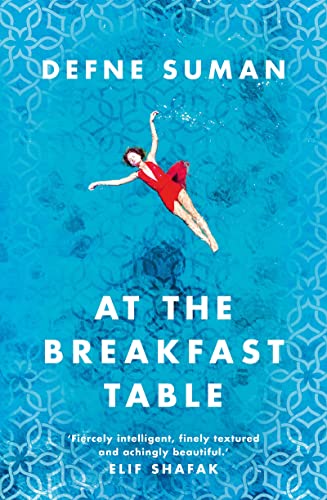
At the Breakfast Table by Defne Suman. Set in Istanbul, it weaves the story of four generations of a family, focused around one weekend, but giving glimpses into the recent history and politics of Turkiye through the lives of each character. The role of women, class and art are in the process. It was one of my random picks from the library, and I now have another of hers on order. 

Glorious Exploits by Ferdia Lennon. What a terrific read, full of humour, violence, Irish sensibilities set in ancient Syracuse. The love of Euripides’ plays drives our two main characters to stage a production performed by prisoners. We saw Ferdia at the Sydney Writers’ Festival where he was equally entertaining. 

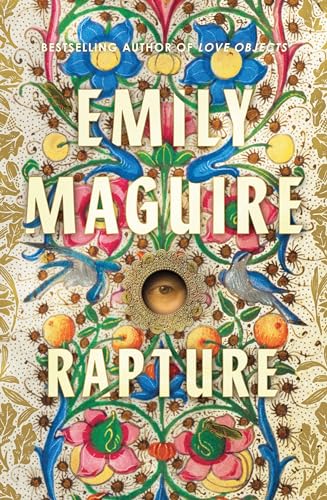
Rapture by Emily Maguire. I had put off reading this but eventually, somewhat reluctantly, picked it up. It was gripping, conjuring up mediaeval Europe and a woman struggling to have independence from the constraints imposed at the time.

Brotherless Night by V. V. Ganeshanathan. Another random pick from the library, this is set in Sri Lanka as the civil war builds over a few decades. Its main character, a young female medical student, tries to sidestep the conflict as her brothers are increasingly caught up in it. A powerful read.

33 Place Brugmann by Alice Austen. During the Second World War, an apartment block in Belgium holds the range of residents that reflect the broader society – those enthusiastic about Nazism and willing to inform, those willing to put their lives in danger to hide Jews and those who become the target of hatred. 

Best non fiction
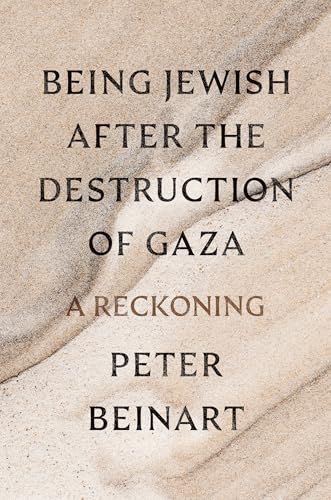
What does Israel Fear from Palestine by Raja Shehadeh and Being Jewish after the Destruction of Gaza: A Reckoning by Peter Beinart are two excellent books about the current genocide.

From me

I can never pick a favourite or best book. Some highlights of 2024 were:

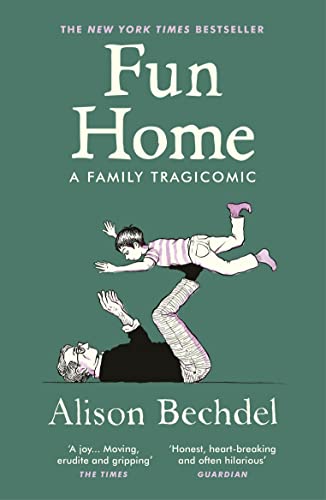
A comic: Fun Home by Alison Bechdel, an LGBTQI autobiographical work that has become a classic. A friend was shocked that I hadn’t read it already (she didn’t care that I haven’t read Pride and Prejudice).

A novel: Time of the Child by Niall Williams, one of three novels so far set in the small fictional Irish town of Faha. Its picture of the role of Catholicism in the life of the village struck a deep chord for me as a child of a Catholic family in North Queensland.

Another novel: First Name, Second Name by Steve MinOn features a Jiāngshī (a kind of Chinese vampire). This struck a personal note for me as the Jiāngshī’s journey ends at the Taoist Temple in Innisfail – and a childhood friend of mine told me that the MinOns lived down the street from him when he was a child.

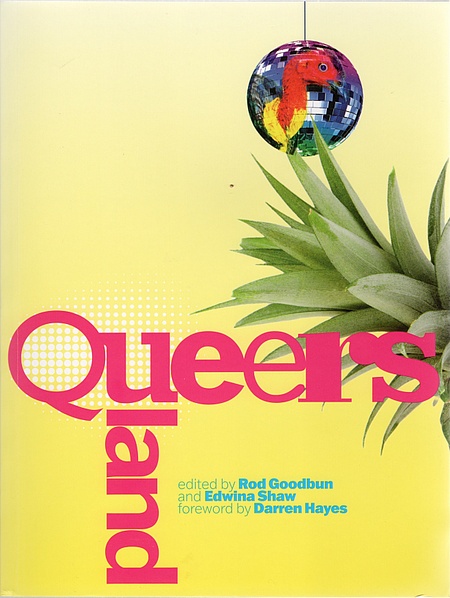
A collection of essays: Queersland is full of stories about being LGBTQI+ in the state of Queensland, especially in the Jo Bjelke-Petersen era, co-edited by Rod Goodbun and my niece Edwina Shaw. I love it because it is so necessary and for obvious nepotistic reasons.

Poetry: Rather than sngle out an individual book I’ll mention the Flying Islands Poets series edited by Kit Kelen. I read 12 books in the series this year, and my life is much richer for it.

I should mention Virginia Woolf. I was inspired by a podcast about the centenary of the publication of Mrs Dalloway to plunge into that book. I’m very glad I did, though plunge is probably exactly the wrong word for my three-pages-a-day approach.
To get all nerdy, I read:

  • 77 books altogether (counting journals and a couple of books in manuscript, but only some children’s books)
  • 32 works of fiction
  • 19 books of poetry
  • 5 comics
  • 11 books in translation – 4 from French (including Camus’ L’étranger, which I read in French), 2 from German, and 1 each from Chinese, Icelandic, Korean and Hungarian
  • 9 books for the Book Group, whose members are all men
  • 11 books for the Book Club, where I’m the only man
  • counting editors and comics artists, 39 books by women and 41 by men
  • 3 books by First Nations writers, and
  • 14 books by other writers who don’t belong to the White global minority.

And the TBR shelf is just as crowded as it was 12 months ago.

Happy New Year to all. May 2026 turn out to be unexpectedly joyful. May we all keep our hearts open and our minds engaged, and may we all talk to peope we disagree with.


I wrote this blog post on Wadawurrung land, overlooking the Painkalac River. I acknowledge their Elders past and present and welcome any First Nations readers of the blog.

The Granddaughter by Bernhard Schlink

Bernhard Schlink, The Granddaughter (©2021, translation by Charlotte Collins, Weidenfeld & Nicholson 2024)

When I decided a couple of years ago to focus on just one page of a book when blogging about it, I intended it to be a way of cutting down on the time I spend on the blog, while still managing to have fun and hopefully say something interesting. It hasn’t always worked out that way. Too often, I’ve gone on at length about a book and then tacked on a discussion of page 76, 77, 78, 47 or, occasionally, 7.

I’m turning over a new leaf, starting with The Granddaughter.

If, like me, you’d read a couple of books by Bernhard Schlink – in my case The Reader (read before blogging), Guilt About the Past and The Weekendyou might pick this up in a bookshop expecting a novel in powerfully simple prose about Germany coming to terms with its past. You’d be right. If you knew nothing, and turned for a taste of the writing to an arbitrary page, say page 78, you’d find some writing that pulls you in, possibly enough to make you buy the book:

Two young women friends are spending time in a dacha in a forest in East Germany. One of them, the narrator, is pregnant. The other, who want to be a nurse, will assist at the birth. The narrator, who I can tell you is named Birgit, dreams of escaping to the West, with or without a man named Kaspar. At the same time, she is having a blissful time, finding happiness in the moment. This is clearly a period of respite:

I listened to the rain on the roof, the initial drops, the furious pelting of a rainstorm, the soft rustle of steady rain, the last drops falling from the branches above the dacha. Sometimes Paula and I just slipped on dresses and walked through the warm rain till the wet dresses stuck to us and we laughed as we helped each other take them off again and jumped off the jetty into the water.

I learnt to love the forest. My mother never took her daughters to the forest. When we went on trips into the forest with the Young Pioneers and the FDJ, there were instructions to be followed and assignments to be completed, and we did everything busily and noisily. The forest around the lagoon was quiet.

The FDJ (Freie Deutsche Jugend/Free German Youth) was the official youth wing of the German Democratic Republic and the Socialist Unity Party of Germany.

Returning to this page having read the whole book, I’m in awe at its place in the whole. Most of the book is told from Klaus’s perspective, but this is in the middle of 60 pages in Birgit’s voice, a document written by her decades after the time in the forest and found by her husband – Klaus – after her death. He learns for the first time of her pregnancy, and gains some understanding of the long term emotional toll of her escape to the West to be with him. It’s not a spoiler to say that Brigid ends up filled with alcoholic despair – that’s how the book starts. And here, on page 78, in spare, unsentimental prose, in what seems like just a pause in the narrative, Schlink gives us a glimpse of the deep attachment to place that was to be ruptured by her move, as important perhaps as the haunting presence of the baby she decided to leave.

After reading the manuscript Klaus, now a bookseller, decides to go in search of the daughter. She turns out, after a troubled childhood and adolescence, to have joined a right-wing, Holocaust-denying, white-supremacist völkisch community. The main relationship in the book is between Klaus, good liberal Westerner, and Birgit’s granddaughter, who has taken on her parents’ ideology with the absolutism of childhood. Birgit’s tiny moment on page 78 of learning to love the forest, which transcends the political demands of her society, finds a kind of correlative in her granddaughter’s love of music, which Klaus seeks to foster. It’s also echoed in a perverse way in the völkisch elevation of ‘blood and soil’.

Bernhard Schlink is a lawyer and a retired academic. In each of his novels that I have read, individuals try to find their way with integrity in complex moral and political terrain. Complicity in the Holocaust in The Reader, left-wing guerrilla activity / terrorism in The Weekend. And here, unresolved issues from German ‘unification’ and the rise of neo-Nazi sentiment and activity. Like his hero Klaus with his granddaughter, Schlink refrains from lecturing, and approaches the people with whom he disagrees with respect, struggling to understand. Birgit’s joy in the warm rain and the silent forest ad quietly and eloquently to that struggle.


I wrote this blog post on land of Gadigal and Wangal of the Eora Nation. I acknowledge the Elders past and present of this beautiful country, never ceded. I also acknowledge the Elders past and present of the Ma:Mu nation, custodians of the land where I spent my first 13 years.


Bernhard Schlink’s Weekend

Bernhard Schlink, The Weekend, translated by Shaun Whiteside (2008, Weidenfeld & Nicholson 2010)

A group of friends in their 50s meet for a weekend in a grand, but dilapidated house in the German countryside, the first time they’ve all been together in decades. The occasion for their reunion is Jörg’s release from gaol where he has been serving a sentence for acts of terrorism – including four murders – back in the 1970s. The others had been members or sympathisers of the leftist group he had belonged to, but hadn’t been part of the violence.

As well as Jörg, there are Henner, now a journalist, Ilse, a school teacher, Ulrich who owns a string of dental laboratories, and Karin, a bishop, plus Jörg’s protective older sister, Christiane. Ulrich and Karin’s spouses are also there, as well as Ulrich’s young-adult daughter. Margareta, Christiane’s friend who part-owns and lives in the house where they meet, Andreas, Jörg’s long-time lawyer, and Marko, a younger man Jörg has invited at the last minute complete the cast – until a surprise extra guest turns up on Saturday evening (about whom I won’t say anything).

This is a novel by Bernhard Schlink, who writes fine, complex essays on political-cultural issues (my blog post about his Guilt about the Past here), and as you’d expect these eleven, and then twelve, characters aren’t left to talk about the weather. Christiane has organised the weekend to help Jörg make the transition to civilian life. Marko, to the disapproval of everyone else, especially Andreas the lawyer, urgently wants Jörg to become a leader of the revived leftist group. Others, particularly Ulrich, want him to face the reality of his crimes. The conversation ranges – what happens to the dreams of youth, its ideals, loves and resentments? what has become of the leftist, political terrorism of the 70s, and how is it different from the terrorism of al-Qaeda? if you murdered bystanders ‘for the cause’, how do you see that thirty years later, especially if the cause has failed? (Since finishing the book I met the concept of moral injury, which is what happens when someone, usually a soldier, realises they have done terrible things towards what they thought were good ends, but the ends have been revealed as immoral: that concept looms large here, without the term.)

But the debating is rooted in the context of these real lives. There’s some tears, some sex, some humiliation, some wonderful intergenerational conflict, some sweet tenderness, and two surprises that I should have seen coming but didn’t. Ilse, the quiet one, has started writing a story that plays as a kind of counterpoint to the main narrative. In it, another member of their group, Jan, lives on after faking his own suicide to commit more terrorist acts; she has to imagine how to show the mental life of a man who – like Jörg – lives for decades in prison. In the end she decides to have him die, and does it in a way that I read as symbolising how that brand of leftist terrorism came to an end.

It’s a short book. I enjoyed it. It made me think.

Beyond White Guilt at Gleebooks

Last night we cashed in a couple of our Gleeclub vouchers to hear Sarah Maddison in conversation with Jeff McMullen about the former’s new book, Beyond White Guilt. A couple of years ago, Sarah’s Black Politics drew on interviews with 30 Aboriginal leaders to give a kind of map of Aboriginal politics (the link is to my blog entry, which outlines some of salient points on the map). This book could be seen as a sequel, looking at non-Indigenous Australians.

A quick look at Wikipedia’s entry on Jeff McMullen shows him to be an eminently qualified whitefella to converse on this subject. He kicked off the conversation with two lists: on the one hand, invasion, dispossession, genocide, stealing children, and on the other denial, loss of memory and guilt. ‘We struggle in Australia,’ he said at one stage, ‘to have an honest and direct conversation [about the relationship between Indigenous and non-Indigenous Australians].’ This conversation was refreshingly free of indirection or quibble. I won’t try to summarise, but can offer a couple of notes.

Asked why she chose to focus on guilt, which is after all often a useless, self-punishing emotion, Sarah Maddison cited Bernhard Schlink’s Guilt About the Past which argues in the German context that every generation that doesn’t make a substantive break with the atrocities of its forebears is standing in solidarity with them. Her book doesn’t advocate that non-Indigenous Australians should wallow in guilt forevermore, but that we should ‘sit with’ our guilt for a time, not run from it either by taking action or by denial. Facing that discomfort is a necessary step to understanding and making thoughtful progress. [I liked this. I know a Native American woman who urges non-Indigenous people to put our minds to answering the question, ‘How have I personally benefited from genocide?’]

She talked about ‘high-identifiers’ – people for whom it is extremely difficult to acknowledge any negative dimensions to their national identity. Such people tend to think that the continuing disadvantage of Aboriginal people must be their fault, specifically must be because there’s something wrong with Aboriginal culture. She talked about the need for adaptive change, the kind of change that requires a change of perspective rather than a technological fix.

The questions were all excellent. Perhaps for the first time in my life I heard a very long question that was neither primarily self-promoting nor bizarrely tangential to the topic in hand. The questioner spoke of the problematic nature of the phrase ‘white guilt’ both because non-Indigenous Australia is very diverse, and ‘white’ covers only part of it, because the ‘we’ who actually experience guilt, as opposed to, say, denial, is very hard to define (is it only liberals?), and because guilt is a pretty dead-end notion anyway. These were interesting issues to raise, and, as Sarah Maddison acknowledged, weren’t going to be resolved in an hour before dinner on a Friday night.

No doubt I’ll blog about this again when I read the book.

Erotica: the morning after

Having done a “before” post, I now feel obliged to do an “after”.

As it turned out we were all white, middle-aged, heterosexual and in long-term relationships. No one had much interest in discussing Anaïs Nin – most hadn’t been interested enough in Delta of Venus to read the whole thing, though one chap had read a second, similar collection of her dollar-a-page pieces, and another had read some of her diaries. Someone went to the trouble of saying he found some of it offensive. We decided she belonged to another era, and moved on. (Is there something of hers that you, dear reader, would recommend?)

It turned out that if I am timidly vanilla in my taste for erotica I was in a room of similarly minded souls. I did read the Kathryn Lomer poem, and people liked it. One of our number had assiduously ransacked his memory, the web (by googling “erotic poetry”) and the bookshelves at an auction down the road, and shared some gems he’s found. He read us a steamy encounter between Elizabeth Bennett and Darcy in Pride and Promiscuity : The Lost Sex Scenes of Jane Austen – we agreed that that’s probably a perfect read-aloud book for consenting adults. He played recordings of two marvellous poems, one from ancient Egypt and another incorporating a Native American story about a winged penis. He read, with some apologies, Charles Bukowski’s “Like a Flower in the Rain” (warning, that link includes anatomically correct four-letter words), in which one can only marvel at how one word can transform a poem. Someone mentioned the bath scene in The Reader. We talked a little about the early scenes in Silk.

We kept asking each other what makes something erotic rather than pornographic. Clearly our collective taste veered to the non-pornographic end of erotica. We agreed we like our erotica with a bit of wit, a lack of emphasis on the plumbing (though no aversion to it being named), a context, and a sense of minds being engaged.

Next meeting, Anna Karenina.

We didn’t come to blows …

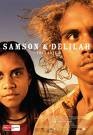
… but we did have a spirited conversation over pizza after seeing Samson and Delilah last night.

20e7fdb0-7ada-482b-ad9e-cd778fb0bf4d.jpgWe both agreed that it’s a marvellous film, that it’s just beautiful to look at, that the performances are miraculous, that the almost complete silence of the main characters is devastatingly effective. We’re both glad it won that prize at Cannes and we both disagreed point blank with statements (quoted from US trade journals) about how joyful and humorous it is.

Where the conversation got spirited was when my companion, who knows much more than I do about such things, lamented the misrepresentation of life in and near Alice Springs: where were the other sniffers? where were the social services, the Tangenyere Council, the camp in Todd River of people from their mob? where were all the Aboriginal faces in the mall? how come the community at the start had a store and a health clinic but almost no people? why did the women who beat Delilah up not know that she had taken care of her grandmother when in such a small place surely everyone could see that’s how she spent her days?  I assume she’s right about these and other complaints. But I thought maybe she was wanting a kind of documentary verisimilitude that the film wasn’t pretending to. After all, in the community where the film starts, a group of men sit on a verandah and play the same boring fragment of music over and over day in and day out, which works brilliantly to create a mood of deadening boredom, but which is clearly not meant as a literal representation of life on a community.

No, she insisted, she wasn’t wanting a documentary, but the film suffered from its distorting of reality in this way: the young protagonists’ profound isolation was profoundly improbable, and this made it hard to take their suffering seriously – unless you were a Cannes jury and understandably ignorant of the condition of Aboriginal people in the Centre, both their devastation and their resilience. I insisted in turn that a story teller doesn’t have to tell the story. All he (or she, but in this case he) has to do, all he can do, is tell a story, and this film tells its story very powerfully.

I think we were probably both right. The only actual disagreement we had was whether the character Gonzo was Aboriginal (as I thought) or not (as she did). The internet has just told me that I was right – at least, the actor is Aboriginal, director Warwick Thornton’s brother, in fact, playing a character based on himself.

When we got home I went to Bernhard Schlink’s Guilt about the Past. He’s talking about representations of the Shoah, but I think it’s relevant:

We don’t want fiction just for the facts being presented to us. We want reality to be presented to us and explained to us and turned into something that, even though it is not our reality, we can imagine ourselves into. We read [and go to the movies – JS] because we want to share the lives of those we read about, we want to empathise with them, fall in love with them, train our hatred on them, and ultimately learn about ourselves from them.

Even though the composition of these fictitious realities with their fictitious plots and situations and characters is something other than a presentation of facts, I experience it as something that has to be true. … I don’t know exactly what I mean and how to define this truth. What I am talking about is the feeling I have when a story that I have thought about, played with, thought about some more, and played with some more is finally ready to be written. … The feeling doesn’t have to do with me putting something autobiographical or something else of which I am particularly certain into the story that I am going to tell. It doesn’t concern having a message I want to convey that I am finally about to convey successfully or with any other agenda. It is a feeling devoid of any agenda except: now I have it, now I can tell it. And it feels like I have found the truth.

I think Warwick Thornton found that kind of truth here, and handed it to us.

(Incidentally, in interview on Cinema Autopsy, the blog I linked to above, referring to his brother Scott, Warwick Thornton says that Gonzo, the parky who shares what little he has with the two lost young people ‘is in a sense the audience’. My own point of identification, which caused some soul-searching, was a woman in the cafe who watches Delilah go off down the street off her head on petrol: the woman’s face shows genuine concern, but it’s clear she’s not about to do anything about it.)

Bookblog #68: The joys of non-fiction

[This is reposted from my earlier blog because I want to link to it from a 2020 post. It first appeared on 19 May 2009 – JS]

Bernhard Schlink, Guilt about the Past (UQP 2009)
Theodore Seifert, Snow White: Life Almost Lost (©1983, translation into English, Chiron Publications Illinois 1986)

Pasted Graphic 2

It’s a truism that as men get older we prefer non-fiction to fiction. I hesitate to say that that’s true me in particular, but this collection of lectures by Bernhard Schlink thrills me much more than The Reader did some years ago. The Reader was a bloody good, thought-provoking read. Guilt about the Past strikes sparks from my brain with just about every paragraph.

These essays/lectures deal with the question of collective guilt: is it a legitimate concept, and if so what is to be done about it? Who has the right to forgive? How can a valid reconciliation be achieved between those who inherit a shared history of monstrous deeds in which their forebears were perpetrators and objects respectively? Bernhard Schlink has recent German history in mind and refrains from talking about his subject in universal terms, but what he manages to articulate is powerfully relevant to all manner of situations. He talks in terms of law, and morality where it’s not covered by law. I won’t try to write a proper review here, but recommend that you read the book. It’s short, clear, and lively. Every time I picked it up, as I flicked through the pages looking for my place, sentences would leap out at me. At random:

The notion that the past could be brought into form and order is foreign to the law.

… simply stated, everyone whose relationships have been damaged can reconcile. While forgiveness lifts the burden of guilt from the guilty parties, reconciliation merely makes it a bit lighter.

… understanding does not have only positive connotations.

… my mother was right. If a person does not believe in a forgiving God, then they have to live with their guilt when they can no longer obtain forgiveness from the person they injured.

The book is very readable, but I’ll need to re-read it and meditate on it.

sw021

Snow White: Life Almost Lost, on the other hand, does the meditating for you. It’s a discussion of the fairy story from the point of view of a Jungian therapist. Much wisdom is dispensed about the challenges of the inner life, and the Grimm Brothers’ 1859 version of the tale provides a mostly plausible springboard for it, but Herr Seifert surely sets a record of some kind by taking 32 pages of discussion to get us through the first 45 words of the story – and that’s without any attention to ‘Once upon a time’! The words themselves, in case you need reminding:

Once upon a time in the middle of winter, snowflakes were falling like feathers from heaven; a queen was sitting at a window that had a frame of black ebony, and she was sewing. As she sewed and looked up at the snow, she pricked her finger with the needle.

You’ll have to read the book to discover what profundities about life and death, hope and despair, belief, imagination, love, law and deprivation those words contain – assuming that like me you can’t see these profundities unaided.

My favourite couple of sentences, from much later in the book (remember there is no married couple in the story, until the wedding in its last paragraph):

Even after many years of marriage, going to bed at different times is still a problem for many couples. Every evening they suffer the same irritation: The one has to go now, the other can’t go yet. Each always experiences this as a form of a seeming demand; and without exception the mate is accused. We talk only of what the other did to us; we do not talk of our own lack of readiness to risk corresponding conflict and stand up for our own wishes. Ultimately all these poisoned thoughts suffocate our soul, just as the bodice laces suffocated Snow White.

Leaving aside the incomprehensible phrases, which can probably be laid at the translator’s door, this measures up fabulously against some of the most ingenious of mediaeval biblical hermeneutics. And for all that, and for all the preoccupation with marriage as the one road to a fully human life, I have come away from the book with a much deeper appreciation of the Snow White story.

Posted: Tue – May 19, 2009 at 11:57 AM