Tag Archives: Niall Williams

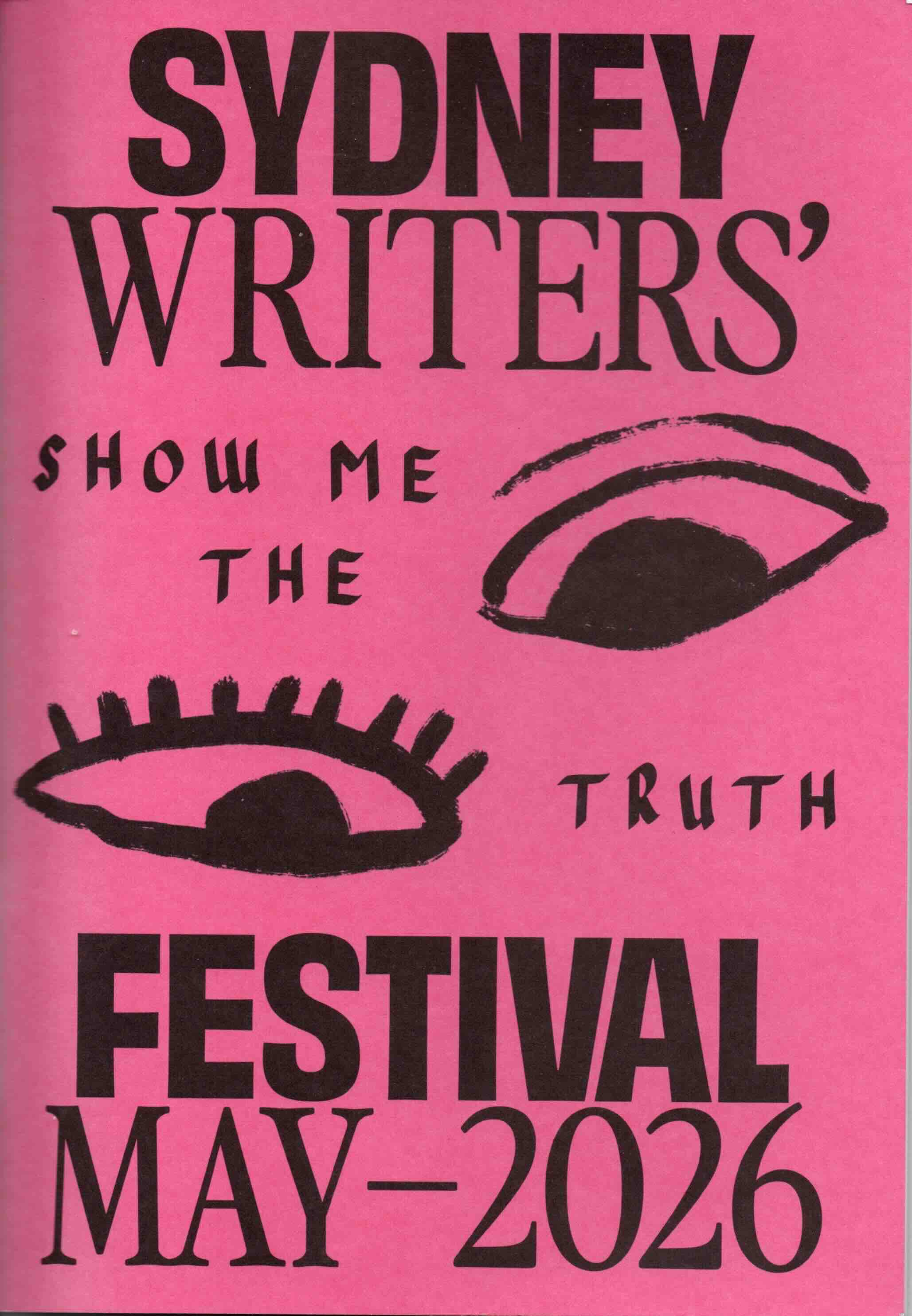
Sydney Writers’ Festival 2026, Day one minus 10

The Sydney Writers’ Festival is coming. On Wednesday evening this week I had a foretaste of its joys. Niall Williams chatted for an hour with Phillipa McGuinness at the State Library to a largely grey-haired audience. I was one of half a dozen men in the full auditorium.

Niall Williams was at the end of his Australian visit, having done what Seamus Heaney described as ‘standing on his hind legs’ in Hobart and Sorrento. But from where I was sitting I saw no sign of weariness or going through the motions.

His opening remark, ‘Everyone in Faha says hello,’ signalled that he expected the audience to have read at least one of his last three books, and the response indicated that he was right. (For readers who need help in understanding the enthusiasm, I refer you to my blog posts about History of the Rain, This Is Happiness and Time of the Child.

In just one hour the conversation covered a number of topics. Much was said about rain, religion and rural Ireland.

The Irish language, repressed by the occupying English for centuries, was forcibly revived with the establishment of the republic, and only now is having what feels like an organic revival. When Williams and his wife Christine moved to County Clare in 1984, they found that people there had unselfcosciously retained smatterings of Irish: he gave examples of a word meaning a fistful used in a recipe, and one meaning an armful used when asking someone to bring some peat from the yard.

Meditating on the phrase, ‘Once upon a time …’, he asked, ‘Why upon rather than, say, in or at?’ Story, he said with his hands as much as his words, lies on a plane above the real world. It doesn’t reproduce it, but refers to it. In writing about Faha, he doesn’t try to give an accurate picture of life in rural Ireland 80 years ago, but the story he tells rests upon his sense of what it was like.

When he first started writing about Faha – which by is based closely on the community he and Christine found in County Clare – he just didn’t want to stop. The book found its own way of coming to an end, so he went on to write another, and then another, and according to a bookmark given us at the end of the session, there’s another coming out in November, called O Now!

He read a couple of pages from Time of the Child. He chose the passage that ends with the doctor holding the little baby, and beginning to dance. There was magic in the way his body (and I suspect the bodies of half the audience) began ever so slightly to sway to the music of his sentences.

Phillipa McGuinness did a lovely job as interlocutor. Sadly there was no time for audience questions, so I didn’t get to ask how he would pronounce ‘Teige’ (see previous post for explanation). Even more sadly, the Emerging Artist and I had to leave before the end to perform out grand-duties. As we were leaving, Williams was paying tribute to his wife’s creativity in their garden and using gardening as an analogy for his own creative process.


I am a man of settler heritage who has been alive for almost a third of the time elapsed since Arthur Phillip claimed this continent for the British crown. The State Library is on unceded Gadigal land and is built, as Phillipa McGuinness reminded us, from stone that was once sand walked on by the people who have lived here for tens of thousands of years. I wrote this blog post on the land of Gadigal and Wangal of the Eora Nation. I acknowledge their Elders past and present and welcome any First Nations readers.

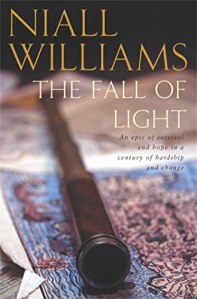
Niall Williams, The Fall of Light and the Book Group

Niall Williams, The Fall of Light (Picador 2001, Picador ebook 2010)

Before the meeting: The group has previously enjoyed three Niall Williams novels (my blog posts here, here, and here). This month’s chooser decided that we couldn’t have enough of this good thing.

The other novels have been set in the fictional Irish town of Faha. In so far as this one centres on a particular place, it is the real-life Scattery Island in the estuary of the Shannon River, though the action also wanders over three continents. According to a foreword, the novel is a family story that has passed down through generations, embellished on the way.

The story unfolds in 19th century Ireland. In the context of longstanding, brutal English occupation and the devastating potato famine, we follow the travails and adventures of the Foleys. First Emer the mother leaves. Then her husband Francis and their four sons set out across the width of Ireland, on what they see as an epic quest, seeking a new life in the West, in Galway. First Francis is swept away by a river in flood. Then the brothers are separated. Tomas the eldest falls catastrophically in love and flees for his life with his beloved. Of the next two brothers, twins, Finan finds his way to Africa, and Finbar becomes the leader of a community of Gypsies. The youngest brother, with the deeply Irish name Teige, has an uncanny facility with horses that opens possibilities for him. It’s all told in wonderfully musical prose with a touch of what you could call Celtic magic realism.

The family is dispersed – to Africa, to continental Europe, and to North America. The book is most vibrantly alive in the Irish sections. Finan’s life in Africa is told briefly at third hand. Finbar’s adventures with the Gypsies (probably not what they’d be called if the book were written now) left me unconvinced, though there are some wonderful moments, of which my favourite occurs when Finbar, who has waited outside the caravan where his partner was in labour, calls out, ‘How is my son?’ The midwife replies:

‘Your son has no penis.’ She watched as all the fathers’ heads came up and their eyes opened and their mouths dropped and there was a kind of moan that passed among them like a wind.
‘No penis! But two heads!’ she shouted, and bought her hands up to the sunken sides of her leathery face and leaned back and hooted a kind of hoo-hoo of owl-like laughter to the astonishment of all.

When I told a version of that to my grandchildren they were quick to guess that there were twin girls.

Two sons end up in North America. The westward trek in the USA, paralleling the one in Ireland, is a different kind of desolation – a solitary Meek’s Cutoff. But, like the Gypsy story, these sections lack the Irish sections’ vivid sense of place and I was always glad when the narrative returned to Ireland.

Though I infinitely prefer to read books in hard copy, I had to content myself this time with an ebook from the library. Where page 79* falls depends on your settings, but in my reading it occurs at about the one-third point. Francis and Teige, father and son, have been reunited against all odds. (You might have guessed that the shape of the story is separation and then arduously achieved, partial reunion.) After some time together Teige tells Francis that he has done what they all set out to do in the first place – he has seen the sea, and gone into it, even though he was afraid of its wildness. The father says he was ‘right to try it and keep well out of it’:

Another pause, then Teige added: ‘I didn’t though.’
‘You didn’t?’
The pony flicked her head. Her tail swished. The boy looked at her a moment and felt his father’s eyes upon him.
‘No,’ he said, ‘I still went in, three times.’
The father said nothing then. He sat there and the emotions he held made his lips quiver. He blinked. Dark clouds moved across the sky. The night fell and the stars came and went and wheeled above them and each lay down to the slender hope of their dreams.

This kind of interplay between understated dialogue, big emotions and romantic descriptions, all framed in a mild mockery, is one of the joys of the book. ‘The father said nothing then.’ We have followed Francis’s narrow escape from drowning, so know what lies behind his quivering lips and blink. Maybe the dark clouds and the stars are there to mark the passage of time, but they are also a way of showing the thing that can’t be said by these inarticulate characters: for Francis, the realisation that his son has dared to go into the ocean marks a great shift in his own emotional state. It lends strength to ‘the slender hope’ of his dreams.

You might wonder what that pony is doing there, flicking her head and swishing her tail. Teige has calmed her down and ridden her in a race for the Gypsies, after which she has become his steadfast companion. He is forever moving close to nervous horses, stroking them and speaking to them in language that isn’t quite words, calming them and coaxing them to do what their owners require. It’s an almost magical power that places him at the emotional heart of the book.

This stage of the narrative is a journey. Francis is looking for what will come to be known as Scattery Island – monks who saved him from drowning have given him directions. Both he and Teige are seeking the other sons and their mother.

Still on page 79:

The following day when they were passing a cottage a cry stopped them. The cottage was not unlike others, a small building of dark stone with crooked windows and a door open to the road even in that February. The cry was that of a woman, it came from the garden beyond. The Foleys stopped, the pony flicked her ears. Then Francis called out. There was no response and Francis looked to Teige who slid down the pony. Together they walked in around the cottage and found in a small garden a woman of fifty years trying to pull up from the earthen ridges the fallen body of her husband.

The landscape they travel through is full of suffering and death. Mostly there’s a generosity of spirit among the sufferers. Here Francis and Teige don’t hesitate before they stop to help, and in the nature of fairy tales – or family stories that have been polished and decorated by generations of telling – when they help this couple and their children they gain information that leads them forward dramatically in their quest.

I’ve mentioned Scattery Island a couple of times. The real-life island at the mouth of the Shannon River is better known as Inis Cathaigh (the link is to its Wikipedia page). It became a place of safety for a community of pilots during the Great Famine. How Francis and the other Foleys relate to that actual history is a beautiful invention.

The meeting: We met, unusually, in a pub. It was a beautiful space, though noisy, which made it hard to maintain a single conversation, even with the music turned down. we displaced a women’s baseball team (‘We don’t usually come to the pub on a Tuesday night in our uniforms’) and were displaced in turn by a group of young women toting laptops.

We had a terrific discussion of the book.

A number of us confessed that they had come to the book reluctantly. We’ve read three of his books already. Do we have to read one more? For some, it came alive when the famine appeared. For others, it was the language from the very beginning. I don’t think anyone wasn’t won over completely.

To generalise, we were all willing to forgive its faults because the story rattles along brilliantly, and the writing is wonderful. We differed on what the faults were. One man couldn’t bear the unrealistic elements of the romance between Teige and a wealthy Englishwoman – others (me included) were charmed by its improbabilities. Some loved the sequence where all the Gypsy women give birth on the same day, whereas other (me included) were irritated by the artifice. We were all, I think, unenthusiastic about the North American sections, and even more so by the almost perfunctory treatment of the brother who goes to Africa.

Someone pointed out that it’s a book about men, that the women aren’t fully developed characters. (This observation case an interesting light on the midwife’s joke I quoted above – the character’s assumption that a baby will be male reflects an awareness of the male-centred nature of the narrative in general.)

At the end of the book, the narrator reveals that Tiege is his ancestor. Some of us took this to be an authorial statement – and an explanation for why the narrative is less ‘tight’ than other Williams novels: this is a version of his own family story, so was obliged to go where the actual history had gone, even if fancifully. I’m inclined to think the narrator is separate from the author.

Someone observed that the book is suffused with love, especially love among the Foley men. we agreed that this is true of the book, an it led to a number of us telling stories about their siblings, mainly brothers. There was a theme of connections being lost or broken and re-established after a period. I didn’t realise it at the time, but this was an astonishing echo of the book’s shape.

One question remained unresolved. How =do you pronounce ‘Teige’. Everyone except me rhyme it with ‘intrigue’. I hear it as ‘tyke’ but with a soft end. Opinions welcome in the comments.


The Book Group members are all men of settler heritage. We met on Gadigal land. I wrote this blog post on the land of Gadigal and Wangal of the Eora Nation. I acknowledge Elders past and present and welcome any First Nations readers of the blog.


My blogging practice is focus arbitrarily on the page of a book that coincides with my age, currently page 79.

2025 End of Year List 4: Books

The Emerging Artist now keeps a record of the books she reads so she can easily whip up a list for the blog at this time of year. First her data:

  • 62 novels,  9 non fiction, 3 art books 
  • 29 novels by women
  • 20 novels by non English speakers
  • 2 First Nations authors

Best novels
I’ve tried not just to mention books reviewed by Jonathan. That meant excluding two favourites: Time of the Child by Niall Williams and The Granddaughter by Bernhard Schlink. My best five are:

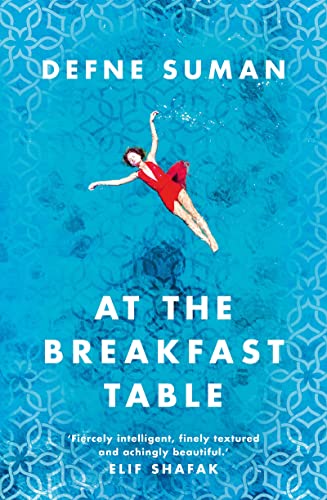
At the Breakfast Table by Defne Suman. Set in Istanbul, it weaves the story of four generations of a family, focused around one weekend, but giving glimpses into the recent history and politics of Turkiye through the lives of each character. The role of women, class and art are in the process. It was one of my random picks from the library, and I now have another of hers on order. 

Glorious Exploits by Ferdia Lennon. What a terrific read, full of humour, violence, Irish sensibilities set in ancient Syracuse. The love of Euripides’ plays drives our two main characters to stage a production performed by prisoners. We saw Ferdia at the Sydney Writers’ Festival where he was equally entertaining. 

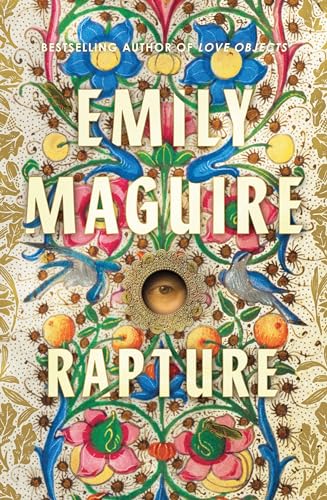
Rapture by Emily Maguire. I had put off reading this but eventually, somewhat reluctantly, picked it up. It was gripping, conjuring up mediaeval Europe and a woman struggling to have independence from the constraints imposed at the time.

Brotherless Night by V. V. Ganeshanathan. Another random pick from the library, this is set in Sri Lanka as the civil war builds over a few decades. Its main character, a young female medical student, tries to sidestep the conflict as her brothers are increasingly caught up in it. A powerful read.

33 Place Brugmann by Alice Austen. During the Second World War, an apartment block in Belgium holds the range of residents that reflect the broader society – those enthusiastic about Nazism and willing to inform, those willing to put their lives in danger to hide Jews and those who become the target of hatred. 

Best non fiction
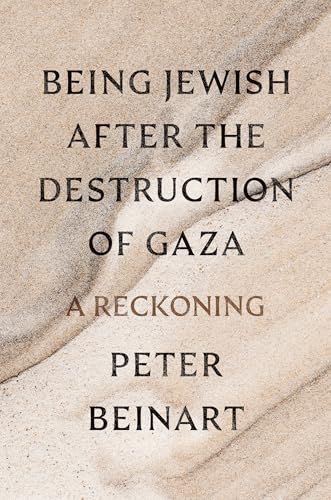
What does Israel Fear from Palestine by Raja Shehadeh and Being Jewish after the Destruction of Gaza: A Reckoning by Peter Beinart are two excellent books about the current genocide.

From me

I can never pick a favourite or best book. Some highlights of 2024 were:

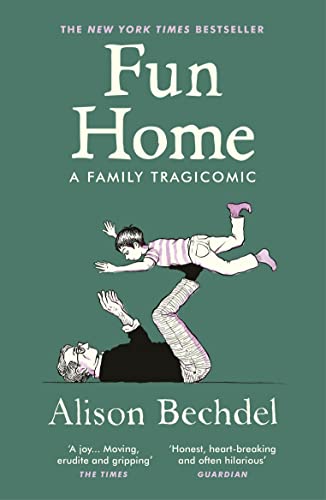
A comic: Fun Home by Alison Bechdel, an LGBTQI autobiographical work that has become a classic. A friend was shocked that I hadn’t read it already (she didn’t care that I haven’t read Pride and Prejudice).

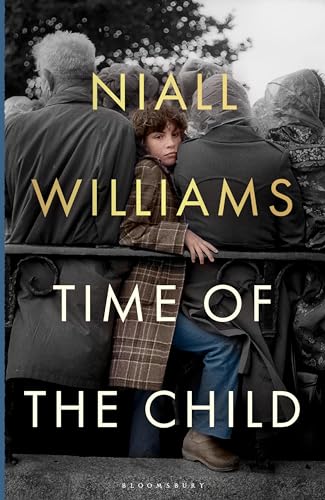
A novel: Time of the Child by Niall Williams, one of three novels so far set in the small fictional Irish town of Faha. Its picture of the role of Catholicism in the life of the village struck a deep chord for me as a child of a Catholic family in North Queensland.

Another novel: First Name, Second Name by Steve MinOn features a Jiāngshī (a kind of Chinese vampire). This struck a personal note for me as the Jiāngshī’s journey ends at the Taoist Temple in Innisfail – and a childhood friend of mine told me that the MinOns lived down the street from him when he was a child.

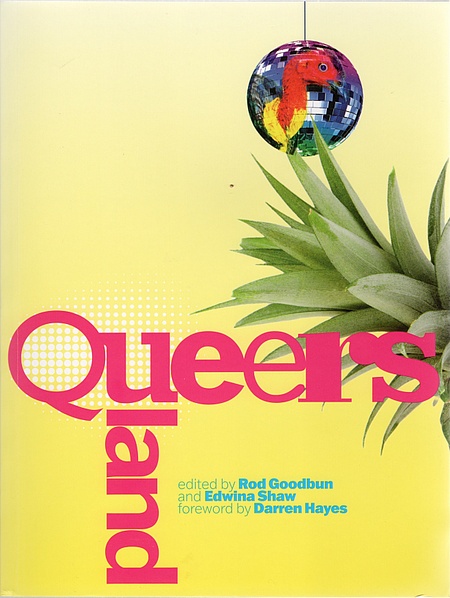
A collection of essays: Queersland is full of stories about being LGBTQI+ in the state of Queensland, especially in the Jo Bjelke-Petersen era, co-edited by Rod Goodbun and my niece Edwina Shaw. I love it because it is so necessary and for obvious nepotistic reasons.

Poetry: Rather than sngle out an individual book I’ll mention the Flying Islands Poets series edited by Kit Kelen. I read 12 books in the series this year, and my life is much richer for it.

I should mention Virginia Woolf. I was inspired by a podcast about the centenary of the publication of Mrs Dalloway to plunge into that book. I’m very glad I did, though plunge is probably exactly the wrong word for my three-pages-a-day approach.

To get all nerdy, I read:

  • 77 books altogether (counting journals and a couple of books in manuscript, but only some children’s books)
  • 32 works of fiction
  • 19 books of poetry
  • 5 comics
  • 11 books in translation – 4 from French (including Camus’ L’étranger, which I read in French), 2 from German, and 1 each from Chinese, Icelandic, Korean and Hungarian
  • 9 books for the Book Group, whose members are all men
  • 11 books for the Book Club, where I’m the only man
  • counting editors and comics artists, 39 books by women and 41 by men
  • 3 books by First Nations writers, and
  • 14 books by other writers who don’t belong to the White global minority.

And the TBR shelf is just as crowded as it was 12 months ago.

Happy New Year to all. May 2026 turn out to be unexpectedly joyful. May we all keep our hearts open and our minds engaged, and may we all talk to peope we disagree with.


I wrote this blog post on Wadawurrung land, overlooking the Painkalac River. I acknowledge their Elders past and present and welcome any First Nations readers of the blog.

2025 End of year list 5: Blog traffic

This is the last end of 2025 list, and I don’t expect you to read it – it’s mainly so I’ll have a record.

Here are the posts that attracted most clicks on my blog in 2025:

  1. Niall Williams’s Time of the Child (February 2025, 861 hits)
  2. Ellen van Neerven’s Throat (July 2020, 847 hits)
  3. There Are Rivers in the Sky, Elif Shafak and the Book Club (October 2024, 734 hits))
  4. Ocean Vuong’s Time is a Mother (March 2023, 591 hits)
  5. Yael van der Wouden’s Safekeep at the Book Club (January 2025, 576 hits)
  6. Andrew O’Hagan on Caledonian Road with the book club (July 2024, 525 hits)
  7. Robert Alter’s Psalms (September 2020, 491 clicks)
  8. Mick Herron’s Standing by the Wall (October 2023, 489 hits)
  9. The Book Group & Richard Flanagan’s Question 7, page 77 (May 2024, 422 hits)
  10. The Book Club and Paul Murray’s Bee Sting (April 2024, 400 hits)

I don’t know what these figures mean. The Mick Herron book is almost not a book.

Here’s WordPress’s list of my all-time top ten posts. This list stays pretty stable. The long-time place-holders don’t need to get many views to stay, and only one of them was in this year’s top ten:

  1. Travelling with the Art Student (November 2014, 3567 hits)
  2. The Book Group and Shirley Hazzard’s Transit of Venus (June 2018, 3010 hits)
  3. (Re-)reading Kevin Gilbert’s poetry (April 2012, 2499 hits)
  4. Mary Oliver’s Twelve Moons (April 2020, 2193 hits)
  5. Ellen van Neerven’s Throat (July 2020, 2074 hits)
  6. Mary Oliver’s House of Light (April 2020, 1909 hits)
  7. Claire Keegan’s Small Things Like These (October 2023, 1880 hits)
  8. Bran Nue Dae (January 2010, 1856 hits)
  9. Ocean Vuong’s Time is a Mother (March 2023, 1672 hits)
  10. The book group’s Harp in the South (February 2011, 1447 hits)

The post at the top of the list is there because someone lifted an image from it and put it up on Pinterest.

That’s it. Thanks to everyone who has contributed to those statistics. Some of you I know IRL, some I’ve met through email etc, some in the comments section, some I know only as anonymous clickers. I’m happy that you’ve visited the blog. Come again.

Niall Williams’s Time of the Child and the book group

Niall Williams, Time of the Child (Bloomsbury 2024)

Before the meeting: As I was reading the first couple of chapters of this book, I had ringing in my ears something that a Book Group member had said about a different book, perhaps one of Niall Williams’s earlier novels, A History of the Rain or This Is Happiness: ‘It’s a beautifully written Irish novel, but I’m not sure the world needs yet another beautifully written Irish novel.’

The first chapters, in fact almost the first half of the book, are brilliant descriptions of life in 1962 in the fictional West Ireland village of Faha, the village we know from those previous books. The rain is still incessant and the village still slowly sinking into the river. The heart broken in This Is Happiness is still broken. Life is still dominated by the Catholic Church. Gossip is still the lifeblood of the community. Most houses now have electricity.

The first chapter begins with a wonderful setpiece, a parish Mass where the beloved parish priest stalls mid-sermon in the first major sign of dementia. Things are seen from the point of view of Jack Troy, the village’s general practitioner whose face and manner give away nothing of his inner feelings as his role in the community means he must always be available, including to people who will never ask for a doctor’s attention on their own behalf. After Sunday Mass he is regularly approached by people who indicate with a nod and a wink that his services are needed at such and such a house.

The second chapter revolves around another magnificent setpiece: the Christmas fair in which farmers bring their cattle to town to sell, and hawkers and traders come from elsewhere. Here, twelve-year-old Jude Quinlan, son of a drunkard farmer, carries the narrative burden.

Through both of these chapters, we are teased by hints that something big is going to happen. It’s as if the narrator is saying to his readers, ‘Yes yes, I know you’re here for a story, but first let me tell you about the place it happened in and the people who live there.’ At the end of the second chapter, more than a third of the way into the narrative, there’s this:

But it was here, at the back wall of the church in the village of Faha, on the night of the Christmas Fair 1962, that Jude Quinlan found the child.

Ah! The titular child has arrived! Then the third chapter continues to tease us. It takes us back a couple of days in the life of Ronnie Troy, Jack’s long-suffering dutiful daughter. After 16 pages in which we come to know and (speaking at least for myself) love her, she responds to a late-night knock on the door and at last the story begins.

Given that it happens so late in the book, I’m reluctant to say much more about it, except that though my Group member may be right that the world doesn’t need another book like this, I certainly do. Maybe it’s because I spent my 1950s childhood as part of the Irish diaspora in north Queensland, and I respond with little gasps of recognition to little throwaway lines about the Sacred Heart, the ‘Hail Holy Queen’, the smiling pope, or to the way the priest says Mass with his back to the church while the congregation’s more or less devout members goes about their own business. That is to say, maybe there’s a hefty dose of nostalgia in my response to the book. But if so, that nostalgia serves a serious purpose.

This is a time and place when the Church dominated Irish society. It was the time of the Magdalen laundries, covered-up clerical sexual abuse of children, pitiless laws against abortion and condemnation of most forms of birth control. None of this is foregrounded in the book, but oppressive Church–State authority looms large, mostly unspoken, over the second half of the book. On the one hand, a handful of people sinking to their knees to say the Rosary can be an exhilarating manifestation of something fine beyond words (though Niall Williams finds the words); on the other a priest with a form letter mouths deadly phrases like ‘For his own good’ and ‘Preserving his dignity’.

Just as much as, say, Sebastian Barry’s Old God’s Time or Claire Keegan’s Small Things Like These, this book is about decent humanity – individuals and communities – resisting the monolithic, repressive authority of Church and State. Like them, it revels in musical language. More than them it’s funny. I did cry, twice, but I laughed a lot.

Page 77* includes a micro example of the resistance. In the absence of a fairground, Faha’s monthly fair is a chaotic mess, and the church gates, ‘with their splayed look of welcome in the centre of the village’, are a main centre of trade. The curate, Father Coffey, representing the Church’s authority, asks the farmers not to stand their cattle there:

As it happened, the curate’s appeal fell on deaf ears, but he took some satisfaction when he was able to negotiate a treaty whereby Mick Lynch promised a rope corridor to let the daily Mass-goers through. As a goodwill gesture, Lynch said, the farmers would take their dung with them when they left, which Father Coffey reported back to the Canon, unaware it was a joke until the older priest put the hand across his laugh to stop his teeth flying.

With such jokes, in which the older priest colludes, the people of Faha keep the authority of the Church in its place.

Most of page 77 is taken up wth one of Niall Williams’s bravura character sketches:

Mick Lynch had the walk of a man who owned his own bull. Short and broad, he carried a blackthorn, wore a frieze coat and low hat with red feather in the band. That hat never came off his head outside of church. He wore it at the counter in Ryan’s, in the spartan confines of his iron bed, and when he went to wring the necks of geese. From victories in cards or trade, Lynch took a deal of pleasure. With a contrary nature, his cheeks were where the most of his hair grew, furred sideburns made key-shaped by the shaving of his chin which gave him a jailor’s look. Lynch had the reputation of being what Faha called a right cool man, a designation that pre-dated refrigeration, meant he could not be hurried or ruffled, and once, when asked by a dealer, ‘What are you looking for in a horse, boss?’ had delivered the incontestable answer, ‘Leg in each corner.’ He had not married. For women he hadn’t the handbook, he said, and children nothing but hosts to headlice and worms.

Remember, nothing has really happened in this book so far. That is, we’re a quarter of the way into it but we haven’t yet had what the movies call the inciting incident. But the narrator refuses to be hurried. There is too much to enjoy at any moment in the life of Faha, so though this is Mick Lynch’s only appearance, we’re going to take a moment, just for the fun of it, to savour him. I especially like that ‘outside of church’: whatever else he may be or do, it wouldn’t occur to Mick Lynch to defy the custom of men going bare-headed in church.


After the meeting: Unusually, this book was the subject of quite a lot of WhatsApp discussion before the meeting, mainly from people who couldn’t make it on the night. A number of us had wept, prompting one to ask whether we were ‘silly old men getting emotional about a baby and family relationships’. He who had made the remark about beautifully written Irish novels confounded my expectations by loving tis one, and wrote a thoughtful email on the theme of ‘the soul’. Another sounded a mildly dissenting note, having read only 80 percent and found it slow going; he reacted against the religion’s hold on people, and used the word ‘silly’ about a main character’s attempt to take charge of the situation (all of which are completely reasonable responses). Yet another quoted a number of favourite passages, and said he loved the way Catholicism co-existed with pishogues, which he noted was an excellent new word to him (as it is to me – definition at this link if you’re interested).

On the night there were just five of us. Among other things, we ate baked potatoes. Almost as soon as we arrived, those of us with Catholic backgrounds – a slim majority – were reminiscing about, of all things, our Confirmations. Not directly on topic, but certainly book-adjacent. We had an animated discussion. More than one said that the book took its own sweet time to get to the point – one said he almost stopped reading, but others (me included) thought it was a feature rather than a bug. Someone quoted a passage to the effect that Irish story-telling never goes in a straight line.

Someone said, on WhatsApp and then again on the night, that the book was an Irish Catholic equivalent to Marilynne Robinson’s Home. I don’t quite see that, though it’s an interesting thought. I had a go at articulating some of what I see the book as saying about Catholicism in Ireland then and now – which I won’t go into here because it would be spoilerish.

Interestingly, no one thought to say out loud that this is a Christmas story, even a kind of second-coming story. And, though someone had looked up Niall Williams on the internet, no one wondered aloud if he became a grandfather somewhere on the way to writing this book.

As for the rest of the conversation, I can’t do better than quote (with permission) from one chap’s report on WhatsApp. Conversation ranged, he wrote:

from John Cage and the Necks to motor bike accidents, playing golf, Parkinson’s disease and then the realities of being Bilbo Baggins.


I wrote this blog post on land of the Gadigal and Wangal clans of the Eora Nation. I was born in MaMu country, though as a small child I was confused about whether I lived there or in ‘Erin’s green valleys’. I acknowledge the Elders past and present of both countries, never ceded.


My blogging practice is focus arbitrarily on the page of a book that coincides with my age, currently page 77.

Middlemarch: Progress report 2

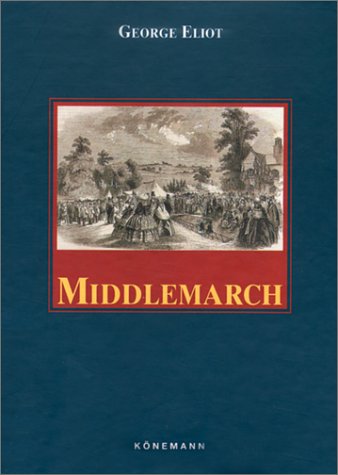
George Eliot, Middlemarch: A study of provincial life (George Eliot, 1871–1872; Könemann 1997), chapter 15 to most of chapter 28

Reading five pages of Middlemarch each morning, which I’ve now been doing it for two months, is a joy.

When reading Niall Williams’s This Is Happiness, I kept feeling a Middlemarchian tone: the narrators in both books tell of events that happened in a remote village in living memory but feel as if they are from a different era. Williams’s narrator has a name and a story of his own. We are left to imagine who George Eliot’s narrator might be, though there’s definitely a person there, who is full of opinions, occasionally mentions conversations with her friend, and – if we assume she is a mature woman as Eliot was known to be when the book appeared – has bitter experience of male domination. Both narrators identify themselves as sophisticated and modern, she in metropolitan England, and he in the USA.

This month the intrigues continue among the older and younger generations, the former to do with control of the town’s institutions and the latter to do with affairs of the heart. Dorothea is married to Casaubon but troublingly finds his young cousin Will Ladislaw a more interesting companion in Rome. Rosamond is closing in on Lydgate as a prospective husband. And Fred, the profligate young man, discovers that his failure to keep promises not only harms his reputation but also harms other people.

This morning, the Rosamond–Lydgate story is approaching a defining moment. They have been thrown together when Lydgate comes to attend Rosamond’s brother Fred who has been struck down by typhus. Actually, not quite thrown together: Rosamond has declined to take the recommended course of leaving their house until the danger of infection was past, ostensibly so that she can help her mother tend to Fred, but really so she can see more of Lydgate. After some vividly evoked moments when they become embarrassed at meeting each other’s eyes, they settle into openness and ease with each other. He begins to play at flirting with her, seeing no harm in such a little pleasure. She – admitting it to no one – has visions of marrying him and escaping the suffocating backwater of Middlemarch. After much intricate tracking of the mental processes of each of them, and a scene where Lydgate sees off a chinless young man who he doesn’t even realise is a rival for Rosamond’s affections, today’s read finished with this terrific paragraph, which sums up the state of play, foreshadows the outcome, and ends with a gloriously deflating image:

To Rosamond it seemed as if she and Lydgate were as good as engaged. That they were some time to be engaged had long been an idea in her mind, and ideas, we know, tend to a more solid kind of existence, the necessary materials being at hand. It is true, Lydgate had the counter-idea of remaining unengaged; but this was a mere negative, a shadow cast by other resolves which themselves were capable of shrinking. Circumstance was almost sure to be on the side of Rosamond’s idea, which had a shaping activity and looked through watchful blue eyes, whereas Lydgate’s lay blind and unconcerned as a jelly-fish which gets melted without knowing it.

(pages 312–313)

This is Happiness, Niall Williams and the Book Group

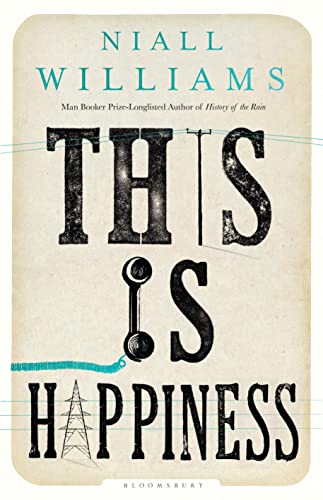
Niall Williams, This Is Happiness (Bloomsbury 2019)

Before the meeting: When we discussed Niall Williams’s History of the Rain in October, a number of people had also read his next book, This Is Happiness. December’s chooser, impressed by their enthusiasm, decided we should all read it.

The book’s first sentence, ‘It had stopped raining’, which sits on a page by itself, is pretty much identical with the final sentence of the earlier book, and the tiny, backward village of Faha in West Ireland is again the setting, but the bulk of the narrative takes place in an earlier period, and there is no obvious reference to the characters or events of History of the Rain. It’s the story of the coming of electricity to the village; a coming of age story of young Noe, who has taken leave of the seminary and is telling the story as an old man in the USA; and a big romantic story of love lost and found by Christy, an older man who befriend Noe.

Page 75* must be one of the book’s few pages that doesn’t mention the absence of rain. It happens in the thick of one of the book’s comic set pieces. It’s not the set piece when the lights go down and the cinema comes alive with amorous grapplings, or the one where Noe goes to the communion rail at Sunday Mass in order to get a good look at the woman Christy left at the altar, or the spectacular one where he is knocked unconscious by a falling electricity pole. On page 75 Noe and Christy are on the first of a number of epic pub crawls.

These pub crawls are as much about music as about alcohol, music performed by men who are shy and nondescript until they start playing, and then are brilliant conduits of a great folk tradition. On this first adventure, when the evening is well under way, Christy startles Noe and everyone else in Craven’s pub by starting to sing:

Not only was Christy singing, he was singing with screwed-up eyes and fists by his side a ballad about love. He was singing it full-throated and full-hearted and before he had reached the second verse it was clear even to Roo the dog that a passionate truth was present in that place. It wasn’t only that this didn’t happen in Craven’s, it was that there was something raw in it, something deeply felt, that was, even to those who had descended blinking into the umbrae and penumbrae of numberless bottles of stout, immediately apparent and made those who first looked now look away.

(page 73)

Christy has come to Faha as a worker in the great electricity project. This episode is our first inkling of his profoundly romantic reason for signing up for the work. Not so obviously, it prepares us for the major role music is to play in Noe’s story. Page 75 itself is a beautiful piece of misdirection. After Christy has sung, Noe writes:

I did the only thing I could do. I went to the counter and got two bottles of stout.

Those bottles are followed by another two, and then another. Greavy the guard arrives and declares that it’s Closing Time (as Noe says, this is one more way in which Faha lags behind the times), but the two of them are incapable of moving. Alcohol-based humour usually leaves me cold, but Niall Williams’s version made me laugh out loud. I suppose the whole book could be read as an extended Irish joke: the villagers have an almost superstitious awe of the one telephone in town, and the coming of electricity has almost cosmic significance for them. If you read the whole book like that, the stereotypical Irish drunkenness in this passage is representative (including the sly invocation of Waiting for Godot):

Getting up proved aspirational. There was the idea of it, quite clear. Unmistakably clear now. There were hands placed on knees for push-off. There was a Right now. There was another when that failed to produce action. A Right so following. And still nothing. Between thought and verb a vacancy, not intended, but not grievous, just gently perplexed, and in that perplex the realisation that Craven’s was not in fact such a bad place at all, was downright comfortable in fact, in fact there were few places on this earth as agreeable. True? Too true. A person could stay here, could stay right here and be quite happy now, quite, for a very long time. What’s your rush? There’s no rush. All the problems of the world could be settled right here.
Right.
Will we go so?

I don’t want to minimise the book’s humour. Far from it. But there’s a seriousness to it that page 75 gives no clue of. Christy’s romance is genuinely touching. The villagers’ resistance to the coming of electricity is more than comic: and these villagers are described as custodians of their land, defending an ancient culture under siege by capitalism – without being at all heavy handed, the narrative reminds us that the Irish were the first people to be colonised by the English. The dramatic decline in the Catholic Church’s power since the 1950s is deftly evoked both in Noe’s commentary and in his own story: his turning away from his priestly vocation is a tiny reflection of the ending of Church-domination in Ireland at large.

After the meeting: There were seven of us. Covid–19 and other coronaviruses kept some away, while one or two had better things to do – and one sent video of spectacular drone art over Sydney Harbour.

This was our end-of-year meeting so we had other business besides the book, but it generated quite a bit of discussion. The discussion was unusual in that quite a few of us read out favourite passages. Indeed, two of the absentees sent lists of quotes – it’s that kind of book. One interesting insight was that the narrative as we receive it is created by an old man looking back on a key moment in his youth, making a story out of it, and casting a benevolent glow over the community in which that moment happened.

Other business, besides of course the plentiful food including a splendid pavlova, included a Kris–Kringle book exchange with the usual mixture of cautious delight and polite almost-hidden dismay, and a poetry reading. We were each supposed to bring a poem, and most did, even one of the absentees.

Poems were a nonsense poem by CJ Dennis (‘Triantiwontigongolope’), a poem about climate change (that was me – Kit Kelen’s ‘Parable’), a Thomas Hardy (‘Heredity’), a Robert Frost (‘A Time to Talk’), a poem from Claudia Rankine’s Just Us (‘sound and fury’), and two poems of Australian patriotism that couldn’t have been more different (Sara Mansour’s ‘My Australia‘ – link to her performing it on YouTube – and a poem whose name and creator I don’t remember celebrating the lump in the throat brought on by, for example, Anzac Day). This little reading, including by two people who said they felt awkward reading poetry aloud, left us reeling.

And that was a wrap for the Book Group for 2022.

* Currently when blogging about books I take a closer look, arbitrarily, at page 75 – moving on to page 76 at my next birthday if the idea works well enough.

Niall Williams’s History of the Rain and the Book Group

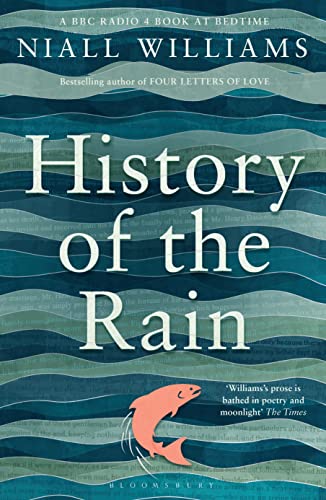
Niall Williams, History of the Rain (Bloomsbury 2014)

Before the meeting: I fell in love with this book at the first paragraph:

The longer my father lived in this world the more he knew there was another to come. It was not that he thought this world beyond saving, although in darkness I suppose there was some of that, but rather that he imagined there must be a finer one where God corrected His mistakes and men and women lived in the second draft of Creation and did not know despair.

That’s nineteen-year-old Ruth Swain, whose mother is a MacCarroll, writing from her sickbed in a book-filled room at the top of a house in the tiny Irish village of Faha, where it has been raining for centuries.

Ruth has inherited her father’s vast library and her head is filled with the books she has read while sick, especially the novels of Dickens. As she tells us the story of her family – her grandparents Irish and English, her mother Mary, her father Virgil and her twin brother Aeneas whom everyone calls Aeny – her prose bristles with references to those books, usually taking the intertextuality to a comic extreme by naming the book’s publisher, date of publication, and its number on her father’s shelves. Her style, as she is told by a schoolteacher who visits her, is ‘a bit Extreme’:

I am that anachronism, a book-reader, and from this my writing has developed Eccentric Superabundance of Style, Alarming Borrowings, Erratic Fluctuations, and I Must lose my tendency to Capitalisation.

Her narrative is indeed eccentric, alarming, erratic, and overflowing with Irish charm. I totally believed in her – so much so that when I reached the Acknowledgements at the end of the story and read Niall Williams speaking in his own voice it was like coming down to earth with a thud.

Ruth’s father is a poet. We don’t get to read a single line written by him, but – in striking contrast to the poet mother in Edwina Preston’s Bad Art Mother (my blog post here) – we have total confidence in his creative process. Here’s a little of the description of the moment when he first begins to create poems, when he is ‘brimming’ after the birth of his children:

There were no words at first. At first there was a kind of beat and hum that was in his blood or in the river and he discovered how somewhere in his inner ear, a pulsing of its own, a kind of pre-language that at first he wasn’t even aware he was sounding. It was release. It was where the brimming spilled, in sound. To say he hummed is not right. Because you’ll suppose a tune or tunefulness and there was none, just a dull droning inside him.

(Page 262)

As well as a multitude of writers, Ruth’s head is filled with the people of Faha, their malapropisms, their idiosyncrasies, their all-knowingness. Possibly because I spent my childhood in the Irish-Catholic diaspora of North Queensland, I didn’t recoil from what you might see as sentimentality in their portrayal, but was delighted by their comic energy. Take this, for example, from the moment when the newborn twins are being baptised in river water in the kitchen of their home:

Everyone closed in around us, everyone wanted to see. It was as if our story was already being told and was moving the hearts of Faha, making people think These two will need help, for right then there was an opening of shirt buttons, a rummaging in handbags, in wallets and coat pockets, a general flurry of rooting about, and then, as the river water was being scooped from the bucket, into our swaddling on the kitchen floor came assorted Miraculous Medals, rosary beads, Memorial cards, brown and blue and green scapulars of various antiquity (and body odour), two Padre Pios, two Pope John Pauls, one Little Flower, Saint Thérèse of Lisieux, Patron-of-the-Missions card, several (because we had been Lost & Found) Saint Anthonys, one Saint Teresa of Ávila, Patron of Headache Sufferers, and from the handbag of Margaret Crowe a sort of crouched-down Lionel Messi-looking Saint Francis of Assisi, all of them well-worn and used and in our first moments in this world falling around Aeney and I now like holy human rain.

(Page 269)

The only reference in that list I had to google is Lionel Messi. All the rest is vintage irish-Catholic. I was so enchanted I barely noticed that horrible ‘Aeney and I’ at the end.

I laughed out loud. I inflicted passages on my long-suffering partner. I cried, though not at the sad bits, which were the only place where the book’s hold on me slackened a little. No, it was when Ruth relents for a moment and lets her awkward and consistently rebuffed suitor wash her hair.

After the meeting: Our host gave us an excellent Irish stew and roast potatoes, which were supplemented by a salad, pastizzi from Newtown and various cheeses, chocolates and ice creams brought by the rest of us.

Not everyone had finished the book; one was still waiting for it to arrive at his local bookshop. Not everyone loved it as much as I did. But we had an animate discussion of the what-about-that-bit variety, and I wasn’t the only one who had been prompted to read sections aloud, as much for the reader’s pleasure as for the listener’s. We all had the impression that the listeners, in this case, enjoyed the experience.

I wasn’t the only one to have wept at the hair-washing incident.