Tag Archives: Mick Herron

Sydney Writers’ Festival 2026: My Day Two

I just had two sessions at the festival on Friday. A third – S Shakthidharan’s session – was cancelled, so I was given a free evening as well as a long break in the middle of the day.

10 am: Big Histories

A historian, a novelist and a scholar walk onto a stage …

I’m a fan boy for Amitav Ghosh, whose Ibis trilogy (Sea of Poppies, River of Smoke and Flood of Fire) we’ve read at my Book Group (links are to my blog posts). I was swept away by Luke Kemp’s recent appearance on David Runciman’s Past Present Future podcast. Clare Wright’s democracy trilogy (The Forgotten Rebels of Eureka, You Daughters of Freedom and Näku Dhäruk: The Bark Petitions) is a big deal. I felt like genuflecting when they took their seats.

Clare Wright set the ball rolling with some comments about history – how it needs to be endlessly discussed, debated and debunked. She said she intended to stay out of the way of the others because she knew they were keen to talk to each other. Happily, she didn’t fade into the background, but did an excellent job as facilitator.

Two books lay on the table for this session, each with a curse in the title, one looking at the broad sweep of history, the other beginning with a tiny, pretty much forgotten incident. Luke Kemp’s Goliath’s Curse (2025) has a subtitle that announces its scope: The History and Future of Societal Collapse. The subtitle of Amitav Ghosh’s The Nutmeg’s Curse (2021) does similar work: Parables for a Planet in Crisis.

Luke Kemp’s field of study is Existential Risk, which he explained is the risk of extreme societal collapse or even human extinction. Given the current state of the world, perhaps it will help, he said, to go back and study the way large societies have collapsed in the past. He names these large societies goliaths, and defends what might be seen as a gimmicky bit of language by saying that the usual word, civilisation, is misleading. The societies he discusses, ranging antiquity to the present, are not in fact civilised – they have all been brutal, increasingly unequal organisations built on the acquisition and defence of what he calls lootable resources. These are resources such as wheat or corn that can be seen, stored and stolen – as opposed to, say, yams, that grow underground, can’t be stored for long, and are not attractive to thieves. The goliaths are huge thieving organisations – civilisations as a title for them is pure propaganda. Like the biblical Goliath, they are huge and intimidating, they rule by violence and they are surprisingly fragile.

[Added later: I missed out one of Luke Kemp’s main points, possibly because once stated it’s obvious: before the coming of goliaths, humans lived in egalitarian communities. They weren’t without violence but it wasn’t organised warfare over territory or resources.]

Amitav Ghosh’s book is non-fiction. It tells the story of a massacre in 1621 on tiny Banda Island in what is now Indonesia. The island was the only place in the world where nutmeg grew. The islanders refused Dutch East India Company’s demand of exclusive access and, to cut a long story short, the Dutch murdered almost the entire population. Ghosh sees this ruthless act as part of the desacralising of nature, in which everything is seen in terms of potential profit. Barbados is now the world’s largest producer of nutmeg, he said, but no one there sings to the nutmeg trees as the Bandans once did, and the descendants of survivors still do.

There was a lot more. A brief discussion of what novels offer that histories can’t flew past before I cold take decent notes. Amitav Ghosh told stories of Dutch superstition in the 17th century as seen with amazement by the Bandans, whom they saw as benighted savages. The 17th century witch hunts in Europe were not, as we’ve been led to believe, driven by superstitious peasants, but were instigated by the elites as part of the project of destroying the sense of all things being connected and replacing it with the dominance of the profit motive. Not a lot of time was spent on contemporary USA, but when Luke Kemp listed the signs that a goliath was about to collapse, the relevance was shockingly clear.

There were so many ideas in this session I look forward to listening to it again when it comes out as part of the SWF podcast series.

Our next session brought a completely different kind of joy:

4 pm: Great Adaptations

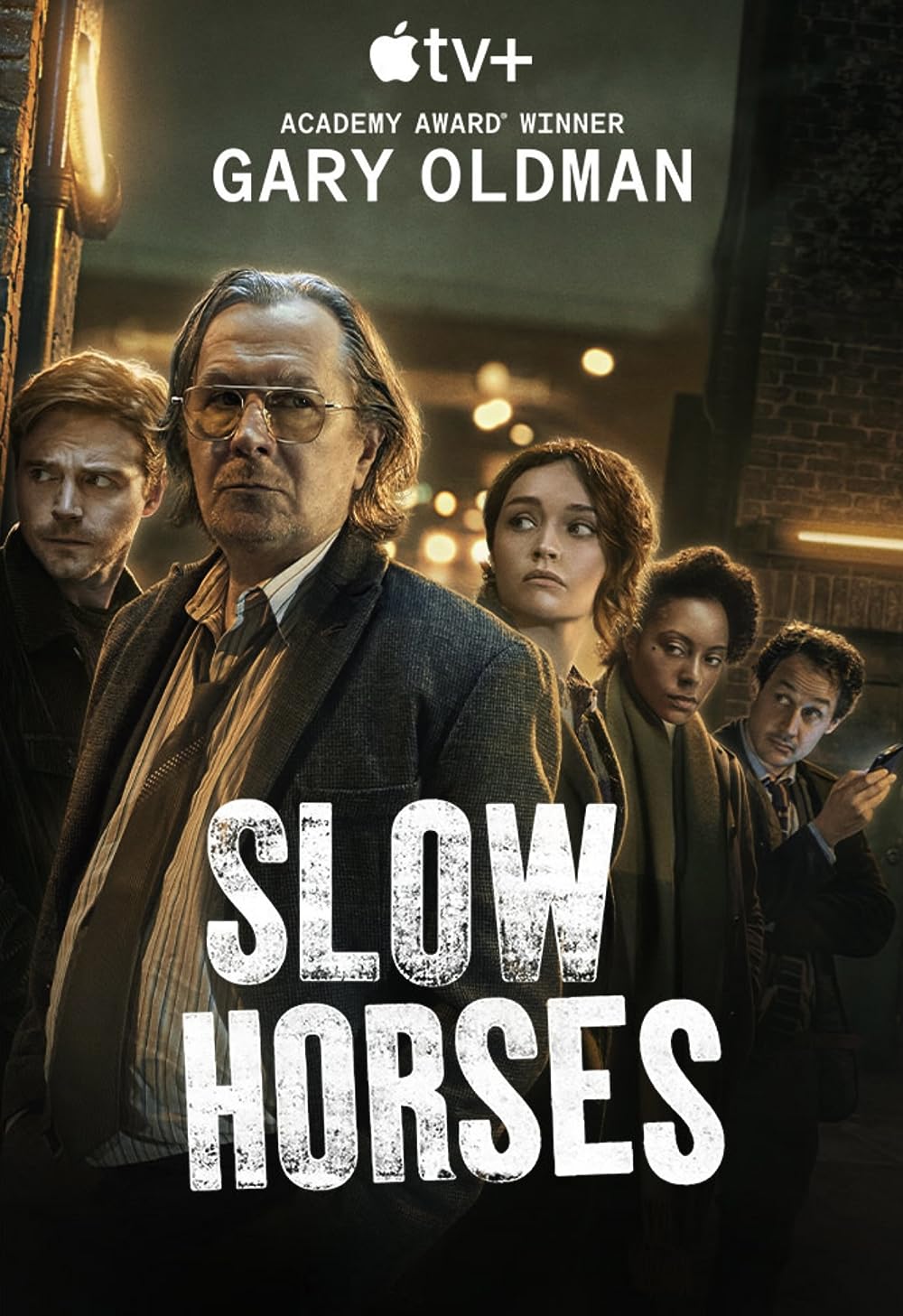
Mick Herron, author of the Sloane House series of spy novels that have been made into the wonderful TV series, Slow Horses, says he writes novels without any idea of them becoming anything else. The adaptation was other people’s idea, and other people’s work.

Suzie Miller describes herself as a creature of the theatre. Her phenomenally successful play Prima Facie has been performed in many languages in many countries, and has been instrumental in having the law about rape changed in the UK. Partly because she had much more material than one actor could be expected to perform, she decided to adapt it to a film including the bits she’d had to ‘put in the garage’. She abandoned the film project and did a novel version. Then took up the film again, and it’s now in production.

Benjamin Law led them tactfully in an entertaining conversation that shed a lot of light on the differences among the forms: stage, TV, film and novel.

Playwrights are an interesting addition to television writing rooms, because they keep reaching for a sense of the whole form – which is what theatre demands. There was much talk about the excellent food and decor in writing rooms.

I think it was Suzie Miller who answered Benjamin’s question about the difference between the different forms: Theatre is basically an aural landscape, and as a writer you’re always dealing with other people’s input; cinema is primarily visual; novelists have space to develop their own vision.

Asked about ways they had been surprised in the adaptation process, Mick Herron said Gary Oldman is a lovely man. (In one of his books he described Lamb as looking like Timothy Spall gone to seed – people thought he might be disappointed to have Gary Oldman cast in the role, but it wasn’t so, he’d only mentioned Timothy Spall as shorthand descriptiion because he has no visual imagination.) Suzie Miller’s surprise has been to have people say to her about the novel, ‘That is my story.’

As a little side note, I was impressed about Benjamin Law’s facilitation. For example, someone told a story about egregious ignorance on the part of an unnamed senior writer in a TV room, a story that was remarkably similar to one I’d heard Benjamin tell in another context. An undisciplined person would have leapt into the conversation to tell that story, but he gave not a glimmer. He might looks like he’s on stage for a relaxed chat, but he’s very good at his job.


The Sydney Writers’ Festival is happening on beautiful, unceded Gadigal land. I have written this blog post on Gadigal and Wangal land. I acknowledge their Elders past and present, and welcome First Nations readers of this blog.

2025 End of year list 5: Blog traffic

This is the last end of 2025 list, and I don’t expect you to read it – it’s mainly so I’ll have a record.

Here are the posts that attracted most clicks on my blog in 2025:

  1. Niall Williams’s Time of the Child (February 2025, 861 hits)
  2. Ellen van Neerven’s Throat (July 2020, 847 hits)
  3. There Are Rivers in the Sky, Elif Shafak and the Book Club (October 2024, 734 hits))
  4. Ocean Vuong’s Time is a Mother (March 2023, 591 hits)
  5. Yael van der Wouden’s Safekeep at the Book Club (January 2025, 576 hits)
  6. Andrew O’Hagan on Caledonian Road with the book club (July 2024, 525 hits)
  7. Robert Alter’s Psalms (September 2020, 491 clicks)
  8. Mick Herron’s Standing by the Wall (October 2023, 489 hits)
  9. The Book Group & Richard Flanagan’s Question 7, page 77 (May 2024, 422 hits)
  10. The Book Club and Paul Murray’s Bee Sting (April 2024, 400 hits)

I don’t know what these figures mean. The Mick Herron book is almost not a book.

Here’s WordPress’s list of my all-time top ten posts. This list stays pretty stable. The long-time place-holders don’t need to get many views to stay, and only one of them was in this year’s top ten:

  1. Travelling with the Art Student (November 2014, 3567 hits)
  2. The Book Group and Shirley Hazzard’s Transit of Venus (June 2018, 3010 hits)
  3. (Re-)reading Kevin Gilbert’s poetry (April 2012, 2499 hits)
  4. Mary Oliver’s Twelve Moons (April 2020, 2193 hits)
  5. Ellen van Neerven’s Throat (July 2020, 2074 hits)
  6. Mary Oliver’s House of Light (April 2020, 1909 hits)
  7. Claire Keegan’s Small Things Like These (October 2023, 1880 hits)
  8. Bran Nue Dae (January 2010, 1856 hits)
  9. Ocean Vuong’s Time is a Mother (March 2023, 1672 hits)
  10. The book group’s Harp in the South (February 2011, 1447 hits)

The post at the top of the list is there because someone lifted an image from it and put it up on Pinterest.

That’s it. Thanks to everyone who has contributed to those statistics. Some of you I know IRL, some I’ve met through email etc, some in the comments section, some I know only as anonymous clickers. I’m happy that you’ve visited the blog. Come again.

2025 End of Year List 3: TV series

The Emerging Artist and I watch far too much television. A lot of it is very good. To make a list of ‘best’ we had to struggle to extract specific shows from the blur. I’m not sure we agreed completely so here is my list compiled in consultation though not always complete agreement with the Emerging Artist. There are 23 titles in fairly shaky categories.

Reminiscence

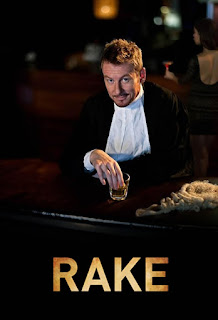
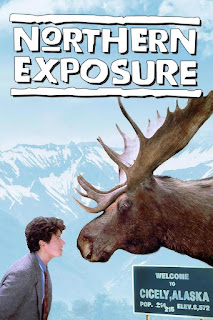
Judge John Deed (G F Newman 2002–2007) was a new discovery for us which we loved mainly for Martin Shaw’s wonderful screen presence as a nonconformist judge. We binged on Northern Exposure (Joshua Brand and John Falsey 1990–1995), which held up surprisingly well. And our comfort binge was Rake, Season 1–5 (Peter Duncan, Richard Roxburgh and Charles Waterstreet 2010–2018), which probably couldn’t be made now but is fabulous.

Police

Soooo much crime. So many crime series are really about watching the face of the main detective as she (these days it’s very often a woman) does her detecting. From a huge field, we’ve selected these:
  • Blue Lights, season 3 (Declan Lawn & Adam Patterson) continues to follow the lives of a group of recruits to the Belfast Gardaí. Among other faces there’s that of Katherine Devlin

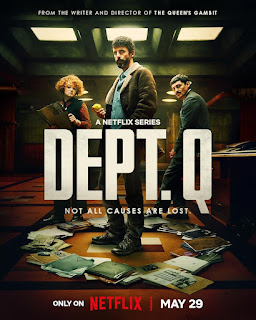
  • Dept. Q (from novels of Jusii Adler-Olsen 2025) transposes a Nordic crime series to Scotland. The face belongs to a bearded Matthew Goode.
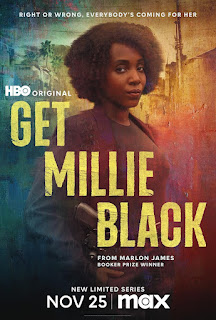
  • Get Millie Black (Marlon James 2024), created by Jamaican novelist Marlon James, writes back to shows like Death in Paradise . The face is Tamara Lawrance’s.
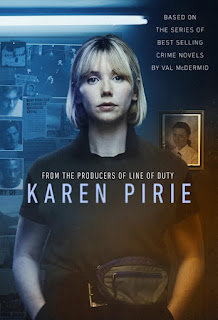
  • Karen Pirie, series 1 & 2 (Emer Kenny 2022, 2025) is another Scottish procedural. The face is Lauren Lyle’s.
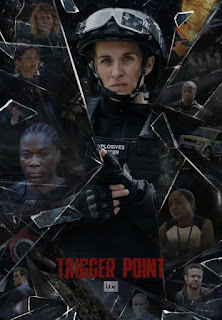
  • Trigger Point, Series 3 (Daniel Brierly 2025) is a bomb disposal unit in London, with Vicky McClure as the main face

Comedy

  • Nobody Wants This, season 2 (Erin Foster 2025), a romcom in which a Christian heritage woman and a rabbi negotiate their relationship.
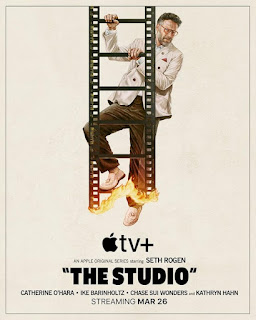
  • The Studio (Seth Rogan 2025): inside Hollywood
  • Iris (Doria Tillier 2024): a comedy of manners featuring socially awkward truth-teller
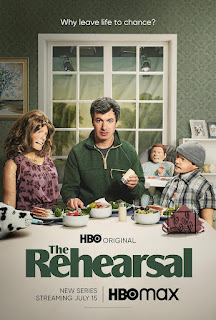
  • The Rehearsal, season 1 & 2 (Nathan Fielder 2025): sometimes unsettling show about a man who helps people rehearse for stressful events in their lives
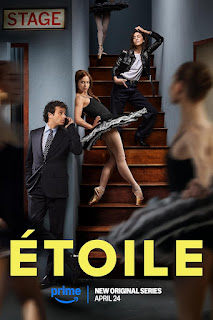
  • Étoile (Daniel Palladino & Amy Sherman-Palladino 2025): French and a New York ballet companies swap key talents
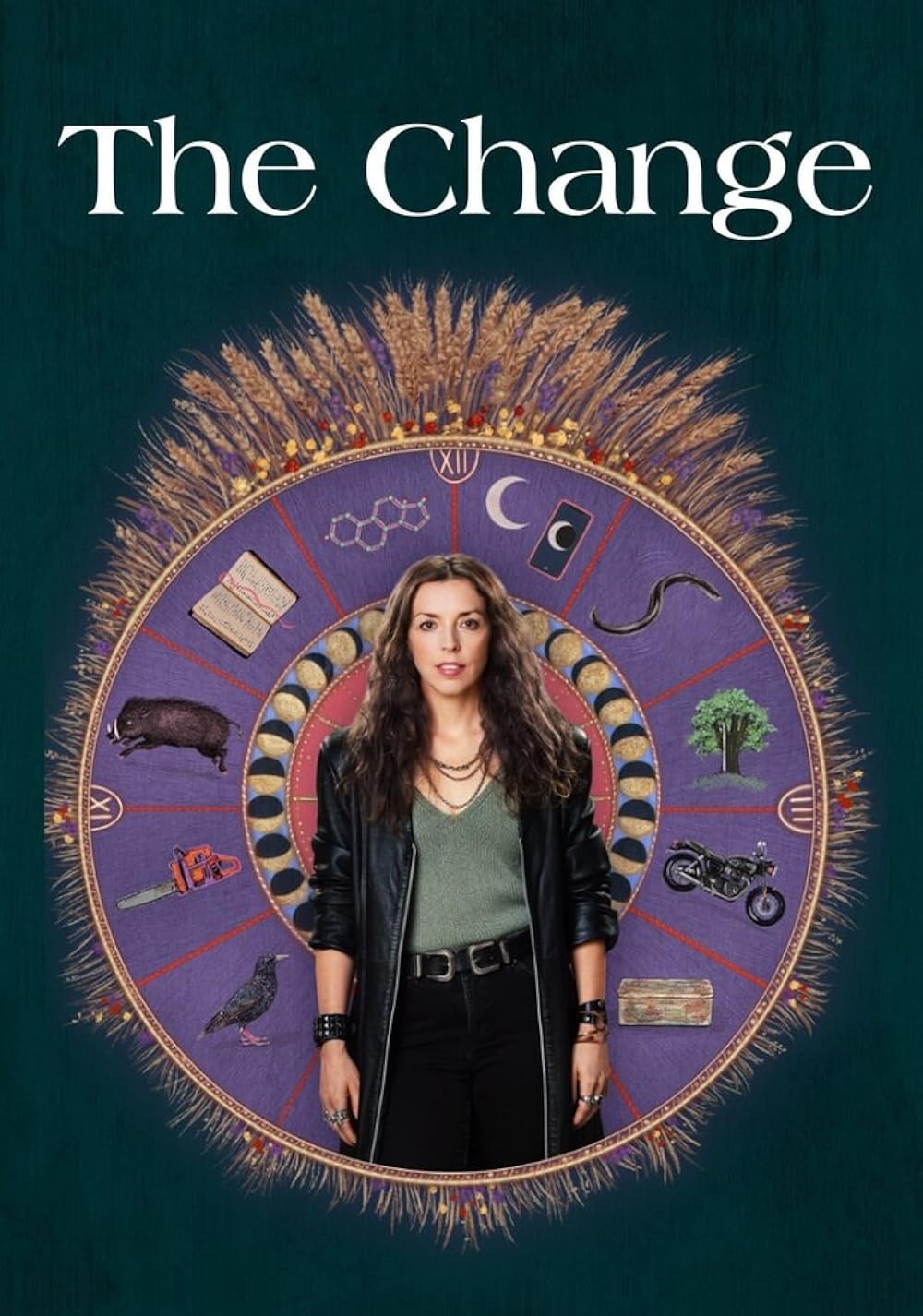
  • The Change, season 2 (Bridget Christie 2025): A post-menopausal woman sets out on a journey of self discovery in the English woods where she gets entangled with a deeply weird community

Drama

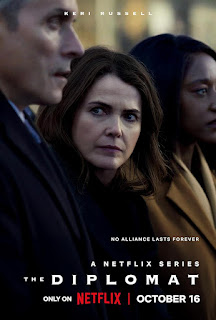
  • The Diplomat, season 3 (Debora Cahn 2025): what looks increasingly like fantasy in the age of Trump, a woman with bad hair (Keri Russell) is a brilliant diplomat
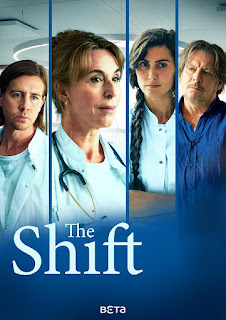
  • The Shift / Dag & Nat, Season 2 (Lone Scherfig 2024): a Danish obstetrics unit under pressure day and night
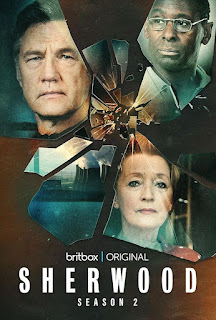
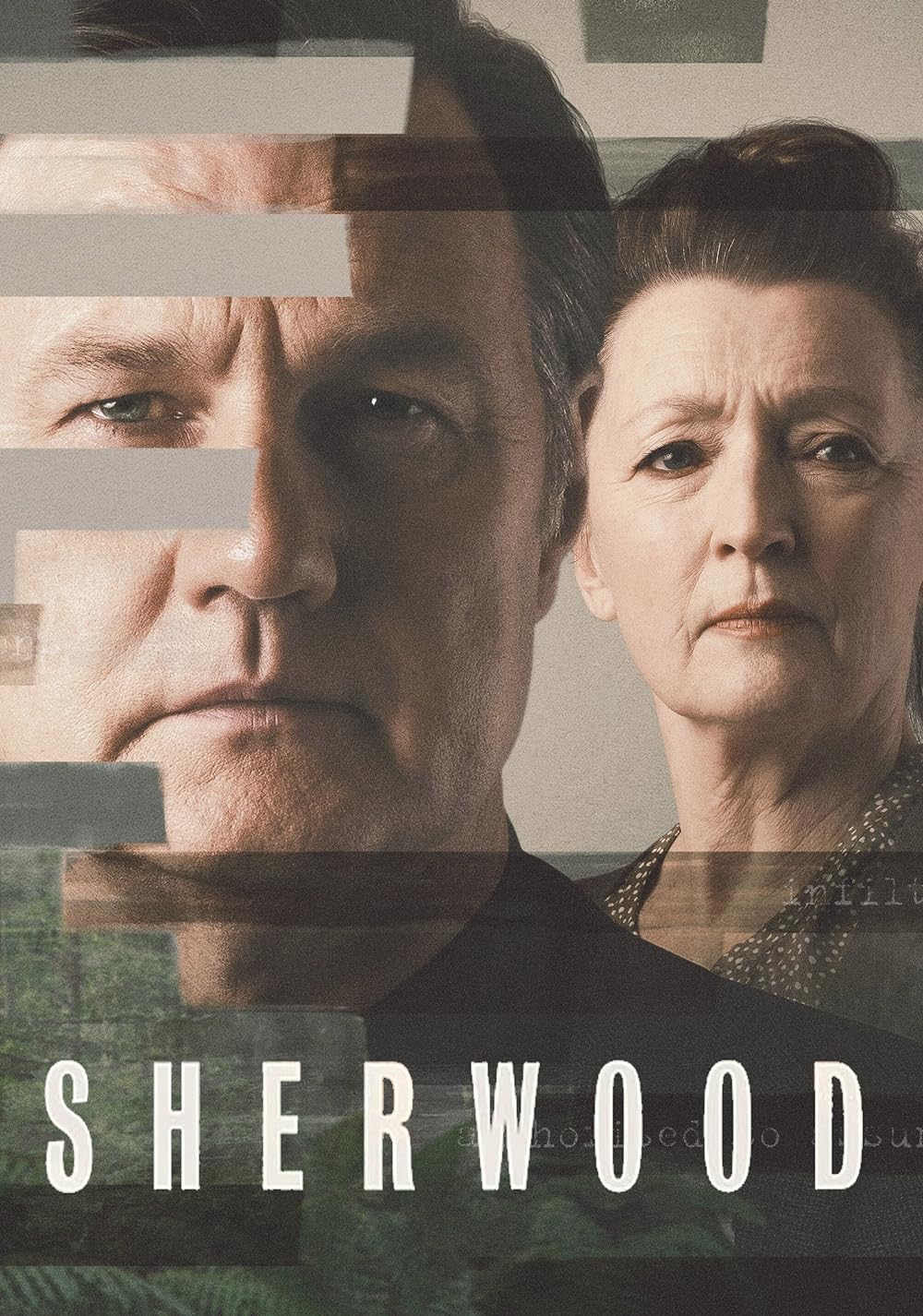
  • Sherwood, season 2 (James Graham 2024): a community where the wounds from the miners’ strike under Thatcher still sting
  • The Hack (Jack Thorne 2025): David Tennant with bad hair as an investigative journalist versus the Murdoch empire
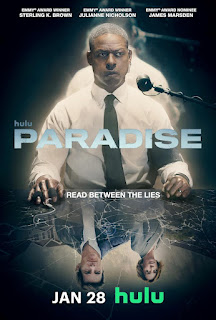
  • Paradise (Dan Fogelman 2025): this starts out as a murder mystery and develops into a dystopian fantasy
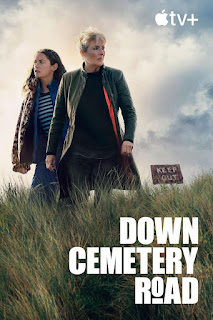
  • Down Cemetery Road (Morwenna Banks 2025): Emma Thompson, also with bad hair!

Documentary series

We didn’t watch many documentary series this year, but the five-episode Mr. Scorsese, directed by Rebecca Miller was excellent. Lots of clips and wonderful interviews with family, friends, actors and other directors.

My nominations for Year’s Best

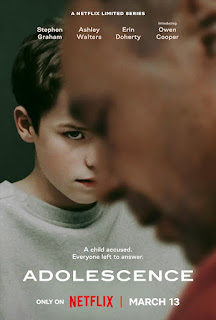
  • Adolescence (Jack Thorne and Stephen Graham 2025). Brilliant brilliant brilliant!
  • Slow Horses Season 5 (Will Smith and others, from books by Mick Herron 2025): Five seasons in, this is still funny and gripping and leaves me wanting more. You come away thinking you could smell Gary Oldman.

Thank you for reading this far. Please add your own favourites in the comments.

End of Year List 2: TV series

I watch too much television, but at least in 2023 an awful lot of it has been very good.

Last year we allowed ourselves to name just three shows. This year we decided to have two or three in each of five categories, and then in one of the categories we had to break that rule. It’s probably true that in every category we would have chosen different titles on another day. Three of the ones we chose were the final seasons of longer-running shows, all of them most satisfactory conclusions.

Cop shows

Documentaries / reality TV

Historical fiction

Comedy

Drama

Next, a much shorter list: Theatre

Mick Herron’s Standing by the Wall

Mick Herron, Standing by the Wall: A Slough House Interlude (Baskerville 2022)

This is one of those tiny books designed for display at the check-out of a books-and-mortar bookshop, to be bought on impulse as a small gift for, say, Mother’s Day, or for someone you know to be a fan of Mick Herron’s Slough House novels.

It probably found its way into our house as such a gift. I haven’t read any of the novels, but I love the TV series based on them (and I’m glad to learn that a third season is due to drop in December). For me, this book was a chance to get a taste of how it all works on the page. All the main characters are there: irascible and malodorous Lamb, obnoxious IT wiz Roddy, our hero River, salt-of-the-earth dry drunk Catherine and mistress of the archives Molly. Not much happens: River drops in on the station after extended leave to recover from being poisoned; Lamb has Roddy alter a photograph from the archives; Catherine has a moment of almost human conversation with Lamb, in which he says ‘I don’t do memories’; and most of the reject spies who work at Slough House go out for Christmas drinks. That’s it.

‘Ho!’

The name wasn’t so much dropped as thrown from the top of Slough House, and like a snowball finding its target struck Roddy Ho, two floors down, on the back of his neck. He looked up from his screen, senses quivering. He was needed.

The opening is horrendously over-written, and it goes on in that vein for a couple of pages. I was about to lay the book aside, giving quiet thanks for the wit and nuance of the TV series, when I realised that the over-writing was deliberate, allowing us a taste of Roddy Ho’s self-heroising perception of the world. The irony became clear, the prose settled down, and I was amused and gripped.

Page 47 (I can’t talk about page 76 because this is a very small book) features another piece of mock-heroics:

There was no one to flinch when, with surprising suddenness, Lamb swung his shoeless feet to the floor and went barrelling out of the room, entering Catherine’s office like a Viking on manoeuvres. Flakes of plaster fell from the ceiling when the door slammed against the wall; more drifted free as he pillaged desk drawers with the kind of controlled fury that this room alone, of all Slough House, generally provided sanctuary from. Most of what he found he dropped to the floor – reels of sticky labels, cellophane folders, account books, boxes of Biros, treasury tags; all this junk from another era, as if he were trashing a museum installation – littering the carpet with a mess of ancient stationery.

It comes as no surprise that all this furious pillaging turns out to be just Lamb looking for an envelope. Mick Herron is having a good time, and so is the reader.

The book is a fun chance to see the characters in action on the page. It may be laying the grounds for big events later in the series, or harking back in a way that will delight long-term readers, but whether or not it’s either of those things, it’s an enjoyable confection that entertained me on a train trip from Central to Parramatta and back.