Tag Archives: Amitav Ghosh

Sydney Writers’ Festival 2026: My Day Three, part 1

Saturday was my busiest day at the Festival. I had four sessions booked and then was given tickets to a fifth. There were three writer-in-conversation sessions and two panels about current politics. This post is about the former.

10 am Amitav Ghosh in Conversation

Amitov Ghosh was ‘in conversation’ with Michael Williams.

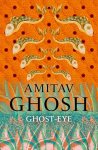
Michael Williams set up the conversation by suggesting that Amitav Ghosh had a kind of double vision: on the one hand he is a journalist with a PhD in social anthropology and a commitment to knowledge; on the other he writes fiction that involves ghosts and other supernatural phenomena. After Ghosh’s initial smiling response that writers are not normal people, the conversation expanded to take in elements of his biography, the genesis of his novels (including the brilliant Ibis trilogy, which wasn’t originally intended to be about the opium trade, but the facts got in the way of the other story), his love of travel, the absurdity of colonialist thinking, the British Empire as the world’s second narco state, the importance of Indigenous knowledge systems, and at last his most recent novel Ghost Eye.

I could have listened to him for hours. Here are some highlights:

  • A British reviewer of his first novel, The Circle of Reason (1988), commented that poor benighted third worlders could only write about politics, they had no inner life. Ghosh laughed and said, ‘Look at the United States now. They’re experiencing what we did then.’
  • Ronald Ross was a British doctor who was awarded the Nobel Proze in 1902 for discovering the malaria parasite. When Ghosh read his case notes, he found that all his major findings were in fact made by his Indian servants – who were given no credit.
  • He spoke about language in the Ibis trilogy. In colonial India, there were many Englishes. The multi-ethnic ship crews, the English colonisers who adopted Hindi words, etc. He said of those glorious passages where the language goes wild, that they don’t advance the story: Language is like white noise sometimes, its purpose is not to convey meaning but to establish the context in a kind of background hum. He referred us to Melville in Moby Dick for a similar use of language.
  • He mentioned his non-fiction book addressing climate change, The Great Derangement, which he wrote after the Ibis trilogy. I hadn’t heard of this book, and wonder of Ian MacEwan’s use of the phrase in his future-looking-back novel What We Can Know owes something to Ghosh.
  • In Western thought the world has come to be regarded as a machine whose function is to have goods extracted from it. We badly need to pay attention to First Nations / traditional ways of knowing, where teh world has not been desacralised. This is happening to some extent – he gave the example of the Wanganui River in Aotearoa/New Zealand being acknowledged as having legal personhood. But mining Indigenous cultures for their knowledge can be another form of extraction. The knowledge can’t really be separated from the stories by which it is communicated.
  • In the same reasonable tone, he told us that he doesn’t believe in reincarnation, but numerous studies in India and elsewhere have recorded phenomena which can only be explained by the existence of past lives: children suddenly recite long passages of classic books they can’t have read, etc.

I felt like we were in the presence of a great mind, who manages to communicate important, difficult ideas with an extraordinary lightness of touch and generosity of spirit, and also enjoys stirring the pot a bit.

We had a cup of tea with a friend, and a bite to eat, then off to Track 8, where train carriages were once built:

1.00: Melissa Lucashenko: A Writing Life

Winnie Dunn, author of Dirt Poor Islanders and an important part of the Western Sydney literary movement, was on stage with Melissa Lukashenko. As the session got under way, Melissa called out to people up the back to come and fill empty seats down the front – eventually people bowed to her benign authority and the front rows, perhaps reserved for celebrities who didn’t show, were filled.

The reason for the pairing of these two writers soon became apparent: Melissa lived for some time on Tonga, and Winnie is the first Tongan Australian writer to have a novel published. There was a relaxed vibe between the two of them: Winnie maybe not all that experienced at interviewing in front of a big, mainly white audience, and Melissa seeming competely comfortable in her own skin, right from that early moment when she beckoned us closer.

Melissa was there partly to promote her most recent publication, Not Quite White, a collection of essays, and she read beautifully from two of its essays. But the guts of the conversation was the story of her writing life.

Some highlights:

  • At a time of her life when she was newly divorced and living poor, she earned a living by driving an Uber and wrote her fifth novel, Mullumbimby, in her spare time. By the time it was published she was tossing up whether to go (back) to a life of crime [my brackets represent her smiling retraction of the word]. Then it won some significant awards and she was out of the poverty trap.
  • The story that’s allowed about Aboriginal people has shifted enormously in thirty years. When she wrote Too Much Lip, which also won substantial prizes, she feared that she would be attacked for its portrayal of family sexual violence, but she felt it had to be written – partly because of her activism with Sisters Inside. It turned out the attack didn’t come.
  • Asked how she found the voice for the main character in Too Much Lip, she said that character was written in anser to the question, ‘Who might I have become if I hadn’t gone to uni?’
  • Asked what she wanted from white readers, she said, ‘Stop the deficit narrative!’ (This was a nice echo of Amitav Ghosh’s mockery of the assumption of white superiority.)
  • On awards culture, she said that when her first novel, Steam Pigs, was short listed for a number of prizes, she had no idea what it meant. She kind of thought, ‘Oh well, you publish a novel, and then it gets listed for prizes.’ What mattered to her, then and now, is the response from readers, especially Aboriginal readers and family.
  • Advice to new writers: Have a second job!
  • When Winnie Dunn asked how she approached community responsibilities in her writing, she turned the question back on the questioner, ‘How do you do it?’ This came across as a real question, and Winnie Dunn took it that way and spoke eloquently of her own writing about and for the Tongan community. Melissa did say that when she writes she always has the voices of a couple of Elders in her head, especially one scathing old man. Sadly, she didn’t elaborate.

There were a couple more sessions, to be discussed in my next post, and then, after dark, with a ticket I had been given unexpectedly:

8.00: Maria Reva: Endling

Literary critic Beejay Silcox was on stage with Maria Reva, Ukrainian Canadian author of Endling, a book that I have read for the Book Club and enjoyed enormously. The book is about snails, the trade in brides in Ukraine, the Ukrainian war, and the impossibility of writing a novel about all that.

There were some nice moments of comedy. When Beejay spelled out her understanding of how metaphors worked in the novel. Maria said, ‘You should have written it!’ This became a running joke, I’m not sure at whose expense.

They discussed the process of writing the novel, which felt oddly like a synopsis of the novel itself, though its most splendid twists and turns were not revealed.

The novel started from an article about a scientist in Hawaii who had a project of saving snail species from extinction. And it also started out as a novel about ‘romance tours’ in Ukraine, where men from the USA come on tours wth the aim of finding a wife. Maria Reva found a way of combining these two themes and was feeling pleased with her plot-making abilities, as three of the young women from the romance tour kidnap a van-load of bachelors. Then Russia invaded Ukraine and she couldn’t see the point of the novel any more. She gave up on it and wrote the draft of something completely different – that went nowhere. Then came the moment of decision: ‘If the genre was imploding on me, I would take the reader down with me.’

She read a passage from the novel which, she said, was mostly verbatim from actual email correspondence, in which a journal editor wanted her to write what, in order to make the connection to the two other speakers today, I’ll call a ‘deficit model’ account of the Canadian Ukrainian community’s response to Russia’s invasion. It was funny when I read it a couple of weeks ago. It’s much funnier when you know it really happened! Maria Reva was clearly enjoying her revenge.

There was a lot more. I’ll mention just two things. One, the structure of the novel was inspired by the movie Everything Everywhere All at Once. I knew it was familiar from somewhere! Two, the book started out being about women’s oppression in Ukraine, but once the war started, Maria Reva forgot about gender and the question became, ‘How do different minds cope with the cataclysm?’

My companion had read one book from Ukraine, ‘the one about tractors’. I had also read one, the one about bees. This was a whole other version of Ukraine and Ukrainians.

And so to bed.

Sydney Writers’ Festival 2026: My Day Two

I just had two sessions at the festival on Friday. A third – S Shakthidharan’s session – was cancelled, so I was given a free evening as well as a long break in the middle of the day.

10 am: Big Histories

A historian, a novelist and a scholar walk onto a stage …

I’m a fan boy for Amitav Ghosh, whose Ibis trilogy (Sea of Poppies, River of Smoke and Flood of Fire) we’ve read at my Book Group (links are to my blog posts). I was swept away by Luke Kemp’s recent appearance on David Runciman’s Past Present Future podcast. Clare Wright’s democracy trilogy (The Forgotten Rebels of Eureka, You Daughters of Freedom and Näku Dhäruk: The Bark Petitions) is a big deal. I felt like genuflecting when they took their seats.

Clare Wright set the ball rolling with some comments about history – how it needs to be endlessly discussed, debated and debunked. She said she intended to stay out of the way of the others because she knew they were keen to talk to each other. Happily, she didn’t fade into the background, but did an excellent job as facilitator.

Two books lay on the table for this session, each with a curse in the title, one looking at the broad sweep of history, the other beginning with a tiny, pretty much forgotten incident. Luke Kemp’s Goliath’s Curse (2025) has a subtitle that announces its scope: The History and Future of Societal Collapse. The subtitle of Amitav Ghosh’s The Nutmeg’s Curse (2021) does similar work: Parables for a Planet in Crisis.

Luke Kemp’s field of study is Existential Risk, which he explained is the risk of extreme societal collapse or even human extinction. Given the current state of the world, perhaps it will help, he said, to go back and study the way large societies have collapsed in the past. He names these large societies goliaths, and defends what might be seen as a gimmicky bit of language by saying that the usual word, civilisation, is misleading. The societies he discusses, ranging antiquity to the present, are not in fact civilised – they have all been brutal, increasingly unequal organisations built on the acquisition and defence of what he calls lootable resources. These are resources such as wheat or corn that can be seen, stored and stolen – as opposed to, say, yams, that grow underground, can’t be stored for long, and are not attractive to thieves. The goliaths are huge thieving organisations – civilisations as a title for them is pure propaganda. Like the biblical Goliath, they are huge and intimidating, they rule by violence and they are surprisingly fragile.

[Added later: I missed out one of Luke Kemp’s main points, possibly because once stated it’s obvious: before the coming of goliaths, humans lived in egalitarian communities. They weren’t without violence but it wasn’t organised warfare over territory or resources.]

Amitav Ghosh’s book is non-fiction. It tells the story of a massacre in 1621 on tiny Banda Island in what is now Indonesia. The island was the only place in the world where nutmeg grew. The islanders refused Dutch East India Company’s demand of exclusive access and, to cut a long story short, the Dutch murdered almost the entire population. Ghosh sees this ruthless act as part of the desacralising of nature, in which everything is seen in terms of potential profit. Barbados is now the world’s largest producer of nutmeg, he said, but no one there sings to the nutmeg trees as the Bandans once did, and the descendants of survivors still do.

There was a lot more. A brief discussion of what novels offer that histories can’t flew past before I cold take decent notes. Amitav Ghosh told stories of Dutch superstition in the 17th century as seen with amazement by the Bandans, whom they saw as benighted savages. The 17th century witch hunts in Europe were not, as we’ve been led to believe, driven by superstitious peasants, but were instigated by the elites as part of the project of destroying the sense of all things being connected and replacing it with the dominance of the profit motive. Not a lot of time was spent on contemporary USA, but when Luke Kemp listed the signs that a goliath was about to collapse, the relevance was shockingly clear.

There were so many ideas in this session I look forward to listening to it again when it comes out as part of the SWF podcast series.

Our next session brought a completely different kind of joy:

4 pm: Great Adaptations

Mick Herron, author of the Sloane House series of spy novels that have been made into the wonderful TV series, Slow Horses, says he writes novels without any idea of them becoming anything else. The adaptation was other people’s idea, and other people’s work.

Suzie Miller describes herself as a creature of the theatre. Her phenomenally successful play Prima Facie has been performed in many languages in many countries, and has been instrumental in having the law about rape changed in the UK. Partly because she had much more material than one actor could be expected to perform, she decided to adapt it to a film including the bits she’d had to ‘put in the garage’. She abandoned the film project and did a novel version. Then took up the film again, and it’s now in production.

Benjamin Law led them tactfully in an entertaining conversation that shed a lot of light on the differences among the forms: stage, TV, film and novel.

Playwrights are an interesting addition to television writing rooms, because they keep reaching for a sense of the whole form – which is what theatre demands. There was much talk about the excellent food and decor in writing rooms.

I think it was Suzie Miller who answered Benjamin’s question about the difference between the different forms: Theatre is basically an aural landscape, and as a writer you’re always dealing with other people’s input; cinema is primarily visual; novelists have space to develop their own vision.

Asked about ways they had been surprised in the adaptation process, Mick Herron said Gary Oldman is a lovely man. (In one of his books he described Lamb as looking like Timothy Spall gone to seed – people thought he might be disappointed to have Gary Oldman cast in the role, but it wasn’t so, he’d only mentioned Timothy Spall as shorthand descriptiion because he has no visual imagination.) Suzie Miller’s surprise has been to have people say to her about the novel, ‘That is my story.’

As a little side note, I was impressed about Benjamin Law’s facilitation. For example, someone told a story about egregious ignorance on the part of an unnamed senior writer in a TV room, a story that was remarkably similar to one I’d heard Benjamin tell in another context. An undisciplined person would have leapt into the conversation to tell that story, but he gave not a glimmer. He might looks like he’s on stage for a relaxed chat, but he’s very good at his job.


The Sydney Writers’ Festival is happening on beautiful, unceded Gadigal land. I have written this blog post on Gadigal and Wangal land. I acknowledge their Elders past and present, and welcome First Nations readers of this blog.

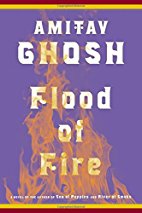
Amitav Ghosh’s Flood of Fire

Amitav Ghosh, Flood of Fire (Straus and Giroux 2015)

flood.jpgWhen we set up a street library out the front of our house, we intended it as a way to send books from our shelves to good homes. We hadn’t thought about the reverse traffic: this book is like a gift from the benevolent Street Library deity. I loved the first two books in the Ibis trilogy when I read them for the book group some time back. When this third book urned up on our front fence I  snuffled it gleefully.

I started reading it on the plane from Sydney to Singapore and finished it after a little more than a week in London, where I’m staying in culturally diverse Walworth (or SE17, to use the locals’ preferred term). That’s an eminently appropriate way to have read it.

The flood of the title is the firepower unleashed on China by the British in what is now known as the First Opium War in the mid nineteenth century, and the vivid account of that assault, including the brutal use made of Indian sepoys, is a salutary reminder of the blood-soaked foundations of England’s prosperity. By happy coincidence I just found this in my twitter feed:

That – or at least the similar events a couple of decades earlier – is the big historical event that provides the context and is front and centre for quite a lot of the narrative, but on the way we follow the adventures of a handful of characters who sailed on the Ibis in the first book, and whose paths continue to cross in unexpected ways. There’s comedy, melodrama, romantic tragedy, a sustained bawdy episode, and always a dizzying interplay of cultures.

I love the way Amitav Ghosh incorporates his research into the narrative. To give just one small instance, after an encounter in which the Chinese forces were routed:

There were corpses everywhere, many of them with black scorch-marks on their tunics. On some, the clothes were still burning: looking more closely, Kesri saw that the fires were caused by a fault in the defenders’ equipment. The powder for their guns was carried not in cartridges, as was the case with the British troops, but in rolled-up paper tubes. These tubes were kept in a powder-pouch that was strapped across the chest. In the course of the fighting the flaps of these pouches would fly open, spilling powder over the soldiers’ tunics; the powder was then set alight by the wicks and flints of their matchlocks.

I don’t suspect for a moment that Ghosh has made this up. Along with the horror, you can sense the novelist’s exhilaration in finding such telling details. I suppose you might read it as an info-dump that distracts from the story, but from my point of view it’s an info-dump that enriches the story with a sense of historical truth.

Similarly, I relish Ghosh’s seemingly endless play with language. I’d call this inventive if it didn’t seem to be the result of arduous research into the many englishes of South, Eastern and South-east Asia. This play is everywhere, but nowhere more joyful than in the pages where a sternly moralistic mem sah’b demonstrates her vast repertoire of synonyms for male masturbation. There a re many sentences elsewhere that, if taken out of context, would be mystifying. I defy you to guess the meaning of, ‘It isn’t decent for a girl to talk to mysteries.’

I had one discontent as I read. Neeti, the character who was in some ways the warm heart of the first book, is no longer a presence. We left her on Mauritius in the second book, and this one is set entirely in India, China and places nearby. But Ghosh is no idiot. My discontent was surprisingly and satisfactorily dealt with in the very last page.

Damon Galgut’s Arctic Summer

Damon Galgut, Arctic Summer (Atlantic Books 2014)

0857897195After Howard’s End was published, E M Forster began another novel named Arctic Summer, but never finished it. Damon Galgut has co-opted the title for this novel about Forster, appropriately enough given that the book is suffused with a sense of unfulfilled desire and unachieved goals.

Forster is homosexual (his term is ‘minorite’), which for a middle-class Englishman just a few decades after Oscar Wilde’s trial is terrifyingly illegal and paralysingly shameful. A central powerful thread of the novel follows Forster’s agonised path towards an active sexual life and the closely allied quest for intimacy. He has two great loves, neither of them ‘minorites’, and neither of them Englishmen. One, the Indian Masood, rejects his physical advances; the other, Egyptian Mohammed, accommodates what he calls his ‘foolishness’. Forster has other, more compliant sexual partners, but it is with these two men that he forms abiding emotional connections, as each of them reciprocates his love in deeply un-English, heartfelt ways.

The novel is also a story of artistic triumph, an imagining of how Forster came to write his greatest novel, A Passage to India. If I didn’t have other more pressing demands on my time I would now be rereading that novel, which must surely have been changed – enriched, I would guess – by the light shed on it by this one. Damon Galgut inspires trust, partly because he has obviously researched his subject meticulously, and partly because his protagonist’s inner life is so powerfully realised. The story he tells, persuasively, is that Forster’s cross-cultural relationships, with the men he loved and with others in India and Egypt, provided the emotional and dramatic heart of his novel. 

It’s interesting how much this book is in dialogue with others. There are Forster’s books, of course: phrases from and references to A Passage to India  are scattered though it, apparent even to someone whose memory of the book is as vague as mine; Howard’s End and Room with a View crop up, though they’re not named; Forster writes Maurice pretty much as wish fulfilment and shows the manuscript to friends; he has a couple of collections of short pieces published. The richly evocative dedication of Galgut’s novel, ‘To Riyaz Ahmad Mir and to the fourteen years of our friendship’, echoes that of A Passage to India, ‘To Syed Ross Masood and to the seventeen years of our friendship’, surely as elegant an indication of an author’s relationship to his subject as you’re likely to find anywhere.

Forster has significant conversations with other writers: Leonard and Virginia Woolf (the former wanting to publish him, the latter agreeing, not unkindly, when he says he’s not a novelist); Lytton Strachey (who loves Maurice and wants its title changed to Lytton); Edward Carpenter (who gives him a vision of relaxed homosexual intimacy); D H Lawrence (hilariously, dogmatically voluble, and totally heteronormative); and Cavafy (who reads his poems to Forster in Alexandria). Even the raffish character who in the first pages shows Forster some explicit erotic writing (a neat way of showing that Forster’s problem is not simply prudishness) turns out, according to the acknowledgements pages, to be historical.

As well as the intertextuality implied in these encounters, I wanted to put  Arctic Summer on a shelf between Amitav Ghosh’s Sea of Poppies and a DVD of The Best Exotic Marigold Hotel: the three of them could have an interesting chat about the Raj, with Galgut’s novel forming some kind of bridge between the horrors portrayed by Ghosh and the movie’s golden-glowing nostalgia. I’d also like to eavesdrop on this book in conversation with Robert Dessaix’s Arabesques: where I found it hard to read Dessaix’s accounts of Oscar Wilde and André Gide’s erotic adventures with much younger men of colour as anything other than sex tourism, Galgut’s version of Forster’s superficially similar experiences reads as complex cross-cultural encounters.

At the Sydney Gay and Lesbian Mardi Gras Fair on Sunday there was a Police Department stall in the middle of all the glitter. That evening I went to Belvoir Street to see the supremely silly and sexy The Blue Wizard – billed as ‘the gayest one-man show ever’. I had this book in my bag at both events.

The Book Group goes up Amitav Ghosh’s River of Smoke

Amitav Ghosh, River of Smoke (John Murray 2011)

0719568986 Before the meeting: After Karl Ove Knausgaard’s mountains of mundane detail, we wanted our next book to be one that spins a great yarn. Someone proposed the sequel to Amitav Ghosh’s Sea of Poppies, which we’d all enjoyed. There were no dissenting voices, so River of Smoke it was.

We’d forgotten that in his own way Ghosh is just as given to piling on the detail as Knausgaard. Especially in the first half of River of Smoke, hardly a paragraph is without its cluster of glittering facts or shiny words. A glossary would have to define a seemingly endless variety of boats, buildings, functionaries, items of clothing, financial processes, scientific equipment, dubious activities, plants, religious rituals and so on as they are named in Bengali and other Indian languages, Cantonese, Portuguese, Farsi, regional Englishes, Cantonese pidgin, Mauritian Kreol, and so on. And then there’s a wealth of historical anecdote: we see Napoleon at Longwood on St Helena; we hear of escaped slaves on Mauritius who committed mass suicide when they saw troops approaching their hiding place, unaware that the troops were coming to tell them that slavery had long since been abolished; we learn the origins of chai, and much much more. The effect isn’t intimidating: Amitav Ghosh is like a child let loose in a linguistic and historical lolly shop, and wants us to share his delight. The writer he most resembles in this love of the source material is Neal Stephenson.

As you would expect, River of Smoke starts out putting us back in touch with the main characters from Sea of Poppies. But pretty much as soon as they’ve been reintroduced most of them drop out of the picture, some never to be mentioned again, and those who remain gradually withdraw from centre stage to become relatively minor figures – the munshi (secretary cum newsgatherer) to a major character, the recipient of letters from another. The characters we engage with most strongly are new: Bahram Modi, a Parsi opium trader, and Robin Chinnery, artist, homosexual romantic and writer of long, flamboyant letters. Possibly the main character is fanqui-town, the brilliantly evoked, exhilaratingly diverse Babel on the edge of Canton where foreign traders were allowed to live and work in the 18th and early 19th centuries. The opium trade, whose viciousness was graphically evoked in the first book, is the most profitable activity of the fanquis, and the novel traces events leading up to the First Opium War in 1939: the Emperor is no longer turning a blind eye and a new, incorruptible man arrives in Canton to take definitive, dramatic action. According to Google the historical war didn’t turn out well for the Chinese and the trade continued for decades, but River of Smoke ends just before the war proper begins and that outcome isn’t at all obvious.

At the group meeting about Sea of Poppies, someone said he enjoyed the ripping yarn and learned a lot of history but wasn’t engaged in the way he wanted to be by a novel. For all its delights, River of Smoke was like that for me. The tension is real, the stakes are high, and I trust that I’m being told a true story – but sometimes it’s as if the novelist was swamped by his research and forgot that he cared about his characters. There are longish extracts from actual documents issued by the Chinese authorities and the fanqui opium traders, for example, which are fabulous to read, but leave our characters with little to do but react or comment from the sidelines.

Maybe the book suffers from the Middle Book Syndrome – in the first book the world and characters were new. In the third book we’ll find out how everything is resolved. In this one, we just have to get from Book One to Book Three. It’s a bridge rather than a stand-alone, and so not completely satisfying.

After the meeting: There were seven of us, of whom five had read the book.

Two people reported being on holiday and experiencing a powerful resistance to submitting to the world of the book – one ploughed on despite the resistance, the other followed his bliss after 20 pages or so.

The man who liked the book most described it – accurately – as very visual. At a level of simple pleasure it was the linguistic fireworks that appealed most to me. Someone else was most moved by the painful sense of history.

None of us were wildly enthusiastic about the epistolary chapters, tending to find the flamboyant Robin Chinnery a bit on the tiresome side.

Someone arrived with multiple tabs open on his iPad web browser: paintings of Canton’s foreign factories in the 18th and early 19th century, maps of historic Canton, etc. It turned out that a number of us had been to Wikipedia to look up the Opium Wars, and to see if various characters were real (many were). Amitav Ghosh’s web site has the Chrestomathy, mentioned in passing in the book, which is an odd linguistic document compiled in old age by Neel, the zemindar turned munshi who may well turn out to be the central character of the trilogy.

Attitudes to the as yet non-existent third volume ranged from eager anticipation to ‘meh’. I’m close to the eager anticipation end of that continuum.

[As I was about to upload this, I checked and found that Amitav Ghosh is on Twitter, which prompts two remarks. First, I hope Twitter isn’t distracting him from his writing, and if it is I apologise for adding to the distraction. Second, I was delighted to see that someone on Twitter actually drew the world’s, and Ghosh’s, attention to something that I kept to myself all through our meeting – ‘fanqui-town’ sounds very like ‘Funky Town’. Ghosh’s response was three exclamation marks.]

End of year lists 2012

As if it isn’t enough to be shopping and wrapping and cooking and unwrapping and eating and searching for lost dogs and blocking our ears to keep out the piped carols, it’s the season for drawing up Best-Of lists.

The Art Student’s best five movies (with links to the movies’ IMDb pages):

A Separation (Asghar Farhadi 2011): ‘Definitely the best movie this year. We got to see how complex it all is for secular Muslims in Iran.’

Lore (Cate Shortland 2012): ‘Up there with A Separation. You don’t believe you can watch yet another film about Jews and Nazis, yet here it was, original and fresh. I hope it wins an Oscar. I liked Somersault too.’

The Skin I Live In (Pedro Almodóvar 2011): ‘Creepy,’ she said, ‘but good.’

This Must Be the Place (Paolo Sorrentino 2011): ‘I loved the great humour, the art, the spectacular musical event.”

The Sessions (Ben Lewin 2012): ‘I liked having nudity and sex without it being voyeuristic.’

My best five movies, chosen fairly arbitrarily (with arbitrary reason given) from a short list of 19 that included all five of the Art Student’s picks:

Liberal Arts (Josh Radnor 2012) features a main character who walks around the city reading. I identified. It also reminded me of the pleasures of Eric Rohmer movies.

Sing Me the Songs that Say I Love You: A Concert for Kate McGarrigle (Lian Lunson 2012) pips The Sapphires (Wayne Blair 2012) at the post for my musical of the year. It’s a concert movie that invites us into extraordinary intimacy with a brilliantly musical family. Martha Wainwright sings ‘First Born’, which her mother wrote for her brother, and which we played a lot when our firstborn son was being ‘the first to crawl’.

Le Havre (Aki Kaurismäki 2011) made me feel irrationally pleased with myself or recognizing the oddly deadpan directorial style from Drifting Clouds, which I saw and loved decades ago.

The Artist (Michel Hazanavicius 2011) was a moderately enjoyable film until the final moment, which resolved a plot point I had been half-awarely worrying over, and vastly expanded the movie’s meaning.

Weekend (Andrew Haigh 2011): In spite of the phenomenal consumption of alcohol and other drugs, which would normally be enough to put me right off, I loved the unsentimental, unprurient portrayal of two characters who are completely taken with each other, including sexually.

The worst movie: We both picked Sophie Lellouche’s bland, self-indulgent Paris–Manhattan. But don’t take this as a solid judgement on the film as it might have miraculously picked up after the first hour, which is all we could bear. If we had to name a movie we stayed the course for, the Art Student would pick Skyfall, which she just plain hated, and I might have to pick Bernie, because Jack Black’s creepiness and the creepiness of the subject matter were from different universes.

The Art Student’s best books (she wouldn’t be limited to five), listed here in no particular order, with links to my blog entries or the book’s LibraryThing page:

1bmMartin Gayford, A Bigger Message: Conversations with David Hockney (2011): ‘Full of surprises and delights, about the way an artist sees the world.’

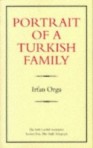
090787181XIrfan Orga, Portrait of a Turkish Family (©1950, Eland & Galeri Kayseri 2004): ‘Compellingly tells of the transition from a feudal society to modernity as a result of war. Also wonderful was the insider child’s view of life under the veil.’

20120704-175516.jpgHilary Mantel, Bring Up the Bodies (2012): ‘I’m glad it won the Booker. I’m completely hooked on the story, and looking forward to the third book, although having fallen in love with Cromwell I’m not looking forward to his death.’

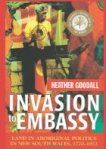
1920898581Heather Goodall, From Invasion to Embassy (1996): ‘A must-read for all Australians, especially those who think the dispossession of Aboriginal people all happened in the distant past.’

1ccStephen Gilchrist, editor, Crossing Cultures: The Owen and Wagner Collection of Contemporary Aboriginal Australian Art at the Hood Museum of Art (2012): ‘I’m only half way through this but it’s a great, accessible introduction to the complexity of Australian Indigenous art.’

Edwina Shaw, Thrill Seekers (2012): ‘I read this in one sitting. I couldn’t put it down even though a lot was uncomfortable.’

0007149530Richard Holmes, The Age of Wonder (2008): ‘Fascinating portraits of scientists in the late 18th century, when science and romanticism were closely joined. Particularly good on Banks and the Herschels.’

0670033804Sebastian Barry, The Long Way Home (2005) and On Canaan’s Side (2011): ‘Two completely absorbing novels. The first is probably the best novel of the First World War I’ve read, and the second extends the story to Irish immigration to the USA, and the past catching up with you, written convincingly in the voice of an 80 year old woman.’

My best books, which I’ve kept down to just five by declaring the AS’s list off limits:

20120224-180529Fàbio Moon & Gabriel Bà, Daytripper (2011): A gem of a comic book by twin brothers from Brazil, this is a string of connected short stories that celebrates a human life as a miracle of survival.

Amitav Ghosh, Sea of Poppies (2008): A story of colonial India that manages to be a gripping romance at the same time as blasting any romantic nostalgia for the Raj to oblivion.

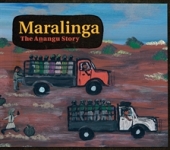
Yalata and Oak Valley Communities with Christobel Mattingley, Maralinga, the Anangu Story (2009): it was a toss-up between this and Tohby Riddle’s miraculous Unforgotten for my picture book of the year. This is a different kind of miracle from Tohby’s – it opens a space for a multitude of voices to speak about the lethal indifference to Indigenous Australians on the part of he British atomic test at Maralinga, and about the resilience of the Anangu people.

Ross Gibson, Seven Versions of an Australian Badland (2002): I choose this over Gibson’s brilliant 26 Views of the Starburst World, which was published this year, because the earlier book made me understand something of the colonisation of my North Queensland home that I had read about previously but managed not to grasp.


Jennifer Maiden, Liquid Nitrogen (2012): I read quite a bit of poetry this year. Possibly the major revelation was Byron’s Don Juan, but I haven’t finished reading that, and I might have chosen Liquid Nitrogen anyway, as I feel that Jennifer Maiden’s stories, meditations and dialogues help me to live in the modern world.

A note on the gender balance front: I would have thought my reading was fairly every spread between male and female writers, but numbers don’t cater to wishful thinking. According to my blog statistics, I read 34 books by men and 22 by women.

Asia Literary Review 22

Martin Alexander (Editor), Asia Literary Review 22, [Northern] Winter 2011

20120416-173808.jpg

[Note added in 2021: All the links in this blog post are broken except the ones in the journal title above and in the image to the left, and the profile of Amitav Ghosh and ‘The Sacred Cow‘. The whole journal is still available online to subscribers.]

The Asia Literary Review has a new Editor in Chief, the third in the nine issues since I first subscribed. There’s no note of farewell to Stephen McCarty, as there was none to Chris Wood before him. The silent turnover is just a little unsettling, but I guess we don’t read the journal for news of its staff. Martin Alexander, the new occupant of the chair, was previously (and still is) Poetry Editor. In his editorial, he addresses the journal’s identity:

… while Asia is a concept we may broadly understand, it would be foolish to attempt a precise definition. Asia’s identity is in a state of motion; we aim to capture that motion in these pages.

That’s not bad: if Asia is an imprecise entity, it would be a mistake to overdefine the journal’s scope or purpose. Its contents are in English, and they ‘capture’ Asia in some way. That’s enough.

‘Capture’ can describe what a tourist snapshot does, and there’s quite a lot of that in this issue, mainly but not exclusively in its four photo essays – of street scenes in Java, Vietnam, Hong Kong, and the grand but as yet unpopulated city of Kangbashi in Inner Mongolia. The photography is brilliant in each case, but in the end they are all picturesque street scenes, and so a lot less interesting than, say, Jack Picone’s ‘Planet Pariah’ about life on the Burma Thailand border in issue 19.

There are a number of excerpts from longer works, both prose and verse, which are like snapshots in a different way: tantalising glimpses, but sometimes hard to tell what it is one is glimpsing. An exception is the excerpt from Chen Xiwo’s novel I Love My Mum (banned in China, translated by Harvey Thomlinson, and published by Make Do Publishing), which stands alone as a tale of desperate brutality with chilling allegorical implications. You can read the whole excerpt at the link.

Sticking with the idea of ‘capture’, there’s Fionnuala McHugh’s profile of Amitav Ghosh. I’ve only recently discovered his writing, and was delighted to learn more about him, and about his Sea of Poppies. He reveals, for example, that having done a little sailing he knew that sailing was ‘very dependent on words’:

I thought there has to be a dictionary. I happened to be at Harvard but I found the Lascari dictionary in Michigan – published in 1812 in Calcutta by a Scottish linguist. I didn’t have to make anything up.

He sounds like a terrific man – if a Sydney Writers’ Festival scout happens to read this, could you invite him some time soon, maybe when the third book of the Ibis trilogy comes out?

The Ghosh profile is also part of what Martin Alexander calls ‘motion’, if he means by that the kind of dynamic interplay that can add spice to a literary magazine.  Ghosh, we read, turned down the 2001 Commonwealth Writers’ Prize because it was for works written in English, from a region ‘that was once conquered and ruled by imperial Britain’. This is honourable and hardly surprising, given the unflinching portrayal of the Raj in Sea of Poppies. But here it resonates interestingly with a short piece by Pico Iyer, The Empire Writes Back, Revisited, which argues that the formerly colonised have taken charge of the cultural centre, and that the English language, no longer dominated by the former colonisers, is being reclaimed and revitalised by a host of writers from India, China, the Caribbean, Africa, New Zealand, Australia. This ALR tends to bear out Ghosh’s side of the conversation, as most of the contributors seem to be of European or US extraction, and there is that strong touristic element. But Pico Iyer would find material to support his view as well.

Of the short stories, ‘The King, the Saint and the Fool‘ by A. K. Kulshreshth weaves a sweet romance from elements taken from the folk history of Singapore, and Sindhu Rajasekaran’s ‘The Sacred Cow‘ tells a distinctly modern love story in the context of Indian village life. The essay that stands out is Michiel Hulshof’s ‘Special Academic and Art Zones‘. Hulshof is a Dutch journalist living in China. Among other things his essay gives a fascinating account of the economic and political context of contemporary Chinese art (of the kind Sydneysiders get to enjoy at the White Rabbit Gallery).

Almost as good as getting on a plane and travelling for six months.

The Book Group on Amitav Ghosh’s Sea of Poppies

The Group’s December meeting picked Frank Moorhouse’s Cold Light for the next title, but word of that decision didn’t go out until a week before the February meeting, so those who, like me, had missed December had no chance of reading it. Instead, in February we each brought along a selection of our summer reading and had fun comparing and contrasting, recommending and lending. Those who had read or partly read the Moorhouse were having second thoughts, someone had an alternative in his briefcase, and the coup was complete.

Amitav Ghosh, Sea of Poppies (John Murray 2008)

Before the meeting: While waiting for my library copy I asked another Grouper how he was enjoying the book. ‘A lot,’ he said, ‘and I’ve stopped looking up the meanings of words.’ That remark is a lot funnier than you might think. There could be very few readers of this book who wouldn’t stop looking up unfamiliar words – unless you’re extraordinarily knowledgeable, you either ride the language like unruly surf or give up the book altogether.

It’s a wonderful book. I came across a tweet that said it well:Brian Minter: Just finished 'Sea of Poppies by Amitav Ghosh - super good. Serious Literature + Adventure Story + Dickensian Saga.It’s the first instalment in a trilogy, of which the second – River of Smoke – was published last year. Set mainly in northern India, with the impending English-Chinese Opium War and the English outlawing of slavery as backdrop, it’s a riproaring adventure–romance with an extraordinarily diverse cast of characters: a peasant wife forced into dependency on the East India Company, a young Frenchwoman adopted by a wealthy English family after the death of her enlightened parents, a young Indian man who makes a living as a boatman on the Ganga and yearns to be a sailor on the open sea, a Hindu mystic who believes himself to be possessed by the spirit of his deceased female guru, a freeborn Black American sailor who passes for white, a rajah whose life is ruled by ceremony but who finds himself suddenly and humiliatingly deprived of his status, a ship’s crew of lascars. As the book progresses we realise that the disparate paths of all these characters are converging – from desire, necessity, ambition or coercion, they are all to board a former slave ship, the Ibis, which is to take a cargo of indentured workers to Mauritius. The first half is like a pool above a waterfall: it takes a while, but you realise that all the narratives are moving inexorably towards the same point, and they’re picking up speed. When the ship sails you can almost hear the roar of the falls in the trilingual prayers of those on board, and then there’s another hundred pages of churning and roiling, and just as you think perhaps it will all settle down (with a shipboard wedding here, a comic-mystic revelation there) we’re plunged into a new tumult – not so much a cliff-hanger as an over-a-new-cliff ending.

All that is marvellous, but it’s the language(s) that make the book sing: not just the sometimes familiar bits of Indian English like the dhoti, kameez and puja that occur on the first page, but the lascar lingo and the garbled slang of the English in India, the French- or Bengali-inflected dialogue of particular individuals, the technical terms of the opium and sailing trades, the traditional languages of Islamic, Hindu and Catholic prayer, botanical nomenclature … It’s a written equivalent of the spectacle that assails the senses in the streets of India. I’d love to quote lots, but will content myself with a scrap from an Englishman’s description of the hospitality of the Raja of Raskhali :

No fear of pishpash and cobbily-mash at the Rascally table. The dumbpokes and pillaus were good enough, but we old hands, we’d wait for the curry of cockup and the chitchky of pollock-saug. Oh he set a rankin table I can tell you – and mind you, supper was just the start: the real tumasher came later, in the nautch-connah. Now there was another chuckmuck sight for you! Rows of cursies for the sahibs and mems to sit on. Sittringies and tuckiers for the natives. The baboos puffing at their hubble-bubbles and the sahibs lighting their Sumatra buncuses. Cunchunees whirling and the ticky-taw boys beating their tobblers. Oh, that old loocher knew how to put on a nautch all right!

That tobbler, recognisably a bastardisation of tabla, makes me think that the more linguistically adept you are the more you will enjoy this and the book’s many other passages like it.

I happened to see The Best Exotic Marigold Hotel while I was reading Sea of Poppies. It’s not by any means a vicious film, but in part it presents modern Rajasthan as a kind of decayed remnant of the splendours of the Raj. Well, it will be hard ever again to think of the Raj as splendid after reading the account here of the East India Company: you’d be closer to the mark with vicious, hypocritical, callous, smug, treacherous. Another word whose meaning has been permanently deepened for me is indentured. The viciousness that lies beneath that economistic sounding word has been laid permanently bare. (My great-grandfather had indentured labourers from the Pacific Islands (Kanakas) on his Queensland farm.)

After the meeting: Our host for the evening hadn’t had time to make an Indian meal, though we did start out with bhajis. Not everyone was as enthusiastic as I was. One guy said that although he learned a lot of history and enjoyed the ripping yarn, he wasn’t swept away by the language. But we had all clearly read the same book, which isn’t always the case.