Tag Archives: children’s literature

China Miéville’s Un Lun Dun

China Miéville, Un Lun Dun (Macmillan 2007)
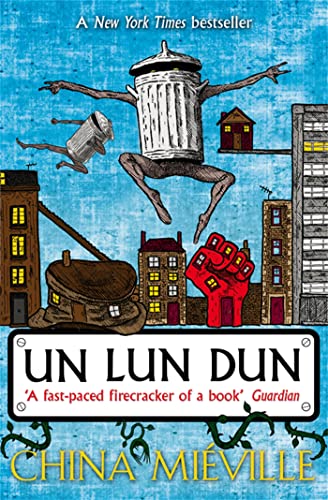
I was quite a few pages into Un Lun Dun before I realised it’s a children’s book. It’s wonderfully fast-paced. It’s witty, endlessly inventive, full of surprising plot twists, respectful of young readers and welcoming to old ones. I had a great time from start to finish. I’d say China Miéville did too, and so would any 10 or 11 year old with the stamina for a 521 page novel and a taste for the scary fantastic.

UnLondon – like Parisn’t, No York and other abcities – exists alongside its real-world equivalent. It’s mostly constructed from garbage and discarded objects that have crossed over. Broken umbrellas are particularly significant. The citizens of UnLondon are a motley lot, not all of them completely human. They are threatened by the Smog, a sentient noxious cloud that feeds on smoke and pollutants, can break up into smoglets and possess the living and the dead. Aided by its greedy or power-hungry humanish accomplices, it plans to take over UnLondon and, later, the world. There are smombies, binjas, stink-junkies, a doughnut-shaped sun and any number of weird creatures and buildings, many of them not only described but lovingly illustrated in ink drawings by the author.

Into this situation wander young Zanna and her friend Deeba. Zanna is hailed as the Shwazzy, which we learn is a phonetic representation of the French choisie. A prophetic book foretells she will defeat the Smog. But, mercifully for the enjoyability of the novel, the book is thoroughly unreliable (much to its own regret, because of course the book can talk).

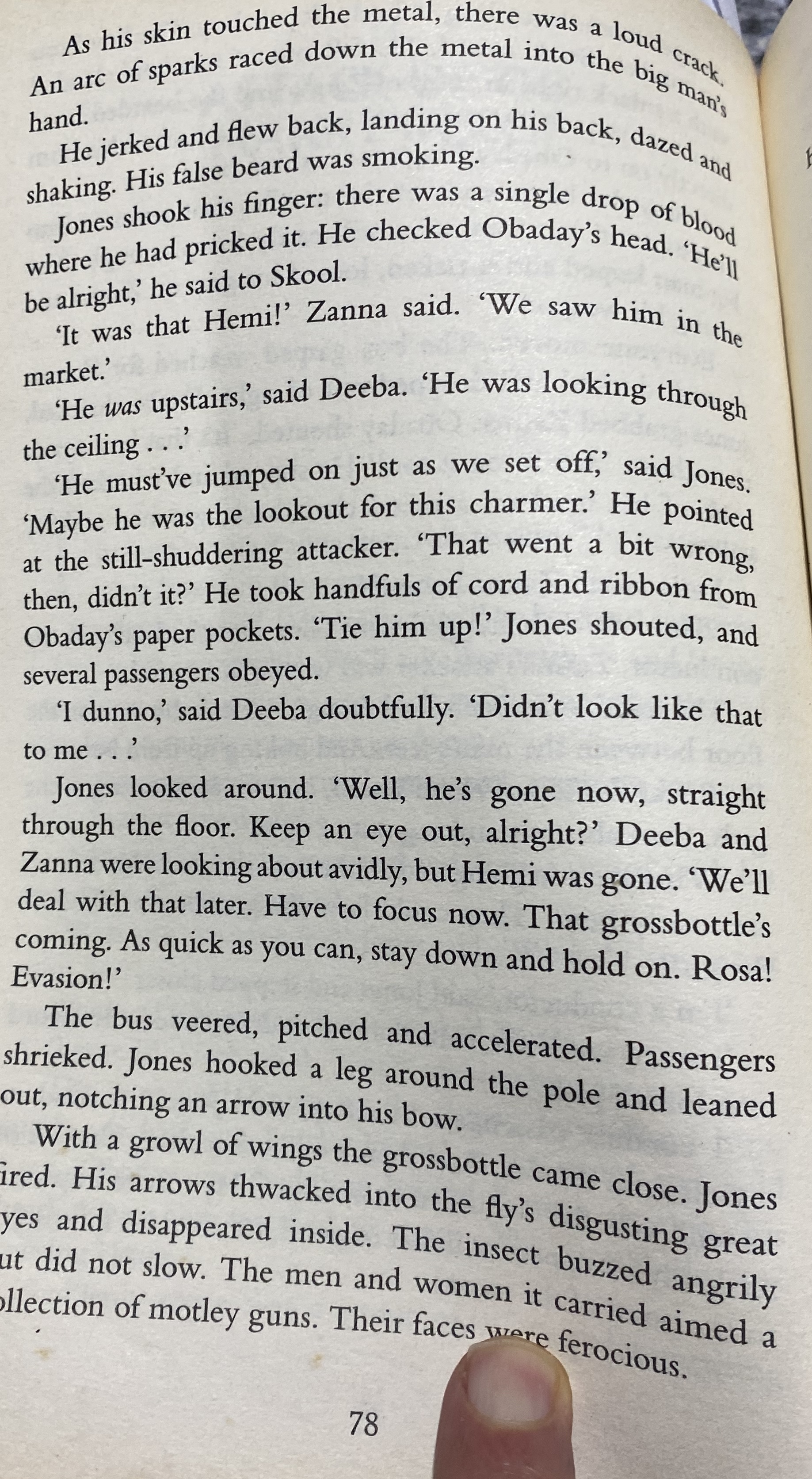
At page 78* things are just warming up, but even on this one page a gallery of characters is on display and there’s plenty of colour and movement.
Let me take you through it.

As his skin touched the metal, there was a loud crack. An arc of sparks raced down the metal into the big man’s hand.
He jerked and flew back, landing on his back, dazed and shaking. His false beard was smoking.

The skin belongs to Jones, an UnLondon bus conductor. Naturally, he also conducts electricity, and here he sends an elecric shock into the sword wielded by a big, bearded man who is attempting to abduct Zanna.

Jones shook his finger: there was a single drop of blood where he had pricked it. He checked Obaday’s head. ‘He’ll be alright,’ he said to Skool.

Jones has injured his finger by touching the tip of the bearded man’s sword. Along with Jones and a milk carton called Curdle, Obaday and Skool are Zanna and Deeba’s companions. Obaday, who wears clothes made of paper and has pins instead of hair, has been knocked unconscious on page 77. The silent Skool, Obaday’s friend and constant companion, is invisible inside a deep-sea diver’s suit. (The meaning of Skool’s name is to be revealed in the final battle scene.)

‘It was that Hemi!’ Zanna said. ‘We saw him in the market.’
‘He was upstairs,’ said Deeba. ‘He was looking through the ceiling . . .’
‘He must’ve jumped on just as we set off,’ said Jones. ‘Maybe he was the lookout for this charmer.’ He pointed at the still-shuddering attacker. ‘That went a bit wrong, then, didn’t it?’ He took handfuls of cord and ribbon from Obaday’s paper pockets. ‘Tie him up!’ Jones shouted, and several passengers obeyed.
‘I dunno,’ said Deeba doubtfully. ‘Didn’t look like that to me . . .’
Jones looked around. ‘Well, he’s gone now, straight through the floor. Keep an eye out, alright?’ Deeba and Zanna were looking about avidly, but Hemi was gone.

Hemi is a boy who approached our heroines when they first arrived in UnLondon. He seemed friendly, but they were warned that he was a ghost boy who wanted to steal their bodies. This, is turns out much later, was only partly true. But they fled from him and now they realise that he has followed them onto the flying bus, and has somehow passed down through the ceiling of the lower deck and then out through the floor. Hemi is an ambiguious figure at this stage of the story – as Deeba’s doubts about Jones’s narrative remind us.

But Hemi and the man with the sword must now wait because the bus is being attacked by a grossbottle, a giant fly, with a platform on its back carrying a gang of heavily armed airwaymen and airwaywomen.

‘We’ll deal with that later. Have to focus now. That grossbottle’s coming. As quick as you can, stay down and hold on. Rosa! Evasion!’

Rosa is the bus driver.

The bus veered, pitched and accelerated. Passengers shrieked. Jones hooked a leg around the pole and leaned out, notching an arrow into his bow.
With a growl of wings the grossbottle came close. Jones fired. His arrows thwacked into the fly’s disgusting great eyes and disappeared inside. The insect buzzed angrily but did not slow. The men and women it carried aimed a collection of motley guns. Their faces were ferocious.

And so it goes.

There is an army of unbrellas, an infestation of Black Widows in Webminster Cathedral, a shadowy organisation called the Concern that sees the Smog’s attack as a commercial opportunity, a diabolical link between the Smog and the UK government. Things are rarely what they seem. Expectations are always met but rarely in the way you expect.

What’s not to like?


I wrote this blog post on Wulgurukaba land, the luxuriant island of Yunbenun, and have finished it with the tropical sun warming my back. I acknowledge the Elders past and present, and welcome any First Nations readers.


My blogging practice is to focus on the page that coincides with my age, currently 78.
Listening to the Twits, Cold as Hell

Roald Dahl, The Twits (1980)
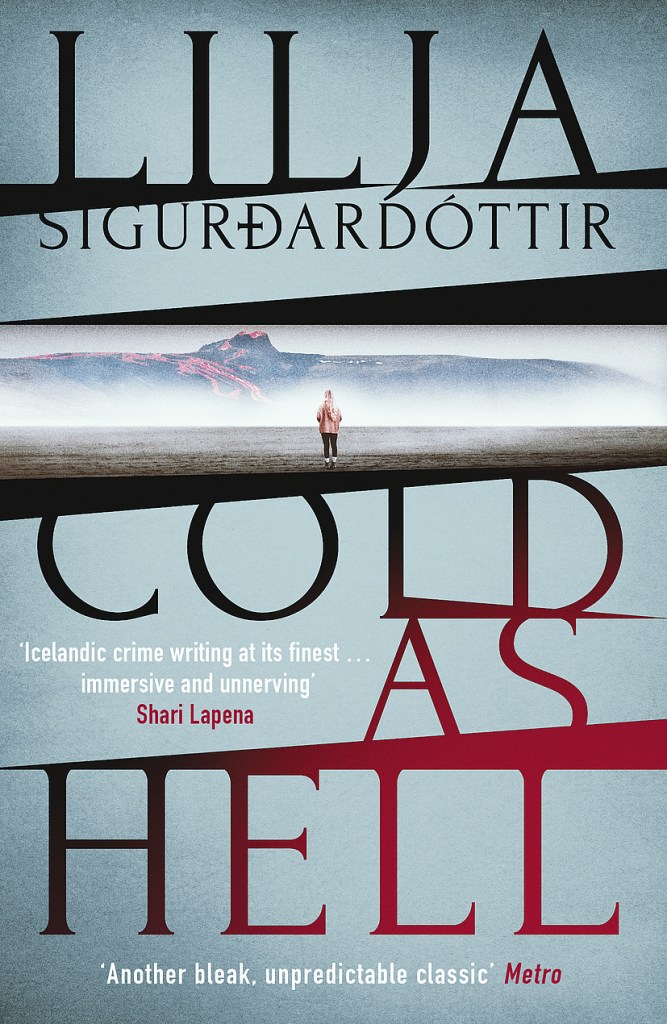
Lilja  Sigurðardóttir, translator Quentin Bates, Cold as Hell (2022)

I spent the Easter weekend with family at Bawley Point on the south coast of New South Wales. The Emerging Artist and I drove there from Sydney with two grandchildren aged 4 and 7, and came home alone. On the way down we had a great time playing Car Bingo on sheets designed by the EA, and when the excitement of seeing the umpteenth cow had waned we listened on Audible to The Twits. On the way back, without grandchildren, we listened to the rest of Cold as Hell, which we had begun on a previous trip.


When I was first interviewed for a job at The School Magazine, Australia’s venerable literary journal for children, I was asked to name some children’s books that I enjoyed. Among others, I mentioned The Twits and The BFG, both by Roald Dahl. Kath Hawke, the magazine’s editor, raised a belligerent eyebrow. ‘Oh, you like them, do you?’ she asked, and went on to talk about the relish with which both books describe people humiliating and physically hurting each other. I scoffed at such concerns, identified with the relish, and didn’t get the job. (I was, however, placed on an eligibility list and eventually spent nearly two decades working there.)

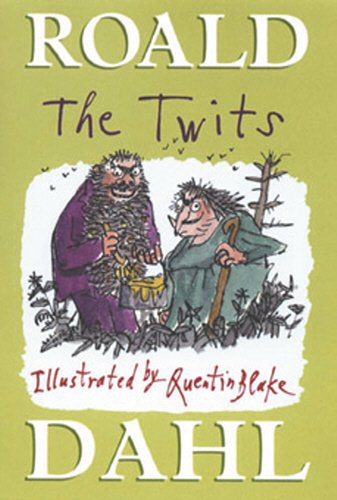
Hearing The Twits again 40 decades later, I sympathise more with Kath’s view. Two repulsive individuals play mean tricks on each other and torment birds and animals in their power. The animals and birds take an appropriate revenge. End of story. It was refreshing once, and maybe still is for young people, especially those for whom ‘poo poo’ is a dependably witty response to almost anything. Maybe I’m just being all 21st century, but while I find the description of Mr Twit gleefully disgusting, I wonder if that of Mrs Twit isn’t marred by an extra layer of visceral misogyny.


According to an online bookseller juggernaut Cold as Hell is the first book in ‘an addictive, nerve-shattering new series’.

Áróra Jónsdóttir, a twenty-something freelance financial investigator, flies to her native Iceland to check on her sister Ísafold. Ísafold has been in an abusive relationship and the two sisters have recently fallen out. Áróra soon realises that Ísafold hasn’t just been avoiding her, but has disappeared.

What can I say? Iceland is cold. Áróra uncovers some financial skulduggery when on a break from searching for Ísafold. There’s a weird character called Grimur (I think), an African refugee named Omar, a police detective who is some kind of uncle to Áróra. Áróra’s mother flies in from London to share the anxiety. There’s a little bit of sex and a little bit of violence. It all turns out pretty much as you’d expect, with a slight twist, as you’d expect.

It felt like a novel equivalent of Nordic Noir TV, and given that The Áróra Investigations is a series, it may turn up soon on content-hungry streaming. It passed the time pleasantly enough, but my nerves weren’t shattered and I’m not addicted.


We listened to these books while travelling through Dharawal country. I have written the blog post on the land of Gadigal and Wangal of the Eora nation. I gratefully acknowledge Elders past and present, and thank them for their custodianship of these lands over millennia.

William Steig’s Shrek!

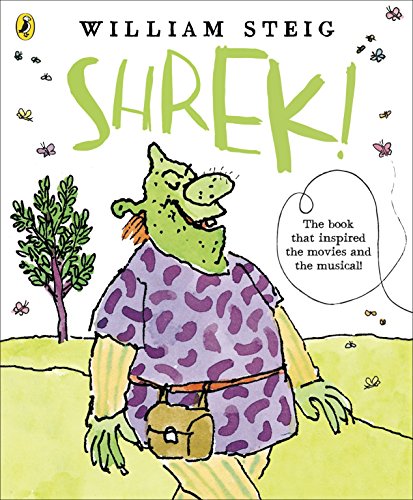
William Steig, Shrek! (©1990, Puffin 2017)

We recently watched the original Shrek movie with our grandchildren, and all four of us enjoyed it. Both our children were adults in 2001 when it was made, and grandchildren were a long way off, so I hadn’t seen the movie before, though though I’d seen clips. Nor had I been drawn into the rest of the Shrek franchise – half a dozen movies, a Broadway musical, a theme park beside the Thames. But I was aware that behind it all was a book by the great children’s author-illustrator William Steig.

When we told our six-year-old, a voracious reader, about the book she was interested, so we borrowed a copy from the library.

The six-year-old read it, said she had enjoyed it, then put it aside. I read it to the four-year-old, he said he enjoyed it, but didn’t demand an immediate reread.

I think it’s a case of the movie adaptation of a book making the book unreadable – not in the sense that it’s a difficult or unpleasant experience, but that the much broader, louder, and sentimental effects of the movie make the sly, deadpan humour and linguistic charm of the original almost impossible to discern. For example, in the movie, Shrek’s love interest starts out as a stereotypically beautiful princess, and when (spoiler alert!) she turns into an ogre she still has a degree of feminine cuteness. The love interest in the book is hideous on first encounter and remains hideous: we are never invited to see past her or Shrek’s surface ugliness to their inner beauty and goodness. Steig’s book doesn’t lose its nerve. The central joke, that the hero and then his love interest have no redeeming qualities, holds firm, and the book trusts its readers to get it. We quite like that they are pleased with themselves and each other, but we don’t have to like them at all.

That reversal of conventions and the absence of reassurance are what make the book fun.

The pages of our library copy aren’t numbered, but by my count, this is page 7:

As you can see, William Steig’s Shrek has none of the movie Shrek’s gross charm. He’s just gross.

A witch has sent Shrek on a quest to find the princess he will wed. On the previous page he has encountered a peasant scything a field. The peasant has uttered a few lines of verse about his unconsidered life, and now this.

The rhyming wordplay – Pheasant, peasant … pleasant present – is typical of the joyful use of language throughout the book. The unconscious peasant, blue in the face where on the previous page he was a healthy pink, didn’t cause any evident distress in our young readers. I think they got the joke. It’s typical of Steig’s respect for young readers that he doesn’t spell out how the peasant lost consciousness. (We love Steig’s Doctor De Soto and Sylvester and the Magic Pebble for their similar tact.)


I wrote this blog post in Gadigal Wangal country. I acknowledge Elders past, present and emerging for their continuing custodianship of this land, over which their sovereignty has never been ceded.


My blogging practice is generally to focus on the page that coincides with my age, currently 77. For short books like Shrek, I am stuck with page 7.

Katzuko Yamamoto’s Litto

Katzuko Yamamoto, Litto (©2020, translation by Junko Ishii Blades & Peter Cummins, Monomori Books 2023)

This is a sweet Japanese children’s story about the power of innocence.

Litto is a little dog (I believe ‘litto’ is a Japanese rendition of the English ‘little’), whose naive kindness wins through in a series of dangerous encounters – not only enabling him to escape but giving rise to transformations in his would-be attackers and captors. The book is illustrated by the author with line drawings that perfectly match the charming simplicity of the tale.

The story is accompanied by two essays explaining that it was inspired by the late Kazuo Murakami, an eminent geneticist who came to believe that the enormous complexity of human genes and DNA implies the existence of what he calls ‘Something Great’ guiding the course of events. In the book, this Something Great is called Gashuda. In an essay here, ‘Living in gratitude to Something Great’, he discusses the Covid pandemic, and to my mind comes dangerously close to saying that a positive mental attitude will protect from it. Certainly he argued, with evidence, that human genes can be ‘awakened’ to dramatic effect by mental and emotional factors.

Though I’m happy to be alerted to Professor Murakami’s work, and now have his book The Divine Code of Life on my radar, I can’t help feeling that Litto would have worked better as a book without the earnest weight of its supporting material.

Page 76 provides a taste of the writing. Litto has found a loving home with a girl named Ollie and her mother, a baker whose secret is that she always bakes with love:

One day, a lot of orders for bread came to Ollie’s mum.
The director of a large hospital in the city had heard of the bread, and he wanted all the patients to eat the Mother’s delicious bread.
Normally Ollie’s mum wouldn’t accept such large orders because she couldn’t bake so many loaves at one time. But she felt very grateful when she heard the director’s plan to give the patients her bread. She was passionately motivated by his thinking and really wanted all the hospital patients to eat her bread.
The Mother started making bread from the day before the bread was to be delivered. Putting her prayers into each of them, she kneaded the loaves carefully one by one.
She put her heart into the work while imagining the smiles of the people who would eat it. By the time the last loaf was baked, the sun had begun to rise. She delivered the bread to the hospital without delay.

The patients report that the bread is delicious and immediately begin to feel better. And soon Litto is reaching out to all the humans and animals he has influenced, enlisting them in a communal project to relieve the suffering of people in lockdown by distributing loaves of Ollie’s mum’s bread.

Sadly I didn’t manage to try out the book with its intended readership. My three-year-old grandson lost interest after half a page (there are no trucks!), and the six-year-old is currently far too busy exercising her newly developed reading skills (mainly on the Billy B Brown books) to tolerate being read to, unless it’s Harry Potter.

Jeannie Baker’s Desert Jungle

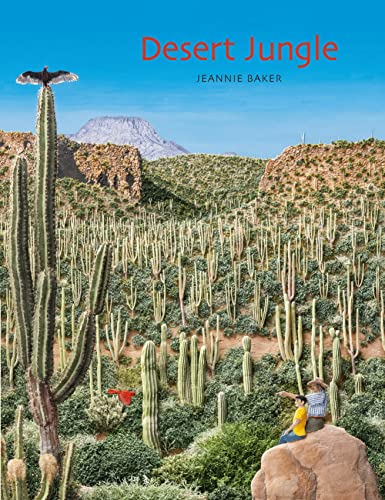
Jeannie Baker, Desert Jungle (Walker Books Australia 2023)

There are no books quite like Jeannie Baker’s. For four decades she has been creating picture books that are immediately recognisable as hers. Where the Forest Meets the Sea (1988) was the first one I encountered. In it, a small boy wanders through the Daintree rainforest in North Queensland. The forest is recreated in collaged materials, most of them gathered in the real-life rainforest, to stunning effect. The book is meant for young readers, but readers of all ages are intrigued and delighted by the extraordinarily detailed work that has gone into the images.

Since then, every couple of years, a new book using similar collage techniques has appeared. All of them reflect a deep concern and love for the natural environment. Window (1991) traces the changes to a rural environment brought about by urban sprawl as seen through a child’s window. The Story of Rosy Dock (1995) features a beautiful but destructive invasive weed. Circle (2016) is about migratory birds.

Jeannie Baker has made short films of Where the Forest Meets the Sea and The Story of Rosy Dock – both of which are available from the National Film and Sound Archive. And there have been many exhibitions of her original artwork.

Which brings me to Desert Jungle. I read the book at the Penrith Regional Art Gallery, at an exhibition of the collages for this book. The gallery website describes the work (and the book) in these terms:

In this new story, Jeannie explores the Valley of the Cirios in Mexico, through the perspective of a young child and his grandfather. In parts of the Valley, towering stands of Cardon Cactus – some of the largest cacti on Earth – and Elephant Trees, mix with Cirios and other unique desert plants as a ‘forest’, almost a desert jungle. These cacti and other plants form both subject and material for Jeannie, who incorporates clippings from plants in her intricate and stunning works

https://www.penrithregionalgallery.com.au/events/jeannie-baker-desert-jungle/

The collages are in effect dioramas, displayed behind perspex that is curved to accommodate their depth. Part of the fascination is to read the labels, to see that most of the images are made from parts of the plants they represent. Even, in an image of the young boy sitting with his grandfather, the hairs on the old man’s arm are actual human hair meticulously glued in place.

In the context of these wonders, the book’s story is almost of secondary interest. When the boy visits his grandfather, he doesn’t like to go out into the surrounding desert because he’s afraid of coyotes, so he stays by the house and plays on his tablet. A coyote steals his precious technology and when he wanders out to search for it, he finds the desert isn’t so scary after all. He even encounters the coyote and nothing bad happens. It’s an understated little drama about facing one’s fears, and at the same time has something to say about the importance of engaging with the natural world.

I haven’t read it with a small child yet. I’ll be interested to see how it goes.

Reading with the Grandies 32: Digger, Digger and Despereaux

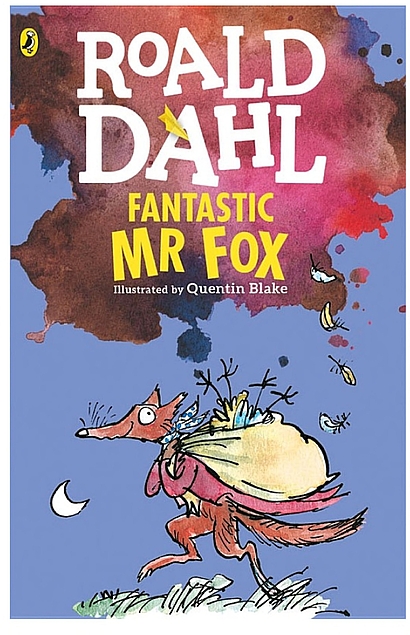
The world has changed since my last post about grandparental reading. Our granddaughter has started school, which means that her little brother now goes to Day Care without her reassuring presence. They both still like to be read to. Here are some of the titles that now have a look-in among the established favourites such as Catwings, Grug, Mrs Wobble the Waitress or Fantastic Mr Fox.


Sally Sutton, illustrated by Brian Lovelock, Dig, Dump, Roll (Walker Books Australia 2018)

For a brief time, our grandparentng days included the reading time at our nearest bricks and mortar bookshop, Harry Hartog’s in the Marrickville Metro. On one of our attendances we asked the brilliant ukulele-playing book reader to include a book about diggers as a treat for our two-year-old grandson. She obliged, and made a sale for which we are immensely grateful.

It’s a simple book, first published in Australia but now available from Candlewick in the USA and Walker in the UK. It’s structured as a series of riddles: What’s that making that noise? Here’s a hint … [Turn the page] … machinery revealed. The book’s refrain has now entered permanently into the vocabulary of the two year old and the five year old as well as their grandparents: ‘Digger digger coming through!’

An added topical bonus is that we discover at the end that all the machinery and the builders have been constructing a school: ‘You can learn and play here too.’


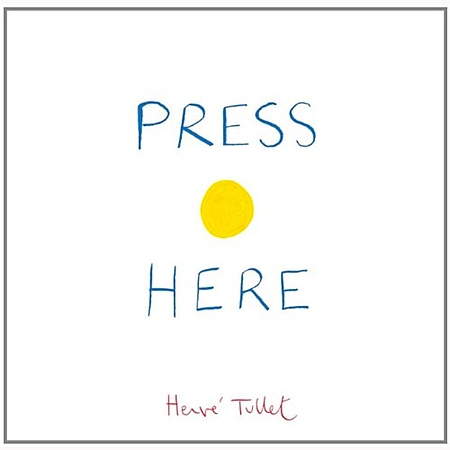
Hervé Tullet, Press Here (Allen & Unwin, first published in France as Un Livre by Bayard Editions 2010)

This is a terrific piece of design. One spread presents an image of one or more coloured dots with an instruction (‘Press here and turn the page’, ‘Tilt the page to the left’, and so on). The next spread reveals the result of your action. The dots multiply, change colour, move around the page, get bigger and smaller. It’s a wonderful book to read and be read to, and I’ve seen people of various ages having a nice time with it.

The English translator isn’t named. It may have been designer Hervé Tullet himself. Whoever it was did a magnificent job.


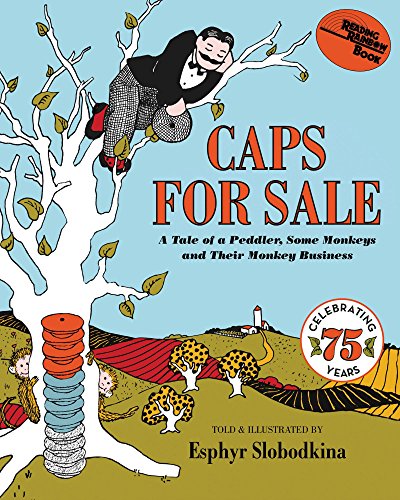
Esphyr Slobodkina, Caps for Sale (©1940)

We may have a copy of this in a box somewhere. I remember enjoying it with our children, and now it’s been read to us by the marvellous Lisa at Balmain Library Storytime.

A troupe of monkeys steal a pedlar’s caps from his head while he’s asleep. He tries everything he can think of to get his caps back, and in the end manages it in an unexpected way. The language is wonderfully incantatory, and apart from sheer enjoyment value, there’s plenty to exercise young minds – the range of colours, numbers, and of course the overarching problem to be solved.

Esphyr Slobodkina was a Russian-born avant garde artist and feminist, and this is brilliant.


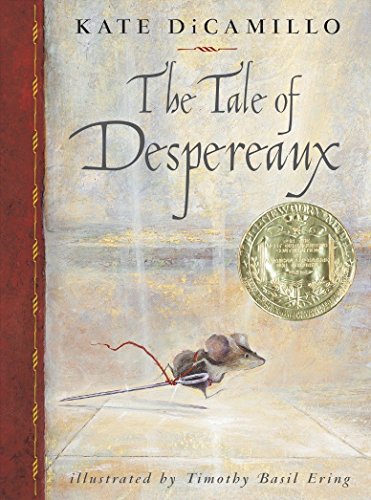
Kate diCamillo, The Tale of Despereaux (Being the Story of a Mouse, a Princess, Some Soup, and a Spool of Thread) (Walker Books 2003)

I may be posting about this prematurely, as we’re only a couple of chapters in – it’s a big chapter book. But both Nana / the Emerging Artist and I are enjoying it immensely, and Granddaughter listened wide-eyed.

I did read parts of this decades ago, but it’s brilliantly fresh this time around.

The princess, known as Pea, isn’t all that keen on the business of choosing a suitor, but is very taken by a little mouse, the Despereaux of the book’s title, who is entranced by her beauty. The mouse breaks some of the most sacred rules of mousekind by first letting humans see him, then letting one of them (Pea) touch him, and then – oh horror! – speaking to them. But what are you gong to do when the most beautiful creature you’ve ever seen doesn’t think you’re an ugly, big-eared runt, but thinks you’re cute, with cute ears?


We do a lot of reading. Small amounts of Paw Patrol, My Little Pony, Peppa Pig. These blog posts are selective.

Reading with the Grandies 31: Roald Dahl, Grug and the Bus Book

In the months since I last posted about Ruby’s reading, she has discovered Roald Dahl, and her little brother has started asking to be read to from what he calls the ‘Bus Book’.

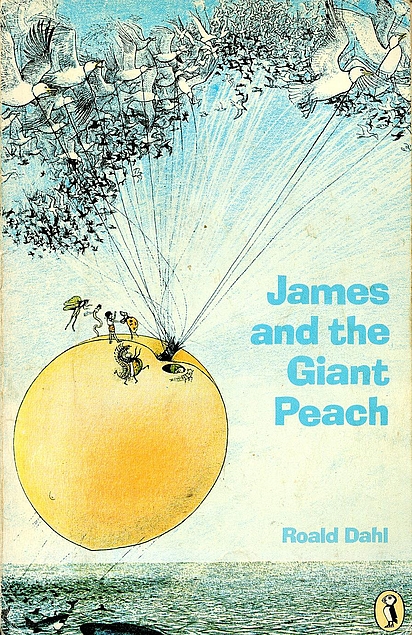
Roald Dahl, James and the Giant Peach (© 1961, illustrations © Quentin Blake 1995, Penguin Random House 2016)
—–, Fantastic Mr Fox (© 1970, illustrations © Quentin Blake 1996, Penguin Random House 2016)
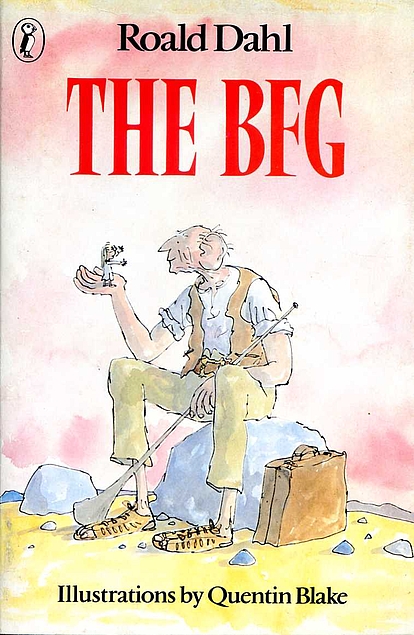
—–. The BFG (© 1982, illustrations © Quentin Blake 1982, Puffin 1985)

Whatever else you might think about Roald Dahl (and I know there are people would keep him away from young children because of what they see as cruelty), his sentences are a joy to read aloud, and evidently a joy to hear, while his plots are full to bursting with vividly imagined incidents. We’ve read James and the Giant Peach more than once, a couple of pages at a time. We’ve reached page 54 or so of The BFG, in one sitting, but will probably take a while to return to it because something about it is too scary.

Fantastic Mr Fox has been an amazing success. Currently we see Ruby for a couple of hours in the afternoon two days a week. On half a dozen successive Nanna-and-Poppa afternoons, she has asked for Fantastic Mr Fox, and listened to the whole book in a single sitting. Once or twice she has agreed to have something else as an appetiser, but this is the book she wants, and she wants it all. At first, she would cover her ears to mute the bits she found scary, but by the most recent reading she stayed for everything. As the non-reading grandparent, it’s wonderful to watch her absorption in the story, and her intent study of Quentin Blake’s illustrations.

I hope we can keep Wes Andersen’s travesty of a film out of the picture until it’s too late for it to spoil anything. And I expect Charlie and the Chocolate Factory, which I loathe for its, well, cruelty as well as its racism and gooiness, can’t be too far away. But for now, we’re having a ball.


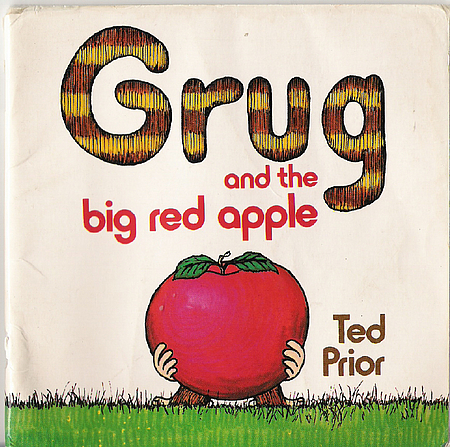
Ted Prior, Grug and the Big Red Apple (1979)
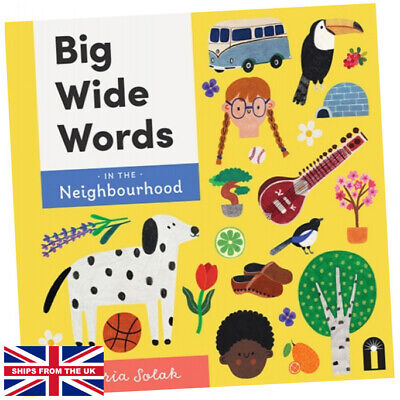
Daria Solak, Big Wide Words in the Neighbourhood (Hardie Grant 2022)
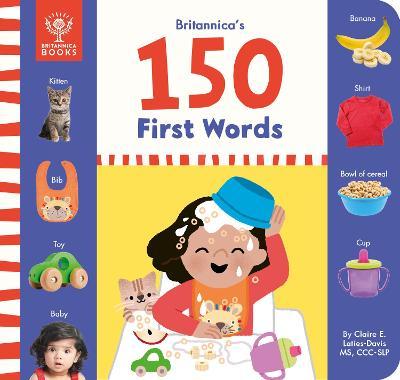
Claire Laties-Davis (text), Kazia Dudziuk (illustrations), Britannica’s First 150 Words (Britannica Books 2021)

As Charlie’s second birthday approaches, his interest in story isn’t as intense as his big sister’s. He loves spreads where we name an object and he finds it. The pages he comes back to again and again, and then is reluctant to leave, have pictures of buses, cars and especially TRUCKS. These two books, with illustrations by Daria Solak and Kazia Dudziuk respectively, stand out for their surprising choices of words, and unconventional illustrations.

Grug and the Big Red Apple, on the other hand, is a story that does the trick. The introductory bits where Grug, the mysteriously animate scrap of Australian flora, finds the apple, and the bit where Clara the carpet snake coils around the apple in order to move it – all that’s well and good, but we all love the last few spreads where the apple looms larger and larger in the foreground while Grug looks hungrier and hungrier beside it, and then, turn the page and all that’s left is a tiny core and a sated Grug. Yay for story!

Ruby Reads 30: Billie B Brown

Sally Rippin (writer) and Aki Fukuoka (illustrator), Billie B Brown: The Bad Butterfly (Hardie Grant Children’s Publishing 2010) [Nº 1]
––––, Billie B Brown: The Perfect Present (2010) [Nº 7]
––––, Billie B Brown: The Birthday Mix-up (2011) [Nº 10]
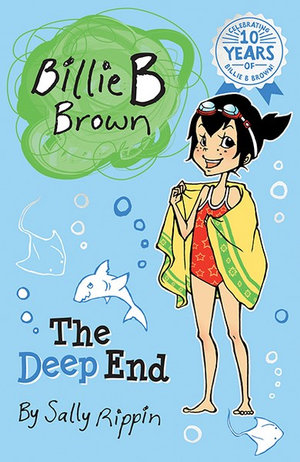
––––, Billie B Brown: The Deep End (2012) [Nº 17]
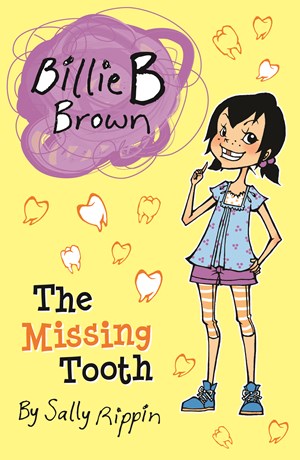
––––, Billie B Brown: The Missing Tooth (2020) [Nº 19]
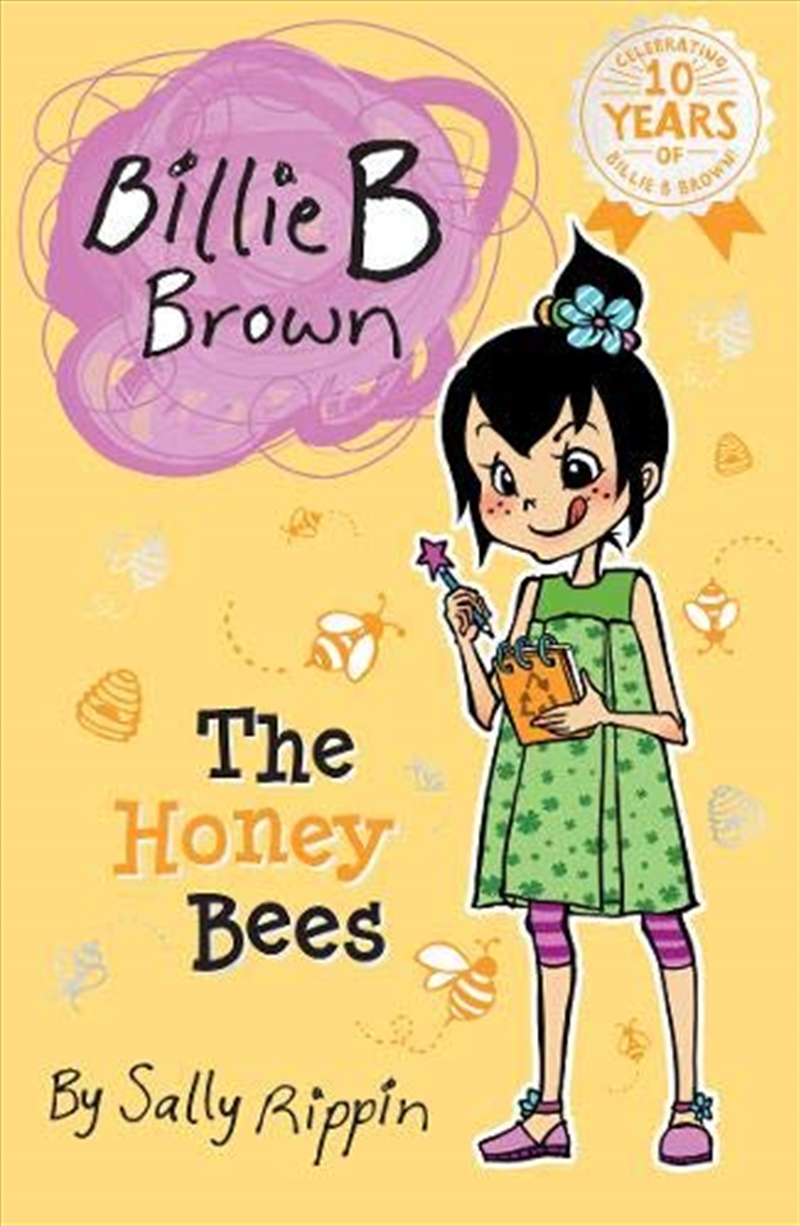
––––, Billie B Brown: The Honey Bees (2020) [Nº 23]
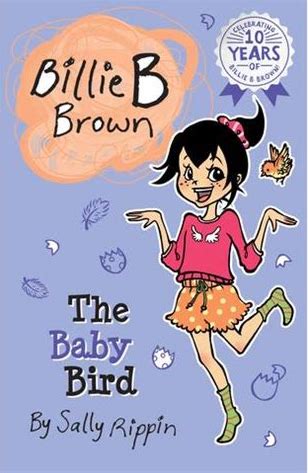
––––, Billie B Brown: The Baby Bird (2021) [Nº 24]

I used to be fairly knowledgeable about children’s literature, but that was a while ago. Until two months ago I hadn’t heard of Australia’s top-selling female author Sally Rippin or her Billie B Brown series, which Goodreads says has sold more than 4.5 million copies in 14 languages.

On advice from a salesperson at Gleebooks, Ruby’s local bricks and mortar bookshop, we bought four titles, then another three a couple of weeks later.

They’re chapter books, intended mainly for six-year-old readers but Ruby, who is still 4, loves them. It’s living evidence that children often enjoy books meant for readers who are older than themselves.

In each book, Billie B Brown – the middle B stands for something different every time – meets an age-appropriate challenge. In book Nº 1, The Bad Butterfly, she and her best friend, Jack from next door, go to ballet classes and discover that Jack excels at the dainty butterfly dance while Billie does better as a stomping troll – and (spoiler alert) they tell the teacher that Billie will dance a boy’s part (a troll) and Jack a girl’s (a butterfly). This is done quietly, without flag-waving or defiance, just two young people solving a problem, and only incidentally evoking a sigh of relief from the adult reader who was bristling at the dance school’s gender stereotyping.

And so it goes. In The Perfect Present, Billie (the B is for Bursting) is excited then disappointed about Christmas; in The Birthday Mix-up, she has a party and it looks as if no one is coming; she is painfully anxious about swimming in the deep end of the pool; she loses a tooth, but not completely according to plan; she learns about bee-sting allergy, and is distraught about an abandoned baby bird. The story generally goes how you would expect: the guests arrive; the tooth fairy delivers; the baby bird is OK; relationships with other children are realistically fraught, and reassuringly resolved. But there’s nothing stale about the tellings, and Aki Fukuoka’s manga-ish drawings add to the freshness. Here’s her full-page drawing that ends The Honey Bees (which she discusses on YouTube, here):

It’s uncanny how many of Ruby’s concerns are taken up explicitly in these books – birthdays, Christmas, the danger posed by bees, friendships, swimming, ballerinas, letters and numbers, little brothers, and more. I doubt if Billie would have been quite as much appeal to either of my sons. But Sally Rippin and Aki Fukuoka have another series, Hey Jack! Maybe that will still be there when my other grandchild is thirsty for chapter books.

PS: In his memoir Tell Me Why, Archie Roach calls his grandchildren grandies. I haven’t seen the word in a dictionary, but I love it, and I’m using it. As Ruby’s little brother is just beginning to enjoy being read to, I’m changing the name of this series of posts to Reading with the grandies.

Ruby Reads 29: Gift

It’s the time of year when Ruby comes into possession of many new books, first for her birthday, and then for Christmas. This is one I gave her, and which she took time to enjoy in the midst of things. (I love it.)


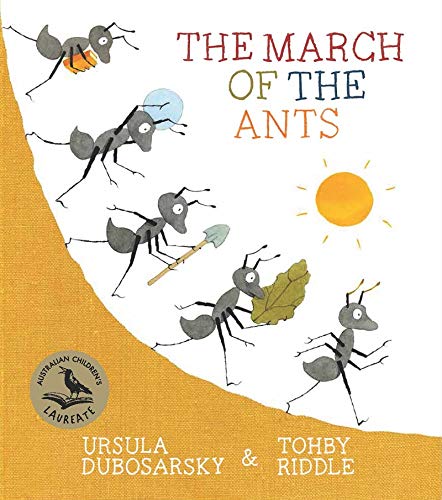
Ursula Dubosarsky and Tohby Riddle, The March of the Ants (Book Trail 2021)

Full disclosure: Ursula Dubosarsky and Tohby Riddle are friends of mine.

They’re also both geniuses, who have collaborated on a number of books for children. This gorgeous picture book is the latest. The text was read by Ursula at her launch as Australian Children’s Laureate in February 2020. Neither she nor Tohby could have known that its message about the importance of story had a prophetic relevance for the two years that lay ahead.

A group of ants set out on an excursion. Every one of them carries something important for the enterprise. When one little ant shows up with just a book, there is much mockery. But the little ant persists. Later when all the others are tired from their exertions and the food and drink have run out, the little ant reads to the others, and they are revived by the story.

Tohby’s images are masterly, full of odd details without being at all crowded.

Here’s a video of a laurel-crowned Ursula reading the book, from the Australian Children’s Laureate Foundation webpage


The March of the Ants is the 15th and final book I’ve read for the Australian Women Writers Challenge 2021.

Ruby Reads 28: Mostly William Steig

A good friend who has a vast library of children’s books decided it might be time for Ruby to meet William Steig, one of the greats of US children’s literature. Shrek is his best known book, but wasn’t among the swag she lent us. The four books in our swag have been read many times by many children over the decades, and needed to be treated with great care. After we read them to Ruby, we decided to get hold of copies we could keep and manhandle. It turned out that none of the three public libraries I belong to have copies; I’ve ordered them from bookshops, but it will take months for them to arrive from ‘suppliers’.


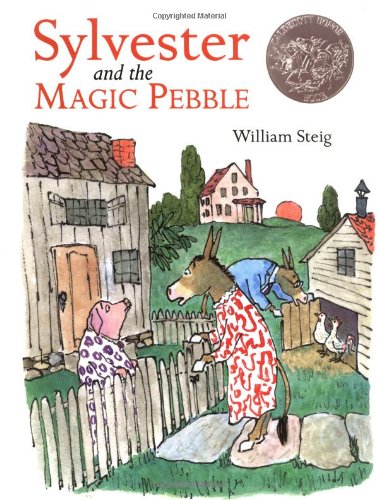
William Steig, Sylvester and the Magic Pebble (©1969, Simon & Schuster 2005)

Sylvester is a donkey who finds a pebble that grants his wishes. As you’d expect, one of his wishes goes terribly wrong. The wonder of this book is that the wrongness isn’t Sylvester’s fault: his wish is a clever response to a real threat, so the pickle it lands him in isn’t a punishment. All the same, the bulk of the book has poor Sylvester trapped and immobile, while his parents search for him desperately.

The suspense is terrible. All the more, because z– not to give anything away – the reader can see just how close Sylvester is to a solution to his problem. Yet the happy end, when it comes, is a huge relief.

We’ve only read this once, but it feels as if it will be part of Ruby’s repertoire for a while. We had to play a game based on it, but Ruby instructed us to make up our own wishes. So the appeal of th story so far seems to be in the idea of a tiny red stone with magic powers.


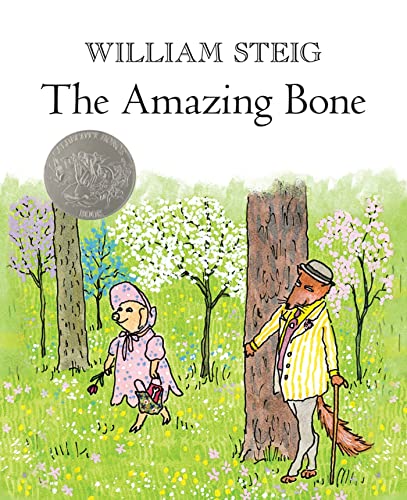
William Steig, The Amazing Bone (©1976, Puffin 1981)

Pearl is a pig who dresses in pink (always a winner with Ruby: ‘Did you know my favourite colour is pink, Poppa?’ ‘Yes, I had gathered that somehow’). One day, relaxing in the woods, she discovers and befriends a magical talking bone.

The bone is much more active than the pebble in the earlier book, and the dangers that Pearl faces are more dramatic: first some masked bandits, and then a suave and hungry fox. The bone scares the bandits off without breaking a sweat, but the fox is another matter.

Needless to say, Pearl and the bone escape the fox and, like Sylvester, Pearl returns to her parents. But whereas the pebble was locked in a safe out of harm’s way, the bone lives on in pride of place in Perl’s household.

I’d hesitated to read this to Ruby because she tends not to like scary stories. But she loved it


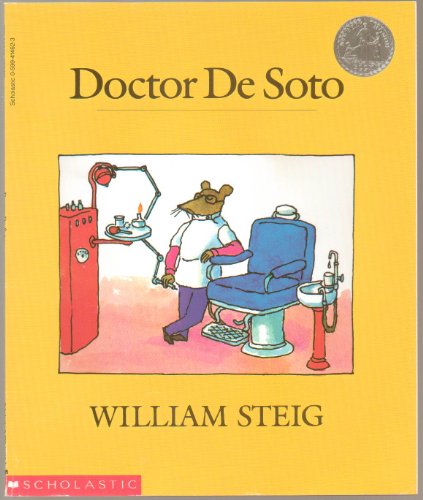
William Steig, Doctor De Soto (Farrar Straus & Giroux 1982)

Doctor De Soto is a mouse who is also an excellent dentist. For work health and safety reasons, dangerous animals such as cats are banned from his practice. One day, however, a dapper fox who is in extreme pain from toothache pleads for his help. Doctor De Soto and his wife, who is also his able assistant, reluctantly take pity on the wretched creature and remove the troublesome tooth. But they know, and we know, that the fox is still a fox and will eat them both once he is relieved of his pain. (Spoiler alert: Doctor de Soto and his wife outsmart the fox and stay safe.)

There are comic-terrifying images of the mouse-dentist actually going inside the fox’s mouth, with its huge sharp teeth. Ruby kept her hands at the ready to clamp over her ears each time this happened, but decided over and over to let the story continue: ‘I think they’ll escape,’ she said. I think she had the crocodile’s jaws in Jonny Lambert’s Let’s All Creep Through Crocodile Creek (see below) as a reference point, and so was prepared to trust the story teller not to hand her a steaming pile of tragedy.

As for me, I love Doctor and Mrs De Soto for their courage, compassion, and quick-wittedness. I also love the dapper and unscrupulous fox, who may actually be the same fox who troubled Pearl and the bone, now recovered from what they did to him.


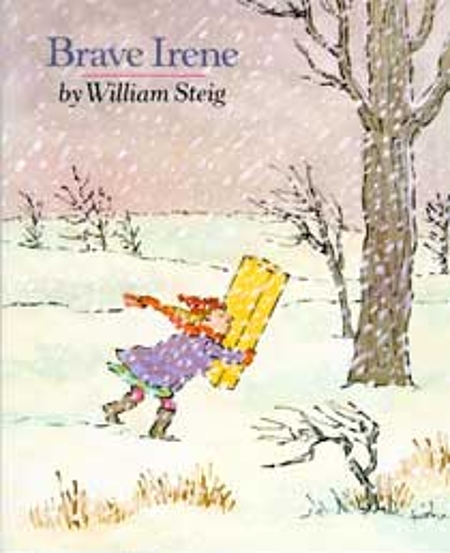
William Steig, Brave Irene (©1986, Victor Gollancz Ltd 1987)

Irene is a young human. Her mother has made a dress for the Duchess, but is taken ill and can’t deliver it in time for the ball. When Irene offers to deliver it for her, the mother can see no other option and reluctantly agrees. So brave Irene struggles on through page after page of blizzard. She rides on the dress’s package like a sled, and when the wind snatches the beautiful dress from her, she struggles on anyway because it would be even harder to return home.

It all turns out well in the end.

I’m not sure Ruby quite got this book, but I’m hoping it will grow on her. Irene is no Disney princess, which is a plus from my point of view, but not so much from Ruby’s.


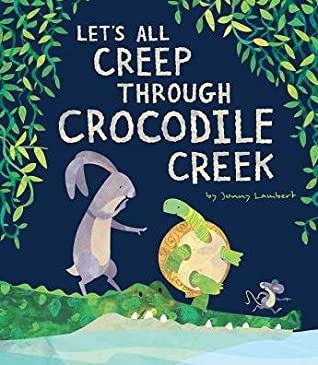
Jonny Lambert, Let’s All Creep Through Crocodile Creek (Little Tiger Press 2019)

I had to read this book to myself in order to understand what I had to do when Ruby said, ‘I’m the mouse, you’re the rabbit and Nanna is the turtle.’

Three animals take a short cut across a creek. The mouse is the leader who knows it’s safe because they have never seen a crocodile in this creek. The turtle is a little bit thick and has to have everything explained to her/him: ‘What does a crocodile look like?’ and so on. The rabbit is all too aware of the dangers and preaches caution.

As they cross the creek, the three adventurers keep seeing things that match up to the mouse’s description of crocodiles: from bumpy, scaly backs to big eyes and very sharp teeth. The mouse pooh poohs the similarities, the turtle asks more questions, and the rabbit understands the danger they are in all too well but her/his cries fall on deaf ears.

It’s a lot of fun. Thanks to the interplay of text and image, we understand what is going on so much better than the characters, so the pleasures of the unreliable narrator can begin at an early age. And in our case, the book is perfect for re-enactments if you have two willing collaborators. It may seem odd to write about this in the same blog post as the William Steig books, but the link is there in the scary teeth.