There’s a way of talking about children’s literature as if it’s a genre, like detective stories or police procedurals or thrillers or vampire stories or fantasy novels. I think this is quite wrong. A genre has acknowledged conventions, that can be followed flexibly or even violated in any particular specimen of the genre. The conventions change and grow with time. But they still rule. It’s not a vampire movie if no one sucks blood. It’s not a detective story if there’s no major crime in the first quarter of the book. Children’s literature isn’t like that. It’s defined entirely by the imagined readership. I like Margaret Mahy’s definition, which I remember as: Children’s literature is literature that you can start enjoying while a child.
The two books I’ve just read illustrate my point.
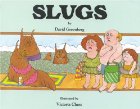
David Greenberg & Victoria Chess, Slugs (Pepper Press 1983)
I read Slugs for the first time in years the other night. My five year old great-niece was staying with her father. At bedtime, having scoured our bookshelves, she emerged with this unpleasant little book and asked me in her sweet, shy way to read it to her. Evidently she’d fallen in love with the book earlier in the year when they stayed here in our absence. I complied with as much gusto as I could muster. I find the book profoundly unattractive. It has rudimentary rhymes, describing a huge variety of slugs, many being subjected to would-be comic indignities, tortured and murdered in hideous ways, all with images showing the brown creatures impassively accepting their fates, until in the last pages they come and wreak a horrible revenge on a child (known in the book as ‘you’), ending:
And after how you’ve treated Slugs
It surely serves you right!
My great-niece seemed to enjoy having this horror read to her, and when I’d finished she sat for maybe half an hour studying the pages intently.
Clearly she is the reader the creators had in mind – as well as my sons twenty or so years ago. I am not that reader.
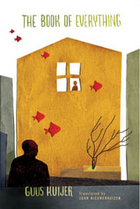
Guus Kuijer, The Book of Everything (2004; Translation by John Nieuwenhuizen, Allen & Unwin 2006)
The Book of Everything is definitely a children’s book, but it couldn’t be more different. It has more in common with J M Coetzee’s Boyhood (which I’ll blog about during the week), in subject matter, point of view, even tone, than it does with Slugs. A lonely boy, helped by apparitions of Jesus and an old woman who is almost certainly a witch, finds a way to free himself and his family from the dominion of his harsh, violent, religiously extreme father.
The book speaks in particular to literate children. The hero,Thomas, finds inspiration in Emil and the Detectives, Joanna Spyri’s All Alone in the World and the Book of Genesis. The narrative assumes familiarity with literary conventions (OK, there are some conventions!), particularly those about witches in children’s literature. I found my adult-reader self wanting explanations of Thomas’s visions: ‘Please be clear about this. Is the poor child hallucinating from terror, or is this a world where such things really happen?’ Such questions are just plain irrelevant to the book’s imagined reader, and once I moved over to occupy that position the book opened up to me – or I opened up to it.
It occurred to me that some animated movies tend to wink knowingly over the heads of the children in their audience, both these books are winking at the children – ‘Don’t tell the adults.’ If we have to talk genre, the first is something like Perversely Cautionary Verse (which may be a genre found only in children’s literature), the second Domestic Magic Realism (and I doubt if that is limited to any age readers).
I read The Book of Everything on Richard Tulloch‘s recommendation. His dramatisation of it will be playing at Belvoir Street at the end of the year. It seems to me that one of his challenges is to take the story away from the children and give it to the adults who will presumably make up the bulk of the Belvoir audience.

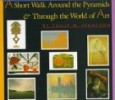 I don’t do much re-reading of old favourites. Maybe I should. I first read this when it was new, with an eye to possibly publishing an excerpt in the School Magazine. (We had reviewed and excerpted Philip M Isaacson’s marvellous first book, Round Buildings, Square Buildings, & Buildings that Wiggle Like a Fish.) I picked it up again today because Penny had taken it to read to Mollie in the nursing home, and reported that it had been a great success – not just for the photographs of the pyramids, but also for the actual reading-aloud, at least of the first few pages.


 Me fail? I fly!