Tag Archives: David Malouf

Sydney Writers’ Festival: My Day 2

One of the joys of the Sydney Writers’ Festival is hearing from friends and complete strangers about events you’ve missed. This morning in the coffee queue an older woman, a Millers Point resident currently threatened with eviction (Millers Point residents can look down in the festival from their rear windows) was off to a session on how to kill yourself (though probably phrased less bluntly than that) but was also planning one on enjoying old age. I went in out of the sunshine into the very life affirming

10 am: Marathon Reading: Asia Pacific Poetry

This event, presided over by the genial Michael Brennan of Vagabond Press, more or less continued the launch of that publisher’s new Asia Pacific Poetry Series at Gleebooks on Saturday.

A modest crowd sat around at small tables, while, to quote the Festival web site, a line-up of 10 writers made ‘poetry sing in its many voices across languages and get a little beyond the anglosphere’.

Kyoko Yoshida from Japan kicked off with a surrealist short story from her collection Disorientalism. She said she’d never been to Australia before, but the story was set here, and featured a weird love triangle in which one participant was a kangaroo who was very good at sales.

Violet Cho read a long poem in a Karen language, followed by David Gilbert reading us his English version. It’s fascinating to hear the music of a poem before having any idea of its meaning. And Karen is very musical.

Robert Nery, a Sydneysider, read poems translated from Tagalog: crazy, dangerous street scenes filled with brand names, many immediately recognisable to a Sydney audience – capitalism makes the whole world kin, perhaps.

Elizabeth Allen, one of the two pillars on which Vagabond Press stands, represented the Anglosphere – anglophone Australia is after all part of the Asia Pacific.

Nhã Thuyên fro Vietnam was next. In introducing herself she said she was nervous (and perhaps she had a cold as well), that she was usually more human than she was right then. She read beautifully and musically in Vietnamese, and Liz Allen stepped up to the mike with an english version.

Bella Li, from Melbourne, read in  a dour, uncompromising Melburnian manner.

Mabel Lee, who had been introduced by Michael Brennan as the matriarch of Chinese translation in Australia, read magisterially. ‘There must be as many women writing poetry in China as men,’ she said by way of introduction,  but it’s men who get all the attention in the outside world.’ Her edition of poems by three Chinese writers, two of them women, Poems of Hong Ying, Zhai Yongming & Yang Lian, is Number 6 in the Asia Pacific Poets Series.

Adam Aitken is too young and too mild-mannered to be called the patriarch of anything, but he brought a certain local gravitas with him. He read ‘Ala Moana’, which was published in his chapbook, Tonto’s Revenge, and is the only poem of the session that I’d read previously. Adam described it in his introduction as an anti-touristic touristic poem.

Dinah Roma read last. Her Naming the Ruins is the first book by a Philippine poet living in the Philippines to be published in Australia.

We walked out into the sunlight ‘with fragments of poems like ornaments in our hair’ (to quote a poem a student wrote for me in my brief stint as an Eng Lit tutor in a bygone era).

Usually it rains and is nasty for at least some of the Writers’ Festival. Not so far at this one.

It should be raining

11.30 am: David Malouf: Celebrating 80 Years
David Malouf is probably the most loved public figure in Australia. His novels are justly acclaimed. His poetry too. I was surprised to learn from Tegan Bennett Daylight, his interlocutor in this session, that the recently published A First Place is the first collection of his essays: it seems as if his writing about Brisbane and his Queensland education have been working away on the general consciousness for decades.

This was a wonderful session. Tegan Bennett Daylight mentioned in passing that she had been immersed in Malouf’s work for a couple of months in preparation, and it showed – not in any encyclopaedic knowledge but in a deep appreciation, and in a willingness to risk interpretations.

At one stage David said that in a conversation about a book, the only person who hasn’t read it is likely to be the author. Everyone else is in a position to see things that the author can’t see. (Doesn’t that just cry out for the hashtag #oftwasthoughtbutneersowellexpressed? A lot of his talk does that.) Emboldened, TBD offered her observation that all DM’s novels are about a man who finds himself removed from his usual environment, and in the new environment, seeing things freshly, discovers what it is to be. The example she gave as her test case was from Ransom. DM didn’t respond directly to her thesis, but spoke charmingly at some length about what he was trying to do with that part of the book. A little later almost apologised,  saying that what he had said didn’t in any way contradict her thesis.

The conversation played out like a beautiful piece of theatrical improvisation: no one blocked, every question led somewhere interesting. A couple of times Tegan had to take a moment to process what had just been said to her, while David stayed ready to field whatever she gave him as a result. When she ventured into potentially dangerous waters and asked this eminently private author about being in love when writing one of his books, he managed with extraordinary grace to give no information about his private life while answering the question very interestingly about the book.

The session finished with David reading ‘Night Poem’ from Earth Hour (I would have asked for ‘A Green Miscellany’ or ‘Touching the Earth’), and then, most beautifully, Tegan drew our attention to David’s generosity as an interviewee, in particular his generosity to her. I hope this conversation turns up on the radio. Do listen to it.

I dashed home to walk and feed the dog and generally attend to the rest of life, then back for the next session. In the queue, we heard about a brilliant session with the writers of The Gods of Wheat Street, in which among other things they talked about how tough Jimmy McGovern had been with them when they were working on Redfern Now: ‘Make the characters bleed,’ he would say, and ‘That’s furniture, cut it out.’

4. 30 pm: Alice Walker: Beauty in Truth
This was a  documentary movie by Pratibha Parmar, followed by  Alice Walker, again in conversation with Caroline Baum. It went some way to explaining the awkwardness of the previous evening’s conversation: how could they talk about Alice Walker’s life and times when they knew that the next afternoon many of the people in that audience would be seeing this movie, which is nothing if not the life and times of Alice Walker? The film goes into detail about her work, her activism and how they relate to each other in a way that was frustratingly not there yesterday. Her early life, her participation in the Civil Rights movement, her relationships, the writing of her books, all were in the film, where yesterday had tiptoed around them.

The film also shed light on what I registered as a kind of serene abrasiveness. Alice Walker hasn’t been in the habit of speaking in order to be liked: I knew The Color Purple  had been criticised, but had no idea what a  vehement and sustained attack she had endured. And there has been plenty of nastiness in the press since then, often enough from African and African communities, about her writing about uncomfortable truths as much as about her personal life. She has been on the receiving end of some of the worst of celebrity culture, so a little wary defensiveness is more than understandable.

Also, my companion pointed out, she has fabulous clothes and has created a beautiful living, meditating and working environment for herself.

We didn’t stay for the talk, because we had to eat, catch up and walk up town for our next session. Having just been to a movie, which arguably belonged in the Film Festival rather than the Writers’ Festival, we now went to a stand-up show, which you might think belonged in the Comedy Festival.

8.30: Sandy Toksvig: My Valentine
We knew Sandi Toksvig as one of the occasional women panellists on QI. This show, she said, was her Valentine to Life. It began and ended with bits of Beethoven’s Ninth Symphony; we learned a little Danish which led to a surprisingly poignant pay-off; we found out that Sandy Toksvig has been on British Television for 34 years, and some of the audience vocally remembered her from a children’s show – ‘I see that some of my children have gown up,’ she said). We laughed a lot, and bought one of her books, which turns out to be a female to male cross-dresser who enlisted to fight in the Boer War.
Ngurrumbang update and some very old news

It can now be revealed that Melburnians will have a chance to see Ngurrumbang on their home turf in May. No need this time to travel to Sydney, Brisbane, Adelaide or central Spain, just head off to the Australian Shorts session of the Human Rights Arts and Film Festival at the Australian Centre for the Moving Image 7.30 pm on 9 May.  The whole program looks fabulous. (Sadly, that set of films won’t be part of the Festival as it travels around the country in the next three months.)

And other news: I was interviewed yesterday for a project about resistance to conscription at the time of the Vietnam War. Gulliver Media’s Hell No! We Won’t Go, which may one day become a film, is shaping up at present as a collection of interviews with draft resisters and conscientious objectors. I was a conscientious objector and happy to delve into memory as part of this project to preserve part of our history that is threatened with occlusion.

I also delved into a diary that I kept at the time (my CO hearing was either late 1970 or early 1971), which prompts me to offer the following unsolicited advice to anyone in their early 20s who is keeping a diary: no one, including yourself, is going to be interested in your half-baked witticisms and introspective anxieties in 40 years time; what they’ll want is NAMES, and DATES, and PLACES.

While finding very little to help my recollections of the court case, and shrivelling with embarrassment at the angst and pomposity of 23-year-old me (which makes me look even more kindly on Lena Dunham’s Girls),  I did find one or two entertaining snippets. On Les Murray:

I met Les Murray at Dianne’s party last Saturday night, a man who is not shy about quoting from his own someday-to-be-written ‘Table Talk’. Among other things he said wh I found interesting: ‘There is no Tao for stumbling in the dark. If you had the Tao, you’d walk.’

On David Malouf, perhaps from conversation in the English Department common rooms, which I’d forgotten I ever shared with him:

Dave Malouf  ‘don’t think Polanski’s any good’, but when pressed likes all except Rosemary’s baby, on the grounds that it moves away from the class vision wh MUST be part of his Communist framed sensibility – and WILL NOT see Fearless V Ks.

Having recently read the script of Rosemary’s Baby, I think he was right about that. But I hope he relented and saw The Fearless Vampire Killers, which I hope is as funny as I remember.

David Malouf’s Earth Hour

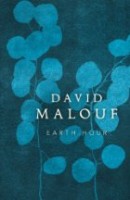
DavidMalouf. Earth Hour (UQP 2014)

0702250139 As I was reading Clive James’s translation of Dante’s Purgatorio recently, one of my unexpected small pleasures was the occasional recognition of a place name. ‘Fiesole – that’s Anny’s town!’ I would exclaim under my breath, or ‘Campagnatico – isn’t that where David Malouf used to live?’ My pleasure comes from my North Queensland provenance: if you live in New York, Paris or even Sydney, you’re forever walking down streets that have appeared in poems, novels, movies; if you’re from Innisfail, North Queensland, not so much. My Purgatorio moments weren’t completely without wider usefulness, of course, as they gave me a whiff of how Dante’s contemporaries would have read the poem: they knew all the places he mentions, and had a wealth of personal associations with them. Any personal connection a modern reader has is a pale shadow, but a shadow all the same.

The shoe was on the other foot as I read the poems in Earth Hour. The poetry may address what they used to call universal themes (do they still call them that?), but it often addresses them as they arise in places I know, and nowhere more dramatically than in ‘At Laterina’. For a start, the poem is dedicated ‘For Jeffrey Smart (1921–2013)’: I know who Jeffrey Smart is, I know his portrait of David Malouf as petrol pump attendant, and what’s more I have fond memories of him as Phidias, the artist on the ABC Children’s Hour of my childhood, all of which may not add to an understanding of the poem, but it does add to my sense of connection with it. The poem meditates on the passage of time in an Italian village (‘Centuries pass / unnoticed here; it’s days that are tedious’), and moves on to the ‘sweet loaded breath’ of the tiglio in bloom. I’m engaged enough to find out that tiglio is lime tree. Then:

__________________Was it always
like this? Did native sons high on a scaffold
in Piedmont, streaked with smuts in a smoky canefield
near Innisfail, North Queensland, feel the planet
shrink in their memory of it, the streets, the decades
one as each June makes them when we catch
on a gust of heated air, as at a key-change,
its green, original fragrance?

I certainly feel the planet shrink, and in a good way.

There’s so much to love in this book: renderings of Horace, Heine and Baudelaire that range from elegant close translation to wildly divergent variations on the originals’ theme [Added later – not as divergent as I thought once I had the right Baudelaire poem – see Brendan Doyle’s comment below]; meditations on deep time, on what it means to be human, on our effect on the planet; profound pieces on ageing and mortality. I’m not able to do much more than name some of the poems that I am deeply grateful for: ‘Whistling in the Dark’ (‘Seeking a mind in the machine, and in constellations’), ‘A Green Miscellany’ (‘No, not nature but a green / miscellany, our years-in-the-making masterpiece’), ‘Touching the Earth’ (about worms), ‘Long Story Short’ (reminiscent of Blake’s ‘A Poison Tree’), ‘Persimmons: Campagnatico’ (about trees bearing fruit at the end of winter), ‘Nightsong, Nightlong’ (about a bird, and a heart), ‘Eternal Moment at Poggio Madonna’ (about a sleeping cat). That will have to do.

David Malouf turned 80 recently, and was celebrated on the show that has replaced Ramona Koval’s Book Show on the ABC. You can hear an excellent interview with Michael Cathcart here, and a discussion of his work here, by a panel comprising Ivor Indyk, academic Yvonne Smith, and poet Jaya Savige.

Finally, as a service to any drop-in readers looking for information about the translations in Earth Hour, here are links to the originals and literal translations: Horace Odes II, ii, Horace Odes I, xxvii, Baudelaire’s Spleen (link corrected thanks to Brendan Doyle], Heine’s Der Scheidende and Morphine.

Malouf Adamson Aitken Harrison: Rare Objects

Adam Aitken, November Already (Vagabond Press Rare Objects Series No 86, 2013)
Martin Harrison, Living Things: Five Poems (Vagabond Press Rare Objects Series No 87, 2013)
David Malouf, Sky News (Vagabond Press Rare Objects Series No 88, 2013)
Robert Adamson, Empty Your Eyes (Vagabond Press Rare Objects Series No 89, 2013)

I bought this quartet of chapbooks at the Sydney Writers’ Festival, where all four poets read brilliantly. At $15 each, this is poetry at just over a dollar a page, which isn’t a lot of bang for your buck if you measure it by the yard, but – speaking as someone who has ploughed through a number of Collected volumes in the hope of getting a feel for their authors’ work – I’d say these tiny, beautifully presented books are great value for money. The poems have room to breathe. [The list above is in order of publication, my random comments below are in order of my reading.]

1sn

It’s common wisdom that learning poetry by heart is a good thing, because – besides being able to surprise and delight your friends – it’s a way of making the poetry your own, inscribing it on yourself (as Dan Beachy-Quick said memorably, here). Reading David Malouf’s Sky News, I realised that, memorised or not, I haven’t really read a poem until I’ve heard it in my own voice, at least internally. I’ve loved hearing David read his poetry ever since he made sunlight glint off milk churns and today blaze from a lapel in his 70s imitations of Horace. But there’s a different pleasure in taking the poems into oneself.

The poems in Sky News are like piano pieces: there’s a right hand with lots of trills and arpeggios, images and alliterative wordplay, and a slower, deeper, meditative left hand. As I got to know each poem, I found myself looking for my own balance between the two, between being charmed by the right hand, as in this evocation of a quiet night in ‘At Clerici’:

Crickets strike up
a riff on the razzle-dazzle
of starlight, then stop.

and being moved by the left hand, which doesn’t lend itself to quotation because it’s often there by implication or comes into the foreground only in the final moments of a poem.

In ‘A Parting Word’, a rendering of Heinrich Heine’s ‘Der Scheidende’, Malouf the translator engages in a similar balancing act. I can’t read German, but compared to what looks like a close translation of the original, it’s evident that Malouf’s poem is a lot livelier: ‘Estorben ist in meiner Brust /
Jedwede weltlich eitle Lust’ (‘It has died in me, as it must, / Every idle, earthly lust’) becomes the playfully alliterative ‘All’s dashed in me, all’s dished and done’, and this playfulness keeps up all the way to the final lines, where ‘Der Schattenfürst in der Unterwelt’ (‘The shadow prince in the Underworld’) becomes

__________________First
in rank of the resident zombies. Top
dog in this dog-house, Hades.

In Heine’s poem, the speaker moves from a cheerless contemplation of his approaching death to a grim acknowledgement that the most vulgar of the living are better off than the noblest dead, so in the end by implication what does art matter? In Malouf’s, the mood is less gloomy – it’s still a poem about age and mortality, but the scales tip towards a celebration of life – it’s not that art is futile, but life is the thing.

1eye

The current submission guidelines for Going Down Swinging warn prospective contributors not to send ‘poems involving birds, wings, feathers or flight’. Luckily for Robert Adamson and his readers this prohibition doesn’t prevail everywhere. Henry Thoreau said an abode without birds was like meat without seasoning – Adamson without birds is unimaginable. From traffic casualties in the prose poem / flash fiction ‘A Proper Burial’ to birds that ‘call and call the light’ in ‘Michael Dransfield in Tasmania’, there are plenty of birds in Empty Your Eyes. Poets are here in plenty too: Adamson’s compadres like Dransfield and Charles Buckmaster, but also an assortment of Catholic convert poets – James McAuley, Pierre Reverdy and Francis Thompson (the only poet my mother ever quoted – ‘I fled him down the labyrinthine ways / Of my own mind; … and under running laughter’). Adamson’s poetry is steeped in the Hawkesbury River, in the world of poetry and poets, and increasingly in a kind of questing mysticism:

------------------I read
'The Hound of Heaven'
by a river in new South Wales:

There was a black chuckle
before the 'running laughter' –
Attention shifts, revelation grips.
1na

Perhaps even more than Adamson’s, Adam Aitken’s cool, postmodern, intercultural poems abound in allusions – not in an arrogant bugger-off-if-you-haven’t-read-Rimbaud way, but more in a let’s-have-some-dislocating-and-provocative-fun way. I went googling quite a bit as I read November Already: John Clare (hardly an esoteric reference, but I hadn’t read anything by him), Rimbaud (I couldn’t find the arachnid referred to in ‘Rimbaud’s Spider’, so I don’t know what I’m missing, but enjoyed the poem anyhow), Ezra Pound (who wrote a travel diary, A Walking Tour in Southern France), Raymond Roussel (I found a note on Adam’s blog that helped hugely in reading the poem ‘Rousselesque’).

There’s a lot of France in these poems: Paris and the tiny village of Mareuil, the Resistance and the Revolution, Roman relics and Australian expats. From what I’ve read of Aitken’s work, I have a sense that he generally writes as if he’s not quite at home, always with a dislocated, interrogative feel. So when a poem about a deserted railway line is entitled ‘On the Chemin du Fer’, it doesn’t read as a mistyping of chemin de fer, but as a marker of the speaker’s outsider status. In the poem, this outsider is on a disused length of railway surrounded by blossoming almond trees, ‘tougher, more industrial’ than cherry blossom, and in these beautifully evoked surroundings, before evoking the Terror by a mention of Saint-Just, asks:

Was that old man "Europe"
so often so hard, so cruel
a one-stop shop
for the soul?

Likewise, I think of Aitken as an urban poet, so when he misspells ‘chicken coop’, it doesn’t read as a mistake, deliberate or otherwise, but as the equivalent of a visitor from the city wearing shiny shoes in a cow paddock, adding to the edgy feel of the poem.

1lt

Martin Harrison’s poems, by contrast, feel completely at home in their mostly Australian landscapes. This may be especially true of the first poem in Living Things: Five Poems, ‘Wallabies’, a long, breathless (and sparsely punctuated) celebration of western New South Wales landscapes:

nothing is dead here the spaces between them are
inhabited leaves twigs debris fallen white-anted trunks

slopes rocks grass parrots galahs floating down
in pink streamers again the grey lack of edge

around sprays cream waterfalls of turpentines flowering
in high irrigated air-blue reaches she-oaks aspirant

with their million fingers and amber seed-flowers
spotted gums mottled as grandmothers but with contrasts

of grey brown white and silver as if dressed for a ball

He does more than describe natural phenomena, of course. A recurring theme here is ‘how events change time’s flow beneath perception’: a ‘small thump from somewhere’ (‘White-Tailed Deer’), thrips that are ‘quite possibly meaningless, quite possibly / microbes of non-significance’ (‘Cloud’), a frog you can hear ‘miles away, / long before you thought you could’ (‘The Frog’). Even the eponymous wallabies would be easy to miss if you didn’t read carefully. Some lines from ‘Blue Wren Poem’ suggest something of what’s going on:

____-_____________________Such

detail can be lost – bobbins, birds, refuge, storm –
when innocence starts holding out against the tide,
when radiance blurs the future.

Michael Brennan of Vagabond Press says this series will come to an end at 100 titles. That means there are 11 to go, and the distinctive design, with pasted-on cover art by Kay Orchison, will sadly be no more.

Quarterly Essay on the country and the city

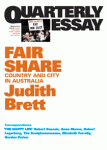
Judith Brett, Fair Share: Country and city in Australia (Quarterly Essay 42)

Judith Brett has an admirable capacity for seeing beyond the surface of ugly or bizarre utterances to the valid concerns or at least genuine pain that has given rise to them. In this essay, for example, she resists (or perhaps doesn’t even feel) the pull to mock or repudiate Bob Katter’s extreme language when he’s arguing for his constituency. And she doesn’t indulge in the city dweller’s revulsion from book-burning when she discusses the farmers who burned copies of the Murray–Darling Basin Authority’s draft plan last year – no snide comment about people who condemn and burn documents they haven’t had time to read.  That is to say, she side-steps the kind of point-scoring that tends to pass for debate in the press these days. Instead, she addresses her subject seriously and respectfully. Even as she argues that ‘economic rationalism’ brought havoc to rural Australia, charts the rise and fall of the Country/National Party, or notes the impact of Pauline Hanson, she avoids cheap shots.

It’s an excellent, thoughtful essay. This paragraph comes close to encapsulating its argument :

City and country in Australia share a history, a long history both of interdependence and of watchful suspicion. The understanding of that interdependence was strong in the first two centuries of Australia’s European settlement, and the attempt to build a vibrant and self-sustaining countryside was a major political preoccupation. The country made claims on the city for support, and by and large the city attempted to meet them as part of a compact in which Australians shared the cost of living in a big country. This understanding has waned rapidly since the neoliberal 1980s. Since then the country has seemed to be in a perpetual state of crisis: dying towns, depressed and ageing farmers, unproductive farms carrying too much debt, environmentally unsustainable irrigation schemes, droughts and flooding rains, crisis-ridden marketing schemes like the wool stockpile and the Australian Wheat Board, and so on. The picture is of irreversible decline. Yet, as Tony Windsor reminds us, over 30 per cent of Australians live outside the big cities. What is their role in the nation? And what are we to do with all that land beyond the ranges and the thinly settled coastal strip?

My two cents worth: read it – you’ll see the world a little better!

As usual, this Quarterly Essay includes correspondence about the previous issue. The contributors here are all but unanimous in their appreciation of David Malouf’s The Happy Life, calling it variously ‘beguiling’, ‘characteristically delicate’, ‘elegant and humane’, ‘thoughtful and courteous’. They are also all but unanimous in finding that he didn’t say anything definitive about happiness. A Russian scholar argues that his reading of A Day in the Life of Ivan Denisovich is simplistic an uninformed. A psychiatrist invokes the academic literature about happiness. Several others push their respective barrows with varying degrees of elegance and insight.

David Malouf does not rejoin the conversation. I read his silence as signifying that he’s perfectly happy for other people to have their say, to correct him where needed, to have their own crack at the subject. After all his piece differed from most Quarterly Essays by being in the tradition of the essay as a crack at a subject rather than a tightly argued thesis. Sometimes the appropriate response to an essay is not to argue with it. Maybe Marieke Hardy got it right on the First Tuesday Book Club last night. She said she felt as she was reading The Happy Life that she was sitting on David Malouf’s lap resting her cheeks on his bald head and letting him read to her.

David Malouf and the Happy Life

David Malouf, The Happy Life: The search for contentment in the modern world (Quarterly Essay 41)

If I ever need to be reminded of the depths of my ignorance, I need only read an essay by David Malouf, any essay. In this one, he draws for his argument on Plato, Heidegger, Jefferson, Montaigne, George Herbert, Solzhenitsyn and Condorcet, gives illustrations from Chekhov, Rembrandt and Rubens, and refers in passing to Dostoievski, Horace, Marvell, Shelley – there are cameo appearances by at least twenty writers and artists we know by a single name, that is to say, key figures in European cultural history. He’s not Wikipeding. Nor is he showing off. You know that these writers are part of his mind’s living furniture, that he needs to refer to them if he is to lay out his own thinking. At the same time he realises many of his readers won’t share his erudition, so he becomes a tactful and gracious teacher, elegantly spelling out Heidegger’s interpretation of the Platonic story of Epimetheus and Prometheus, for example, or explaining Condorcet’s pivotal role in the history of ideas. It’s quite a change of pace from the electoral politics of even-numbered Quarterly Essays.

It’s a change of pace in another way too. At least the way I read it, it’s not so much a thesis, a marshalling of evidence and argument to convince the reader of something, but an essay, as in the French essai, an attempt at its subject, a reflective chat with past thinkers and makers, a teasing away at a question and a stab at partial answers. Here’s the question – I should preface it by saying that by us here, he means ‘the new privileged, those of us who live in advanced industrial societies’. (‘The truth is,’ he writes, ‘ that though we are all alive on the planet in the same moment, we are not all living in the same century.’)

How is it, when the chief sources of human unhappiness, of misery and wretchedness, have largely been removed from our lives – large-scale social injustice, famine, plague and other diseases, the near-certainty of an early death – that happiness still eludes so many of us?

He explores the question down many interesting paths – because of course the question of happiness has been addressed by great thinkers for millennia – with excursions into art history He reflects on elements of the modern world from the effect of seeing our planet photographed from space to the way we think of our bodies has changed since his childhood in the 1940s (this is as close as he gets to the personal note that is a key element of the classic personal essay). Insofar as he arrives at an answer, it seems to be that ‘we’ need to slow down, shrink our horizons, accept limits. I won’t give any more detail: it’s beautifully argued, by means of a compelling image from a great piece of fiction, and I don’t want to spoil the reading for you. I do want to argue, though, that while this ‘answer’ may appear formally as the essay’s conclusion, it doesn’t resolve the argument. So much of the rest of the essay is arguing for something much more zestful, for the value of restlessness that the reader is inclined to think, ‘Well, if that’s the way to happiness, I’ll stick with my discontent, thanks.’ It’s a subtle, elegant, shape-changer of an essay, not easy to pin down, but very easy to enjoy.

There is one major perspective that makes an appearance only by virtue of an explicit exclusion. While it’s clearly legitimate to ask a question about happiness for the ‘new privileged’, leaving the happiness of the rest of humanity for a different essay, the rest of humanity must surely figure in the answer. No privileged elite is an island, entire of itself, and so on. My crude thought, which amounts to a central article of faith, is that none of us can be content while we don’t challenge and actively oppose the monstrous disparities covered by the notion that we are not all living in the same century. Didn’t we (and I think I mean David’s we) feel a surge of joy when the crowds in Tahrir Square had their moment of exultant hope recently, as if a weight had been lifted from our shoulders? And don’t we sleep less soundly knowing, even while we push it to the backs of our minds, that Aboriginal people in this country are still living in a different century from us, as the result, not of some geological time slip, but of ‘our’ forebears’ deliberate policies, and that ‘we’ all benefit personally from those policies? Someone said, ‘No one can be free until all of us are free.’ I think a corollary of that is that none of us can be happy as long as we are indifferent or ineffectual in the face of the misery of others. I can’t say I’m an unqualified fan of Alice Walker, but the banner that unfurls at the end of Possessing the Secret of Joy comes to mind: the secret of joy is resistance.

That is to say, this is a terrific Quarterly Essay, one that makes ya think.

The Monthly

When I collected my subscription copy of The Monthly from the letter-box yesterday, I had an irrational impulse to drop it in the bin on the way back into the house. Yet again the cover features a photo portrait of a public figure – a politician like the majority of the other cover photos. Here are the last 12 months’ covers:

August 2009: Nick Cave (not a politician, but a media personality, which is the other frequently occurring category of citizen)
September 2009: A photo of the fence at Christmas Island, one of two covers that’s not a portrait
October 2009: Julia Gillard
November 2009: James Murdoch
December 2009–January 2010: Nicole Kidman
February 2010: Tony Abbott
March 2010: Germaine Greer
April 2010: A couple of cherries – the only cover of the twelve to display something like metaphor
May 2010: Tony Abbott again (on a bike this time)
June 2010: Barack Obama (at least he’s not an Australian politician, but it is his third appearance on the cover in 18 months )
July 2010: Bob Brown
August 2010: Julia Gillard again, this time with make-up

If you can recycle your cover ideas so blithely, I can do some recycling of my own, was my unbidden thought.

As it turns out, I’m glad I restrained the impulse to recycle, because in particular of Mark Aarons’ piece which explains in words I can understand how the current approach to polling and policy-making in the ALP is different (and more cynical and strikingly less successful) than in the past, and for David Malouf’s wonderful essay, ‘States of the Nation’, on our Federation. I love this paragraph:

Federation may have established the nation and bonded the people of the various states into one, but nations and peoples, unless they arise naturally, the one out of the other, rather than by referendum or by edict, are likely to be doubtful entities, and the relationship between them will be open to almost continuous question. Of course when they arise too naturally – that is, when they claim to belong to nature rather than human choice – they are dangerous.

How good it is that David Malouf’s sharp, engaged, generous mind is gracing The Monthly‘s pages – and grace is something that Malouf has in spades. What a relief that Louis Nowra’s grumpy ad-mulierem pieces are not to be the dominant voice.

Out of the Box

Michael Farrell and Jill Jones (editors), Out of the box: Contemporary Australian gay and lesbian poets (Puncher and Wattmann 2010)

I approached this anthology with suspicion. Does it really make sense, I wondered, to read David Malouf’s or Pam Brown’s poetry in a context that draws attention to the poet’s sexuality? Wouldn’t it skew, and narrow, the reading? My suspicion wasn’t allayed by having recently read editor Michael Farrell’s ultra-skewing assertion in Jacket Magazine 39 that he has ‘always read Judith Wright’s “Woman to Man” as referring to the experience of gender transfer’. But … well, once again the Book Club has dragged me from the path of least resistance.

Of Michael Farrell’s introduction and its use and abuse of the Concise Oxford Dictionary, I can reasonably say I didn’t find it congenial, and his readings of poems strayed too far into hip idiosyncrasy for my taste. Jill Jones, his co-editor, gives a nice potted history of identified gay and lesbian writing in Australia since the late 70s, and provides some useful orientation to the lesbian poems – I mean of course the poems written by identified lesbians, because as the book’s subtitle makes clear it’s the poets, not the poems, that have sexual identitites.

The poems are wonderfully diverse. They belong together not because of shared themes or concerns or formal qualities, but because their creators are contemporary (ie, alive?), Australian and gay or lesbian. A number of the poems are outed by the context – that is, poems I would elsewhere have read as heteroerotic I here read as homoerotic. That’s probably a good thing – my heteronormative mentality is being challenged. Others shrink: Pam Brown’s ’20th Century’ (‘And as we were the tootlers / we tootled along’) here tends to read as referring to the Gay and Lesbian Mardi Gras rather than something more global. I don’t know that that’s so good. At times I caught myself approximating a Beavis and Butthead snigger: ‘Hur hur! He said fist!’ Definitely not cool, though I plead in mitigation that Michael Farrell’s introduction does something of the sort more than once, and a handful of poems seem to be intent on a kind of high-culture gay Beavis-and-Buttheadism.

A good bit of the time while reading these pages, I got to feel very straight – not necessarily in the sexual sense, but in the sense that I prefer my language syntactical, don’t warm to commas at the start of sentences or parentheses that don’t close, and hate it when I can’t tell whether something is a typo or deliberate wordplay (when Javant Biarujia’s ‘MappleTROPE’ gives us Mapplethorpe’s deathbed utterance as, ‘I just hope I live long / enough to see the frame’ – has he inserted that r into the last word as a piece of witty surrealism or is it just bad proofreading? I genuinely don’t know, and it bothers me).

There are wonderful poems by David Malouf (‘A History Lesson’), Dorothy Porter (‘The Ninth Hour’), Pam Brown (‘Peel Me A Zibibo’), Martin Harrison (‘About the Self’), Peter Rose (‘Plague’), Kerry Leves (‘the escape’ – I’ve known Kerry mainly as a children’s writer, and he is definitely not that here) and joanne burns (‘aerial photography’), among others. I was delighted to be introduced to Stephen J Williams (‘Museums of beautiful art’), Andy Quan (‘Oath’, possibly the single poem that touched me most directly) and Tricia Dearborn (‘Life on the Run’) among others.

It probably doesn’t make sense to talk about a book of poetry without quoting any, but every poem I wanted to quote turns out to feel like an all or nothing proposition. I guess if you’re interested you’ll just have to find the book.

Not a 68er

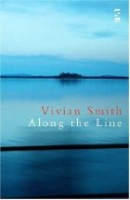
Vivian Smith, Along the Line (Salt Publishing 2006)

Having mentioned the ‘sixty-eighters’ a couple of times on this blog, I poked around on the net to find out what I was talking about. It looks as if the idea of a distinct ‘generation of 68’ among Australian poets can be traced to John Tranter’s 1979 anthology, The New Australian Poetry: the work of twenty-four poets from Australian poetry’s most exciting decade. The notion of a ‘generation’ was challenged almost immediately by, among others, Rae Desmond Jones (‘the … highly successful anthology and the polemical introduction had only marginal relevance to each other’), but it has lived on. More recently, as one might have predicted, the 24 68ers have been portrayed as a mob of up-themselves, cliquish poetry warriors, and – also no surprise – have been defended against those charges. (The article by Alan Wearne on that last link demonstrates nicely that reality is more complex, interesting and benign than the labels might suggest.) When the Tranter anthology came out I was distracted by being a new parent and earning a living and the like, but during the late sixties and early 70s I had been a regular at poetry readings in Sydney (and once, memorably, in Canberra) and can testify that the poetic times were pretty exciting. I have a copy of a 1971 publication, We took their orders and are dead: An anti-war anthology (edited by Shirley Cass, Ros Cheney, David Malouf and Wichael Wilding), which captures some of the feel of the Moratorium Poetry Readings where elder statesmen of Aust verse like AD Hope shared a stage with as yet un-labelled 68ers like John Tranter or Vicki Viidikas and quite a few in-betweeners like, say, David Campbell. (The 68ers themselves, of course, are now either dead or approaching elder status.)

All of which is a convoluted lead-in to Along the Line, which I bought a while ago as my contribution to Salt Publishing’s Just One Book campaign. If memory serves, Vivian Smith read at those long-ago Moratorium readings. He’s certainly got a poem in the anti-war anthology. But he’s not a 68er – and not just because John Tranter didn’t include him. The poems in this book have a quiet formality that shows none of the influences or impulses  that besotted the young ones in those heady days. The poems don’t spread across the page like spider webs catching and displaying apparently random flies of perception. They aren’t Chinese boxes or monkey puzzles. Neither the Ramones nor Bob Dylan are referred to even once. Iambic pentameters rule and straightforward subjects dominate: there are many arrivals in Sydney, the poet’s home, and at least as many returns to Hobart, where he grew up; there are poems about poetry, poets and painters, depression, friends alive and dead. I used the word ‘quiet’ , and that is the overwhelming effect: quiet reminiscence, quiet elegy, quiet observation, quiet wit, even, in ‘Deathbed Sketch’, some quiet philippic. Something of a quiet achiever, then, and reading him is a quiet pleasure.

Incidentally, ‘Return to Hobart’, the poem that appeared in the 1971 anti-war anthology makes another appearance here, unchanged except for much improved editing, which makes me realise that this is not a collection of new poems, but some kind of unspecified retrospective, which accounts for a sense of temporal dislocation –  the poet’s daughter is a little girl on one page, for instance, and quite grown up a couple of pages later, and all those comings and goings between Sydney, Hobart and the rest of the world don’t have any discernible sequence.

Rather than say more about the poetry, let me declare an interest. Vivian Smith was the supervisor of my aborted MA thesis in the mid 1970s. Of course it wasn’t his doing that the thesis came to nought, though I wish I’d got my facsimile copy of Edward John Eyre’s Journals of Expeditions back from him before leaving the university. (Vivian, if you chance to read this and happen by some miracle to have those books still in your possession, I love your poems, please drop me a line …)

I have a vivid memory of a Year 3 elective in which Dr Smith gave a series of lectures to a tiny scattering of students. He was a quiet, unassertive lecturer, poles apart from, say, David Malouf, who lectured us with passionate brilliance on the Jacobean playwrights. At about the third lecture, there may have been only three of us in the audience – me up the front dutifully taking notes, and two older women (they must have been at least 28), one of whom has since gone on to wield power and influence in the ABC and elsewhere, the other to do impressive work as a journalist and writer, leaning together like grumpy conspirators. As Dr Smith was discussing the two main kinds of poetry being written in England during the post-war years, open and closed poetry if I recall correctly, the future journalist interrupted his flow:

‘Excuse me, but aren’t these generalisations almost completely meaningless?’

She had a point. Dr Smith responded quietly, modestly, and not at all defensively, ‘Yes, but they provide a structure that allows me to talk about the poetry.’

And he continued with the lecture, of which I remember nothing else. (Maybe I should be explicit here: I’m not suggesting that the poetry in this book is ‘completely meaningless’: rather that it isn’t out to impress, or seduce, or dazzle, but offers itself as a mind at work and play, take it or leave it.)