Tag Archives: Debra Dank

End of Year List 4: Books

From the Emerging Artist, in her own words (links to the LibraryThing pages or, at her request, to my blog post when there is one):

Non fiction
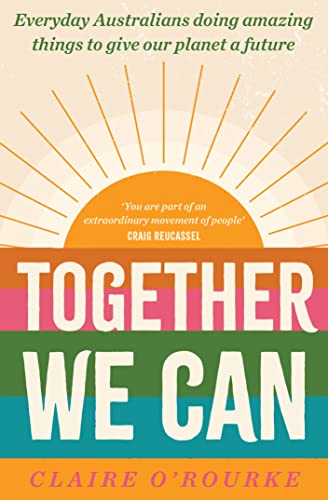
Claire O’Rourke, Together We Can (Allen & Unwin 2022)
I read this after hearing Claire talk on a Sydney Writers’ Festival panel on how to have hope in relation to climate change. It’s a good read, mixing specific examples of everyday Australians tackling what’s happening with broader theory on how to bring about change. It does fulfil its title, giving a real sense that “together we can”.

Debra Dank, We Come With This Place (Echo Publishing 2022)
We watched this book win four awards and heard Deborah Dank’s speech at NSW Premier’s Literary Awards 2023. We immediately went out to buy it. The writing is beautiful, a slow evocation of country and its connection to the author, while filled with story. I think it’s the must read of the year.

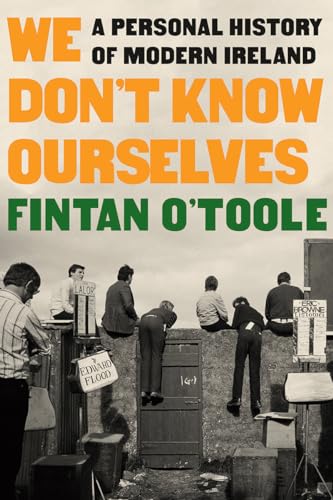
Fintan O’Toole, We Don’t Know Ourselves, a personal history of Ireland since 1958 (Head of Zeus 2021)
Hearing Fintan on the ABC’s Conversations, I immediately placed an order and waited patiently for four months for it to arrive. I’m glad I did. It’s written in short chapters in chronological order, but often picking up themes from chapter to chapter. It’s funny while documenting the appalling state of Ireland from 1958 through personal history, statistics and other sources. The incredible poverty (no running water in homes or sewage, no education for 80% of the population past primary school) made worse by the stranglehold of the Church and corruption in keeping poverty in place and the changes brought about by the impact of globalised capitalism all come alive in riveting storytelling.

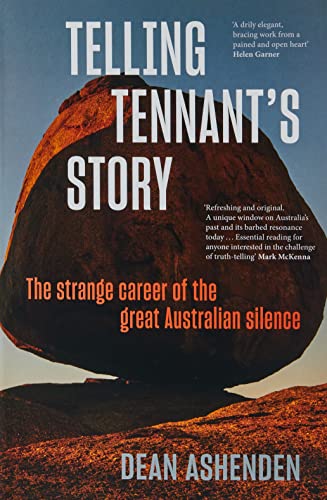
Dean Ashenden, Telling Tennant’s Story: The Strange Career of the Great Australian Silence (Scribe 2022)
A very readable history of post WWII Australian policies in relation to First Nations people where the impact of the policies on Aboriginal people in a specific area – Tennant Creek – are made clear. It tells how the policies of assimilation and later self determination came about and how far-reaching their effects have been. It would have been good for all those voting no to have been made to read this as a requirement for having a say.

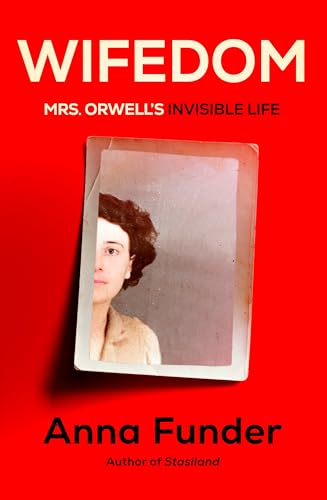
Anna Funder, Wifedom: Mrs Orwell’s Invisible Life (Penguin 2023)
So much has been written about this book already I don’t need to give a summary. I found it gripping. 

Fiction
I read 62 books this year, from quick comfort ‘junk’ reads to harder literary tomes. I take a photo of each book to prompt memory, and going through them all, it’s clear I have had an excellent selection to choose five favourites from. I’ve ended up deciding by level of enjoyment, not on some literary merit criteria.
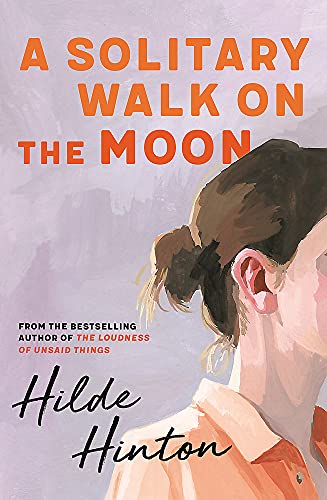
Hilde Hinton, A Solitary Walk on the Moon (Hachette AUstralia 2022)
A totally enjoyable read while disquieting in its simplicity. This is a second novel by an Australian author who seems to slipped under the radar. I found it in my local library. 

Annie Ernaux, The Years (Fitzcarraldo Editions 2018)
This was also an entrancing read, covering a similar time period to my own life. It conjures up the similarities and immense differences between growing up in middle class France and Australia.

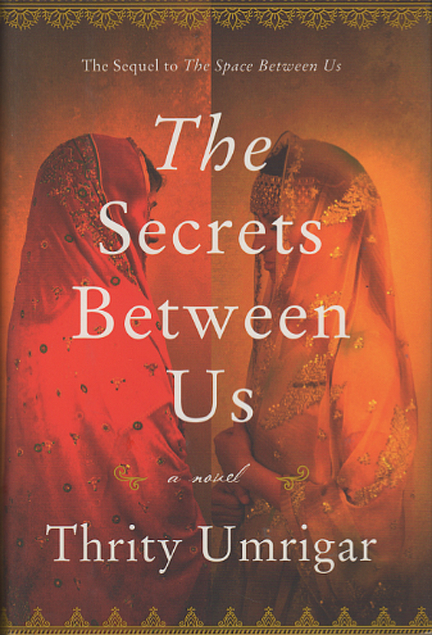
Thrity Umrigar, The Secrets Between Us (HarperCollins 2018)
Another library chance find. I loved the three strong old women protagonists, the exploration of caste and how this is/isn’t changing in modern India.

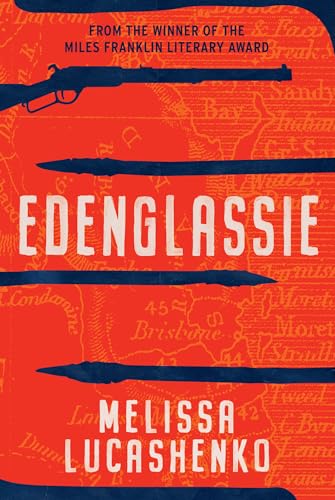
Melissa Lucashenko, Edenglassie (University of Queensland Press 2018)
This was gripping rather than straight out enjoyable, with a sense of what was to come on every page. I loved the imagined world of life at the point where the strangers are staying and growing in number, while keeping your own way of life intact.

Richard Russo, Somebody’s Fool (Allen & Unwin 2023)
Jonathan hasn’t yet been lured into the wonderful world that Richard Russo writes about, but I expect that to change soon. This is the latest in a series that includes Everybody’s Fool and Nobody’s Fool, all set in small town east coast USA. The books follow a number of interconnected characters over a few generations recording the process of change as late capitalism, racism and gender are played out in the town of Bath. He writes with affectionate humour about all of his characters. We see their frailties and appalling behaviour (between white and black, men and women, different generations) but in a number of cases we see how their connections with each other bring a shift in perspective. I love them. 


From me

I read 83 books (counting journals but not children’s books). I finished my slow read of Middlemarch and read St Augustine’s Confessions, a little each morning, but didn’t start another slow read in September because I was doing the Kelly Writers’ House course in Modern and Contemporary American Poetry (ModPo), which was great fun and probably taught me a lot.

I read:

  • 21 books of poetry
  • 26 novels
  • 4 comics
  • books in translation from Chinese (2), Spanish (3), French (2), Danish (1 or 3, depending on how you count), Russian (1) and Latin (1), and bilingual books containing Greek (1) and Maori (1)
  • counting editors and comics artists, 44 books by women, 39 by men
  • 12 books by First Nations writers, and
  • 15 books by other writers who don’t belong to the White global minority.

Biggest serendipity: Four books spoke powerfully to each other and to me in the wake of the referendum on the Voice: Debra Dank’s We Come with This Place, Melissa Lucashenko’s Edenglassie, Dean Ashenden’s Telling Tennant’s Story and David Marr’s Killing for Country (no blog post yet). Unlike Voice and Treaty, the third proposal from the Uluṟu Statement from the Heart – Truth – doesn’t have to wait for government action. These books, and so many others with them, are moving that project forward brilliantly and unsettlingly.

The most fun was probably two novels about poetry, which also spoke to each other: Chilean Poet by Alejandro Zambra and The Anthologist by Nicholson Baker.

Most interesting new discovery of someone who has been writing for decades: 2022 Nobel Prize laureate Annie Ernaux. I read Les années and Mémoire de fille, both of which mine her life story in ways that make most memoirs seem dull. Though I read them in translation, it seems right to name them in French.

Most imaginatively huge was Alexis Wright’s novel Praiseworthy, which incidentally is set in some of the same localities as Killing for Country.

Most memorable poetry: Sarah Holland-Batt’s Jaguar, with Ken Bolton’s Starting at Basheer’s (no blog post yet) a close second, the first for its precise, compassionate treatment of the poet’s father’s final illness, the latter because it filled me with joy about the everyday.


Happy New Year to all. May 2024 see the rejection of authoritarianism in elections and an end to mass killings everywhere. And may fossil fuels at last be left in the ground. Failing that, may we all keep our hearts open and our minds engaged.
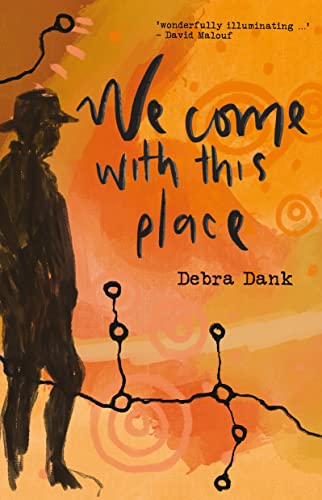
Debra Dank’s We Come With This Place at the book group

Debra Dank, We Come with This Place (Echo Publishing 2022)

Before the meeting: We Come With This Place won an amazing four prizes at the NSW Premier’s Literary Awards this year, including Book of the Year: you can read the judges’ comments here and here. They include this:

This sensational memoir is an unheralded reflection on what it is to be First Nations in Australia, and on the very deepest meanings of family and belonging.

In one of her modest acceptance speeches at the awards ceremony, Debra Dank mentioned that the book started out as part of her PhD study. In the Preface, she elaborates:

I wanted to show how story works in my community and how it has contributed to our living with country for so long. It seemed to me imperative to talk about those voices, both human and non-human, who guided Gudanji for centuries before anyone else stepped onto this land.

(page viii)

The weeks after the referendum on the Voice failed seemed a perfect time to read this book. The Uluṟu Statement from the Heart’s call for Voice, Truth, Treaty has been rejected at the political level: it’s a relief to listen to the voices of First Nations writers like Debra Dank, and participate in this form of truth-telling.

It’s a terrific book: an intimate portrait of family life, placed in the context of ancestral stories, a deep sense of connection to Country, and resilience in the face of the horrors of colonialism. The family lived ‘under the Act’ in Queensland, and managed ingeniously to hide little Debra when the Welfare came looking for light-skinned children; her father worked on a number of rural properties, where sometimes he was treated with great respect, other times not so much. She helps her father work on a windmill. There is a tactfully written scene where she stands up against family violence, and magical moments with her grandfather, and with her children and grandchildren. I love the pages where Dank’s white surfie husband (he’s saltwater, she’s dust) struggles to learn how to read the bush, to see the things that are glaringly obvious to his Aboriginal children.

Dank identifies as belonging to dry country, and she makes brilliant use of images of dust. On the very first page, ‘vague images try to speak to [her] through dust motes rising from the thick pale pages’ of a 400-year-old edition of a book by Aristotle, and a few pages later, she tells us that the stories of her people – the Gudanji kujiga – ‘grow from the fine dirt that plays around your feet and makes the dust that rolls over the the vast Gudanji and Wakaja country’. As a child she is fascinated by the way a drop of blood from a foot caught on barbed wire blends into the soil. Dust rises from the heels of a family group in the not so distant past running in terror from armed men on horseback. It memorably obliterates the Country-scarring road in the passage I versified the other day (here).

I don’t want to give the impression that the book is written in high metaphorical mode. Here’s a little passage from page 76 (for those who came in late, I like to have a closer look at that page because it’s my age). The family are driving from one place of employment to another, and appropriately enough the page starts with dust:

The wind brought dust in with it, but it was the Dry and the road wasn’t too bad. The caravan happily kicked up dust into frothing red feathers that followed us for a bit, then settled back onto the road. Long stalks of tall yellow grass formed a guard of honour as we traveled across the plains. We played games of spot the turkey and several times tried desperately to convince Dad to stop for the goannas that would run across the road and then lie still and flat in the shelter of the yellow grass and amber shadows, but we needed to get there so he didn’t stop. Besides, Mum said she refused to turn up at the new station with a dead gonna in the car.

You see what I mean: if you’re not alert to the dust motif, those frothing red feathers that follow and settle are a nice piece of decoration; if you’ve picked up on it, they’re a reassuring presence of Country. And this tiny moment embodies the way the family manages to live successfully in two worlds: goannas would be great, but not when you’re about to meet a new white boss.

After the meeting: It was our end-of-year meeting, so as well as discussing the book, we exchanged gifts – of books chosen from our bookshelves. I gave Diana Athill’s wonderful memoir, Somewhere Towards the End, and scored J M Coetzee’s 1986 novel, Foe. We also, in a three-year tradition, each brought a poem to read to the group: poems represented included Seamus Heaney, Oodgeroo Noonuccal writing as Kath Walker, Adrian Wiggins, J Drew Lanham, Rosda Hayes, and Sean Hughes.

There were seven of us. Two hadn’t read the book – it’s a busy time of year. One was ‘at about 55 percent’ on his device. One said he had read seven other books since so had difficulty recalling it with any clarity. We were in a pub rather than our usual domestic setting. None of that stopped the conversation from delving into the book, ranging widely and then finding its way back to the page. Those of us who had read it celebrated the way it presented the history from inside an First Nations point of view: even Kim Scott’s brilliant novel That Deadman Dance didn’t get to the inside story as completely as this; and it has a calm assurance that, say, Julie Janson’s Benevolence lacks, for all its other strengths (the second of these comparison came up in conversation in the car ride home).

One Covid-ed absentee emailed in some cogent comments – noting that there seemed to be a number of voices, and that the passages dealing with the author’s personal experience worked better than the narration of ancient stories. He loved, and others agreed, the bits of bushcraft such as reading shadows and catching fish with your hands in the desert, the cultural landscape connections.

I went on a bit about dust.

There was a lot of reflection on personal experiences the book reminded people of. There was also, as usual, much excellent conversation about unrelated matters, including Anna Funder’s Wifedom; the recent blockade in Newcastle and a similar one nearly 20 years ago which provoked a very different response from the police and the press; philosophy and poetry groups in a small town; behind the scenes stories from a fascinating film project; travellers’ tales.

And that’s a wrap for the Book Group for 2023.

November verse 9: From Debra Dank

I’ve just read Debra Dank’s We Come with this Place, an astonishing book that I expect to blog about soon. It won four of the prizes at the NSW Premier’s Literary Awards this year: you can read the judges’ comments here and here.

Today’s stanza is a versification of the first paragraph of the chapter ‘Yarned into Place’. It’s probably useful to say that the red dust of Gudanji Country is a powerful presence throughout the book.

Verse 9: From Debra Dank
'Nyamirniji ilinga jaburru'
'You listen first and then you'll know.'
The road ahead lies straight and narrow,
dictates where our car will go.
A line dug in the land by grader,
straight as pencil-rule on paper,
irons out what that land has lived
and seen: a scar. We'd be deceived
but there behind us all the swirling
waves and billows of red dust
erase that line, as breezes must,
defy geometry’s appalling
power. No straight line. All around
dust hides what hides the sacred ground.

Here’s the original prose, from page 239 of the book:

‘Nyamirniji ilinga jaburru,’ she said. ‘You listen first and then you will know.’ The road stretched ahead, an astonishing river of earth that we, travelling in a white troopie, moved along as if in a boat. As far ahead as we could see, the road continued straight. Someone had taken out a grader and dug a straight line across the landscape as easily as they would have used a ruler to draw a line on a paper map. And they built that road, so straight and flat that it ironed out all the history this country had lived and seen, leaving just that awful scarring mark. But, when we looked behind us, swirling and billowing waves of red dust obliterated the road, twisting and turning in eddies and breezes. There was not a straight line to be found anywhere.

2023 NSW Premier’s Literary Awards night

Tonight, the New South Wales Premier’s Literature Awards were announced at an event livestreamed from the State Library of NSW. I missed the start but got to see two of Debra Dank’s four acceptance speeches, and Sara Mansour and Bilal Hafda accepting the Special Award on behalf of Bankstown Poetry Slam (Bilal’s hands were a joy to watch). It’s been a while since a Premier has actually presented the awards – Chris Minns may be the first to do it since Christina Keneally in 2011. The recording is on YouTube, and I can think of worse ways to spend a couple of hours if you’re interested in Australian literary culture.

The winners (with links to the judges’ comments):

UTS Glenda Adam’s Award for New Writing: We Come With This Place, DEBRA DANK (Echo Publishing)

Indigenous Writers’ Prize: We Come With This Place, DEBRA DANK (Echo Publishing)

Multicultural NSW Award: The Eulogy, JACKIE BAILEY (Hardie Grant)

Nick Enright Prize for Playwriting: Whitefella Yella Tree, DYLAN VAN DEN BERG (Griffin Theatre Company/ Currency Press)

Betty Roland Prize for Scriptwriting: Blaze, DEL KATHRYN BARTON and HUNA AMWEERO (Causeway Films)

NSW Premier’s Translation Prize: People from Bloomington, BUDI DARMA, translated from Indonesian by TIFFANY TSAO (Penguin Classics)

Ethel Turner Prize for Young People’s Literature: The Upwelling, LYSTRA ROSE (Hachette Australia)

Patricia Wrightson Prize for Children’s Literature: The First Scientists: Deadly Inventions and Innovations from Australia’s First Peoples, COREY TUTT and BLAK DOUGLAS (Hardie Grant)

Kenneth Slessor Prize for Poetry: The Singer and Other Poems, KIM CHENG BOEY (Cordite Books)

Douglas Stewart Prize for Non-fiction: We Come With This Place, DEBRA DANK (Echo Publishing)

Christina Stead Prize for Fiction: Women I Know, KATERINA GIBSON (Scribner)

The People’s Choice Award: Every Version of You, GRACE CHAN (Affirm Press)

The Special Award: Bankstown Poetry Slam

Book of the Year: We Come With This Place, DEBRA DANK (Echo Publishing)

The evening ended with a bunch of flowers to Jane McCredie, Senior Judge, to mark her final year in that role.

I have read exactly none of the winning books, plays or TV shows, but I am a huge fan of the Bankstown Poetry Slam and couldn’t be more delighted by that award.