Tag Archives: Gitta Sereny

Andrew O’Hagan’s Atlantic Ocean

Andrew O’Hagan, The Atlantic Ocean: Essays on Britain and America (Faber 2008)
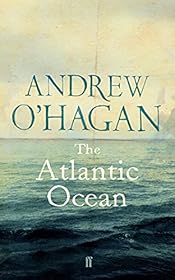
This book was my gift in a Book Group Kris Kringle years ago, and has been languishing on my top shelf ever since. I was prompted to read it by Caledonian Road, Andrew O’Hagan’s most recent novel – which I’ve just read for my other Book Club (blog post to come after the next meeting).

These 23 essays were first published between March 1993 (‘The Killing of James Bulger’) and February 2008 (‘Brothers’). That’s not so long ago, but the book feels as if it comes from another, ancient era. Michael Jackson was alive. 9/11 (and England’s 7/7), the Iraq War, Hurricane Katrina and George W. Bush were in the headlines. Donald J Trump was barely a reality TV star; Brexit wasn’t a cloud on the horizon; a global pandemic was predicted, but with no sense of urgency.

Most of the essays were first published in the London Review of Books, many of them as book reviews. We are told the month and year of first publication, but not the details, or sometimes even the name, of the books being reviewed. We’re invited to read them as stand-alone essays, and for the most part they succeed – as memoir, literary journalism, social commentary, a general reflections on literature. There are pieces of serious long-form journalism, like ‘On Begging’ (November 1993), in which 25-year-old O’Hagan joins the beggars of London with a tape recorder in his pocket, or ‘Brothers’, the book’s final essay, in which he visits the people left behind by the deaths of two servicemen in the Iraq War, one from each of England and the USA.

Three essays illustrate the range of O’Hagan’s subject matter and the variety of his approaches:

‘The Killing of James Bulger’. In the north of England in 1993, two 10-year-old boys abducted, tortured and killed two-year-old James Bulger. The great Gitta Sereny wrote about the murder, probing the boys’ motives and challenging the vengefulness of the press, the courts, and the crowds that gathered to demand the death sentence. O’Hagan’s essay has a similar impetus but, strikingly, his starting point is to identify with the killers. He describes in unsettling detail the way, as a child in Glasgow, he and a girl friend mistreated a much younger child, and expands from there to the general normalisation of cruelty in his part of Scotland. (Shades of Douglas Sewart’s Shuggie Bain or Jimmy Barnes’s memoir Working CLass Boy. It’s a challengingly personal essay that is shamefully relevant to the place I’m in just now, as Queensland’s Liberal National Party is pushing an ‘Adult crime, adult time’ policy.

‘On the End of British Farming’ (March 2001), one of the longest essays, is a brilliant piece of investigative journalism. O’Hagan visits a number of small farmers, and gives shocking statistics on the economic pressures they are up against. Most shockingly, perhaps, is what happens when he follows up a claim by a Sainsbury representative that the retail chain has an excellent relationship with a dairy farm in Devon. On visiting the ‘farm’, he finds that in order to survive (and then thrive), the couple who run it have got rid of all their cows. Their enterprise is now is in effect a yoghurt and ice cream factory, buying milk at just above the unsustainable going rate from neighbouring farms. The essay sees the source of the problem in the subsidy policies after the Second World War. There is some discussion of the role of the EU (real, but not major, he argues). It’s one of the many moments when I would love to see an update: did Brexit improve things?

‘After Hurricane Katrina’ (October 2005). O’Hagan saw online that two men from another state were driving to New Orleans to help in the aftermath of Hurricane Katrina. He contacted them and asked to travel with them. The essay is a literary equivalent of a fly on the wall documentary: the writer is all but invisible, making no overt judgement, authorial comment or explanation, but allowing the story to unfold mainly through the dialogue of the two men. They are rowdy, spectacularly sexist, uncareful about racism (one of them is African-American), and a weird combination of generosity and self-absorption. It reads a bit like a Carl Hiaasen novel. I could only wish that Caledonian Road had as much exuberant life.

Page 77 occurs in ‘Tony and the Queen’ (November 2006), which is part a reflection on the Stephen Frears/Peter Morgan Movie, The Queen – long since superseded in our minds by the TV series The Crown (also largely written by Peter Morgan). The page happens to include one of the passages where O’Hagan notes the influence of US culture on Britain’s. He is discussing the moment in the film and in real life when the Queen was slow to grieve publically after the death of Lady Diana:

Obviously, the elder royals and their familiars had completely missed out on the Oprah-isation of the universe. If they hadn’t, they might have learned the new first rule of successful leadership: enjoy your inscrutability if you must, but don’t ever stand in the way of a confessional heroine. If stopping Diana was something of a thankless task while she was alive, the effort would come to seem suicidal for the British monarchy in the summer of 1997, after Diana died in that Paris tunnel. William Shakespeare himself could scarcely have imagined, in the days after the crash, a royal household with more out-of-touch advisers than the Windsors had on twenty-four-hour call, each of them sharing a gigantic unawareness of the difference between a pest and a mass phenomenon. But it is said that much of the intransigence was coming from the Queen herself, who, despite all her experience, disported herself that summer like a person lumbering in a dark cave. She was somehow unable to see what the infants and the dogs in the street could see, that the old style was unsuited to the virulent new mood – and that if something had to give, or someone, it was most likely going to be the woman whose head appears ready-severed on Britain’s postage stamps.

An astute observation at the time, and probably accurate about the changing times, but it fails to imagine – and how could it – the powerful impact of the image of that same inscrutable queen sitting alone at the funeral of her husband. Inscrutability itself, evidently, can find favour in the ‘virulent new mood’, and O’Hagan’s ominous hints of decapitation to come (inspired no doubt by Scottish wishful thinking) fell very wide of the mark.


I finished writing this blog post in Ma:Mu country. My father, my siblings and I were born on this country, and I’m very happy to belatedly acknowledge the Ma:Mu Elders past and present who have cared for this prodigally beautiful land for millennia, and continue to do so..


* My blogging practice for some time has been to focus arbitrarily on the page of a book or journal that coincides with my age, which currently is 77.

Gitta Sereny’s German Trauma

Gitta Sereny, The German Trauma (Allen Lane 2000)

1gtGitta Sereny (1921–2012) was one of the great non-fiction writers of the 20th century. Holocaust denier David Irving described her as a shrivelled Nazi hunter, but though she may well have worn the insult as a badge of honour it wasn’t accurate. She said of herself: ‘I am interested above all in how individual human beings succumb to, or resist, evil.’ In Albert Speer: His Battle with Truth (1995), and Cries Unheard: The Story of Mary Bell (1998) she digs with empathy and rigour into the minds of one of Hitler’s closest henchmen and a child murderer respectively, and sheds light on very dark places.

This book, retitled optimistically for the US market as The Healing Wound, was her last. It’s a collection of essays and newspaper pieces spanning 30 years, revised and with new interstitial pieces so that something of a coherent narrative emerges, beginning with the Austrian-born Sereny’s childhood and adolescent experience of Nazism (she accidentally attended a Nuremberg rally as an 11 year old schoolgirl and was enraptured; at 15 she shouted at an SS officer who was humiliating some Jews in Vienna soon after the Anschluss), and tracing her engagement with the meaning and legacies of that time up to the turn of the century.

It’s not pretty. She takes us with her just after World War Two on the extraordinarily distressing task of tracking down East European children stolen from their parents years before, and abetting their being torn from home for a second time – she was in the employ of the UNRRA, the United Nations Relief and Rehabilitation Administration, where she might have rubbed shoulders with Edith Campbell Berry if the latter hadn’t been a figment of Frank Moorhouse’s imagination. We encounter Franz Stangl, who was commandant of the Treblinka extermination camp (I haven’t read Sereny’s 1974 book, Into That Darkness, which expanded the Daily Telegraph article included here, though I may one day have the stomach for it) and Albert Speer (in an essay that doesn’t add a lot to her magnificent book, but is well worth reading). We are introduced to children of Nazis who find strength in each other to face the horrors perpetrated by their parents. We follow Sereny’s dealings with a number of odd individuals who are dedicated collectors of Nazi documents and memorabilia. We gain some understanding of the US’s dubious dealings over decades with the question of justice for Nazi criminals. We meet an elderly woman who was one of Hitler’s secretaries, to whom he was always kind and thoughtful.

And through it all Gitta Sereny’s gaze doesn’t flinch. The book is saved from being a catalogue of horrors by the pervasive sense that she is driven by a need to understand. Perhaps the most impressive moment in the book is her response to David Irving’s book claiming that Hitler knew nothing of the ‘final solution’: rather than dismissing it out of hand as incompatible with her own understanding, she was intrigued, and began her fact-checking exercise, which was to turn into a devastatibg debunking, almost hoping Irving was right.

I learned a lot from this book. The Jewish Holocaust was a towering piece of evil, a calculated attempt to kill a whole people that succeeded in killing a full third of them – something way beyond genocide. But the Nazi murderousness wasn’t restricted to Jews. They killed something like 15 million people – homosexual men and women, political opponents, Romany people, eastern Europeans, people with disabilities – not as war crimes but as murders committed under the shadow of war, some with industrial efficiency in the extermination camps, some a bullet in the back of one head at a time, some with hideous callousness and mind-boggling disrespect for the dead. The US’s ‘denazification’ barely scratched the surface, leaving the German courts to prosecute Nazi crimes for at least 30 more years. While most Germans tried to forget and move on with their lives, Sereny says, a small elite made up of writers, artists and lawyers pursued the incredibly difficult task of coming to terms with what was generally known as ‘the recent past’ until well into the 1980s. Next time I hear an Australian shock jock or rabid columnist condemning ‘inner city elites’ or a combatant in our renewing history wars use. Dismissive phrase such as ‘black armband history’, I’ll remember Sereny and gird my loins for battle.

Sonnet 4: On Being Kept Awake by David Denholm

I’m falling behind on my sonnet quota – partly because I’ve had other things preoccupying me, but also because every time I sit down to write a paragraph from the David Denholm book comes into my head insisting that it be the subject. I’ll add the paragraph below, but first here is my Onegin stanza response to it (with a little input from Gitta Sereny’s The German Trauma, about which I expect to blog in good time.).

Sonnet 4: On being kept awake by David Denholm
Before we sang our soil as golden
before the settlers’ toil made wealth
long before the FJ Holden
this land was taken, not by stealth,
but violence and then watchful waiting,
armed and calm, anticipating,
one with musket, one with spear,
each the other’s direst fear.
We can’t claim Bach and not own Hitler,
a German lawyer said postwar:
we’re made of all that’s gone before.
The death toll here may have been littler
(I’ll write this, though my rhyme is weak)
If Anzac’s us, so’s Myall Creek.

From David Denholm, The Colonial Australians (Penguin 1979) page 40:

… the normal condition of inland life was an armed, watchful, wary, nervous calm. White and black spent months, even years simply watching one another, waiting for someone like Vincent James Dowling on the Paroo in Queensland in 1861 to drink at a lonely waterhole without first reconnoitring the vicinity, or like Paddy Finucane in 1853 to leave his musket in the hut while attending to a sick sheep, or like the Pinjarup in Western Australia in 1834 to camp the tribe down at night on a site familiar to white men. The victim had to deliver himself up. That is the whole point of the horror.

From Jennifer Maiden’s backlist

Jennifer Maiden, Tactics (UQP 1974)
Selected Poems of Jennifer Maiden (Penguin 1990)
Jennifer Maiden, Play with Knives (Allen & Unwin 1990)

Friends of mine who met and married in their 40s discovered during their courtship that twenty years earlier they had moved in the same circles, shared similar enthusiasms, gone to the same demonstrations, once even posed in the same group photo, but never actually met. They speculate that if they had met back then, they might never have fallen in love, might not even have liked each other.

It can be like that with readers and writers. I may have heard Jennifer Maiden read in the early 1970s, and almost certainly read some of her poems in magazines and anthologies, but I didn’t engage with her poetry until her 1999 collection, Mines, and – as dedicated readers of this blog will have noticed – I now can’t get enough of her new work. In the last little while I’ve journeyed back in time to read three of her early books: her first poetry collection, a selection she got together after eight books, and a novel. I’ve enjoyed all three (though ‘enjoyed’ may not be quite the right word for some of the more gruesome bits), but I’m not sure I would have embraced the work of that 20- and 30-something writer when I was a 20- and 30-something reader.

IMG_0682It’s clear from Maiden’s first book, Tactics, why she was included in significant 70s anthologies like Kate Jennings’s Mother I’m Rooted (1975) and John Tranter’s The New Australian Poetry (1979), in which she was one of only two women. This early poetry is more compressed and elliptical, and in that way much more difficult, than more recent work, but it’s recognisably the same mind: grappling with issues of violence, holding a public event or abstract concept up against an intensely private perception or intimate moment, refusing easy answers. From the perspective of 2012, it’s interesting to read in the cover blurb, ‘She is interested in the Labor party, and married,’ two subjects that don’t get an obvious look-in in the poetry in 1974, but are addressed head-on by the more relaxed older woman in poem after poem (that is, if the notion of being married can be taken to include being a mother).

Reading the book at about the same time as Nigel Robert’s In Casablanca for the Waters, which hails from the same era, led to some interesting juxtapositions. Take Roberts’s ‘As Brian Bell said‘ and Maiden’s ‘Isolde and the Censor’. Both poems are about works of art that assert female sexuality, the former using what these days would be called explicit language about a Modigliano nude (the link saves me from risking my PG rating, though I should advise you there’s a typo – it should be ‘crap’ not ‘crab’), the latter describing a censor, ‘complacent Arbiter’, obliviously applauding a Wagnerian soprano who ‘carols the meltwater of her “heart”‘. Both poems, I realised, were written in the context of a struggle against repressive censorship: Maiden’s narrative celebrates euphemism as an evasive tactic, Roberts’s refusal of euphemism is a direct challenge to the censorious. I don’t think I would have understood the political seriousness of either poem if I hadn’t read them more or less together.

1spjmThe 1990 Selected Poems includes ‘The Problem of Evil’, alluded to in ‘Sphinx on Legs’ in this year’s Liquid Nitrogen. It’s a narrative but, possibly typically of its time, is not at pains to make itself understood. (I thought of Dr Jim Tulip’s saying that a certain poet’s work was like the pre–Vatican II Catholic Mass, where the priest kept his back to the audience and mumbled the ritual inaudibly in a foreign language.) It’s still worth reading even if, like me, you decide not to make the mental effort required to disentangle it. As the book progresses through the six books published between Tactics and 1990, there’s a lovely sense of the poetic voice relaxing, becoming more open.

There’s a lot to enjoy. One thing that struck me was the continuing exploration of evil, which reaches something of a climax in The Trust, a long poem in which a story-teller addresses a character in a story she is making up, a story that involves violent death and a suggestion of necrophilia (and incidentally makes it clear that the valuing of euphemism in ‘Isolde and the Censor’ doesn’t imply a rejection of blunt language). It’s not so much violence and evil that is being explored, as our fascination with it. Certainly there’s a lot in these poems that enriches my reading of more recent work: in them, violence is not only something out there, in other people, but something to be worried at in one’s own heart as well. Take these lines from ‘The Mother-in-Law of the Marquis de Sade’ (from Birthstones, 1978):

To sit people on gas-stove jets,
to plug them into light-sockets,
to prod with sparklers, stand
them barefoot in buckets of dry ice:
_____I remember I devised
all these things in the bored
South Africa of childhood,
________the shrill
Brazil that still entrances
the clean children next door

The Soweto uprising was recent when the poem was written, and Brazil was a brutal military dictatorship. The invocation of these regimes in the context of children’s cruel imagining could be read as trivialising them, but I think the poem works the other way, against the trivialising of childhood: the big public violence that fills the news and the private unspoken and unacted violent imagining are part of the same phenomenon. ‘Tiananmen Square’, one of the seven previously uncollected poems at the end of the book, prefigures the way recent poems respond sharply and personally to what Martin Duwell calls ‘media-experienced public events’: it begins, ‘I’m forty now.’ Two of these seven poems, ‘Aptly’ and ‘Chakola’, mark the debut appearance of a major character in the Maiden oeuvre, identified in the latter poem as ‘my three year daughter’.

1pkI wanted to read Play with Knives because its two main characters, George Jeffreys and Clare Collins, have reappeared many times in the last three books. Jennifer Maiden said in her recent fabulous interview with Magdalena Ball on Blog Talk Radio that it’s part of the conceit of the George Jeffreys poems that the reader knows these characters from previously, but it doesn’t really matter if she/he actually does know them. All the same, when I saw the book listed on the internet for a reasonable price I decided to buy and read.

If you avoid stories where terrible things are done to women, then stay away from this one. It’s a pretend genre piece involving a serial killer in Western Sydney, which reaches a truly nasty and unexpected climax. I say ‘pretend genre piece’ because the serial killer scenario is secondary to the story of a gossipy, slightly sleazy group of public servants and professionals involved in the release and return to civilian life of teenager Clare Forster/Collins who had killed and mutilated her three younger siblings when she was nine years old. At the heart of this story is Clare’s relationship with the narrator, probation officer George Jeffreys.

As I read the conversations between these characters, first as George is determining whether he will recommend Clare’s release, and then as he is her mentor while on parole, I was reminded of Gitta Sereny’s Cries Unheard, in which Sereny tries to get inside the mind of child murderer Mary Bell, through long and exhausting conversations with her as an adult. The Sereny book was published nine years after this one, so it’s not a source, and the books have very different angles on the subject of child murderers: Sereny asks how a child could have come to commit such an act; Maiden is interested in what life is like for the perpetrator afterwards – and what it means to be fascinated by such a person.

The broad outline of the George–Clare back-story is given in a note in Friendly Fire, and it’s true that even that much information might not be necessary for an understanding of the poems. But it’s clear to me that, having read the book with all its ethical creepiness, outright horror and high romance, I can read the poems better. It’s not as necessary as Shakespeare is to Eliot’s The Wasteland, but it helps.