
James McBride, The Heaven and Earth Grocery Store (Weidenfeld & Nicolson 2023)
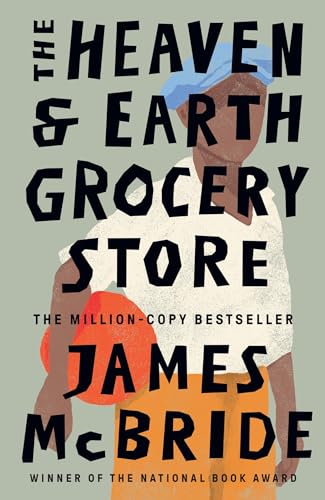
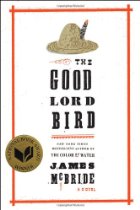
Before the meeting: Though this is the first book by James McBride that I have read, he has featured in this blog before, as the author of The Good Lord Bird, one of the Emerging Artist’s best five books of 2014 (link here). That book won the USA’s National Book Award. According to his Wikipedia entry, The Color of Water, a 1995 book about McBride’s African American and Jewish family history and his relationship with his white mother, is widely regarded as an American classic.
The Heaven and Earth Grocery Store is his sixth novel, set in 1925, mainly in Chicken Hill, a ‘ramshackle neighbourhood’ of the Pennsylvania city of Pottstown (Pottstown exists in real life; Chicken Hill not so much as far as I can tell). The store of the title is run by Chona, a Jewish woman, whose husband Moshe runs a neighbourhood theatre. As most of the Jews leave Chicken Hill for more salubrious neighbourhoods, Chona and Moshe remain and, swimming against the tide of their times, continue to serve and welcome the presence of their African American neighbours (always ‘Negroes’ in this book). At the heart of the book is a celebration of friendship and alliance between Jews and Blacks, plus a significant Italian or two.
The book runs to 381 pages, so page 77* occurs at about the one-fifth point. If a conventionally structured Heaven and Earth Grocery Store film were to be made, I imagine that the events on this page would come much earlier, at the 10 percent mark, when the Inciting Incident is due. The set-up has been established: a death has been foreshadowed; we’ve met Moshe and Shona and the main African American couple, Addie and Nate, who work in the shop and the theatre respectively; we’ve seen the theatre and the grocery store in action; we know the story of Chona’s chronic illness and disability; we’ve met the book’s villain, Doc Roberts, who comes from ‘good white Presbyterian stock’ and marches every year with the Ku Klux Klan. It’s time for the first turning point.
Nate has told Moshe about his ten-year-old nephew, Dodo, who recently started working in the theatre. He was made deaf by an accident, and his mother has died.
Nate’s brow furrowed and his old hands moved up and down the broom handle slowly. He said softly, ‘Me and my wife’s got him.’
Moshe looked down at the floor a moment, embarrassed. It rarely occurred to him that he and Nate shared one commonality. Neither of their wives could bear children. They had worked in the theater all day side by side for twelve years but rarely discussed their wives or matters of home.
Their relationship is already changed by this conversation. The distance imposed by their histories is being bridged. The rest of the conversation introduces the book’s main external action.
‘Well, I think that’s fine,’ Moshe said. ‘You can run things as you like.’
Nate’s brow furrowed. ‘A man from the state come to the house last week. Says he’s gonna carry Dodo off to a special school over in Spring City. Dodo don’t wanna go to no special school. He’s all right here with us.’
Moshe’s heart quickened. He felt a request coming, but Nate continued. ‘The man says he’s coming back to fetch him next week. I’m wondering if you might let me slip Dodo into the theater here tonight, just for a few days till the man goes away. The boy’s quiet. Can’t hear nothing. Won’t be scared or make no noise. He can work good, clean up and so forth.’
‘For how long?
‘Just a couple of days till the man’s gone.’
Knowing where this passage occurs in the book, you would almost certainly guess – correctly – that those few days will expand, and the small favour will balloon into something that changes all their lives. As it turns out, when Moshe tells Chona the situation, she insists that they take Dodo into their own home, and he becomes a much loved member of their family until, in spite of their careful strategies to keep him hidden from the authorities, he is taken from them to a ‘special school’, which is in fact a prison-like institution for people deemed insane. Doc Roberts is key to that removal.
The second half of the book is given over to plans to free Dodo. Relationships between Jews, Blacks and poor Whites flourish. Nate’s back story emerges from the shadows and the man who we first meet as the genial, ageing employee shows a dark side that leads to the book’s one shocking moment – shocking because the reader, or at least this one, cheers on a terrible act of violence.
Doc Roberts and his ilk are embodiments of callous, racist, antisemitic hypocrisy and not much else. There’s a subplot to do with water supply to the synagogue that had me wondering why it was there at all until at the very end it joins the main plot to lead to the death mentioned on the first page. (Not really a spoiler.)
The meeting: We discussed this book along with Elif Shafak’s There Are Rivers in the Sky. We seem to be developing a tradition in the Book Club of having a dedicated nay-sayer at each meeting. This month’s nay-sayer said she had had read this one first, and felt it was built from hackneyed tropes with nothing fresh to offer. Then she read There Are Rivers in the Sky, and revised her view upwards. Our non-finisher had the reverse view – based on a small taste of each book, this one was much less gripping.
Such faint praise aside, we had an animated discussion. One person’s bug turned out to be another’s feature. For example, Chona’s neighbour Bernice was once her best friend but they have been estranged for decades, yet when she asks for help in concealing Dodo from the authorities, Bernice is willing to put herself on the line. One person saw this as inconsistency in the character; another saw it as reflecting the nature of the community – solidarity trumping personal animosity.
There’s a sequence in which two young disabled men – one deaf and the other with severe cerebral palsy – work out a way to communicate. ‘Unbelievable!’ someone said. ‘But brilliant!’ someone else replied. It turned out they both meant pretty much the same thing.
Our Book Club meets on the land of Gadigal and Bidjigal, looking out over the ocean. I wrote this blog post further inland in Gadigal Wangal country, where I am priivileged to live. I acknowledge Elders past and present for their continuing custodianship of this land.
* My usual blogging practice is to focus on the page that coincides with my age, currently 77. Sometimes, as here, it’s a crucial page.












 Me fail? I fly!