Tag Archives: Jimmy Barnes

Andrew O’Hagan’s Atlantic Ocean

Andrew O’Hagan, The Atlantic Ocean: Essays on Britain and America (Faber 2008)
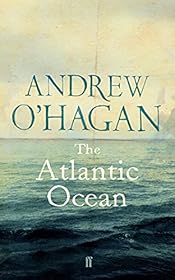
This book was my gift in a Book Group Kris Kringle years ago, and has been languishing on my top shelf ever since. I was prompted to read it by Caledonian Road, Andrew O’Hagan’s most recent novel – which I’ve just read for my other Book Club (blog post to come after the next meeting).

These 23 essays were first published between March 1993 (‘The Killing of James Bulger’) and February 2008 (‘Brothers’). That’s not so long ago, but the book feels as if it comes from another, ancient era. Michael Jackson was alive. 9/11 (and England’s 7/7), the Iraq War, Hurricane Katrina and George W. Bush were in the headlines. Donald J Trump was barely a reality TV star; Brexit wasn’t a cloud on the horizon; a global pandemic was predicted, but with no sense of urgency.

Most of the essays were first published in the London Review of Books, many of them as book reviews. We are told the month and year of first publication, but not the details, or sometimes even the name, of the books being reviewed. We’re invited to read them as stand-alone essays, and for the most part they succeed – as memoir, literary journalism, social commentary, a general reflections on literature. There are pieces of serious long-form journalism, like ‘On Begging’ (November 1993), in which 25-year-old O’Hagan joins the beggars of London with a tape recorder in his pocket, or ‘Brothers’, the book’s final essay, in which he visits the people left behind by the deaths of two servicemen in the Iraq War, one from each of England and the USA.

Three essays illustrate the range of O’Hagan’s subject matter and the variety of his approaches:

‘The Killing of James Bulger’. In the north of England in 1993, two 10-year-old boys abducted, tortured and killed two-year-old James Bulger. The great Gitta Sereny wrote about the murder, probing the boys’ motives and challenging the vengefulness of the press, the courts, and the crowds that gathered to demand the death sentence. O’Hagan’s essay has a similar impetus but, strikingly, his starting point is to identify with the killers. He describes in unsettling detail the way, as a child in Glasgow, he and a girl friend mistreated a much younger child, and expands from there to the general normalisation of cruelty in his part of Scotland. (Shades of Douglas Sewart’s Shuggie Bain or Jimmy Barnes’s memoir Working CLass Boy. It’s a challengingly personal essay that is shamefully relevant to the place I’m in just now, as Queensland’s Liberal National Party is pushing an ‘Adult crime, adult time’ policy.

‘On the End of British Farming’ (March 2001), one of the longest essays, is a brilliant piece of investigative journalism. O’Hagan visits a number of small farmers, and gives shocking statistics on the economic pressures they are up against. Most shockingly, perhaps, is what happens when he follows up a claim by a Sainsbury representative that the retail chain has an excellent relationship with a dairy farm in Devon. On visiting the ‘farm’, he finds that in order to survive (and then thrive), the couple who run it have got rid of all their cows. Their enterprise is now is in effect a yoghurt and ice cream factory, buying milk at just above the unsustainable going rate from neighbouring farms. The essay sees the source of the problem in the subsidy policies after the Second World War. There is some discussion of the role of the EU (real, but not major, he argues). It’s one of the many moments when I would love to see an update: did Brexit improve things?

‘After Hurricane Katrina’ (October 2005). O’Hagan saw online that two men from another state were driving to New Orleans to help in the aftermath of Hurricane Katrina. He contacted them and asked to travel with them. The essay is a literary equivalent of a fly on the wall documentary: the writer is all but invisible, making no overt judgement, authorial comment or explanation, but allowing the story to unfold mainly through the dialogue of the two men. They are rowdy, spectacularly sexist, uncareful about racism (one of them is African-American), and a weird combination of generosity and self-absorption. It reads a bit like a Carl Hiaasen novel. I could only wish that Caledonian Road had as much exuberant life.

Page 77 occurs in ‘Tony and the Queen’ (November 2006), which is part a reflection on the Stephen Frears/Peter Morgan Movie, The Queen – long since superseded in our minds by the TV series The Crown (also largely written by Peter Morgan). The page happens to include one of the passages where O’Hagan notes the influence of US culture on Britain’s. He is discussing the moment in the film and in real life when the Queen was slow to grieve publically after the death of Lady Diana:

Obviously, the elder royals and their familiars had completely missed out on the Oprah-isation of the universe. If they hadn’t, they might have learned the new first rule of successful leadership: enjoy your inscrutability if you must, but don’t ever stand in the way of a confessional heroine. If stopping Diana was something of a thankless task while she was alive, the effort would come to seem suicidal for the British monarchy in the summer of 1997, after Diana died in that Paris tunnel. William Shakespeare himself could scarcely have imagined, in the days after the crash, a royal household with more out-of-touch advisers than the Windsors had on twenty-four-hour call, each of them sharing a gigantic unawareness of the difference between a pest and a mass phenomenon. But it is said that much of the intransigence was coming from the Queen herself, who, despite all her experience, disported herself that summer like a person lumbering in a dark cave. She was somehow unable to see what the infants and the dogs in the street could see, that the old style was unsuited to the virulent new mood – and that if something had to give, or someone, it was most likely going to be the woman whose head appears ready-severed on Britain’s postage stamps.

An astute observation at the time, and probably accurate about the changing times, but it fails to imagine – and how could it – the powerful impact of the image of that same inscrutable queen sitting alone at the funeral of her husband. Inscrutability itself, evidently, can find favour in the ‘virulent new mood’, and O’Hagan’s ominous hints of decapitation to come (inspired no doubt by Scottish wishful thinking) fell very wide of the mark.


I finished writing this blog post in Ma:Mu country. My father, my siblings and I were born on this country, and I’m very happy to belatedly acknowledge the Ma:Mu Elders past and present who have cared for this prodigally beautiful land for millennia, and continue to do so..


* My blogging practice for some time has been to focus arbitrarily on the page of a book or journal that coincides with my age, which currently is 77.

Douglas Stuart’s Shuggie Bain

Douglas Stuart, Shuggie Bain (Picador 2020)

This is a Book Group book.

Before the meeting

Shuggie Bain is the story of a boy who grows up in poverty in Glasgow, the youngest of three children. His mother, Agnes, is an alcoholic who is brutally treated by her husband, Shuggie’s father, and then abandoned by him. Once a stunning beauty, she struggles to maintain appearances as she descends into increasingly desperate poverty, alienated from other women and sexually exploited, often violently, by men. From an early age, Shuggie takes on the burden of looking after her, protecting her and trying to make things better. The downward trend is reversed at times when Agnes joins AA, finds part-time employment and has a relationship with a decent man, but there is never any doubt about how her story will end, or that she will take Shuggie down with her. Through it all, Shuggie is singled out by adults and other children as different, not a proper boy – it’s a story of growing up gay.

The Wikipedia entry on Douglas Stuart gives an account of his childhood that could easily be a plot summary of the book. It’s surely no coincidence that ‘Shuggie’ rhymes with ‘Dougie’ (though maybe not in Australian pronunciation, if ‘Shug’ is short for ‘sugar’ as in The Color Purple), and the opening line of the acknowledgements refers to the author’s mother ‘and her struggle’. So the book presents itself as a fictionalised version of the author’s own childhood. As such it’s a valiant work of imagination, wrangling terrible experience into words. I admire it, I read it compulsively, I must have been moved by the horror because when I reached the book’s one moment of genuine tenderness I felt an extraordinary sense of a weight lifting from my mind, even though I knew it was only temporary. But …

… if I hadn’t been reading it for the book group, I would have stopped at page 37, where Agnes is beaten and raped by Big Shug. Really, do I need any more images of that sort lodged in my brain? I did read on, encouraged by the fact that the book won the Booker Prize in 2020, and I’m glad I did, but I found the insistence on the misery of Agnes and every other character in the book disturbing. I can explain what I mean by way of a tiny moment fairly early on. Agnes has regained consciousness after a night of drunkenness, destruction and violence:

Agnes wrapped her lips around the cold metal tap and gulped the fluoride-heavy water, panting and gasping like a thirsty dog. 

(page 72)

She has been beaten up, raped, and shunned. She has done appalling things in her drunken state. Now, the tone of this sentence implies, she has reached such a state of degradation that she drinks directly from a tap, and not only that, but the water has been fluoridated! Where I come from, you don’t have to be subhuman to drink fluoridated water from a cold tap. It feels as if the narrator, if not the book itself, has lost perspective, and I lose faith. It could be that this sentence is a momentary false note. After all, as Randall Jarrell said, a novel is a prose narrative of some length that has something wrong with it. But my uneasy sense that perhaps this was a work of Misery Porn persisted for the rest of the book, even while I engaged intensely with the characters.

Between reading the book and the Book Group meeting: I took the book, and my unease about it, seriously enough to do some counterpoint reading – that is, to read writing that deals with similar material from different points of view. Interestingly enough, the other reading led me to a better appreciation of Shuggie Bain.

1. Jimmy Barnes’s memoir Working Class Boy (link to my blog post here). The early chapters tell of a childhood in a family and community in Glasgow, where alcohol-fuelled violence is as prevalent as in Shuggie’s. Young Jimmy could easily have been one of the boys who terrorised young Shuggie.

They are different kinds of book, of course. Jimmy Barnes can expect his readers to know him as a rock star, and to read the memoir as his back story. As he tells it, the young Jimmy was able to escape from the violence at home, and he went pretty wild on drugs and alcohol himself. Writing as a grandfather, he repents the errors of his youth and writes with generosity and forgiveness of his parents.

The narrator of Shuggy Bain doesn’t have that kind of safe distance from the events he describes. The novel has a visceral immediacy. The account of Agnes’s degradation is told from a point of view not far removed from Shuggie’s own, so the reader is aligned with the helpless child bystander. If the narrator has any distance at all, I imagine it’s that of an adult Shuggie who has escaped Glasgow, and looks back in horror at what he witnessed and endured.

2. Wendy McCarthy on the ABC’s Conversations podcast describes her own response when she saw her father lying drunk in the gutter.

This boy said to me, ‘You know your father’s a drunk,’ and I said, ‘Yep,’ and just kept walking. I learnt something then: I’m not going to carry his shame.

(The link is here. The quote is at 14 minutes and 20 seconds.)

Wendy McCarthy was already at high school when that happened, and had had time to build her inner resources. Shuggie Bain is a novel about a child who didn’t have that chance, and who was caught in the vortex of his mother’s shame.

3. Kit Kelen’s Book of Mother (blog post to come). On the face of it, this poetry collection has nothing in common with Shuggie Bain. Mostly, it plunges the reader into the experience of living with the poet’s mother’s dementia. The son/poet-narrator is an adult, but the poetry captures a kind of mental vertigo that has a lot in common with the way Shuggie is drawn into his mother’s struggles. Comparing the books, I realised Shuggie isn’t just a dreadfully abused child, but he’s also a person of extraordinary heroism. When everyone else abandons Agnes or – in the case of Shuggie’s siblings – escapes her destructive gravitational pull, Shuggie stays, loving her and trying to make things better for her, until the bitter end.

After the meeting: We met in person, all but three who were respectively on the road with a theatrical production, visiting New York for major family event, and home with non-Covid sick children. As usual we ate well and eclectically. Among other things we discussed the role of table tennis for one of us in the process of retiring from regular work; the joy for another at having no income to declare as he too is in the process of hanging up his tools; and our shared relief at having a government that isn’t just about slogans, announcements and cruelty.

The Chooser kicked off conversation about the book by saying that if he’s known what it was about he wouldn’t have picked it, but he’d trusted his wife’s recommendation. I think we were unanimously glad he had, as the book provoked animated, and at times intensely personal conversation.

Many, if not most, had had to overcome initial reluctance that ranged from my own borderline prissiness to not wanting to dredge up memories of a major alcohol-related disruption in his own life.

A number of the chaps said they’d had to take breaks from reading it – one said a dull work on (I think) the energy grid was a perfect palate cleanser. One of the night’s three absentees texted that it was like Hanya Yanigahara’s A Little Life ‘but without the gratuitous violence etc.’ Another absentee sent us a long text part way through the evening, and encapsulated the general sentiment in his summing up: ‘In the end it was really good but hard going. I’m glad it’s over but glad I finished.’

A number of things were identified as having won us over. We agreed that it’s beautifully written – one man said he kept stopping to reread sentences for the sheer pleasure. It feels real – you believe that the author has experienced something close to Shuggie’s life. The narrative has a strong forward drive: as readers we share Shuggie’s hope that Agnes will snap out of the downward spiral, or at least we want it desperately even though we know it’s futile – and we keep turning the pages. The moments of lightness, tenderness and spirited resistance (there are more than the one I remembered) are beacons in the gloom. And we feel strongly for all the characters: Shuggie’s older brother Leekie won more than one heart, and (for me at least) Eugene, the one man who genuinely loves Agnes, tore my heart out when he became the unintentional agent of her destruction.

It’s a terrific book. Next meeting’s Chooser has been urged to choose something cheerful.

Jimmy Barnes’s Working Class Boy

Jimmy Barnes, Working Class Boy (HarperCollinsAustralia 2016)

This is a terrific book.

These days, Jimmy Barnes turns up on social media as a genial grandfather who makes music with his large family for the pleasure of a nation beleaguered by Covid and other ills. Once he was a hard living, hard-drinking rock star whose songs ‘Working Class Man’ and ‘Khe Sanh’, the latter sung as front man of Cold Chisel, have anthem status.

At the end of Working Class Boy, he more or less promises us the story of how he made the transition from then to now. This book is a prequel, a back story: ‘How I became Jimmy Barnes.’ It begins in poverty-stricken Glasgow where alcohol-fuelled violence is the norm in the streets and in the home. It takes us through the small boy’s emigration with his dysfunctional family to South Australia, where the town of Elizabeth is hardly less violent or alcohol-riven than Glasgow. It leaves off as Jimmy, now as addicted to alcohol and other substances as the next knockabout young man, sets off for Armidale with the newly formed Cold Chisel, not with any hope of peace or stability, but at least with the possibility of making it as a rock band.

It’s a harrowing story, but it doesn’t ask for pity, and it doesn’t feel as if it aims to shock. The writer uses his great skill as a yarn-spinner to keep the narrative alive, at the same time never letting the reader lose sight of his serious purpose, as he articulates it in the Acknowledgements:

There’s a lot of my past that I wanted to push out of my memory and never see again. But I couldn’t. I tried to drown my past in every possible way, but as long as it was festering inside me I could never really move on. My childhood affected every step I took over the rest of my life. It twisted the way I thought and the way I interacted with normal human beings. Eventually I realised that these wounds needed to be brought out in the open and aired if I ever wanted them to heal.

So I started trying to write things down.

(page 359)

I read Working Class Boy at the Emerging Artist’s suggestion, when I told her about Shuggie Bain. I’d read that novel for the Book Group (blog post to come in a couple of weeks), and was uneasy about its insistence on the main woman character’s wretchedness and victimhood amid alcohol-fuelled violence and poverty in Glasgow – was it a kind of misery porn? ‘Jimmy Barnes’s childhood was in Glasgow,’ the ER said.

It turned out that reading the books in close sequence increased my appreciation of both of them. I won’t talk about Shuggie Bain here.

None of Jimmy Barnes’s characters is a straightforward victim. He doesn’t hold back from telling us about his own violence, and sexism. He makes no excuses, but gives us glimpses of the inner struggles, and terrors, that he was dealing with at the time of his worst behaviour. The effect is that when he tells us about his mother’s and father’s violent moments, we aren’t invited to sit in judgement. It’s understood that they too are wrestling with demons. I was struck by his account of how his first son, David Campbell, was conceived and born when Jimmy was just 16. This episode of teenage sex and consequences can’t have been easy to write, but Barnes tells it with generosity to all involved, including David when he learned the truth of his origins. Then he says:

I don’t need to say much more about this time. Not to you guys anyway.

(Page 317)

How’s that for telling the reader to respect the writer’s boundaries?

Comparing the two books made me appreciate the quality of Barnesie’s humour (I hope it’s OK to call him that). Even as he laments the terrible damage wrought by alcohol and poverty, he celebrates the wit and resilience, and the sense of community, of the people involved. I came away from the scenes in Glasgow wanting to see a lot more more of the Glaswegians, though I’d prefer to be out of striking range. Many of his adolescent exploits have a terrific derring-do about them. There’s the time he drove a half a dozen drunken mates to the drive-in cinema in a car with no brakes, or the occasion when he and a few of his mates took LSD and got drunk before turning up at a party given by ‘a quiet young guy’ from the foundry, to find that the young guy ‘was a drag queen in his spare time’, and the party a great success.

The book pulls off the minor miracle of taking the reader along on this wild ride, feeling the excitement of it, but not losing sight of the human cost both for the writer and the other young men like him, and for the many people – girls, women, strangers – they damaged. I’m not drawn to celebrity autobiographies, but Jimmy Barnes’s Working Class Man (HarperCollinsAustralia 2018) just made it onto my TBR list.