Tag Archives: Kate Grenville

July Books [2006]

[This was originally posted in my now defunct blog Family Life, on 2 August 2006. I’m retrieving it today because it includes some comments on Kate Grenville’s The Secret River, which recently came in at number 20 in Radio National’s Top 100 Books of the 21st Century.]

Books I bought in July:
Robert Charles Wilson, Spin (Tor Books 2005)

Books read:
Poppy Z. Brite, Liquor (Three Rivers Press 2004) and Prime (Three Rivers Press 2005) Marilynne Robinson, Gilead (Virago 2006)
Tim Harford, The Undercover Economist (Little Brown 2006)
Jared Diamond, Collapse (Penguin 2005) (finished)
Kate GrenvilleThe Secret River (Test 2005)
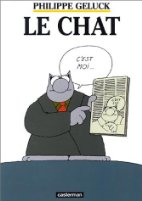
Philippe Geluck, Le Chat (Casterman 2002)

As this month has been spent travelling, I’ve laid aside a couple of books only partly finished, and mostly started on a whole new swag
liquor

I read Poppy C Brite’s Liquor and most of Gilead on the plane to Europe. It’s hard to think of a greater contrast, one about heavy-drinking chefs in pre-Katrina New Orleans, the other an elegiac look at three generations of austere men of religion. Both of them were infinitely preferable to trying to watch a movie in those circumstances (I gave up when an announcement about duty-free shopping interrupted the opening scene of Candy). Poppy C. Brite’s book strikes me as a thinly disguised love song – love for her city (New Orleans, pronounced with the emphasis on the middle syllable), for the world of restaurant work and I presume for her chef husband, and for lovely bits of the English language. The plot is functional, but that’s not where the interest lies.
1844081486

Gilead is also a love letter, with a lot less disguise: it’s in the form of a letter written from a dying man to his seven-year-old son, in the expectation that the son will be an adult by the time he reads it. The narrator is deeply in love with his little son; Marilynne Robinson clearly loves her narrator, probably the last of a line of passionate preachers in the US midwest. He is a man of profound faith, saturated in bible-awareness, but also acquainted with other intellectual traditions. He is writing the boy’s ‘begats’ – that is to say, he tells the story of his own grandfather, a wild, pistol-wielding preacher called by a vision to fight slavery, of his father, an equally single-minded man of peace, and of himself, struggling with a world where his kind of faith is more and more under attack – by secularism on the one hand and television evangelism on the other. It’s a book full of grace and wisdom.
0316731161

In Amsterdam I moved on to The Undercover Economist. I’d heard Tim Harford speak at the Sydney Writers’ Festival, and been taken as much by his Tin-Tin quiff as by his talking sense about economics. I feel as a result of reading this that I now have a basic grasp of classic market economics, and it was more or less fun to read.
1400050081

Prime is a sequel to Liquor, and like that book it abounds in glorious descriptions of the joys of cooking and eating. The book gained extra piquancy for me from being read in Ireland, where we had some difficulty finding palatable food (we gave a special award to the lightly spiced salmon patties served up in a posh-looking hotel dining-room and called Thai fish cakes).
0713992867

In London, I finished Collapse. Again, this was appropriate, not because it’s a great escapist holiday read (it’s anything but), but because it cast a sharp light on the experience of London’s hottest summer days ever: this wasn’t just a frivolous news story about Poms not knowing how to build cool houses; it was a harbinger of major things to come for all of us. It was good to read his chapter on Australia in London as well, because he argues that our persistent identification with British traditions is one of the things preventing us from choosing environmentally sound directions. I was struck by his articulation of one of the key challenges facing the world:

the challenge of deciding which of a society’s deeply held core beliefs are compatible with the society’s survival, and which ones instead have to be given up.

Before leaving the brick of a book behind on the train to Gatwick (to avoid excess baggage charges), I copied out this from his final section, where he talks about what anyone can do about the current crisis:

an individual should not expect to make a difference through a single action, or even through a series of actions that will be completed within three weeks. If you do want to make a difference, plan to commit yourself to a consistent policy of actions over the duration of your life.
secret

I moved on to The Secret River with high expectations. But whereas recent readings, Neal Stephenson’s Baroque Trilogy and Seamus Heaney’s ‘District and Circle’, had both evoked London localities so vividly that I was constantly being reminded of moments from that novel and that poem during my stay there, I was disappointed that this book’s London remained pretty bodiless. Once the hero, Will Thornhill, arrived on the Hawkesbury with his family, however, my disappointment disappeared: there the book’s true subject emerged, and at the same time the physical world became powerfully present:

When Thornhill jumped over the bow the mud gripped his feet. He tried to take a step and it sucked him in deeper. With a huge effort he dragged one foot out and looked for a place to set it down between the spiky mango roots. Lurched forward into even deeper mud, pulled his other leg up with a squelch, feeling the foot stretch against the ankle, and floundered towards the bank. He put his head down and butted blindly through a screen of bushes, bursting out at last onto dry land. Beyond the river-oaks the ground opened onto a flat place covered with tender green growth and studded with yellow daisies.

His own. His own, by virtue of his foot standing on it.

Will’s first real encounter with one of the people he is dispossessing in this moment occurs within pages, and the book becomes as gripping as the Hawkesbury mud – in which I have no doubt Kate Grenville has had her feet stuck.
220334024X

Le chat was my one book in French, a bande dessinée whose measure I found very hard to take. It consists the Steven-Wright-ish monologues of a large, cool, besuited cat. For example:

Le mot ‘long’ est plus court que le mot ‘court’. C’est dingue, non?

And now I return to Romanesque churches and ancient Cathar towers.

Posted: Wed – August 2, 2006 at 03:54 AM
Bookblog #51: Book Club Xmas presents

[This was originally posted in my now defunct blog Family Life, on 14 January 2009. I’m retrieving it today because it includes some comments on Christos Tsiolkas’ The Slap, which recently came in at number 37 in Radio National’s Top 100 Books of the 21st Century.]

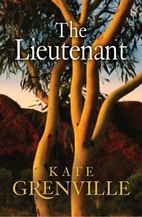
Kate Grenville, The Lieutenant (Text Publishing 2008)
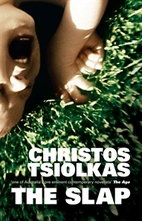
Christos Tsiolkas, The Slap (Allen & Unwin 2008)

These were Penny’s and my presents from the Book Club Secret Santa/Kris Kringle in December. They’re both novels we’d been planning to read, both much praised in the press.

lieutenant

The Lieutenant was mine, and I was delighted to receive it. My interest had been piqued by hearing Kate Grenville talk charmingly – and passionately – about it at Gleebooks and then again on the Book Show. I think, though, that when I came to read it, I suffered from having heard too much, and the story remained for too long something I was being told about rather than something that was happening for me as I read. I was disorientated by the policy of renaming historical characters. I suppose the reason for this was to avoid being taken to task by grumpy old historians. You know, if someone were to say, ‘But the evidence is clear that Arthur Phillip was not an authoritarian, culturally blinkered careerist,’ the novelist could reply, ‘But this is a fictional first Governor of New South Wales called Gilbert, not the historical Phillip at all.’ The trouble is, given that the pithy core of the book is an actual document, which Kate Grenville has been careful to tell us provides every word of the conversation between her lieutenant hero and the young Aboriginal woman who befriends him, the novel is clearly meant to be an imagining of the actual early colony, and such arguments would be so much blown smoke.

The result is a kind of roman à clef effect: is Silk actually Watkin Tench? which of the Aboriginal men is Bennelong? etc. Now that I’m dropping in bits of French, I might as well say that there’s also something of the roman à thèse about the book, in the sense that one feels that the characters are there not so much for their own sake as for what they can show us about the meeting of cultures in Port Jackson in 1788. When I wrote in this blog about Kate Grenville’s previous book, I used the word ‘bodiless’. There’s something un-fleshed about this one too. All the same, it’s about one of the most interesting subjects I can imagine: the meeting of two mutually uncomprehending cultures in the form of two people establishing a delicate intimacy, against the odds and ephemeral. That it is tightly based on Lieutenant Dawes’s actual notebook on the Gadigal language gives it enormous moral force. By the end I was weeping.

slap

As I mentioned earlier, The Slap accounted for exactly half of the books in the Secret Santa/Kris Kringle. Clearly, sight unseen, we’d all decided it was worth a read. It would be hard to imagine a greater contrast to The Lieutenant. While we are told that Kate Grenville’s hero has an active sex life, it happens discreetly offstage. The Slap treats us in great detail to any number of sexual encounters, or perhaps I should say events, since ‘encounter’ implies a meeting of some kind. (Actually the sex in this book reminded me my childhood curiosity about characters in books going to the toilet. It’s as if this book decides it’s going to show the sexual things that are usually glossed over, but the result is mostly unconvincing.)

I read the first third or so aloud to Penny on three longish car trips. At a certain point she refused to have me read any more, not just because of the sex and the tediously undifferentiated obscenity of much of the dialogue, but because she just didn’t want to go where the plot was signalling its intention of taking us. I read on, mostly out of a sense of duty, and it turned out the signals were misleading. I can’t say it was a pleasant read, but in the end it was an impressive one.

In case anyone reading this doesn’t know, the story deals with an interwoven group of family and friends in suburban Melbourne. A man slaps a child at a barbecue: the man is Greek, the child’s parents are ‘Skip’ and embedded in victim identities. Though the back cover blurb says that the book is about ‘the slap and its consequences’, I read it more as using the slap as a device that provided a slender unifying narrative thread to the novel’s eight parts, each of which is told from the point of view of a different person who was at the fateful barbecue. A young girl gets plastered with her friends at an end-of-school party; an old man confronts his own mortality at the funeral of an old friend; several marriages are revealed as built on compromise – variously generous, self-sacrificing, resentful. There are lies about sex, half-truthful confessions of infidelity, a shocking betrayal of trust. For me, perhaps the finest thing is the tender–tough revelation of what drives the neurotic and vicious mother of the child who is slapped, so that we move from loathing and despising her to recognising her tragedy. The writing is pretty rough at times, and I think that people who say it’s wonderful to have a book with such a compelling plot for a change haven’t read much children’s or young adult writing.

I’m not rushing out to find all Christos’ other books, but my sense of what it is to be alive, human and suburban Australian has been expanded.

NSW Premier’s Literary Awards Night 2021

For the second year in a row, the NSW Premier’s Literary Awards Night has been an online event. I was one of 65 people watching it at the beginning, an audience that grew to 68 near the end. Not exactly the Oscars.

Here’s how it went:

After a number of introductory speeches – by State Librarian John Vallance who quoted Aristotle in the State Library’s Shakespeare Room, Wiradjuri woman Yvonne Weldon who welcomed us to Gadigal land, President of the Library Council of NSW George Souris, Minister for the Arts Don Harwin who promoted the government’s support for literature, Premier Gladys Berejiklian who came out as a passionate reader. We then went on to the winners, presented by John Vallance except where I note otherwise:

Multicultural NSW Award presented by Joseph La Posta, CEO of Multicultural NSW: Throat, Ellen van Neerven (UQP) – my blog post here. Ellen van Neerven skyped in. ‘This book has been more than just a book. It has been a chance to write alongside my mum among others …’

NSW Premier’s Translation Prize (awarded every second year) also presented by Joseph La Posta, to two winners: Imminence by Marian Dimópoulos, translated by Alice Whitmore (Giramondo) and Autumn Manuscripts, Tasos Leivaditis, translated by N. N. Trakakis (Smokestack Books). Both spoke beautifully; Nick quoted a poem.

Nick Enright Prize for Playwriting: Milk, Dylan van den Berg (The Street Theatre). In true theatre style, the winner thanked many many people, including ‘the Mob’ in the ACT.

Betty Roland Prize for Scriptwriting: Freeman, Laurence Billiet (General Strike and Matchbox Pictures). Laurence Billiet acknowledged her subject, Kathy Freeman. The novel was made during the Melbourne lockdown, ‘or should I say the Melbourne lockdowns’.

Patricia Wrightson Prize for Children’s Literature: The Grandest Bookshop in the World, Amelia Mellor (Affirm Press). ‘I was a broke student when I started writing this book.’ She thanked libraries for making the book possible.

Ethel Turner Prize for Young People’s Literature: The End of the World is Bigger than Love, Davina Bell (Text). ‘I am honoured and humbled and genuinely shocked.’ Among other people, she singled out her editor to thank.

Kenneth Slessor Prize for Poetry: Ellen van Neerven again.

Douglas Stewart Prize for Non-Fiction: The Warrior, the Voyager, and the Artist: Three Lives in an Age of Empire, Kate Fullagar (Yale University Press). Thanked the army of scholars who helped her write it. ‘I will donate some of the prize money to two scholarly organisations.’ One is a Cherokee organisation. The other is Pacifika Student Organisation.

UTS Glenda Adams Award for New Writing: Cherry Beach, Laura McPhee-Browne (Text). Interestingly, she thanked the judges by their first names. Her editor also got a big plug.

People’s Choice Award: The Dictionary of Lost Words, Pip Williams. when she has enjoyed a book she goes to the acknowledgements page and offers up a silent prayer of thanks to the author.

Christina Stead Prize for Fiction: A Room Made of Leaves, Kate Grenville (Text Publishing). ‘There is no best book, but the judges had to pick one, so thank you.’ She thanked the descendants of John and Elizabeth Macarthur for their generosity in depositing papers in the State Library, and spoke of Elizabeth Macarthur as a foremother.

Book of the Year, presented by the senior judge, Jane McCredie: Throat, Ellen van Neerven (UQP). They were stuck for words on their second prize, and even more so here. [Added later: But they did manage one glowing sentence: ‘It gives me a boost to continue doing what I’m attempting to do, which is to write as gently and as considerately as possible.’]

The Special Award: Melina Marchetta. Wow, and also Yay! Usually this prize goes to someone who is nearing the end of a career, possibly with death around the corner. Hopefully, Melina Marchetta has many years of creativity and literacy activism ahead of her. She spoke of how stories came into her life around a table during meals, and she wishes she could be with us in person. ‘I feel so much pride that I wrote my first novel on Gadigal land.’ And she expressed gratitude to her family who allowed her – ‘I don’t know if they allowed me, but I did it anyhow’ – to use their stories. She dedicated the award to her daughter.

That was it.

You can watch the whole ceremony at:

Sydney Writers’ Festival 2015: My Day 2

My Friday at the Festival was a long day. Also wet. Anticipating queues, I arrived early for my first event, and turned out to be one of three people sheltering under the long marquee for a good half hour. Sadly, attendance was pretty sparse for an excellent session:

10 am: Australia in Verse
As is often the case, this event’s title was irrelevant. With poetry events at the SWF, it’s the who that counts rather than the what.

Sam Wagan Watson and Ali Cobby Eckerman were in conversation with Ivor Indyk. Jennifer Maiden’s name was in the program but back trouble kept her away, that and her wish that the two Indigenous poets should have the floor. I was sorry not to see her, but it was wonderful that we got so much of the two who were there.

The poets spoke about their backgrounds. Sam’s south-east Queensland childhood was full of story-tellers, writers and artists, solidly Aboriginal though not in denial about European heritage as well. He described himself as a child of popular culture. Ali’s mother was taken from her family when very young; Ali herself was taken; and she relinquished her own baby son. Their paths to becoming poets were vastly different, as is their poetry.

Both read a number of poems, and spoke about what their poetry meant to them. Ivor Indyk was wonderful in the chair. When Sam said something about his early poems being well received, Ivor said that was because they were good: ‘And I’ll say what was good about them in a minute.’

There was a lot of laughter, and some tears.

And on to:

11.30: Writers on Writers: Rilke
I know very little about Rilke. I read his Letters to a Young Poet when I was a young non-poet, and I love this passage from Etty Hillesum‘s diaries, written on her way to Auschwitz, which makes me want to know more:

I always return to Rilke.
It is strange to think that someone so frail did most of his writing within protective castle walls, would perhaps have been broken by the circumstances in which we now live. […] In peaceful times and under favourable circumstances, sensitive artists may search for the purest and most fitting expression of their deepest insights so that, during more turbulent and debilitating times, others can turn to them for support and a ready response to their bewildered questions, a response they are unable to formulate for themselves, since all their energies are taken up in looking after the bare necessities.

So I was interested.

There was a lot to absorb. All four panelists knew an awful lot about Rilke, which they were enthusiastic to share: much more than could possibly fit into an hour. Luke Fischer, enthusiastic young scholar–poet, fell over his own words as he gave us three trains of thought at once. Lesley Chamberlain, a learned Englishwoman in jeans, made sure we knew how to pronounce Brancusi properly. Peter Morgan, from Sydney University’s German department, was in the chair and had interesting things to say about translating Rilke. Elder poet Robert Gray seemed to rise every now and then from the depths of abstract thought to make a brief contribution. It was fascinating theatre, and pretty good as an impressionistic introduction to a poet who, they said, sits at the beginning of modernism.

Not that it was like a fish and chip shop, but I had three takeaways:

  • Rilke is the one who ended a short poem describing an ancient sculpture with a phrase that seemed to come from nowhere and go everywhere, ‘You must change your life.’
  • He regarded his letters as part of his literary output. (This was a relief, because if the Letters to a Young Poet were dashed off there’s no hope for the rest of us.)
  • Something that came up in response to a question at the very end, that seems relevant to to Etty Hillesum quote is Rilke’s concept of the reversal. As far as I could understand, the idea is that if you set out to experience any pain and painful emotion fully rather than numbing them out or seeking distraction from them, then at some point a reversal happens, and the pain is in some way transcended.

Time for lunch, in what was now a beautiful sunny day by the Harbour, and then:

1.30: The World in Three Poets

3 poets

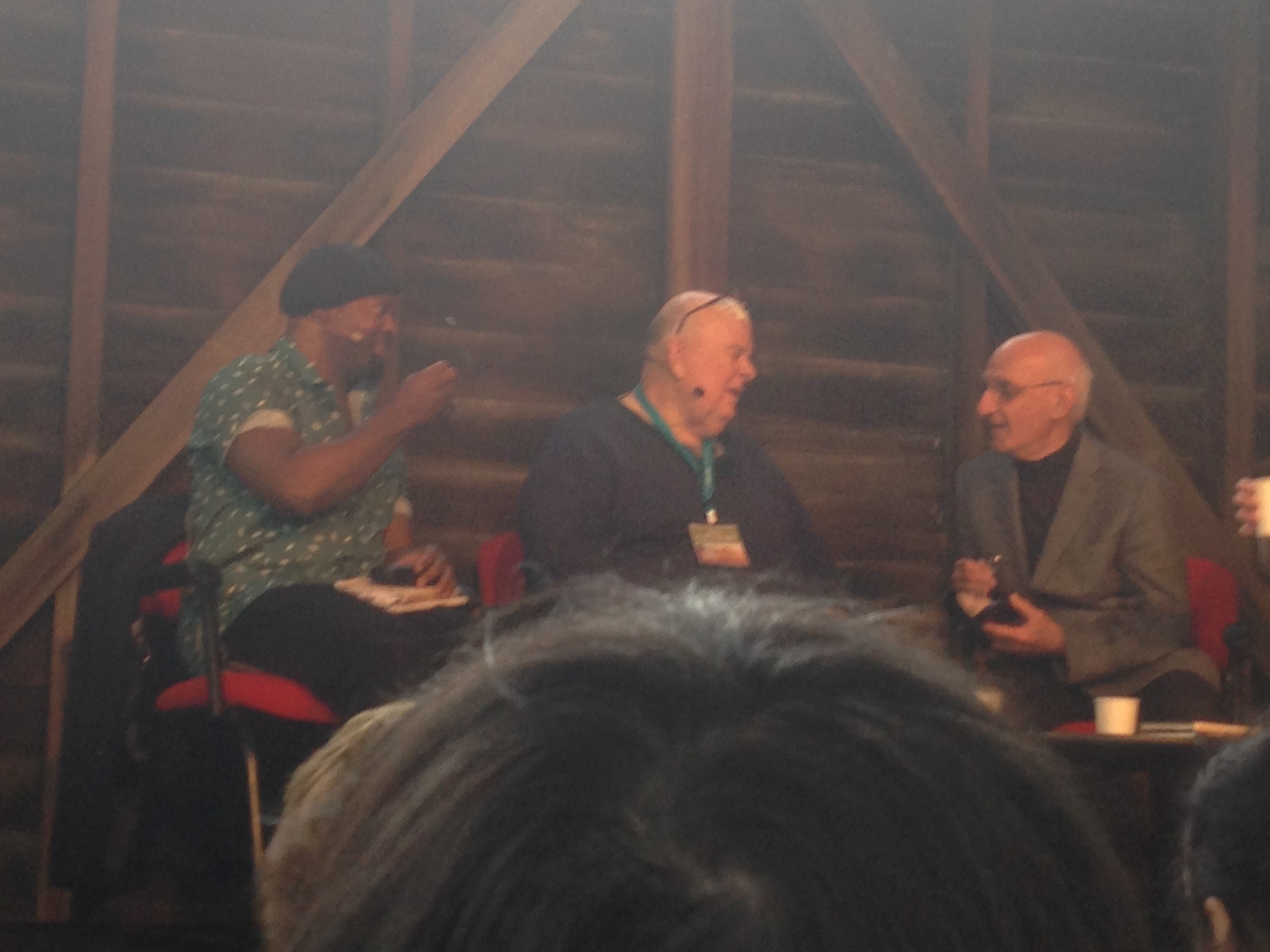
This was a wonderful session. Kate Fagan (not pictured), herself no mean poet, did an amazing job of introducing poets Ben Okri, David Malouf and Les Murray. That is, she said just a few extraordinarily well crafted words about each of them, leaving most of the hour for them to read to us, followed by a short question time. It was an almost overwhelming combination of talents.

The woman sitting next to me said she was there mainly for Ben Okri – she’d read some of his novels (‘if you can call them novels’) and hoped that hearing him read in person would help to understand them. As if he’d heard her, his final reading was from his current novel, which he introduced by saying that his novels had often been described as poetic. My transitory companion was pleased.

Les Murray read nothing from his most recent book, which of course was because he had a whole session on that book – Waiting for the Past – the next day. What he did read was marvellous. And when David Malouf read, Les was a picture of concentration – as if he was in training for an Olympic event in Listening to Poetry.

David began with his ‘Seven Last Word of the Emperor Hadrian’. Heard in the context of the previous day’s session on the classics, this revealed itself more clearly: the speaker, anticipating death, bids a tender farewell to his soul, the reverse of what we would expect in the Judaeo-Christian mindset, and there is something deeply moving about that.

All three of these extraordinary poets shone in the question time.

3  pm: Australia’s Oldest Stories: Indigenous Storytelling with Glen Miller
It’s 51 years since Jacaranda Press published a children’s book, The Legends of Moonie Jarl by Moonie Jarl (Wilf Reeves) and Wandi (Olga Miller), which has been described as the first book written by Aboriginal people. The Indigenous Literacy Foundation have re-published it this year. Glen Miller, nephew and son respectively of the authors, talked to Lydia Miller about his own very interesting life – as very young worker in the coal mines, public servant, cultural tourism entrepreneur, and now as elder and activist in the Maryborough Aboriginal community – and about the origins of the book as he remembered them. He was very good value, but I can’t have been the only person in the audience who was hanging out to be read to. Eventually, he did read us one story – almost apologetically, as if an audience full of adults wouldn’t want to be read a children’s story. There were no complaints.

It being Friday, I was joined by the Art Student for:

4.30: The Big Read
The Big Read is where a big theatre full of people, mainly adults, sits back to be read to. This event used to be for ninety minutes, but it’s sadly been cut back to just an hour, and that hour has to accommodate the presentation of the Sydney Morning Herald Best Young Australian Novelist Awards.

This year the awards presentation featured some unscheduled theatre. The set-up has always been a little awkward, as one by one the young novelists stand silently off to the side of the stage while their novels are described, and then again while the others have their turns. This year, the first recipient, Michael Mohammed Ahmad, clearly feeling the awkwardness acutely, sat down in a spare chair while his book (The Tribe) was being described. When he was shepherded away from that chair after receiving his award, he looked around and saw that there wasn’t a chair (Beatles reference intended), so sat on the floor. His successors – Maxine Beneba Clarke, Ellen van Neerven and Omar Musa (Alice Pung, the fifth recipient, was in Melbourne with a small baby) – each made the decision to join him. Linda Morris from the SMH said it was like a sit-in. Perhaps next year there will be chairs, and the young novelists may even have a moment each at the microphone.

On to the show itself: Camilla Nelson read from Alice Pung’s book; Kate Grenville read from One Life, a kind of biography of her mother; Steven Carroll read an extended passage about a guitar from his novel, Forever Young; Damian Barr gave us a snippet of Glaswegian childhood from his memoir Maggie and Me. Annette Shun Wah was as always a warm and charming host.

It’s probably telling that when we went to Gleebooks on our way to dinner to buy Damian Barr’s book it was sold out. After a dinner up the hill at the Hero of Waterloo, we uncharacteristically returned to the Festival for an evening session:

8.00 Drafts Unleashed + Slam
MCd by Miles Merrill, mover and shaker on the Australian spoken word scene, this featured an open mic plus a number of featured guests, all of whom were invited to read something completely new. Benjamin Law read us the opening scene of the TV series currently in production based on his memoir The Family Law. He did the voices and the accents, and it was a wondrous thing to see this slight, mild man transformed before our eyes into a big, loud, wildly inappropriate woman. The rest was fun too, but we were weary and left before the show was over, walking back to Circular Quay through the spectacle and crush of the Vivid festival.

Kate vs Inga – it’s still going on

Kate Grenville was interviewed on the most recent Guardian Books Podcast, a good choice of guest as the subject was historical fiction, and her last three books – The Secret River, The Lieutenant and Sarah Thornhill –  have been tales of the early years of the colony of New South Wales.

It must be irritating to Ms Grenville that every time a journalist talks to her about her colonial novels, they raise the matter of the ‘attacks’ on The Secret River by ‘historians’. And that’s what happens in this podcast. Asked about the response to The Secret River, KG says in part:

We all kind of knew that things had happened, but people of my generation were brought up with this illusion that, you know, the reason there were no Aboriginal people left in many parts of Australia was that they all got measles, and had no resistance to it. We all kind of knew that this was wrong and The Secret River gave people a way of starting to think about it, I think. And because it’s fiction, it wasn’t too confronting. With fiction you can always reassure yourself that after all this is just made up. …
A couple of historians, with The Secret River, were cranky that I was writing something that they felt was their territory. You know, this is hard stuff to think about. Here we are as white Australians living incredibly privileged lives and we’re doing it on the back of 2oo years of oppression and misery and murder, basically. To actually look that fact in the face is extremely confronting, very difficult. So I think when those historians really diverted the debate away from what I’d been writing the books about, which is the massacre and what  the beneficiaries of it do with that knowledge, I think they felt that this was a chance to divert the debate into something more comfortable – which is the debate of is it history, is it fiction, how far should novelists go in writing historical fiction.

OK, the only reason for a novelist to appear on the Guardian podcast is to promote her own work, and the dismissal of any number of other novelists who have tackled the subject (Thea Astley comes immediately to mind, and surely there are others) can be forgiven as loose talk. It’s absolutely true that the subject of ‘massacre and what  the beneficiaries of it do with that knowledge’ is difficult and confronting and, I would add, of high priority (though it’s an open question whether the book actually goes to the question of the beneficiaries). It may even be that the criticisms of The Secret River had the effect of diverting attention from that question. But really ….

The only historian I’ve read on this subject is Inga Clendinnen, who made some astringent and, yes, cranky remarks about The Secret River in her Quarterly Essay, Who Owns the Past? But her gist, as I remember it, was that on many points the novel distorts the history – for instance, by moving a key incident from the first years of the colony to a couple of decades later – and in general it lacks any sense of actual engagement with the times she was writing about. Clendinnen herself could hardly be described as ‘heavy duty’ in the sense of inaccessible. And it would be hard to read her writing about the early colony as comfortable.

Evidently Kate Grenville is still smarting from the criticism, but this is fighting dirty. Inga Clendinnen is not Keith Windschuttle, yet anyone learning about her criticisms from this podcast would assume she was near allied.

End of year lists 2011

Here are the Art Student’s best five movies for the year, in no particular order. That’s five out of roughly 43 movies we went to. (If you don’t know a movie the title links to  its IMDb page.)

Inside Job: A documentary about the Global Financial Crisis. The most memorable thing is that at the end Obama kept in something like 20 key positions the same people whose advice had led to the policies that brought about the collapse.

Of Gods and Men: The AS knew this was on my list and wouldn’t give me a comment.

Win Win: She liked this for its moral complexity and understatedness.

The Guard: This made her laugh. She liked being seduced by someone who did bad things.

Bill Cunningham New York: She was exhilarated by this and loved it as a model of a kind of integrity that may well be disappearing from the western world.

And mine:
Bill Cunningham New York: See the Art Student’s comment above

Of Gods and Men: Interestingly enough, this is also a study in integrity, and though it’s fiction, it ends with a profound letter written by the actual man it’s based on.

Source Code: An SF Groundhog Day that I found completely delightful.

If a Tree Falls: A Story of the Earth Liberation Front: There seems to be a theme emerging: what I loved about this was that its main character had done bad things with good intentions and took responsibility for his actions. It also cast yet more unflattering light on the US authorities’ response to ‘terrorism’.

Toomelah: I saw this at the Sydney Film Festival, introduced by Ivan Sen in the company of two young actors. Perhaps that’s why I saw it as an ultimately hopeful, though unsparing, look at life in a crushed, neglected and dysfunctional Aboriginal community.

About books, the Art Student claims not to be able to remember back past the last book she read, but she’s happy to have Edmund de Waal’s The Hare with Amber Eyes in her top five books for the year. This year, following the shocking VIDA statistics on gender bias in literary journals, I decided to keep track of whether books I read were by men or women, and a quick count shows, astonishingly that I read 25 books by men and 23 by women. Compulsive honesty has me acknowledge that many of the books by women were very short. the most dubious inclusion being a YouTube video of Harvard Professors reading Margaret Wise Brown’s Goodnight Moon.  My top five, a list that might look quite different if I did it on another day:

Christina Stead, The Man Who Loved Children. What a painful pleasure to re read this! I can’t think of a character I’ve hated more, while being fascinated, than Sam Pollitt.

Francis Webb, Collected Poems and a number of ancillary books.

Charles Dickens, Bleak House. I’m that much less likely to win a game of Humiliation now that I’ve read this. I completely understand why Claire Tomalin read this twice when researching her biography of Dickens – she wasn’t prompted by duty but by pleasure.

Kim Scott’s That Deadman Dance. Phew! We’re into the 21st century. After the necessarily careful correctness of, say, Kate Grenville’s novels about early contact in Sydney, this exuberant, multi-faceted, generous, funny, heartbreaking novel is like a blast of clean air.

Robert Whitaker’s Anatomy of an Epidemic: Magic Bullets, Psychiatric Drugs, and the Astonishing Rise of Mental Illness in America. Whenever I’m asked what my favourite book is I’m tempted to name the one I’m currently reading, but this really is a wonderful book, all the more shocking for the care with which it marshals its evidence and argument. I want to push it into the hands of everyone I know.

Please quarrel with these lists, add your recommendations, etc.

Dinner at the Art Gallery

I love the Premier’s Literary Awards dinner. It’s a night when writers who aren’t Neil Gaiman get to be stars: all these people who spend much of their lives tapping away in the quiet of their rooms emerge into the limelight and a chosen ten or so get to stand up at the podium and say something witty or profound or incoherent and shake a politician’s hand to great applause. I was going to say it was like a literary Oscars, but it’s more of an anti-Oscars: a celebration of the inward, the thoughtful, the critical, the gentle, the impassioned and the incisive.

Tonight was the fourth time I’ve been to the dinner. This year it moved down the road from the Strangers Room in Parliament House to ‘The Grand Court’ at the Art Gallery of New South Wales. It’s a pleasant space, and there wasn’t the hurry to get us out by 10 pm that marked the event at its old venue.

The address was given by Neil Armfield, not himself known as a writer, but a director in the theatre and now in film. I subscribe to the Belvoir Street Theatre, his home, and love his work in spite of being goaded to sarcasm by his penchant for having at least one male actor take off all his clothes, or at least urinate on stage, in every play – though come to think of it, no one disrobed in Waiting for Godot or anything I’ve seen since, so perhaps that signature motif is in the past, at least on stage (Heath Ledger drops his daks in Candy). Anyhow, tonight he spoke with tremendous passion and humour, starting with the moment on an Aer Lingus flight when he realised the plane seats were covered with elegantly written quotes from Irish writers: ‘Oh to live in a country …’ he started before being interrupted by applause.

Last year I had the unexpected and scary honour of being seated next to Ruby Langford Ginibi, ‘a national treasure and an icon of the survival and power of Aboriginal people’, who won the Special Award. This year I was flanked by people I know.

My predictions, unsurprisingly, were largely incorrect: I picked only two of the winners, though one of them won two prizes. I haven’t read any of the winning books, and very very little of the poetry of the Special Award recipient, of whom more later.

  • Tim Flannery won the Gleebooks Prize and the Book of the Year Award for The Weather Makers, which I had tipped to win a different prize. Tim moved straight to the microphone and delivered an urgent reminder of the importance of climate change. Since the book was published, he said, new research has indicated that things are even worse: a study soon to be published calculates that the northern polar ice cap will melt in the summer by the year 2016. We are blighting our children’s future for our own comfort, and there are alternatives to hand. Called back to the podium without warning to receive his second prize at the end of the evening, and clearly unprepared, he leaned into the mike and said – no time wasted in thank-yous or by-your-leaves – ‘Go out and buy a solar panel.’
  • Kate Grenville’s The Secret River won the Community Relations Commission Award and the Christina Stead Prize for fiction. She said in her second speech that she had expected to be attacked because of the book, which explores some uncomfortable Australian history, based on her own forebears’ story. She was so frightened, she said, that she took her name out of the phone book. But instead of attack she finds that people are hungry for what the book has to offer.
  • The UTS award for New Writing – Fiction was won by Stephen Lang, An Accidental Terrorist.
  • Script Writing Award was won by Chris Lilley, We Can Be Heroes, who gets the prize for shortest acceptance speech ever. He didn’t say much more than ‘Thank you’. Bob Debus, Minister for the Arts, who was handing out the prizes, bemusedly muttered, ‘Terrific,’ and moved on to the next winner.
  • Play Award was won by Tommy Murphy, Strangers In Between. ‘We’d love to do your play,’ the director of the Griffin Theatre had said to him, ‘if only it was better.’ They worked on it and it obviously got better.
  • Prize for Literary Scholarship was won by Terry Collits, Postcolonial Conrad: Paradoxes of Empire (as tipped by me). He gave a very funny speech, in which he spoke about ‘pollies’ and ended by suggesting that John Howard might consider ‘The Life of Mr Polly’ as a possible title for an autobiography.
  • Patricia Wrightson Prize won by Kieren Meehan, In the Monkey Forest.
  • Ethel Turner Prize for young people’s literature won by Ursula Dubosarsky, Theodora’s Gift. She thanked the Premier, the Minister and the government for the award, for the words about the importance of children’s literature with which the Premier had opened the evening, and then went on to thank the government and all the governments of New South Wales for the last 90 years for creating and sustaining The School Magazine, an institution readers of this blog will know is dear to my heart. This was my Stendhalismo moment.
  • Kenneth Slessor Prize was won by Jaya Savige, a young man from Brisbane with his hair tied back in a rough bun, for Latecomers. He thanked his mother – ‘Writing this book was one of the things I promised her I’d do’ – and ‘Ken’, who turned out to be Kenneth Slessor. He then did a lovely recitation of Slessor’s ‘South Country‘.
  • Douglas Stewart Prize for non-fiction was won by Jacob G. Rosenberg for East of Time, a memoir which he described as a festival of ideas and people.

The Special Award went to Rosemary Dobson, who had to be helped up onto the podium, and looked terribly frail. She too read us a poem, ‘Museum’, which ends:

What then to do?

Learn still; take, reject,
Choose, use, create,
Put past to present purpose. Make.

No fewer than seven people thanked their editors by name. You find this ordinary, I find it lovely. (Slessor is obviously on my mind.) Tim Flannery also thanked his two principal researchers, his poorly paid children.

All the usual suspects were there, by which I mean most of the shortlisted writers, a number of publishers and agents, eminent politicians who know how to read (not a huge number of those), previous judges (of which I am one), booksellers, bloggers (though I only know of three counting me), shadows and perhaps a stalker or two. As usual I left soon after the speeches were over, but I did have fun doing a bit of catching up, garnering gossip, chatting, congratulating, commiserating. I bought two books, sadly not including the Terry Collits book, a fairly slender hardback priced at $170 odd: academic publishing ain’t cheap.