Tag Archives: Kim Stanley Robinson

2024 End of Year List 4: Books

The Emerging Artist now keeps a record of the books she reads so she can easily whip up a list for me at this time of year. Here are her favourite reads from 2024 in her own words (links to LibraryThing pages or, at her request, to my blog post when there is one):

Fiction
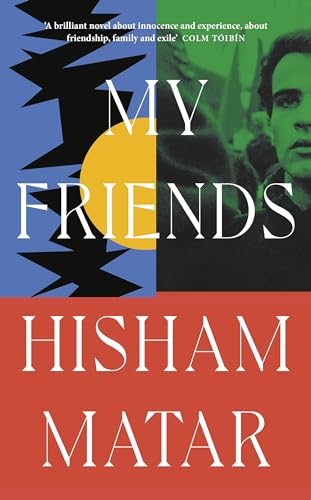
Hisham Matar, My Friends (Viking 2024)
I enjoyed Hisham Matar’s previous books, though I wasn’t enthusiastic about them as they often felt repetitive, and more like unreliable memoir than fiction. My Friends continues to draw on his life, but it feels more like a story that examines what it is to be an exile in a time of radical upheaval.

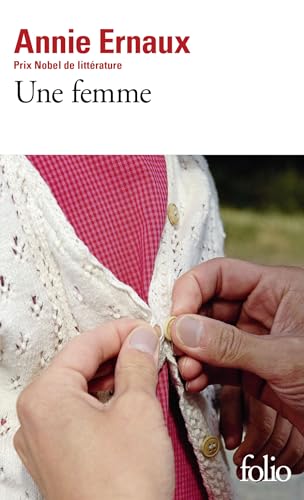
Annie Ernaux, A Woman’s Story (translated by Tanya Leslie 1991, Fitzcarraldo Editions 2024)
I read Annie Ernaux’s The Years before I got to this very slim volume, so I came to it with high expectations. I wasn’t disappointed. In such concise prose Ernaux describes the details of one woman’s life, and iin doing so conjures up a broader world.

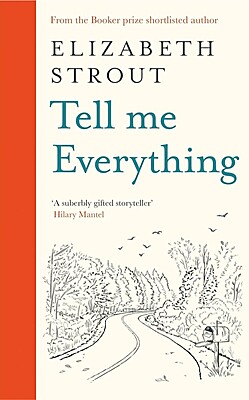
Elizabeth Strout, Tell Me Everything (Viking 2024)
This continues the stories of a number of Elizabeth Strout’s characters, bringing them together as they deal with death, ageing, love and lust. She writes with wit and kindness.

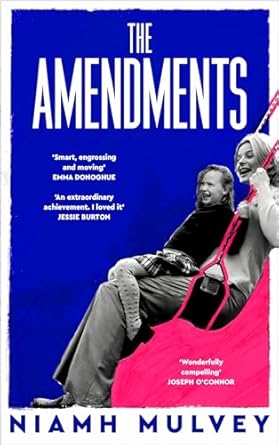
Niamh Mulvey, The Amendments (Picador 2024)
A new Irish writer for me. I hope she writes a lot more. This is a generational feminist tale about a family of women, dealing with the way issues of reproductive rights governed women’s lives before Ireland shifted from Catholic dominance – a shift made because of women demanding change.

Donal Ryan, Heart, Be at Peace (Doubleday 2024)
I had read two previous Donal Ryan novels, both of which I loved. In this one he continues to create the sense of Irish village community and disunity in the context of the Celtic Tiger and its collapse. Told from multiple perspectives, it builds a picture of complex relationships.

Non fiction
Mark McKenna, From the Edge: Australia’s Lost Histories (Melbourne University Publishing 2016)
Published in 2016, this is still a wonderful way to learn about First Nations and settler interactions. McKenna writes compelling history. These relatively short pieces include the pearl industry in Western Australia, the Barrup Peninsula petroglyphs and mining, early failed attempts to establish a colony in northern Australia, and the brutality of the Palmerston goldfields in north Queensland. They are written with a focus on First Nations agency, and they attempt to understand how colonisation played out in each specific time and place.

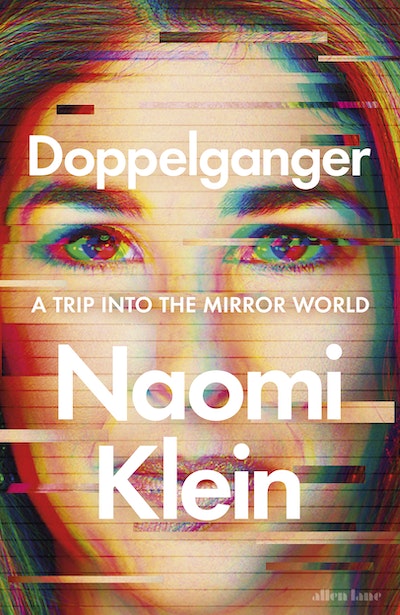
Naomi Klein, Doppelganger: A Trip into the Mirror World (Penguin 2023)
I’m still reading this, having put it down during the US elections as much of what Naomi Klein describes was playing out in the headlines. It’s a fascinating enquiry into the nature of truth, and the way fakery has become entrenched in political discourse.

From me

I can never pick a favourite or best book. My favourite is always the one I’m reading right now, unless the one I’m reading is the book I hate most in the world. Some highlights of 2024 were:

  • Montaigne’s Essays: I have read four or five pages most mornings since the beginning of March, and will have finished the book in a couple of weeks. He has been a great person to start the day with (apart from the Emerging Artist, of course)
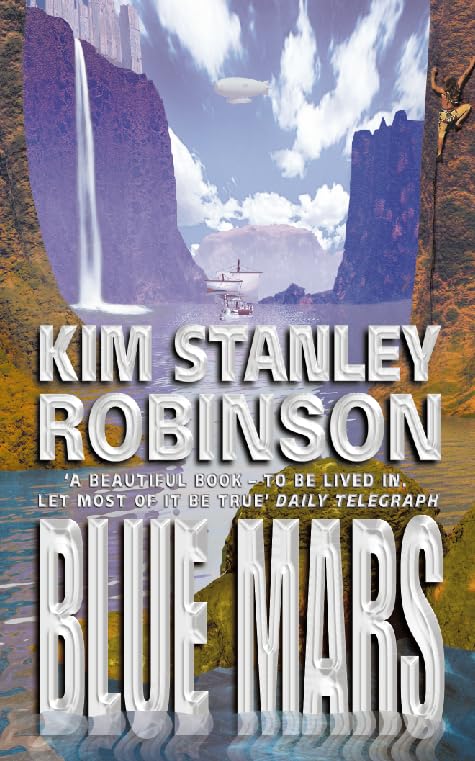
  • Blue Mars, the final book in Kim Stanley Robinson’s Mars trilogy has finally made it from my TBR shelf, and it was a most satisfactory experience
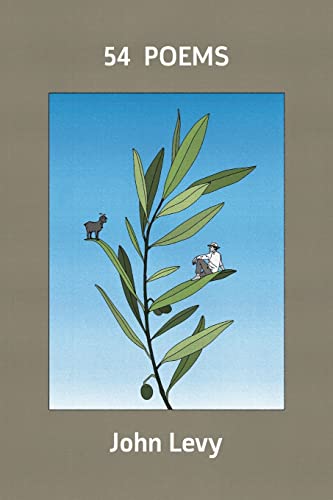
  • the poetry of John Levy, who showed up in my comments to share his enthusiasm for Ken Bolton’s poetry, and offered to send me a copy of his own book. I’m so glad I accepted the offer
  • I read more of Annie Ernaux: if ever I write a memoir, I hope I can manage to be at least slightly Ernauxian

To get all nerdy, I read:

  • roughly 83 books altogether (counting journals but only some children’s books)
  • 34 novels
  • 21 books of poetry
  • 5 comics
  • 6 books in translation – 3 from French (counting Montaigne’s Essays), 1 each from German, Japanese and Chinese
  • 7 books for the Book Group, whose members are all men
  • 12 books for the Book Club, where I’m the only man (two of them to be reviewed after tomorrow night’s meeting)
  • counting editors and comics artists, 45 books by women, 46 by men
  • 3 books by First Nations writers, and
  • 11 books by other writers who don’t belong to the White global minority.

And the TBR shelf is just as crowded as it was 12 months ago.


Happy New Year to all. May 2025 turn out to be a lot less dire than it’s looking at the moment, and (to repeat my wish from last year) may fossil fuels at last be left in the ground. May we all keep our hearts open, our minds engaged, and may we all talk to strangers.

Spell the Month in Books – September

Spell the Month in Books is a linkup hosted on Reviews From the Stacks. We’re invited to find a book title, on a given theme, that starts with each letter in the month’s name, make a list, and share the link. It’s a nice way to look back over one’s reading.

This month, the theme is Back to School. Reviews from the Stacks is a Northern Hemisphere blog, where the theme is seasonally appropriate – but it’s full of possibilities for us in the planetary south as well. Here I go. Links on the book titles are to my blog posts.

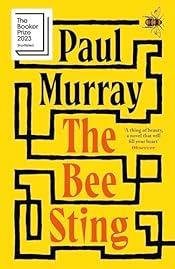
The Bee Sting by Paul Murray (Hamish Hamilton 2023). Two of this book’s characters, a generation apart, have their lives transformed when they leave their home in rural Ireland to go to university in Dublin.

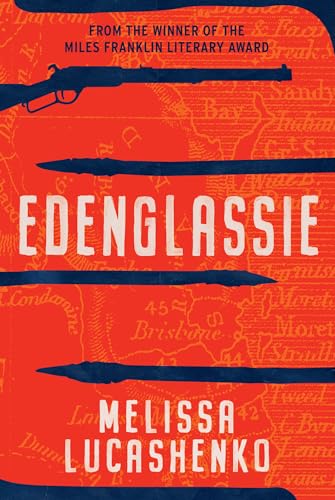
Edenglassie by Melissa Lucashenko (University of Queensland Press 2023). It may be stretching it a bit, but this novel, along with a lot of First Nations writing, amounts to an invitation to unlearn some Australian history, to go back to school and develop a different, richer understanding of our past. In this case, it’s the early history of what is now south-east Queensland. Sue at Whispering Gums has an excellent review.

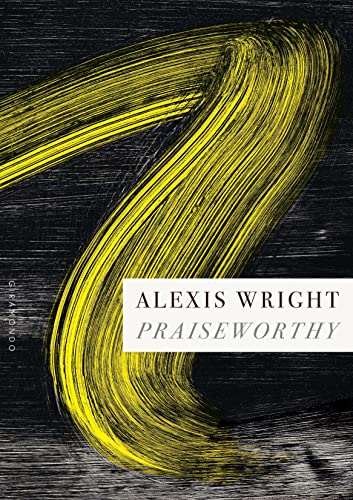
Praiseworthy by Alexis Wright (Giramondo 2023) is another example of First Nations writing that amounts to an invitation to go back and learn different ways of looking at the world. At its heart there’s a mad scheme to cope with climate change by using the donkeys that roam wild in the Northern Territory. There are clouds of butterflies and a boy who lives in a whale’s skeleton. You see the world differently once you’ve read it.

Small Things Like These by Claire Keegan (Faber & Faber 2021) actually centres on a school. It’s hardly more than a short story, in which an Irishman faces a huge moral challenge when he discovers that terrible things are being done in the convent school just outside his village.

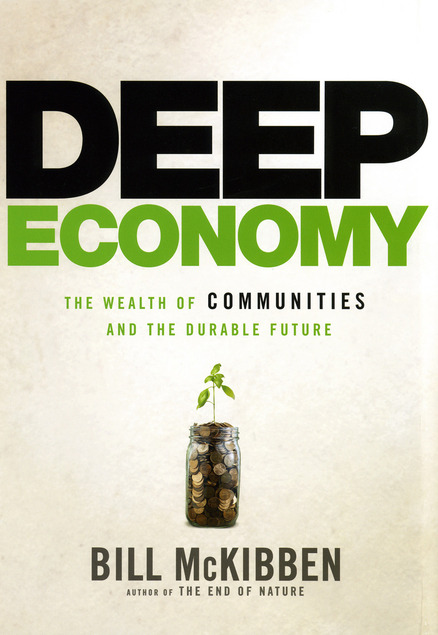
Deep Economy: The wealth of communities and the durable future by Bill McKibben (Henry Holt 2007). For me at least, this book was a tremendous learning experience about economics and the environmental crisis. In my 2007 blog post I described it as ‘a substantial, reasoned, systematic move towards an alternative way of thinking about these things’.

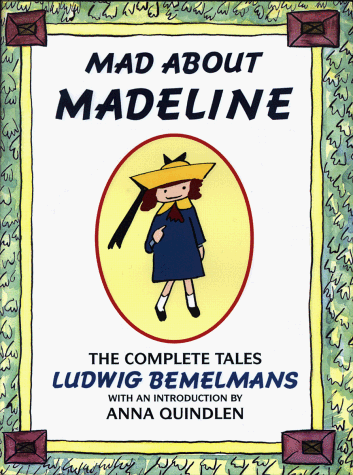
Madeline (Ludwig Betelmans 1939). How good it was, recently, to go back to this book, which I must have first read when I was at school, or perhaps when nieces and nephews were. ‘In an old house in Paris that was covered in vines …’

Blue Mars (Kim Stanley Robinson, 1996) Kim Stanley Robinson’s Mars trilogy is a terrific yarn. It’s also an education in the scientific, engineering, social and political challenges that would face an attempt to settle on Mars. I first encountered the word katabatic, among many others, in these books.

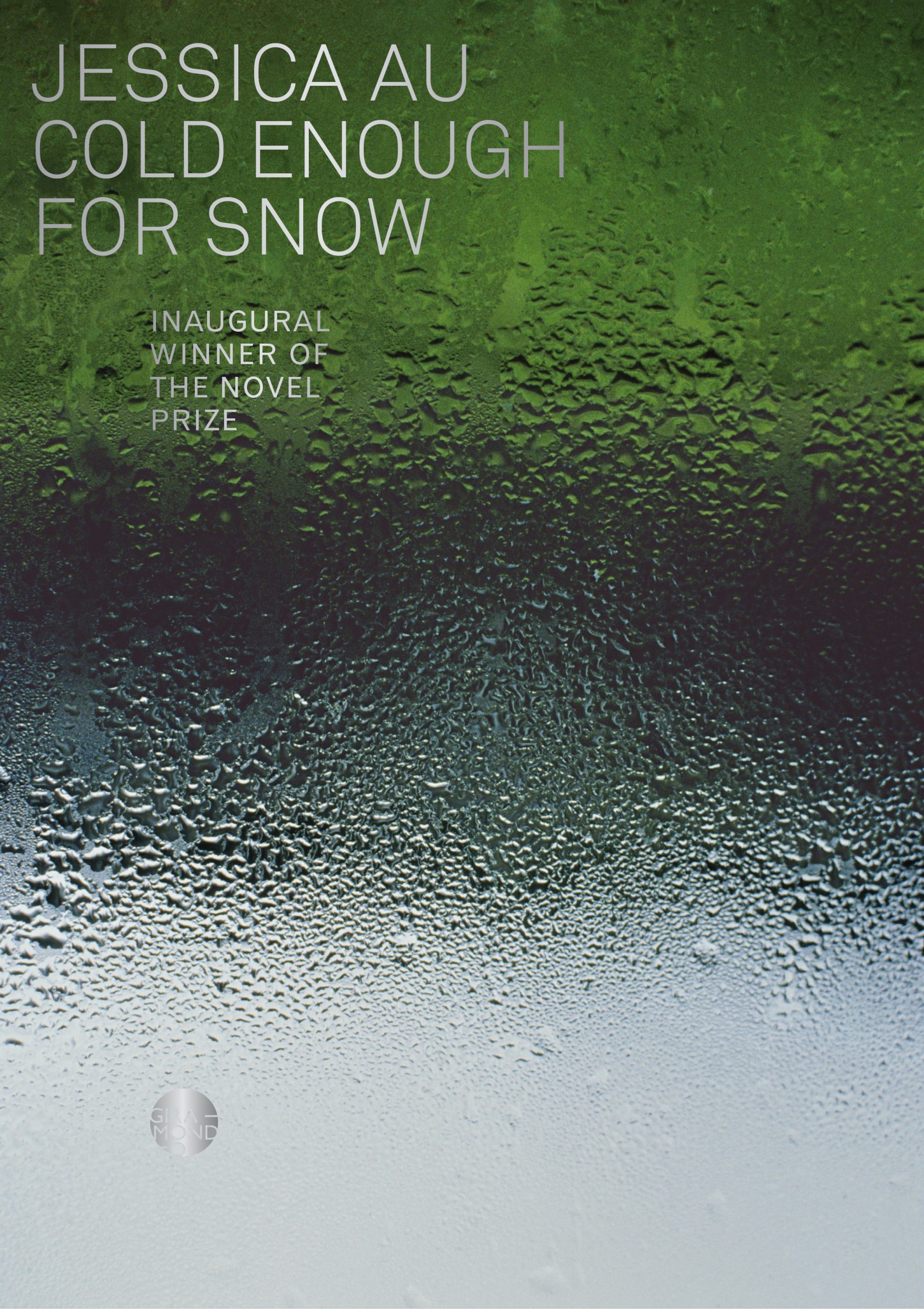
Cold Enough for Snow by Jessica Au (Giramondo 2022). The section in this slim book where the narrator goes to university and encounters a whole new world struck a chord with me, even more so than the similar experience described in The Bee Sting, because this one happens in Australia.

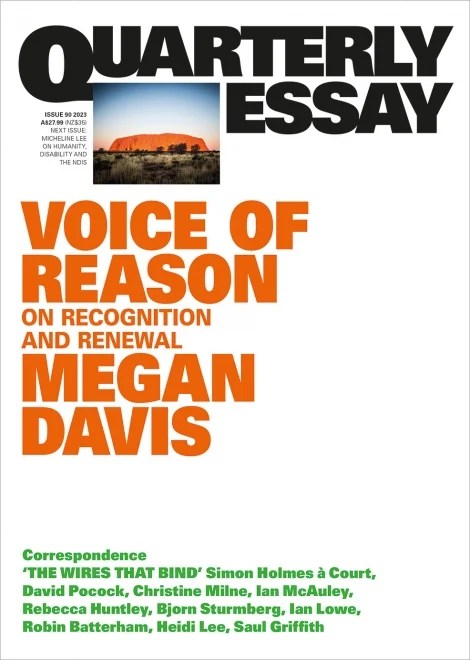
Voice of Reason: On Recognition and Renewal by Megan Davis (Quarterly Essay 90, 2023) is another piece of First Nations education, in this case about the recent referendum on an Indigenous Voice to Parliament. Especially in the face of the No campaign’s ultimately successful slogan, ‘If you don’t know, vote no,’ the schooling provided by this essay was salutary and continues to be.

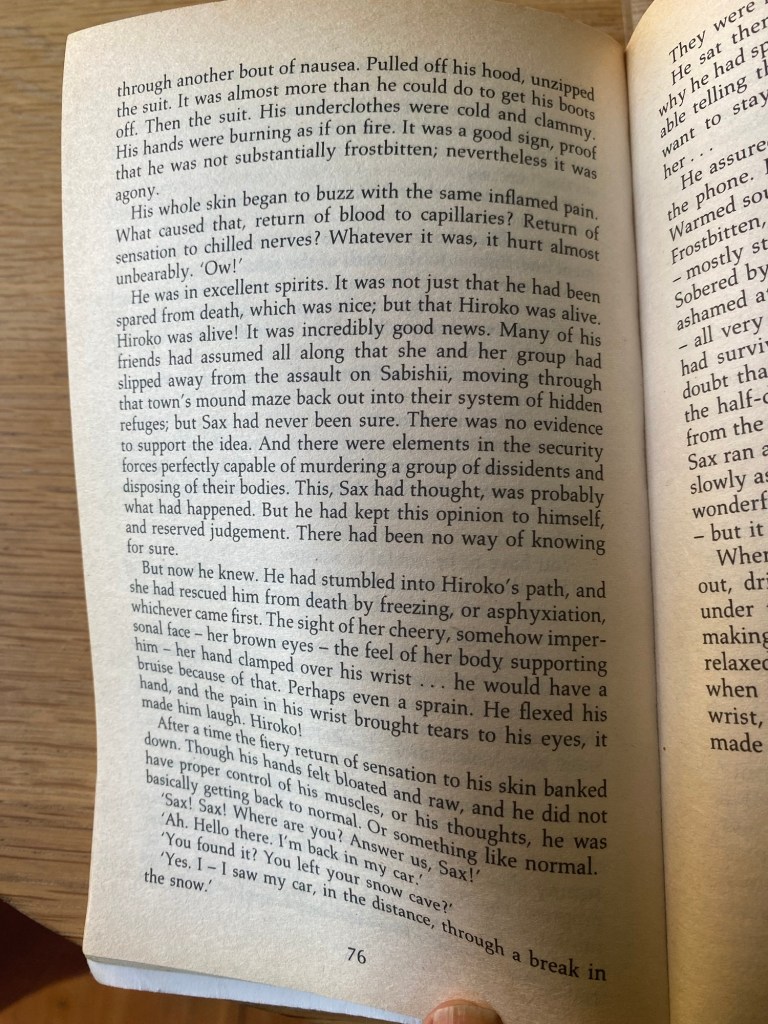
Kim Stanley Robinson’s Blue Mars, page 76

Kim Stanley Robinson, Blue Mars (1996)

This wonderful book is the third in Kim Stanley Robinson’s Mars trilogy.

I read the first two books – Red Mars (1992) and Green Mars (1993) – in pre-blogging days, that is, before 2003. I was swept away by them, but I kept deferring Blue Mars. In fact, last summer I read Kim Stanley Robinson’s more recent novel 2312 (my blog post here), thinking I would never return to Mars.

Yet here I am.

The trilogy begins in what was the future year of 2020 with the first human landing on Mars. In Red Mars, a hundred selected individuals and one stowaway, to be known and revered as the First Hundred, make the journey to the red planet, and the narrative follows the engineering, cultural and political processes of colonisation. The book ends, in about the year 2060, on a hopeful note in the middle of violent conflict against the forces of Earth capitalism, the ‘metanats’, and their political arm, the UN. Though the politics and the many individual stories are fascinating, what I remember most vividly of this book is the practicalities of interplanetary travel and survival on the arid, low-gravity planet.

Green Mars deals with the terraforming project (the greening of Mars), and the continuing struggle against the Terran forces. It ends in 2127, when Earth is devastated by a huge flood and Mars attains independence. Mars is largely habitable now, with tented cities, large bodies of water, a thickening atmosphere, and a huge reflecting mirror in space that augments the effect of the sun. A longevity treatment has been developed and is almost universally available.

Blue Mars starts in 2127 and finishes in 2212, so covers nearly a hundred years. The key characters are again from either the First Hundred, well over 200 years old by the book’s end, or the next two generations. As well as sorting out Mars’s relationship to Earth and the other colonies now being established elsewhere in the solar system (including those that feature in 2312), the main global story concerns the political struggles among the different Martian groupings. The Reds, including extremist ecoteurs, want Mars kept as close to its original state as possible. The Greens want it to become ever more Earthlike. Civil war is avoided and a new constitution is thrashed out in early chapters. We follow the teething problems of the new government structure and economy, and witness the development of distinctively Martian cultures. The younger generations grow very tall by Earth standards, tend to disregard gender binaries and can be spectacularly hedonistic.

The book is full of delights. Kim Stanley Robinson is interested in everything – politics, sociology, art, music, theatre, philosophy, religion, history, engineering, geology, climatology, rocket science, brain science, psychology, linguistics, myths, fairy tales, sports, the Basque cooperatives of Mondragon and the katabatic winds of Antarctica. All this and more finds its way into the story.

There are lovingly detailed descriptions of Martian landscapes and seascapes. In one meta moment a character observes, ‘This small-planet curvature is producing effects no one ever imagined.’ Yep, and Kim Stanley Robinson describes these effects, and those of the lower gravity, in such detail that you feel he has actually been there and seen what no one ever imagined.

None of that would work without a set of characters that we care about. Each of the book’s 14 parts is narrated from a different character’s the point of view, and Robinson has an almost Shakespearean ability to disappear into his characters.

I could go on, but I want to give an example of the writing. Here’s page 76 (control click / right click to enlarge if you want to read it in full):

This is in Part Two, ‘Areophany’, told from the viewpoint of Sax Russell, one of the First Hundred who had his brain reconstituted after a stroke in the second book and has been oddly dissociated ever since. He is a brilliant scientist, committed to rational thinking and out of his depth when it comes to articulating emotional matters.

On the preceding 10 or so pages, Sax has been on a solo excursion, enjoying a Mars that is newly free from earth domination. Civil war has been averted, but only by appeasing of the Reds by removing the soletta, the mirror in space that created Earth-like warmth and light. Now, he has been caught out of his vehicle in a violent snow storm, one of the extreme weather events brought on by this removal – and the protection of his suit is almost useless against it. APS (as in Areological Positioning System) and a call on his wristpad have not helped him get back to his rover. He is facing certain death when a helmeted figure comes out of the storm, takes him firmly by the wrist and leads him to safety. He recognises his rescuer as Hiroko Ai, one of the First Hundred who is believed to have been killed. As soon as he is safe, she vanishes into the blizzard.

The high drama is over, but a lot happens on page 76.

First, there’s some deft character development. Sax manages to strip off his frozen clothes in the warmth of the car, and it hurts. But he’s Sax, always alive with scientific curiosity:

His whole skin began to buzz with the same inflamed pain. What caused that, return of blood to capillaries? Return of sensation to chilled nerves? Whatever it was, it hurt almost unbearably. ‘Ow!’

The next couple of paragraphs do a lot of work. They recap incidents from the earlier book, and they introduce a recurrent motif of this one. Since I’ve forgotten almost all the details of Green Mars‘ guerrilla struggles, I’m grateful for the recap, which is not so much a memory prompt as a general outline of what happened. (Incidentally, you could probably read Blue Mars as a stand-alone novel, but you’d have to fill in a lot of gaps from your own imagination.)

He was in excellent spirits. It was not just that he had been spared from death, which was nice; but that Hiroko was alive. Hiroko was alive! It was incredibly good news. Many of his friends had assumed all along that she and her group had slipped away from the assault on Sabishii, moving through that town’s mound maze back out into their system of hidden refuges; but Sax had never been sure. There was no evidence to support the idea. And there were elements in the security forces perfectly capable of murdering a group of dissidents and disposing of their bodies. This, Sax had thought, was probably what had happened. But he had kept this opinion to himself, and reserved judgement. There had been no way of knowing for sure.

But now he knew. He had stumbled into Hiroko’s path, and she had rescued him from death by freezing, or asphyxiation, whichever came first. The sight of her cheery, somehow impersonal face – her brown eyes – the feel of her body supporting him – her hand clamped over his wrist … he would have a bruise because of that. Perhaps even a sprain. He flexed his hand, and the pain in his wrist brought tears to his eyes, it made him laugh. Hiroko!

Stan, as he’s called in his bio, can spend pages describing a landscape (some readers might skip – I didn’t!), but he knows when to hold back. People with fresh memories of the earlier books will understand the reason for Sax’s joy. But the rest of us don’t need to be told, the joy itself is enough for us to know that Hiroko has been a key and much loved figure in the history of Mars.

Beginning with his lie when people at base finally contact him on his wrist on this page, Sax never tells anyone of this encounter, but its vivid physicality keeps Hiroko alive for the reader. In the remaining 700 pages, people report sightings, even some on Earth, none of them ever verified. In her absence she becomes a kind of genius loci, a spirit of the place – not part of the ordinary world of laboratories and constitutional assemblies, but elusive, concealed, anywhere. In the final act, when the surviving members of the First Hundred meet to remedy a glitch in the longevity treatments, I was on the edge of my seat hoping she would appear. I’m not saying if she does.

I went to Wikipedia to fill the gaps in my memory: it was Hiroko who created the spiritual underpinning of the new Martian culture – ‘a new belief system (the “Areophany”) devoted to the appreciation and furthering of life (“viriditas”)’. My understanding of viriditas is a little different from Wikipedia’s. I think of it as the universe’s impulse towards life, what Dylan Thomas called ‘the force that through the green leaf drives the flower’. It’s probably true to say that what makes the book more than a dry, overlong piece of speculation is the way on every page it bears witness to an imagination shot through with the thing that Hiroko comes to symbolise: Viriditas.


Added later: I meant to include this wonderful, terrible description of a future Earth, from page 511

Steaming, clotted, infectious, a human anthill stuck with a stick; the panic pullulation ongoing in the dreadful mash of history; the hypermalthusian nightmare at its worst; hot, humid, and heavy; and yet still, or perhaps because of all that, a great place to visit.

Ah, Earth, you’ve gotta love it!

Kim Stanley Robinson’s 2312

Kim Stanley Robinson, 2312 (Orbit 2012)

I picked this fabulous book up from our local street library, and it was a perfect fit for my personal tradition of reading a big SF novel over the end-of-year break.

According to Wikipedia, Kim Stanley Robinson is best known for his Mars trilogy. I read the Red Mars (1992) and Green Mars (1993) decades ago. Though I loved them, was totally absorbed in their world, and felt that I was learning a lot about the practicalities of space travel, the realistic possibilities for terraforming Mars, and the opportunities for new political beginnings provided by leaving the Earth, I somehow didn’t get around to Blue Mars (1996). Now I don’t know if I ever will, because 2312 takes up the story some centuries later.

This novel begins on the surface of Mercury, where the domed city of Terminator moves on rails, staying always in darkness, because the direct heat from the sun would devastate the city and kill any living thing. There are ‘walkers’, who stay outside the city and by walking briskly remain just ahead of the dawn, though they will often turn back to watch the first flames of the sun spread across the eastern horizon, and (most of them, most of the time) tear themselves away from the spectacle before destroying their retinas or worse – much worse.

And so it goes. Mars is long-established. Earth, the sad planet, still recognised as humanity’s home, is as strife-torn and irrational as ever. Venus and some of Saturn’s moons have been settled, and any number of asteroids have been hollowed out to make space ships, known as terraria. Every settlement and every asteroid has its own distinctive qualities and challenges, and the passage of time has meant humans have begun to diverge: there are smalls, and rounds, and talls. Most spacers live for more than a century, and most have had some form of gender modification surgery – because it has been discovered that gender fluidity (not the term they use) increases the human lifespan significantly.

At every moment it feels as if Kim Stanley Robinson has lived in the world of the novel. It’s an amazing feat of imagination. We see how the light falls on the surface of Mercury, we feel the heat on Io, we struggle with the effect of Earth’s gravity after living so lightly on Mercury. We look about with wonder at the stars as we float, marooned in space.

There’s a lot of hard SF. Between the mostly short chapters of story there are numbered sections labelled ‘Extract’, which comprise fragments from texts explaining the science or history behind events: instructions on how to terraform an asteroid, the science of longevity, ‘human enhancement’, and so on.

There’s a romance, about which I’ll say only that it’s unexpected but (to me at least) completely convincing. There’s a mystery, involving quantum computers (‘qubes’), organised crime and political skulduggery. There are loose threads, whose effect isn’t so much to make us want a sequel as to reassure us that this world will continue after the book ends. There are music, and microscopic alien life forms, and huge explosions.

This future world has cultural tendrils reaching back to our time and beyond. Andy Goldsworthy and Marina Abramović have become lower-case names for art forms. Emily Dickinson is quoted at a climactic moment; Beethoven animates more than one key scene; Philip Glass recurs. There are lovely snippets, like this:

After a while she said, ‘Mozart’s pet starling once revised a phrase he wrote. The bird sang it after he played it on the piano, but changed all the sharps to flats. Mozart described it happening in the margin of the score. “That was beautiful!” he wrote. When the bird died, he sang at its funeral, and read a poem to it. And his next composition, which the publisher called A Musical Joke, had a starling style.’

(Page 158)

There are moments that remind us that Kim Stanley Robinson is an environmental activist:

Obviously most in the bar felt they were only helpless observers of a giant drama going on above their heads, a drama that was eventually going to suck them down into its maelstrom, no matter what they said or wanted. Better therefore to drink and talk and sing and dance until they were stupid with exhaustion and ready for a stagger through the early-morning streets

(Page 387)

There’s an account of life on Earth, as seen by the Mercurial protagonist, Swan Er Hong, on a visit:

The dead hand of the past, so huge, so heavy. The air seemed a syrup she had to struggle through. Out in the terraria one lived free, like an animal – one could be an animal, make one’s own life one way or another. Live as naked as you wanted. On the God-damned Earth the accumulated traditions and laws and habits made something that was worse than any body bra; it was one’s mind that was held in place, tied in straitjackets, obliged to be like all the others in their ridiculous boxed habits. Here they were, on the only planetary surface on which you could walk freely, naked to the wind and the sun, and when they had a choice, they sat in boxes and stared at littler boxes, just as if they had no choice – as if they were in a space station – as if the bad old days of the caged centuries had never gone away. They didn’t even look up at the stars at night. Walking among them, she saw that it was so. Indeed if they had been people who were interested in the stars they would not have still been here. There overhead stood Orion at his angle, ‘the most beautiful object any of us will ever know in the world, spread out on the sky like a true god, in whom it would only be necessary to believe a little.’ But no one looked.

(Page 387)

As far as I know, there is no sequel to 2312. But New York 2140 (2017) and Red Moon (2018) look as if they belong on the same universe. Perhaps the former gives the history behind 2312‘s images of Manhattan as a city of canals as a result of sea-level rises. Maybe it can be my big SF book next December.