Tag Archives: Laura Tingle

SWF 2023: My sixth day

Another early start with 10–11 am: Barrie Cassidy & Friends: State of the Nation

Veteran journalist Barrie Cassidy has been a regular at the Sydney Writers’ Festival, but this is the first time I’ve been to one of his sessions. He was on stage with what the festival program calls ‘his hand-picked squad of the country’s sharpest pundits’: Amy Remeikis, Niki Savva and Laura Tingle. They’re all regulars on current affairs TV, but I don’t think I’d seen any of them in person before.

The subject was politics, that is to say mainly electoral politics and the state of the major parties. The most telling comment was towards the end when Barrie Cassidy said, ‘When there’s consensus between the major parties, the media doesn’t chase it up.’ This means that the press doesn’t do a lot of interrogating of the AUKUS deal – is it actually in Australia’s interest or is it a matter of us serving the interests of the UK and the US? Similarly, coverage of climate issues through a party-political lens can often miss the point.

Nikki Savva’s subject seems to be the Liberal party. She sees the current dominance of Labor in Federal parliament and in all mainland states is largely due to the decline of the Liberals as a fighting machine and also as representative of a population. They are ceasing to be an effective opposition, or even an opposition at all. Peter Dutton’s survival strategy depends on three things: the failure of teh referendum on the Voice; an economic crash; and the rise of intolerance. Hard to cheer for him, then, and she says many dyed in the wool Liberals can no longer bring themselves to vote for what the party has become since Howard.

Amy Remeikis, introduced by Barrie Cassidy as political correspondent for The Australian much to the amusement of the Guardian readers in the audience, thought Labor’s ascendancy had something to do with changing demographics. Millennials now outnumber boomers, and in addition to the tendency of people to be more progressive when young, there’s the fact that life is particularly tough for the young these days.

Laura Tingle added that politics tends to go in cycles. This is Labor’s time for dominance, it was at rock bottom in 2014.

All agreed that there is a growing disconnect between the political class – politicians, political journalists, people who turn up for panels like this one – and the rest of the community. People are doing it hard, inequality is bigger than it’s ever been, our sense of common life is being eroded (not as badly in the USA, yet). Things are better than they were before last year’s election. The people in charge now are there with good motives, but business as usual could lead to disaster. We need grown-up conversations about tax and climate policy, and we’ve got a way to go for that.

A non-party-political subject that got some airplay was the recent resignation of Stan Grant after he was subjected to vicious and sometimes racist attack for giving a Wiradjuri perspective on the British Crown. Laura Tingle, as recently elected member of the ABC’s Board, said she had been out of action for a couple of weeks because of a bereavement, but deeply regretted Stan’s lack of support from management and the Board.

I haven’t ever watched Insiders, which used to be Barrie Cassidy’s Sunday morning show on the ABC. I imagine this was a slightly generalised version of that. One of the questions at the end referred to the fact that over a number of years not one non-white panellist had appeared on that show (the questioner didn’t need to point out that all the panellists today were white). Barrie did the only thing he could do and said it had been a mistake.


11 am: Osman Faruqi on Australia’s War Against Hip Hop

I listened to this Curiosity Lecture almost by accident. I know almost nothing about hip hop, and I guess I skip over headlines saying that it has been banned in venues including Sydney’s Royal Easter Show.

Osman Faruqi’s exasperated plea could have been meant specifically for me: ‘For once, listen to some art that doesn’t come from Bondi or Balmain.’ (Though, to be honest, I don’t know when I last listened to music from either Bondi or Balmain.)

He told us that NSW Police have taken steps to ban particular hip hop performers saying, nonsensically, that their music is used to ‘procure’ members for criminal bikie gangs etc. This censorship, he said, is ‘the greatest example of artistic suppression in Australia’s history’. If Nick Cave, who is white and part of the music establishment, sings about murdering every woman he sees, no one bans his song as inciting murder. When Bill Henson’s photographs are taken down, there’s an outcry. But if a brown rapper uses violent imagery they are banned from performing and police have their videos removed from YouTube, and there is resounding silence from the art world, including from successful white rappers.

Showing my age: in the 1970s the campaign against censorship focused on erotic material, because the banning of material deemed pornographic (the famous example if Lady Chatterley’s Lover, but Norman Mailer’s Why Are We in Vietnam was also banned). You don’t have to love pornography or be a fan of drill-rap to be uneasy about what’s happening now


12–12.30 pm: Beginnings: Remembering Robert Adamson and Frank Moorhouse

There were a number of ‘Beginnings’ sessions. It’s a nice idea: people read the beginnings of their favourite books, or perhaps their own books, on the assumption that writers put a lot of attention to their opening paragraphs.

This short session used the format to honour Frank Moorhouse and Robert Adamson, who both died in the last 12 months. I wonder if it would be an idea to plan a couple of elegiac sessions along these lines for every Writers’ Festival. Spaces could be left blank for people who die too late to be included in advance publicity. John Tranter, who died on 21 April this year, might then have been honoured.

As it was, Annabel Crabb and Mark Mordue read to us.

Annabel read the opening pages of the first two ‘Edith’ books, the first line of the third, and then the final pages, Edith’s death scene, from Cold Light, the third book. It was shockingly good.

Mark Mordue opened with a letter found in Adamson’s papers in which Frank Moorhouse responded warmly to one of Adamson’s poems. He spoke briefly about Adamson’s life, including his time in prison, his drug addiction and the role of his wife Juno Gemes. He finished with a poem that Adamson wrote for her, ‘The Kingfisher’s Soul’, which Adamson himself read at at least one previous Sydney Writers’ Festival. It ends:

_________________________ the future awaits you.
I stepped into the day, by following your gaze.

I want to make a final small observation about acknowledgements of country.

My initial prompt for this was an acknowledgement that was gobsmackingly perfunctory: the presenter didn’t look at us, but read hurriedly from a clipboard, stumbling slightly over the words. Disrespect may not have been intended, but it was certainly there.

I started to notice how other presenters made their acknowledgements personal. For example:

  • Michael Williams spoke briefly of how the land was unceded and so the issue of sovereignty was unresolved
  • Omar Sakr noted that some people object to the acknowledgements and responded that words – words like ‘genocide’ and ‘sovereignty’ – matter, that words give rise to actions
  • Sisonke Msimang made acknowledgement first in her own mother tongue and then in English
  • Felicity Plunkett quoted two lines about the power of country from First Nations poet Ellen van Neerven
  • Barrie Cassidy drew our attention to the coming referendum on a First Nations Voice to Parliament.

I was born on Mamu land in what is now North Queensland, and my father remembered as a child hearing ceremony down at the river behind our place. I’m writing this on Gadigal-Wangal land. Both places make my heart sing.

And the Festival is over, bar the podcasting.
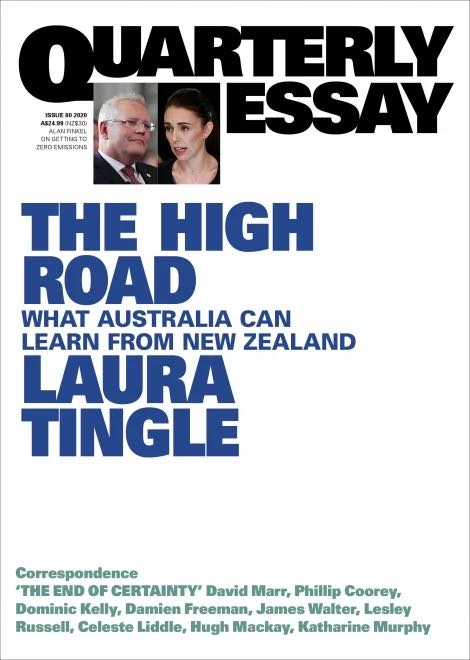
Laura Tingle’s High Road

Laura Tingle, The High Road: what Australia Can Learn from New Zealand (Quarterly Essay 80) – and correspondence from Quarterly Essay 81.

The High Road is Laura Tingle’s fourth Quarterly Essay, making her possibly the series most frequent contributor. Great Expectations (QE 46 2012) dealt with Australian expectations of government, Political Amnesia (QE 60 2016) with failing institutional memory, and Follow the Leader (QE 71 2018) with political leadership in the modern world (links are to my blog posts). The High Road presents an abridged comparative chronology of Australia and Aotearoa New Zealand: both began as colonies of England, and both were cut adrift when the UK joined the EU, and they have taken very different, though parallel paths since then, while for the most part doing their best to ignore each other.

The essay begins with the stark contrast between Jacinda Ahern’s decisive response to the Covid crisis and Scott Morrison prevarication and ambiguity, and goes on to make broader comparisons between the two leaders that are all unflattering to Morrison. But when the essay goes back to sketch the histories of the two nations, the comparisons don’t always favour Aotearoa New Zealand.

Aotearoa New Zealand doesn’t have a written constitution. It does have the Treaty of Waitangi, which laid the basis for a mutually respectful relationship between Māori and Pākehā. The treaty was largely ignored by settler society until the second half of last century, but it has been since taken seriously and provided a basis for major advances in Māori status and conditions, and for compensation for past injustices. Compare this to Malcolm Turnbull’s offhand dismissal of the Uluru Statement from the Heart’s call for a makaratta and a Voice to Parliament. In Aotearoa/New Zealand politicians of all stripes speak of ‘honour’ in relation to the Treaty, a word we will wait some time to her in the Australian Parliament.

Neo-liberalism has come like a plague to both countries. It hit Aotearoa New Zealand harder. Because there is only one house in their Parliament, and there are no states, a Prime Minister with a majority can override opposition to an economic program, which is what happened with ‘Rogernomics’ – a ‘deregulatory frenzy’ in the 1980s, which has made New Zealand ‘a stellar example for those wanting less government, less tax and more markets ever since’, and has also brought about a huge amount of human suffering. On this side of the Tasman, when Hawke and Keating set out with similar aims they had to compromise and set up a certain level of protection for the vulnerable.

On the other hand, because Aotearoa New Zealand has an electoral system that makes it less likely than in Australia that any one party will have a clear majority, and though Jacinda Ahern has one currently she chooses to work collaboratively in the manner to which she has been accustomed. Their electoral system means that parties that appeal to the centre are more likely to gain power – unlike in Australia, where the major parties (especially the LNP?) can be held captive by their extreme elements.

Laura Tingle’s starting point is that most Australians are fairly ignorant about the history of our most similar near neighbour. She’s certainly right about me, and I’m less ignorant for having read the essay.

The correspondence in the following Quarterly Essay, Alan Finkel’s Getting to Zero – from historians and journalists from both sides of the Tasman, economists, lawyers and politicians – largely amplifies the thesis of this one, with some minor disagreements and several pointed anecdotes. Historian Frank Bongiorno, for instance, reminds us of the underarm bowl by Australian Trevor Chappell in a 1981 cricket match, saying this ‘ugly’ tactic was ‘the emblematic event in the trans-Tasman relationship’ of his childhood, even after New Zealand took a stand against US nuclear weapons and Australia remained supine.

The most telling pieces of correspondence are from First Nations writers.

In particular, Bain Attwood from Monash University and Miranda Johnson from the University of Otago argue ‘that relations between white settlers and Indigenous people in Australia and New Zealand did not actually follow a significantly different course after their beginnings’, that in both cases Indigenous people lost their resources or autonomy or both. As to the difference in the degree to which each country has sought to address historical injustice:

Rather than simply attributing this to the presence or absence of normative, moral, legal, philosophical and political forces in the governments, as Tingle does, it makes more sense to take note of the role played by material factors – for example, the fact that Māori are a much larger minority in New Zealand than Aboriginal and Torres Strait Islander people are in Australia or that there was less post-war non-British migration to New Zealand than to Australia. Unforeseen consequences of government policies and practices must also be taken into account. For example, the New Zealand Labour government in 1985 had no inkling that granting the Waitangi Tribunal the authority to hear cases about historical breaches of the treaty dating back to 1840 would lead to a veritable flood of claims and the compensation of many Māori iwi (tribes).

In her reply to the correspondence, Tingle focuses on the Covid pandemic and the difficulty of landing ‘a definitive portrait of my fleet-footed and shape-shifting subject, Australia’s prime minister’. Someone said journalism is the first rough draft of history. Laura Tingle is a top-ranking political journalist, and this essay is an excellent draft of significant history.


The High Road is the eighth book I’ve read for the Australian Women Writers Challenge 2021.

Laura Tingle’s Follow the Leader

Laura Tingle, Follow the Leader: Democracy and the Rise of the Strongman (Quarterly Essay 71, Black Inc 2018)

qe71.jpg

Follow the Leader is Laura Tingle’s third Quarterly Essay, a third instalment in a loose trilogy. Great Expectations (QE 46 2012) dealt with Australian expectations of government, Political Amnesia (QE 60 2016) with failing institutional memory, and now Follow the Leader with political leadership in the modern world (links are to my blog posts). ‘For,’ Laura Tingle writes, ‘whatever our expectations of government, whatever the state of our institutions and institutional memory, it is leadership that helps to settle those things, and change them.’

She might have added that the ills of political leadership looms large in the age of Trump, Duterte, Putin, Rudd–Gillard–Rudd–Shorten and Abbott–Turnbull–Dutton–Morrison.

The tagline on Laura Tingle’s website is ‘Reporting on politics from Canberra’. This essay is very high level reporting, and not just about Canberra, offering incisive accounts of political developments in the years since Howard’s prime ministership and invoking the insights of  historians, political scientists, politicians (from Kim Beazley to Barack Obama), speechwriters, military leaders, philosophers, other journalists and more.

The essay takes a key idea from Ronald Heifetz’s 1994 book Leadership Without Easy Answers that ‘leadership, power and formal authority too often get confused and need to be carefully distinguished’, and offers his definition of leadership as ‘helping a community embrace change’ as a touchstone against which to judge the functioning of our elected leaders. (incidentally, her account of Heifetz’s discussion of Lyndon Johnson’s  handling of the US war in Vietnnam – big fail – and Civil Rights – big win – is enlightening.)

The reality is that elected leaders in Australia and elsewhere are much more committed to their own survival in office, treating their rivals as enemies or pushing their ideological agendas as ‘would-be strong men’ (I love the way that phrase punctures postures) than to leading in the Heifetz sense, and in the face of global warming, mass displacement of people, stunning unequal distribution of wealth, and increasingly dangerous  international politics, that is just plain terrifying. Laura Tingle gives an account of how we have come to this dire situation, and perhaps reassuringly sketches alternatives, mainly in the leadership style of Angela Merkel, who is masterly at building consensus, and giving her opponents room that allows compromise.

I’ll give Laura Tingle the final word in this sketchy account of the essay. Her closing words, which I wish could appear in letters of fire over the entrance to parliament House (notice the eleg:

We need our leaders to be wary of simple solutions built on scapegoating and hatred, and to resist succumbing to those who relentlessly conjure up reasons for  intolerance. We should expect our leaders to help rebuild the national debate and protect other voices within it. We should be looking for strong leaders to follow, not a strongman.

Follow the Leader is the sixteenth book I’ve read for the 2018 Australian Women Writers Challenge.

AWW 2016 challenge completed

AWW2016

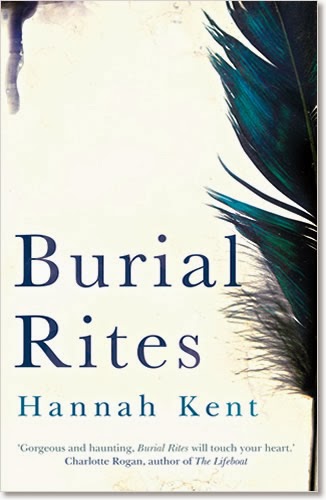
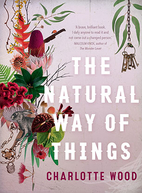
This is my mandatory round-up post about the Australian Women Writers’ Challenge 2016. I undertook to read 10 books by Australian women writers. I read 14, which ranged from revelatory and richly entertaining to definitely meant for readers who aren’t me. Here they are. I’ve tried to be clever with the lay-out. My apologies if it shows up on your screen as a jumble.

Poetry:

x

Novels:

Short Fiction:

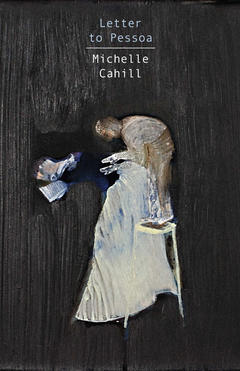
lp
Michelle Cahill
Letter to Pessoa

x

x

x

x

x

x

Memoirs:

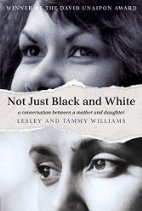
njb&w
Lesley and Tammy Williams
Not Just Black and White

x

x

x

x

x

x

A comic (that’s a graphic novel to those who think ‘comics’ means superheroes or Disney):

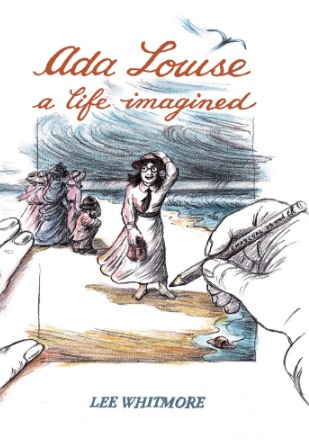
alli
Lee Whitmore
Ada Louise


x

x

x

x

x

Essays:

I’m signing up for the 2017 challenge.

My general gender stats: This year I read 39 books by men and 31 by women.This includes at least five (the Y: The Last Man series) that were jointly written by a man and a woman.

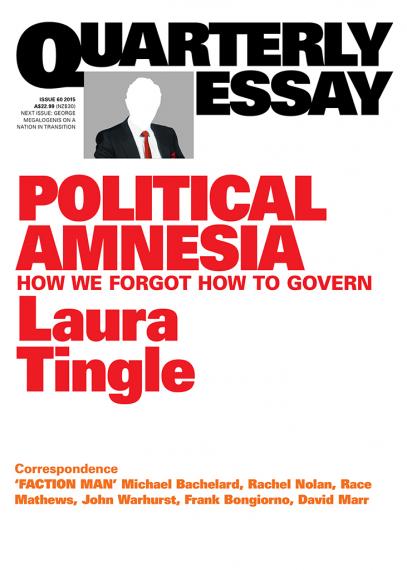
Laura Tingle’s Political Amnesia

Laura Tingle, Political Amnesia: How we forgot how to govern (Quarterly Essay Nº 60, Black Ink 2015)

qe60.jpgAs always with the Quarterly Essay I turned to the back section of this issue for the correspondence on the previous one. The responses to David Marr’s profile of Bill Shorten aren’t argumentative – they mostly praise, summarise, amplify and contextualise. My favourite paragraph is from Michael Bachelard:

The dilemma is that, though fascinating to insiders, the grindings of Labor’s factional machine – at once impenetrable, distasteful and apparently crucial – are to outside observers dull to the point of stupor. But without understanding and accounting for the networks of influence and patronage that bind the union bosses, the branches (more accurately, the branch-stackers), the ethnic warlords and the parliamentarians, there is no explaining the Labor Party and how it identifies and promotes talent.

Marr’s ‘Response to Correspondence’ doesn’t actually respond, but reflects on the timing of the essay’s publication. Its portrait of Bill Shorten as the man who might beat Tony Abbott for the Prime Ministership lost a lot of topicality when Malcolm Turnbull did the job on the eve of publication – but, Marr says, ‘Anything can happen between now and the uncertain date at which Australia will go to an election.’

Political Amnesia asks us to turn aside for a moment from politics as soap opera or contest of personalities, and look instead for structural changes underlying our current political malaise. She argues, convincingly, that there is a growing loss of institutional memory in Australian public life. ‘Without memory,’ she argues

there is no context or continuity for the making of new decisions. We have little choice but to take these decisions at face value, as the inevitable outcome of current circumstance. The perils of this are manifest. Decisions are taken not as informed by knowledge of what has worked, or not worked, in the past, or even by a conscious analysis of what might have changed since the issue was last considered. … Rational debate about the pros and cons of an issue becomes too hard for both advocates and audience. We slip into the habit of conducting our debates in the present tense.

Or worse, three word slogans. The rot has been a long time coming, she argues, and has had complex causes, including the advent of the 24-hour news cycle, where the media beast must always be fed something new (am I the only one who finds it unnerving that even on the ABC news bulletins often tell us about announcements that will be made the next day?), the politicisation of the public service (beginning in a big way when John w Howard sacked department heads he considered politically unacceptable), the blurring of the roles of political advisers and policy advisers (perhaps beginning as early as the Whitlam government, but reaching the heights with Peta Credlin’s role in the Abbott government). She sums up the extent of the problem:

[The] institutions which have made Australia’s political system so vibrant and successful have been changing profoundly over the past few decades. These changes include the rise of unstable executive government (because it has lost the capacity to build institutional memory) at the cost of the parliament (which has also lost its memory as it struggles for relevance); the decline in the influence of the public sector (as a result of a range of forces which have robbed it of much of its institutional memory); the relative rise of the national security establishment (which retains its influence and its memory); and the transformation of the media into a channel for present-tense information, rather than a reliable repository of the historical record. In the background there has also been a nibbling away at our civil rights, as relentless incremental change has left many of us unaware how far the law has moved in the last couple of decades.

The essay has a refreshing focus on systems and structures rather than personality. It ends on a tentative note of hope, and some general suggestions for how the erosion of memory could be slowed or even reversed. Though she can’t be much more than 50, it’s clear that Laura Tingle is one of the precious vessels of memory, a journalist auntie. Much of what she describes if familiar to anyone who has worked in the public service, or really to anyone who has been paying attention. We can hope that this essay contributes towards a change for the better.

AWW2016.jpgPolitical Amnesia is the first of hopefully ten books by Australian women that I will read this year as part of the Australian Women Writers 2016 Challenge.

If not for the challenge, I might not have noticed an element of the essay that would have been unlikely to been there if the essay had been written by a man. The essay pretty much begins with a quote from the ancient Roman historian Tacitus, which describes the Roman people as seduced by Augustus Caesar into preferring ‘the safety of the present to the dangerous past’. That could easily have been done by a man, but Tingle frames the quote in a story about helping her daughter study for an Ancient History exam: so the quote slips into the reader’s mind as something that anyone’s teenage child might know, with none of the elitist baggage that quotes from the ancients – and by extension arguments about institutional memory – might otherwise carry.

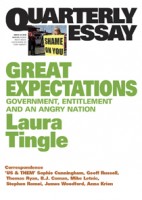
Laura Tingle’s Great Expectations

Laura Tingle, Great expectations: Government, entitlement and an angry nation (Quarterly Essay Issue 46, 2112)

In 1965, my classmates and I helped to fight the terrible Chatsbury/Bungonia bushfire in the Southern Tablelands of New South Wales. I vividly remember a woman whose house had been burned down crying out in rage and distress, ‘I’ll never vote Labor again!’

It’s easy to mock such blame-the-guvmint mentality, and we did. We weren’t without compassion, but we were 18 years old and not very forgiving.

But these days – I grow old, I grow old – the misogyny, anti-science and book-burning that characterise our blame-the-guvmint discourse feel too serious for mockery. In this riveting Quarterly Essay, not a cheap shot in sight, Laura Tingle brings decades of experience as a political journalist to bear and argues that they are the symptoms of a deep, longstanding and unfaced confusion over what we can expect from the government, a confusion that has been pushed to something like crisis point by the economic rationalist reforms introduced by Hawke and Keating, extended and exploited by Howard, and maintained, with some ineffectual backtracking, by Rudd and now Gillard.

To diagnose the confusion, she goes back to the autocratic/paternalistic beginnings of the colony of New South Wales and the development of its democratic institutions, drawing on historian John Hirst – Convict Society and its Enemies and The Strange Birth of Colonial Democracy. The glimpses she gives of his books make them seem like ideal contrapuntal readings for the late Robert Hughes’s The Fatal Shore: the vicious brutality Hughes describes was far from being the whole story – for many if not most convicts the colony provided much greater opportunity than they would have if they had not been transported. For example, the children of convicts had access to public education well before children of similar class background in Britain.

The history is interesting. The essay’s thesis is lucidly argued. As we come closer to the present time, the narrative takes on an authoritative feel – Tingle never says it in so many words, but there’s an ‘I know this, I was there’ edge, especially to her account of Howard’s and Rudd’s prime ministerships. Her conclusion:

Australians will be forced in the next decade to consider what level of government intervention we really want and what form it should take. That will require us to forge a much more explicit new settlement, a much clearer social contract than the one we have had to date. We must assess what level of government intervention works in an open economy and how best to deliver it. We will have to go back to the idea that government assistance is on a needs – not an entitlements basis [a change brought about largely by Howard’s strategy of bribing the electorate] and work out which needs we are prepared to support. Our politicians will have to face up to the question of what governments can realistically promise – and what they can no longer pledge to provide – and change their messages accordingly.

I’m looking forward, as always to the correspondence about this essay. It would be good to see a Marxist response, though on past showings there’s unlikely to be one. My own grasp of Marxism is pretty crude and old fashioned, but it seemed to me that what Laura Tingle calls variously ‘the world’ or ‘an open economy’ or ‘market forces’ is actually international capitalism – driven by profit to the exclusion of other considerations. What she calls government paternalism is the role of government in restraining capitalism, protecting people from its ruthlessness. She traces the process by which we have been misinformed and bribed into accepting the dismantling of structures that served the common interest and replacing them with for-profit structures. People’s anger, then, comes not so much from an unreasonable sense of entitlement, as from an intuition that behind the confusing smokescreen of economic techno-talk, and in spite of the many handouts of the Howard era, something valuable has been lost.