
I almost missed the NSW Premier’s Literary Awards this year. I missed the announcement of the short lists altogether, and only realised that the awards were last night because the Sydney Writers’ Festival is about to start and I think of the NSWPLAs as the first cab off the festival rank.
Here I am making up for the omission. Sadly I’ve read only one of the books, and seen a production of only one script, none of the winners.
Last night, the awards ceremony was live streamed. As always on a Monday, I was busy being grandfather, so I tuned in late. It’s all on YouTube and you can even watch it by clicking the image below. The ceremony begins with didjeridoo and Welcome to Country by Uncle Brendan Kerin, who spoke eloquently about the meaning of the word ‘Country’ in this context. After introductory speeches from librarians and politicians, the presentation of awards by Senior Judge Bernadette Brennan and Library Chair Bob Debus begins at about 29 minutes.
Here are the shortlists in the order of announcements, with links to the judges’ comments. The winners are first in each list, in bold:
UTS Glenda Adam’s Award for New Writing ($10,000)
- Jilya, Dr Tracy Westerman (UQP)
- Borderland, Graham Akhurst (UWA Publishing)
- Cut Chilli, Chenturan Aran (New Ghosts Theatre Company)
- Dirt Poor Islanders, Winnie Dunn (Hachette Australia)
- Excitable Boy, Dominic Gordon (Upswell)
- rock flight, Hasib Hourani (Giramondo)
- Ultrawild, Steve Mushin (Allen & Unwin)
- Why Do Horses Run?, Cameron Stewart (Allen & Unwin)
- Night Bloomers, ‘Friend or Foe’, Andrew Undi Lee (Turn About Entertainment)
Dr Tracy Westerman appeared on video, speaking from Perth: ‘As someone who doesn’t consider themselves to be a real writer, as a kid from the Pilbara who had a pretty unorthodox education through distance education, being awarded for my writing feels, frankly, a little bit surreal.’ She went on to talk about mental wellbeing: it ‘should never be just for the privileged, and Jilya sheds light on the reality that it continues to be … because of a one-size-fits-all, monocultural approach to mental health.’
Multicultural NSW Award ($30,000)
- 36 Ways of Writing a Vietnamese Poem, Nam Le (Scribner Australia
- Translations, Jumaana Abdu (Vintage Australia)
- Cut Chilli, Chenturan Aran (New Ghosts Theatre Company)
- Dirt Poor Islanders, Winnie Dunn (Hachette Australia)
- IMAGI-NATION, Jack Manning Bancroft, illustrated by Bronwyn Bancroft (Hardie Grant Children’s Publishing)
- Always Was, Always Will Be, Thomas Mayo (Hardie Grant Explore)
Nam Le, also on video, spoke against a background of a bookshelf piled high with books. He thanked many people and dedicated the award to his father, who ‘has been an engine of multiculturalism in this country’.
Indigenous Writers’ Prize ($30,000)
- When the World Was Soft, Juluwarlu Group Aboriginal Corporation (Allen & Unwin)
- Black Witness, Amy McQuire (UQP
- Always Will Be, Mykaela Saunders (UQP)
- Refugia, Elfie Shiosaki (Magabala Books)
- Jilya, Dr Tracy Westerman (UQP)
Lorraine Coppin, CEO of Juluwarlu Group, also spoke on video. She and her husband have spent years documenting Yindjibarndi stories – the graphic novel format is a way of making the history accessible to young people.
Nick Enright Prize for Playwriting ($30,000)
- Three Magpies Perched in a Tree, Glenn Shea (Currency Press/La Mama Theatre)
- Cut Chilli, Chenturan Aran (New Ghosts Theatre Company)
- The Hate Race, Maxine Beneba Clarke (Malthouse Theatre)
- Into the Shimmering World, Angus Cerini (Sydney Theatre Company)
- Bad Boy, Patricia Cornelius (fortyfive downstairs)
- The Past is a Wild Party, Noëlle Janaczewska (Siren Theatre Co)
Glenn Shea appeared in person! He is a member of the Stolen Generations. The play’s story comes from community. The question it asks is how do we plant seeds for our young people to shift and shape their decision-making about work lives and community. He shouted out La Mama theatre among many others.
Betty Roland Prize for Scriptwriting ($30,000)
- Inside, Charles Williams (Simpatico Films, Macgowan Films, Never Sleep Pictures)
- Heartbreak High, ‘Boys Don’t Cry’, Hannah Carroll Chapman (Fremantle Australia)
- White Fever, ‘Yu Chang, I’m Gonna Do You’, Ra Chapman and Harvey Zielinski (Black Sheep Films, Orange Entertainment Co. and Unruly Productions)
- Better Man, Simon Gleeson, Oliver Cole and Michael Gracey (Lost Bandits/Footloose Productions)
- Total Control, Season 3, Episode 5, Pip Karmel (Blackfella Films)
- Went Up the Hill, Samuel Van Grinsven and Jory Anast (Causeway Films)
Charles Williams was also in the room. He started out with a remark that must have struck a chord with many people in the movie industry: ‘I usually identify as a director more than as a writer, but I spend a lot of my life writing and not much directing.’ He quoted Charlie Kaufman: ‘A writer is someone for whom writing is harder than it is for other people,’ and noted in passing that Kaufman stole the line from Thomas Mann.
Patricia Wrightson Prize for Children’s Literature ($30,000)
- Silver Linings, Katrina Nannestad (HarperCollins Publishers)
- The Truck Cat, Deborah Frenkel, iIlustrated by Danny Snell (Hardie Grant Children’s Publishing)
- Leo and Ralph, Peter Carnavas (UQP)
- In My Blood It Runs, Dujuan Hoosan, Margaret Anderson and Carol Turner, illustrated by Blak Douglas (Pan Macmillan Australia)
- The Other Shadow, Tania Ingram (Scholastic Australia)
- Ultrawild, Steve Mushin (Allen & Unwin)
Katrina Nannestad thanked all the right people, but in particular her mother, whose story is in the book.
Ethel Turner Prize for Young People’s Literature ($30,000)
- Anomaly, Emma Lord (Affirm Press)
- Smoke & Mirrors, Barry Jonsberg (Allen & Unwin)
- Birdy, Sharon Kernot (Text Publishing)
- Liar’s Test, Ambelin Kwaymullina (Text Publishing)
- The Invocations, Krystal Sutherland (Penguin Random House Australia)
Emma Lord said among other things that everything she writes is for her daughter, even though she is too young for the books. She acknowledged the courage of her publishers who accepted a book with a pandemic in it during a pandemic. Following a developing theme of the evening, she said her mother shared the award.
Translation Prize ($30,000)
- The Trial of Anna Thalberg, Eduardo Sangarcía, translated from Spanish by Elizabeth Bryer (Restless Books)
- You Glow in the Dark, Liliana Colanzi, translated from Spanish by Chris Andrews (New Directions)
- The Son’s Story, Marie-Hélène Lafon, translated from French by Stephanie Smee (Mountain Leopard Press)
- What I’d Rather Not Think About, Jente Posthuma, translated from Dutch by Sarah Timmer Harvey (Scribe)
- For a Splendid Sunny Apocalypse, Jiang Tao, translated from Chinese by Josh Stenberg (Zephyr Press)
Elizabeth Bryer accepted by video. She said she had decided to wind back her translation practice because she couldn’t see a way to make it viable. This award changes that, and means she can take on a project she had been thinking about – to set up a mentorship wth an emerging translator who is a person of colour or a heritage speaker.
Kenneth Slessor Prize for Poetry ($30,000)
- rock flight, Hasib Hourani (Giramondo)
- The Oblong Plot, Chris Andrews (Puncher & Wattmann)
- 36 Ways of Writing a Vietnamese Poem, Nam Le (Scribner Australia)
- Gawimarra: Gathering, Jeanine Leane (UQP)
- Television, Kate Middleton (Giramondo)
Hasib Hourani described rock flight as intended to explore both historical and speculative acts of liberation in Palestine. ‘Throwing a rock is one kind of protest. A book is another.’
Douglas Stewart Prize for Non-fiction ($40, 000)
- Deep Water, James Bradley (Hamish Hamilton Australia)
- Bullet, Paper, Rock, Abbas El-Zein (Upswell)
- Slick, Royce Kurmelovs (UQP)
- Black Witness, Amy McQuire (UQP)
- The Lasting Harm, Lucia Osborne-Crowley (Allen & Unwin)
- Cactus Pear For My Beloved, Samah Sabawi (Penguin Random House Australia)
James Bradley revealed that winners had been instructed to speak for less than a minute. Among the many thankyous, he thanked Ashley Hay who read every draft. With a nod to W. H. Auden, he said that though it seems like books don’t make anything happen, his experience with this book has shown that this isn’t actually the case: ‘Books change minds, and by changing minds they can change the world, and at the moment that matters more than it has ever mattered before.’
Christina Stead Prize for Fiction ($40,000)
- Highway 13, Fiona McFarlane (Allen & Unwin)
- One Another, Gail Jones (Text Publishing)
- Heartsease, Kate Kuimink (Picador)
- Edenglassie, Melissa Lucashenko (UQP) – my blog post
- Days of Innocence and Wonder, Lucy Treloar (Picador)
- The In-Between, Christos Tsiolkas (Allen & Unwin)
Fiona McFarlane is on the road, so Alex Craig from her publishers Allen & Unwin read a speech on her behalf.
The University of Sydney People’s Choice Award ($10,000)
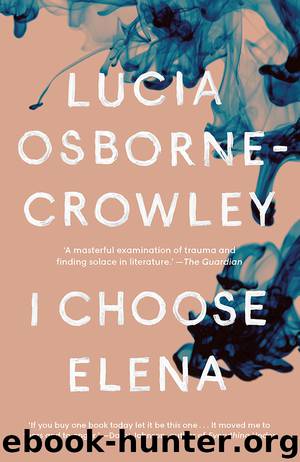
The Lasting Harm, Lucia Osborne-Crowley (Allen & Unwin)
Lucia Osborne-Crowley was another video appearance. Before she made the necessary thankyous she noted the importance of writers speaking up for Palestinians who are being subjected to genocide and war crimes. She thanked the survivor community who voted for her – the book is for and about and by survivors of sexual violence and child sexual violence.
Special Award
This award went to Liminal. The award was accepted by founding editor Leah Jing McIntosh. Evidently aware than many people watching the awards or reading about them might not have herd of Liminal, she began by explaining that it is ‘a project driven by the desire to make visible the unacknowledged structures of racism that so dehumanise all of us.’ She went on, ‘We work towards new ways of thinking, of seeing, of being in the world. That is to say, we work together towards a better future. We know we cannot do it alone.’
Book of the Year ($10,000)
36 Ways of Writing a Vietnamese Poem, Nam Le (Scribner Australia). Ben Ball from Scribner Australia read a speech written by Nam Le. He expanded on his earlier dedication to his father, and spoke interestingly and powerfully about multiculturalism. I won’t try to summarise his speech here out of respect for his intellectual property. I hope it’s published somewhere. At heart it was a warning against complacency.
The twin shadows of Gaza and Trump were never far from the stage, and repudiations of all they stood for were frequent. And what a reading list has emerged from the evening, even if only of the winners.



 Me fail? I fly!