Tag Archives: Margaret Mahy

Sydney Writers’ Festival 2025: My day four, part two

The young woman who was my neighbour at the launch of Ritual was just at the festival for the one day. She said she planned to go to ‘all the Palestinian sessions’. My next two sessions would have been on her radar.


1 pm: Peter Beinart: Being Jewish After the Destruction of Gaza

Peter Beinart is a New York journalist, commentator, substacker, and professor of journalism and political science.  He was in conversation with ABC journalist Debbie Whitmont.

He began by saying that he hoped there would be people in the packed room who disagreed with him. If there were any such, he made no attempt to placate them, but left us in no doubt about his views. He spoke fast (and at times furious), so please don’t take this as a summary of his whole presentation, but here are some things I jotted down.

The Jewish community in the USA and elsewhere is painfully divided over current events in Israel-Palestine. He begins his book Being Jewish After the Destruction of Gaza with a letter to a former friend: speaking from a position of love and Jewish solidarity, he says that something has gone horribly wrong, that the current action of Israel is a profound desecration, the greatest spiritual crisis of Judaism since the Holocaust.

There has been a great sustaining story for Jews. They are the world’s perpetual victims. In line with that narrative, Hamas’s horrific attacks on 7 October 2023 are seen in the context of the Holocaust and, before that, the centuries of pogroms and persecution. But placing the attacks in that narrative is to dehumanise Palestinians. To understand 7 October we need to look to different analogies – the example he gave was of a group of Native Americans who broke out of virtual imprisonment to perform a horrific massacre. In the case of 7 October, the Israeli Jews weren’t a marginalised group – it was horrible that they were killed but they were members of the oppressing group.

The narrative behind the creation of Israel is that Jews need a safe place. But supremacy does not make you safe. In South Africa it was widely believed that the relinquishment of white supremacy and Apartheid would lead to a bloodbath because whites would no longer be protected from the armed resistance. It didn’t happen(whatever the current president of the USA might say). Similar fears in Northern Ireland proved to be illusory. When structures of supremacy were taken down, the violence pretty much ended.

Yet the fear persists. Jewish Israelis fear to visit Gaza or the West Bank – while going to hospitals where there are many Palestinians among the doctors and nurses. Rather than argue, one needs to ask, ‘What are the experiences that led you to that belief?’

The answer is partly that the Holocaust is not ancient history. There are still fewer Jews in the world than there were in 1939. He is not suggesting that we should forget the past, but it matter what stories we tell. In his early 30s he went (as a journalist, I think) to spend time with Palestinians on the West Bank. Nothing in his life had prepared him for the brutality and terror he witnessed there. He realised then that the story of the persecution of the Jews was not the only story, and not the main one to tell in Israel-Palestine.

Among some circles there is a new definition of what it means to be a Jew. To be a real Jew, you must unconditionally support Israel. This, he says as an observant Jew, is a form of idolatry – the worship of something human-made. States are meant to support their citizens. Under this new definition, the state of Israel is to be worshipped: it’s not a relationship of support but of adoration. Likewise there’s a new definition of antisemitism that includes anti-Zionism: this would mean that any support of Palestinians is antisemitic. Again he quoted Edward Said, ‘Palestinians have been denied permission to narrate.’ This would make that denial absolute.

In fact, Jews are disproportionately represented in pro-Palestinian activities in the USA. These are not ‘self-hating’ Jews, but Jews acting in keeping with longstanding cultural values.

The last sentence of my notes: ‘Jews need to be liberated from supremacy.’


4.30: Plestia Alaqad: The Eyes of Gaza

Plestia Alaqad is a young Palestinian woman who has defied the lack of permission named by Edward Said. On 6 October 2023, a recent graduate, her application for a job with a news outlet in Gaza was rejected: local journalists weren’t needed. On 9 October, after the Hamas attack on Israel and the beginning of Israel’s response, she received a call saying things had changed. So she began an astonishing period of reporting. (At least, this is what I gathered from this conversation; the Wikipedia page tells a slightly different story.) For six weeks, she published first-person eye-witness accounts as Israel’s attacks on Gaza became more intense. She also published her diary on Instagram, giving millions of followers what Wikipedia calls ‘an unfiltered glimpse into the harrowing realities of life under siege’. And she wrote poetry. Her book, Eyes of Gaza, is a memoir built from her Instagram diaries.

At the beginning of the session, Sarah Saleh stepped onto the stage and sat beneath the huge screen to tell us who Plestia Alaqad was. Being completely ignorant, I assumed Plestia Alaqad was about to be beamed in from the Middle East, like Ittay Flescher and Raja Shehadeh. In fact, she is currently living in Australia, having left Gaza in November 2023 in fear for her family’s safety. Sara was alone on the stage so her guest could make an entrance: our applause was accepted, not by a stereotypically dour, hijab-wearing Palestinian refugee, but by a glamorous, vivacious, long-haired young woman.

The entrance wasn’t just a nice piece of theatre. Like Flescher and Shehadeh, she sees her work as being in large part to counter the dehumanisation of Palestinians – and she made us see her as human. This is why she writes about shopping as well as the outright horrors. ‘People don’t expect to see me shopping. They want to donate clothes to me.’

‘I knew how to be a journalist,’ she said, ‘but not how to be a journalist in the middle of a genocide.’

‘You have to deal with the genocide,’ she said, ‘and then you have to deal with the media’s treatment of it.’ Once she had come to public notice, mainstream journalist wanted to hear from her. She told us of one interview, with an Israeli news outlet I thnk, where the interviewer kept asking her leading questions, wanting her to say something like, ‘Kill all Jews.’ But this is not her position, and she referred constantly to the perpetrators of atrocities specifically as the IDF, not even ‘the Israelis’ in general. The interview was not published.

Children in Gaza grow up afraid of the sky.

About her book, she said, ‘I want people of the future to not believe that this book is non-fiction.’


5.30: Anna Funder, Closing Address: Bears Out There (click for podcast)

It was a hard transition from Plestia Alaqad to the formalities of the festival’s closing address. The CEO Brooke Webb (wearing a Protect the Dolls t-shirt), Artistic Director Ann Mossop and the NSW Minister for the Arts John Graham each spoke in justifiably self-congratulatory mode. What remains tantalisingly in my memory from all three speeches is an unexplained image of Jeanette Winterson being pursued by three stage managers. Apparently it was funny and made sense, but I guess you had to be there.

Anna Funder’s speech was terrific. The bears of its title came from an incident in her childhood. At a campsite in a Claifornian redwood forest, she needed to go to the toilet. Her mother, who was breastfeeding little Anna’s baby sister, told her to go to the toilet block by herself. When she came back and said she couldn’t go alone because, ‘There’s a bear down there,’ her mother, like the mother in Margaret Mahy’s classic children’s book, A Lion in the Meadow (it’s me, not Anna Funder, making that comparison), told her to stop making things up. The third time little Anna came back she was accompanied by a burly man who wanted to know who kept sending this small child to the toilet block when there was a bear there.

She went on to offer a range of perspectives on that story. Her mother told it often as a humorous story against herself as a neglectful mother. It could be read as showing the importance of the kindness of strangers. And so on.

I’m writing this at least ten days after the event, from very scanty and mostly unreadable notes, but where the story landed in the end was to make an analogy with the work of a writer, to go to places where there are bears – in Anna Funder’s case, the world of secret police, patriarchy, and like that. In these days, with the advent of AI under a global surveillance oligarchy, we need to recognise the importance of human beings writing and reading, daring to go where the robots cannot.

For the podcast of this address, clink on the title above. [Added later: An edited version was published in the July 2025 issue of the Monthly.]


And that’s it for another year, bar the events scheduled outside the week in May and of course the podcast series (I’ll add links to them as they appear). The Festival had an official blogger, Dylin Hardcastle. You can read his blogs at this link.

The small fraction of the Festival that I saw was terrific. At least four people, from different perspectives, spoke of the importance of countering the dehumanisation of Palestinians. There were lots of Readers against Genocide t-shirts, but any fears that there would be displays of antisemitism proved to be unfounded. There were wonderful poetry events – curated as part of the First Nations program, featuring a spectacular international guest, launching a landmark anthology of Muslim poets. I missed the intimate poetry sessions that were a feature of the Festival when it was held at the Walsh Bay wharves. Maybe next year we could have Pádraig Ó Tuama, or Judith Beveridge, or Eileen Chong, or a swag of poets from Flying Islands, Australian Poetry, or Red Room.

I gained new insights into books I’d read, and was tantalised about books I hadn’t. I’ve come away with a swag from Gleebooks, and have added to my already vast To Be Read shelf. I’ve already read a book by Raja Shehadeh from the Newtown library and am part way through a book by Emily Maguire.

Normal blogging will resume shortly.


The Sydney Writers’ Festival took place on Gadigal land. I have written this post on Gadigal and Wangal land, where the days are growing shorter and colder beneath, at this moment, a cloudless sky. I acknowledge Elders past, present and emerging and warmly welcome any First nations readers of this blog.
November verse 7

7. On reading Burglar Bill for something 
like the thousandth time
Everything he owned was stolen:
bed, beans, teapot, teacup, tea,
the grate he heaped his stolen coal in,
helmet, handsaw, got for free
on his nightly torchlit outing,
in at windows, gaily shouting,
'That's a nice –––, I'll have that!'
(A question: Did he steal his cat?)
Then along came Burglar Betty:
being burgled isn't fun.
Betty's baby (daughter? son?)
turned them both from crime and yet he
now – a timid reader prays –
recalls with joy his wicked days.

If you’ve never read Burglar Bill, by Janet and Allen Ahlberg, you’ve got a treat in store. I probably haven’t actually read it a thousand times, but these days I can be asked to read it three times in a row. Like Maurice Sendak’s Where the Wild Things Are or Margaret Mahy’s A Lion in the Meadow, it never gets boring.

Ruby Reads 24: Visiting the library

All but the first of these books were read during two visits to the wonderful Marrickville Library. The first was a gift from a friend.


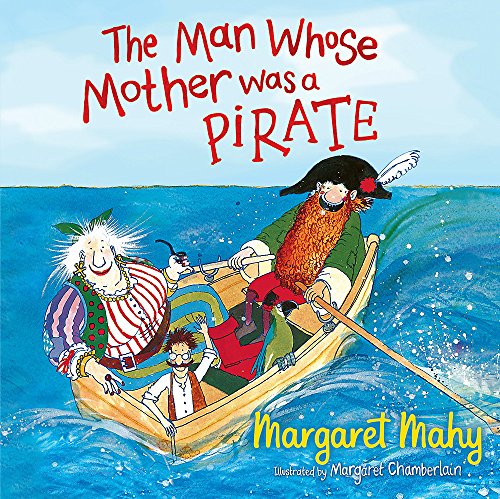
Margaret Mahy, The Man Whose Mother Was a Pirate (Puffin 1996)

This is one of the great picture books. A drab little man who works in a soul-destroyingly dull job has a large, exuberant mother who used to be a pirate. He has never even seen the sea until, at her request, he wheels her over a long distance down to the coast. On the way, in spite of the discouraging comments from a philosopher and others they encounter, he becomes increasingly enraptured by the idea of the sea. When they arrive, the reality is overwhelmingly more impressive than his imaginings. (The opposite of Proust, you could say.) In Margaret Chamberlain’s illustrations, the little man’s transformation is wonderful to behold, as iss the mother’s exuberance and the stunning beauty of the sea.

A Catholic priest once told me he used this book as the basis for sermons. Ruby quite likes it, asked for it more than once, but it’s not a great favourite (yet, he added hopefully).


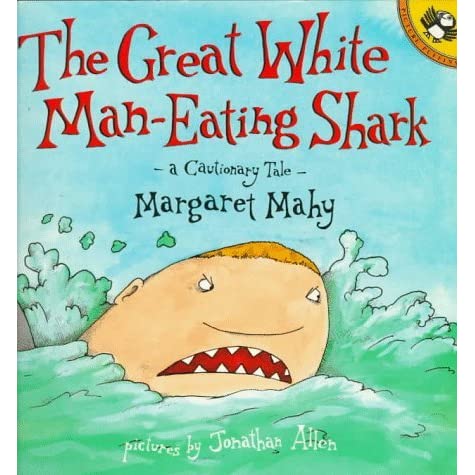
Margaret Mahy (words) and Jonathan Allen (pictures), The Great White Man Eating Shark (Puffin 1989)

This is another of my favourite picture books. Norvin is an unprepossessing boy and failed actor. He loves to swim, ‘to cut through the water like a silver arrow’, but other people at the beach always get in the way. He decides to capitalise on his appearance and his acting skills and disguises himself as a shark. When the other bathers panic, he has the beach all to himself … until a lady shark comes along and is beguiled by his gorgeous sharkiness. Jonathan Allen’s illustrations strike a perfect note that combines silliness and threat.

In spite of Ruby’s love of ‘Baby Shark‘ (if you don’t know about that song, click on the link), her current love of swimming, and her enduring love of pretend games, this book sadly failed to hit the spot (yet, I say again).


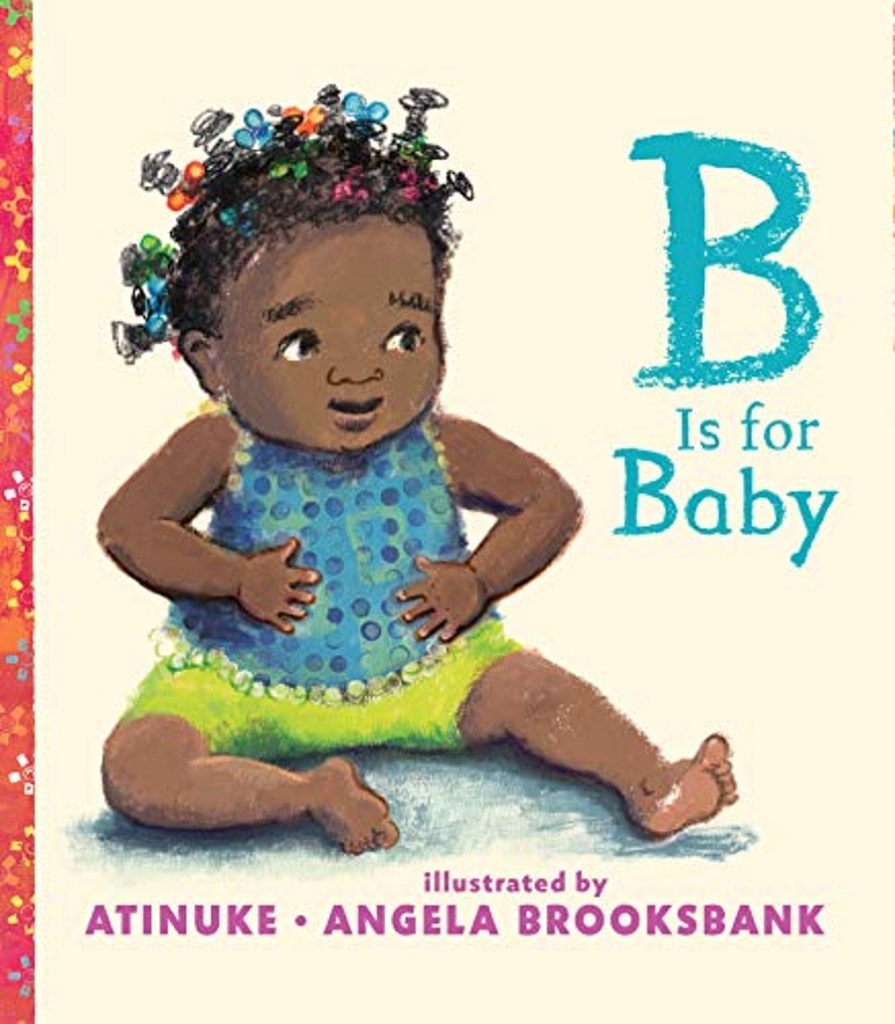
Atinuke (words) and Angela Brooksbank (images) B Is for Baby (Walker Books 2019)

This is not an alphabet book. It’s entirely about the letter B. And somehow that’s perfect for Ruby just now. She can recognise all the letters of the alphabet, and having one of them have a whole book to itself appeals to her. Especially when it’s identified with a brilliant little baby.

Evidently Atinuke, originally from Nigeria and currently living in Wales, has written a number of books featuring this baby. I don’t know if Angela Brooksbank has illustrated them all. I hope so, because the warmth and sheer life of these images is a tonic for the heart.


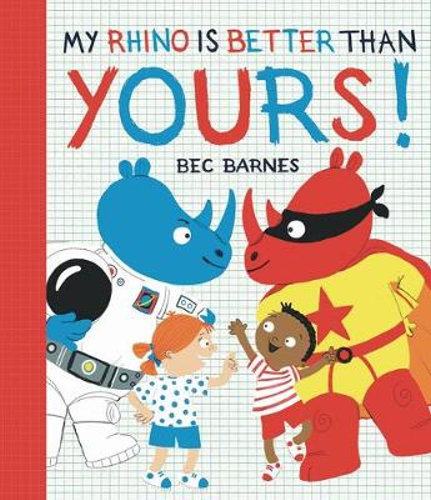
Bec Barnes, My Rhino Is Better Than Yours (David Fickling 2020)

The recurrent phrase, ‘The rhino that I know is better than yours,’ works like a charm. Two children, a boy and a girl, compete for the title of best rhino owner, their claims for their respective toys becoming more and more hyperbolical, and incidentally transgressing all sorts of gender-specific boundaries. Not just the rhyme, but the concept and the final resolution, in which a real rhino turns up and threatens to eat both children, work a treat. I approached this book with dread, but came very quickly to share Ruby’s love of it.


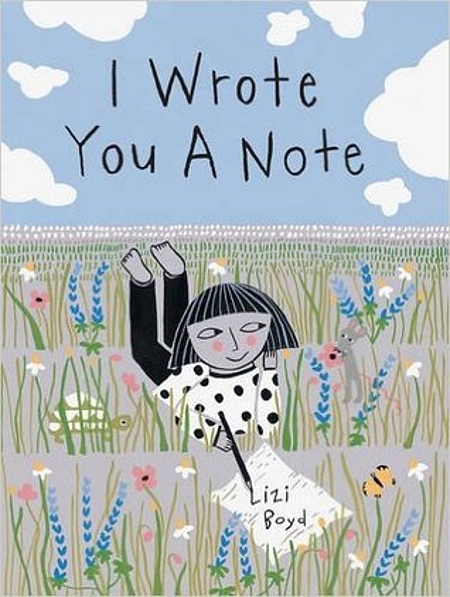
Lizi Boyd, I Wrote You a Note (Chronicle Books 2017)

As with the rhino book, the rhyme of this title, which I would barely have noticed, appeal hugely to this three-and-a-quarter-year-old. She chanted it over and over in the car on the way home from the library.

A young person’s note is found by a series of creatures who miraculously don’t chew it, or rip it, or soak it, and in the end it finds it way to its intended reader. Ruby loves to draw pictures for (and of) absent loved ones. This book is right up her alley.

The cover gives a good idea of the subtle style of illustration.


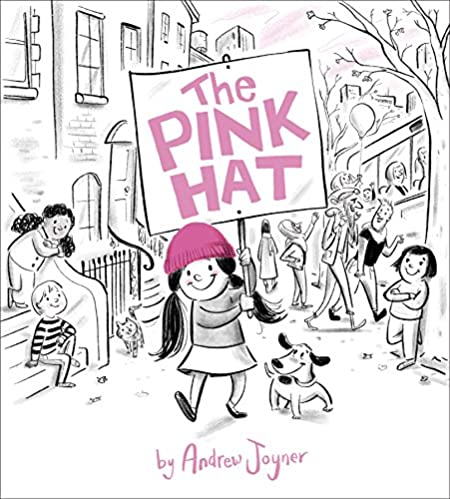
Andrew Joyner, The Pink Hat (Schwartz and Wade 2017)

Like I Wrote You a Note, this picture book follows the vicissitudes of an inanimate object – in this case a pink knitted hat – as it is claimed by one creature or person after another and then escapes them. This time, the the hat doesn’t just end up with the young person it is intended for, but with her it joins a sea of pink knitted hats at the great Women’s March of 2017. It’s a brilliant example of a book that is deeply satisfying on a number of levels. Andrew Joyner, an Australian who has illustrated for my beloved School Magazine, says on his website:

Inspired by the 5 million people (many of them children) in 82 countries who participated in the 2017 Women’s March, this is a book that celebrates girls and women and equal rights for all! 

I’ll keep an eye out for his Stand Up! Speak Up!, a story inspired by the Climate Change Revolution, which may be a little old for Ruby for another year or so.

Ruby Reads 22:

It’s been a long time since I’ve posted about books read with my granddaughter. Here’s a beginning catch-up.

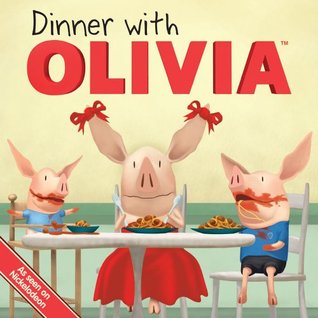
Dinner with Olivia (Simon & Schuster 2009, based on the TV series, adapted by Emily Sollinger, illustrated by Guy Wolek)

Neither Ruby nor her grandparents knew there was a TV series featuring Olivia, and at first I was wary of this knock-off of Ian Falconer’s wonderful books: as befits children’s TV, the illustration style is a lot cruder than Falconer’s New Yorkish elegance. But it turns out the book is lovely. Olivia goes to her posh friend Francine’s place for dinner. At first she is in awe, and mildly ashamed of the messiness of her own family, especially her little brothers. But once she has experienced the rule-bound life of Francine’s family, not to mention the Brussels sprouts, she – and Francine – realise how excellent it is to slurp spaghetti sauce and occasionally have a meatball bounce to the floor.


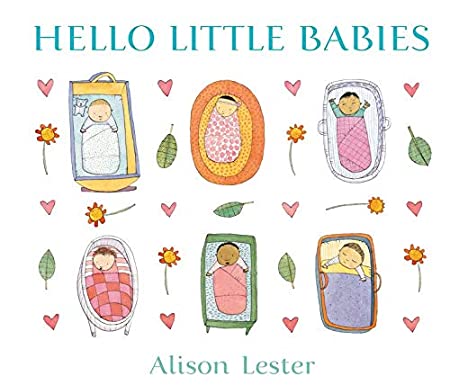
Alison Lester, Hello Little Babies (OUP 1985)

Like Alison Lester’s Clive Eats Alligators, this follows a number of children in different activities. This time the children are babies, of a range of ethnicities. Ruby is besotted with her little brother, and with babies in general – at the museum, the exhibit that held her attention was the diorama of baby dinosaurs hatching from their eggs. An added attraction in this book is that one of the babies is named Ruby.


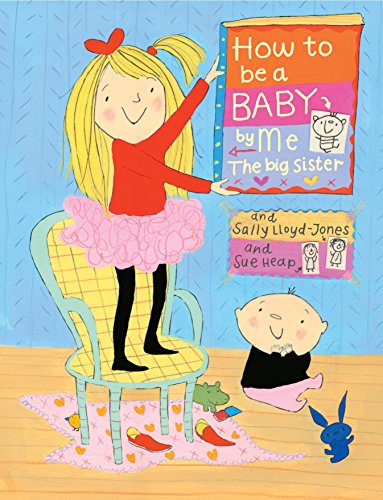
Sally Lloyd-Jones and Sue Heap, How to Be a Baby, by Me, The Big Sister (Schwartz & Wade Books 2007)

Much loved by Ruby, this mocks the narrator’s baby brother for his comparative helplessness. At least, we assume the baby is male, because that’s what Ruby’s baby brother Charlie is. We first read this before he was born. It has become much more popular since he became a reality. I’m not entirely comfortable with the book’s rampant condescension, but I think Ruby can tell it’s joking, and she particularly likes the last pages, where the big sister looks forward to the time when the baby will be as tall as her and able to play with her.


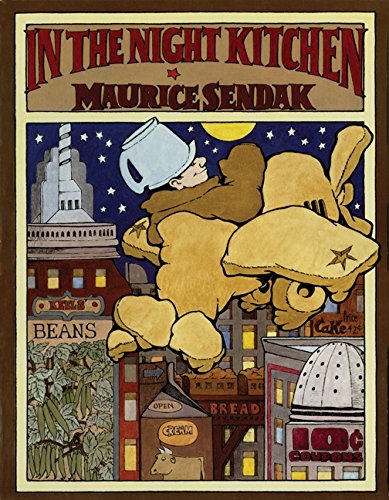
Maurice Sendak, In the Night Kitchen (©1970, HarperCollins Publishers 1988)

Ruby’s not so fond of this. I think there’s too much that she doesn’t quite recognise: the cooks in the kitchen, dough rising, New York skysline, naked boy … And the story line is weird. However, we were driving in the car the other day and she started chanting, ‘Milk in the batter! Milk in the Batter!’ So the magic of Sendak is percolating.


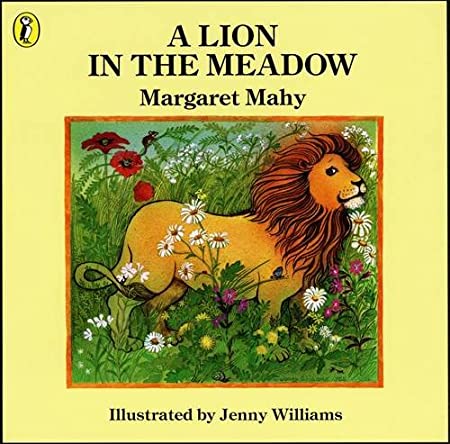
Margaret Mahy (writer) and Jenny Williams (illustrator), A Lion in the Meadow (©1969, re-illustrated edition ©1986, Picture Puffins 1989)

We picked this up at the Addison Road markets. Margaret Mahy is one of the great children’s writers, and Ruby has responded to this book appropriately. Like Sendak’s The Sign on Rosie’s Door, it has a brilliant mother who responds intelligently to her child’s fantasies. The difference is that is this case the child’s fantasy, of ‘a big, roaring, yellow, whiskery lion in the meadow’, turns out to be real, and so does the mother’s counter-fantasy of a dragon in a matchbox who will chase the lion away. Not a word out of place, this is irresistible, and – like the Sendak books – a pleasure to read aloud.


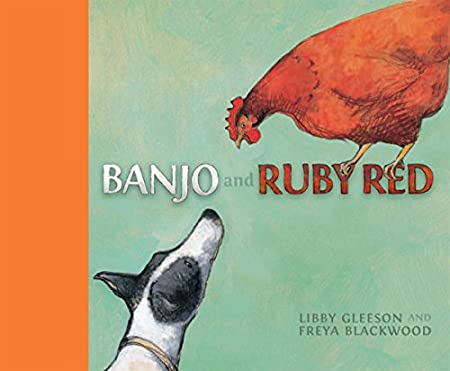
Libby Gleeson (writer) and Freya Blackwood (illustrator), Banjo and Ruby Red (Little Hare 2013)

A dog and a chook overcome initial relationship difficulties to become good friends. What’s not to love? We used to visit some urban chickens when Ruby was much smaller (her word for chicken as ‘babook’, but she eventually decided to go with the consensus). She still talks about the family dog who died some time ago – ‘It’s very sad.’ And relationship difficulties seem to be an issue as she spends more time in childcare. Plus, the chook’s name is Ruby Red. I don’t imagine the Australian farm setting is any more familiar to our inner-city girl than Sendak’s New York skyline, but in this case that doesn’t seem to matter.

This book is also a pleasure to read aloud, for the pathos of a scene where Ruby Red is apparently lifeless as much as for the pages where Banjo does a lot of barking and for the way movement can be traced in great arc across the pages in Freya Blackwood’s illustrations


Hello Little Babies and Banjo and Ruby Red are the first two books I’ve read for the Australian Women Writers Challenge 2021.

Children’s literature is not a genre

There’s a way of talking about children’s literature as if it’s a genre, like detective stories or police procedurals or thrillers or vampire stories or fantasy novels. I think this is quite wrong. A genre has acknowledged conventions, that can be followed flexibly or even violated in any particular specimen of the genre. The conventions change and grow with time. But they still rule. It’s not a vampire movie if no one sucks blood. It’s not a detective story if there’s no major crime in the first quarter of the book. Children’s literature isn’t like that. It’s defined entirely by the imagined readership. I like Margaret Mahy’s definition, which I remember as: Children’s literature is literature that you can start enjoying while a child.

The two books I’ve just read illustrate my point.

David Greenberg & Victoria Chess, Slugs (Pepper Press 1983)

0316326593

I read Slugs for the first time in years the other night. My five year old great-niece was staying with her father. At bedtime, having scoured our bookshelves, she emerged with this unpleasant little book and asked me in her sweet, shy way to read it to her. Evidently she’d fallen in love with the book earlier in the year when they stayed here in our absence. I complied with as much gusto as I could muster. I find the book profoundly unattractive. It has rudimentary rhymes, describing a huge variety of slugs, many being subjected to would-be comic indignities, tortured and murdered in hideous ways, all with images showing the brown creatures impassively accepting their fates, until in the last pages they come and wreak a horrible revenge on a child (known in the book as ‘you’), ending:

And after how you’ve treated Slugs
It surely serves you right!

My great-niece seemed to enjoy having this horror read to her, and when I’d finished she sat for maybe half an hour studying the pages intently.

Clearly she is the reader the creators had in mind – as well as my sons twenty or so years ago. I am not that reader.

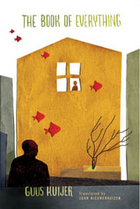
Guus Kuijer, The Book of Everything (2004; Translation by John Nieuwenhuizen, Allen & Unwin 2006)

1kuijer

The Book of Everything is definitely a children’s book, but it couldn’t be more different. It has more in common with J M Coetzee’s Boyhood (which I’ll blog about during the week), in subject matter, point of view, even tone, than it does with Slugs. A lonely boy, helped by apparitions of Jesus and an old woman who is almost certainly a witch, finds a way to free himself and his family from the dominion of his harsh, violent, religiously extreme father.

The book speaks in particular to literate children. The hero,Thomas, finds inspiration in Emil and the Detectives, Joanna Spyri’s All Alone in the World and the Book of Genesis. The narrative assumes familiarity with literary conventions (OK, there are some conventions!), particularly those about witches in children’s literature. I found my adult-reader self wanting explanations of Thomas’s visions: ‘Please be clear about this. Is the poor child hallucinating from terror, or is this a world where such things really happen?’ Such questions are just plain irrelevant to the book’s imagined reader, and once I moved over to occupy that position the book opened up to me – or I opened up to it.


It occurred to me that some animated movies tend to wink knowingly over the heads of the children in their audience, both these books are winking at the children – ‘Don’t tell the adults.’ If we have to talk genre, the first is something like Perversely Cautionary Verse (which may be a genre found only in children’s literature), the second Domestic Magic Realism (and I doubt if that is limited to any age readers).

I read The Book of Everything on Richard Tulloch‘s recommendation. His dramatisation of it will be playing at Belvoir Street at the end of the year. It seems to me that one of his challenges is to take the story away from the children and give it to the adults who will presumably make up the bulk of the Belvoir audience.