Tag Archives: Novel

Neil Gaiman’s Ocean at the End of the Lane

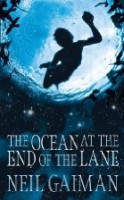
Neil Gaiman, The Ocean at the End of the Lane (Headline 2013)

1472200322 Neil Gaiman is a rock star among writers. He’s a brilliant user of social media, a generous participant in readings and signings, a glamorously nerdy co-star with his wife Amanda Palmer (whose ‘Vegemite (the Black Death)‘ he has described as the only love song she’s written for him). He reads with a sinister intonation that reminds one of Hammer horror movies. He has written brilliant comic books, most notably the Sandman epic, and his children’s books (Coraline, The Day I Swapped My Dad for Two Goldfish, The Wolves in the Walls, The Graveyard Book) tend to become instant classics. He has written screenplays for a handful of movies and for episodes of Doctor Who. The wonderfully creepy Coraline has been made into a successfully creepy animated movie, and his novel for grown-ups American Gods is on its way to becoming a TV series.

Gaiman fandom is such a phenomenon that shortly after the publication of The Ocean at the End of the Lane a lane in his native Portsmouth had its name changed to ‘The Ocean at the End of the’ Lane. The Internet has a photo of Neil (as he’s known to his fans) unveiling the sign, looking chuffed

On top of all that, the book is excellent. It’s a fantasy tale of a small boy who tangles with a vast amorphous monster and stops it from destroying the universe, with the help of three mysterious women who live in the house at the end of the lane, right next to the pond that the youngest of them – actually an eleven year old girl rather than a woman, though she has been around for millennia – insists is really an ocean. There’s a strong sense, as in many of his books, of childhood as a time of huge moral and other challenges, when the stakes are very high and the possibilities for wonder are endless. The protagonist is six years old but it’s not a children’s book: all but the most committed young readers are likely to be deterred by the elliptical writing in the first few pages, in which the narrator, having just attended his father’s funeral, is drawn by a vague nostalgic impulse to drive down the lane near his childhood home. It looks to me like an excellent way out of the dilemma faced by people who write books for adults as well as children: how to signal clearly enough to prospective readers whether they are going to be happy in a given book.

Alexis Wright’s Swan Book

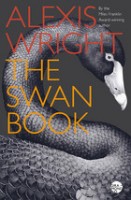
Alexis Wright, The Swan Book (Giramondo 2013)

1sbA friend of mine, an activist whom I admire hugely, says that when he can’t sleep at night he generally does one of three things: he plays a computer game, reads a novel, or does some work. None of the three is satisfactory, he says, but at least if he does work, then his sleeplessness has been productive. If he spends an hour or two doing either of the others, nothing has changed at the end of that time.

I’m fairly sure that when he speaks so lightly of novels he’s not thinking of The Swan Book or books like it (if there are any). It would be hard to read this book and not feel that something had changed.

As my blogging time is severely limited these days, I give you a heroic attempt at describing the set-up, lifted from an impeccable source – thanks, Will:

Wright’s opening chapter chronicles a post-apocalyptic world where climate change has sent everything mad, where people have been driven from their homelands, forced to seek refuge without knowing a destination, carrying along with them, as they mass upon the oceans seeking a new home, the history of the world’s cultures. That history becomes layered and overlapped, interpenetrating, elements commingled. Wagner jostles the Bible in a radioactive landscape of water and ice, monkeys and swans. Aunty Bella Donna of the Champions, leading this exodus from a drowned world, comes to Australia.

There is a marshy swamp, where she settles, in and amidst the rusted hulls of naval vessels cast up to rot in Army-run camps of an intervention, under a sky filled with swans, sometimes. Sometimes, instead, there are helicopters shining searchlights onto the jetsam of Aboriginal people confined there. There, Aunty Bella Donna takes under her wing the girl Oblivia. Oblivion Ethylene, to credit her fully, is a sly spry spink spank sprint of a thing (a characterization I’ve taken not from Wright, but from Finnegans Wake) pulled out from the depths of a eucalyptus tree where she hid after being raped by a pack of petrol sniffers.

That, as Will goes on to say, is just the beginning. There’s the Harbour Master, who is probably Aboriginal and may or may not be a ghost for most of the book, along with his well-dressed monkey. And there’s Warren Finch, a kind of Aboriginal Barack Obama cranked up to eleven, and brolgas, and owls, and rats, and a weird building full of fountains and cats. Oblivia becomes the First Lady of whatnot, she becomes the swan lady, she takes part in a great exodus from a dying city (Sydney perhaps) across a land devastated by climate change.

The book doesn’t lend itself to a quick synopsis. It moves like a dream: the identities of places, people and other living things are unstable. For instance, Oblivia, who has married Warren Finch, sees herself on television accompanying him on state occasions. Since we know, or think we know, that she hasn’t left the house where he dumped her immediately after the wedding, we assume she is seeing an imposter, or perhaps a robotic creation of some kind – it is after all the future. But Oblivia doesn’t share that assumption: as far as she is concerned she must have been there. Are we to read this as Oblivia having a tenuous grasp on reality? Perhaps. Or perhaps we’re the ones who don’t understand how this world works. The narrator doesn’t really care one way or another.

The narrative voice is merciless to the reader’s desire for certainty. In other ways, too, it’s constantly unsettling. As a recovering proofreader, I bristled at a couple of glaring errors: someone etched out a living, graffiti was sprawled on a rusted keel. But by the time I came to a character reigning in an impulse, I realised that in all likelihood the author had staved off any editorial intervention: these occasional errors, along with the frequent grammatical slippages, mangled cliches and apparently random quotes featuring swans, aren’t a bug, but a feature. Likewise the occasional impossibility, such as the tiny Oblivia picking up an adult swan and carrying it some distance tucked under one arm. The reader isn’t so much being told a story as being drawn into a vast dream. And dreams don’t care about proofreading or footnotes or logical consistency.

It’s an almost incredibly rich book. There’s satire (‘closing the gap’ is still a slogan, but its meaning has changed to sinister effect),  astute observation (the scene where Oblivia meets a white family is a deeply uncomfortable lesson about cultural sensitivity), erudition (lots of science and history to do with black and white swans), science fiction (a grim dystopian future), and at its heart a devastating non-love story.

awwbadge_2014The Swan Book is the third book I’ve read as part of the 2014 Australian Women Writers Challenge.

William Nagle’s Odd Angry Shot

William Nagle, The Odd Angry Shot (Angus & Robertson 1975, 1979)

20131230-200308.jpg Before I looked up IMDB, I would have said The Odd Angry Shot (1979), directed by Tom Jeffries and featuring a number of well-known comic actors, was the only feature film dealing with Australia’s involvement in the US–Vietnam War. I was wrong, but it’s certainly the only such film that most people remember, whether they’ve seen it or not (I haven’t). This is the book it was based on. The cover of the film tie-in edition that I’ve just read features a group of military men laughing intensely, and the words: ‘Cry a little, laugh a lot / Aussies being Aussies in The Odd Angry Shot.’ That is, you’re invited to expect something like Leslie Thomas’s Virgin Soldiers: larrikin japes among young men living together, with a seasoning of casual sexism, racism and homophobia, and an occasional reminder that there’s a war going on somewhere nearby.

Well, up to a point, Lord Copper. There are indeed plenty of larrikin japes: our group of SAS soldiers make a wanking machine for the padre who has annoyed them, and the padre surprises them by being a good sport; they bet on a battle to the death between their pet spider and the pet scorpion of nearby US soldiers, and lose the bet gracelessly; they vie for the favours of a woman they assume to be a bar girl but who turns out to be a school teacher and definitely not available. The barracks banter is lively and rings true, and there’s more than enough humour about bodily functions to fill the genre’s requirements.

But readers who expect The Virgin Soldiers with an Australian accent or a celebration of the larrikin Anzac spirit will be disappointed. The book takes the genre and busts it open. The homophobia may stay casual, but the sexism reaches peaks of visceral misogyny, the racism leads to more than one act of hideous brutality against non-combatants, and the combat episodes are graphically, horrifically rendered. The humour is the manifestation of a group ethos that the young men see , correctly, as a kind of stoicism, but at least to this reader communicates a ruthless ban on any show of emotion apart from rage, and almost any conversation apart from chiyacking.

The book is about the group. It’s not The Red Badge of Courage or Regeneration, where we are invited to imagine the effects of soldiering on an individual mind. These young men resent the people back home who demonstrate against the war. They occasionally recognise that the Viet Cong and North Vietnamese soldiers they are fighting are as much pawns in the broader politics as they are themselves, but they don’t have the luxury of questioning those politics. If they can’t make a joke they down a can or four of beer. There’s a telling moment towards the end, when one of the young men asks, ‘Do you suppose we’re doing any good by being here?’ His mate answers:

Not much … because when we get home we’ll be an embarrassment to our wonderful nation. The only bastards who’ll want to know about us are the silly buggers in this man’s army. Let’s face it, we’ve got no one else.

The question is asked, but can’t be answered. The best the mate can do is respond to a different question: ‘Will people appreciate what we’ve done here?’ The narrator does finally break free of the enforced lack of reflection a couple of pages from the end:

We are stuck here, refusing to admit defeat, an army of frustrated pawns, tired, wet and sold out. Yet we still believe in our task; still, after all this, we are bound together all over the world, friend and enemy alike, the soldier, the green-clad, second-class citizen of the earth …

We will arrive at any dictated hour to join in our pastime – to hunt and dispose of each other in the ultimate test of the mind, the reward of which is life for another day, another week. You have angered us, all of us, your praetorians from the red tabs downwards are angry.

… We, the survivors, will come home, will move amongst you, will wait, will be revenged.

That is so unlike any other writing in the book it might have been inserted by a canny editor if it weren’t for its awkwardness. I read it as the author struggling against the code of silence he has shown us in the rest of the book.

The Odd Angry Shot shared the 1975 Australian National Book Council Award for Australian literature. Although it remains steadfastly on the side of its soldier characters, it doesn’t sit easily with the current rhetoric about heroes and veneration of those who sacrificed all, as in this, which I saw in Balmain as I was finishing the book. I suspect William Nagle would have sided with the pigeons against the notice poster.

[In case you can’t read the notice, it says: ‘This is a war / memorial / to honour our fallen / diggers / not a lunch seat / or a child’s playground / Please treat it / with the respect it / deserves / Lest we forget’]

Lest We Forget

What Maisie and the Book Group Knew

What Maisie Knew, Henry James (1897, this Kindle edition based on Echo Library Large Print Edition 2006)

1_wmkBefore the meeting: When I read Henry James at university (Portrait of a Lady in first year and What Maisie Knew some time later), quite a bit of it went right over my head. I loved the prose, but the worlds of his novels were a long way from the North Queensland pragmatism and Catholic piety that I had been brought up with. Perhaps now, more than forty years of secular urban life under my belt, I’d have more luck. After all, Scott McGehee and David Siegel’s movie adaptation just about tore my heart out a few weeks ago, and Kate Lilley’s poem ‘Maisily’ moved me simply by listing the adverbs from the book.

The Kindle edition gets right down to business – cover, title page, table of contents, and then, without so much as a chapter heading:

The litigation seemed interminable and had in fact been complicated; but by the decision on the appeal the judgement of the divorce-court was confirmed as to the assignment of the child. The father, who, though bespattered from head to foot, had made good his case, was, in pursuance of this triumph, appointed to keep her: it was not so much that the mother’s character had been more absolutely damaged as that the brilliancy of a lady’s complexion (and this lady’s, in court, was immensely remarked) might be more regarded as showing the spots.

We’re thrown right into the middle of a story, everything in plain sight, embedded in metaphor and sarcasm. This can’t be read fast, and once you know that by this stage of his life James dictated his novels, it can’t be read without the mental image of a portly gentleman pacing the room enjoying the sound of the sentences as they roll out from his mouth.

And it continues as it has begun: rich, sonorous, intricate sentences that tell a story of child neglect from the point of view of the child, but with no attempt to tell it as a child would: instead, we are asked to explore the great complexity of this little girl’s perceptions of the adult world and her strategies for dealing with it, in language that is at times as baffling to the reader as that world is to her.

I enjoyed the book, but I can’t pretend that I always understood what was going on in that adult world. Specifically, in the last movement Maisie – now well past the age of six that she remains in the movie – has to make a decision about her living arrangements in a context where the adults clearly share an understanding of the issues and believe incorrectly that Maisie does too. James seems to expect his readers to have the insider’s view as well. But times have changed, and the reference point of the culture have shifted so much that I at least could only follow the broadest outlines of what F R Leavis calls the ‘moral squalor’ of the adult world. The governess Mrs Wix, who is possibly meant to be a kind of moral centre of gravity (and who is not there in the movie) wins out in the end, and I think we’re meant to see this as a triumph of good over evil, but I completely couldn’t see why Maisie’s rejection of Mrs Beale, who has always defended and loved her, should be seen as a good thing (though who can tell when the air is so thick with irony?).

By telling the story from Maisie’s point of view, the novel throws into question the whole concept of moral squalor, if that refers primarily to sexual behaviour: what Maisie doesn’t get is all the sexual stuff, so being a kept man or a loose woman or a gold-digger or someone who pays for sex, as various characters appear to be, matters not at all, whereas loyalty, patience, kindness, generosity and their absence are what count.

F R Leavis thought very highly of this novel, which is probably why it was set for us to study at Sydney University in the 1970s. I don’t know that it’s a book I’ll be in a hurry to reread, though many of James’s sentences merit many re-readings.

After the meeting: Words like ‘loathing’ kept cropping in emails leading up to last night’s dinner. However, it was hard to feel loathing for anything much, as we sat outside eating barbecued chicken and sausages on a balmy, mosquito-free Sydney spring evening, as darkness brought an end to a day that had been predicted to be full of bushfire horror but had instead been one where the volunteer rural fire service could be justifiably proud of having averted disaster by strategic backburning the day before.

There were six of us. A couple had been travelling, and shared travellers’ tales. One had been living in Darwin and told spectacular yarns of Territory life. Some of us had been to the theatre and had stories to tell from there as well – one involving a smart phone that played Beatles tunes as background to the drama until an actor politely asked the blithely unaware owner of said phone to turn it off. It was a warm, convivial evening.

We did talk about the book, happily and with minimal rancour. Only one of us – me – had read the whole thing. Only one of the others said he planned to finish it. I may have been the only one who found the sentences fascinating rather than perversely complex. As we were going home, we clapped eyes on the paperback that one chap was holding, and several of us had difficulty reconciling the slimness of the paperback with the size of the book we felt we had read on our various electronic devices.

Rumer Godden’s China Court

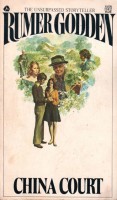
Rumer Godden, China Court (1960, Avon 1970)

chinacourt002

China Court is a dilapidated old house in Cornwall that has been home to four generations of the Quin family. It has witnessed their loves and compromises, triumphs and subterfuges, sacrifices and betrayals. Each generation has changed the building, its garden, and its relationship with the village.

After the death of old Mrs Quin in 1960 (the year of publication), we meet her loving servant, the reformed scapegrace who rents the farm attached to the house, her beloved granddaughter who arrives from Rome too late to see her grandmother alive, her sensible daughters and their even more sensible husbands, an old man who has been called in by Mrs Quin (at the insistence of the most belligerently sensible son-in-law) to evaluate the paintings and other artefacts that have accumulated over the decades, and of course the benign old family lawyer who comes to read the will. Events unfold pretty much as that list of characters suggests: the will surprises all the characters but not the reader, unexpected treasure is found that makes everything work out, young love blossoms, and China Court is saved: no rude shocks there for the readers of the Ladies’ Home Journal, where the novel first appeared as a serial.

But Rumer Godden is a formidable writer. The present-time story unfolds in sentences filled with unexpected pleasures and strange twists and rhythms, using the conventional past tense. And intertwined with that narrative is what makes the book splendid: as if they are emanating from the stones and wood of the house, scenes from the past 120 years are told in the present tense. It’s a simple device, but it allows the narrating voice to switch without pause, explanation or any other signposting from a 1960 conversation in the kitchen to a rhapsodic account of how that kitchen has changed over the decades or to a completely different scene from 80 years earlier. Old Mrs Quin becomes Ripsie, the orphan girl from the village, childhood friend of the sons of China Court; the ferocious Lady Patrick who bullies little Ripsie becomes the aristocratic Irish beauty heartbroken at her husband’s infidelity; maiden aunt Eliza becomes a headstrong girl and a tragic figure as an old woman – at least five main stories, and any number of lesser ones, all woven together brilliantly, and the reader never loses track.

There are any number of reasons why this book and I are wrong for each other.

Gender: Not only are the main characters female but there is seemingly endless detail about flowers, clothes, household ornaments, cooking and domestic life in general, not to mention lots of pining after men in uniform.

Religion: I was brought up Catholic, and the book is high Anglican (though one character is ‘chapel’ and another Catholic). Key to the plot is a beautiful old Book of Hours, and the novel’s sections are named after the hours of the Office of the Blessed Virgin Mary – Prime, Terce, Sext, Nones, Vespers, Compline and Matins – with a Latin phrase (and translation) from the relevant Hour at the head of each section. My inner Catholic youth was torn between pleasure at being reminded of a prayer cycle that marked out my days from age 18 to 23, and a completely unjustifiable distaste at having those prayers used primarily as decoration.

Politics: Not that the book is overtly political, but it’s shot through with a kind of conservatism we know well from TV’s Downton Abbey (there are a lot of similarities, though the Quins aren’t aristos like the DA family). Early in the book, a family member is described as ‘go[ing] out to his great-uncle’s business in Canton when it has settled down again after the Opium War’ – having just read an Amitav Ghosh novel about the lead-up to that war, I’m alert to the human suffering glossed over in this passing comment, and suspicious when told that that business in Canton was just about tea. An uncritical acceptance of the spoils of Empire is deeply troubling, but doesn’t ruffle the surface here.

Pedantics: As a copy editor I would have gone nuts. The use of run-ons in particular is maddeningly irresponsible. I doubt if Ms Godden and the Chicago Manual of Style had ever been introduced.

There are probably other reasons why we shouldn’t get on. But in the event, I loved it. Sentence by sentence, scene by scene, I was eating out of Rumer Godden’s hands. She made me care about a dozen characters. She drives home the tragic effects of sexism and male domination on women, including women of the privileged classes. She fiercely opposes the creeping commodification of everyday life that was to blossom into neoliberalism. She may have cured me of my slavish devotion to the Style Manual.

Kevin Powers’ Yellow Birds

Kevin Powers, The Yellow Birds (Sceptre 2012)

1444756133Kevin Powers served in the US Army in Iraq in 2004 and 2005, and this novel draws on that experience. It’s a story about combat told by someone who was there. It needs to be approached with respect. And I did. I was repelled by some callous and/or confused anti-Islamic imagery in the first paragraph (‘The war tried to kill us in the spring … While we slept, the war rubbed its thousand ribs against the ground in prayer.’). But I read on.

The anti-Islam thing was clearly not deliberate. The narrative follows a small group of soldiers in Iraq – really just three characters. They do vile things, but they’re not triumphalist about it: this is what soldiers have to do, and they are pretty much as numb to the deaths of their comrades as to the enemies and the innocent bystanders they kill. There are flashbacks to home in rural Virginia. A terrible fate for one of them is foreshadowed. There’s a nasty scene in a brothel, a colonel who does what the narrator calls a ‘half-assed Patton imitation’, some clueless embedded journalists.

I had trouble believing any of it. I don’t for a moment think Powers is misrepresenting things. Certainly, there’s a fierce rejection of the sort of crypto-glamour of something like The Hurt Locker (I mean the movie – I haven’t read the book it draws on). I’m pretty sure he tackled some material that was unimaginably hard to face, and I admire him greatly for that. But nothing came alive for me, everything felt painfully constructed. I stopped reading at about page 90 when an embedded journalist was being a complete idiot.

So The Yellow Birds may be all the things that the distinguished writers quoted on its back cover say it is: ‘inexplicably beautiful and utterly, urgently necessary’, ‘born from experience and rendered with compassion and intelligence’, written ‘with a fierce and exact concentration and sense of truth’. It may, as one of them proclaims, be the All Quiet on the Western Front of America’s Arab Wars. Please don’t take my word against the combined judgement of Ann Patchett, Tom Wolfe, Colm Tóibín. Alice Sebold and more. As far as I read, I thought it was pretty good first novel on a very important subject, and hope Kevin Powers has a great writing career ahead of him.

The Book Group goes up Amitav Ghosh’s River of Smoke

Amitav Ghosh, River of Smoke (John Murray 2011)

0719568986 Before the meeting: After Karl Ove Knausgaard’s mountains of mundane detail, we wanted our next book to be one that spins a great yarn. Someone proposed the sequel to Amitav Ghosh’s Sea of Poppies, which we’d all enjoyed. There were no dissenting voices, so River of Smoke it was.

We’d forgotten that in his own way Ghosh is just as given to piling on the detail as Knausgaard. Especially in the first half of River of Smoke, hardly a paragraph is without its cluster of glittering facts or shiny words. A glossary would have to define a seemingly endless variety of boats, buildings, functionaries, items of clothing, financial processes, scientific equipment, dubious activities, plants, religious rituals and so on as they are named in Bengali and other Indian languages, Cantonese, Portuguese, Farsi, regional Englishes, Cantonese pidgin, Mauritian Kreol, and so on. And then there’s a wealth of historical anecdote: we see Napoleon at Longwood on St Helena; we hear of escaped slaves on Mauritius who committed mass suicide when they saw troops approaching their hiding place, unaware that the troops were coming to tell them that slavery had long since been abolished; we learn the origins of chai, and much much more. The effect isn’t intimidating: Amitav Ghosh is like a child let loose in a linguistic and historical lolly shop, and wants us to share his delight. The writer he most resembles in this love of the source material is Neal Stephenson.

As you would expect, River of Smoke starts out putting us back in touch with the main characters from Sea of Poppies. But pretty much as soon as they’ve been reintroduced most of them drop out of the picture, some never to be mentioned again, and those who remain gradually withdraw from centre stage to become relatively minor figures – the munshi (secretary cum newsgatherer) to a major character, the recipient of letters from another. The characters we engage with most strongly are new: Bahram Modi, a Parsi opium trader, and Robin Chinnery, artist, homosexual romantic and writer of long, flamboyant letters. Possibly the main character is fanqui-town, the brilliantly evoked, exhilaratingly diverse Babel on the edge of Canton where foreign traders were allowed to live and work in the 18th and early 19th centuries. The opium trade, whose viciousness was graphically evoked in the first book, is the most profitable activity of the fanquis, and the novel traces events leading up to the First Opium War in 1939: the Emperor is no longer turning a blind eye and a new, incorruptible man arrives in Canton to take definitive, dramatic action. According to Google the historical war didn’t turn out well for the Chinese and the trade continued for decades, but River of Smoke ends just before the war proper begins and that outcome isn’t at all obvious.

At the group meeting about Sea of Poppies, someone said he enjoyed the ripping yarn and learned a lot of history but wasn’t engaged in the way he wanted to be by a novel. For all its delights, River of Smoke was like that for me. The tension is real, the stakes are high, and I trust that I’m being told a true story – but sometimes it’s as if the novelist was swamped by his research and forgot that he cared about his characters. There are longish extracts from actual documents issued by the Chinese authorities and the fanqui opium traders, for example, which are fabulous to read, but leave our characters with little to do but react or comment from the sidelines.

Maybe the book suffers from the Middle Book Syndrome – in the first book the world and characters were new. In the third book we’ll find out how everything is resolved. In this one, we just have to get from Book One to Book Three. It’s a bridge rather than a stand-alone, and so not completely satisfying.

After the meeting: There were seven of us, of whom five had read the book.

Two people reported being on holiday and experiencing a powerful resistance to submitting to the world of the book – one ploughed on despite the resistance, the other followed his bliss after 20 pages or so.

The man who liked the book most described it – accurately – as very visual. At a level of simple pleasure it was the linguistic fireworks that appealed most to me. Someone else was most moved by the painful sense of history.

None of us were wildly enthusiastic about the epistolary chapters, tending to find the flamboyant Robin Chinnery a bit on the tiresome side.

Someone arrived with multiple tabs open on his iPad web browser: paintings of Canton’s foreign factories in the 18th and early 19th century, maps of historic Canton, etc. It turned out that a number of us had been to Wikipedia to look up the Opium Wars, and to see if various characters were real (many were). Amitav Ghosh’s web site has the Chrestomathy, mentioned in passing in the book, which is an odd linguistic document compiled in old age by Neel, the zemindar turned munshi who may well turn out to be the central character of the trilogy.

Attitudes to the as yet non-existent third volume ranged from eager anticipation to ‘meh’. I’m close to the eager anticipation end of that continuum.

[As I was about to upload this, I checked and found that Amitav Ghosh is on Twitter, which prompts two remarks. First, I hope Twitter isn’t distracting him from his writing, and if it is I apologise for adding to the distraction. Second, I was delighted to see that someone on Twitter actually drew the world’s, and Ghosh’s, attention to something that I kept to myself all through our meeting – ‘fanqui-town’ sounds very like ‘Funky Town’. Ghosh’s response was three exclamation marks.]

Carrie Tiffany’s Mateship with Birds

Carrie Tiffany’s Mateship with Birds (Picador 2012)

mwb This little book is populated by a handful of painfully shy individuals living on the outskirts of a small Australian town in the 1950s. There’s Betty Fletcher and her two children, Michael and Little Hazel. The children were conceived and born elsewhere, but it’s not the kind of town where people pry into one another’s business. Mues, one of their neighbours, is a retired slaughterer and a pretty unsavoury character – he exposes himself to Little Hazel in the first couple of pages, and it’s a sign of things to come that the little girl, far from being traumatised, is profoundly disappointed that his promise to show her a pony was a trick, that adults can’t be counted on: ‘they hold one thing in their hand and call it another.’ the other neighbour is Harry, a dairy farmer, who has become a virtual member of their family, having dinner with them and being called over to help with masculine tasks like removing a dead possum from their roof. And then there’s Harry’s dairy herd, half a dozen kookaburras and sundry other specimens of animal and bird life.

Not a lot happens: Harry takes notes on the kookaburras’ family life, and his milking of the cows is beautifully described; Betty works in an old men’s home, and her warm-hearted management of their needs is not so very different from Harry’s caring for his cows; Hazel keeps a journal about the bird life at school, and it wins second prize; Harry and Betty have an undeclared mutual attraction that builds convincingly over years; Harry decides to take on young Michael’s sex education, which he does in awkwardly comic conversations and in long letters that are a mix of frank personal reminiscence and weirdly detailed accounts of human female anatomy (possible the book’s central tension hinges on these letters – will he actually give them to Michael, and if so what will happen?); Michael embarks on his own sexual experiences; Mues makes an occasional appearance, each less savoury than the last.

It’s not a book to read for the plot. Tension builds and is resolved without insulting the reader’s intelligence, but the main pleasure is in the way we come to know and care about the characters and understand their place and time. They live in a harsh enough world – not exactly nature red in tooth and claw, but death and an uncompromising physicality are everywhere. If you think of kookaburras as slightly comic, benign creatures, Harry’s observations will put you right. Likewise, big-eyed dairy cattle aren’t all sweetness and light, and looking after old men with dementia isn’t work for those of delicate sensibilities. Yet the depiction of this harsh world is suffused with a warm, compassionate affection the way a Drysdale landscape is with light. That is, things may not be pretty, but they’re closely observed with what, if it’s not love, will do till love comes along.

One small note: I was unsettled when I recognised one of Harry’s personal recollections as an episode from Havelock Ellis’s autobiography, relocated from the London Zoo to an Australian country orchard (if you’re curious you can google “Havelock Ellis” “I did not mean you to see that”). This made me wonder about the sources of the sex education passages. Harry does drop in at the town library and, improbably, read a book by Havelock Ellis (not the autobiography), so perhaps that is an implied acknowledgement. A note up the back acknowledges that the novel’s title is pinched from a 1922 book by Alec Chisolm, perhaps implying that the bird descriptions owe a debt to that book. I guess that’s all fodder for scholars.

awwbadge_2013 This is the eighth book I’ve read as part of the Australian Women Writers Challenge 2013.

The Book Group and Book One of Karl Ove Knausgaard’s Struggle

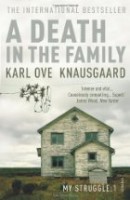
Karl Ove Knausgaard, A Death in the Family (My Struggle: 1) (2009, translation by Don Bartlett 2012, Vintage 2013)

0099555166When we googled “My Struggle” at the Book Group last month, the top result was Hitler’s Mein Kampf. We were mildly amused by what we took to be a google oddity. But the Norwegian title of Karl Ove Knausgaard’s six-volume novel is Min Kamp – a similarity that could hardly be accidental. At the Sydney Writers’ Festival, the man himself told us that the sixth and final volume is a 400 page essay about Adolf Hitler. One has to wonder: if A Death in the Family is point A, how does he get from point A to point Way Off the Chart?

But since only two of the books are available in English so far, that’s a question for later.

Before the meeting: I finished reading A Death in the Family a couple of weeks ago, just after hearing Karl Ove speak at the SWF. I would have moved straight on to the second volume, A Man in Love, if I hadn’t had other more pressing demands on my imaginative faculties. The appeal, for me, is to do with shoe leather.

In the movie business shoe leather is the term for precious screen time wasted on actors walking from place to place. Knausgaard has elevated its written equivalent to a high art. It seems no one ever just gets in a car and drives somewhere: they always turn on the indicator, check the rear-vision mirror and pull out into the traffic, then follow a series of carefully named streets until they arrive at their destination. When a character cleans a book case, it goes like this:

I sprayed the glass door of the bookcase, crumpled up the newspaper and rubbed it over the runny liquid a few times until the glass was dry and shiny. Looked around for more to do while I had the spray in my hand, but saw nothing apart from the windows, which I had determined to save until later. Instead, I went on with the bookcase, tidied everything, starting with its contents.

That man be unremarkable, but so much of the book is taken up with similar attention to detail that how a reader responds to it will have a huge influence on their response to the book as a whole. Early on, there’s a passage about growing up that helps explain what’s happening, as I understand it:

As your perspective of the world increases not only is the pain it inflicts on you less but also its meaning. Understanding the world requires you to keep a certain distance from it. Things that are too small to see with the naked eye, such as molecules and atoms, we magnify. Things that are too large, such as cloud formations, river deltas, constellations, we reduce. At length we bring it within the scope of our senses and we stabilise it with fixer. When it has been fixed we call it knowledge. Throughout our childhood and teenage years we strive to attain the correct distance from objects and phenomena. We read, we learn, we experience, we make adjustments. Then one day we reach the point where all the necessary distances have been set, all the necessary systems have been put in place. That is when time begins to pick up speed. It no longer meets any obstacles, everything is set, time races through our lives, the days pass by in a flash and before we know what is happening we are forty, fifty, sixty.

I read the narrative’s wealth of undifferentiated detail as an attempt to reverse that process: to give priority to specific observations and experiences over any abstraction, to go for immediately apprehended ‘meaning’ over calm, generalisable ‘knowledge’, to avoid our habitual exclusion of some things from consideration. As well as the tiny acts, the brand names, the hyper-specifics, we are given the narrator’s play of mind, apparently unfiltered – memories and meditations that are jogged by the brand names on cleaning products, say, his adolescent worries about the shape of his penis when erect, or  the strange feeling he had as a boy about the gravel on the floor of the family garage. And, because nothing is being left out, he tells us things that are just not talked about: how he shakes his little girl when she irritates him, the extraordinarily squalid circumstances of his father’s death, his grandmother’s incontinence. These last things don’t feel deliberately shocking – more like the inevitable result of a  decision made at the beginning to put everything in.

Karl Ove has said that the overwhelming emotion he had while writing the novel was shame. He couldn’t believe anyone would read it, and now he is embarrassed to realise that roughly half a million people know all about his failures as a parent and his sexual inadequacies (those are yet to come, perhaps in the second book).

After the meeting:  This book provoked as much sustained conversation as any we’ve discussed in the group. One man who spent his childhood in Britain was most deeply struck by the way the weather was evoked: the grimness of the winter and the way spring came as a great relief. This struck a chord with others who had lived in northern Europe for any length of time. Another man, following his daughter’s lead, had been watching a lot of Simon Amstell‘s recent melancholy stand-up and found a striking resonance with this book. Another man was struck by the book’s failure to make him empathise with the narrator – at one stage he thought it might all be total fiction, that Knausgaard the author might be no more Karl Ove the character than Mark Haddon is Christopher in The Curious Incident of the Dog in the Night-time – and in that case it’s a brilliant creation. I don’t know that anyone liked it as much as I did.

As always, the conversation ranged widely, from the sexist bile being showered on Julia Gillard to details of our lives, all to the tune of excellent pasta, grilled zucchini and fennel and tomato salad.

Noel Beddoe’s Yalda Crossing

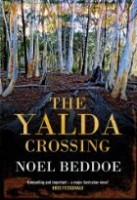
Noel Beddoe, The Yalda Crossing (UQP 2012)

0702249394 As Noel Beddoe says in an Author’s Note, this book is fiction, but adheres closely to the history of white settlement near what is now the township of Narrandera, including the Second Wiradjuri War and the massacre on Murdering Island. That’s the same massacre that lies in the background of our short film Ngurrumbang and Andy Kissane’s poem ‘The Station Owner’s Daughter, Narrandera’ that inspired us. It’s my great good fortune that the book wasn’t published until the screenplay was complete and pre-production was well under way – the first I heard of it was a comment from Jim Kable on my blog entry inviting people to donate via pozible. If I’d known of the book any sooner,  I would probably have been scared right off.

It’s a formidable achievement. Told from the point of view of Young James Beckett, as a teenager in the 1830s and as an old man in Sydney decades later, it is deeply embedded in its historical moments, and has a powerful sense of place. We care about the characters and come to appreciate their secrets and mysteries, not all of which are revealed, and some not until the last pages. The unfolding narrative gives us neither the ‘dun-dreary naturalism’ that Patrick White hated in Australian fiction, nor the black armband breastbeating that John w Howard claimed to discern and despise among Australian literati, nor again a ripping yarn of the frontier (though unless I’m very confused, Young James mentions reading some James Fenimore Cooper, whose novels must have been hot off the press). The tensions of the colonial society are there – English vs Irish, convicts vs free,  authority vs opportunism, women as a tiny, vulnerable minority – but they are embodied in recognisable individuals, facing particular dilemmas. I started this blog entry with the massacre, and most of the publicity for the book has centred around it, but the social, economic and moral world of the settlers is thoroughly fleshed out in its own right well before the prospect of massacre appears on the horizon.

Unlike other fictional treatments of atrocities against Aboriginal people, The Yalda Crossing lays the ground so that we understand how good people can deliberately commit abominable acts, not without reluctance, revulsion and remorse, but with a terrible sense of necessity. The good people who set the tone of the community aren’t drawn into the vortex of violence created by people less grammatically correct than they: when push comes to shove, they are the ones who orchestrate the terrible acts. Launching the book at the Sydney Institute last July, Linda Burney said that as a Wiradjuri woman, descendant of the victims, she had to skip the chapter where the massacre happens and come back to it later. Noel Beddoe, descendant of the perpetrators, doesn’t blink, and invites us, his semblables, to face our heritage with similarly unflinching gaze.

Linda Burney quoted a moment just before the massacre when a white man refuses to take part because he would lose his soul, which is more important to him than gaining the land. (Incidentally, it’s a gauge of the strength of Noel Beddoe’s writing that only when I typed it like that did I recognise the Biblical reference there.) For me, one of the devastatingly true things in the book is how that man, in spite of his genuine refusal to take part, is nonetheless in the end completely implicated.

Every bit as good, I think as Thea Astley’s A Kindness Cup or Kate Grenville’s The Secret River. (Links are to my blog entries, though the one on Kate Grenville’s book is very brief.)