Tag Archives: NSWPLA

Dorothy Hewett’s Selected Poems

Selected Poems of Dorothy Hewett, edited and introduced by Kate Lilley (UWA Press 2010)

When she launched this book at Gleebooks Gail Jones warned against becoming so fascinated by the iconic figure of Dorothy herself that we forget to actually read her poetry. Good advice, no doubt, but I’m probably no different from anyone who knew Dorothy at all in being completely incapable of reading these poems without feeling that I’m in the presence, not so much an icon as a … well, a presence.

Dorothy was a frequent visitor to Currency Press, where I worked in the 1970s. She commanded attention, was never dull, and was never stuck for words. Her first appearance in my time there was by way of a letter written to her good friend our editor in chief Philip Parsons, which he read aloud to the staff (all three of us). She was approaching 50, and wrote that she wanted to celebrate her birthday on a beach in Bali, laid out in a coffin surrounded by black candles. We were amused. When she saw the Currency edition of her play The Chapel Perilous (on the front cover a glamorous photo of  Dorothy when young, on the back a pensive Dorothy in her late 40s), she exclaimed,  ‘Time’s cruel!’ I really don’t need to say this, but Dorothy approaching 50 didn’t exactly lack glamour. We were amused again. In 1976 we published her much earlier play, This Old Man Comes Rolling Home, and I marked up the typescript for the printer. When you mark up a text you take it one word at a time and if it’s a play it tends to perform itself in your head. As I neared the end of my pencil-wielding way through This Old Man, tears were streaming down my cheeks. Dorothy walked into the office soon after I’d finished it, and I told her, with feeling, how much I loved the play. ‘Ah well,’ she said, rolling her eyes, ‘you work away for ten years and they still say your first thing was the best.’ Once, impertinent pup that I was, I told her she had misused a word in a piece published in Overland (writing bisexual but meaning, I said, androgynous). She didn’t slap me down: her eyes lit up, and we had an animated conversation. The last time I saw her was at the NSW Premier’s Literary Awards dinner in 2000, where she received the Special Award, and though she was ill and walked with difficulty, she was as commanding and glamorous a presence as ever, her hair still wild.

If you said that none of those random memories had anything to do with the poetry I couldn’t say confidently that you were wrong.  But it would be odd to quarantine Dorothy’s poetry from her plays and prose, or from what we know of her life. The subject matter of her plays and autobiographical writing is revisited here: her childhood in the Western Australian wheat belt, her sexual adventures and ordeals, her history with the Communist Party. As Kate Lilley writes in her introduction, Dorothy was a ‘magnificently unabashed poet of female narcissism’. (She’s also a magnificently unabashed poet of Australian Communism and disillusion with Communism.) In the poems, even more explicitly than in the plays, she puts herself on the … I was going to say ‘on the chopping block’, and I think I’ll stick with that. If this is narcissism, it’s a ruthless variety; if sometimes her laments over her suffering as a woman sound like self pity, there’s a pitilessness in the way she holds that emotion up to the light. Nothing is quarantined in these poems, and when I read them, I hear Dorothy’s voice.

I think I’m blathering.

Excerpts from the autobiographical  ‘The Alice Poems’ take up about a third of the book, and fill me with chagrin that the book Alice in Wormland is out of print. But the quieter poems of the last 20 pages, which look squarely at old age, the effects of cancer, and the approach of death, are the real treasure. From ‘The Last Peninsula’:

death in his blue cowl
takes one reluctant step away
while the suffering flesh
cut sewn and sealed
lies still in its narrow bed
the spirit looks down and is healed
Healed for what? says the voice
More of the same?
And the currawong sings Rejoice
I have called your name
.

I find the last poem in the book, ‘What I Do Now’,  intensely moving. After a quote from Frank O’Hara (‘I always wanted my life / to have some kind of meaning’), the poem walks us through the speaker’s day – lying in bed reading, getting up at 6 pm, watching television until midnight, and staggering back to bed. Then, with what might be read as desolation, but which to me sounds like a reprise in a minor key of Dorothy’s grimly stoic, eye-rolling response to the Chapel Perilous photos or my response to her early play:

–––––––––the wind howls
ripping my poems to shreds
the paper lantern whirls

I listen to the semis
changing gear
to tackle the 40 Bends
in the tapestry chair
the cat snores loudly
will I live to a great old age?
there are lots of mad old women
in these mountains
shut up in their houses dying.

Sonnets according to ‘m’

Jordie Albiston,  The sonnet according to ‘m’ (John Leonard Press 2009)

The M in these poems is not from Fritz Lang (‘When out of grace in Peter Lorre’s eyes’?) or the James Bond franchise (‘If gin and vermouth stirred not shaken are’?), but is, as the back cover blurb tells us in a manner ominously reminiscent of the  labels in contemporary art exhibitions, ’emblematic of recurrence and precipitousness’. It’s a commonplace that poets nowadays don’t generally have a huge audience. The most recent variation I’ve heard was from David Brooks, at a Sydney Writers Festival workshop: the world is desperate for poetry but poets aren’t writing the poetry that the world wants. It’s almost as if, he said (but blame me if this is crudely expressed, I took skimpy notes), you have to choose between writing for poets or writing for the public. As a reader, I definitely identify as part of the public, and Jordie Albiston’s clever play with the sonnet form in this book tends to intimidate and alienate me rather more than it delights. Yet, there is delight here, and a little sharpening of attention brought rewards.

There are at least three Ms: ‘me’, Marsi  and em. Marsi, the acknowledgements page informs us,  was the poet’s maternal grandmother, whose diary, kept for a month in 1959, provides the basis for 12 of the book’s 54 sonnets.  Em is Emily Skinner, Jordie’s paternal great-great-grandmother, whose memoir lies behind another four of them. I found the use of these sources fascinating. At the Sydney Writers’ Festival, Adam Aitken read a poem based on his father’s letters, so perhaps this kind of familial translation is a common practice. It’s certainly an interesting one, and here the Marsi sonnets in particular provide a kind of rootedness. They tend to observe metrical and rhyming conventions, not strictly, but more so than the ‘me’ poems, and the quiet intelligence they bring to the concerns of a 50s housewife  demonstrate Albiston’s range marvellously:

well we have waited twelve months to see
what the nuns would do with the old wood
house 00 a noise at last from the sainthood:
the roof is coming off! 00 now of course we

are curious to know What Next!

and so on. Compare this to the ebullient play with form in ‘mandatory’ (all but the ’em’ poems have titles beginning with  m):

well you gotta be good 00 but
you gotta be bad 00 you gotta
be both glad & sad 00 yep you
gotta be human it says in the
book but look! 00 there’s that
creature inside! 00 you gotta be
nothing you gotta be all 00 you
gotta be both great and small

Would you have picked that as the octet of a sonnet? There’s a huge variety here. There’s quite a bit that seems to be just for fun (as in ‘methinx (i)’, ‘2moro 2moro & 2moro / goes slo frm day 2 day’). Katherine Mansfield scores a sonnet. There are a number entitled ‘mural’ that celebrate and mourn the passing of verbal graffiti. Some seem to embody a very contemporary feeling of derangement. And so on.

I ended up being completely won over.

NSWPLA dinner

There’s a quote from James Tiptree Jr I’ve been wanting to sneak into my blog for some time. When an editor asked her to write an afterword to her short story, ‘The Milk of Paradise’ she wrote that some authors are ‘walkie-talkie writers … who are named Mailer and Wolfe when they are good’ and went on:

But the rest of us, poor carnivores whose innards meagrely condense into speech. Only at intervals when the moon, perhaps, opens our throats do we clamber up on the rocks and emit our peculiar streams of sound to the sky. Good, bad, we do not know. When it is over we are finished, our glands have changed. Push microphones at us and you get only grumbles about the prevalence of fleas and the scarcity of rabbits.1

That, in short, is why I’ve become a dedicated paying guest at the annual  NSW Premier’s Literary Awards Dinner. I love to see those poor carnivores clamber up onto the podium to be honoured, even the ones who can’t manage any more than ‘Thank you’.

I nearly didn’t go this year, fearing that the dreaded PowerPoint’s incursion, begun at the shortlist announcement, would continue. I was also trying to think like a grown-up about the expense, and then there was the Dîner des Refusés precipitated by the nul prize for a playscript. But here I am again, home from the Art Gallery, out of pocket but flush with the inside dope, even though the on-the-spot tweeters and newspapers (with self-promoting or surprise-upset hooks) have beaten me to publication.

It turned out, no surprise, to be a pleasant evening. The company was convivial, the setting brilliant, the food excellent. There was no PowerPoint as such, but sadly the dinner has become an Event, the creation of Events Organisers, with glossily impersonal results. There was a would-be witty typewriter centrepiece on each table. Two huge television screens told us who was talking to us at any given moment, threatening but thankfully not quite managing to distract us from the mere humans on the stage between them. And the pause between the announcement of each winner’s name and their arrival at the microphone – that is, the time it took them to reach the stage, be photographed kissing the Premier and cross to the mike – was now filled, not just with applause and a buzz of conversation, but with a blast of fanfare from the sound system. I hope someone whispers to the Organisers that this isn’t the Oscars, still less the Logies.

Auntie Sylvia Scott welcomed us to country. As last year, she told us she was an avid reader, and revealed that though Nathan Rees had promised her a pile of books, she never saw any. As she left the stage Carol Mills, Director General of Communities NSW and MC for the evening, promised her a pile this year. She was gracious enough not to look sceptical.

Richard Fidler gave the address. He was funny, and with enough meat to be satisfying, with quotes ranging from Neil Gaiman (about the joys of being a writer), by way of Stalin (writers are the ‘engineers of the soul’) to the unnamed Bush aide (‘probably Karl Rove’) who derided the ‘reality based community’. He advise women in quest of a man to look to their bookshelves – men don’t care so much about appearances, it’s the books that count: ‘Ladies, if we see a copy of a book by Deepak Chopra or Erich von Daniken, we’re out of there.’ He recommended The Moth podcast, and inveighed against Twitter as the ruination of literature – all those writers being witty in 140 characters instead of being at work: ‘Get back to your desks you Gen Y bastards!’ (At that point I saw my Baby Boomer friend misrule discreetly tweeting.)

On to the awards:

The UTS Glenda Adams Prize for new writing: Andrew Croome – Document Z
I started to read this a while back but couldn’t bear to read yet another book on the subject. Perhaps seduced by the sub-Oscaresque music that accompanied him to the mike, Andrew Croome gave a straightforward thank you speech, an example followed by most of the award recipients. In particular he acknowledged his debt to University creative writing courses. The book started out as a PhD – ‘But that doesn’t mean it’s boring.’

The Community Relations Commission Award: Abbas El Zein – Leave to Remain: A Memoir
A lovely book. He said, ‘I never thought I’d shake hands with the Premier and be paid for it,’ introducing another recurring motif of writers responding to Kristina Keneally’s physical presence.

The NSW Premier’s Prize for Literary Scholarship: Philip Mead – Networked Language: Culture and History in Australian Poetry
I hope to read this hefty volume some day. The very tall Philip Mead (nickname ‘Tiny’) commented that it was lovely to stand next to someone of normal height. The Premier leaned over to his mike and said it was lovely to stand next to someone who was taller than her. He went on to thank, among others, independent Australian publishers, who are like tussocks: ‘we do everything we can to destroy them and they keep coming back.’

The Play Award: Controversially not awarded

The Script Writing Award: shared by Jane Campion for Bright Star and Aviva Ziegler for Fairweather Man
Jane is abroad. In accepting the award for her, the film’s producer Jan Chapman threw us the pleasing tidbit that in the absence of any letters from Fanny Bryce to Keats, Jane looked for inspiration on her character to her own teenage daughter. Aviva spoke about the ways writing a documentary is of its nature so much more a collaboration than other forms of writing.

The Kenneth Slessor Prize for poetry: Jordie Albiston – The Sonnet According to ‘M’
I bought the last copy of this on my way home.

At this point in the evening, the main meal was served. I was the only one at my table vulgar enough to want to trade fish for meat. One of my fellow guests was gracious enough to do so. The steak and mushroom and mashed potato was delicious, though it didn’t look a bit like the way my mother used to do it. Then on with the show:

The Ethel Turner Prize for young people:Pamela Rushby – When the Hipchicks Went to War
Pamela Rushby wins the Me fail? I fly! award for the best acceptance speech. She may have been the only recipient who began with the formal ‘Distinguished guests’, but she recovered from that slightly distancing moment by telling us she had pitched the book to publishers as Apocalypse Now meets A Chorus Line. Apart from giving us some little known information about young women who went to the Vietnam War as entertainers, she thanked her family, ‘without whose support the book would have been finished in half the time’.

The Patricia Wrightson Prize for a children’s book: Allan Baillie – Krakatoa Lighthouse
Allan writes with remarkable precision, but he speaks with difficulty – so he can be difficult to follow. I thought he said that on this project his wife had to endure more than most writers’ wives because he’d been carrying on with an orang utan. I probably misheard, but he does have an unsettling sense of humour. He definitely did say that his wife climbed Son of Krakatoa with him.

The Douglas Stewart Prize for non-fiction: Paul McGeough – Kill Khalid: Mossad’s failed Hit … and the Rise of Hammas
‘Madame Premier, Ms Premier?’ ‘Kristine.’ He mainly thanked his editors, and said very little about the book.

The Christina Stead Prize for fiction: J.M. Coetzee – Summertime
Unsurprisingly JMC wasn’t there. Meredith Purnell (?) from Random House read a brief note: ‘Whether I deserve to hold my head up with the esteemed previous winners is something only time will tell.’ So Summertime!

The People’s Choice Award: Cate Kennedy – The World Beneath
‘I can’t believe my luck that all this has come about from just telling stories.’

Book of the Year: Paul McGeough – Kill Khalid
This time, without notes, he spoke about the vulnerability of writers in these late-capitalist times (my term), and daringly drew a parallel with the Taliban, a ragtag collection of warriors holding at bay the great technological firepower of the USA, the closest the evening came to ‘the prevalence of fleas and the scarcity of rabbits’.

The Special Award: The Macquarie PEN Anthology of Australian Literature
This may have been an inevitable award, but it was sad that we didn’t get to honour an ageing lion, who would have responded memorably.

I didn’t realise until this morning how many of the writers receiving awards were born and partly educated outside Australia: Abbas El Zein of course, but also Jane Campion, Aviva Ziegler (I’m guessing from her accent), Allan Baillie, Paul McGeough and J M Coetzee. That’s at least six out of eleven. Does this mean, as a friend of mine insists, that Australians can’t write? I don’t think so. Does it mean anything at all? I don’t know.

The main pleasure of the evening for me, and I suspect others, was catching up with friends. I was sitting with people I didn’t know well, and that was another pleasure, especially as the three people I could talk to most easily were judges who managed to be gloriously indiscreet about some of this year’s processes. It’s often said that literary awards are given to compromise candidates, books that are no one’s favourites but that no one objects to. It seems this was not the case with these awards. There were sharp divisions of opinion over a couple of them, and my impression is some of the uncontroversial decisions had their share of anguish.
——
1From the collection, Meet Me at Infinity, edited by Jeffrey D Smith, 2000, p 238

Jasper Jones at the Book Group

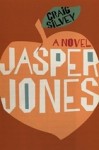
Craig Silvey, Jasper Jones (Allen & Unwin 2009)

The fourth paragraph of Jasper Jones begins:

This is the hottest summer I can remember and the thick heat seems to seep in and keep in my sleepout.

‘Keep in’? That’s awkward, I thought, and it chimes oddly with ‘seep in’ and ‘sleepout’. The paragraph continues:

It’s like the earth’s core in here. The only relief comes from the cooler air that creeps in between the slim slats of my single window. It’s near impossible to sleep …

Seep in, keep in, sleepout, creeps in and sleep, all in five lines: this is definitely odd, but – along with the heat, the relief and those slats, which are slim for no reason other than alliteration – it’s clearly deliberate.

Over the next pages, while the story had my attention from the word go – thirteen year old Charlie Bucktin, the narrator, is woken in the night by the town’s bad boy Jasper Jones and led to a secret place in the bush where he’s faced with a terrible spectacle and an equally terrible dilemma – I had a weather eye out to see if anything would come of this stylistic oddity. Nothing did, in the sense that if you didn’t notice it you weren’t missing a vital clue to the book’s meaning. But Charlie is in love with language, and bursts of assonance and alliteration for their own sake amount to something of a stylistic signature. I did a quick scan before returning the book to the library, and noted, from many examples, ‘a bundle of lonely bones tied to a stone’ (page 123), ‘Pored over it, taking little portions’ (page 128), and this, in one of Charlie’s reflective moments:

Sorry means you feel the pulse of other people’s pain, as well as your own, and saying it means you take a share of it. And so it binds us together, makes us as trodden and sodden as one another. Sorry is a lot of things. It’s a hole refilled. A debt repaid. Sorry is the wake of misdeed. It’s the crippling ripple of consequence. Sorry is sadness, just as knowing is sadness. Sorry is sometimes self-pity. But sorry, really, is not about you. It’s theirs to take or leave.

Like the frequent references to Charlie’s reading – To Kill a Mockingbird, Batman, Breakfast at Tiffany’s (which he hasn’t read, but Eiza, the love interest, has, and seen the film), Huckleberry Finn, The Wizard of Oz – this fascination with words is important in establishing Charlie’s character and the tone of the book. It’s been described as an Australian To Kill a Mocking Bird, but I doubt if Harper Lee’s book was anything like as intertextual as this. The description is OK as a sales pitch but I’m surprised that reviewers have echoed it.

Anyhow, it’s a terrific, fast moving, undemanding read: a coming-of-age romance cum mystery cum homage to Mark Twain cum historical drama (the Vietnam War is on, and the Beaumont children are mentioned towards the end) cum tale of pre-adolescent friendship (with a substantial nod towards the movie Stand By Me). There’s a beautiful description of a cricket match in which Charlie’s best friend, a very short Vietnamese boy (‘Jeffrey Lu on debut’) makes a splash, in a way that reminded me of Ruth Starke’s brilliant book for younger readers, Nips XI.

One thing I don’t understand is what makes the book ‘mainstream’ rather than ‘young adult’. There’s some pretty intense swearing, I guess, but sex is treated with great tact; even when sexual abuse is described explicitly in a letter that’s crucial to the plot, we don’t get to read the letter. The story is told from a thirteen-year-old’s point of view, and there’s no hint that he’s in any way an unreliable narrator: we don’t know any more than he does and we’re not invited to make judgments that differ from his – we learn about the world with him. In fact, Charlie’s angry mother is treated with less adult-sympathy than similar mothers in many a YA title. I’ve heard that the classification was a policy decision on the part of the publishers – that they were invited to submit the book for the Children’s Book Council Awards, but declined. The mainstream classification seems to have paid off in adult readership and award nominations – always assuming that a Miles Franklin shortlisting is more prestigious than one from the Children’s Book Council, and that being on the New South Wales Premier’s Literary Awards shortlist alongside David Malouf’s Ransom and Coetzee’s Summertime is more dignified than being named in the same breath as Justine Larbalestier’s Liar (not a view I share: I’m looking forward to Justine’s book as keenly as I am to David’s, and who in their right mind would want to compete for a prize against Malouf and Coetzee?). I hope this taxonomical decision hasn’t discouraged the young people who are the book’s natural readership. [Since writing that I’ve seen an online  trailer that is clearly aimed at teenagers, so it looks as if the pubisher is having two bob each way, and a good thing too.]

I wrote that much a number of weeks ago. The Book Group met last night.

With one exception, we were lukewarm. No one actively hated the book, but different people saw different things as gaping flaws. One man said he found Charlie’s decision at the very start to help conceal a crime highly implausible, and intolerably hackneyed – from then on he read with very little pleasure. Another was irritated by the banter between Charlie and Geoffrey (though one man said he thought that was the best thing in the book). Others found the narrative voice, and the characters’, wildly inconsistent – perhaps especially in beautifully written passages such as the aria on ‘sorry’ I quoted from above. I think we were unanimous in finding the characters’ emotional responses to crises (a grisly death, the acrimonious departure of a parent, the discovery of a grandparent) lamentably one-dimensional. I’m sorry to say that as we talked the book’s charms diminished. I proposed a reading that transcended these concerns for consistency, verisimilitude and psychological realism. Perhaps we ought to see the book as akin to the startlingly discontinuous novelitas of César Aira that I’ve just been reading about in the current Heat. But that didn’t wash. Its one defender said it reminded him vividly of things he had felt when he was an adolescent, and he wasn’t howled down.

Sorry, Craig.

NSWPLA shortlist

Last Tuesday the Children’s Book Council of Australia announced the short list for their Books of the Year Awards. I’ve only read one of the titles (Ursula Dubosarsky and Andrew Joyner’s lovely The Terrible Plop), but I applauded a couple of inclusions in their Notables Books list that didn’t get shortlisted (mainly Cassandra Golds’s The Museum of Mary Child and the latest of Jackie French and Peter Sheehan’s Australian history titles, Weevils, War and Wallabies: 1920–1945).

Today I turned up at the Mint in Macquarie Street for the announcement of the short list for the NSW Premier’s Literary Awards, hoping I’d have read more of the books and be able to applaud more of the nominees. I was also looking forward to clapping eyes on our newish premier in person. I did see the premier, but it turns out I haven’t read many of the books. It was a pleasant event all the same.

The short lists are already up on the PLA website, and the announcement was being tweeted by my friend misrule and the person next to her (who is paid to tweet), so I’m not exactly breaking news here.

Kristina Keneally was taller than I expected, and not so different in person from her on-screen appearance: poised, slightly awkward, with a sweet smile and a lively manner. She announced the short list with a PowerPoint  presentation, which I’ve just realised is a way of making a personal appearance approximate to television. There was none of Frank Sartor’s teasing of authors for being too shy to put their hands up – that may have been embarrassing, even painful, but it was personal. None of Nathan Rees fanboy enthusiasm about ‘talking to David [Malouf]’ or phoning Christos Tsiolkas. No devil-may-care quoting from Stalin, in the Carr tradition. CK made jokes (‘bribing the judges is not allowed’) and personal comments  about not being the most literate person in the Keneally family (her uncle by marriage is Tom Keneally), but it was all from the script. It was a good script, mind you, and included an honorable mention of Patricia Wrightson. The one moment of clear humanity was when Kristina stumbled over Justine Larbalestier’s surname, and apologised to Justine (who I believe is in New York just now). We all sat in the Mint theatrette and applauded quietly at the end – the shortlisted authors didn’t get to stand and be recognised, there was no partisan applause for individuals.

The food was good, and the mood was light and friendly.

The short list itself?

I haven’t read any of the books on the Patricia Wrightson (for children’s literature), Ethel Turner (for young people’s literature), Douglas Stewart (for non-fiction), Glenda Adams (for new writing), Kenneth Slessor (for poetry) or Literary Scholarship (no famous name yet attached) prizes, though there are books on all those lists I’d love to read, and some are already on my shelves waiting for their time to come.

The Script Writing Award list is stunning. I’ve seen four of the six. Misrule took a break from tweeting to tell me Tangle is on Foxtel and that I’d hate it. I missed Fairweather Man, but it sounds great. I haven’t blogged about East West 101, but I love it. I’ve added links to my offhand blogged remarks on the others:

Jane Campion, Bright Star
Kristen Dunphy and Michael Miller, East West 101: Episode 13
Adam Elliot, Mary and Max
Fiona Seres, Tangle: Episode 1, Yellow Amendments
Aviva Ziegler and Veronica Fury, Fairweather Man
Warwick Thornton, Samson and Delilah (also here)

Of the two works listed for the Community Relations Commission Award, I’ve read and loved the first, and look longingly at the second:

Dr Abbas El Zein – Leave to Remain: A Memoir
Dr Tim Soutphommasane – Reclaiming Patriotism: Nation-Building for Australian Progressives

I’d done OK on the Christina Stead Prize too, with three books read, two on the to-be-read list and strong opinions on all five:

J.M. Coetzee, Summertime
Richard Flanagan, Wanting
Cate Kennedy, The World Beneath
Steven Lang, 88 Lines about 44 Women
David Malouf, Ransom
Craig Silvey, Jasper Jones

Now I’m wondering if I can manage to read Cate Kennedy’s, David Malouf’s and Steven Lang’s books in time to cast a vote in the People’s Choice Award.

MCMLXN

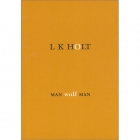
L K Holt, man wolf man (John Leonard Press 2007)

551c

man wolf man won the Kenneth Slessor Award this year. Whatever may be wrong with literary awards (promoting the view that art is a competition, for example), they do extend some readers’ range, mine included. How would I have picked this up if it hadn’t been singled out by the judging panel?  I’m glad I did pick it up.

Luke Davies is quoted on the publisher’s website as saying, ‘Holt’s is one of those voices that blast from the sky now and again, like a lightning bolt.’ To which I reply, ‘Fair enough.’ The writing in this book is sharp and playful and versatile and makes wonderful music. There are two long pieces, series of long sonnets (that is, sonnets with 18 lines – I don’t know if this is something L K Holt invented). One of them, ‘Unfinished Confession’,  starts out with almost A-D-Hopish gravitas, talking about an ancient pioneer of anatomical knowledge, then in the last lines of the first sonnet lurches into crude, impatient vernacular and reveals its totally contemporary subject, still serious, still – like much of A D Hope – rich in scientific reference and allusions to works of art, and preoccupied with sex, but very much its own thing. (I’m trying not to be spoilerish, and also keep my PG rating.) In the book as a whole, there are many delights in the patterning of language, many memorable lines.

The very first poem, ‘Man is Wolf to Man’, begins with a grim commonplace:

Until the consummation of things
man, wolf, man.

and goes on, elegantly, with a catalogue of horrors, ending:

Sometimes the enemy knocks before
entering. A baby is hidden in the drawer.

It seems to be saying that humans, or perhaps just men, are incorrigibly vicious to each other and that the best we can hope for is sometimes to protect something precious. I find this view of things repugnant, its pessimism in some way too easy (not the attribution of lupine viciousness, but the notion that it will be with us forever, that it cannot be effectively resisted). It’s a gauge of how good the book is that I intend to keep it, and reread it, and will seek out more of L K Holt’s work.

(An unsatisfactory explanation of the title of this post can be found in a post on my superseded blog, Family Life.)

NSWPLA Dinner [2009]

[Retrieved from 18 May 2009]

Tonight writers, translators, illustrators, publishers, agents and fans put on their glad rags and turned up for a glittering evening in the Art Gallery. The occasion was the annual NSW Premier’s Literary Awards dinner. This year’s dinner cost $15 more than last year’s.

In previous years the dinner has been organised by staff of the Ministry of Arts. This year it was in the hands of the Department of Arts, Sport and Recreation. The transition was seamless, though there was a slightly awkward moment when the Department’s Director General, who was our MC, said we were doing very well for an arts event and only running half an hour late. There was no hiss of indrawn breath, but I did think it indicated she was much more familiar with sporting events than with arty ones, where my experience has been there is an obsession with punctuality. And at times, as she urged us to resume our seats after a break, her tone was reminiscent of what one would hear over the loudspeaker at, say, a netball tournament. But these were amusing foibles that in no way took away from the pleasure of the evening.

Nathan Rees, more famous for his stint as a garbo and for having inherited a train wreck of a government than for his Eng Lit Hons degree and likeability, gave the impression that he was much happier here than in the bearpit of politics. In his welcome (which followed Aunty Sylvia Scott’s Welcome to Country, in which she said, ‘Your books let me travel’), he spoke of his own passion for books, and told us that some left him cold, surely a mark of a genuine book lover. And he said, interestingly, ‘The examined life is only ever the turn of a page away.’

This was the thirtieth year of the awards, and there was slightly more reminiscence than usual. Neville Wran, the first Premier of the Literary Awards, was there and gave a brief talk on their genesis. Success has many parents, he reminded us, but failure is always an orphan. Of the many people who have claimed m/paternity of these awards, he assured us in his ruined voice, the one who could truly claim parenthood was his wife Jill, who insisted that Sydney should have a writers’ festival distinguished by literary awards. He mentioned the legendary Night of the Bread Rolls in 1985 when the guest speaker Morris West was pelted with bakery products. I’d heard that it was because he droned on. One of my dinner companions was there on that night, and he assured us that it was because the literary types were envious of Morris West’s best-seller status.

Marieke Hardy, of Reasons You Will Hate Me, gave the Address, with a tattoo on each shoulder and a large red flower behind one ear. She spoke of Twitter and quoted Stephen Fry to good effect. In the past, I’ve referred to these dinners as the Oscars of the introverted. Marieke went several steps better and, referring to booklovers out and proud, called it ‘our Mardi Gras’.

As in past years, it’s my pleasure to list the winners with random observations:

The UTS Prize for new writing: Nam Le, The Boat
There’s no short list for this prize, so the announcement was a bit of a surprise. It’s a wonderful book. The award was accepted by Nam Le’s publisher, who read out a short speech Nam had sent him from Italy.

The Gleebooks Prize for an outstanding book of critical writing: David Love, Unfinished Business: Paul Keating’s interrupted revolution
Nathan ‘s script described this as an accessible account of important economic matters. I’m afraid I didn’t understand a word of the brief acceptance speech after the initial ‘This is one for the true believers!’

The Community Relations Commission Award : Eric Richards, Destination Australia: migration to Australia since 1901
Eric Richards spoke of how Australia’s immigration program has been an outstanding success, yet has been and is still a cause of widespread anxiety. He was expecting the book to provoke ‘historical warfare’, but so far there has been none.

The Translation Prize and PEN Trophy: David Colmer
He seems to be a nice man – he translates from Dutch.

The Play Award: Daniel Keene, The Serpent’s Teeth
I saw the STC production of these plays, and was less than impressed by the production, though the plays as written seemed to be marvellous. I approve.

The Script Writing Award: Louis Nowra and Rachel Perkins and Beck Cole, First Australians
In announcing this prize the Premier said, quite rightly, that it was hard to go past this show, but then he went and spoiled the moment by feminising Mr Nowra’s first name. When Rachel Perkins took the mike she pointed out the error. Our Nathan looked suitably abashed, and Louis clearly couldn’t help himself: ‘How long do you plan to stay in government?’ he asked, trying to make it sound good-natured. Ow!

The Kenneth Slessor Prize for a book of poems or for a single poem of substantial length published in book form: LK Holt, Man Wolf Man
Possibly intimidated by the compere’s reminders of the importance of being brief, LK Holt simply thanked her publisher and took her prize. She did stand at the microphone long enough to enable those of us close enough to read the enigmatic tattoo on her left shoulder: ‘MCMLXN’.

The Ethel Turner Prize for a work written for young people of secondary school level: Michelle Cooper, A Brief History of Montmaray
At this stage I began to feel very under-read.

The Patricia Wrightson Prize for a work for children up to secondary school level: Ursula Dubosarsky & Tohby Riddle, The Word Spy
And then I started to feel like an insider again. Tohby and Ursula have both worked at The School Magazine. I read this book in its first incarnations as a series of columns in the magazine, and I was sitting at the same table as both of them – along with two other generations of Ursula’s family and Tohby’s wife Sally. This is the fifth gong Ursula has collected from NSW Premiers. Though it’s no longer a gong.: to mark the 30th anniversary, a new trophy has been created, by Dinosaur Designs: a hefty, transparent, book-shaped objet.

The Douglas Stewart Prize for a prose work other than a work of fiction: Chloe Hooper, The Tall Man: Death and Life on Palm Island
I’ve read this too, and think it deserves any prize anyone chooses to give it.

The Christina Stead Prize for a book of fiction: Joan London,The Good Parents
I haven’t read this, but it’s been very well reviewed in my house. Joan London gave a sweet speech, acknowledging , among other things, her debt to her children.

The People’s Choice Award: Steve Toltz, A Fraction of the Whole
I hadn’t voted, because I’d only read two of the books, and this wasn’t one of the ones I’d read. The same man who had accepted Nam Le’s award accepted this one, but Steve Toltz, who couldn’t be there, hadn’t tweeted him anything to say, so he just looked pleased.

Book of the Year: Nam Le, The Boat
Then the poor guy had to get up for the third time, and gave us the second half of Nam Le’s emailed acceptance speech, in which he thanked his readers, ‘both professional and normal’. As one who used to be a professional reader who is striving for normality, I loved this.

The Special Award: Katharine Brisbane
Katharine was my first employer, when she was Managing Editor at Currency Press, and I couldn’t be more pleased at her receiving this recognition. She adlibbed an elegant speech about the importance of recognising achievement in the arts. She has received a number of awards in her time, she said, but this is the first one to come with money attached. She closed by saying that she too had been there in 1985. ‘We pelted Morris West with bread rolls because he warned us that we had to be prepared for bad things. The Baader Meinhofs were in the news, and he was warning us against terrorism. We thought he was ridiculous, but he was right.’

And then it was all over bar the networking …

… and the journey home. As I was walking back towards the city from the Art Gallery, I drew alongside a rough looking man going in the same direction. He said hello and asked how the evening had gone. ‘We’re homeless, you see, we sleep just beside the porch there.’ We chatted for a couple of minutes. He told me who had won the People’s Choice at the Archibald. I tried to tell him about the Literary Awards, but I think he still thought I’d been at something to do with paintings. As we parted, he said, in an eerie echo of Nathan Rees’s comment about the examined life: ‘People don’t realise it, but you’re always just one step away from the gutter,’ and we wished each other good night and good luck.

NSW Premier’s Literary Awards Dinner [2007]

The Sydney Writers Festival is under way. I kicked off my personal festival yesterday with a workshop led by Patti Miller. The workshop was billed as ‘Memoir – Random Provocations’, which anyone who had read Patti’s book would have recognised as incorporating the title of her chapter on the personal essay. The rest of us signed on for what we thought was three hours looking at approaches to memoir. Heigh ho! It was an excellent three hours regardless, and probably useful. Then last night I went to a screening of Ten Canoes preceded by a conversation between Julianne Schultz and Rolf de Heer, for which the microphones were turned up far too loud for my comfort (I really must post about my tinnitus and booming ears some time). The conversation was interesting, if a little gossipy, and the film was even more wonderful the second time around.

This evening, though, was the real start of my festival. The great court of the Art Gallery of New South Wales was overrun once more by literary types, some who’ve had their likenesses on the walls, but mostly humble key-tappers and pen-wielders. I was at a table with, among others, my friend Madam Misrule, children’s literature activist Bernard Cohen, academic John Stephens, editor-writer-politician-parent Peter Coleman and a charming woman who lives in my street and is often walking her dog when I am walking mine – this was the first time we’ve exchanged names and discovered we have friends and interests in common. The meal was excellent, though I didn’t see anything that would have thrilled a vegetarian. There’s something wonderful about a conga line of waiters weaving between sculptures and tables with plates of beautifully arranged meat and what looked like a dainty caponata.

But on to the business of the evening. Geoffrey Atherden’s address and the award citations are, or soon will be, up on the Ministry for the Arts web site [links all dead in 2020]. I recently bought a microphone for my iPod, and took it for a trial run tonight, so I can give you verbatim bits of the acceptance speeches. But first, I can tell you, nerdishly perhaps, some of the differences between Geoffrey Atherden’s excellent speech as written and as spoken. He cut out about a third of it. In fact he cut out the parts where he argued his case against User Generated Content: someone, talking to me recently about the User Generated Content business model, said that mindless consumerism is being replaced by mindless producerism, and Geoffrey makes a similar argument. He also left out interesting reflections on the Free Trade Agreement, and on the argument that ‘the exciting new multi media, multi platform, new age of digital technology’ will increase the demand for good writing. Presumably these omissions were in order to save time. More interesting than the omissions was an insertion right at the end. Where the written speech, having lamented the current lack of opportunity for young writers in Australia, ends by inviting us to imagine ‘if we had an environment of artistic and cultural activity here that was so stimulating that all those talented young Australians would want to come back,’ and says, with something approaching a non sequitur:

You see, I’m only pretending to be gloomy. Deep down, I’m still hanging on to a last, thin shred of optimism.

The address as spoken ended like this:

… all those young Australians would come flooding back. I seem to remember it happened once before. I seem to remember it happened just after a federal election. Indeed, I’m only pretending to be gloomy.

Gough Whitlam, to whose election in 1972 he was of course referring, was in the room. On the tape I hear myself saying, ‘Stay gloomy, Geoffrey, stay gloomy. It’s not going to happen.’ I hope he’s a better prophet than I am. Given the company I was keeping, I was a little embarrassed when the premier later seized on Geoffrey’s remarks to be fairly crudely party political.

One other nice moment to do with the opening address. As a warm-up remark, Geoffrey said that Maggie Beare in Mother and Son was not based on his mother, and Geoff Morel’s political wheeler-dealer in Grass Roots was not based on Frank Sartor, Minister for the Arts and presenter of all but the final award. In thanking Geoffrey for his address, Frank said, in a welcome departure from his generally ill-at-ease manner, ‘You may not have known this, but Geoff Morel followed me around for two days before he started filming Grass Roots.’

I can’t offer an opinion on any of the awards, because I’ve read so few of the works on the shortlist, but I can tell you a little of what happened.

The first award, the NSW Premier’s Translation Prize and PEN Medallion, went to John Nieuwenhuizen, who has translated from Dutch and Flemish. ‘I’m actually invisible,’ he said. ‘At least that’s what a review of one of my books said, and the judges for this prize agreed. This is of course a huge compliment for a translator. But here I am.’ He also accepted the award as a validation of writing for children – many of the books he has translated have been for children, and this award counterbalances the times he has been asked when he was going to move on to ‘real’ books.

The UTS Award for New Writing was won by Tara June Winch for Swallow the Air. With lovely self deprecation, she said that she’d spent the week practising walking up and down in high heels instead of writing a speech. She made it to the dais and back without stumbling.

Gideon Haigh won the Gleebooks Prize for Critical writing for Asbestos House: the secret history of James Hardie Industries (Scribe). ‘Some books you want to write. Some books just have to be written. This was one of the latter. I couldn’t have turned it down and still considered myself a proper journalist.’

Community Relations Commission Award was won by Shaun Tan’s The Arrival (Hachette Livre Australia), a wordless graphic novel. A friend told me later that she’d nearly hit someone in the ladies’ who was mouthing off about how wrong it was to give a literary award to something that didn’t use words. Well, it’s a paradox I suppose, but it’s a marvellous book, and as Shaun said in his acceptance speech, it’s being read by people who don’t normally read graphic novels, or anything at all – older migrants, for whom the book was really written. I’d cheerfully predicted that this book would win three awards. It won two: it also won the Book of the Year Award. Ms Misrule leapt to her feet and cheered. ‘I love it when one of ours wins,’ she said, encapsulating the esprit de corps that prevails in the children’s literature mob at events like this.

The Scriptwriting Award went to Tony Ayres for the script of The Home Song Stories, a movie we haven’t seen yet. He explained that the story had started out as a memoir but turned into a film script because that’s what he knew how to do.

The Play Award was won by Tommy Murphy for Holding the Man. Impeccably dressed in suit and tie, he told of nervously reading his initial list of ideas for the play to his director: ‘This play might open on the moon. Perhaps the Grim Reaper will appear at some point. And when the character John gets sick he will become a puppet.’ He talked of the importance of collaboration. And he did a gracious thing, which you’ll understand better if you bear in mind that in the play the family of the dying John treat his lover Tim, devastatingly, as having no valid place at his bedside. Tommy, in contrast, thanked his family for teaching the seventh of eight children to embrace sharing, and said his family were represented in the hall by his boyfriend Dane. He went on with some high romance: ‘You can’t win a prize for a love story unless you love someone as deeply as I love Dane.’ He also paid tribute to Tim Conigrave, author of the memoir the play was based on: ‘Tim has taught me that writing is sharing too much. There’s no avoiding that, and I embrace it.’

The Patricia Wrightson Prize went to Narelle Oliver, a Queenslander, for Home (Omnibus), a picture book about peregrine falcons who built a nest high up in a building in Brisbane. She thanked, among many others, the falcons Freda and Frodo: ‘They are probably bedding down right now on their nest of stones upon which I did lie with my camera to capture their home a couple of years ago. I saw my city afresh, in a new and exciting way, through the eyes of falcons, and I hope to share that with children and adults in the book.’

The Ethel Turner Prize for young people’s literature was won by Ursula Dubosarsky’s The Red Shoe (Allen & Unwin). Ursula had had a dog accident in the morning, resulting in a broken wrist and her absence from the dinner. Her father, Peter Colemen, read her acceptance speech. ‘You may well ask what on earth does a six year old girl [the book’s heroine Matilda] make of something as weighty as the Petrov affair [A Soviet defection that made headlines in the 1950s]. What indeed do six year old children make of the current images of public fear – the Twin Towers, Saddam Hussein, global warming? Well, in reply, as the late Ted Hughes has observed, just remember, your first six years shape everything.’

John Tranter won the Kenneth Slessor Prize for poetry with Urban Myths: 210 Poems (UQP). He read a poem (which someone objected to as inappropriate, but I appreciated: it was ‘After Holderlin’, and John’s brief explanatory notes were illuminating). He then contributed to the political theme of the evening by thanking ‘the working men and women of New South Wales who elected this generous government and whose tax dollars went to make up this wonderful cheque’.

The Douglas Stewart Prize for non-fiction was won by Robert Hughes’s Things I Didn’t Know: a Memoir (Random House Australia). Bob wasn’t there but his acceptance speech was read by his publisher. His first remark – ‘The last time I won any sort of prize in Australia was a dismaying number of years ago: I won it for building a control line model aeroplane and flying it in Centennial Park’ – enraged one of my dinner companions: ‘That man is incapable of telling the truth. Everything he says is a lie.’ Be that as it may, the acceptance speech went on to a gracious tribute to Douglas Stewart, his nature poetry and his verse drama, in particular The Fire on the Snow, ‘much of which I still find I know by heart’.

Probably the most prestigious prize apart from book of the year, the Christina Stead Prize for fiction, went to Peter Carey for Theft: A Love Story (Random House Australia), another New Yorker, whose speech was read by the same publisher. After some nicely-turned complaints about a back injury and dental problems, this speech too paid tribute to the person who gave the prize its name. Christina Stead spent 46 years away from Australia; Peter Carey has been away for 16:

I can now understand Christina Stead as one part of that endless stream of Australian travellers most of whom come back in a year or two – most, but not all. Hundreds and thousands of us have become waylaid, up some foreign creek, some foreign road among people who cannot imagine who we are, or that our dreams each night are of Australian landscapes with those smooth, lovely trunks and the vast khaki canopy tossing in the wind showing the silver undersides of its fragrant leaves. I probably don’t need to say this to anyone who has read my work … but I am not only pleased that Theft has been read with pleasure and intelligence by its first true readers, people who do not need a footnote to know what a Blue Heeler is; but also deeply moved that it is the Christina Stead award I am receiving. The award this year is for Theft, but every year it makes us honour a brave artist who swam against the current, worked away from home for 46 years, and bequeathed us novels that are among the greatest works of Australian literature.

Special Award winner was Gerald Murnane. On the tape, when Frank Sartor mispronounces the name of the journal and enduring feature of Australia’s literary landscape Meanjin as ‘Minnajin’, it sounds as if the whole assembly murmurs in amazed disapproval. Frank hesitates, then realises that whatever he’s done wrong can’t be mended and ploughs on. Mr Murnane gave a curmudgeonly speech about receiving the award late in his career.

Shaun Tan was called back to the podium, this time to shake hands with the Premier, Morris Iemma (who seems to be winning people over, to the extent that I heard him referred to as Morris Yummy). One of the great things about the Book of the Year prize is that the recipient doesn’t necessarily know about it in advance, so we get some unprepared remarks. After muttering that there must have been a mistake and thanking the people he’d forgotten in his first trip up front, Shaun talked about his long campaign to have picture books recognised as being for adults as well as children: ‘Part of my success with this book may have been children getting their parents to read it. I’ve got this huge support base among children.’ He thanked independent booksellers for supporting the book, ‘and seeing its inability to be categorised as a blessing rather than a curse’.

And it was all over bar the tart, the chocolates and the schmoozing.

Crotchety note added later: The Sydney Morning Herald‘s report, headlined ‘Big Names Take Book Awards’, doesn’t even mention the Book of the Year or the Special Award, possibly because the sub-editor didn’t deem Shaun Tan or Gerard Murnane to be Big Enough Names, or because the money is the story, and the combined monetary value of Shaun’s two prizes amounts to $17 000 and Gerard raked in a measly $5000, whereas the Big Names each won $20 000. But then John Tranter and Ursula Dubosarsky each got a guernsey – perhaps as token poet and children’s writer, or to flesh out the subtext of resentment of expatriates by indicating that, unlike the judges, the Herald knows about non-expatriate talent. It’s a mystery.

Dinner at the Art Gallery

I love the Premier’s Literary Awards dinner. It’s a night when writers who aren’t Neil Gaiman get to be stars: all these people who spend much of their lives tapping away in the quiet of their rooms emerge into the limelight and a chosen ten or so get to stand up at the podium and say something witty or profound or incoherent and shake a politician’s hand to great applause. I was going to say it was like a literary Oscars, but it’s more of an anti-Oscars: a celebration of the inward, the thoughtful, the critical, the gentle, the impassioned and the incisive.

Tonight was the fourth time I’ve been to the dinner. This year it moved down the road from the Strangers Room in Parliament House to ‘The Grand Court’ at the Art Gallery of New South Wales. It’s a pleasant space, and there wasn’t the hurry to get us out by 10 pm that marked the event at its old venue.

The address was given by Neil Armfield, not himself known as a writer, but a director in the theatre and now in film. I subscribe to the Belvoir Street Theatre, his home, and love his work in spite of being goaded to sarcasm by his penchant for having at least one male actor take off all his clothes, or at least urinate on stage, in every play – though come to think of it, no one disrobed in Waiting for Godot or anything I’ve seen since, so perhaps that signature motif is in the past, at least on stage (Heath Ledger drops his daks in Candy). Anyhow, tonight he spoke with tremendous passion and humour, starting with the moment on an Aer Lingus flight when he realised the plane seats were covered with elegantly written quotes from Irish writers: ‘Oh to live in a country …’ he started before being interrupted by applause.

Last year I had the unexpected and scary honour of being seated next to Ruby Langford Ginibi, ‘a national treasure and an icon of the survival and power of Aboriginal people’, who won the Special Award. This year I was flanked by people I know.

My predictions, unsurprisingly, were largely incorrect: I picked only two of the winners, though one of them won two prizes. I haven’t read any of the winning books, and very very little of the poetry of the Special Award recipient, of whom more later.

  • Tim Flannery won the Gleebooks Prize and the Book of the Year Award for The Weather Makers, which I had tipped to win a different prize. Tim moved straight to the microphone and delivered an urgent reminder of the importance of climate change. Since the book was published, he said, new research has indicated that things are even worse: a study soon to be published calculates that the northern polar ice cap will melt in the summer by the year 2016. We are blighting our children’s future for our own comfort, and there are alternatives to hand. Called back to the podium without warning to receive his second prize at the end of the evening, and clearly unprepared, he leaned into the mike and said – no time wasted in thank-yous or by-your-leaves – ‘Go out and buy a solar panel.’
  • Kate Grenville’s The Secret River won the Community Relations Commission Award and the Christina Stead Prize for fiction. She said in her second speech that she had expected to be attacked because of the book, which explores some uncomfortable Australian history, based on her own forebears’ story. She was so frightened, she said, that she took her name out of the phone book. But instead of attack she finds that people are hungry for what the book has to offer.
  • The UTS award for New Writing – Fiction was won by Stephen Lang, An Accidental Terrorist.
  • Script Writing Award was won by Chris Lilley, We Can Be Heroes, who gets the prize for shortest acceptance speech ever. He didn’t say much more than ‘Thank you’. Bob Debus, Minister for the Arts, who was handing out the prizes, bemusedly muttered, ‘Terrific,’ and moved on to the next winner.
  • Play Award was won by Tommy Murphy, Strangers In Between. ‘We’d love to do your play,’ the director of the Griffin Theatre had said to him, ‘if only it was better.’ They worked on it and it obviously got better.
  • Prize for Literary Scholarship was won by Terry Collits, Postcolonial Conrad: Paradoxes of Empire (as tipped by me). He gave a very funny speech, in which he spoke about ‘pollies’ and ended by suggesting that John Howard might consider ‘The Life of Mr Polly’ as a possible title for an autobiography.
  • Patricia Wrightson Prize won by Kieren Meehan, In the Monkey Forest.
  • Ethel Turner Prize for young people’s literature won by Ursula Dubosarsky, Theodora’s Gift. She thanked the Premier, the Minister and the government for the award, for the words about the importance of children’s literature with which the Premier had opened the evening, and then went on to thank the government and all the governments of New South Wales for the last 90 years for creating and sustaining The School Magazine, an institution readers of this blog will know is dear to my heart. This was my Stendhalismo moment.
  • Kenneth Slessor Prize was won by Jaya Savige, a young man from Brisbane with his hair tied back in a rough bun, for Latecomers. He thanked his mother – ‘Writing this book was one of the things I promised her I’d do’ – and ‘Ken’, who turned out to be Kenneth Slessor. He then did a lovely recitation of Slessor’s ‘South Country‘.
  • Douglas Stewart Prize for non-fiction was won by Jacob G. Rosenberg for East of Time, a memoir which he described as a festival of ideas and people.

The Special Award went to Rosemary Dobson, who had to be helped up onto the podium, and looked terribly frail. She too read us a poem, ‘Museum’, which ends:

What then to do?

Learn still; take, reject,
Choose, use, create,
Put past to present purpose. Make.

No fewer than seven people thanked their editors by name. You find this ordinary, I find it lovely. (Slessor is obviously on my mind.) Tim Flannery also thanked his two principal researchers, his poorly paid children.

All the usual suspects were there, by which I mean most of the shortlisted writers, a number of publishers and agents, eminent politicians who know how to read (not a huge number of those), previous judges (of which I am one), booksellers, bloggers (though I only know of three counting me), shadows and perhaps a stalker or two. As usual I left soon after the speeches were over, but I did have fun doing a bit of catching up, garnering gossip, chatting, congratulating, commiserating. I bought two books, sadly not including the Terry Collits book, a fairly slender hardback priced at $170 odd: academic publishing ain’t cheap.

Premier’s Awards

[Retrieved from 17 May 2004]

Penny’s gone to Queensland for most of this week. I have a busy social and work life lined up to fill the void. Tonight I went to the Premier’s Literary Awards dinner.

My table was fun. These are my dinner companions whose Web presences I found at a click: Chris Cheng, Judith Fox, Judith Ridge, Cassandra Golds, Joanne Horniman. The other two were Chris’s wife Bini and my friend Moira. Two of our number were judges this year; four of us have worked in the same office, though not all at the same time; five of us shared a table at last year’s dinner and in part we were able to take up conversations where we’d left off.

The winners aren’t up on the Awards site as I’m typing this, but probably will be by the time you read it. I expect that Geraldine Brooks’s sharp and charming speech will be posted there too. I will note here what I expect won’t appear there, that among the distinguished guests she named at the start of her talk were two living treasures whom she called simply ‘Gough and Margaret’ – no need for a family name.

Brian Castro, from whom I quoted here a couple of days ago, won the Book of the Year award for Shanghai Dancing. The winners of all the other awards are given advance notice, to make sure they turn up. This one is always given to someone who has already won something, so there is no need for forewarning. As a result, when Brian Castro accepted this second award, he had to adlib, and he didn’t do a bad job of it. ‘I think it was Heraclitus who said that you can’t step into the same river twice, or it’s very difficult to. It’s difficult to come up to this podium twice.’ This was deftly done: Heraclitus was talking about impossibility rather than difficulty, but the twisting of the quote worked, as we had just watched our speaker wend his way through the crowded tables, and perhaps stumble a little on the step up to the microphone after negotiating the necessary handshake with Premier Bob Carr. Then he added another elegant twist. Having spoken earlier of the complexity and size of his book, he now said, ‘I want to thank the judges once again for honouring the difficult.’

Bob Carr seized on the Heraclitus quote and, referring obliquely to Brian Castro’s ethnicity and his own profession (he’s a politician), told us of a Chines proverb: ‘Sit on the bank of a river and wait: Your enemy’s corpse will soon float by.’ (Actually, according to the Googles, it’s an Indian proverb, but that’s just being picky.) Then, as if unable to restrain himself, he quoted Tacitus (or was it Napoleon?): ‘The corpse of an enemy smells sweet.’ I mention this because one of the regular pleasures of the evening is seeing Bob Carr enjoying himself in literary company. Inga Clendinnen, accepting her award for Dancing with Strangers, turned to address him directly and said that she was glad to be receiving an award from him because she knew that for him this evening was personal rather than political.

There were other pleasures. The acceptance speeches were uniformly brief and mostly both moving and witty. I had a number of good conversations. The food was good. The Strangers’ Dining Room looks out onto the Domain and the lights of Woolloomooloo.

Oh, and I was corralled into introducing myself to Bob Carr. He looked slightly bemused, but his handshake was friendly.