Tag Archives: Susan Wyndham

Susan Wyndham’s Elizabeth Harrower and the Book Club

Susan Wyndham, Elizabeth Harrower: The Woman in the Watch Tower (NewSouth Publishers 2025)
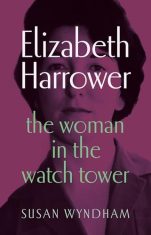
I mistimed my reading of this book. I finished it just before we had to head off to the Book Club meeting, so I can’t do my usual thing of writing a bit about my own take on the book before reporting on the evening’s conversation. It turned out only two of the five of us had read the whole book, and the other completer had also just finished it that afternoon. Of the other three, two hadn’t looked at the book at all and one had read less than a hundred pages.

Nevertheless we had an animated conversation, partly because more of us had read Elizabeth Harrower’s novel The Watch Tower, and there are obvious points of connection between the two books.

Elizabeth Harrower (1928–2020) had four novels and a number of short stories published in the 1950s and 1960s. A fifth novel was accepted for publication in 1970, but she withdrew it in what she later describes as the moment she decided to destroy her life (page 156). From the early 1970s she was a self-identified writer who published nothing. She did go on writing, including copious letters and what she referred to as ‘something big’, which there is no record of anyone clapping eyes on. If the big thing actually existed, she must have destroyed it. Early this century she was rediscovered. Her novels and short stories were republished, or in some cases published for the first time, and in her last years, she enjoyed a degree of celebrity.

Two biographies were published in 2025. Before Susan Wyndham’s appeared, Latrobe University Press published Helen Trinca’s Looking for Elizabeth: The Life of Elizabeth Harrower. To add to the riches, 2024 had seen the publication of Hazzard and Harrower: The Letters, edited by by Brigitta Olubas and Susan Wyndham, consisting of four decades of correspondence between Harrower and Shirley Hazzard.

I’m sorry to say it, but at the end of our evening, none of us admitted to wanting to read further.

This was partly because Harrower tended to guard her privacy, and though she referred to herself as ‘a divorced child’ and much can be inferred about her early life from her novels, Wyndham’s account of her childhood is necessarily vague. Her piling on of whatever information she was able to discover – such as the fancy dress costumes young Betty wore – may be interesting to some readers, but to me they just feel like clutter. The clutter doesn’t end with childhood: there are lists of movies and plays that Harrower attends, descriptions of what she cooks for dinner, lists of dinner guests, and so on – the effect of which, for me at least, is that any broader narrative shape gets lost. Yet such details appear to be the only way available to flesh out the picture.

The portrait that emerges, in my reading, is of a woman who was bullied as a child and continued to see herself as bullied, misunderstood and under-appreciated for the rest of her life: bullied especially by her writer friends, including Patrick White, Kylie Tennant, Shirley Hazzard, Judah Waten and Christina Sread, all of whom loom large in this book. But I don’t entirely trust that picture as it seems to be drawn from her letters – and it may be a mistake to take someone’s bitching about one friend to another as a reliable indication of how that relationship really works.

I wasn’t the only one at our meeting to get a sense of Harrower as unpleasantly self-pitying. Someone asked a number of times, ‘Why did all those people keep being friends with her?’ On reflection, my guess is that it’s because – contrary to the image Susan Wyndham has extracted from the documents – she was actually good company, kind and interested in people, endlessly supportive of friends in need. (I learned a lot about the terrible sufferings of Kylie Tennant’s family, and about Shirley Hazzard’s mother whom Harrower befriended and cared for in trying circumstances). But if, as a biographer probably must, you focus on the toll such other-focused activity takes, you allow a sense of the person as a whingey self-sacrificer to emerge. Likewise with moments when friends complain about her: such moments may have been exceptional in life but come across as typical in the telling.

And then I remembered enjoying Susan Wyndham’s ‘Introduction’ in which she describes her own relationship with Harrower as a journalist and friend. Rereading it, I was struck by this paragraph:

Questions bubbled up in my mind from the depths of her past. How did this good-humoured woman write such disturbing novels? And why did she stop? They were questions she didn’t want to answer, or couldn’t after all this time. Later I realised they were the wrong questions. While I wanted to know about her childhood, her parents, her writing, her love affairs, she veered into talking about friends past and present. I should have taken the clue that her stories about Patrick, Christina and Judah were not just sentimental memories but the scaffolding of her adult life. She was a kind and porous friend, sometimes more concerned about the lives of others than was good for her. Her wide circles of friends were her family.

Perhaps that’s the version of Harrower’s life that is struggling to emerge from the welter of detail. It was a good life. There’s an implied criticism in the question, ‘Why did she stop?’ After all, she wrote five more novels than most people. Shouldn’t that be enough?


The Book Club met on the land of the Bidjigal and Gadigal clans of the Eora Nation, overlooking the ocean. I wrote the blog post on Wangal and Gadigal land as the wind outside my windows gradually died down to a gentle breeze. I gratefully acknowledge the Elders past and present who have cared for this beautiful country for millennia, and welcome any First Nations readers of this blog.

Sydney Writers’ Festival: My Day 1

The Sydney Writers’ Festival has been going for days now, but my festival started yesterday, on a bleak, wet, grey Thursday.

I began with a 10 o’clock launch of four chapbooks in Vagabond Press’s Rare Objects series. Chapbooks are books of poetry so small they don’t even rate an ISBN. But where some chapbooks have a cheap and cheerful feel, the Rare Objects are beautifully crafted, a hundred numbered and signed copies of each title. The books being launched were by the stellar line-up of David Malouf, Robert Adamson, Martin Harrison and Adam Aitken.

Luke Davies gave one of the best launch speeches I’ve heard. He paid tribute to Michael Brennan of Vagabond Press and to the four poets in warmly personal terms, as people and as creators. The mutual respect and affection among the five people on the dais was something wonderful: completely the opposite of the internecine strife for which poets are supposedly famous. Each of the four launchees read: Adam Aitken from November Already, Robert Adamson from Empty your Eyes, Martin Harrison from Living Things)and David Malouf from Sky News (which my deafness heard Luke Davies announce, improbably, as Sky Nudist, but that would be a different chapbook). We the audience were very restrained, applauding politely after each reader – my guess is that we were too busy processing the complex pleasures we were being given to be too demonstrative. It really was a brilliant reading: a stunning prose poem from Adamson, crisp imagery from Malouf, Aitken taking the New York School to a tiny French village (not really, but that’s a mangled form of his own joke), Harrison in fine rhapsodic form. I loved Martin Harrison’s account of the genesis of his ‘Wallabies’: witnessing two young Australians in full xenophobic flight in a Parisian Internet cafe (and he described them to us with great relish), he took notes intending to write a satirical poem, but realised when he sat to write that what he really wanted to do was to celebrate the part is Australia they came from.

I couldn’t have asked for a better start. I bought all four of the Rare Objects, found a spot out of the rain and sat and read, did email things on my iPad, and chatted. (One of the striking things about the SWF is how easy it is to strike up a conversation with complete strangers.) Then it was time for the 1 o’clock session:Harbour City Poets: Some People You May Know, my first event in the Bangarra Mezzanine, which I think of as the poets’ space at the Festival. Again it was a pleasure to be read to, this time by a quintet of poets – Margaret Bradstock, John Carey, David Musgrave, Louise Wakeling and Les Wicks. The poems were about people, real, and imagined. Margaret Bradstock’s pieces about colonial characters made me want more. And there was some witty and elegant light satire. It may be because someone had told me just before the session about the man being hacked to death in London, but I found myself thinking that light satire, especially when performed giving broad Austealian accents to its objects, is a dangerous mode in which the satirist can all too easily come off as smug, class-bound, narrow-minded, bien-pensant and otherwise unappealing.

I rushed home (bus–train–bus), walked and fed the dog and was back, just a few minutes late for Robert Green: On Creativity at 4 oclock. This session wasn’t on my schedule, but a friend had a ticket she couldn’t use, and the Festival program promised ‘exercises to help rid [me] of blocks and unleash thinking that is more fluid and creative’. Given that I’m feeling out of my depth with a writing project just now, it was a case of what the hell archie, and I’d taken the tickets off her hands. It was turned out to be pretty much a motivational talk. The ‘exercises’ were three broadbrush strategies: embrace the blank page; think like an outsider; subvert your patterns of thinking. I enjoyed the talk, not least for the wealth of anecdote and Robert Green’s manifest passion for his message that every human brain is capable of brilliance, that mastery is possible. I especially liked the first question and response at the end. In summary, a white-bearded man suggested that next time a journalist asks him if he can seriously believe the stuff he says, he should try thinking like a mushroom; this was evidently meant as a witticism, but Green was completely nonplussed; after a bit of back and forth in which the point of excuse tin remained obscure, he agreed that he would give it a try.

More bus, more train, dinner at a pub in Chippendale then to the Carriageworks for Stories Then & Now. I’m a big fan of William Yang’s slide-show story telling, especially his exploration of his Chinese and north Queensland heritages over the years. For this show, along with Annette Shum Wah, he has mentored six mainly younger Asian-heritage people to tell the stories of their families (‘then’) and their personal stories (‘now’). Each story-teller had two turns alone on stage with a microphone in front of hem and two screens showing a series of photographs behind them. Ien Ang, Jenevieve Chang, Michael C. S. Park, Sheila Pham, Paul van Reyk and Willa Zheng were each completely engaging, and the combined effect of heir six presentations was extraordinarily rich. The Cultural Revolution, the Korean War, the American War in Vietnam, Indonesian independence, the White Australia Policy; a hilariously failed attempt at an arranged marriage, a weirdly romantic tale of serial fatherhood by sperm donation, a successful Internet match, intergenerational tension and conflict fled, faced and reconciled. We came out into the night exhilarated.

NSWPLA Dinner: I wasn’t there

Just in case anyone was wondering after my post deliberating whether to shell out $150 for the pleasure of attending and blogging the presentation dinner for the NSW Premier’s Literary Awards: I didn’t shell out.

I thought I might storify the event from afar, and went so far as to register on the storify site and explore how to do it. But apart from a couple of images of the fabulously lit-up Mitchell Library reading room, and the relaying of this solitary comment by a winner

the tweeters confined themselves pretty much to telling us who won what. I couldn’t even tell if David Ireland, recipient of the special award, was there.*

Today’s newspapers didn’t give us much colour and movement either. The Sydney Morning Herald printed an abridged and edited version of Kathryn Heyman’s address, and a piece by Susan Wyndham listing the winners, with some detail about the Book of the Year, Ali Cobby Eckermann’s Ruby Moonlight. (That’s the only one of the prize-winners I’ve read. It’s a brilliant book.) Stephen Romei in the Australian focused on David Ireland, who it turns out wasn’t there, but wrote a ‘typically idiosyncratic acceptance speech’ which was read out by his agent.

Did George Souris keep up tradition by mispronouncing at least one person’s name? Did any prize-winner except Tim Soutphommasane say anything memorable? What was idiosyncratic about David Ireland’s speech? Was the food OK? Did everyone behave themselves? We may never know.

* But if you’re interested, the State Library of NSW did storify the event, here.