Tag Archives: V V Ganeshananthan

2025 End of Year List 4: Books

The Emerging Artist now keeps a record of the books she reads so she can easily whip up a list for the blog at this time of year. First her data:

  • 62 novels,  9 non fiction, 3 art books 
  • 29 novels by women
  • 20 novels by non English speakers
  • 2 First Nations authors

Best novels
I’ve tried not just to mention books reviewed by Jonathan. That meant excluding two favourites: Time of the Child by Niall Williams and The Granddaughter by Bernhard Schlink. My best five are:

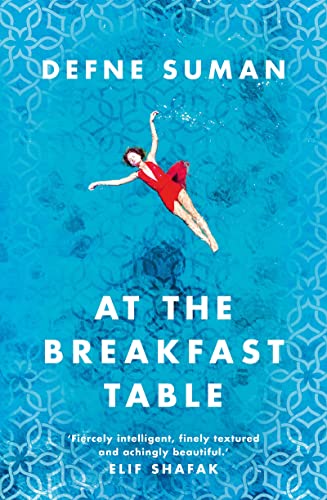
At the Breakfast Table by Defne Suman. Set in Istanbul, it weaves the story of four generations of a family, focused around one weekend, but giving glimpses into the recent history and politics of Turkiye through the lives of each character. The role of women, class and art are in the process. It was one of my random picks from the library, and I now have another of hers on order. 

Glorious Exploits by Ferdia Lennon. What a terrific read, full of humour, violence, Irish sensibilities set in ancient Syracuse. The love of Euripides’ plays drives our two main characters to stage a production performed by prisoners. We saw Ferdia at the Sydney Writers’ Festival where he was equally entertaining. 

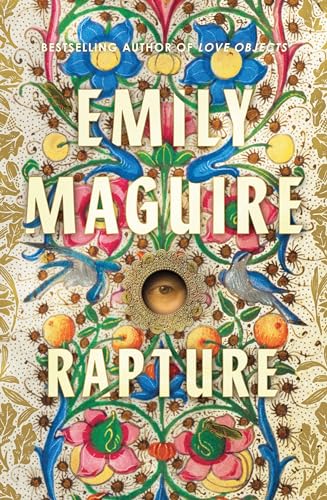
Rapture by Emily Maguire. I had put off reading this but eventually, somewhat reluctantly, picked it up. It was gripping, conjuring up mediaeval Europe and a woman struggling to have independence from the constraints imposed at the time.

Brotherless Night by V. V. Ganeshanathan. Another random pick from the library, this is set in Sri Lanka as the civil war builds over a few decades. Its main character, a young female medical student, tries to sidestep the conflict as her brothers are increasingly caught up in it. A powerful read.

33 Place Brugmann by Alice Austen. During the Second World War, an apartment block in Belgium holds the range of residents that reflect the broader society – those enthusiastic about Nazism and willing to inform, those willing to put their lives in danger to hide Jews and those who become the target of hatred. 

Best non fiction
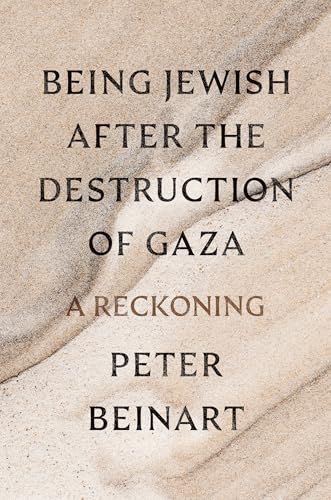
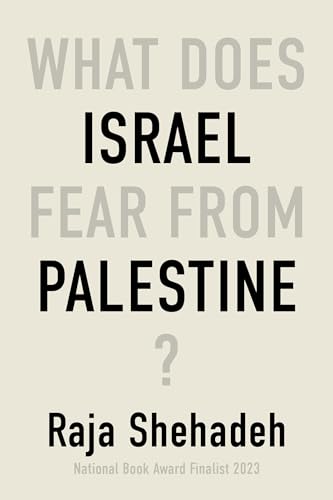
What does Israel Fear from Palestine by Raja Shehadeh and Being Jewish after the Destruction of Gaza: A Reckoning by Peter Beinart are two excellent books about the current genocide.
From me

I can never pick a favourite or best book. Some highlights of 2024 were:

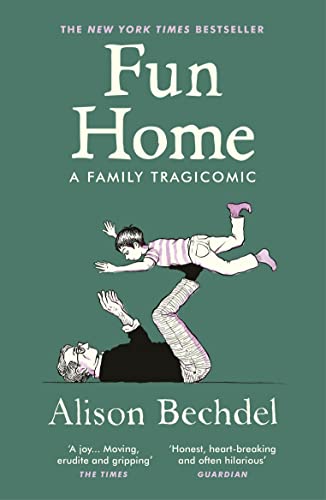
A comic: Fun Home by Alison Bechdel, an LGBTQI autobiographical work that has become a classic. A friend was shocked that I hadn’t read it already (she didn’t care that I haven’t read Pride and Prejudice).

A novel: Time of the Child by Niall Williams, one of three novels so far set in the small fictional Irish town of Faha. Its picture of the role of Catholicism in the life of the village struck a deep chord for me as a child of a Catholic family in North Queensland.

Another novel: First Name, Second Name by Steve MinOn features a Jiāngshī (a kind of Chinese vampire). This struck a personal note for me as the Jiāngshī’s journey ends at the Taoist Temple in Innisfail – and a childhood friend of mine told me that the MinOns lived down the street from him when he was a child.

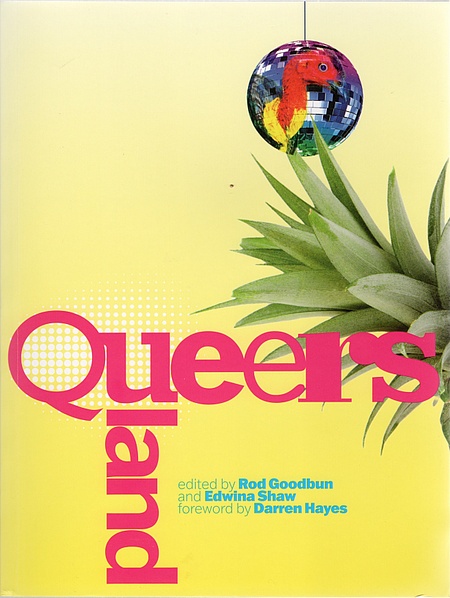
A collection of essays: Queersland is full of stories about being LGBTQI+ in the state of Queensland, especially in the Jo Bjelke-Petersen era, co-edited by Rod Goodbun and my niece Edwina Shaw. I love it because it is so necessary and for obvious nepotistic reasons.

Poetry: Rather than sngle out an individual book I’ll mention the Flying Islands Poets series edited by Kit Kelen. I read 12 books in the series this year, and my life is much richer for it.

I should mention Virginia Woolf. I was inspired by a podcast about the centenary of the publication of Mrs Dalloway to plunge into that book. I’m very glad I did, though plunge is probably exactly the wrong word for my three-pages-a-day approach.
To get all nerdy, I read:

  • 77 books altogether (counting journals and a couple of books in manuscript, but only some children’s books)
  • 32 works of fiction
  • 19 books of poetry
  • 5 comics
  • 11 books in translation – 4 from French (including Camus’ L’étranger, which I read in French), 2 from German, and 1 each from Chinese, Icelandic, Korean and Hungarian
  • 9 books for the Book Group, whose members are all men
  • 11 books for the Book Club, where I’m the only man
  • counting editors and comics artists, 39 books by women and 41 by men
  • 3 books by First Nations writers, and
  • 14 books by other writers who don’t belong to the White global minority.

And the TBR shelf is just as crowded as it was 12 months ago.

Happy New Year to all. May 2026 turn out to be unexpectedly joyful. May we all keep our hearts open and our minds engaged, and may we all talk to peope we disagree with.


I wrote this blog post on Wadawurrung land, overlooking the Painkalac River. I acknowledge their Elders past and present and welcome any First Nations readers of the blog.
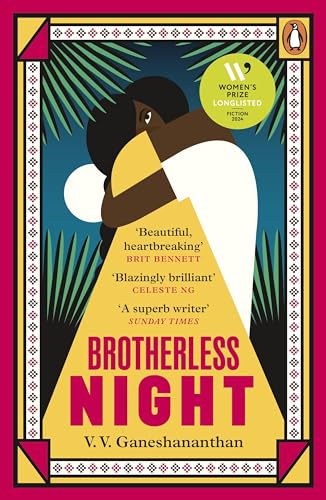
V. V. Ganeshananthan’s Brotherless Night

V. V. Ganeshananthan, Brotherless Night (Penguin 2024)

The main character and narrator of Brotherless Night, Sashi to her friends, is a young Tamil woman who is studying to become a doctor in the city of Jaffna in northern Sri Lanka. She lives through the beginnings of the civil war in the 1980s. Her beloved eldest brother is killed in the anti-Tamil riots of 1983 – the riots that are made so vividly present in S. Shakthidharan’s play Counting and Cracking. Two more brothers join the Tamil Tigers (the Liberation Tigers of Tamil Eelam), and K, a man she has loved since childhood, becomes a celebrated hero and martyr among the Tigers.

Sashi herself is caught between an oppressive government army and a ‘liberation’ force that ruthlessly kills many of the people they claim to be defending. Sashi deplores the tactics of the Tigers, but she works for them in a secret clinic, patching up wounded cadres and civilian casualties, and she can never renounce her love for her brothers and K.

In a pivotal sequence, K comes out of hiding to ask Sashi for her support in a dangerous undertaking: to do so will align her publicly with ‘the movement’, which would grievously misrepresent her sympathies, but not to do it would be to betray a childhood friend. I think of E. M. Forster’s much quoted line: ‘If I had to choose between betraying my country and betraying my friend, I hope I should have the guts to betray my country.’ But Sashi’s choice is not as simple as that.

As she ponders the dilemma, there’s this line (on page 238):

Before there was a movement there were six children on a lane.

It is her loyalty to the vision of themselves as children that is at the heart of the book – that is, her loyalty to a basic shared humanity, and to telling the truth from that place.

It’s a terrific story. I was invested in the characters and sorry to put the book down. Part of its strength is the way it reaches out from its fictional world to highlight elements of actual reality. I can think of three ways.

First, other texts are referred to and integrated into the narrative. The books that Sashi and her brothers read might make an interesting reading list, but most strikingly Sashi and her Anatomy professor start a book group for woman at the university, and at their first meeting they discuss Feminism and Nationalism in the Third World, a real book by Sri Lankan author Kumari Jayawardena. In lesser hands this might have felt like analysis being shoehorned into the narrative, but we share the young women’s intellectual excitement, and their sense of peril as no one can be sure things won’t be reported back to the Tigers, with potentially dire consequences.

Second, there are elements of roman à clef. The salient features of K’s life and especially death, for instance, align closely with those of Tiger leader Theelipan.(Don’t look up this link if you want to avoid spoilers.) One of the book’s epigraphs – ‘There is no life for me apart from my people.’ – signals another real-life equivalent. It’s from Rajani Thiranagama (Wikipedia page here), a human rights activist who was once a member of the Tigers but became critical of them and was eventually believed to be murdered by them. She is the model for Sashi’s Anatomy professor, and the last third of the book features a fictional version of her real-life project of gathering evidence of atrocities committed by Tigers, Indians and Sri Lankan military.

The third way may be peculiar to me.

A young woman has been viciously assaulted by an Indian soldier – nominally there as part of a peace-keeping force. Sashi treats her injuries, and she returns later in a different, devastatingly vengeful role. This young woman’s name, Priya, rang a bell for me, and for no reason I could pinpoint I felt a particular investment in her story. Then I remembered the source of the bell: Priya Nadesalingam, the subject of a huge amount of press in Australia in 2023 (here’s one link in case you need reminding). That Priya, who had sought asylum in Australia with her husband Nades Murugappan and their two daughters, had become part of the community in the tiny Queensland town of Biloela. After a dawn raid, they came close to being deported and sent back to Sri Lanka. There was a huge public outcry and, long story short, the family are now living in Biloela on permanent visas.

The two Priyas have very different stories, but the coincidence of names brings home to me with tremendous force the horrific broader reality behind the bloodless statements about refugees made by politicians in Australia (and I assume elsewhere in the West).

The book doesn’t preach or lecture, but it brings a deeper understanding, not only of the struggle for Tamil independence in Sri Lanka, but of resistance movements generally. It makes me want to be a better person living in a kinder country with broader horizons.


I wrote this blog post on the land of Gadigal and Wangal of the Eora nation. I acknowledge their Elders past present and emerging, and gratefully acknowledge their care for this land for millennia, as well as the generosity I have personally experienced from First Nations people all my life.