Monthly Archives: Nov 2016

Overland 224 and November Verse 4

Jacinda Woodhead (editor), Overland 224 (Winter 2016)
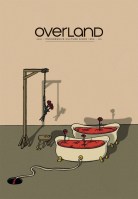
o224.jpg Overland is always a stimulating read. Among this issue’s offerings I am particularly grateful for:

  • Jeremy and the jeremiads by Richard Seymour, which discusses the ruthless and blatantly dishonest treatment of Jeremy Corbyn, the first radical socialist leader in the Labour Party’s history, by the British press – and not just its reactionary bits. As Seymour says, ‘the Corbyn moment has shown us … just how openly interventionist the majority of the media becomes when official opposition threatens to become a force for more radical change.’ Not just the Murdoch press, then.
  • The limits of compassion by Gerhard Hoffstaedter, which explores Malaysia’s response to the flood of people seeking asylum. It’s not that Malaysia is a beacon of light in this matter, but the scale of the problem there makes the panic and harshness here look even more shameful.
  • ‘Just violations’ by Alex Griffin (not online yet), which offers a historical context for Australia’s offshore detention centres. Japanese prisoners were held on Manus until 1953, and an Australian war crimes courts sat there, implementing the dubious War Crimes Act, in 1950 and 1951: ‘Australia could satisfy domestic interest, escape serious censure from its allies and strengthen its position in the Pacific, all while using the bodies of foreign nationals as bargaining chips in a oerverted and heavily weighted judicial situation.’

There’s also Alison Croggon’s column on her personal experience of depression, Ben Eltham spelling out how out of touch Australia’s political class is with the realities of most people’s lives, Giovanni Tiso on the pitfalls of using social media and the Web in general for political organising, with some interesting history for those who don’t remember Usenet.

No issue of Overland would be complete without the finalists of at least one prize. This one gives us the Victoria University Short Story Prize. The winner, Broad Hatchet by Julia Tulloh Harper, is a convincing bush tale with a neat gender twist.

There’s a poetry section. A new overall design means that the poetry is no longer printed in a light colour on a light background, and as a result can be enjoyed without eye strain. Zoë Barnard’s chilling ‘Impulse’ and Michael Farrell’s weird ‘Solve a problem and it grows two heads’ are the two poems that grabbed me the most.

And because it’s November, a verse. It may not be great but it rhymes:

November Verse 4: To Overland and their ilk on Eight-eleven
Unhappy land that needs a hero.
Duterte, Hitler, Donald Trump,
elected (unlike Stalin, Nero)
masters of the campaign stump
who feed on people’s desperation,
fan the myths of race and nation,
harness hate, despair and fear.
A heedless will for change is here.
We do need change. The seas are rising.
The profit motive hurts us all
and holds our governments in thrall.
I’m grateful for the organising,
analysing work you do.
It gives me hope we’ll make it through. 

Helen Garner’s Everywhere I Look and November Verse 3

Helen Garner, Everywhere I Look (Text 2016)

1925355365.jpgI’ve recently been surprised to hear a number of people refer to Helen Garner as ‘one of our great writers’. My surprise doesn’t come from disagreement. It’s just that hers isn’t writing that invites one to bow down in the presence of greatness. She’s less a Great Dane (or Grande Dame) making magisterial pronouncements than a terrier who keeps on at her subject until it yields some truth, her truth. She passes judgement often enough, and definitely enough, but not dogmatically, and not looking for a stoush either, but ready in case one comes along. A striking feature of Sotiris Dounoukos’ movie of Joe Cinque’s Consolation is the absence of the book’s persistent questioning – so when the end titles announce that, against the strongly implied judgement of the previous 90 minutes, one of the real-world characters was exonerated by a real-world jury, one tends to simply distrust the movie. When the book calls that verdict into question, you can disagree, but you can’t honestly dismiss it out of hand: the judgement has been honestly, and I would say humbly, worked for. (Perhaps its relevant that some of the harshest critics of Garner’s The First Stone refused to read it, or so I’ve been told.)

One of the pieces in this collection is titled ‘While Not Writing a Book’. That could have been a working title for the collection as a whole. It and a couple of others, including ‘Before Whatever Else Happens’, are presented as excerpts from the writer’s diaries/notebooks: overheard snippets, chance encounters, family moments, brief reflections. Another writer might have called them flash fictions or prose poems. Other pieces are more sustained: the product of a week locked away with CDs of Russell Crowe movies; reviews; sketches from the courts; wonderful pieces on her friendships with Jacob Rosenberg, Tim Winton and Elizabeth Jolly; glimpses of family life with grandchildren and, once, a dog; a revisit to her relationship with her mother; reflections on the ukulele, the ballet, suburban life; and more, enough to keep her readers interested between This House of Grief and whatever big thing may happen next.

Everywhere she looks and listens, from conversations about farting with small children to a teenager who has bashed her newborn baby to death, Garner finds stuff for her mind to grapple with, and she knows how to communicate the grappling with grace and vigour.

And now, because it’s November, a versification of one of the diary entries (see page 85 for the original):

Verse 3: At a conference
Supreme Court Judge and Helen Garner
chatted over tea and dip.
‘My home,’ the judge said to the yarner,
‘was once the scene of Monkey Grip,
your novel, and we’re renovating.’
‘My novel, and some devastating
and elating life. But how
do those old rooms look to you now.’
He listed them: ‘… and one so dinky
my daughter’s desk was there before.
It’s soon a bathroom, nothing more.’
‘The one with wooden shutters?’ Inky
flash from hippie days divine:
‘That tiny room was [humbly] mine.’

AWW2016Everywhere I Look is the twelfth book I’ve read as part of the 2016 Australian Women Writers Challenge.

November Verse 2: At a reading

Verse 2: At a poetry reading
Tonight’s star reads with great sonority
poems of country, beasts, trees, birds,
with great if pained superiority
over those who use not words
but guns on feral, sick or wounded
animals, whose lands are bounded,
cut by fences which (truth!) he
declares offensive. Glory be!
His passion shames my mammal-eating,
planet-warming life. It shakes
my donsie tricks, my black mistakes,
my use of coal-fired power for heating.
And yet I wish that he could tell
that other humans are not hell.

There’s a line in there that’s stolen from the great Robert Burns. You can read the poem it’s from here

November Verse 1

It’s November and once again, in solidarity with NaNoWriMo participants, I’m taking on a quantity-is-what-matters-and-hang-the-quality project: 14 Onegin stanzas in the month.

I was in Canberra on Halloween night. There wasn’t a lot of trick-or-treating going on in Civic, but as our small group emerged from a pleasant Sri Lankan meal we witnessed what may have been a Halloween-inspired moment.

Verse 1: Spirit of place
It’s nine. We’ve eaten. Frost tomorrow.
The street is still except for these
ebullient young. I’d like to borrow
half their cheer. It’s twelve degrees,
which doesn’t damp down their endorphins:
two young men as sleek as dolphins,
to win a dare or act the fool,
surf naked in the square’s staid pool.
Emerging, one is towelled and shaking.
The other, threatened with a phone,
sprints laughing round the square alone
and wet, all modesty forsaking.
It’s Halloween. No ghosts. No fright.
The body owns this town tonight.