Category Archives: Book Club

The Book Club at Christine Dwyer Hickey’s Narrow Land

Christine Dwyer Hickey, The Narrow Land (Atlantic 2019)

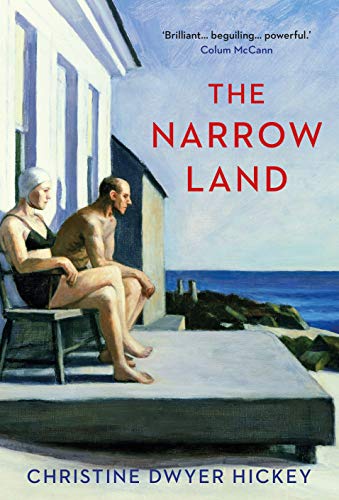
The cover of The Narrow Land features Edward Hopper’s painting Sea Watchers (1952). The back cover tells us the book is about a ten-year-old boy who forms an unlikely friendship with ‘the artists Jo and Edward Hopper’. But nowhere in the narrative itself are we told the names of the two artists, even though many of the man’s paintings are lovingly described and even a reader as ignorant about US art as I am could recognise some of them (admittedly with help from Duck Duck Go) as Hoppers. Nor is there an afterword or acknowledgement to clarify the story’s relationship to historical fact.

I don’t know what to make of that, since it looks as if a significant dimension of the book is a fictional depiction of Hopper’s practice and the Hopper marriage. In particular, to judge from Josephine Hopper’s Wikipedia entry, it’s likely that the narrative draws on her copious journals recording her bitterness and their stormy quarrels. The character’s journals are mentioned, but Josephine Hopper’s are not.

The Hoppers-not-Hoppers, she in her sixties and he quite a bit older, have a terrible relationship. They are at their Cape Cod house for the summer in the early 1950s. He is stuck, searching for inspiration. She lives in his shadow, resents his failure to support her work, nags at him to get on with his own, is hyper-alert to possibilities that he will be attracted to other women, and relentlessly picks fights with him. He is relentless right back at her. They’re not people you want to be around.

Ten-year-old Michael comes into their lives. He is a German war orphan, possibly Jewish, brought to the US and adopted by a working-class couple in New York, spending the summer with a benefactor who is the artists’ neighbour.

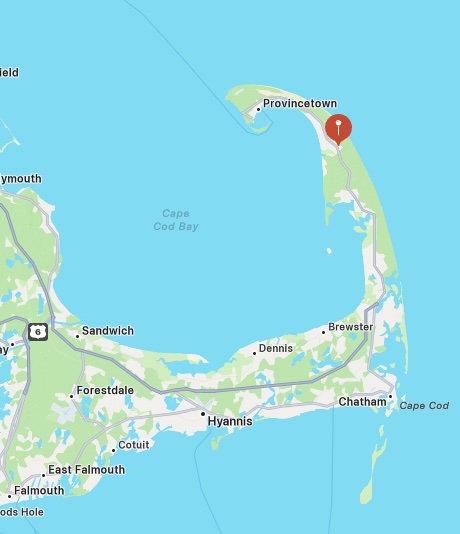
Relationships develop among these characters, including Michael’s complex host family. The narrow land of the title refers literally to Cape Cod, as in this map. It also refers, I think, to the narrowness of a non-combatant USer’s world-view: Michael’s hosts are unable to imagine the magnitude of what he has endured (which he experiences now as nightmarish flashes of memory). The narrowness is also there in the constrictions that society places on the artist, and the claustrophobia that ‘Mrs Aitch’ rails against in her marriage. Perhaps it refers also to the limits imposed on people’s lives in the wake of the Second World War – partners, parents and siblings are still being mourned, and returned soldiers wander through the narrative like wraiths.

For the most part, this isn’t a pleasant read. I found Mrs Aitch especially painful – like Pansy in Mike Leigh’s Hard Truths, her bitterness is unremitting, but she lacks Pansy’s biting wit. Unlike Pansy though, she finds temporary relief in connection with children – Michael and his obnoxious host Richie – where we get to see her in a more positive light. Also unlike Pansy, she has a moment when her intolerant discontent saves the day.

Having just described Richie as obnoxious, I feel obliged to say that even though almost all of the characters are unlikeable, most of them have moments when we see an underlying pain. We come to see Richie in particular as tragic.

Page 78* turns out to be a good example of my pervasive frustration. It’s near the start of the novel’s second section, titled ‘Venus’, in which we realise that ‘he’ – Hopper-not-Hopper – is searching for a woman he glimpsed the previous summer, as he feels that she will inspire him now. (Spoilerish note: he does find her, but it doesn’t work.) On this page he remembers the day that he found her:

She was standing in the doorway of a house, a man standing on the threshold, maybe leaving or maybe hoping to get inside.
He’d driven by and pulled in further along the street. Then he walked back past the house. There had been a bush by the gate, tangled and dried up from the heat, a lawn, yellowed by neglect and the ravages of a long summer.

There’s a description of her clothes and a snippet of overheard conversation, then:

He had walked on for a couple of minutes. then crossed the road to return on the opposite side, his head tilted as if he were searching for the number of a door. As he came closer to the house, he saw her lift her hands and put them under her hair, which was a whiter shade of blonde. Then she flipped it all up, holding it for a few seconds to the back of her head. He could see the damp patches of sweat stamped into her armpits and the outline of her long neck, the soft curve where it joined her shoulders. She dropped her hair and her face lifted upwards. The blue blouse. The light on her face. He couldn’t figure out if it was pouring into her or pouring out of her. He thought she looked sanctified. Then he thought she looked the opposite.

He rushes home and drags out his easel:

He laid it down: the street, the house, the figure of the girl in the doorway, the figure of the man alongside it with one foot on the step, the lawn, the gate, the tangled bush.

This is emphatically an account of a particular artist’s creative process. It’s as if the novelist sets out to imagine for us how Edward Hopper created one of his paintings, but then – for legal reasons, perhaps, or from simple respect for the unknowability of the real man – pulls back from acknowledging that that’s what she’s doing. The understated eroticism here plays nicely into the portrait of the artist’s marriage: his wife (never named) realises that she is not the model for the woman in the painting, and is furious.

On the way to the meeting: We read The Narrow Land along with Richard Russo’s Everybody’s Fool. Just before the meeting I’m noting some things the books have in common:

  • they both have dogs that make a mess of cars – the disgustingly incontinent Rub in Everybody’s Fool, and Buster in this book who leaves a car ‘looking like a feathered nest’
  • characters read books: Sully in Everybody’s Fool remembers as a boy reading the beginning of a book we recognise as David Copperfield (Dickens), and discarding it; Michael in this book reads The Red Pony (Steinbeck) and Tom Sawyer (Twain) and takes them in his stride
  • Class looms large: when Michael’s working-class foster parents turn up we suddenly feel grounded in honest relationships; when Sully’s son turns up in the other book, we’re away with the abstractions of middle-class life.

After the meeting: The books had to compete with the pope’s funeral on the TV, but we still had an interesting conversation.

I think we were all a bit perplexed by A Narrow Land – not quite sure where its focus is. The person who had first proposed it, an artist herself, kicked the conversation off by saying that she was disappointed the book had so little to say about Hopper’s process, and in a way we circled around that central absence for the rest of our conversation.

One other person shared my unease about the relationship between the fictional characters and the historical persons. Others had no problem with it, and I still find it hard to say precisely what my problem is. Our host produced a hefty volume of Hopper’s work and we tried to pin down the paintings he works on in the book. No one claimed to have enjoyed the book unreservedly, though I think we all found some joy, or at least pleasure, in it. No one was much interested in trying to compare the two books.


We met on the land of the Bidjigal and Gadigal clans of the Eora nation, overlooking the ocean. I wrote the blog post on Wangal and Gadigal land. I gratefully acknowledge the Elders past and present who have cared for this beautiful country for millennia.

The Book Club, Alan Hollinghurst and Our Evenings

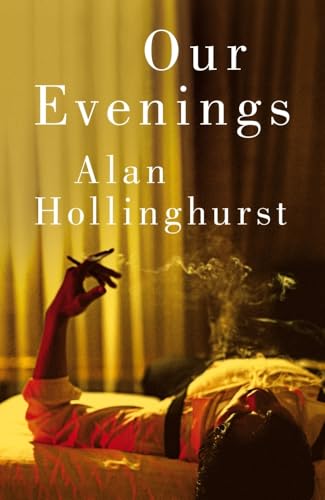
Alan Hollinghurst, Our Evenings (Picador 2024)

Before the meeting: About five decades ago I had to write an Eng Lit essay on Gerard Manly Hopkins’s sonnet ‘Spelt from Sybil’s Leaves’. It’s a poem that cries out to be read aloud, and on a weekend away at a beach house with friends, I found an out-of-the-way spot where I could perform the poem over and over for my own ears. It turned out that my secluded corner was actually an amplifying booth, and my sonorous renditions were heard by everyone in the house. Someone finally came and pleaded with me to stop. Embarrassment aside, I still love the poem.

So I took it as a personal gift to me when the poem is being recited, unannounced and unexplained, at the start of Chapter 15 of Our Evenings:

‘Earnest,’ I said, ‘earthless … equal … attuneable …’ Stella peered at me, tongue on lip, daring me.
‘… vaulty …’ she said.
… vaulty, voluminous … stupendous Evening strains to be time’s vast –’ (now we chanted it together) ‘womb-of-all – home-of-all – hearse-of-all NIGHT!’
‘I bet you can’t go on.’

If I hadn’t been loving the book before then, I would have been hooked.

As it happens, I was enjoying the book. The hero-narrator David Win, son of an English mother and a Burmese father he has never known, was given a scholarship to attend a prestigious boarding school, and at the start of Chapter 15 he’s studying at Oxford. The novel traces his development into a successful actor, his crushes, affairs and finally marriage with men, and his arrival at a reasonably contented late middle age (as we in our late 70s refer to the 60s).

The phrase that gives the novel its title occurs when David is in his last year at the boarding school. He is taken under the wing of Mr Hudson, his English teacher. They listen to classical music together late in the evening. These quiet times have an intimate, erotic charge, but though other boys leap to crude conclusions, ‘nothing ever “happened”, as they say’. Among the pieces they listen to is the first movement of Janáček’s ‘On an Overgrown Path’, which has its own title, ‘Our Evenings’. (You can hear it played by Rudolf Firkusny in 1986 at this link.)

The piece seemed simple and songlike, but the modulations in it made you wonder, and an agitated figure broke in higher up and then, like the scratch on the record, disappeared and left you with the song in a further change of mood, which didn’t quite replace the first one but seemed to cast the shadow of experience over it – what, I couldn’t say, but I felt it. I had no idea what we were listening to or how long it was going on – there was a very quiet passage when the agitated figure came back, but subdued and dreamlike, a trance of sadness and beauty, and soon after that the piece ended without any fuss. I glanced at Mr Hudson, but he was staring at the fire too, and then he jumped up and said, ‘Shall we hear it again?’

Apart from being an instance of the way other works – plays, poems, pieces of music – move the narrative along, this passage is a nice example of the way David as narrator shows rather than tells. ‘I couldn’t say, but I felt it.’ He never says in so many words that he has a crush on Mr Hudson, or that he believes it to be reciprocated, but in little moments like this – in Mr Hudson jumping up and suggesting a replay – readers can draw their own conclusions.

The description of Janáček’s music could be applied to the novel itself: ‘subdued and dreamlike, a trance of sadness and beauty’ occasionally interrupted by an ‘agitated figure’. The prose is elegant and unruffled, and most of the terrible things that happen – AIDS, Brexit, Covid – are offstage. David as boy, adolescent and man is unfailingly polite and helpful – we are usually left to imagine what feelings he is covering up, even perhaps from himself. He regularly encounters ‘agitated figures’ in the form of racism, but mostly it’s of the raised eyebrow or muttered phrase, micro-aggressive variety. An African-heritage lover says, ‘You’re not even Black!’ Likewise the homophobia he encounters is subtle – when he comes out to his mother and her female friend, their response is more or less, ‘Well, that’s been obvious for a long time!’ Class plays a role –  David’s patrons, whom he loves to the end – are like Proust’s aristocrats in their unfailing graciousness and generosity, and the sense that nothing really touches them. The mystery of his father remains a mystery, though late in life he receives some vague information. As in real life, many mysteries remain mysterious.

I suppose sex itself might count as an ‘agitated figure’. There’s quite a lot of it but, though it’s not coy, very little is explicit. I remember only two moments when sexual body parts are named, one involving a kind rejection, the other the beginning of a solid relationship. Neither is the slightest bit prurient.

The last 10 pages depart from the mainly ‘subdued and dreamlike’ narrative in a way that came as a surprise to me, and casts a brilliant light back over the preceding pages.

After the meeting: At the Book Club, we usually have two books under discussion at each meeting. This time, there was just the one, but everyone had to report on the book they’d scored in our Kris Kringle at last meeting. So our discussion, which followed and preceded convivial conversation about other things, began with enticing rundowns of books by Bernhard Schlink, Jock Serong, Robbie Arnott and Niamh Mulvey, and an unenticing rundown of one other.

Of Our Evenings, we had a very interesting discussion. I probably liked the book most, but no one hated it. The only strong difference was about the last ten pages, which I felt gave shape and significance to the whole thing and most others experienced as a lame and unnecessary framing device. It would be too spoilerish to present the arguments here. I’ll just state the obvious: they’re entitled to their opinions, but they’re wrong.

One person had an interesting take on the title. It captured the way the book, for her, is like a series of conversations you might have in a quiet evening at home: meandering, pleasant, amiable recollections and reflections, without drama or much significance. (If that’s so, I hope I said at the time, there’s always an awareness of terrible things happening in the outside world, of which many of the tiny things that come up in those conversations are micro-effects.)

David Win as narrator and hero provoked interesting conversation, which I’ll try to summarise. He is an outsider because of racism, class and sexuality, not necessarily in that order. As an outsider, his main way of being in the world is to aim to fill other people’s expectations – to act out the scripts he is given. It’s not insignificant that he’s an actor. He rarely takes the initiative, and there’s a way he doesn’t seem to know who he is. Not just as narrator, but also as character, he doesn’t have access to his own inner life. The narrative restraint about sex, which is not so in Hollinghurst’s other books that people had read, may be part of this. I read out the only passage in the book that mentions hard-ons, and people laughed (but not at all derisively). It’s as if in this book explicit sex is a relief from always having to decode what is being communicated in tight-lipped upper-class British dialogue (see Mr Hudson’s ‘Shall we hear it again?’ above).

We discussed other characters that I didn’t mention in the first part of this blog, especially a Boris Johnsonesque blustering bully, .

Less centrally, some took an almost anthropological interest in the portrayal of Gay male relationships – and it’s true that Hollinghurst gives meticulous detail on how people make their desires known. One person felt that (minor spoiler alert) having the David’s mother become a Lesbian was just laying on the Gayness too thick. Another, on the contrary, was impressed and delighted by the nuanced portrayal of middle-class, middle-aged, post-heterosexual-marriage Lesbianism.

We didn’t discuss the Hopkins poem, the Janáček music, or the plays – notably by Racine and Ben Jonson – that turn up in the narration.

Mint-flavoured Turkish delight was on offer. Only two of us tried it. I was the only one to finish my piece. I don’t recommend it. I do recommend the book.


Our Book Club met on unceded land of the Gadigal and Wangal clans of the Eora Nation. I acknowledge the Elders past and present. I hope that our conversation was in some way in continuity with yarns that have been happening on this land for tens of thousands of years.

Asako Yuzuki’s Butter

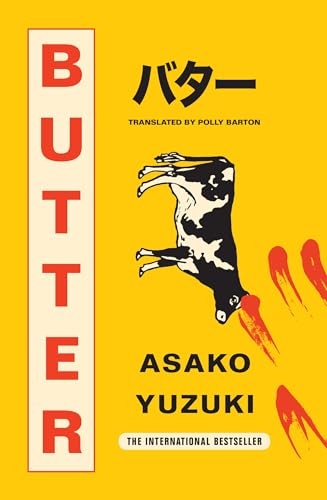
Asako Yuzuki, Butter (2018, translation by Polly Barton, 4th Estate 2024)

This was my end-of-year gift from the Book Club. It is probably an excellent book about misogyny in Japanese culture, with sharp satiric assaults on attitudes to food, with extra piquancy derived from its claim to be based on a true-crime story. It was evidently a huge success in Japanese and this English translation by Polly Barton has been reviewed enthusiastically.

The protagonist, Kira, is an ambitious young woman journalist working on a sensationalist magazine. In searching for a career-defining scoop she becomes enthralled by Manako Kajii, a woman who defies the social norms of slender femininity and is currently in prison for having killed a number of elderly men, after winning their hearts by cooking luxurious food for them. Manako introduces Kira, who until now has survived on a spartan, negligent diet, to the joy of butter – cooking with it and eating the results.

My guess is that the key to enjoying the book is to read it fast, and I’m a slow reader. The themes are real and interesting: feminism versus feminine wiles; social norms versus desire; career ambition versus enjoyment of life. But I struggled with it, and gave up soon after my obligatory 77 pages.

It may well be that Polly Barton has reproduced the feel of the original Japanese, but the best way I can describe my response to the book’s language is to say that it reads like the kind of English you find in school students’ translations. The information is all there, but in the process of capturing it, the student forgets to pay attention to the natural rhythms and sequencing of English prose. That’s fine if you’re a teacher correcting someone’s homework, but if you’re reading a novel, it keeps yanking you out of the story.

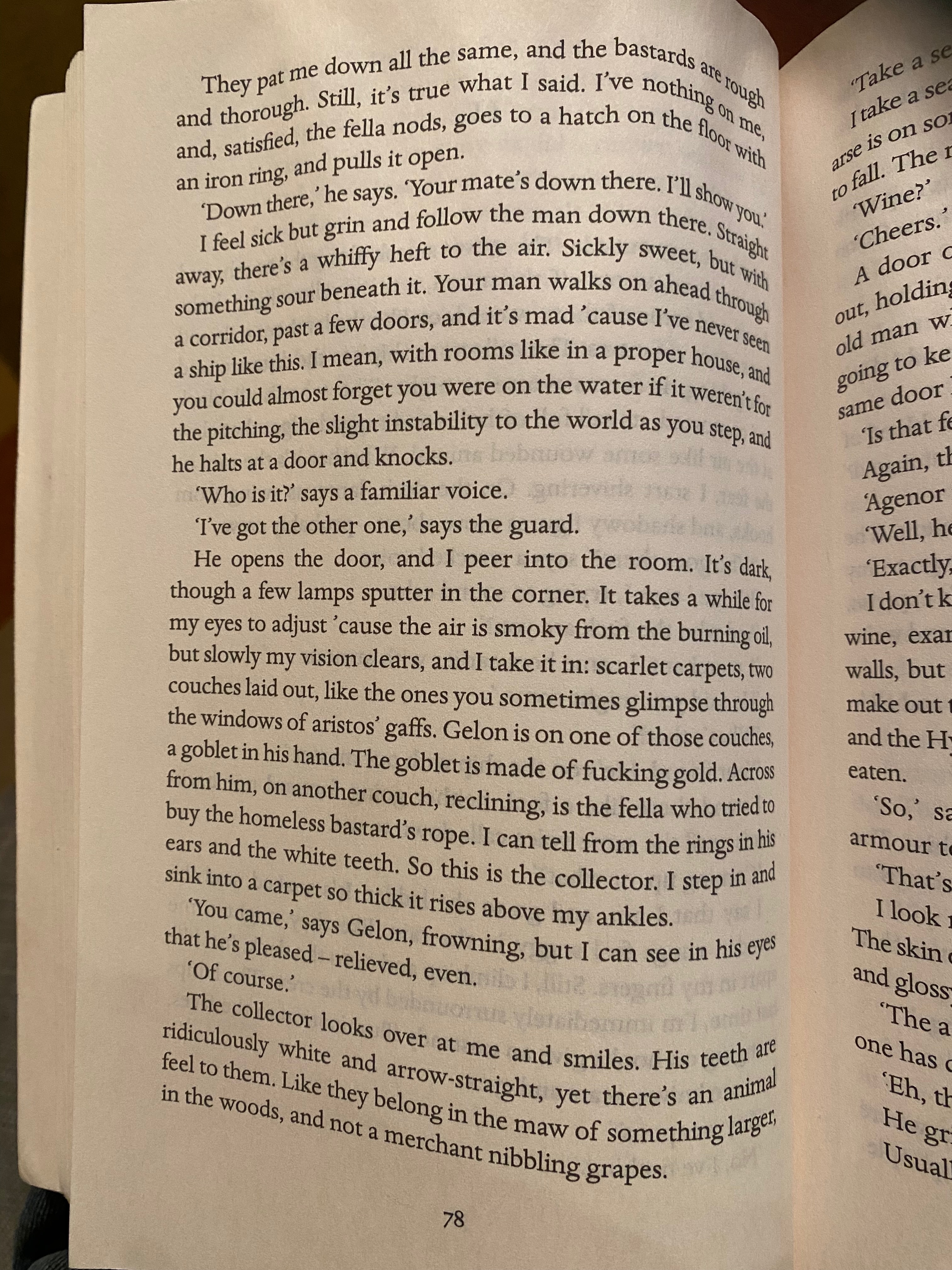
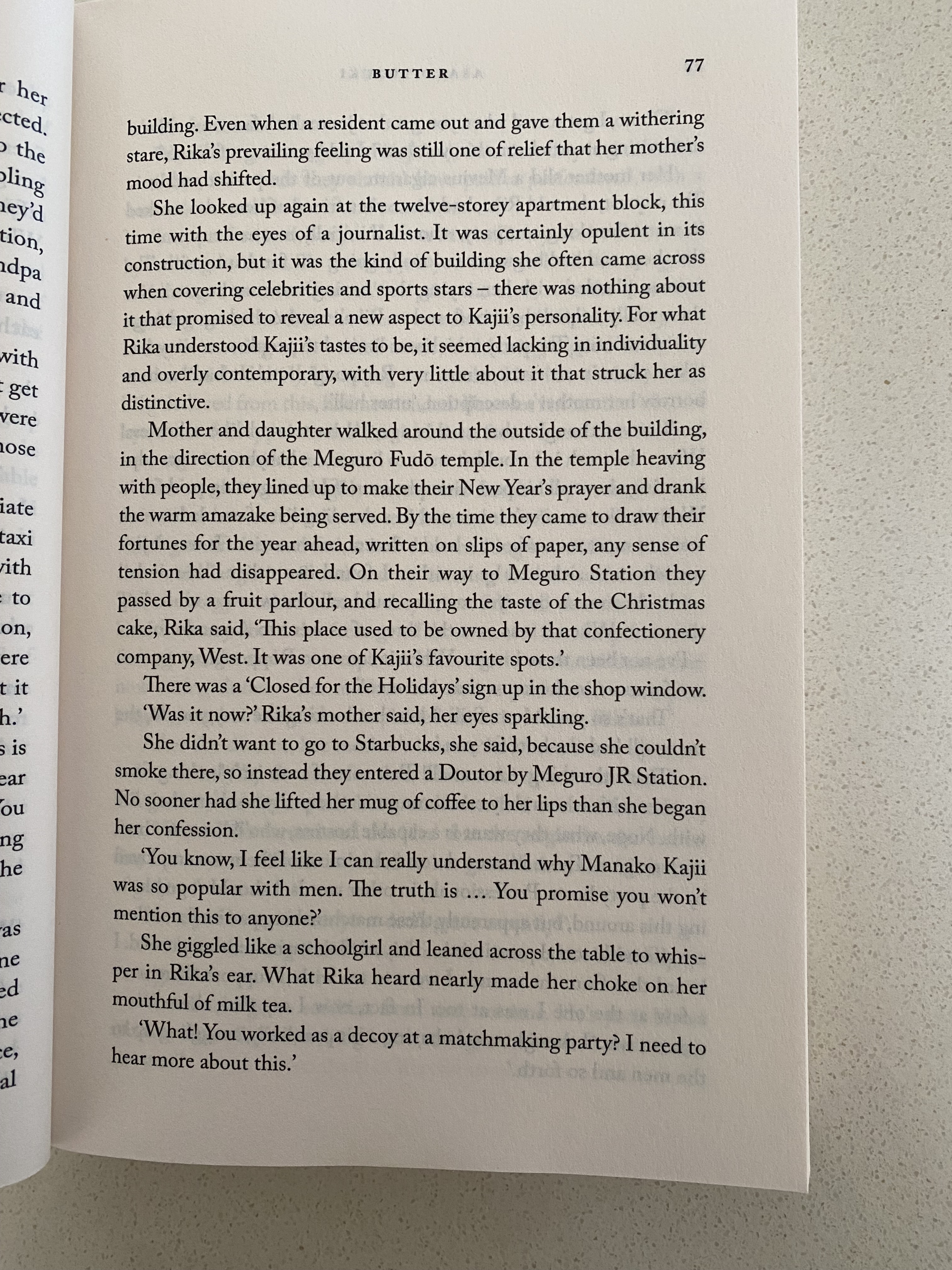
I don’t want to spoil anyone’s enjoyment, but I’ll try to articulate why I find the book such a slog. Page 77* isn’t particularly egregious, but it offers a number of examples. Rika is on an outing with her mother, partly to cheer her up, and partly with the undeclared intention of having a look at Kajii’s apartment. Rika’s mother becomes high-spirited as they inspect the building that has been ‘making a splash in the news’.

I’ll just talk about the beginning and ending of the page, but you can enlarge the image to read it in full:

The first sentence:

Even when a resident came out and gave them a withering stare, Rika’s prevailing feeling was still one of relief that her mother’s mood had shifted.

There’s nothing glaringly wrong with that, but a close look reveals a number of tiny problems contributing to the cumulative awkwardness.

To my ear, the phrase ‘even when’ suggests an extreme event of some kind, and it takes a microsecond to realise that this is something quite undramatic: a resident comes out of the building and gives the pair a withering look. For another microsecond, I wonder why the resident would pay them any attention at all. They’re just two women in a public street. And it’s not just a look, but a stare! How does Rika know that this more or less abstract person is a resident? Moving on, the awkward phrase ‘prevailing feeling’ suggests, if anything, that Rika is experiencing complex emotions, but that suggestion goes nowhere. ‘One of relief’ is clutter – why not just ‘relief’?

One last thing: the word ‘still’, which if you read this sentence without context is completely innocuous. But it’s another example of a micro-interruption to the narrative flow. This is the first time we’ve been told that Rika is feeling relieved. The reader (or at least this one) has to do a quick calculation: oh yes, Rika’s mother’s mood has lifted so of course it was implied that Rika felt relief, so now we’re being told that that relief has survived. This is a recurrent quirk: we’re told that something has happened, rather than seeing it happen.

I can enjoy a text that demands work of me, but these extra little bits of readerly labour bring no joy.

I won’t take you laboriously through the whole page, though I can’t resist mentioning the phrase, ‘In the temple heaving with people’. The meaning is clear, but it doesn’t quite feel like English.

At the end of the page, Rika and her mother are having a coffee (in a Doutor, which Rika’s mother prefers to Starbucks because Starbucks doesn’t allow smoking – in the kind of culture-specific moment that I confess to enjoying).

No sooner had she lifted her mug of coffee to her lips than she began her confession.
‘You know, I feel like I can really understand why Manako Kajii was so popular with men. The truth is … You promise you won’t mention this to anyone?’
She giggled like a schoolgirl and leaned across the table to whisper in Rika’s ear. What Rika heard nearly made her choke on her mouthful of milk tea.
‘What! You worked as a decoy at a matchmaking party? I need to hear more about this.’

Again, these are tiny things, but they accumulate. ‘No sooner than’ is just slightly wrong: can you begin to talk at the moment you lift a mug of coffee to your lips? Specifying a mouthful of tea is unnecessary and creates another of those micro-pauses: I suppose it’s technically possible to choke on a mouthful of liquid, but the term ‘mouthful’ suggests that it’s still in the mouth and more likely to cause spluttering. Having the reader learn what the mother says only when Rika repeats it is an unnecessary and (to me) annoying complication.

Your mileage may vary, and I hope it does. If you want a completely different take on the book, I recommend Theresa Smith Writes.


I wrote this blog post on land of the Gadigal and Wangal clans of the Eora Nation. I happily acknowledge their Elders past and present for caring for this land for many thousands of years.


My blogging practice is to focus arbitrarily on the page of a book that coincides with my age, currently 77.

Yael van der Wouden’s Safekeep at the book club

Yael van der Wouden, The Safekeep (Viking 2024)

Before the meeting: As I mentioned in my post about Lai Wen’s Tiananmen Square, this book has a general strategy in common with a number of other books I’ve read recently – a personal relationship as way of drawing the reader into a big public event.

In this case the personal relationship is sexual. At times I felt like averting my eyes, as if I was intruding on intensely intimate moments.

The book is told from the point of view of a woman who lives alone in the house she has kind-of inherited from her parents in postwar Netherlands. Her brother actually owns of the house but lets her live in it. The story kicks off when he pressures her to allow his girlfriend to stay with her while he goes away for work. The two women are very prickly with each other at first: the owner is prim and obsessive about neatness, and her begrudged guest is an apparently easygoing woman of the world. Bit by bit we realise that the narrator is constantly aware of the other woman’s bodily presence, and eventually the dam breaks and there are many pages of enthusiastic sex.

There are hints along the way that something else is going on. In the book’s very first paragraph, for instance, the uptight host finds a ceramic shard buried in the cottage garden. She recognises a piece from her mother’s precious dinner set, but has no memory of any of those plates ever having been broken. This is the first of a number of hints that there is something about the house that has never been acknowledged. More telling perhaps are childhood memories of strangers knocking at the door and her mother ignoring them.

I guess I knew from the beginning roughty where things were going, and even during the scenes of passion I kept waiting for the other shoe to drop. It does drop, most satisfactorily.

I loved this book.

After the meeting: I wasn’t alone in loving it.

This book group, the majority of whose members are Lesbian, has long had a rule that no Lesbian books were allowed unless the Lesbianism was incidental to the plot. Well, this book smashed that rule to bits, but it did it with such grace and integrity and good writing that not even the Chief Rulemaker minded.

Though we all loved the book, we spent some time discussing the ending. Was it too neat, too quickly achieved, too much out of character? It’s hard to blog about endings but I don’t think I’m giving too much away if I say that two possibilities were raised in defence: first, it’s like the endings to Shakespeare’s comedies – you’re not meant to think this could really have happened but it’s satisfying to imagine it as a kind of justice; second, the apparent change of personality involved could be accounted for by the transformative power of the passionate sexual experience – certainly it was transformative, and maybe even more so than obvious. If you’ve read the book, you’ll have opinions of your own.


The Book Club met on Gadigal land, and I wrote the blog post on land of Gadigal and Wangal of the Eora Nation, land that has never been ceded. I acknowledge the Elders past and present who have cared for this land for millennia.

Lai Wen’s Tiananmen Square at the book club

Lai Wen, Tiananmen Square (Swift Press 2024)

Before the meeting: On page 411 of this novel, the narrator-protagonist, a student at Beijing University, posts an application for an exchange program at a Canadian university. She goes to one of the bars on campus, and then:

The enormity of what I had done began to sink in.

A few pages later, sensations flash across her mind ‘like lightening’, and a few pages further on there is a lake, where a turquoise glow

expanded outward as far as the eye could see, and beyond, the tawny ridges of ochre mountains were flushed at their foothills with dark streaks of wild grass and moss.

The fact that I am brought up short by such moments (enormity is something big and horrible, not something like a major life decision; lightning is what flashes; if the water goes as far as the eye can see, how can you describe what can be seen beyond it?) may say more about me than about the book, but I’m pretty sure if I’d been gripped by the narrative I wouldn’t have noticed them.

If the pseudonymous author is who she says she is, this is an autobiographically inflected story of a young woman caught up in the student uprising in China in 1989. As such, it commands respect.

By coincidence, it shares something of a strategy with three other books I have read recently, telling a story with a tight focus on relationships and then widening out into a huge public event or issue. Kairos by Jenny Erpenbeck is a tales of a toxic relationship between an older man and a young woman that culminates in the fall of the Berlin Wall. The Song of Achilles by Madeline Miller is an adolescent boy-boy love story that becomes a retelling of The Iliad. The Safekeep by Yael van der Wouden (blog post coming soon) is a steamy Lesbian romance that turns out to be about what happens to property confiscated from Jews in the Netherlands under Nazi occupation.

In this book, the personal story lacks a clear or interesting focus. The death of a beloved grandmother, an embittered mother, a pallid teenage sex life (though the first unsatisfactory moment of sexual intimacy is vividly realised), and quirky university encounters all compete for attention. And the otherwise powerful Tiananmen Square narrative is undermined by giving the final moment to a twist that’s silly, and not in a good way.

I am glad I’ve read the book. It’s an important story. It’s just that at the sentence level, which is where I mostly live in books, it trudges.

After the meeting: We discussed this book along with The Safekeep. It was the Book Club’s celebratory end-of-year meeting with exchange of gifts in a restaurant, so discussion of the books was perhaps less extensive than usual.

All but one of us had read the whole book, and given that our meeting had been postponed twice because of illnesses, it was clear that it was lack of interest rather than lack of time that had led to the one non-completion. Generally, the completers all agreed that it was too long – it would have been a better book without a lot of the earlier family stories. Not everyone was convinced by the implied eye-witness status of the author – that claim is undermined by what looks like an arbitrary and ahistorical invention at the very end (and who knows, but we might yet be proved wrong in judging the final moment that way).

The book’s strongest advocate felt (if I remember correctly) that the complex mundaneness of the family story and the story of teenage emotional entanglements was the book’s strength: it took the events of Tiananmen Square in 1989 away from the abstract an showed them irrupting onto the lives of otherwise ordinary people. While others agreed that that’s how the book works, they (we!) felt that the narrator was peripheral to those big events, so her account of them doesn’t add substantially to what we already know from other sources.

We enjoyed The Safekeep a lot more.

The Book Club at James McBride’s Heaven and Earth Grocery Store

James McBride, The Heaven and Earth Grocery Store (Weidenfeld & Nicolson 2023)

Before the meeting: Though this is the first book by James McBride that I have read, he has featured in this blog before, as the author of The Good Lord Bird, one of the Emerging Artist’s best five books of 2014 (link here). That book won the USA’s National Book Award. According to his Wikipedia entry, The Color of Water, a 1995 book about McBride’s African American and Jewish family history and his relationship with his white mother, is widely regarded as an American classic.

The Heaven and Earth Grocery Store is his sixth novel, set in 1925, mainly in Chicken Hill, a ‘ramshackle neighbourhood’ of the Pennsylvania city of Pottstown (Pottstown exists in real life; Chicken Hill not so much as far as I can tell). The store of the title is run by Chona, a Jewish woman, whose husband Moshe runs a neighbourhood theatre. As most of the Jews leave Chicken Hill for more salubrious neighbourhoods, Chona and Moshe remain and, swimming against the tide of their times, continue to serve and welcome the presence of their African American neighbours (always ‘Negroes’ in this book). At the heart of the book is a celebration of friendship and alliance between Jews and Blacks, plus a significant Italian or two.

The book runs to 381 pages, so page 77* occurs at about the one-fifth point. If a conventionally structured Heaven and Earth Grocery Store film were to be made, I imagine that the events on this page would come much earlier, at the 10 percent mark, when the Inciting Incident is due. The set-up has been established: a death has been foreshadowed; we’ve met Moshe and Shona and the main African American couple, Addie and Nate, who work in the shop and the theatre respectively; we’ve seen the theatre and the grocery store in action; we know the story of Chona’s chronic illness and disability; we’ve met the book’s villain, Doc Roberts, who comes from ‘good white Presbyterian stock’ and marches every year with the Ku Klux Klan. It’s time for the first turning point.

Nate has told Moshe about his ten-year-old nephew, Dodo, who recently started working in the theatre. He was made deaf by an accident, and his mother has died.

Nate’s brow furrowed and his old hands moved up and down the broom handle slowly. He said softly, ‘Me and my wife’s got him.’

Moshe looked down at the floor a moment, embarrassed. It rarely occurred to him that he and Nate shared one commonality. Neither of their wives could bear children. They had worked in the theater all day side by side for twelve years but rarely discussed their wives or matters of home.

Their relationship is already changed by this conversation. The distance imposed by their histories is being bridged. The rest of the conversation introduces the book’s main external action.

‘Well, I think that’s fine,’ Moshe said. ‘You can run things as you like.’

Nate’s brow furrowed. ‘A man from the state come to the house last week. Says he’s gonna carry Dodo off to a special school over in Spring City. Dodo don’t wanna go to no special school. He’s all right here with us.’

Moshe’s heart quickened. He felt a request coming, but Nate continued. ‘The man says he’s coming back to fetch him next week. I’m wondering if you might let me slip Dodo into the theater here tonight, just for a few days till the man goes away. The boy’s quiet. Can’t hear nothing. Won’t be scared or make no noise. He can work good, clean up and so forth.’

‘For how long?

‘Just a couple of days till the man’s gone.’

Knowing where this passage occurs in the book, you would almost certainly guess – correctly – that those few days will expand, and the small favour will balloon into something that changes all their lives. As it turns out, when Moshe tells Chona the situation, she insists that they take Dodo into their own home, and he becomes a much loved member of their family until, in spite of their careful strategies to keep him hidden from the authorities, he is taken from them to a ‘special school’, which is in fact a prison-like institution for people deemed insane. Doc Roberts is key to that removal.

The second half of the book is given over to plans to free Dodo. Relationships between Jews, Blacks and poor Whites flourish. Nate’s back story emerges from the shadows and the man who we first meet as the genial, ageing employee shows a dark side that leads to the book’s one shocking moment – shocking because the reader, or at least this one, cheers on a terrible act of violence.

Doc Roberts and his ilk are embodiments of callous, racist, antisemitic hypocrisy and not much else. There’s a subplot to do with water supply to the synagogue that had me wondering why it was there at all until at the very end it joins the main plot to lead to the death mentioned on the first page. (Not really a spoiler.)

The meeting: We discussed this book along with Elif Shafak’s There Are Rivers in the Sky. We seem to be developing a tradition in the Book Club of having a dedicated nay-sayer at each meeting. This month’s nay-sayer said she had had read this one first, and felt it was built from hackneyed tropes with nothing fresh to offer. Then she read There Are Rivers in the Sky, and revised her view upwards. Our non-finisher had the reverse view – based on a small taste of each book, this one was much less gripping.

Such faint praise aside, we had an animated discussion. One person’s bug turned out to be another’s feature. For example, Chona’s neighbour Bernice was once her best friend but they have been estranged for decades, yet when she asks for help in concealing Dodo from the authorities, Bernice is willing to put herself on the line. One person saw this as inconsistency in the character; another saw it as reflecting the nature of the community – solidarity trumping personal animosity.

There’s a sequence in which two young disabled men – one deaf and the other with severe cerebral palsy – work out a way to communicate. ‘Unbelievable!’ someone said. ‘But brilliant!’ someone else replied. It turned out they both meant pretty much the same thing.


Our Book Club meets on the land of Gadigal and Bidjigal, looking out over the ocean. I wrote this blog post further inland in Gadigal Wangal country, where I am priivileged to live. I acknowledge Elders past and present for their continuing custodianship of this land.


My usual blogging practice is to focus on the page that coincides with my age, currently 77. Sometimes, as here, it’s a crucial page.

There Are Rivers in the Sky, Elif Shafak and the Book Club

Elif Shafak, There Are Rivers in the Sky (Penguin 2024)

Before the meeting: I’m glad I read this novel. I am much better informed now on the history of the Yazidi people, and about the unearthing of the Epic of Gilgamesh in the mid 19th century.

After a short opening chapter featuring the tyrant Ashurbanipal in ancient Nineveh, the narrative follows three distinct threads, which remain separate until the final, very short chapter.

There’s Arthur, full name Arthur King of the Sewers and Slums, a fanciful version of the amazing George Smith who decoded the cuneiform script of ancient Mesopotamia, translated the Epic of Gilgamesh and travelled to Nineveh in the mid 19th century. There’s Narin, nine years old at the start, living in south-east Turkey in 2014, child of a shrinking and beleaguered Yazidi family. And there’s Zaleekhah, a 30-something hydrologist in the throes of a break-up in 2018, who we first see renting a houseboat on the Thames.

A number of motifs occur in each of the stories, so that they resonate with each other even there is no evident narrative connection: images of lamassus, the protective spirits of ancient Nineveh who have bearded human heads and lions’ bodies; pieces of lapis lazuli; cuneiform script, on clay tablets or in tattoos; references to The Epic of Gilgamesh; and above all water. The book begins:

Later, when the storm has passed, everyone will talk about the destruction it left behind, though no one, not even the king himself, will remember that it al began with a single raindrop.

That raindrop has no causal impact on events, but the identical drop, having lain dormant in the water table, floated in the ocean, wafted about in clouds, turns up again at crucial moments of each narrative, as a snowflake or ocean spray or another raindrop. That conceit, and the way the narrative frequently pauses for mini-lectures – on hidden rivers, the industrial revolution, Yazidi culture, Napoleonic archaeology, etc etc – meant I spent a lot of time being irritated. The fourth wall is forever being broken, either by a mention of water (at least four times there are sweating necks, or a character introduces herself by saying her name is short for an Irish word for water) or by what reads like a piece of undigested research.

Page 77*, it turns out, has some fine examples. Zahleekha has just stepped into her houseboat for the first time. First there’s the water, with heavy-handed metaphorical significance. She drinks a mug of water ‘in one draught’, and:

It tastes earthy and slightly metallic, with an aftertaste of iron. The flavour has less to do with its intrinsic qualities than with its biophysical environment, the set of conditions that brought it about. Water hardens in adverse circumstances, not unlike the human heart.

Then comes the lecture, preceded by a moment of backstory:

Out of nowhere a memory surfaces – the words Uncle Malek uttered the day she had graduated from university with honours. I’m so proud of you, habibti. I want you to be very successful. Remember, people like us cannot afford to fail.

‘People like us’ … immigrants, exiles, refugees, newcomers, outsiders … Too many words for a shared, recognisable sentiment that, no matter how often described, remains largely undefined.

Children of uprooted parents are born into the memory tribe. Both their present and their future are forever shaped by their ancestral past, regardless of whether they have any knowledge of it. If they flourish and prosper, their achievements will be attributed to a whole community; and, in the same way, their failures will be chalked up to something bigger and older than themselves, be it family, religion or ethnicity.

Then, after a little more along the same lines, Zahleekhah sits down and after a moment starts to cry. But rather than allow the reader space for empathy, the narrator sweeps in with her insistence on water as ubiquitous and rich with symbolic meanings:

A tear falls on the back of her hand. Lacrimal fluid, composed of intricate patterns of crystallised salt invisible to the eye. This drop, water from her own body, containing a trace of her DNA, was a snowflake once upon a time or a wisp of steam, perhaps here or many kilometres away, repeatedly mutating from liquid to solid to vapour and back again, yet retaining its molecular essence. It remained hidden under the fossil-filled earth for tens if not thousands of years, climbed up to the skies and returned to earth in mist, fog, monsoon or hailstorm, perpetually displaced and re-located. Water is the consummate immigrant, trapped in transit, never able to settle.

Again, I’m glad I read this book. But I was annoyed a lot of the time while reading it.

After the meeting: We read There Are Rivers in the Sky along with The Heaven and Earth Grocery Store by James McBride. There were five of us, well-fed by the time we got to the books. We began with confessions: only one person hadn’t read either book, and she had read ‘about 35%’ of this one. She spoke eloquently about what she liked in what she had read – mainly the evocation of polluted, foul-smelling mid-19th century London – which makes me think it’s probably a good idea to have someone in any group who hasn’t finished the book.

Of those who had read to the end, we had a range of responses. One enjoyed it, only peripherally put off by the telling-not-showing and heavy-handed deployment of the leitmotifs. Onehad been enthusiastic abut the book because she hoped it would have interesting things to say about Gilgamesh and appreciated much about it, but was disappointed and disliked being lectured at. And the other just found the book tedious, would rather have read a non-fiction treatment of the history and persecution of the Yazidi, couldn’t feel any of the characters as more than made-up figures to allow the plot to move. And there was me (see above).

We all agreed that the most interesting thing in the book was the character of Arthur. Born in abject poverty, his photographic memory and a series of Dickensian coincidences (one of them featuring Charles Dickens) led him to interesting places, and fixation on a book about Nineveh as a way of dealing with the pain of brutal beating led to a grand obsession that gave The Epic of Gilgamesh to the modern world. I now want to find out more about the real-world George Smith, but I’m very happy to have Arthur in my mental world as distinct from him.


I wrote this blog post in Gadigal Wangal country, in a place where wetlands have been drained, but the river is recovering health, is home to a marvellous variety of birds, and is a great place for catch and release fishing (one day the fish may be edible again). I acknowledge Elders past, present and emerging for their continuing custodianship of this land.


My blogging practice is to focus on the page that coincides with my age, currently 77.

Abdulrazak Gurnah’s Paradise and the Book Club

Abdulrazak Gurnah, Paradise (©1994, Bloomsbury 2004)

Abdulrazak Gurnah, winner of the Nobel Prize in Literature in 2021, was a wonderfully urbane guest at this year’s Sydney Writers’ Festival. In the session I attended he spoke mainly about his 2021 novel, Afterlives, but talked a lot about that book’s relationship with the much earlier Paradise. (Added much later: you can listen to the podcast of the conversation at this link.)

We read Afterlives a while ago in my all-male Book Group, and had a wonderful discussion of it. Now my predominantly female Book Club is tackling the earlier novel.

Before the meeting: Paradise is a long way from languishing in the shadow of Afterlives. Its action unfolds in the same part of East Africa, beginning a couple of decades earlier, in the years leading up to the First World War.

The book begins with a boy named Yusuf looking forward to receiving a customary gift of money from Uncle Aziz when Aziz’s brief visit comes to an end. There is no gift, and instead the boy is taken away with the uncle. Then he realises that he is not going back to his family and soon learns that he has been given to Aziz, who is not actually his uncle, as surety against his father’s debts. He has become little more than a slave in the merchant’s household.

The story unfold from there. There’s adventure, involving an arduous, perilous expedition into the unknown. There’s romance, where intimate moments, perhaps even a kiss, may be snatched in dark corners of a walled garden. There’s a gallery of rich, exuberant characters – Khalil, an older boy in a similar state of bondage to Yusuf; an older woman, infatuated by Yusuf’s beauty, who harasses him to the amusement of onlookers; an ancient gardener who long ago refused his freedom when actual slavery was abolished; a formidable, scarred man who organises Aziz’s trade expeditions and has a reputation as a sexual predator on young men; Aziz himself, a formidable commercial operator who remains calm in the most extreme situations.

Meanwhile, European powers are colonising East Africa. They are mostly peripheral, offscreen characters who threaten to destroy the whole world experienced by the main characters. German soldiers appear twice, once at roughly the midpoint and then again at the very end. Both times they function as a deus ex machina: the first time their unexpected arrival saves Aziz and his expedition, including Yusuf, from a vengeful tribal chief, but the incident leaves a nasty sense of something unresolved; the second time they provide the book’s final moment, which left me staring into space for a long time.

The book was only transated into Swahili – the official language along with English of Gurnah’s home nation Tanzania (known as Zanzibar back then) – after he was awarded the Nobel Prize.

After the meeting: At this meeting we discussed Annie Ernaux’s Une femme / A Woman’s Story along with Paradise, an odd pairing which meant we had two quite separate discussions.

All but one of us enjoyed this book a lot, and the dissenting voice meant we had an interesting conversation. The main character, she said, is completely passive: things just happen to him, one after another, and especially on the gruelling trade expedition that takes up a good slab of the book the bad things are repetitive. The book only becomes interesting once Yusuf is back in town and a powerful woman, in a complex way, is lusting after him. Though others were able to point out that Yusuf was constantly taking initiatives – a surreptitious excursion to town just for fun, offering unauthorised help to the ancient gardener, etc – I was struck by the similarity of this observation to what someone in my other Book Group said about the main character in Afterlives: because of the constraints on the characters, they don’t have the space to attend to their inner lives. When I tried to articulate this thought, someone said something beautifully concise and wise about the way trauma can alienate a young person from their own experience. Sadly I didn’t write it down, but to my mind it captured beautifully the way Yusuf does indeed move from one thing to the next, having no real say about the direction of his life, and no ability to form coherent thoughts about it.

I realised in the course of the discussion that the story is full of references to Joseph / Yusuf in the Hebrew Bible and the Quran, in particular the episode of Potiphar’s wife / Zuleikha. I just read a version of the Quran story on Wikipedia, and the parallels are even closer than I thought. It makes me wonder what other references may be hovering around this eminently readable tale. Joseph Conrad’s Heart of Darkness comes to mind. (Gurnah’s Gravel Heart includes a retelling of Shakespeare’s Measure for Measure, set in modern East Africa.)

We discussed the final paragraph, which I’d love to expand on here but, unlike some surprise revelations (see my blog post on Wole Soyinka’s Chronicles from the Land of the Happiest People on Earth, coming in a month or so), it really is a surprise.

Being of a certain age, we said goodnight a little after 10 o’clock.


I wrote this blog post in Gadigal Wangal country, where it is my great joy to live. In particular right now the days are getting warmer, the sun is rising earlier and setting later, and whenever I walk out my door I see tiny lizards scurrying for cover. I acknowledge Elders past, present and emerging for their continuing custodianship of this land.

Annie Ernaux, une femme, a woman’s story and the book club

Annie Ernaux, Une femme (Editions Gallimard 1987)
—–, A Woman’s Story (translated by Tanya Leslie 1991, Fitzcarraldo Editions 2024)

Before the meeting: The press release announcing that Annie Ernaux had won the Nobel Prize in Literature spoke of:

the courage and clinical acuity with which she uncovers the roots, estrangements and collective restraints of personal memory.

Every word of that is well chosen. Ernaux revisits her own life story in every book, pitting her ‘personal memory’ against what she finds in old photographs and diary entries, constantly questioning and challenging herself. She makes most other autobiographies / memoirs seem at least a little glib and self-serving.

I read Une femme / A Woman’s Story in both French and English. I could do this because it’s a short book – 60 pages in English, 95 in French. Apart from an opportunity to flex my rusty French, I was motivated by the way the English title departs from the original. Une femme is literally ‘A woman’. Calling it A Woman’s Story is a tiny change, but it significantly shifts the meaning. I wondered if similar shifts happened in the body of the book. (I think they do, and I apologise in advance for the way this blog post gets bogged down in the details of translation – fascinating to me, but maybe not to you!)

A Woman’s Story / Une femme does tell the story of a woman: Ernaux’s mother. But actually there are three stories. There’s Ernaux’s reconstruction of her mother’s life: her youth, her time as a shopkeeper in an impoverished part of France, her marriage, her ageing, and at last her dementia and death. There’s the story of Ernaux’s relationship with her, including the times that she lived with her and her family, and at the very end a brilliantly concise statement of what, after the initial intense grief, her mother’s death meant for her. And there’s the story of writing the book, begun in April 1986, very soon after her mother’s death, and finished in February the following year. This is a book in which une femme writes about une femme, and either could lay claim to the book’s French title.

I love this book. It reaches tendrils into parts of my own life that could do with a bit of ‘courage and clinical acuity’. I find Ernaux’s sheer dogged determination to find truthful words completely engrossing. In one of several moments when she steps in to tell us about the process of writing, she says:

When I speak of her, my first impulse is to ‘freeze’ her in a series of images unrelated to time – ‘she had a violent temper’, ‘she was intense in everything she did’ – and to recall random scenes in which she was present. This brings back only the fantasy woman, the one who has recently appeared in my dreams, alive once more, drifting ageless through a tense world reminiscent of psychological thrillers. I would also like to capture the real woman, the one who existed independently from me, born on the outskirts of a small Normandy town, and who died in the geriatric ward of a hospital in the suburbs of Paris. The more objective aspect of my writing will probably involve a cross between family history and sociology, reality and fiction [la jointure du familial et du social, du mythe et de l’histoire] … I would like to remain a cut below literature.

(Page 17)

That is to say, don’t look for fine writing here. Look for a serious attempt to see the reality of this woman’s life and how it was interwoven with Ernaux’s own.

My practice of looking at page 77 is a good way of giving you a flavour of the book, and of some of the issues that must have faced Tanya Leslie, the translator.

On page 77 of the French edition, page 51 of the English, it’s the early 1970s. Ernaux’s mother, now a widow, has sold her business and abandoned her life as a shopkeeper. She has moved to Annecy at the other end of France to live with Ernaux and her young family. She isn’t thrilled with her new life: she is no longer a significant part of a community. Her life has shrunk. ‘Now she felt she was a nobody’ / ‘Elle ne se sentait plus rien.’ She was proud of the life Annie had made for herself, but felt uneasy with the middle-class life that now surrounded her.

I ought to say that after my partner’s father died, her widowed mother became a much bigger presence in our lives, after a time spending a couple of nights a week living with us and then moving in full time. We didn’t have the class difference that Ernaux describes, but this page resonates powerfully, and I am in awe of the way the writing reaches for a deeply respectful understanding of the mother’s point of view:

Living with us was like living in a world that welcomed her and rejected her at the same time. One day she said angrily, ‘I don’t think I belong here.’

The transition from the generalised to the particular in those two sentences is typical Ernaux. In the French, it’s slightly different:

C’était vivre à l’intérieur d’un monde qui l’accueillait d’un côté et l’excluait d’un autre. Un jour, avec colère: « Je ne fais pas bien dans le tableau. »

There are three departures from a literal, word for word translation. First, there is no ‘us’: it’s all about the mother. Second, the English has tidied up the second sentence and given it a verb – ‘she said’ – which is not there in the French. There’s a lot of that in the book. The French text sometimes reads like quick notes: no need to spell out who was speaking etc. The English tidies it up, with the effect that what in French feels rough and raw becomes in English a more polished, considered text. And third, what the mother says has been softened: the tentativeness of ‘I don’t think’ is an insertion, where the French just has an angry statement of fact: ‘I don’t belong here.’

The rest of the page, in English:

And so she wouldn’t answer the phone when it rang next to her. If her son-in-law was watching football on television, she would make a point of knocking on the door before entering the living room. She was always asking for work – ‘Well, if there’s nothing to do, I might as well leave then’ – adding with a touch of irony, ‘After all, I’ve got to earn my keep!’ The two of us would argue about her attitude and I blamed her for deliberately humiliating herself. It took me a long time to realise that the feeling of unease my mother experienced in my own house was no different from what I had felt as a teenager when I was introduced to people ‘a cut above us’. (As if only the ‘lower classes’ suffered from inequalities which others choose to ignore.) I also realised that the cultural supremacy my husband and I enjoyed – reading Le Monde, listening to Bach – was distorted by my mother into a form of economic supremacy, based on the exploitation of labour: putting herself in the position of an employee was her way of rebelling.

And in French:

Donc elle ne répondait pas au téléphone quand il sonnait près d’elle, frappait d’une manière ostensible avant de pénétrer dans le salon où son gendre regardait un match à la télé, réclamait sans cesse du travail, « si on ne me donne rien à faire, je n’ai plus qu’a m’en aller» et, en riant à moitié, « il faut bien que je paye ma place!». Nous avions des scènes toutes les deux à propos de cette attitude, je lui reprochais de s’humilier exprès. J’ai mis longtemps à comprendre que ma mère ressentait dans ma propre maison le malaise qui avait été le mien, adolescente, dans les « milieux mieux que nous » (comme s’il n’était donné qu’aux « inférieurs » de souffrir de différences que les autres estiment sans importance). Et qu’en feignant de se considérer comme une employée, elle transformait instinctivement la domination cultureIle, réelle, de ses enfants lisant Le Monde ou écoutant Bach, en une domination économique, imaginaire, de patron à ouvrier: une façon de révolter.

You can see what the translator had to wrestle with. She breaks two long sentences into shorter ones. I can’t tell if this is her way of making the text more elegant, or if it’s a difference in the way the languages work. And domination must have given her nightmares: ‘supremacy’ isn’t a dictionary equivalent, but it’s surely eccentric to describe reading Le Monde as an act of domination. Yet maybe that eccentricity is exactly what Ernaux intended – certainly ‘economic supremacy’ makes less sense than ‘economic domination’.

This is one place where I was happy I had read the French as well as the English. I didn’t understand the bit in brackets about the ‘lower classes’ until I read the French, where, rather than the ‘others’ choosing to ignore inequalities, they consider some différences to be unimportant (and yes, différences translates as ‘differences’, no inequality necessarily implied). Le Monde is just a newspaper to Ernaux and her husband, and Bach is pleasant to listen to. For the mother, they are markers of cultural superiority. A smaller oddity of the translation is that whereas the French insists that the ‘cultural supremacy’ / domination culturelle is real (réelle) and that the ‘economic supremacy’ / domination économique is imaginary (imaginaire), the English lets the word ‘distorted’ carry that distinction. On top of that, leaving out the word instinctivement, it seems to me, makes the mother seem much more calculating, and perhaps makes Ernaux less patronising. I don’t think Ernaux wants to blame her mother, or spare herself, in this way.

After I’d written that last sentence I noticed a moment in the previous paragraph that struck a chord with me. One of the things Ernaux’s mother has to do to conform to the household’s lifestyle is, in English:

‘observing personal hygiene’ (blowing the boys’ noses on a clean handkerchief).

That’s unremarkable, just one more detail in the list of things she has to adapt to. The original French is:

avoir de l’« hygiène » (ne pas moucher les enfants avec son propre mouchoir).

A literal translation of the phrase in brackets is, ‘not to blow the children’s noses with her own handkerchief’. They say a translation can never be complete, but still I allow myself to mourn the loss of this tiny, graphic image of grandparent–grandchild intimacy forgone in the name of upward mobility, and lost to the English text for who knows what reason: perhaps handkerchiefs themselves are so repugnant to modern Anglo sensibilities that sharing them is unspeakable.

After the meeting: In the Book Club, we traditionally discuss two books. This book was paired with Abdulrazak Gurnah’s Paradise (link to come added later). I think the reason for the pairing was that they’re both by Nobel laureates. At the start of our discussion, an astute person pointed out that they both feature shops (the mother’s shop in Ernaux’s book, and two different shops where Gurnah’s protagonist worked). That’s about where the similarities began and ended. Our evening – or at least that part of it not taken up with excellent food and even more excellent conversation about life, physical afflictions, travel plans and so on – was split neatly into two parts.

As you’d expect, my having read the book in both languages was met with eye rolls, but there was general recognition that the difference was substantial between blowing a child’s nose on a clean handkerchief and not blowing it on one’s own handkerchief.

We had a very interesting discussion of a passage where Ernaux describes her aim as to set aside her own emotional memories about her mother (how she felt when she was angry etc) and tell the story from her mother’s point of view, but says that she finds those emotions breaking through anyway. I think we agreed that this, far from being a failure, is one of the things that makes the book so rich.

One person out of the five of us didn’t care for the book. Reading it, she couldn’t see any reason why Annie Ernaux would have been given the Nobel. Those of us who had read a number of her books tried to articulate our reasons for holding her in high esteem, but maybe it’s a matter of taste. What I/we saw as minimalism, for example, she saw as sketchiness.

One person spoke of the way the book had inspired her to try to write about her own childhood, focusing on specifics rather than a broad narrative. The exercise had led to interesting insights into her early life. We had a brief but interesting conversation about how for ‘our generation’ in Australia (we range from a couple of weeks short of 70 to a couple of years beyond 80), as for Annie Ernaux, there was a shift in class – ‘upward mobility’ – that hadn’t been so widespread in previous generations. This shift was due in part to increased access to education – so we did the Australian equivalent of listening to Bach and reading Le Monde.

It might seem that that conversation was of the same order as travel plans and medical reports, but I think it’s a quality of Ernaux’s books – not just this one – that they prompt readers to reflect on their own lives.

Next: Paradise.

Andrew O’Hagan on Caledonian Road with the book club

Andrew O’Hagan, Caledonian Road (Faber 2024)

Before the meeting: Caledonian Road has a brilliant epigraph from Robert Louis Stevenson’s 1881 essay about ageing, ‘Aes Triplex’:

After a certain distance, every step we take in life we find the ice growing thinner and thinner below our feet, and all around us and behind us we see our contemporaries going through.

This quote struck a powerful chord with me, as the ice is definitely growing thinner below my feet, and I’m seeing my contemporaries ‘going through’ with increasing frequency.

Disappointingly, however, the book isn’t about courage and resilience in the face of ageing. It’s both more ambitious and less engaging than that.

Caledonian Road is a portrait of modern Britain, where criminality and corruption are the order of the day, and complicity is universal. Ranging from a Russian oligarch to a bystander at a backstreet knifing, with a distinguished art critic, a number of parliamentarians and a huge cast of characters in between, no one in the book can claim complete innocence.

The book’s first sentence introduces the main character and hints broadly at what is to happen:

Tall and sharp at fifty-two, Campbell Flynn was a tinderbox in a Savile Row suit, a man who believed his childhood was so far behind him that all its threats had vanished.

Campbell is a successful academic and art critic who dabbles in writing copy for fashion shows. He has written an essay that aims to puncture the complacency of the art world. He’s also dashed off a self-help book called Why Men Cry in Cars for which he plans to hire a handsome young actor to claim authorship and do signing tours. In the year covered Caledonian Road – in four parts named for the seasons, plus a fifth part titled ‘Realisation’ – his plans go (predictably) awry, and his own complacency is shattered. He falls under the spell of a young black student, Milo, who challenges his liberal world view and introduces him to the dubious pleasures of the dark web. Campbell’s comfortable life unravels and all around him and Milo as the outright and criminality of their friends, families and associates is laid bare.

The narrative takes us into many corners of UK society – a private gentlemen’s club, the tiny front parlour of a bereaved working class Scotswoman, a disastrous fashion shoot, a marijuana farm, a lorry full of illegal immigrants, the office of a tabloid newspaper. And weaponised social media is everywhere.

If it was a television series, I’m pretty sure I’d be addicted. As a novel, it’s not my cup of tea. There are many wonderful things in it, but the narrative just doesn’t sing, at least not to me. For instance, this is the opening of Chapter 10, which was a turning point, not in the plot, but in my non-enjoyment:

When he wasn’t in the country or at their mansion in Holland Park, the Duke was often at his old bachelor set at Albany, Piccadilly. His rooms were halfway down the rope-walk, opposite Admiral FitzRoy’s storm barometer, which that day indicated a fair wind. For some time there had been work going on above him, an ‘Oedipal struggle’, the porter said, between the young playboy Ralph Trench and his father, the decorator Hartley Trench, who had made his name, and his family ill, via a lifetime’s association with Sibyl Colefax and the Prince of Wales.

The Duke is one of the book’s main characters, but no one else in that paragraph is ever mentioned again. For an ignorant colonial commoner like me, none of the named places, things or people means anything. Google isn’t much help with Admiral Fitzroy and his storm barometer; I’m guessing the Trenches are inventions; for those in the know there’s probably a witty observation about fashion or the lifestyles of the rich and famous in the mention of Sybil Colefax and the prince. It feels as if Andrew O’Hagan worked hard at getting the details right here. And that’s so for the whole book – details for fashionistas, marijuana growers, people-smugglers and art dealers as much as for the aristocracy. And it feels like work for the reader too, with too little pleasure or enlightenment to show for it.

Andrew O’Hagan spoke with Richard Fidler about Caledonian Road at the Melbourne Writers Festival (here’s a link). He talked an excellent book.

After the meeting: We discussed the book along with Daniel Mason’s North Woods. We found a lot more to talk about in this one.

Someone brought along a book on Joan Eardley, one of whose paintings hangs in Campbell Flynn’s house. We found a painting that most fitted the description in the book, and were reminded of a feature of Flynn’s character that I’ve omitted in the earlier parts of this post: his childhood was in a poor part of Scotland, and he occasionally reflected on the disparity between his present comfort and past deprivation.

I read out the passage about Admiral FitzRoy’s storm barometer. Possibly in response to that, someone said they had read somewhere that London is a character in the book. Maybe so, was my thought, if you already know London.

Someone recognised a syndrome (my word) in Campbell’s relationship with Milo: an ageing academic who feels his grip on the zeitgeist loosening sees the prospect for continuing relevance in latching on to a student and, under the appearance of supporting the student, in effect plagiarises their work. In Campbell’s case, he employs Milo as his research assistant for a significant public lecture and, though like much else in the book this is never quite explicit, Milo in effect writes the lecture for him. When one or two scholars from outside Campbell’s comfortable British liberal arts environment dismiss the lecture as derivative, the narrator leaves it to the reader to judge whether this is just academic snark or whether something substantial is being said. We know that Milo is waging a kind of guerrilla class warfare as a hacker; is he also doing it by messing with Campbell academically?

We argued abut Campbell’s financial worries. Though his psychiatrist wife and he live pretty luxuriously, he considers himself to be in trouble – but won’t tell her about. Some of us believed he really was in trouble. Others thought it was all in his mind. Typically, the narrative voice leaves it up to the reader to figure it out.

I think we generally agreed that there is too much happening in the book. Things just happen, mostly offstage, and the action moves on. Things are generally treated superficially, so that there only a couple of moments, involving minor characters, where real emotion is being captured. In particular, the treatment of the younger characters – Campbell’s DJ son, the profligate son of the Russian oligarch, the Black gang members – is unconvincing.

This is the Book Club where we used to just swap books, with no more than 30 consecutive seconds of discussion allowed on any book. We’ve now met five times and are getting the hang of the Club’s new incarnation. Astonishingly, Trump and Biden hardly got a mention until quite late in the evening, when one who may or may not have inside knowledge predicted that Biden would withdraw from the race on Monday our time. She was right.