Category Archives: Book Club

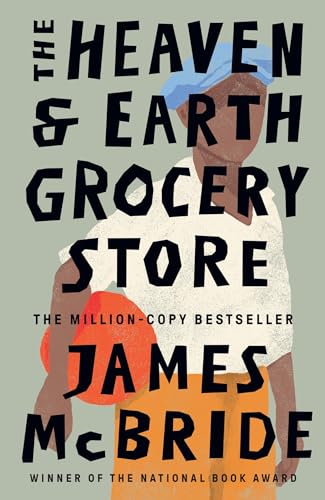
The Book Club at James McBride’s Heaven and Earth Grocery Store

James McBride, The Heaven and Earth Grocery Store (Weidenfeld & Nicolson 2023)

Before the meeting: Though this is the first book by James McBride that I have read, he has featured in this blog before, as the author of The Good Lord Bird, one of the Emerging Artist’s best five books of 2014 (link here). That book won the USA’s National Book Award. According to his Wikipedia entry, The Color of Water, a 1995 book about McBride’s African American and Jewish family history and his relationship with his white mother, is widely regarded as an American classic.

The Heaven and Earth Grocery Store is his sixth novel, set in 1925, mainly in Chicken Hill, a ‘ramshackle neighbourhood’ of the Pennsylvania city of Pottstown (Pottstown exists in real life; Chicken Hill not so much as far as I can tell). The store of the title is run by Chona, a Jewish woman, whose husband Moshe runs a neighbourhood theatre. As most of the Jews leave Chicken Hill for more salubrious neighbourhoods, Chona and Moshe remain and, swimming against the tide of their times, continue to serve and welcome the presence of their African American neighbours (always ‘Negroes’ in this book). At the heart of the book is a celebration of friendship and alliance between Jews and Blacks, plus a significant Italian or two.

The book runs to 381 pages, so page 77* occurs at about the one-fifth point. If a conventionally structured Heaven and Earth Grocery Store film were to be made, I imagine that the events on this page would come much earlier, at the 10 percent mark, when the Inciting Incident is due. The set-up has been established: a death has been foreshadowed; we’ve met Moshe and Shona and the main African American couple, Addie and Nate, who work in the shop and the theatre respectively; we’ve seen the theatre and the grocery store in action; we know the story of Chona’s chronic illness and disability; we’ve met the book’s villain, Doc Roberts, who comes from ‘good white Presbyterian stock’ and marches every year with the Ku Klux Klan. It’s time for the first turning point.

Nate has told Moshe about his ten-year-old nephew, Dodo, who recently started working in the theatre. He was made deaf by an accident, and his mother has died.

Nate’s brow furrowed and his old hands moved up and down the broom handle slowly. He said softly, ‘Me and my wife’s got him.’

Moshe looked down at the floor a moment, embarrassed. It rarely occurred to him that he and Nate shared one commonality. Neither of their wives could bear children. They had worked in the theater all day side by side for twelve years but rarely discussed their wives or matters of home.

Their relationship is already changed by this conversation. The distance imposed by their histories is being bridged. The rest of the conversation introduces the book’s main external action.

‘Well, I think that’s fine,’ Moshe said. ‘You can run things as you like.’

Nate’s brow furrowed. ‘A man from the state come to the house last week. Says he’s gonna carry Dodo off to a special school over in Spring City. Dodo don’t wanna go to no special school. He’s all right here with us.’

Moshe’s heart quickened. He felt a request coming, but Nate continued. ‘The man says he’s coming back to fetch him next week. I’m wondering if you might let me slip Dodo into the theater here tonight, just for a few days till the man goes away. The boy’s quiet. Can’t hear nothing. Won’t be scared or make no noise. He can work good, clean up and so forth.’

‘For how long?

‘Just a couple of days till the man’s gone.’

Knowing where this passage occurs in the book, you would almost certainly guess – correctly – that those few days will expand, and the small favour will balloon into something that changes all their lives. As it turns out, when Moshe tells Chona the situation, she insists that they take Dodo into their own home, and he becomes a much loved member of their family until, in spite of their careful strategies to keep him hidden from the authorities, he is taken from them to a ‘special school’, which is in fact a prison-like institution for people deemed insane. Doc Roberts is key to that removal.

The second half of the book is given over to plans to free Dodo. Relationships between Jews, Blacks and poor Whites flourish. Nate’s back story emerges from the shadows and the man who we first meet as the genial, ageing employee shows a dark side that leads to the book’s one shocking moment – shocking because the reader, or at least this one, cheers on a terrible act of violence.

Doc Roberts and his ilk are embodiments of callous, racist, antisemitic hypocrisy and not much else. There’s a subplot to do with water supply to the synagogue that had me wondering why it was there at all until at the very end it joins the main plot to lead to the death mentioned on the first page. (Not really a spoiler.)

The meeting: We discussed this book along with Elif Shafak’s There Are Rivers in the Sky. We seem to be developing a tradition in the Book Club of having a dedicated nay-sayer at each meeting. This month’s nay-sayer said she had had read this one first, and felt it was built from hackneyed tropes with nothing fresh to offer. Then she read There Are Rivers in the Sky, and revised her view upwards. Our non-finisher had the reverse view – based on a small taste of each book, this one was much less gripping.

Such faint praise aside, we had an animated discussion. One person’s bug turned out to be another’s feature. For example, Chona’s neighbour Bernice was once her best friend but they have been estranged for decades, yet when she asks for help in concealing Dodo from the authorities, Bernice is willing to put herself on the line. One person saw this as inconsistency in the character; another saw it as reflecting the nature of the community – solidarity trumping personal animosity.

There’s a sequence in which two young disabled men – one deaf and the other with severe cerebral palsy – work out a way to communicate. ‘Unbelievable!’ someone said. ‘But brilliant!’ someone else replied. It turned out they both meant pretty much the same thing.


Our Book Club meets on the land of Gadigal and Bidjigal, looking out over the ocean. I wrote this blog post further inland in Gadigal Wangal country, where I am priivileged to live. I acknowledge Elders past and present for their continuing custodianship of this land.


My usual blogging practice is to focus on the page that coincides with my age, currently 77. Sometimes, as here, it’s a crucial page.

There Are Rivers in the Sky, Elif Shafak and the Book Club

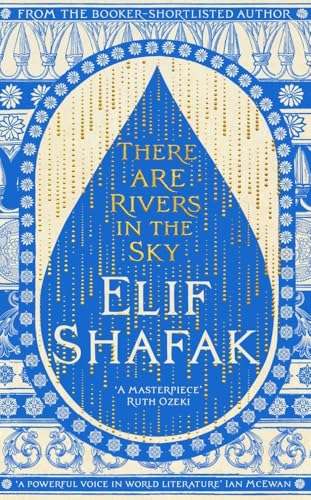
Elif Shafak, There Are Rivers in the Sky (Penguin 2024)

Before the meeting: I’m glad I read this novel. I am much better informed now on the history of the Yazidi people, and about the unearthing of the Epic of Gilgamesh in the mid 19th century.

After a short opening chapter featuring the tyrant Ashurbanipal in ancient Nineveh, the narrative follows three distinct threads, which remain separate until the final, very short chapter.

There’s Arthur, full name Arthur King of the Sewers and Slums, a fanciful version of the amazing George Smith who decoded the cuneiform script of ancient Mesopotamia, translated the Epic of Gilgamesh and travelled to Nineveh in the mid 19th century. There’s Narin, nine years old at the start, living in south-east Turkey in 2014, child of a shrinking and beleaguered Yazidi family. And there’s Zaleekhah, a 30-something hydrologist in the throes of a break-up in 2018, who we first see renting a houseboat on the Thames.

A number of motifs occur in each of the stories, so that they resonate with each other even there is no evident narrative connection: images of lamassus, the protective spirits of ancient Nineveh who have bearded human heads and lions’ bodies; pieces of lapis lazuli; cuneiform script, on clay tablets or in tattoos; references to The Epic of Gilgamesh; and above all water. The book begins:

Later, when the storm has passed, everyone will talk about the destruction it left behind, though no one, not even the king himself, will remember that it al began with a single raindrop.

That raindrop has no causal impact on events, but the identical drop, having lain dormant in the water table, floated in the ocean, wafted about in clouds, turns up again at crucial moments of each narrative, as a snowflake or ocean spray or another raindrop. That conceit, and the way the narrative frequently pauses for mini-lectures – on hidden rivers, the industrial revolution, Yazidi culture, Napoleonic archaeology, etc etc – meant I spent a lot of time being irritated. The fourth wall is forever being broken, either by a mention of water (at least four times there are sweating necks, or a character introduces herself by saying her name is short for an Irish word for water) or by what reads like a piece of undigested research.

Page 77*, it turns out, has some fine examples. Zahleekha has just stepped into her houseboat for the first time. First there’s the water, with heavy-handed metaphorical significance. She drinks a mug of water ‘in one draught’, and:

It tastes earthy and slightly metallic, with an aftertaste of iron. The flavour has less to do with its intrinsic qualities than with its biophysical environment, the set of conditions that brought it about. Water hardens in adverse circumstances, not unlike the human heart.

Then comes the lecture, preceded by a moment of backstory:

Out of nowhere a memory surfaces – the words Uncle Malek uttered the day she had graduated from university with honours. I’m so proud of you, habibti. I want you to be very successful. Remember, people like us cannot afford to fail.

‘People like us’ … immigrants, exiles, refugees, newcomers, outsiders … Too many words for a shared, recognisable sentiment that, no matter how often described, remains largely undefined.

Children of uprooted parents are born into the memory tribe. Both their present and their future are forever shaped by their ancestral past, regardless of whether they have any knowledge of it. If they flourish and prosper, their achievements will be attributed to a whole community; and, in the same way, their failures will be chalked up to something bigger and older than themselves, be it family, religion or ethnicity.

Then, after a little more along the same lines, Zahleekhah sits down and after a moment starts to cry. But rather than allow the reader space for empathy, the narrator sweeps in with her insistence on water as ubiquitous and rich with symbolic meanings:

A tear falls on the back of her hand. Lacrimal fluid, composed of intricate patterns of crystallised salt invisible to the eye. This drop, water from her own body, containing a trace of her DNA, was a snowflake once upon a time or a wisp of steam, perhaps here or many kilometres away, repeatedly mutating from liquid to solid to vapour and back again, yet retaining its molecular essence. It remained hidden under the fossil-filled earth for tens if not thousands of years, climbed up to the skies and returned to earth in mist, fog, monsoon or hailstorm, perpetually displaced and re-located. Water is the consummate immigrant, trapped in transit, never able to settle.

Again, I’m glad I read this book. But I was annoyed a lot of the time while reading it.

After the meeting: We read There Are Rivers in the Sky along with The Heaven and Earth Grocery Store by James McBride. There were five of us, well-fed by the time we got to the books. We began with confessions: only one person hadn’t read either book, and she had read ‘about 35%’ of this one. She spoke eloquently about what she liked in what she had read – mainly the evocation of polluted, foul-smelling mid-19th century London – which makes me think it’s probably a good idea to have someone in any group who hasn’t finished the book.

Of those who had read to the end, we had a range of responses. One enjoyed it, only peripherally put off by the telling-not-showing and heavy-handed deployment of the leitmotifs. Onehad been enthusiastic abut the book because she hoped it would have interesting things to say about Gilgamesh and appreciated much about it, but was disappointed and disliked being lectured at. And the other just found the book tedious, would rather have read a non-fiction treatment of the history and persecution of the Yazidi, couldn’t feel any of the characters as more than made-up figures to allow the plot to move. And there was me (see above).

We all agreed that the most interesting thing in the book was the character of Arthur. Born in abject poverty, his photographic memory and a series of Dickensian coincidences (one of them featuring Charles Dickens) led him to interesting places, and fixation on a book about Nineveh as a way of dealing with the pain of brutal beating led to a grand obsession that gave The Epic of Gilgamesh to the modern world. I now want to find out more about the real-world George Smith, but I’m very happy to have Arthur in my mental world as distinct from him.


I wrote this blog post in Gadigal Wangal country, in a place where wetlands have been drained, but the river is recovering health, is home to a marvellous variety of birds, and is a great place for catch and release fishing (one day the fish may be edible again). I acknowledge Elders past, present and emerging for their continuing custodianship of this land.


My blogging practice is to focus on the page that coincides with my age, currently 77.

Abdulrazak Gurnah’s Paradise and the Book Club

Abdulrazak Gurnah, Paradise (©1994, Bloomsbury 2004)

Abdulrazak Gurnah, winner of the Nobel Prize in Literature in 2021, was a wonderfully urbane guest at this year’s Sydney Writers’ Festival. In the session I attended he spoke mainly about his 2021 novel, Afterlives, but talked a lot about that book’s relationship with the much earlier Paradise. (Added much later: you can listen to the podcast of the conversation at this link.)

We read Afterlives a while ago in my all-male Book Group, and had a wonderful discussion of it. Now my predominantly female Book Club is tackling the earlier novel.

Before the meeting: Paradise is a long way from languishing in the shadow of Afterlives. Its action unfolds in the same part of East Africa, beginning a couple of decades earlier, in the years leading up to the First World War.

The book begins with a boy named Yusuf looking forward to receiving a customary gift of money from Uncle Aziz when Aziz’s brief visit comes to an end. There is no gift, and instead the boy is taken away with the uncle. Then he realises that he is not going back to his family and soon learns that he has been given to Aziz, who is not actually his uncle, as surety against his father’s debts. He has become little more than a slave in the merchant’s household.

The story unfold from there. There’s adventure, involving an arduous, perilous expedition into the unknown. There’s romance, where intimate moments, perhaps even a kiss, may be snatched in dark corners of a walled garden. There’s a gallery of rich, exuberant characters – Khalil, an older boy in a similar state of bondage to Yusuf; an older woman, infatuated by Yusuf’s beauty, who harasses him to the amusement of onlookers; an ancient gardener who long ago refused his freedom when actual slavery was abolished; a formidable, scarred man who organises Aziz’s trade expeditions and has a reputation as a sexual predator on young men; Aziz himself, a formidable commercial operator who remains calm in the most extreme situations.

Meanwhile, European powers are colonising East Africa. They are mostly peripheral, offscreen characters who threaten to destroy the whole world experienced by the main characters. German soldiers appear twice, once at roughly the midpoint and then again at the very end. Both times they function as a deus ex machina: the first time their unexpected arrival saves Aziz and his expedition, including Yusuf, from a vengeful tribal chief, but the incident leaves a nasty sense of something unresolved; the second time they provide the book’s final moment, which left me staring into space for a long time.

The book was only transated into Swahili – the official language along with English of Gurnah’s home nation Tanzania (known as Zanzibar back then) – after he was awarded the Nobel Prize.

After the meeting: At this meeting we discussed Annie Ernaux’s Une femme / A Woman’s Story along with Paradise, an odd pairing which meant we had two quite separate discussions.

All but one of us enjoyed this book a lot, and the dissenting voice meant we had an interesting conversation. The main character, she said, is completely passive: things just happen to him, one after another, and especially on the gruelling trade expedition that takes up a good slab of the book the bad things are repetitive. The book only becomes interesting once Yusuf is back in town and a powerful woman, in a complex way, is lusting after him. Though others were able to point out that Yusuf was constantly taking initiatives – a surreptitious excursion to town just for fun, offering unauthorised help to the ancient gardener, etc – I was struck by the similarity of this observation to what someone in my other Book Group said about the main character in Afterlives: because of the constraints on the characters, they don’t have the space to attend to their inner lives. When I tried to articulate this thought, someone said something beautifully concise and wise about the way trauma can alienate a young person from their own experience. Sadly I didn’t write it down, but to my mind it captured beautifully the way Yusuf does indeed move from one thing to the next, having no real say about the direction of his life, and no ability to form coherent thoughts about it.

I realised in the course of the discussion that the story is full of references to Joseph / Yusuf in the Hebrew Bible and the Quran, in particular the episode of Potiphar’s wife / Zuleikha. I just read a version of the Quran story on Wikipedia, and the parallels are even closer than I thought. It makes me wonder what other references may be hovering around this eminently readable tale. Joseph Conrad’s Heart of Darkness comes to mind. (Gurnah’s Gravel Heart includes a retelling of Shakespeare’s Measure for Measure, set in modern East Africa.)

We discussed the final paragraph, which I’d love to expand on here but, unlike some surprise revelations (see my blog post on Wole Soyinka’s Chronicles from the Land of the Happiest People on Earth, coming in a month or so), it really is a surprise.

Being of a certain age, we said goodnight a little after 10 o’clock.


I wrote this blog post in Gadigal Wangal country, where it is my great joy to live. In particular right now the days are getting warmer, the sun is rising earlier and setting later, and whenever I walk out my door I see tiny lizards scurrying for cover. I acknowledge Elders past, present and emerging for their continuing custodianship of this land.

Annie Ernaux, une femme, a woman’s story and the book club

Annie Ernaux, Une femme (Editions Gallimard 1987)
—–, A Woman’s Story (translated by Tanya Leslie 1991, Fitzcarraldo Editions 2024)

Before the meeting: The press release announcing that Annie Ernaux had won the Nobel Prize in Literature spoke of:

the courage and clinical acuity with which she uncovers the roots, estrangements and collective restraints of personal memory.

Every word of that is well chosen. Ernaux revisits her own life story in every book, pitting her ‘personal memory’ against what she finds in old photographs and diary entries, constantly questioning and challenging herself. She makes most other autobiographies / memoirs seem at least a little glib and self-serving.

I read Une femme / A Woman’s Story in both French and English. I could do this because it’s a short book – 60 pages in English, 95 in French. Apart from an opportunity to flex my rusty French, I was motivated by the way the English title departs from the original. Une femme is literally ‘A woman’. Calling it A Woman’s Story is a tiny change, but it significantly shifts the meaning. I wondered if similar shifts happened in the body of the book. (I think they do, and I apologise in advance for the way this blog post gets bogged down in the details of translation – fascinating to me, but maybe not to you!)

A Woman’s Story / Une femme does tell the story of a woman: Ernaux’s mother. But actually there are three stories. There’s Ernaux’s reconstruction of her mother’s life: her youth, her time as a shopkeeper in an impoverished part of France, her marriage, her ageing, and at last her dementia and death. There’s the story of Ernaux’s relationship with her, including the times that she lived with her and her family, and at the very end a brilliantly concise statement of what, after the initial intense grief, her mother’s death meant for her. And there’s the story of writing the book, begun in April 1986, very soon after her mother’s death, and finished in February the following year. This is a book in which une femme writes about une femme, and either could lay claim to the book’s French title.

I love this book. It reaches tendrils into parts of my own life that could do with a bit of ‘courage and clinical acuity’. I find Ernaux’s sheer dogged determination to find truthful words completely engrossing. In one of several moments when she steps in to tell us about the process of writing, she says:

When I speak of her, my first impulse is to ‘freeze’ her in a series of images unrelated to time – ‘she had a violent temper’, ‘she was intense in everything she did’ – and to recall random scenes in which she was present. This brings back only the fantasy woman, the one who has recently appeared in my dreams, alive once more, drifting ageless through a tense world reminiscent of psychological thrillers. I would also like to capture the real woman, the one who existed independently from me, born on the outskirts of a small Normandy town, and who died in the geriatric ward of a hospital in the suburbs of Paris. The more objective aspect of my writing will probably involve a cross between family history and sociology, reality and fiction [la jointure du familial et du social, du mythe et de l’histoire] … I would like to remain a cut below literature.

(Page 17)

That is to say, don’t look for fine writing here. Look for a serious attempt to see the reality of this woman’s life and how it was interwoven with Ernaux’s own.

My practice of looking at page 77 is a good way of giving you a flavour of the book, and of some of the issues that must have faced Tanya Leslie, the translator.

On page 77 of the French edition, page 51 of the English, it’s the early 1970s. Ernaux’s mother, now a widow, has sold her business and abandoned her life as a shopkeeper. She has moved to Annecy at the other end of France to live with Ernaux and her young family. She isn’t thrilled with her new life: she is no longer a significant part of a community. Her life has shrunk. ‘Now she felt she was a nobody’ / ‘Elle ne se sentait plus rien.’ She was proud of the life Annie had made for herself, but felt uneasy with the middle-class life that now surrounded her.

I ought to say that after my partner’s father died, her widowed mother became a much bigger presence in our lives, after a time spending a couple of nights a week living with us and then moving in full time. We didn’t have the class difference that Ernaux describes, but this page resonates powerfully, and I am in awe of the way the writing reaches for a deeply respectful understanding of the mother’s point of view:

Living with us was like living in a world that welcomed her and rejected her at the same time. One day she said angrily, ‘I don’t think I belong here.’

The transition from the generalised to the particular in those two sentences is typical Ernaux. In the French, it’s slightly different:

C’était vivre à l’intérieur d’un monde qui l’accueillait d’un côté et l’excluait d’un autre. Un jour, avec colère: « Je ne fais pas bien dans le tableau. »

There are three departures from a literal, word for word translation. First, there is no ‘us’: it’s all about the mother. Second, the English has tidied up the second sentence and given it a verb – ‘she said’ – which is not there in the French. There’s a lot of that in the book. The French text sometimes reads like quick notes: no need to spell out who was speaking etc. The English tidies it up, with the effect that what in French feels rough and raw becomes in English a more polished, considered text. And third, what the mother says has been softened: the tentativeness of ‘I don’t think’ is an insertion, where the French just has an angry statement of fact: ‘I don’t belong here.’

The rest of the page, in English:

And so she wouldn’t answer the phone when it rang next to her. If her son-in-law was watching football on television, she would make a point of knocking on the door before entering the living room. She was always asking for work – ‘Well, if there’s nothing to do, I might as well leave then’ – adding with a touch of irony, ‘After all, I’ve got to earn my keep!’ The two of us would argue about her attitude and I blamed her for deliberately humiliating herself. It took me a long time to realise that the feeling of unease my mother experienced in my own house was no different from what I had felt as a teenager when I was introduced to people ‘a cut above us’. (As if only the ‘lower classes’ suffered from inequalities which others choose to ignore.) I also realised that the cultural supremacy my husband and I enjoyed – reading Le Monde, listening to Bach – was distorted by my mother into a form of economic supremacy, based on the exploitation of labour: putting herself in the position of an employee was her way of rebelling.

And in French:

Donc elle ne répondait pas au téléphone quand il sonnait près d’elle, frappait d’une manière ostensible avant de pénétrer dans le salon où son gendre regardait un match à la télé, réclamait sans cesse du travail, « si on ne me donne rien à faire, je n’ai plus qu’a m’en aller» et, en riant à moitié, « il faut bien que je paye ma place!». Nous avions des scènes toutes les deux à propos de cette attitude, je lui reprochais de s’humilier exprès. J’ai mis longtemps à comprendre que ma mère ressentait dans ma propre maison le malaise qui avait été le mien, adolescente, dans les « milieux mieux que nous » (comme s’il n’était donné qu’aux « inférieurs » de souffrir de différences que les autres estiment sans importance). Et qu’en feignant de se considérer comme une employée, elle transformait instinctivement la domination cultureIle, réelle, de ses enfants lisant Le Monde ou écoutant Bach, en une domination économique, imaginaire, de patron à ouvrier: une façon de révolter.

You can see what the translator had to wrestle with. She breaks two long sentences into shorter ones. I can’t tell if this is her way of making the text more elegant, or if it’s a difference in the way the languages work. And domination must have given her nightmares: ‘supremacy’ isn’t a dictionary equivalent, but it’s surely eccentric to describe reading Le Monde as an act of domination. Yet maybe that eccentricity is exactly what Ernaux intended – certainly ‘economic supremacy’ makes less sense than ‘economic domination’.

This is one place where I was happy I had read the French as well as the English. I didn’t understand the bit in brackets about the ‘lower classes’ until I read the French, where, rather than the ‘others’ choosing to ignore inequalities, they consider some différences to be unimportant (and yes, différences translates as ‘differences’, no inequality necessarily implied). Le Monde is just a newspaper to Ernaux and her husband, and Bach is pleasant to listen to. For the mother, they are markers of cultural superiority. A smaller oddity of the translation is that whereas the French insists that the ‘cultural supremacy’ / domination culturelle is real (réelle) and that the ‘economic supremacy’ / domination économique is imaginary (imaginaire), the English lets the word ‘distorted’ carry that distinction. On top of that, leaving out the word instinctivement, it seems to me, makes the mother seem much more calculating, and perhaps makes Ernaux less patronising. I don’t think Ernaux wants to blame her mother, or spare herself, in this way.

After I’d written that last sentence I noticed a moment in the previous paragraph that struck a chord with me. One of the things Ernaux’s mother has to do to conform to the household’s lifestyle is, in English:

‘observing personal hygiene’ (blowing the boys’ noses on a clean handkerchief).

That’s unremarkable, just one more detail in the list of things she has to adapt to. The original French is:

avoir de l’« hygiène » (ne pas moucher les enfants avec son propre mouchoir).

A literal translation of the phrase in brackets is, ‘not to blow the children’s noses with her own handkerchief’. They say a translation can never be complete, but still I allow myself to mourn the loss of this tiny, graphic image of grandparent–grandchild intimacy forgone in the name of upward mobility, and lost to the English text for who knows what reason: perhaps handkerchiefs themselves are so repugnant to modern Anglo sensibilities that sharing them is unspeakable.

After the meeting: In the Book Club, we traditionally discuss two books. This book was paired with Abdulrazak Gurnah’s Paradise (link to come added later). I think the reason for the pairing was that they’re both by Nobel laureates. At the start of our discussion, an astute person pointed out that they both feature shops (the mother’s shop in Ernaux’s book, and two different shops where Gurnah’s protagonist worked). That’s about where the similarities began and ended. Our evening – or at least that part of it not taken up with excellent food and even more excellent conversation about life, physical afflictions, travel plans and so on – was split neatly into two parts.

As you’d expect, my having read the book in both languages was met with eye rolls, but there was general recognition that the difference was substantial between blowing a child’s nose on a clean handkerchief and not blowing it on one’s own handkerchief.

We had a very interesting discussion of a passage where Ernaux describes her aim as to set aside her own emotional memories about her mother (how she felt when she was angry etc) and tell the story from her mother’s point of view, but says that she finds those emotions breaking through anyway. I think we agreed that this, far from being a failure, is one of the things that makes the book so rich.

One person out of the five of us didn’t care for the book. Reading it, she couldn’t see any reason why Annie Ernaux would have been given the Nobel. Those of us who had read a number of her books tried to articulate our reasons for holding her in high esteem, but maybe it’s a matter of taste. What I/we saw as minimalism, for example, she saw as sketchiness.

One person spoke of the way the book had inspired her to try to write about her own childhood, focusing on specifics rather than a broad narrative. The exercise had led to interesting insights into her early life. We had a brief but interesting conversation about how for ‘our generation’ in Australia (we range from a couple of weeks short of 70 to a couple of years beyond 80), as for Annie Ernaux, there was a shift in class – ‘upward mobility’ – that hadn’t been so widespread in previous generations. This shift was due in part to increased access to education – so we did the Australian equivalent of listening to Bach and reading Le Monde.

It might seem that that conversation was of the same order as travel plans and medical reports, but I think it’s a quality of Ernaux’s books – not just this one – that they prompt readers to reflect on their own lives.

Next: Paradise.

Andrew O’Hagan on Caledonian Road with the book club

Andrew O’Hagan, Caledonian Road (Faber 2024)

Before the meeting: Caledonian Road has a brilliant epigraph from Robert Louis Stevenson’s 1881 essay about ageing, ‘Aes Triplex’:

After a certain distance, every step we take in life we find the ice growing thinner and thinner below our feet, and all around us and behind us we see our contemporaries going through.

This quote struck a powerful chord with me, as the ice is definitely growing thinner below my feet, and I’m seeing my contemporaries ‘going through’ with increasing frequency.

Disappointingly, however, the book isn’t about courage and resilience in the face of ageing. It’s both more ambitious and less engaging than that.

Caledonian Road is a portrait of modern Britain, where criminality and corruption are the order of the day, and complicity is universal. Ranging from a Russian oligarch to a bystander at a backstreet knifing, with a distinguished art critic, a number of parliamentarians and a huge cast of characters in between, no one in the book can claim complete innocence.

The book’s first sentence introduces the main character and hints broadly at what is to happen:

Tall and sharp at fifty-two, Campbell Flynn was a tinderbox in a Savile Row suit, a man who believed his childhood was so far behind him that all its threats had vanished.

Campbell is a successful academic and art critic who dabbles in writing copy for fashion shows. He has written an essay that aims to puncture the complacency of the art world. He’s also dashed off a self-help book called Why Men Cry in Cars for which he plans to hire a handsome young actor to claim authorship and do signing tours. In the year covered Caledonian Road – in four parts named for the seasons, plus a fifth part titled ‘Realisation’ – his plans go (predictably) awry, and his own complacency is shattered. He falls under the spell of a young black student, Milo, who challenges his liberal world view and introduces him to the dubious pleasures of the dark web. Campbell’s comfortable life unravels and all around him and Milo as the outright and criminality of their friends, families and associates is laid bare.

The narrative takes us into many corners of UK society – a private gentlemen’s club, the tiny front parlour of a bereaved working class Scotswoman, a disastrous fashion shoot, a marijuana farm, a lorry full of illegal immigrants, the office of a tabloid newspaper. And weaponised social media is everywhere.

If it was a television series, I’m pretty sure I’d be addicted. As a novel, it’s not my cup of tea. There are many wonderful things in it, but the narrative just doesn’t sing, at least not to me. For instance, this is the opening of Chapter 10, which was a turning point, not in the plot, but in my non-enjoyment:

When he wasn’t in the country or at their mansion in Holland Park, the Duke was often at his old bachelor set at Albany, Piccadilly. His rooms were halfway down the rope-walk, opposite Admiral FitzRoy’s storm barometer, which that day indicated a fair wind. For some time there had been work going on above him, an ‘Oedipal struggle’, the porter said, between the young playboy Ralph Trench and his father, the decorator Hartley Trench, who had made his name, and his family ill, via a lifetime’s association with Sibyl Colefax and the Prince of Wales.

The Duke is one of the book’s main characters, but no one else in that paragraph is ever mentioned again. For an ignorant colonial commoner like me, none of the named places, things or people means anything. Google isn’t much help with Admiral Fitzroy and his storm barometer; I’m guessing the Trenches are inventions; for those in the know there’s probably a witty observation about fashion or the lifestyles of the rich and famous in the mention of Sybil Colefax and the prince. It feels as if Andrew O’Hagan worked hard at getting the details right here. And that’s so for the whole book – details for fashionistas, marijuana growers, people-smugglers and art dealers as much as for the aristocracy. And it feels like work for the reader too, with too little pleasure or enlightenment to show for it.

Andrew O’Hagan spoke with Richard Fidler about Caledonian Road at the Melbourne Writers Festival (here’s a link). He talked an excellent book.

After the meeting: We discussed the book along with Daniel Mason’s North Woods. We found a lot more to talk about in this one.

Someone brought along a book on Joan Eardley, one of whose paintings hangs in Campbell Flynn’s house. We found a painting that most fitted the description in the book, and were reminded of a feature of Flynn’s character that I’ve omitted in the earlier parts of this post: his childhood was in a poor part of Scotland, and he occasionally reflected on the disparity between his present comfort and past deprivation.

I read out the passage about Admiral FitzRoy’s storm barometer. Possibly in response to that, someone said they had read somewhere that London is a character in the book. Maybe so, was my thought, if you already know London.

Someone recognised a syndrome (my word) in Campbell’s relationship with Milo: an ageing academic who feels his grip on the zeitgeist loosening sees the prospect for continuing relevance in latching on to a student and, under the appearance of supporting the student, in effect plagiarises their work. In Campbell’s case, he employs Milo as his research assistant for a significant public lecture and, though like much else in the book this is never quite explicit, Milo in effect writes the lecture for him. When one or two scholars from outside Campbell’s comfortable British liberal arts environment dismiss the lecture as derivative, the narrator leaves it to the reader to judge whether this is just academic snark or whether something substantial is being said. We know that Milo is waging a kind of guerrilla class warfare as a hacker; is he also doing it by messing with Campbell academically?

We argued abut Campbell’s financial worries. Though his psychiatrist wife and he live pretty luxuriously, he considers himself to be in trouble – but won’t tell her about. Some of us believed he really was in trouble. Others thought it was all in his mind. Typically, the narrative voice leaves it up to the reader to figure it out.

I think we generally agreed that there is too much happening in the book. Things just happen, mostly offstage, and the action moves on. Things are generally treated superficially, so that there only a couple of moments, involving minor characters, where real emotion is being captured. In particular, the treatment of the younger characters – Campbell’s DJ son, the profligate son of the Russian oligarch, the Black gang members – is unconvincing.

This is the Book Club where we used to just swap books, with no more than 30 consecutive seconds of discussion allowed on any book. We’ve now met five times and are getting the hang of the Club’s new incarnation. Astonishingly, Trump and Biden hardly got a mention until quite late in the evening, when one who may or may not have inside knowledge predicted that Biden would withdraw from the race on Monday our time. She was right.

Daniel Mason’s North Woods and the book club

Daniel Mason, North Woods (John Murray 2023)

Before the meeting: If my experience is anything to go by, your heart may sink as you read the first pages of North Woods. It looks as if it’s going to be one of those historical novels written in a strained imitation of late 17th century semi-literate English. But be of good cheer – the passionate young couple who have fled into the forest from a Puritan settlement in Western Massachusetts don’t last long: the book is about the place they flee to. Each chapter moves to a new set of characters, descended from or otherwise related to the previous set, and we move through the decades and centuries up to the indefinite future of the final chapter.

It’s almost, but not quite, a collection of short stories in different modes, set in different time periods. There are ghost stories, stories of unrequited love, a tragic gay story, family sagas, a psychological horror story. There’s a persistent attention to what happens to the woods in question as an area is cleared for an apple orchard, which is turn is partly destroyed then overgrown, as various blights and diseases wipe out some of the splendid native species. Between the chapters there are sections that are presented as found documents: a story written in the margins of a family Bible, a True Crime article from the 1950s, a speech written for a local amateur historical society meeting. There are ballads written by one set of characters (which I found mostly unreadable), and photographs of the woods in its many stages.

Yes, it’s a terrifically inventive work, with US history of the last three hundred years as its backdrop.

But, well, meh!

I’m mostly left cold. It mostly feels like a writerly exercise with no deeper necessity. That would be fine if it was fun, but it’s not fun. What may be meant as magic realism just feels contrived and arbitrary. Lyrical descriptions of natural processes are laboured – more than anything, they made me want to reread Richard Powers’ Overstory (link to my blog post). Because nothing outweighed it, what might have been a niggle at the back of my mind became a constant unease: First Nations people are only glancingly present and mostly consigned to the unknowable past; tribal names are mentioned a number of times with due respect, and a wise Elder makes an appearance in an early chapter, but that’s it. I don’t know that a similar book could be written in Australia, possibly because colonisation is so much more recent here. For this Australian reader, this virtual absence meant the book felt hollow at its heart.

After the meeting: We discussed this book along with Andrew O’Hagan’s Caledonian Road. That book took up most of the discussion time, though it’s probably true that the excellent Indian meal and catch-up conversation took up more than both combined.

I think there was a consensus that the book worked as a collection of short stories. The over-all concept was impressive but didn’t quite come off, and the ghost stories worked least well of all. Someone else mentioned the Richard Powers novel as a comparison that didn’t reflect well on this book. The stories / chapters that received most honourable mentions were a long interstitial piece, the Johnny-Appleseed-like memoir of the man who planted the orchard, and Chapter Three, in which his daughters Alice and Mary are inseparable, until they’re not, with a creepy Gothic twist at the end.


I wrote this blog post on the unceded land of the Gadigal and Wangal clans of the Eora Nation, which has seen many changes in the last 236 years, but has never ceased being cared for by these First Nations people. I am very happy to acknowledge their elders past and present.

The Book Club and Paul Murray’s Bee Sting

Paul Murray, The Bee Sting (Hamish Hamilton 2023)

Before the meeting: Grandparenting during school holidays has left me with very little time to write about The Bee Sting before the Book Club meets, so this may be sketchy.

I loved it. It’s a beautifully written Irish novel, a family saga in which each chapter focuses on a family member in rotation, with a couple of other characters taking a chapter each. A teenage girl, Cass, can’t wait to leave her tiny village behind and go to University in Dublin with her unreliable best friend. Her younger brother, PJ, is in a world of trouble at school. Their father, Dickie, is in much worse trouble as his Volkwagen dealership, inherited from his tough-man father, is falling on hard times, and – as we discover – that’s the least of his worries. Their mother, Imelda, formerly a stunning beauty, is bitterly discontented. There’s adultery, blackmail, teenage alcoholism, survivalist adventures in the woods, small-town scandal-mongering, a malign version of the Terence Stamp character in Pasolini’s Teorema, and a final chapter that feels like a version of the opening of Act Two of Sondheim’s Into the Woods

A friend of mine who worked as an assistant director on TV says he usually has to read a novel twice: the first time he is in professional mode, taking note of the locations; only on the second reading can he attend to characters and plot. I’m pretty sure he would love his first read of The Bee Sting. The locations are brilliantly realised: a shed in the woods that is in turn a place for young people to hang out, a site of sexual danger, a survivalist project, a place for a secret stash, and the focus of the book’s final movement; the prestigious but grungy ‘Rooms’ at Trinity College; the elegant, dilapidated family home; the contrasting house where Imelda grew up; some new project homes that have been left unfinished when the Celtic Tiger failed.

What kept me in thrall, though, was the way characters’ back stories unfold like petals on a surprising flower, involving among other things the tragic death of Dickie’s elder brother (a local sports hero who had been engaged to Imelda and who was, we believe, the apple of his father’s eye), a car accident that injured Dickie in his days at Trinity College, and the titular bee sting that meant Imelda’s face remained hidden under her veil at her wedding.

The story of the bee sting turns out to be just that: a story. And the same goes for almost every story from the family’s past.

Rather than saying any more about the book in general, I want to focus on one moment. It involves a minor character named Willie. As a young man at Trinity he embodies the brilliantly witty, ironic, flamboyant element of university life that intimidates and entrances young Dickie fresh from small-town life. When Dickie leaves university after his brother’s death, Willie disappears from the book, only to turn up much later to give a talk that Cass attends almost by accident. The talk goes for roughly five pages, and is a brilliant example of a scene that does many things at once: it brings us up to date with WIllie’s life, showing him to us in a new light; it gives his perspective on a key incident that until now we have only seen from Dickie’s point of view; it moves Cass along decisively on her trajectory; it brings to the fore the book’s preoccupation with climate change and – possibly – allows the author to put an argument that’s dear to his heart. At least, it spoke to me as if from his heart:

Here’s a little from toward the end the speech:

Togetherness is crucial, if we’re to tackle something as total as climate change. Banging your own little drum, demanding everyone look at your mask, be it a consumer status symbol or one of sexuality or race or religious belief or whatever else, that will do no good. Division will do no good. You may gain some attention for your particular subgroup, there may even be minor accommodations made. But you are moving the deckchairs on a sinking ship, diversity deckchairs. Global apocalypse is not interested in your identity politics or who you pray to or what side of the border you live on. Cis, trans, black, white, scientist, artist, basketball player, priest – every stripe of person, every colour and creed, we are all going to be hit by this hammer. And that is another fact that unites us. We are all alive together in this sliver of time in which the human race decides whether or not it will come to an end.

I just love that. The fact that a few pages later a young character characterises the speech as loathsome fascist rhetoric only deepens my awe for Paul Murray’s story-telling.

After the Meeting: The Bee Sting shared our agenda with Jenny Erpenbeck’s Kairos (link is to my blog post). We generally liked this book much more than the other, though more than one thought it was a good yarn but not much more than that. The Emerging Artist and I definitely liked the book more than everyone else.

One person singled out Willie’s speech, though for a very different reason from me. She saw it as symptomatic of the way the book is contrived, its world kept deliberately narrow. Why bring that character back in? she asked. I don’t see that as a problem – it’s not even up there with Dickensian coincidences – Ireland has a small population, and the same people will keep on turning up.

We tended to agree that there were longueurs and improbabilities when Dickie, PJ and another man go on their survivalist project.

Spoilerphobia stops me from airing one genuinely puzzling thing that occurred to me during the discussion. But two, and only two, of the characters have names that seem to mock aspects of their story – not so much them, as perhaps one of the Club members thought, as the act of creating their story.

When someone said that the book would make an interesting TV series, there was general assent.

Jenny Erpenbeck’s Kairos and the Book Club

Jenny Erpenbeck, Kairos (translated by Michael Hofmann, Granta 2023)

Before the meeting: The Emerging Artist read this book before I did. She hated it, couldn’t finish it, and threatened to divorce me if I ended up liking it. Though I wouldn’t say I absolutely loved the first 166 pages, by page 167 (of 292) I was pretty sure our relationship was safe.

In a prologue, the book’s narrator, Katharine, learns that a former lover has died. She is unable to attend his funeral as she has promised, but soon after the funeral two boxes of material are delivered to her door by a weeping woman. Here’s how she describes the project that becomes this book:

Kairos, the god of fortunate moments, is supposed to have a lock of hair on his forehead, which is the only way of grasping hold of him. Because once the god has slipped past on his winged feet, the back of his head is sleek and hairless, nowhere to grab hold of. Was it a fortunate moment, then, when she, just nineteen, first met Hans? One day in early November, she sits down on the floor and prepares herself to sift – sheet by sheet, folder by folder – through the contents of the first box, then the second.

What follows, based on the contents of those boxes plus a suitcase of Katharina’s own memorabilia, is the story of her relationship with Hans, a married man who is ten years older than her father, 51 to her 19. Two things inclined my expectations against the Emerging Artist’s distaste. First, the set-up linked nicely to other recent reading – mainly Annie Ernaux’s The Young Man (link is to my blog post), a memoir of a relationship between the author and a much younger man. Second, it’s set in East Germany in the 1980s in the prelude and aftermath of the fall of the Berlin Wall, so I thought (correctly) that the book would capture something of the flavour of that time and place.

The book starts with a cute meet in a downpour in Berlin in 1985. There’s a period of mutual bliss, which blossoms all too quickly into a physically and psychologically abusive nightmare, to which Katharina is inexplicably committed, so that by page 167 without any explanation she has evidently consented to being tied up and beaten with a belt, and later with a riding crop. Until that point, the historical context was enough to keep me afloat as a reader. The hideous mind games move up a notch as Hans convinces Katharina that she is cold, selfish and deceitful and sends her a series of cassettes detailing how terribly she has made him suffer. Instead of pulling the plug, she listens to the tapes, takes careful notes (hence the narrator’s ability to recall them even though he destroys each hour-long diatribe by taping the next one over it), and writes a self- abasing reply, thereby provoking another cassette.

The hideous gaslighting continues for many pages. Several times the reader breathes a sigh of relief as it seems the relationship is finished, and then it’s on again with occasional moments of joy and endless rounds of blame and accusation on his part and wretched self-abasement on hers. Maybe its an allegory about East Germany, as Neel Mukherjee says on the back cover, but I can’t see it.

I’m glad I persisted, because a) the worm does finally turn, if ever so slowly and slightly, and more importantly b) there are several wonderful pages about how the reunification of Germany was experienced by the Easties. Maybe for German readers the relationship between the central relationship and the historical moments would be clearer, but I couldn’t see it as more than a gruelling account of a vulnerable young woman being exploited by a self-obsessed and cruel much older man, with the broad sweep of history barely impinging on their lives until massive change happens all around them.

Page 204: I usually blog about page 77. It would have been interesting to linger on that page in Kairos, where Katharina first visits the West, foreshadowing the final movement. But this time I want to give you a bit of page 204, which is the moment when I first began to hope for something other than abuse and submission, and catch a glimmer of the book’s intention to capture what it was like to have lived through first the Nazi and then East German Communist regimes. It’s the closest Hans comes to introspection:

The abolition of a pitiless world through pitilessness. But when does the phase after begin? When is the moment to stop the killing? … To be arrested or to carry out arrests and believe in the cause, to be beaten or to beat and believe in the cause, to be betrayed or to betray and believe in the cause. What cause would ever again be great enough to unite victims and murderers in one heartbeat? That it would make victims out of murderers and murderers out of victims, until no one could tell any more which he was? Arrest and be arrested, beat and be beaten, betray and be betrayed, till hope, selflessness, sorrow, shame, guilt, and fear all make one indissoluble whole … And if beauty can only be bought with ugliness, and free existence with fear? Probably, Hans thinks, turning aside, and hearing Katharina mutter something incomprehensible in her sleep, that’s probably what it took to produce the deeper experience that you can see here in every woman, every man, every child even.

After the meeting: After a pleasant meal of mussels and pasta, we dutifully turned to a discussion of the books (Paul Murray’s The Bee Sting was also on our agenda, blog post to follow). Only two of the five of us had finished the book. There was some discussion about whether Book Clunb members had an obligation to read the books. I think the position that ended up being accepted was that yes, they do, except if a book offends their value system intolerably. Kairos was such a case for at least one of last night’s non-completers.

Generally we agreed that it was an awful read. I tried to argue that the final section, in which the Wall comes down, made the whole book worth reading, but I didn’t even convince myself. I also argued that the eerie lack of internality in the characters was not a bug but a feature: the narrator is reconstructing a painful episode from her youth, which she no longer understands or perhaps can’t bear to imagine herself back into. So she meticulously recreates a narrative from the documents, including details of places, times, food eaten, drinks drunk, transport caught, the content of cassette tapes and letters, and leaves it to the reader to imagine the emotional content beyond the broad outlines of ‘love’. I pretty much convinced myself that this was an accurate reading, but no one else bought it.

We didn’t talk about the translation at all. I couldn’t help thinking, though, that the book would almost certainly speak more forcefully to German readers, not so much because of the language as because of their connection to the history.

In short, not a recommended read.


I wrote this post on Gadigal-Wangal land, not far from the Cooks River, in a place that was once wetland teeming with birdlife. I finished it after a long walk through Gadigal land to the waters of Sydney Harbour/Warrane on a beautiful autumn day. I want to acknowledge the people who have looked after this place for tens of thousands of years, their Elders past present and emerging.

Hisham Matar, My Friends, the book club, page 77

Hisham Matar, My Friends (Viking 2024)

Before the meeting: Hisham Matar was a guest at the 2017 Sydney Writers’ Festival. On a panel titled ‘Resist!’ which was mainly concerned with the recent election of Donald Trump as President of the USA, he enriched the conversation by referring back to his own childhood in Qaddafi’s Libya, where he wondered who was more sculpted by the regime, those who actively served its interests or those who dedicated themselves to resisting it. He argued powerfully for the importance of complexity, of remaining true to one’s own authentic self. (My blog post here.)

In My Friends, when the narrator, Khaled, is a teenager in Benghazi, he and his family hear a short story read over the BBC. It’s a kind Kafkaesque version of Melville’s ‘Bartleby the Scrivener’, in which the word ‘no’ has tremendous power. Nobody spells it out, but we understand that it’s a heavily coded advocacy for non-compliance with the Qaddafi regime. (By the end of the book, we understand it could equally refer to refusal to take up arms.) The young narrator, partly inspired by the story, leaves Libya to study at Edinburgh University.

In 1984, he and his friend Mustafa evade the surveillance of their fellow Libyan students and travel to London to join a demonstration outside the Libyan embassy. When the crowd is fired on from inside the embassy (this really happened), they are seriously injured. Unknown to them, the writer of the short story – Hosam – is also at the demonstration, but walks away uninjured. All three of them are now exiles.

The novel traces the way the lives of these three men intertwine, how their friendships grow, how each of them deals with the pain of separation from family and country, and how each responds to the changing political news from home. The Arab Spring of 2010 brings things to a head: the question is now whether to return to join the revolt against Qaddafi, or to continue with the lives they have built away from home, however insubstantial.

On page 77, Khaled is walking the streets of London, remembering when he and Mustafa first came there for the demonstration which would radically alter the course of their lives. His memories leap forward to the period years later when he and Hosam were walking those same streets, with Hosam enthusing about literary history attached to those places. Both the anecdotes on this page touch on major themes of the book.

At the start of the page Hosam has just relayed gossip that when Karl Marx is said to have been ‘sweating it out’ in the British Library, he was actually visiting his mistress in Soho:

‘I like imagining him shuttling back and forth between the two lives. And, anyway, doesn’t his prose hint at this? I don’t mean that it’s duplicitous necessarily, but that it endlessly sidesteps one thing so as to reach for another … ?’

Regarding characters, this is Hosam, six years older than Khaled, showing off his sophistication. Thematically, his description of Marx’s prose could equally be describing Khaled’s approach to life: it never quite commits himself to a clear position. Even in these early pages when he describes his participation in the demonstration, he oscillates between saying he waas led there by Mustafa and taking responsibility for his own decision.

It strikes me that I could draw up a list of all the writers and works mentioned in the early pages of this book and have a reading schedule for a year. There’s not just Marx, and further on this page Conrad, and much of the western canon (including Montaigne, my current early-morning read), but a whole world of Arabic writing including, for example, the Sudanese poet Nizar Qabbani, the Lebanese novelist Salim el Lozi, and Khaled’s father’s favourite poet Abu al-Ala al-Ma’arri. Conrad, who wrote in English away from his native Poland, crops up a lot.

As we were walking down Beak Street, he said, ‘Have I shown you this yet?’ and shot down a narrow alleyway barely wide enough for a man to lie down. It had the unsuitable name of Kingly Street.
‘It’s here,’ he said and crossed to the other side. ‘No, here, yes, this is it, where one night, very late in the hour, Joseph Conrad, believing himself to be pursued by a Russian spy, took out his pocketknife and hid, waiting. As soon as his pursuer appeared, Conrad sneaked up behind him and slit his throat.’
The story was so farfetched that it did not deserve any attention, but what I remember most was the strange excitement that came over Hosam then.
‘It was probably why,’ he went on to say, ‘soon after this, Conrad, despite all the friends he had in London and his burning literary ambition, moved to the country, where he could look out of his window and be able to see from afar if an enemy were approaching.’

I’ve got no idea if this anecdote is Hisham Matar’s invention – a web search found nothing – but Hosam’s excitement in telling it signals a parallel with his own trajectory. By the time he tells it, he has abandoned his writing career, and like all three of the friends, he is intensely aware that he has enemies in Qaddafi’s regime.

Hosam never explains in so many words why he no longer writes, and is unmoved by his friends’ urgings. It’s through moments like this remembered anecdote that we are able to glean what is going on: Conrad’s withdrawal after killing the suspected agent is parallel to Hosam’s fear of detection and shame at his own silence after the 1984 demo.

The book’s opening words point to a feature of the narrative that this passage exemplifies:

It is, of course, impossible to be certain of what is contained in anyone’s chest, least of all one’s own or those we know well, perhaps especially those we know best

I don’t think we ever know what is going on in Khaled’s heart. For instance, when Qaddafi is being overthrown, he sits up all night listening to news and reading text messages from back home, but at work the next day he mumbles that he doesn’t pay much attention to the news. He is more forthcoming with the reader, but a stubborn silence remains.

There’s a lot more to say, but I’m out of time. There’s one wonderful scene I must mention. When after many years his family come to London to visit him, Khaled finally tells his father the real reason that he hasn’t come home, his participation in the 1984 demonstration and the wound he sustained. What happens next between father and son is profound. Here’s how it starts, as Khaled indicates the location of the scar:

‘Here,’ I said and pointed to my chest.
His manic fingers were all over me, trying to unbutton my shirt and pull it off at the same time. I gave him my back and did it myself. He took hold of my vest, and the child I once had been surrendered his arms. What happened next broke a crack through me.
My father, the tallest man I know, bowed and began to trace his fingers along my scar, reading it, turning around me as he followed its line, tears streaming down his face.
‘My boy, my boy,’ he whispered to himself.

(page 242)

Now I really am out of time.

After the meeting: The five of us discussed this book along with Anne Enright’s The Wren, The Wren (blog post here). This one generated much more interesting conversation. Among other things, two of us had been to Libya when Qaddafi was still in power – for them, the descriptions of life in Benghazi stirred rich memories.

Most if not all of us had read at least one other book by Hisham Matar, The Return (my blog post here), Others had read either In the Country of Men (which I read with my other Book Group, blog post here) or A Month in Siena.

The one who had read A Month in Siena had been irritated by it because ‘nothing happened’. She had a similar complaint abut My Friends. Having enjoyed it up to the point of the demonstration, she was frustrated that instead of telling a story about Libyan politics, the narrative stalled and Khaled in particular settled for a boring uneventful life for most of the book. For others of us, that was the point – it’s a story of exile, and Khaled is stuck, caught between the yearning for home and the impossibility of going there. Yet another challenged the assertion that Khaled was stuck: he had a job teaching English literature, which was the great love of his life – what’s wrong with that? And as the narrator of this book, he is the one who gets to see the whole picture.

Speaking vaguely so as to avoid spoilers, there was some disagreement on how successfully the narrative placed its characters at key events in Libyan history. I thought it was audacious; others thought it was a weakness, a clumsy welding act.

We didn’t come to blows. Even the least enthusiastic among us enjoyed the book, and I think it’s true to say that we all learned a lot about, or were at least reminded of, recent Libyan history.

Also, we had a pleasant meal and heard epic tales of bathroom renovation.

Anne Enright, The Wren, the Wren, the book club, page 77

Anne Enright, The Wren, the Wren (Jonathan Cape 2023)

Before the meeting: Carmel and Nell are mother and daughter. They have a complex relationship with each other, and terrible relationships with men: Carmel’s father Phil, a middlingly successful, womanising poet; Nell’s coercive, rapey on-and-off boyfriend Felim; an endlessly boring man who comes into Carmel’s life for a time; and so on. It seems that Phil’s long shadow is responsible for their misery. Tess writes online copy for an influencer.

The first couple of pages of The Wren, the Wren had me enthralled as the narrator describes a psychological experiment conducted by Russell T Hurlburt, a real person (here’s a link). The experiment deals with the fact that we can never know what is happening in another person’s mind. Sadly, I hadn’t read much further when I realised I had no idea what was in Anne Enright’s mind when she wrote the book. I couldn’t tell what mattered to her about the story, and it gave me no reason to keep reading.

I did read on, motivated pretty much entirely by the need to avoid being scolded at Book Club like the people who hadn’t read Killing for Country at our last meeting.

Nell and Carmel have alternating chapters, except for one chapter narrated by Phil. As far as I could tell, Phil’s chapter is there for the purpose of including some hideous animal cruelty that neither of the women could have witnessed. The book is punctuated by his (in my opinion) tedious poems.

Anne Enright’s style is smooth and there are moments that give joy: Nell’s state of mind after the first time she has sex with Felim (the only time she enjoys it); some nice reflections on the naming of birds in Australia; conversations between Nell and Carmel that capture a fine balance between love and irritated mutual incomprehension. But as a whole, this is one of the least engaging books I’ve read. It may be that this is my internalised patriarchal attitudes taking over my reading mind. If so, please put me right in the comments.

Meanwhile:

Page 77 is part of the description of Phil’s funeral. Though he was accustomed to slagging off his native town in USA talk shows, he had expressed a sentimental desire to be buried there. I suppose this page is darkly funny if you’re not as jaded with the book as I was. To me it just reads as cliché.

First there’s a bit of gratuitous dangerous-driving humour as Carmel is in a car following the hearse from Dublin airport where the body has been received:

The hearse went slowly for a while and then, at some secret moment, started belting along the road. It took the bends so fast, Carmel became a little fixated on the square end of the box disappearing up ahead. This chase went on for three hours, then the hearse slammed on the brakes and they were right on top of it again.

Then a bit of yokel humour. Or it may be a moment of pathos that segues into yokel humour. It’s a choose-your-own-tone paragraph:

People turned to stare. A man took off his hat and nodded right at her, through the glass. A woman stood at a garden wall with her children lined up in a row, and they each made the sign of the cross as the cars crawled past. In the centre of Tullamore, shopkeepers stood in front of half-shuttered windows, pedestrians blessed themselves and, when she looked behind, Carmel saw these people step down off the kerb to follow the cortège, like zombies.
That is what she said later to Aedemar Grant, it was Night of the Living Dead Culchie.

Then some joyless satire about the hypocrisy of public mourning ceremonies:

When they took their place at the top of the church, there was a man in military uniform in the other front pew; absurdly handsome and looped at the shoulder with fancy braid. The president of Ireland had sent him, apparently.
He came over to shake their hands and to give a smart, heart-turning salute, and Carmel wanted to ask him if he thought Phil was any good, as a poet. Because no one her age thought he was any good, he was just an example of something. Also, this whole scene was an example of something. There were a few women in headscarves and about 400 middle-aged men, many of whom had started enjoying themselves right there in the church.

That final sentence is probably a ‘comic’ invocation of the idea that the rural Irish are a mob of drunks.

I haven’t read anything else by Anne Enright*. On the strength of this book I’m unlikely to.

The meeting: In this Book Club, we discuss two books, possibly because if we just choose one it could turn out to be a dud. The Wren, the Wren was paired with My Friends by Hisham Matar. Both books start out with the notion that it’s impossible to know what’s going on in another person’s head. Both have a lot to do with fathers, and – as someone pointed out at the club meeting – both have protagonists who are lost.

No one told me I was completely wrong about The Wren, The Wren. There was general agreement that Carmel was more interesting than Nell, and no one cared for the book as a whole. We were all bemused by the praise heap[ed on it elsewhere, including its being included on the long list for the Booker. Two people had heard Anne Enright talk at the Adelaide Festival Writers’ Week. Evidently she was delightful, speaking a lot about the importance of poets and family in Irish society and not that much about the book. A friend of one of us had said it was a wonderful book: we surmised that this was because of its portrayal of coercive control – which I at least thought was as ordinary as Phil’s poetry.

My Friends is a much more interesting book and generated much more interesting conversation. I’ll write about it separately.


* Or so I thought. A couple of hours after pressing ‘Publish’, I discovered that I read The Green Road only a year ago, and to judge by my blog post (here) I loved it.