Category Archives: Book Group

Rebecca F. Kuang’s Yellowface and the book group

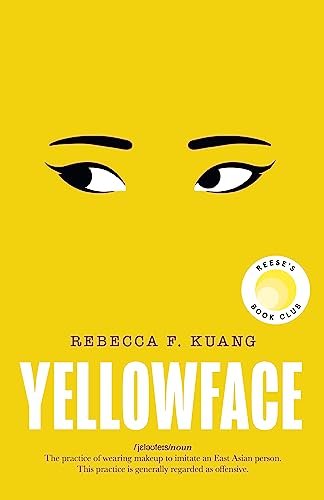
Rebecca F. Kuang, Yellowface (The Borough Press 2023)
Before the meeting: It’s a thing: books – and movies – that deal with questions of authorship. The protagonist of Siri Hustvedt’s The Blazing World (2014) presents a young male artist as the creator of her sculptures. In Cord Jefferson’s movie American Fiction (2023, based on Percival Everett’s Erasure (2001), which I haven’t read), an African-American novelist writes a trashy novel full of the stereotypes he despises, and presents its author as a fugitive from justice. I won’t do a spoiler on Björn Runge’s movie The Wife (2017, based on a 2003 novel by Meg Wolitzer). In Caledonian Road, Campbell Flynn knocks off a self-help book for men and has a photogenic young actor pose as the author. And that’s just some relatively recent ones that come to mind.

Yellowface is an entertaining addition to that list.

June Hayward, a young white woman whose first novel has done poorly, has an uneasy friendship with Chinese-American Athena Liu, a fabulously successful one-book novelist. When Athena dies suddenly with June as the only witness, June gets hold of her unfinished manuscript, which deals with aspects of Chinese immigrant life in North America. She sets about editing the manuscript and completing the story, telling herself that she is doing it to honour Athena. She gradually comes to think of the novel as primarily her own work and sends it to her agent over her name.

The novel is a publishing sensation and, without actually claiming Chinese heritage, June allows herself to be seen as Chinese. Her Hippie parents had given her ‘Song’ as a middle name, so – she rationalises – it’s not actually lying when she adopts the Chinese-sounding pen name of June Song and lets people make their own assumptions. Anyhow, Athena’s research consisted of extracting stories from other people, so they were already stolen property. And other rationalisations.

Needless to say, things go very wrong. Right up until the last movement I was having a great time. There’s a marvellous scene where June is invited to do a reading to a local Chinese community, where her hosts – including one elderly man whose experiences are similar to those narrated in the novel – are genuinely shocked when they realise she is not Chinese, but remain icily courteous. Social media users are infinitely less restrained.

We see it all from June’s point of view. We sorta-kinda believe the stories she tells herself, and even when she crosses the line into outright deception, we sympathise – until we don’t. June may acknowledge that she hasn’t been completely honest, but she continues to see herself as the victim of unfair attacks until the end of the book. But somewhere along the line, and I imagine the precise point differs from reader to reader, she loses our allegiance. So at the end, where she comes up with a way to redeem herself in the eyes of the publishing and reading world, we are led to believe that it will probably work, but are disgusted by a world where that is the case.

It’s cleverly done. The introduction of some unconvincing horror tropes spoiled the big climax, but I can forgive that.

Page 77* is a nice example of one of the strengths of the book. If you’re going to write a satire of identity politics in the publishing industry, you’d better make your version of the industry seem real. Kuang does that. June’s conversations with her agent and editor, her meeting with the marketing executives, the closing of ranks among authors, followed by the shunning once the scandal becomes too much: all feel real. The description of publication day on page 77 is surely taken from life:

Months become weeks become days, and then the book is out.
Last time, I learned the hard way that for most writers, the day your book goes on sale is a day of abject disappointment. The week beforehand feels like it should be the countdown to something grand, that there will be fanfare and immediate critical acclaim, that your book will skyrocket to the top of all the sales rankings and stay there. But in truth, it’s all a massive letdown. It’s fun to walk into bookstores and see your name on the shelves, that’s true (unless you’re not a major front-list release, and your book is buried in between other titles without so much as a face out, or even worse, not even carried by most stores). But other than that, there’s no immediate feedback. The people who bought the book haven’t had time to finish reading it yet. Most sales happen in preorders, so there’s no real movement on Amazon or Goodreads or any of the other sites you’ve been checking like a maniac the whole month prior.

According to Wikipedia, Rebecca F. Kuang’s first novel, The Poppy War, was a big success, but I am pretty confident that its 22-year-old author had exactly such a ‘day of abject disappointment’.

After the meeting: As usual, our meeting was convivial, and people had a range of responses. I was a bit of an outlier in feeling generally positive about the book, but I wasn’t the only one to derive at least mild enjoyment from the meta stuff: the Asian woman writing in the first person as a white woman pretending to be Asian. Someone wondered out loud how James would have been received if the author was revealed to be white, Helen Demidenko/Darville/Dale and The Hand the Signed the Paper was mentioned. But I don’t think anyone else just enjoyed Yellowface as a light satirical tale.

At least one other chap couldn’t for the life of him see what there was to enjoy. From memory, he was something like, ‘Yes, I get what you’re saying about identity politics and the publishing industry, and maybe even that there’s satire happening, but it’s not funny, there are no real characters, and nothing interesting happens. June, the protagonist, doesn’t develop and we don’t learn anything about her beyond the superficial.’

There were a number of positions in between. The extreme implausibility of the big climactic scene was something we could all agree on. Someone said that the effect staged there would have taken the resources of a Taylor Swift concert to pull off. I couldn’t disagree.

But we had an excellent time together, enjoyed the food and the fleeting visit from a teenager who lives in the flat, shared stories (including some tales of school reunions, of which the outstanding one was the 40th reunion of a former Australian Prime Minister who had been bullied at school and continued to be bullied 40 years later), laughed a lot, had peanut-flavoured ice cream, and didn’t feel at all competitive with (something I found out about recently) the all-male Book Group that has been meeting for 25 years in Melbourne.


I pressed ‘Publish’ for this blog post on Gundungurra land, where the creeks are flowing and the air grows cold as soon as the sun goes down. I read the book on Gadigal Wangal land, and brooded on it in Yidinji country and the many lands I have flown over or driven through in the meantime. I acknowledge the Elders past and present who have cared for these lands for millennia, and continue to do so.


My blogging practice is to focus on the page of a book or journal that coincides with my age, which currently is 77.

Percival Everett, James and the book group

Percival Everett, James (Pan Macmillan Australia 2024)

Before the meeting: Mark Twain’s Adventures of Huckleberry Finn is one of those books that, even if you haven’t actually read it, you probably feel as if you have. Though it’s set in the south of the USA during the time of slavery, it was published in 1884, two decades after slavery was abolished. It’s an adventure story. A prefatory note warns the reader not to look for a motive, a moral or a plot. But the warning is obviously ironic. Huck, a white boy, teams up with Jim, a man escaping from slavery, on a raft trip down the Mississippi and, though the book is much praised for other elements such as its portrayal of the great Mississippi River and its breakthrough use of US vernacular English, it’s Huck’s moral growth, his coming to recognise Jim’s humanness and the evils of slavery that account for the book’s status as a Great American Novel.

But …

As African-American voices – voices of people whose lives are still deeply affected by the legacy of slavery – have made themselves heard, the book has met with controversy. I first met the negative case in Julius Lester’s Falling Pieces of the Broken Sky, in which one essay begins, ‘I am grateful that among the indignities inflicted on me in childhood I escaped Adventures of Huckleberry Finn.’ Inspired by Lisa Hill in the comments section on my post about that book (yes, there are places where it’s safe to read the comments!), I searched for the article to refresh my memory and found a version at this link. Lester is scathing, describing the book’s world as the ‘all-too-familiar one of white fantasy in which blacks have all the humanity of Cabbage Patch dolls’. There’s a lot more if you’re interested.

Percival Everett’s James tackles Huck Finn in a different way, less scathing but even more radical in its project of restoring humanity to the character Jim. It’s a novel in its own right, which I imagine you could read without reference to Twain’s. But you’d miss a lot of the pleasure and insight it has to offer.

James tells the story from Jim’s point of view, including a number of episodes where Jim and Huck are separated. It keeps much of the adventure and the humour of the original, but it opens out to the visceral horrors of slavery. In particular Twain’s final section in which Huck and Tom Sawyer hatch a plot to free Jim is replaced by darker, and also more joyful and just as improbable actions in which Jim takes things into his own hands.

But just as important as the changes in the story are the changes in tone. Beginning with the book’s title, dignity is restored to Jim. He is still called by the diminutive in most of the narrative, but we know that’s not all of him. In a key device, whenever enslaved characters talk to each other out of earshot of whites, they speak a form of standard English, returning to ‘slave talk’ – Sho nuff, Massah, etc – if they think they’ll be overheard. It’s not realistic: there’s no way enslaved people in the American South in the mid 19th century spoke standard 21st century English, but it’s an inspired bit of comedy that works to undo the othering of the enslaved.

As it happens, page 77* is a nice example of how James writes back to Huckleberry Finn.

In Mark Twain’s narrative, Huck and Jim have been separated by a near disaster. When Huck regains the relative safety of the raft he finds Jim in an exhausted sleep, and decides to play a trick on him. He tells Jim nothing untoward has happened, that it has all been a dream. Jim believes him, and sets about interpreting the dream – only to have Huck point to some damage on the raft that proves the incident really happened. Huck, who is the narrator, asks teasingly what these things stand for:

He looked at me steady without ever smiling, and says:
‘What do dey stan’ for? I’se gwyne to tell you. When I got all wore out wid work, en wid de callin’ for you, en went to sleep, my heart wuz mos’ broke bekase you wuz los’, en I didn’ k’yer no’ mo’ what become er me en de raf’. En when I wake up en fine you back agin, all safe en soun’, de tears come, en I could a got down on my knees en kiss yo’ foot, I’s so thankful. En all you wuz thinkin’ ’bout wuz how you could make a fool uv ole Jim wid a lie. Dat truck dah is trash; en trash is what people is dat puts dirt on de head er dey fren’s en makes ’em ashamed.’
Then he got up slow and walked to the wigwam, and went in there without saying anything but that. But that was enough. It made me feel so mean I could almost kissed his foot to get him to take it back.
It was fifteen minutes before I could work myself up to go and humble myself to a nigger; but I done it, and I warn’t ever sorry for it afterwards, neither.

It’s a milestone in Huck’s journey to realising that Jim is fully human, and is often quoted as one of the most moving passages in the book.

Here’s the equivalent in James, beginning with Jim playing along with Huck’s childish trick:

‘Lawdy, Lawd, Lawd,’ I said. ‘Sho was a scary dream.’
Huck started laughing. He pointed at me and laughed harder.
‘You mean you was pullin’ on my leg?’ I said. He was enjoying himself and that was all right with me. It always made life easier when white folks could laugh at a poor slave now and again.
‘I had you goin’,’ Huck said.
I acted like he’d hurt my feelings. White people love feeling guilty.
‘I’m sorry, Jim. I just thought it was funny,’ he said.
‘Yeah, it be funny, Huck, sho nuff funny.’ I pushed out my lower lip a bit, an expression I displayed only for white people.
‘I din’t mean to hurt you none.’
It could have been my turn to experience a bit of guilt, having toyed with the boy’s feelings, and he being too young to actually understand the problem with his behaviour, but I chose not to. When you are a slave, you claim choice where you can.

So much is happening here. Jim is no longer a gullible fool. He’s an adult, adept at playing the role assigned to him by slavery while holding firm to his own reality. Huck’s great moral turning point is just another example of the psychology of members of the oppressor group who want to see themselves as virtuous: ‘White people love feeling guilty.’ But as an adult he is acutely aware that Huck is a child. When he chooses not to ‘experience a bit of guilt’ he’s departing from his usual protective attitude. Despite what he says, he clearly does feel guilty – and needs to justify his behaviour. Like a true adult, though, he doesn’t argue that he was just giving as good as he’d got, tit for tat, ‘He started it’. He acknowledges that he was acting within their other opprsssor–oppressed relationship. ‘When you are a slave, you claim choice where you can.’ It’s a complex moment, that foreshadows the way we come to see Jim and Huck not so much as slave and slaver as adult and child.

Jim, soon to call himself James, gets to dispense some rough justice in the course of the book, but his relationship with Huck develops in benign and interesting ways, with a twist that is signalled early, guessable, and very satisfying.

After the meeting: We had a fabulous meal, over which discussion ranged from the recent State of Origin match to the question of whether as a man of a certain age one should step off the footpath when an oncoming group of young people acts as if you’re invisible.

I was probably the most familiar with Huckleberry Finn, and no one else was all that interested in the relationship between the two books. My impression is that reading with that relationship in mind meant that I enjoyed it more – I didn’t just forgive what others saw as the faults of the book but saw them as features. For example, a number of chaps commented that there was a series of incidents and events rather than a character-driven plot. That’s definitely an issue for James as a stand-alone novel, but I just accepted it as integral to the basic project of writing back to Huck Finn. Similarly, the number of coincidences that allow Jim and Huck to get back together after their separations is irksome, or possibly laughable, unless you take them in your stride as echoing nineteenth century conventions. Most interestingly, the ‘twist’ (sorry, I won’t be spoileristically specific) feels implausible. Sure, but it’s profoundly satisfying as a symbolic statement.

But it wasn’t a disagreement. We reminded each other of ‘good bits’: the time Jim spends with a minstrel group, as a Black man pretending to be a white man pretending to be a Black man; a horrific scene when a man who is being savagely flogged mouths the word ‘Run!’ to someone he sees to be at risk Mostly, we enjoyed the book as a good yarn – down the river then a u-turn back up, as someone said.


I wrote this blog post on the unceded land of the Gadigal and Wangal clans of the Eora Nation, not far from where what we now call the Cooks River has been cared for by Elders for millennia. As I finished it, the shortest day of the year was nearly here, and the ground was sodden from abundant rain.


* My blogging practice is to focus arbitrarily on the page of a book that coincides with my age, currently 77.

The Book Group & Richard Flanagan’s Question 7, page 77

Richard Flanagan, Question 7 (Knopf 2023)

Before the meeting: Richard Flanagan is a giant of Australian literature. His non-fiction work has been transformative. He has won the Booker Prize and many other awards.

Before this year, I had read one and a half of his novels and had no desire to read any more. My blog posts on The Unknown Terrorist and Wanting speak for themselves.

So, bidden by the Book Group, I came to Question 7 bristling with prejudice.

I was not encouraged by this passage on the second page:

Sometimes I wonder why we keep returning to beginnings – why we seek the single thread we might pull to unravel the tapestry we call our life in the hope that behind it we will find the truth of why.
But there is no truth. There is only why. And when we look closer we see that behind that why is just another tapestry.
And behind it another, and another, until we arrive at oblivion.

Oh really? Other opinions are available, but this struck me as the kind of thing Les Murray meant when he described another of Richard Flanagan’s books as ‘superficial, showy and pretentious’ (link here)?

But what the Book Group wants, the Book Group gets … I read on.

I found a lot to dislike. The whole Question 7 schtick struck me as ‘superficial, showy and pretentious’ (more about that later). There are a couple of pages that could have been written by a self-righteous teenager, denouncing Oxford holus bolus as misogynist, racist and imperialist; a sneer often hovers at the edge of Flanagan’s descriptions of other writers; there’s a muddled insistence that all time is now – a kind of mix-up of Kurt Vonnegut in The Sirens of Titan and co-opted Indigenous notions. Regularly, out of the blue, there will be a bit of ‘philosophising’ about the uselessness of words, or a portentous one-line paragraph: Chekhov’s non-sequitur, ‘Who loves longest?’ or the sub-Vonnegut refrain, ‘That’s life.’

It could have been an engrossing book. There are powerful portraits of his grandmother, his mother and his father, and a gruelling, operatic account of near-death as a young adult. Above all, there’s the way Flanagan sets out to explore his own origins in the context of world history.

His father was a prisoner of the Japanese in 1945 and would have died in the camp if not for the nuclear bombs dropped on Hiroshima and Nagasaki – Flanagan owes his existence to that massively destructive act.

The book comes at that painful paradox from a number of angles: his father’s reminiscences of the camp; his own visit to its site, including an encounter with a former guard; stories about H. G. Wells, who coined the phrase ‘atom bomb’; the life of Leo Szilard, the scientist who first conceived of a chain reaction and after 1945 became a tireless campaigner for nuclear disarmament. It’s a fascinating tapestry of interlacing lives, thoughts and actions.

Flanagan is a Tasmanian, so he also owes his existence to the genocidal dispossession of the First Nations of luwitja. (In one of the recurrences that the book delights in, H. G. Wells’s novel The War of the Worlds was inspired that history.) There are powerful passages about colonisation, which (to my mind) he undermines by describing the term settler colonial society as lazy thinking because it hides the inequalities on which what he calls ‘the new Martian world’ was built. His point is that many of the first non-Indigenous arrivals were convicts, suffering terribly under the British system – and among them he counts his forebears. IMHO, settler colonial society is a fine term: patriarchy doesn’t hide inequalities among men; capitalist society doesn’t hide inequalities in our current world. The fact that you suffer doesn’t change the fact that you play an oppressive role. Not that Flanagan denies that, but he want to make it clear that his people were primarily victims rather than perpetrators.

But I’m getting irritated again.

Page 77* does not show the book in its best light. It falls in the midst of an excursion into historical fiction involving H. G. Wells.

The much younger Rebecca West has come into Wells’s life, and they are mutually entranced. After a first passionate kiss, he withdraws – not so much because he already has a wife and a mistress as because, according to Flanagan, she is too much his equal.

All that is evidently true to the known facts. West and Wells’s relationship was to endure. She had a son with him and they remained friends until his death. But at page 77 that’s all in the future, and she is struggling with his rejection of her:

Rebecca West, though, was not for defeat. For her, love and victory were synonyms. And she was not one for losing. She coupled audacity and ambition with an idea of stability she would forever after mistake older men as offering. She held herself to a high standard. She had written only a few months earlier how unrequited love was pathetic and undignified, adding as proof her contention that Christianity lacked dignity – and by implication was pathetic – not because Christ was crucified, but because his love for the world was unrequited. ‘A passion that fails to inspire passion,’ she wrote, ‘is defeated in the main object of its being.’

Having dispensed with God, she wrote to Wells that she was going to kill herself after being rejected by him, that all she could do was love. She had tried to hack the overwhelming love she felt for him back to the little thing he seemed to want. But even that, she realised, was too much for him.

Does that feel to you like a real person? Is it respectful of the historical Rebecca West? Does it use its sources fairly or even accurately? On the latter point, I looked up the essay it quotes (in The Freewoman, July 2012). It’s a brilliantly witty takedown of a book of literary history, in which the reference to Christ is cheeky, but not dismissive and not meant to prove anything. Flanagan is being snide, and not pretending otherwise. His Rebecca West is basically a comic character.

But what is she doing in this book at all? Maybe she’s there to establish that Wells was a truly complex, flawed human being (‘flawed’, to be specific, means physically ugly and using high-sounding ideals of free love to justify his promiscuity). It also serves the purpose of having a strong female presence in the historical part of the novel, which is otherwise full of men. This particular passage may owe something to her reference to Jesus echoing a repeated line in Flanagan’s The Unknown Terrorist: ‘the innocent heart of Jesus could never have enough of human love.’

The West–Wells story also, confusingly I think, seems to relate to the book’s title. That title is a riff on an early Chekhov short story, ‘Questions Posed by a Mad Mathematician’, an absurd parody of a mathematics quiz. The seventh quiz item starts with trains leaving stations at various times and ends with the non-sequitur question, ‘Who loves longer, a man or a woman?’ Because it’s posed as a question about gender, the Wells–West story (the only romance in the book) seems to hark back to it, but I think now probably not, as the version of the question that pops like a refrain, is simply, ‘Who loves longer?’ (Incidentally, the only version of Chekhov’s story I could find online, at this link, translates the question as, ‘Who is capable of loving?’ I’d be interested to know if the gendered version of the question is more a product of the gendered nature of the Russian language than of Chekhov’s intention.)

In the rest of the page, we follow the West-resistant Wells to Switzerland:

Wells arrived at his mistress’s magnificent Swiss retreat with his two sons and half a suitcase of scientific reprints concerning the recent discoveries about radium – discoveries that, he told Little e, as he called the diminutive Elizabeth, pleasantly took his mind as far away as laudanum once had Samuel Taylor Coleridge’s and which would form the basis of the novel he would write – the story of man summoning a power equivalent to the sun.

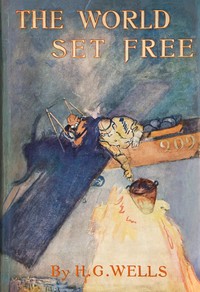
Wells runs from West to write the novel that is his reason for being in this book. It’s The World Set Free, in which he will coin the term ‘atom bomb’ and imagine with amazing accuracy the devastation such a bomb was to create. (I’m depending on Flanagan’s description. The novel is available at Project Gutenberg for the truly dedicated.)

Presumably the real-life Wells is being cited here, but what sense does it make to say that his lifelong interest in science was like a drug? In the immediate context, the implication seems to be that his interest in radioactivity is a distraction from the emotional turmoil associated with with Rebecca West. Am I wrong to read this as a sneer?

So, I look forward to having the virtues of the book made clear to me by people who have not been blinded by their own grumpiness.

After the meeting: After a wonderfully eclectic dinner over which we had exchanged important information about dumplings and life in general, we had one of the most interesting and spirited Book Group discussions ever.

Evidently it’s a love-it-or-hate-it book, and we were fairly evenly divided.

One man had hated the Wells-West thread so much that he re-read the book leaving it out, only to discover that he still hated the book, and spent days trying to figure out why. As I understand it, he realised that he regularly came up against a closing off of possibilities – just as Flanagan proclaimed he was opening up to complexity he would shut things down with a piece of certainty.

Another, on the contrary, read the book as an anti-narrative. Those shutting-down moments were a way of frustrating our quest for simple answers in an impossibly complex world. It’s important that Question 7 is about love, because all through the book there’s a dreadful intertwining of love and brutality.

Where some felt Flanagan was arrogant and withheld, others read him as exposing his own vulnerability. One loved the Rebecca West story; another loathed it. One read out a passage he particularly loved eliciting sympathetic nods from some and groans from others. Some felt that the book spoke directly to their own experience as colonial settlers, others not so much. I had to admit that I had got fixated on the things that annoyed me, and disregarded things that otherwise would have fed my soul.

None of us had previously heard of Leo Szilard. One of us said he now has Family Matters, by Flanagan’s brother Martin, on his to-be-read list, as a supplement to Richard’s account of his parents.

It was amazing! I don’t think anyone left feeling bruised. For myself, I intend to reread the book. But not for a while.


* My blogging practice for some time has been to focus arbitrarily on the page of a book that coincides with my age. Surprisingly, this page often reveals interesting things about the book as a whole.

Sebastian Barrry’s Old God’s Time at the book group, page 77

Sebastian Barry, Old God’s Time (Faber and Faber 2023)

Before the meeting: Tom Kettle is a nine-months retired Irish policeman, living quietly suicidal in an annexe of a castle in Dalkey, on the coast outside Dublin. Two young coppers from his old unit come knocking on his door with a request that he read the file of an old case he is particularly suited to help with. The conversation is oblique, but we understand that the case has to do with child sexual abuse by Catholic priests.

It’s the set-up for a Cincinnatus story: the hero is summoned out of retirement to do battle with the forces of evil. The reader settles down for a yarn whose shape is familiar, and whose subject is also, horribly, familiar: the terrible history of sexual abuse of children by Irish clergy.

From the beginning, however, Sebastian Barry is in no great hurry to get that story under way. Tom gives the young coppers shelter from a storm overnight, but barely looks at their file. He is still grieving the death of his wife some years earlier, and is missing his two adult children. The visit from the young men and then a couple of days later from their boss, his own former boss, stirs up memories of his terrible childhood in an institution, and the sexual abuse inflicted on his wife by a priest when she was a child in another institution. This is no longer a straightforward police procedural featuring a heroic retired copper. It becomes something much more elusive than that: part ghost story, part psychological thriller, part fictional misery memoir, part dramatisation of the long tail of child abuse, part revenge tragedy. And part, perhaps, a portrait of a mind in the early stages of dementia.

Bit by bit a tale of horror emerges. At times it seems that only Sebastian Barry’s brilliantly musical prose and the presence of the land, sea and town are all that stand between us and the abyss. At the same time, it is a deeply humane book that features a gallery of odd characters (odd in the sense of interesting and surprising), and wonderfully memorable dialogue.

There are so many twists that I’m reluctant to say more about the plot. I was gripped, and I trusted the truthfulness of the story, though (no spoilers) I was not completely convinced by the main event of the final act: too much hinges on ‘an expression of pure depravity‘, italics in the original.

The emotional spine of the novel is Tom’s love for his wife, June. They gave each other the possibility of decent lives after the desolation of their childhoods. On page 77, he is remembering their early days together.

Here’s the paragraph that fills the page –’those things’ in the first sentence is the June’s childhood spent in an orphanage (no details), and the only other things that may need explaining are that June is working as a waitress in a Wimpy bar, and that she has been fostered by a prim and moralistic woman, Mrs Carr:

For so long she was quiet and never spoke about those things. They’d been going out for a whole month, him fairly killing himself to get out on the bus or the train to her, from his lousy digs in Glasnevin, or his work in Harcourt Street. He tried to see her every day. If only the old train station there had still been open, oh bejesus, but he had to gallop all the way across Dublin, through the Green, down Grafton Street, skirt the college, stampede up Abbey Street and onto Talbot, and go like the clappers to Connolly station for the 5.30 to Bray. He was younger then and fit but it was summer all the same and he was obliged to change into a spare shirt in the tiny jacks as noisy as a drumkit, and wash the sweat off his chest and arms into the bargain. After a month of this he might have qualified for the Irish team at the Olympics. A whole month, a fortune in train fares. Couples might be expected to talk through their life stories the first night – not June. She liked to tell him all that had happened that day at the café, maybe in just a little too much detail, but he could bear it. He liked her in the aftermath of her work, weary but not bone-weary, her feet aching. She’d have thrown on her jeans and grabbed a jacket. Her lovely denim jacket, the very height of hippy fashion. The jeans she had worn into the bath as instructed by the label, and let shrink on her legs, skin-tight. She would never meet him in her digs, of course, because it was some kind of religious gaff for the protection of Catholic girls – Mrs goddamn Carr lived in Stillorgan, far away from the Wimpy. Not that he even knew about Mrs Carr then. He knew nothing. She loved to natter on but she never talked. He supposed that was it, that was how she was. In a way he was relieved she didn’t go serious on him, because he was the guardian of his own silences, had been all his life.

It’s so alive, carrying the reader along with sheer vitality – the vivid evocation of first love remembered in old age, and details like the tiny jacks (that’s a toilet to non-Irish speakers, not the only one in the book), the word-map of Dublin. Then, after a little joke about the Olympics and a wry complaint about the expense, the paragraph turns to June: her work, her fashionable clothes, her chattiness, her home, and, crucially, her silence about her past. Then the key sentence, so deftly placed that you might almost miss it, ‘She loved to natter on but she never talked,’ and his version of himself as ‘the guardian of his own silences.’

Is it a particularly Irish thing, this ability to ‘natter on’ without talking? It certainly feels familiar to me from my own Irish-heritage background. Almost all the conversations in this novel are elliptical, from the first visit of the young gardaí to the climactic revelations about June’s death – we can mostly guess at what isn’t being said, but we have to work at it.

After the meeting:
There were seven of us, excellent food, a friendly dog under the table who one suspected was more interested in the food than in us, glass walls open to a garden on a gorgeous early-autumn Sydney night. Once we had sat down to eat, and a number of book-group-relevant announcements had been made – the long aftermath of an injury sustained at a much earlier meeting, the imminent sale of the ouse where we were meeting, my own modest act of self-publication – the evening took an unaccustomed turn. One man decided to take on a smilingly stern facilitator role and proposed that we each take an initial turn of two minutes to give a quick first response to the book, and then stomped cheerfully on anyone who attempted to speak out of turn. This is probably standard practice in other book groups, and if so I can see why. That first round was rich. Here are some highlights (as they survive in my poor memory):

  • L– loved the Irishness of it: the way the dead were still present, the oddities of the community, the evocation of the country
  • G– was keen on the book but felt that the final movement piled things on too much
  • I– said it was a beautifully written Irish novel, but he wasn’t sure the world needed any more beautifully written irish novels. He thought it wasn’t as good as the other Sebastian Barry book we’ve read, A Long Long Way (link to my blog post)
  • D– found the prose irritating, and didn’t enjoy the experience of being inside the meandering mind of an old man – he got quite enough of that already, thanks very much (someone pointed out, later when allowed by the facilitator, that Tom is 66, a good bit younger than D– and most of the rest of us)
  • J– (that is, me) said something passable, and mentioned the, um, glibness of that ‘expression of depravity
  • S– said he loved and hated the book. When he started he thought, ‘Not another novel abut child sex abuse, and not another novel about the Catholic Church,’ but he read on and was often delighted and moved. He understood something very early that others of us took half the book to realise (I’m carefully avoiding spoilers).
  • N– thought that the oddities of Tom’s memory weren’t so much about cognitive decline as the way traumatic experiences can be remembered as if they happened to someone else. He reminded us of the pivotal moment when Tom, having been unsure whether some of the stories in his head were June’s experiences or his own, realises with a shock that something he had remembered as something he witnessed had actually happened to him.

Others shared my reaction to the word ‘depravity’ and the way it suggests a lack of imaginative commitment to the big events near the end. But, as often happens, we disagreed about the very ending, which I don’t think is ambiguous at all. What I hadn’t realised until the meeting is how that ending – however you interpret it – echoes key elements of the opening pages. It would be far too spoilerish to say more.

The consensus was that this was an excellent book, but something a little more cheerful might be called for next time.

Bookblog #65: The Book Group

I originally posted the following to the original version of this blog on 22 April 2004. I’m resurrecting it nearly 20 years later because my book group is currently reading another Sebastian Barry novel.

Sebastian Barry, A Long Long Way (Viking 2005)

Pasted Graphic

I missed the last meeting of my book group, where they discussed, among other things, Barack Obama’s Audacity of Hope and Stephen Carroll’s The Time We Have Taken. I was saved from the embarrassment of admitting that I hadn’t read either of them by an invitation I couldn’t refuse: to see Zack Snyder’s Watchmen with my sons on the giant iMax screen. But I arrived at last night’s meeting with a clear conscience. I had struggled with the first third or so of A Long Long Way.

There’s a huge field out there of First World War novels, and I know some people can’t get enough of them, but the déjà vu was a bit much for me: from Robert Graves’s Goodbye to All That, which I read an awfully long time ago, to Pat Barker’s Regeneration trilogy, they all tell the same monstrous story. The fact that the cover design of my library copy of A Long Long Way uses the same photograph as one of Pat Barker’s books only added to the turn-off. And then there was Sebastian Barry’s prose: not at all a transparent vehicle for the story, but calling attention to itself by its Irish musicality, asking to be read slowly, even aloud. Here’s a random paragraph from the early pages:

Willie Dunne’s father, in the privacy of his policeman’s quarters in Dublin Castle, was of the opinion that Redmond’s speech was the speech of a scoundrel. Willie’s father was in the Masons though he was a Catholic, and on top of that he was a member of the South Wicklow Lodge. It was King and Country he said a man should go and fight for, never thinking that his son Willie would go as soon as he did.

All that repetition and inversion and balance and general quirkiness is beautiful, but when you start reading a novel that’s written in such prose, on a subject you feel may have been done to death, you’re not necessarily enthusiastic.

Resistance proved futile. The subject, I confess, is huge enough to generate a potentially infinite number of novels, each with its own urgency and richness, its own take on things, its own ability to compel. The First World War may yet turn out to be the war to end wars if we can only learn its lessons. There’s a powerful story, well told here, in the situation of the Irish who fought for the King of England in Flanders while their compatriots were battling the forces of the same king in the streets of Dublin. Worse – and I trust completely that Sebastian Barry didn’t make this up – there were Irish recruits among the army units that fired on the Easter Uprising rebels in 1916. The novel tells the story of Willie Dunne, one of those recruits.

There was no controversy at the group. The book had touched us all. Someone said that books such as this were very important to counter the nationalistic garbage that comes at us in Australia as Anzac day approaches, obscuring the reality of modern wars. One guy arrived late, having read the wrong book, Birdsong by the wrong Sebastian, surname Faulks. Apart from giving rise to much merriment, this threw a different light on my déjà vu response: we would mention some detail from ‘our’ book, and he would exclaim, ‘That’s in this one too!’

As an added extra, someone had recently rediscovered a cache of his childhood reading, and gave each of us a comic from the early 1960s. Here’s mine:

war006

Different war, different propaganda.

Posted: Wed – April 22, 2009 at 08:01 AM

David Marr’s Killing for Country at my Book Groups

David Marr, Killing for Country: A Family Story (Black Ink 2023)

I’m a member of two book groups. This month, they both focused on Killing for Country.

Before the meetings: An ‘ancient uncle’ asked journalist David Marr to explore their family history. As Marr complied, he came upon a photograph of one of his ancestors in the fancy uniform of the Native Police, the infamous organisation in which white officers led Indigenous men in extrajudicial killing sprees in lands that are now known as northern New South Wales, Queensland and the Northern Territory. Marr realised that this was a significant project and set about writing the interwoven stories of his forebears and the Native Police.

I imagine most of the book’s readers will know the broad outline of genocidal massacre that was instrumental in taking possession of the land in these parts of Australia, as elsewhere. Most of us now know that the euphemistic language of ‘dispersal’ and ‘punitive expeditions’ covers terrible atrocities. For me, Ross Gibson’s 2002 book Seven Versions of An Australian Badlands was a turning point. Rachel Perkins’s monumental TV series, The Australian Wars (2022), did heroic work in dispelling any residual beliefs that Australia was settled peacefully, and the Native Police featured in the third, heartbreaking episode. Anyone wanting to cling to such beliefs is advised to stay away from Killing for Country.

Marr follows the thread of his own family’s story through the complex history. He doesn’t try to be comprehensive. He makes no mention, for instance, of the punitive expeditions led by Sub-Inspector Robert Johnstone in Mamu country, the part of Australia that I come from. And professional historians will no doubt find fault with his work – he is too concerned to push his agenda, perhaps, and not judicious enough in checking his sources for sensationalist or other motivations, the kind of criticisms made of Robert Hughes’s The Fatal Shore. It certainly won’t please the columnists of Quadrant or commentators on Sky News at Night. But, as Marcia Langston says on the front cover blurb:

If we want the truth, here it is told by David Marr.

Told by David Marr means told well. I attended one of the many public talks Marr has given about the book, and on that occasion I was struck by the heavily ironic way he spoke of the perpetrators and justifiers of colonial violence as profoundly respectable men. It felt wrong, somehow, to praise them, even in mirthless, defensive jest. The book does none of that. In writing it down, evidently, Marr had no need for such defences. But the reader, this one at least, needs to take frequent breaks.

This is a key part of White Australia’s foundation story: brutal mass killings, including breathtakingly callous first-person accounts, followed by pseudo-euphemistic newspaper accounts (‘with the usual results’ is one memorable phrase to indicate many deaths) or political justifications. When I was reading the book, I watched Prosecuting Evil, a TV documentary about Nazi murders of Jews, and some of the horrific footage was an exact match for scenes described in this book.

There were people at the time who named what was happening in terms we can recognise, and many of those voices are also present here.

This isn’t history that can be comfortably consigned to the distant past: Marr is writing about his own family, and about history that constantly chimes with the present, or perhaps has never gone away. ‘Let no one say the past is dead,’ Oodgeroo wrote. ‘The past is all about us and within.’

It’s my custom on this blog to have a close look at Page 76. Weirdly perhaps, that page, chosen arbitrarily because it’s my age, often shows a lot about a book.

In Killing for Country, page 76 is the beginning of Chapter 7, ‘The Creeks’, which deals with two massacres, at Waterloo Creek and Myall Creek, and their aftermaths – the first a whitewash, the second a major scandal and a court case spearheaded by Attorney General John Plunkett, one of the settler heroes of the book, leading to the execution of seven murderers, but also leading, as Marr points out, to secretiveness on the part of later murderers of Indigenous people.

This page is pretty much the full treatment of the Waterloo Creek massacre. The Native Police, the main subject of the book, have yet to be established, but this brief account of a massacre by white troopers is something of a template for much of what is to follow.

Governor Richard Bourke, having tried without success to limit the activities of the squatters in their treatment of convicts and the traditional owners of the land they claimed, resigned and sailed back to England . In December 1837. His successor George Gipps was to take office in February 1838. In the meantime:

Reports had reached Sydney of fresh depredations by the Kamilaroi.

It’s worth noting here that Marr take great care with names. While his sources, such as the quote from the Sydney Herald below, refer to ‘Blacks’, ‘tribes’, and so on, Marr himself always specifies which First Nations are being talked about, in this case the Kamileroi. This simple act has a powerful cumulative effect, as nation after nation comes into conflict with the military, with vigilante convicts, and with the Native Police.

The Herald was baying for blood.

THE POOR BLACKS- Letters have been received from the Northern parts of the Colony, which state, that the Blacks are murdering the shepherds and stockmen with impunity. These letters also inform us, that the same tribe of Blacks are destroying the cattle by hundreds.

‘Baying for blood’ may be the kind of thing that professional historians would steer clear of, but I like the way it spells out what the newspaper leaves unspoken (these people are murderers and mass destroyers of cattle, therefore …). Elsewhere, Marr quotes newspaper correspondence and other contemporary sources pointing out that the ‘murders’ and ‘destruction’ are perpetrated by people defending themselves against an invasion or avenging atrocities committed against them. Such arguments are roundly mocked by the mainstream as sentimental wailers ‘desirous of acquiring a reputation for humanity’ – the tone isn’t so different from some of our current media talking about virtue-signalling latte-sippers.

While waiting for the new Governor to arrive, the Colony had been left in the hands of Colonel Kenneth Snodgrass, a capricious veteran of the Napoleonic Wars, who gave Major James Nunn of the 80th Regiment a free hand to deal with trouble on the plains. ‘You are to act according to your own judgement,’ said Snodgrass, ‘and use your utmost exertion to suppress these outrages.’

The fabulously named Kenneth Snodgrass, deftly characterised and contextualised in seven words, makes no other appearance in this story, but his instructions foreshadow the vague instructions given to officers of the Native Police. Without fail, the politicians giving the orders retain deniability. Their intentions are clear, but they consistently refuse to give explicit instructions to kill. All the Native Police massacres were illegal, and directly counter to general policies emanating from distant Britain, but no one was ever held accountable for them. At Waterloo Creek, the troops and mounted police were white, and so even less likely to face legal consequences.

At Waterloo Creek on 26 January 1838, Nunn’s troops and Mounted Police drove a large number of Kamilaroi into a swamp and slaughtered at least fifty.

One of my difficulties with the book is that I often lose track of dates. For example, I kept waiting for the moment when the narrative would intersect Melissa Lucashenko’s novel Edenglassie, in which the Native Police play a role. But 1854, Edenglassie‘s year, comes and goes without being named. So the explicit dating of this incident stands out. Serendipitously, I’m writing this on 26 January, a public holiday when fewer people each year choose to celebrate Australia Day. I’m guessing that Marr was struck by the significance of the date and left it there as a grim easter egg. The Waterloo Creek massacre happened on the 50th anniversary of Arthur Phillip raising the Union Jack on Gadigal land. A hundred years later, William Cooper declared the date to be a day of mourning. Today there’s a struggle over whether it’s Australia Day or Invasion Day.

Afterwards, Nunn found a few bits and pieces in their camp which convinced him he had punished blacks involved in the murder of Cobb’s shepherds on the Gwydir, a crime for which hundreds had already been killed. Back at Cobb’s head station, Nunn boasted to the appalled squatter of ‘popping off with his holster pistols the Blacks whenever one appeared from behind a tree’.

Again, this foreshadows how things will go. Where killings had to be accounted for, the commanding office would find or fabricate some dubious evidence to justify it. When Gipps presented Nunn’s account of the massacre to his Legislative Council, according to Marr he knew it to be a whitewash, but nothing more seems to have been done about it. Nunn’s boast was reported years later, according to a note, by Lancelot Threlkeld, another of the book’s settler heroes. Again and again, we see private boasting recorded in memoirs or letter, as opposed to public justifications.

I kept thinking of the last line of Bob Dylan’s ‘The Lonesome Death of Hattie Carroll’: ‘Bury the rag deep in your face, for now’s the time for your tears.’

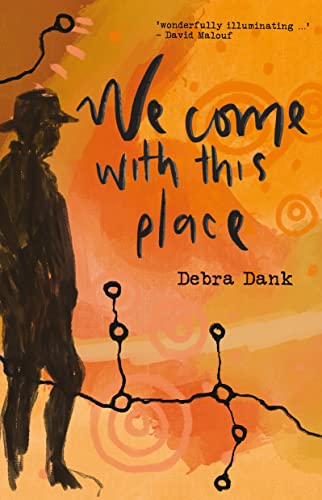
After the first group’s meeting, Friday night: For this group, we had ambitiously agreed to read and discuss two books, Killing for Country and Debra Dank’s We Come with this Place. I wrote about Debra Dank’s book a while ago, here.

There were five of us. Only two had read all of Killing for Country. Of the others one said she gave up after 10 or so pages because she wasn’t interested in the wool industry and early colonial politics, another read about the same and decided she needed to read something more relevant to her life plans, and the third is still reading it, though she’s suspicious of it because she’s also rereading solid works of history like Heather Goodall’s From Invasion to Embassy and Grace Karskens’s The Colony.

All the same, once the slackers had been duly reprimanded (not by me, I hasten to note), we had a terrific conversation. While acknowledging the huge amount of work that went into the book, and that it had opened her eyes to a history that just hasn’t been told, the other completer said she found it unsatisfactory: leaping from place to place with maps that didn’t always help, likewise leaping from character to character, lacking a solid analytical context. She and the history-reader saw as bugs the things that I was content to note as mildly inconvenient features that resulted from the basic decision to follow the careers of particular David-Marr-related individuals.

There was some discussion of David Marr’s decision not to include Indigenous voices. I think he gave a good account of that in his final chapter:

This is a white man’s view of this history. I’ve drawn on rich Indigenous resources to write the bloody tale of Mr Jones and the Uhrs, but I found it was not my place to give the Aboriginal view of this tangled history. I asked Lyndall Ryan, veteran of so many academic battles on the frontier, which Indigenous scholars I should read. Indigenous scholars, she said, research particular incidents in their country. ‘But they don’t work on the frontier wars. The topic is whitefella business.’ An Indigenous colleague I’ve known for years put it this way: ‘You mob wrote down the colonial records, the diaries and newspapers. You do the work. You tell that story. It’s your story.’

(Page 409)

Others still felt that there was a glaring absence in the book.

The non-readers were appropriately contrite and asked productive questions.

We had all read and loved We Come With This Place. The mood lifted as we discussed it. Smiles came back to our faces, and we found ourselves flipping through the book to quote bits.

After the second group’s meeting, Tuesday night: This is my much loved, long-running, all male group (I’m the only man in the other).

I had a runny nose on Saturday night and a positive RAT on Sunday morning, so was stuffed with antivirals on Tuesday and couldn’t be there for this discussion. In the WhatsApp chat ahead of time, one man said he couldn’t read the book: ‘It was too brutal and depressing.’ Another sent us a lnk to The Australia Institute’s webinar with David Marr. After the even the WhatsApp reports said there was at least an hour’s worth of animated discussion.

I guess I’ll watch the webinar when I’ve had a little lie-down.

Debra Dank’s We Come With This Place at the book group

Debra Dank, We Come with This Place (Echo Publishing 2022)

Before the meeting: We Come With This Place won an amazing four prizes at the NSW Premier’s Literary Awards this year, including Book of the Year: you can read the judges’ comments here and here. They include this:

This sensational memoir is an unheralded reflection on what it is to be First Nations in Australia, and on the very deepest meanings of family and belonging.

In one of her modest acceptance speeches at the awards ceremony, Debra Dank mentioned that the book started out as part of her PhD study. In the Preface, she elaborates:

I wanted to show how story works in my community and how it has contributed to our living with country for so long. It seemed to me imperative to talk about those voices, both human and non-human, who guided Gudanji for centuries before anyone else stepped onto this land.

(page viii)

The weeks after the referendum on the Voice failed seemed a perfect time to read this book. The Uluṟu Statement from the Heart’s call for Voice, Truth, Treaty has been rejected at the political level: it’s a relief to listen to the voices of First Nations writers like Debra Dank, and participate in this form of truth-telling.

It’s a terrific book: an intimate portrait of family life, placed in the context of ancestral stories, a deep sense of connection to Country, and resilience in the face of the horrors of colonialism. The family lived ‘under the Act’ in Queensland, and managed ingeniously to hide little Debra when the Welfare came looking for light-skinned children; her father worked on a number of rural properties, where sometimes he was treated with great respect, other times not so much. She helps her father work on a windmill. There is a tactfully written scene where she stands up against family violence, and magical moments with her grandfather, and with her children and grandchildren. I love the pages where Dank’s white surfie husband (he’s saltwater, she’s dust) struggles to learn how to read the bush, to see the things that are glaringly obvious to his Aboriginal children.

Dank identifies as belonging to dry country, and she makes brilliant use of images of dust. On the very first page, ‘vague images try to speak to [her] through dust motes rising from the thick pale pages’ of a 400-year-old edition of a book by Aristotle, and a few pages later, she tells us that the stories of her people – the Gudanji kujiga – ‘grow from the fine dirt that plays around your feet and makes the dust that rolls over the the vast Gudanji and Wakaja country’. As a child she is fascinated by the way a drop of blood from a foot caught on barbed wire blends into the soil. Dust rises from the heels of a family group in the not so distant past running in terror from armed men on horseback. It memorably obliterates the Country-scarring road in the passage I versified the other day (here).

I don’t want to give the impression that the book is written in high metaphorical mode. Here’s a little passage from page 76 (for those who came in late, I like to have a closer look at that page because it’s my age). The family are driving from one place of employment to another, and appropriately enough the page starts with dust:

The wind brought dust in with it, but it was the Dry and the road wasn’t too bad. The caravan happily kicked up dust into frothing red feathers that followed us for a bit, then settled back onto the road. Long stalks of tall yellow grass formed a guard of honour as we traveled across the plains. We played games of spot the turkey and several times tried desperately to convince Dad to stop for the goannas that would run across the road and then lie still and flat in the shelter of the yellow grass and amber shadows, but we needed to get there so he didn’t stop. Besides, Mum said she refused to turn up at the new station with a dead gonna in the car.

You see what I mean: if you’re not alert to the dust motif, those frothing red feathers that follow and settle are a nice piece of decoration; if you’ve picked up on it, they’re a reassuring presence of Country. And this tiny moment embodies the way the family manages to live successfully in two worlds: goannas would be great, but not when you’re about to meet a new white boss.

After the meeting: It was our end-of-year meeting, so as well as discussing the book, we exchanged gifts – of books chosen from our bookshelves. I gave Diana Athill’s wonderful memoir, Somewhere Towards the End, and scored J M Coetzee’s 1986 novel, Foe. We also, in a three-year tradition, each brought a poem to read to the group: poems represented included Seamus Heaney, Oodgeroo Noonuccal writing as Kath Walker, Adrian Wiggins, J Drew Lanham, Rosda Hayes, and Sean Hughes.

There were seven of us. Two hadn’t read the book – it’s a busy time of year. One was ‘at about 55 percent’ on his device. One said he had read seven other books since so had difficulty recalling it with any clarity. We were in a pub rather than our usual domestic setting. None of that stopped the conversation from delving into the book, ranging widely and then finding its way back to the page. Those of us who had read it celebrated the way it presented the history from inside an First Nations point of view: even Kim Scott’s brilliant novel That Deadman Dance didn’t get to the inside story as completely as this; and it has a calm assurance that, say, Julie Janson’s Benevolence lacks, for all its other strengths (the second of these comparison came up in conversation in the car ride home).

One Covid-ed absentee emailed in some cogent comments – noting that there seemed to be a number of voices, and that the passages dealing with the author’s personal experience worked better than the narration of ancient stories. He loved, and others agreed, the bits of bushcraft such as reading shadows and catching fish with your hands in the desert, the cultural landscape connections.

I went on a bit about dust.

There was a lot of reflection on personal experiences the book reminded people of. There was also, as usual, much excellent conversation about unrelated matters, including Anna Funder’s Wifedom; the recent blockade in Newcastle and a similar one nearly 20 years ago which provoked a very different response from the police and the press; philosophy and poetry groups in a small town; behind the scenes stories from a fascinating film project; travellers’ tales.

And that’s a wrap for the Book Group for 2023.

Andrey Kurkov’s Grey Bees at the Book Group

Andrey Kurkov, Grey Bees (2018, translation by Boris Dralyuk, MacLehose Press 2020, 2022)

Before the meeting: I hadn’t heard of Andrey Kurkov before this book was nominated for the Book Group. He’s a Ukrainian novelist, children’s writer, essayist and broadcaster. In an interview on PBS early last year he said that, though he is ethnically Russian and writes in the Russian language, Putin’s invasion has made him ashamed to be Russian, and he is now considering writing only in Ukrainian. He finds it impossible to write fiction in the current situation, but he continues to write and broadcast about the war – his series of broadcasts for the BBC, ‘Letter from Ukraine’, is available online.

Grey Bees, originally written in Russian, was first published in 2018. Russia had annexed Crimea, and there was armed conflict with Russian separatists in two breakaway ‘people’s republics’ in the Donbas region in the eastern part of Ukraine. The novel is set in a time when the front between those forces stretched for about 450 kilometres (it’s now closer to three thousand). The area between the fronts is known as the ‘grey zone’. In his useful Preface to the 2020 English edition, the author explains:

Most of the inhabitants of the villages and towns in the grey zone left at the very start of the conflict, abandoning their flats and houses, their orchards and farms. Some fled to Russia, others moved to the peaceful part of Ukraine, and others still joined the separatists. But here and there, a few stubborn residents refused to budge. … No one knows exactly how many people remain in the grey zone, inside the war. Their only visitors are Ukrainian soldiers and militant separatists, who enter either in search of the enemy, or simply out of curiosity – to check whether anyone’s still alive. And the locals, whose chief aim is to survive, treat both sides with the highest degree of diplomacy and humble bonhomie.

(Page 12–13)

Sergey Sergeyich, the hero of Grey Bees, lives in a tiny village in the grey zone, one of two cantankerous old men who have refused to leave. The electricity has been cut off. He has to trek to the next village to buy food. He depends on a charity’s annual delivery of coal for heating through the savage winter. He is a beekeeper, whose emotional life focuses on the wellbeing of the beehives that spend the winter in his garden shed. His wife and daughter are long gone, and he has never really got along with Pashka, the other remainer.

The opening scenes reminded me of Czech comedies in the 1960s like The Firemen’s Ball. There, people’s lives were miserable under the Soviet regime and the comedy was subversive as well as desperately funny. Here the enemy is the war itself, and the quiet desperation of the characters is made tolerable to the reader by their comic focus on tiny issues – like the way the two men hide from each other whatever good food they’ve managed to get hold of (where good food can include a block of lard!), or Sergey’s decision to swap the street signs so he no longer lives in Lenin Street. There’s a touch of Waiting for Godot: how can anything happen so long as they are trapped in this place?

Then, as the days warm up and the buzzing of his bees becomes more demanding, Sergey decides to take them to a place that hasn’t been laid waste by the war, and we follow him on a journey south, to environments that are more friendly to him as well as his bees. He meets with kindness, and is kind in return. He sets out to visit a Tatar beekeeper he met at a conference years before, and arrives in a tiny village in Crimea that is occupied by the Russians. In the process of getting there he has to pass through Russian checkpoints, and he is looked at with suspicion on all sides: coming from Donbas, is he a separatist or a loyal Ukrainian? He’s attacked on suspicion of being one and harassed when he is assumed to be the other. An Orthodox man, he falls foul of the Russian authorities when he befriends a Muslim family.

Though terrible things happen, what shines through is Sergey’s unassuming human kindness. The background buzzing of the bees is warmly reassuring: they go about their work, and can be counted on to produce honey, which is universally welcomed.

Towards the end, when the Russian authorities meddle with one of the hives, Sergey has dreams that the bees of that hive have turned monstrously grey, and the allegorical role of the bees, which is a quiet undercurrent for most of the book, comes front and centre in some splendidly surrealistic passages.

To give you a taste of the writing, here’s a little from page 76, when Sergey is still in the village. Spring is on the way:

The sun had spread even more of its yellowness through the yard. The trampled snow had turned yellow, as had the fence, and the grey walls of the shed and the garage.
It wasn’t that Sergeyich didn’t like it – on the contrary. But he felt that the sun’s unexpected playfulness, as appealing as it may be, disrupted the usual order of things. And so, in his thoughts, he reproached the celestial object, as if it could, like a person, acknowledge that it had acted improperly.
The artillery was whooping somewhere far, far away. Sergeyich could only hear it if he wished to hear it. And as soon as he went back to his thoughts, turning into Michurin Lane, its whooping melted away, blending into the silence.

In his preface to the 2020 edition, Andrey Kurkov says that on his visits to the grey zone he ‘witnessed the population’s fear of war and possibly death gradually transform into apathy’. Sergey’s dislike of disruption, even by warmth and playfulness, and the way he can be deaf to the whoops of the artillery, are ways of showing that apathy. It’s a terrific achievement of this book that it brings tremendous energy and compassion to bear on the person lost in apathy, and never loses sight of his enduring humanity.

After the meeting: It turned out this was an excellent choice for the group – someone awarded the Chooser two gold koalas, which must come from a children’s show I’ve missed out on.

Conversation looped around the Russian invasion of Ukraine, to other terrible events of recent days in the local and international scenes, sometimes becoming heated, but not acrimonious, and kept coming back to the book. I think it was Kurkov’s insistence on keeping close to the humanity of his characters, especially Sergey, focusing on what could be benign between people, even while not mitigating the horrors of the war. The father of one group member was Ukrainian, but always identified as Russian. He himself has never learned either language but he could speak a little of how the book stirred memories of his father. The rest of us lacked such a direct connection, but I think the general feel was that we came away from the book with a much more solid grasp of the depth and reach of the current war, and the centuries of Ukraine–Russia relations that preceded it.

I got blank stares when I mentioned The Firemen’s Ball.

Tove Ditlevsen’s Childhood, Youth, Dependency and the Book Group

Tove Ditlevsen, Childhood, Youth, Dependency: The Copenhagen Trilogy, 1968–1971 (Penguin 2020)
First two books translated by Tiina Nunnally 1985; the third by Michael Favala Goldman 2009

Before the meeting: In January this year as part of a series of belated obituaries, The New York Times published an article on Tove Ditlevsen, 47 years after her death. You can read the whole thing at this link (you might have to sign up for a free account to get access).

The short version: Tove Ditlevsen (1917–1976) was one of Denmark’s most popular authors. Her published works included 11 books of poetry, seven novels and four story collections, as well as the three short memoirs, Childhood (Barndom in Danish), Youth (Ungdom) and Dependency (Gift) that have been collected here as The Copenhagen Trilogy. She didn’t enjoy critical success during her lifetime and was virtually unknown outside Denmark. None of her books of poetry were translated into English. Then in 2016 translator Michael Favala Goldman picked up a copy of Gift in an airport, considered it to be a masterpiece, and set the snowball in motion for a critical discovery in the English-speaking world and elsewhere.

I was prompted to go looking for that background by something about the book itself. Perhaps because I’ve recently read two brilliant memoirs by Annie Ernaux (blog posts here and here), not to mention Proust’s vast À la recherche du temps perdu, I felt that the first book (Barndom/Childhood) and much of the second (Ungdom/Youth) were too neat, too confident in their detail to be trusted as memoir.

The first book begins with Ditlevsen as a small child trying unsuccessfully to avoid triggering her mother’s anger, and observing the life of their apartment block. ‘Childhood is long and narrow like a coffin, and you can’t get out of it on your own.’ She goes to school, and has an ambivalent relationship with the cool girls who gather at ‘the trash-can corner’. She thinks of herself as unattractive and no one contradicts her. She is hospitalised with diphtheria. She reads a lot and writes poetry that she keeps in a secret album.

In Youth, still living at home, she has a series of terrible jobs, is befriended by the worldly Nina, and enters the world of boys and kissing goodnight at the door. She continues to write and, encouraged by her older brother and Nina, dares to show her poems to a literary gent who offers qualified encouragement of her writing and allows her to borrow from his well stocked bookshelves, then disappears without explanation. Another older man becomes a mentor and publishes one of her poems in his literary journal. She fantasises becoming his wife. At the end of this volume, she has had a book of poems published.

Rather than memoirs, these books read as novelisations of the writer’s early life, and as novels they have an almost generic quality. I was so lulled into thinking of them as fiction that I was taken aback when, in Dependency, Piet Hein turns up as a character. Piet Hein, as you probably know, was a Danish polymath (1905–1996) who wrote little poems he called grooks, of which probably the most famous is

The road to wisdom? Well, it's plain
And simple to express:
Err
and err
and err again,
but less
and less
and less.

He was a real person, who would have been known to the book’s first readers at least as well as Ditlevsen herself, and he was very much alive when the book was published. He is portrayed mockingly as a charming but callous serial monogamist. Maybe, I thought, all the other people named – and to varying degrees shamed – were real as well. I did a little duck-duck-going, and sure enough the people given full names mostly did exist. So I’m guessing that part of the books’ original appeal may have been their gossip value – a popular writer was spilling the beans.

In the third book, things get much worse for Tove, and as a result (I’m sorry to confess this of myself as a reader) the book is much more interesting. Its Danish title, Gift, means ‘poison’ but it’s also some form of the word for ‘marriage’. Michael Favala Goldman’s title, Dependency, suggests both Ditlevsen’s approach to marriage and relationships, and her harrowing experience of drug addiction. In this book, Ditlevsen marries, divorces, and has a child with a new lover (not Piet Hein). When she falls pregnant a second time she has an illegal and traumatic abortion, which leads to her first experience of the opioid painkiller Demerol. The book comes fully alive and gripping in the detailed account of the abortion and her subsequent addiction to Demerol. The harrowing process of drying out, relapsing, drying out again, is described with tremendous force.

I’m not sure I needed the first two books, but I was shaken and stirred by the third.

There’s not a lot of lightness – her relationships with men are terrible and mainly explicitly transactional, though (spoiler alert) that changes at the very end. One snippet of literary gossip is an exception that’s worth mentioning as a moment that makes her (and us) realise how grim her life has become in the grip of addiction and of the controlling lover who administers her ‘shots’. It also casts a somewhat benign light on her ambivalence about her children. She accepts a rare invitation to dinner:

During the dinner I sat next to Evelyn Waugh, a small, vibrant, youthful man with a pale face and curious eyes. … Kjeld Abell asked Evelyn Waugh if they had such young and beautiful female authors in England. He said no, and when I asked what brought him to Denmark, he answered that he always took trips around the world when his children were home on vacation from boarding school, because he couldn’t stand them.

(Page 334)

After the meeting: It was a long time between meetings – I wrote the previous paragraphs a couple of months ago – and my memories of the book had faded when at last we met. In the days leading up to the meeting there were ominous rumblings on our WhatsApp group giving advance notice that many group members either disliked the book intensely or couldn’t finish it for reasons other than lack of time. A lone voice said it was brilliant. It was promising to be an interesting evening.

But then, one chap was attacked by an unruly plate-glass door on his way here and had to be taken to a hospital emergency, which would have been bad enough, but the man who drove him to hospital was the book’s main advocate and – I learned later – he himself had just finished the book and thought it was a masterpiece.

Because of the accident itself and the absence of advocacy, discussion was fairly muted. One chap who had also just finished reading the book gave a spirited account of why he loved it (making it three out of 11 definite thumbs up; maybe three definite thumbs-down). He read it quickly. He couldn’t put it down, he said, and then at time he had to put it down. My sense was that a number of people got to the moments when you have to put the book down and just didn’t want to pick it up again – some would say they were lily-livered.

Someone pointed out that a good deal of the action takes place in Denmark occupied by the Germans, and it’s a revelation that for Ditlevsen and her literary pals the occupation was little more than a dark shadow on the edges of their lives.

But it wasn’t long before conversation moved to other pressing matters: the Women’s Football World Cup – the Matilda’s had beaten France, but not yet been defeated by England, and many of us were in love; the Voice referendum, Peter Dutton’s dastardliness and Anthony Albanese’s alleged lack of statesmanship; the mushroom dinner; parental dementia; and far too much food.

No one was interested in my recitation of the above grook.

The Book Group and Percival Everett’s Trees

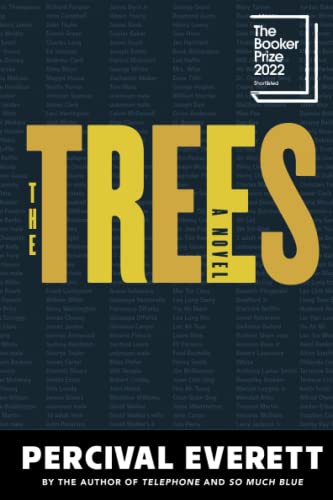
Percival Everett, The Trees: A novel (Graywolf Press 2021)

Before the meeting: This is another excellent book I wouldn’t have read but for my wonderful book group.

The book moves disconcertingly from genre to genre. After a bit of hayseed comedy, it develops into one of those murder mysteries where wisecracking out-of-town detectives arrive to help resentful local cops with an apparently insoluble case. Then there’s some social satire as the detectives, who are both African-American, make fun of the racism endemic in the small town. It’s all good TV detective show fun with an anti-racist bent.

Then the corpses multiply, each murder scene featuring a dead and mutilated White person paired with a long-dead Black person whose clenched fist holds the other’s severed testicles. It could be a highly implausible serial-killer yarn, or a revenge ghost story about racist violence in the USA (against Chinese people as well as African Americans, as the narrative makes unnervingly clear). A magic realist parable, perhaps, in which the murder scenes eerily evoke, and partly reverse, iconic images of lynchings? Or a tale of witchcraft? Certainly one key character identifies as a witch, but then she is also an amateur archivist who has accumulated records of thousands of lynchings from 1913 to the present. Or maybe, as the plot widens, it’s a zombie apocalypse, one whose allegorical meaning lies right on the surface. And Donald Trump makes an appearance. In the end, it’s a genre mash-up that manages – perilously – to stay coherent.

It’s all – to quote Quentin Tarantino from another context – ‘so much fun’. But it doesn’t lose sight of the monstrous historical reality. For example, one chapter consists of a ten-page list of names, in the manner of a spread in Claudia Rankine’s brilliant book, Citizen (my blog post here), and reminding me of Nana Kwama Adjei-Brenyah’s short story ‘The Finkelstein 5’, in which Black vigilantes kill random white people while shouting the names of Black people who have been murdered (my blog post about Friday Black, the book the story appears in, here).

A book that plays around like this with form and genre, that preaches a little, chills a lot and leaves a lot of questions unanswered, has to work brilliantly at the scene level and even the sentence level. This one does. I could give lots of examples, but take the moment at about the one-quarter mark, when the detectives, Ed and Jim, visit the juke joint on the edge of town.

The narrator doesn’t say so, but everyone in the joint is Black. Apart from one character who passes for White and another who is revealed to be Black late in the book, this is Ed and Jim’s first encounter with the town’s Black people. (In classic movie structure the one-quarter mark is the second turning point, often involving a change of location.) When they walk in, everything stops:

Jim and Ed stared back at the staring faces.
‘Yes, we’re cops,’ Jim said loudly. ‘And we don’t like it either. Everybody carry on. Have fun. Break the law, if you like.’
A couple of people laughed, then others. There was the sound of someone breaking a rack at the pool table in back. The dancing and chatting started up again.

(Page 75)

Maybe you have to enjoy writers like Elmore Leonard to be tickled by moments like this. I do and I am. You almost don’t notice that what is being described is a tacit alliance, or at least deep mutual understanding, among the Black characters, whether they’re cops, people relaxing at a bar, or possibly murderers.

What happens as Ed and Jim question the bartenders continues on that note. The bartenders express no sorrow for the racist White men who have been killed, but it’s different with the photograph of the Black corpse whose face has been beaten in. This corpse has appeared at the first murder scene, disappeared, turned up at the second murder scene, and disappeared again. Soon after this scene he will be identified [rest of this sentence whited out, but you can select it with your cursor if you don’t mind spoilers], mistakenly but with great thematic impact, with Emmett Till, whose murder sparked outrage in 1955. At this stage, most of the townspeople, Black and White, believe that this ancient corpse is somehow the murderer.

Jim pulled the picture from his pocket. ‘This is kind of hard to look at, but tell me if you recognise this man.’
The man cringed at the sight. ‘Ain’t nobody gonna recognise him. What the fuck happened?’
Jim shrugged. ‘If this man is alive, we want to find him before that cracker sheriff and his deputies do.’
‘How can that man be alive?’ the bartender asked.
Jim shrugged again.
‘Franklin, come here and look at this.’
The other bartender came over. Jim held up the photo for him to see. ‘Lord, have mercy. What’s that?’
‘That’s a human being,’ Ed said. ‘Somebody did that to another human being. Do you recognise him?’
The second man shook his head. ‘He must be dead. Is he dead?’
‘On and off,’ Jim said.
The man offered a puzzled look.
‘We don’t know,’ Ed said.

(Page 76)

‘Somebody did that to another human being’ lands like a well placed rock in the middle of the hard-boiled humour. It’s a sentence that is to gather force like a snowball in an avalanche. An awful lot of the writing in this book is as impeccable as that.

Why The Trees? Trees don’t feature in the book much at all. But a character sings the Billie Holiday classic (written by Abel Meeropol / Lewis Allan):

Southern trees bear strange fruit
Blood on the leaves and blood at the root
Black bodies swinging in the southern breeze
Strange fruit hanging from the poplar trees

Pastoral scene of the gallant south
The bulging eyes and the twisted mouth
Scent of magnolias, sweet and fresh
Then the sudden smell of burning flesh

Here is fruit for the crows to pluck
For the rain to gather, for the wind to suck
For the sun to rot, for the trees to drop
Here is a strange and bitter crop

Nearer to the meeting (spoiler): On Friday 28 April news broke that Carolyn Bryant Donham, the woman whose accusation led to a notorious racist murder, had died. Percival Everett got there just before Real Life: in the novel Carolyn Bryant, aka Granny C, is the third person to die in the presence of the small Black corpse. It’s unlikely that the Real Life Carolyn Bryant even heard of this book, but the timing!

After the meeting: Tragically I came down with a heavy cold (not Covid) on the morning of the meeting, and spared them all the risk of infection. It’s now a couple of days later and the customary brief account of the evening hasn’t materialised, so all I can say in this section of my blog post is: a) one chap beforehand said he could barely read for tears of laughter, until the book went dark and the laughter dried up; b) on the night itself, the conversation turned – as it does – to identity politics, including pronouns (several of us have gender non-conforming family members or friends); and c) they all had a good time while I stayed home nursing a stuffy nose.