Category Archives: Books

The Essays of Montaigne, progress report 5

Michel de Montaigne, The Complete Essays (Penguin Classics 1991, translated by M. A. Screech)
– part of Book 2 Essay 12, “An apology for Raymond Sebond’

Since my last Montaigne report, I’ve been faithful to my four pages of Montaigne each morning except for two breaks – one for a fortnight and the other just a weekend. The book is too heavy to take on a plane, and travel tends to disrupt routines like this one.

Five weeks ago, I had just started reading the longest essay in the collection, ‘An apology for Raymond Sebond’. Today I still have 60 odd pages of that essay to go. As I have only the vaguest idea of who Raymond Sebond was, or in what way Montaigne is attempting an apology, I’ll spare you any attempt at a summary, and just give a couple of snapshots.

Having declared himself to be a sceptic (as opposed to a dogmatist), Montaigne sets out to establish the limits of human reason. He piles on example after example of ancient philosophical versions of God, products of the ‘fierce desire to scan the divine through human eyes’. Arguing that if reason were able to determine the nature of God, then these versions would tend to some kind of agreement. Having established that this isn’t what happened, he (at least in M. A. Screech’s translation) drops his dignified mode of discourse altogether and exclaims:

So much din from so many philosophical brainboxes! Trust in your philosophy now! Boast that you are the one who has found the lucky bean in your festive pudding!

That’s on page 577. I’ve now reached page 625. In those 48 pages he has explored (and deplored) the limitations of reason in understanding even the world of nature or the human mind itself, and has been cheerfully insulting of many ancient writers whom he clearly admires enormously (including describing Plato as sometimes ‘silly’). Now he is going on about how philosophers can’t reach any agreement about the immortality or otherwise of the soul. He has reached the transmigration of souls:

the received opinion … that our souls, when they depart from us, go the rounds from one body to another, from a lion, say, to a horse; from a horse, to a king, ceaselessly driven from one abode to another.

And he’s having quite a lot of fun with it, citing the Epicureans’ objection:

What order could be maintained if the crowds of the dying proved greater than the number being born? The souls turned out of house and home would all be jostling each other, trying to be first to get into their new containers! They also ask how souls would spend their time while waiting for their new lodgings to be got ready.

Having added some lines of Latin poetry, he then goes on:

Others make our souls remain in the body after death, so as to animate the snakes, worms and other creatures which are said to be produced by spontaneous generation in our rotting flesh or even from our ashes.

In short, I’m enjoying this essay as a kind of romp in the history of philosophy. As a settled atheist who thinks my mind is a function of my body, I have a kind of museum-piece interest in a lot of the arguments. I was taught at school that until a certain point in European history people relied on the authority of, I think it was Aristotle, for their knowledge of the world. We knew from Aristotle how many teeth a human had, and only at a certain stage did it occur to people to look in each other’s mouths and count for themselves. As I read this essay, it feels as if I’m seeing that change happen before my very eyes, and it’s riveting. (Mind you, I think the essay itself is going to end with a declaration that Christian revelation is the ultimate source of Truth, but both things can be happening at once.)

To be continued.


This blog post was written on Gadigal-Wangal land, where understandings of the universe beyond Montaigne’s imaginings were developed millennia before the Ancients he discusses. It’s raining again, and my compost bin is alive with worms. I acknowledge the Elders past, present and emerging of the Gadigal and Wangal Nations,.
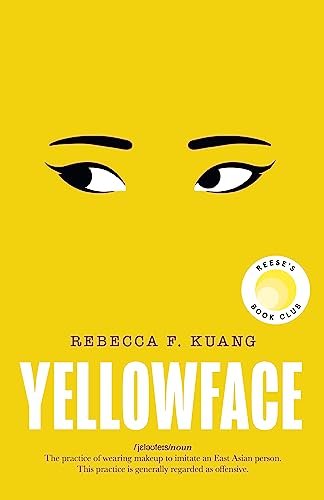
Rebecca F. Kuang’s Yellowface and the book group

Rebecca F. Kuang, Yellowface (The Borough Press 2023)

Before the meeting: It’s a thing: books – and movies – that deal with questions of authorship. The protagonist of Siri Hustvedt’s The Blazing World (2014) presents a young male artist as the creator of her sculptures. In Cord Jefferson’s movie American Fiction (2023, based on Percival Everett’s Erasure (2001), which I haven’t read), an African-American novelist writes a trashy novel full of the stereotypes he despises, and presents its author as a fugitive from justice. I won’t do a spoiler on Björn Runge’s movie The Wife (2017, based on a 2003 novel by Meg Wolitzer). In Caledonian Road, Campbell Flynn knocks off a self-help book for men and has a photogenic young actor pose as the author. And that’s just some relatively recent ones that come to mind.

Yellowface is an entertaining addition to that list.

June Hayward, a young white woman whose first novel has done poorly, has an uneasy friendship with Chinese-American Athena Liu, a fabulously successful one-book novelist. When Athena dies suddenly with June as the only witness, June gets hold of her unfinished manuscript, which deals with aspects of Chinese immigrant life in North America. She sets about editing the manuscript and completing the story, telling herself that she is doing it to honour Athena. She gradually comes to think of the novel as primarily her own work and sends it to her agent over her name.

The novel is a publishing sensation and, without actually claiming Chinese heritage, June allows herself to be seen as Chinese. Her Hippie parents had given her ‘Song’ as a middle name, so – she rationalises – it’s not actually lying when she adopts the Chinese-sounding pen name of June Song and lets people make their own assumptions. Anyhow, Athena’s research consisted of extracting stories from other people, so they were already stolen property. And other rationalisations.

Needless to say, things go very wrong. Right up until the last movement I was having a great time. There’s a marvellous scene where June is invited to do a reading to a local Chinese community, where her hosts – including one elderly man whose experiences are similar to those narrated in the novel – are genuinely shocked when they realise she is not Chinese, but remain icily courteous. Social media users are infinitely less restrained.

We see it all from June’s point of view. We sorta-kinda believe the stories she tells herself, and even when she crosses the line into outright deception, we sympathise – until we don’t. June may acknowledge that she hasn’t been completely honest, but she continues to see herself as the victim of unfair attacks until the end of the book. But somewhere along the line, and I imagine the precise point differs from reader to reader, she loses our allegiance. So at the end, where she comes up with a way to redeem herself in the eyes of the publishing and reading world, we are led to believe that it will probably work, but are disgusted by a world where that is the case.

It’s cleverly done. The introduction of some unconvincing horror tropes spoiled the big climax, but I can forgive that.

Page 77* is a nice example of one of the strengths of the book. If you’re going to write a satire of identity politics in the publishing industry, you’d better make your version of the industry seem real. Kuang does that. June’s conversations with her agent and editor, her meeting with the marketing executives, the closing of ranks among authors, followed by the shunning once the scandal becomes too much: all feel real. The description of publication day on page 77 is surely taken from life:

Months become weeks become days, and then the book is out.
Last time, I learned the hard way that for most writers, the day your book goes on sale is a day of abject disappointment. The week beforehand feels like it should be the countdown to something grand, that there will be fanfare and immediate critical acclaim, that your book will skyrocket to the top of all the sales rankings and stay there. But in truth, it’s all a massive letdown. It’s fun to walk into bookstores and see your name on the shelves, that’s true (unless you’re not a major front-list release, and your book is buried in between other titles without so much as a face out, or even worse, not even carried by most stores). But other than that, there’s no immediate feedback. The people who bought the book haven’t had time to finish reading it yet. Most sales happen in preorders, so there’s no real movement on Amazon or Goodreads or any of the other sites you’ve been checking like a maniac the whole month prior.

According to Wikipedia, Rebecca F. Kuang’s first novel, The Poppy War, was a big success, but I am pretty confident that its 22-year-old author had exactly such a ‘day of abject disappointment’.

After the meeting: As usual, our meeting was convivial, and people had a range of responses. I was a bit of an outlier in feeling generally positive about the book, but I wasn’t the only one to derive at least mild enjoyment from the meta stuff: the Asian woman writing in the first person as a white woman pretending to be Asian. Someone wondered out loud how James would have been received if the author was revealed to be white, Helen Demidenko/Darville/Dale and The Hand the Signed the Paper was mentioned. But I don’t think anyone else just enjoyed Yellowface as a light satirical tale.

At least one other chap couldn’t for the life of him see what there was to enjoy. From memory, he was something like, ‘Yes, I get what you’re saying about identity politics and the publishing industry, and maybe even that there’s satire happening, but it’s not funny, there are no real characters, and nothing interesting happens. June, the protagonist, doesn’t develop and we don’t learn anything about her beyond the superficial.’

There were a number of positions in between. The extreme implausibility of the big climactic scene was something we could all agree on. Someone said that the effect staged there would have taken the resources of a Taylor Swift concert to pull off. I couldn’t disagree.

But we had an excellent time together, enjoyed the food and the fleeting visit from a teenager who lives in the flat, shared stories (including some tales of school reunions, of which the outstanding one was the 40th reunion of a former Australian Prime Minister who had been bullied at school and continued to be bullied 40 years later), laughed a lot, had peanut-flavoured ice cream, and didn’t feel at all competitive with (something I found out about recently) the all-male Book Group that has been meeting for 25 years in Melbourne.


I pressed ‘Publish’ for this blog post on Gundungurra land, where the creeks are flowing and the air grows cold as soon as the sun goes down. I read the book on Gadigal Wangal land, and brooded on it in Yidinji country and the many lands I have flown over or driven through in the meantime. I acknowledge the Elders past and present who have cared for these lands for millennia, and continue to do so.


My blogging practice is to focus on the page of a book or journal that coincides with my age, which currently is 77.

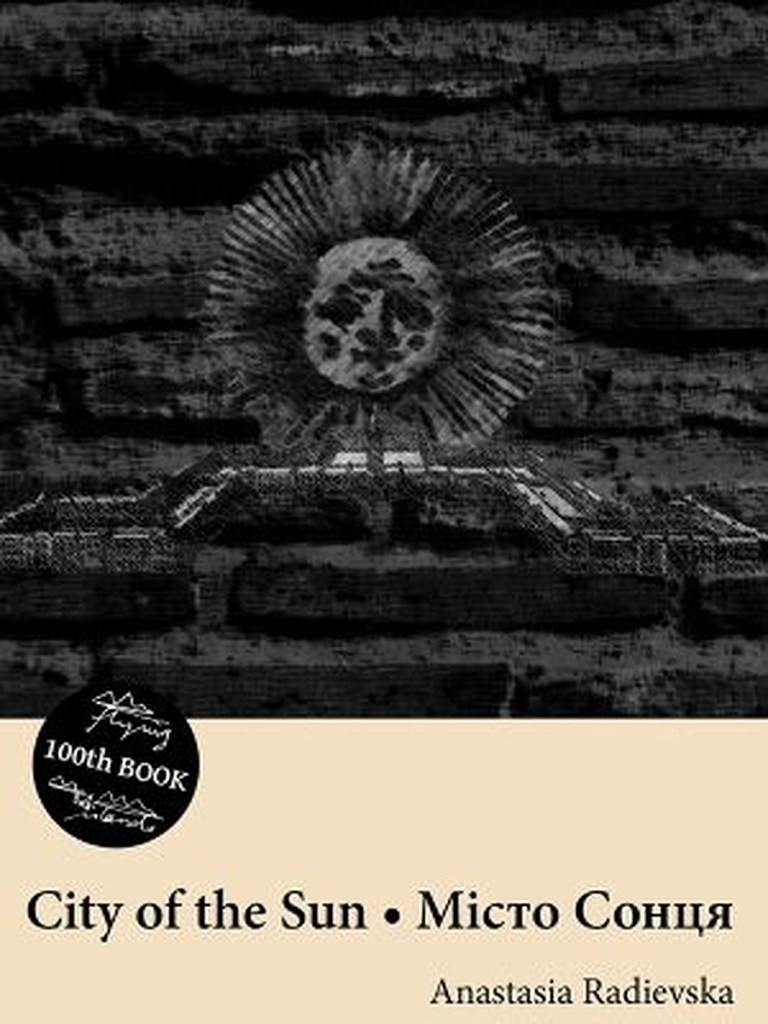
Anastasia Radievska’s City of the Sun

Anastasia Radievska, City of the Sun / Місто Сонця (Flying Island Books 2024)

This is Ukrainian-Australian poet and artist Anastasia Radievska’s first book of poems. It’s a rich, complex creation.

There are poems in English and Ukrainian, which means that almost half the book’s contents remain enigmatic and even unpronounceable to readers like me who can’t read Ukrainian script – but beautiful to look at.

The book takes its title from The City of the Sun, an early 17th century philosophical work by Tommaso Campanella, which according to Wikipedia is an important early Utopian work. Campanella’s city is protected by a series of walls, and this book’s sections are named for six of those walls. Each section is introduced with what I assume to be a quote from Campanella describing the images painted on its wall – followed by a double-spread illustration, a semi-abstract painting that mostly relates to that description.

For example, ‘The Fifth Wall’ is introduced by this paragraph:

On the fifth interior they have all the larger animals of the earth, as many in number as would astonish you. We indeed know not the thousandth part of them, for on the exterior wall also a great many of immense size are also portrayed.

For a casual reader like me, this framing has a pleasingly decorative effect, but as with the beautiful characters of the Ukrainian alphabet I expect that a more serious approach would make the reading experience much richer. More serious readers, please speak to us in the comments.

Page 77* includes neither Ukrainian text, quotation from Campanella, nor illustration. It’s ‘instructions for lunchtime’, one of six English poems in the ‘The Fifth Wall’ (which also includes six Ukrainian poems). As you would expect from the section’s introduction above, the poem features some of ‘the larger animals of the earth’.

instructions for lunchtime

always remember
dogs are beautiful for having been engineered
and well-loved
to engineer us back

the gaze turned inward
towards something worthy –
finally – of looking back at

and an entire piece of ginger in the mouth
doesn't say otherwise

but thinks of course
of racing horses
with ginger in the sacrum
a culinary cruelty
somebody's paying to have
done to them

and on a Monday
I would too if hadn't thrown away
a fortune on tom kha soup
in little brown bowls
and a seat by the window

watching the dog wag its tail at the Lime bike
like it might be relevant to it
as a conspirator or fellow thing
to answer our doubts with –
throw in the river
– price – chase
at fleece rabbits –
does it not breed, breed, breed?

As with Radievska’s poems generally, part of the pleasure here lies in the poem’s difficulty. It’s not that there’s a puzzle to be deciphered; what the poem asks for is a little patience – understanding will come.

The poem starts with an abstract consideration about dogs, goes to the sensation of ginger in the mouth, then to a memory of cruelty to horses. Only at about the fifteenth line, you get to see some coherence. As advised in the title, it’s a lunch poem: the speaker is having her customary tom kha soup in a Thai eatery. Just as she sees a dog in the street outside the window wagging its tail at a hire bike, she finds she has put a whole piece of ginger into her mouth and her mind wanders to something she has heard about a use of ginger in horse-racing. Her attention returns from the ginger and horses to what she is seeing in the street, and she indulges some fanciful imaginings about the dog and the bike.

That’s the narrative.

There’s a lot else happening. The opening injunction, ‘Always remember…’, is a nice reminder of something we all know: we find dogs beautiful because we have bred (‘engineered’) them to be that way, but they have their own subjectivity and have changed us in turn. It’s not the standard joke about how dogs have made us their servants – bringing them food, throwing balls for them, cleaning up their messes, etc. It something about the dogs’ gaze: meeting a dog’s eyes can make you feel (‘finally’) that you are worth looking at (unlike the often indifferent or critical gaze of other human beings).

The piece of ginger in the mouth introduces a different human–animal relationship – a piece of ‘culinary cruelty’ in the racing industry. I don’t know what ‘ginger in the sacrum’ is and couldn’t find anything in a quick online search, but I’ll trust the poem that it’s a thing.

someone is paying 
to have done to them

The cruelty to horses is a comparatively malevolent, profit-driven parallel to the engineering of dogs.

But this isn’t a poem of indignation or protest:

and on a Monday
I would too

At first glance this seems to be condoning cruelty to racehorses, but it’s worth spending time on the convoluted syntax to realise that it’s actually a little joke, playing perhaps on the ambiguity of ‘them’ in the previous line – callous about the horses, perhaps, but only because not keeping them in mind. A paraphrase might be: ‘When I have to drag myself to work on a Monday, I’d happily pay someone to do something similar to me …’

I would too if hadn’t thrown away
a fortune on tom kha soup

And with this mock-lament at having spent money on soup rather than self-torture, we’re back by the restaurant window, or in the reader’s case, realising for the first time that that’s where we are, watching with idle amusement as a dog confronts a hire bike (Lime bikes are everywhere in my part of town).

The thoughts projected onto the dog pick up on the poem’s opening lines: dogs are bred to please us but they look back and have an effect on us. Can a bike do the same? The answer isn’t as obvious as we’d like. Sure, a bike can be thrown in the river, the cash transaction is front and centre, and (we know, even if the dog doesn’t) that a bike won’t play with a soft toy. But the final line introduces some doubt:

does it not breed, breed, breed? 

On the surface, this is a version of the joke about the discarded hire bikes that litter some parts of our cities – they’re breeding like rabbits. The dog asks if that’s literally so. But there are further possibilities: there may be something about capitalism as a creature that has got out of hand, but what strikes me is a suggestion that as artificial intelligence develops, perhaps objects like this bike will, like dogs, develop agency of their own, and if they haven’t already changed the way we see ourselves (with ‘the gaze turned inward’), that may be just a few generations of breeding/engineering away. Dogs and horses are among the ‘larger animals’; the poem asks if bicycles also belong in that category, or will some day.

Not bad for a poem that presents as capturing the idle play of mind during a lunch break.


I finished writing this blog post on Gadigal Wangal country, where the days are growing longer, and some wattle trees are in exuberant flower. I acknowledge Elders past, present and emerging for their continuing custodianship of this land.


My blogging practice, especially with books of poetry, is to focus on the page that coincides with my age, currently 77.

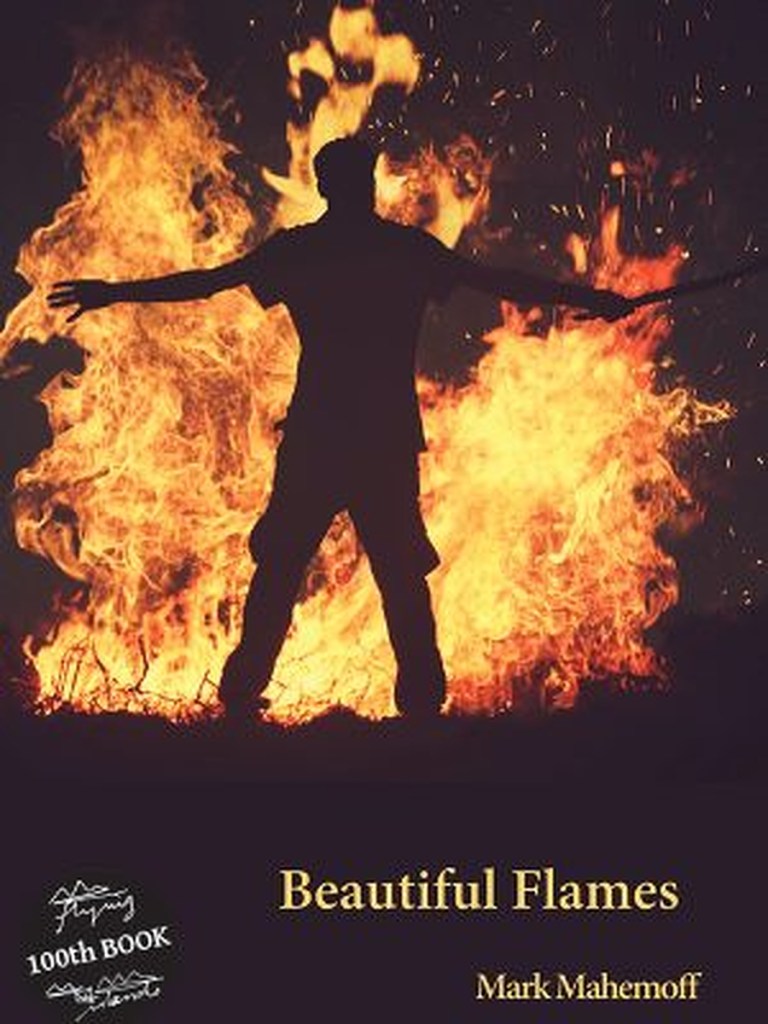
Mark Mahemoff’s Beautiful Flames

Mark Mahemoff, Beautiful Flames (Flying Island Books 2024)

This is another pocket-sized book I took with me on my recent trip to North Queensland. It’s Mark Mahemoff’s sixth book, a modest, user-friendly poetry collection in four sections.

The first section, ‘Chronicles’, mostly includes brief stories taken from life – family events, losses, a school reunion, the process of leaving home. From ‘Leaving’ (page 20):

Because childhood is a country
no one escapes unscathed
we haul it like a suitcase
stuffed full of unwashed clothes.

The second section, ‘Observations’ is what it says on the lid, observations on life’s passing parade. The titles of its poems generally tell you what to expect: ‘Kookaburras’, ‘Night Train’, ‘A Mediation’, ‘Bar Sport’, ‘Professional Development’.

The main pleasure of these first two sections is like what can get from a photograph of something ordinary – not claiming that it’s anything other than ordinary, but inviting us to pay attention to it for a moment. I generally try not to quote the final lines of poems – it’s too much like revealing the punchline of a joke – but the last stanza of ‘Nasturtiums’ (page 53) is too good an example of what I mean. Having described the large patch of these flowers on a lawn ‘somewhere in Haberfield’, and wondered whether they count as ‘weeds, food or flours’, the poem concludes:

But just devour them with your eyes
and you'll find that's enough
when you're walking beside someone
or alone
in sunlight.

That might seem banal but there’s some subtle, even self-effacing complexity. Mahemoff isn’t just talking about his own walk, but gently and elliptically inviting us to go on a walk of our own, to see for ourselves, and the last two line breaks create an unsettling effect. (What if it’s an overcast day, will it be enough then? If not, is it because the flowers look drab without the sun on them? Or is the sunlight a kind of companion?) The poem isn’t tied off in a neat bow.

The third section, ‘Travelogue’, comprises six poems in the form of notes from visits to, respectively, Western Australia, New Zealand, Melbourne, two unnamed places (one of which has a river and the other cactus plants), and Texas. The last-mentioned (‘Dallas in January’, page 84) forms a nice companion piece to Andrew O’Hagan’s essay ‘The American Dream of Lee Harvey Oswald’ in The Atlantic Ocean, which I read a couple of weeks ago: O’Hagan and Mahemoff describe the same museum, and have similar responses.

Page 77* contains two of the nine short poems that make up ‘New Zealand Snaps’.

The first is ‘Lower Shotover’:

Lower Shotover
Cool in the shade.
Singeing in the sun.
'The ozone layer is thinner here,'
she said.
You watch washing flap
while jets cruise past mountains.
How does one manage
this surfeit of beauty?
A bee falters
from flower to flower.

I had to look Lower Shotover up, but even without seeing images online (here are some if you’re interested), I knew from the poem the kind of place it is. And that’s without any of the kind of writing you might find in a tourist brochure or a poem that trusted its readers less.

It’s a thing in some contemporary poetry to plonk one thing down after another – an image, a quote, an aphorism – and call on readers to make their own connections. The poem becomes a collaboration between writer and reader. ‘Lower Shotover’ does a version of that, giving us a two-line observation about the temperature, a snippet of dialogue, images of washing on a line and jets in the sky, an abstract question, an image of a bee. We’re not left entirely to our own devices. We know from the title that the disparate items all refer to a place, but it’s up to us, for example, to imagine who speaks the third line (I think it’s the host at a tourism spot, but you might think it’s a visiting climate scientist), or whose washing flaps in the fifth line. But what is definitely there is the way the poem moves from bodily sensations in the first lines, to human connection in the third and fourth, to attention first to things seen and heard in close-up and then things seen and heard heard far-off . Only then, in the seventh and eight lines, is there an oblique reference to the reason the poem exists: the beauty of the place. But instead of trying to describe the beauty, the poem in effect confesses itself inadequate to the task. The image of the bee in the last two lines brings a nice meta touch – the poem itself has been faltering from one thing to another.

The second poem, unlike most of the poems in this book has a strict form. Each of its stanzas consists of 17 syllables – 5 in the first and third lines and 7 in the middle line. Yes, they are haiku, as we have come to understand that form in the English-speaking world.

Fox Glacier
Mountains demand awe.
We whisper in their presence,
take snapshots, and leave.

It rains ceaselessly.
A single set of headlights
burns through the distance.

Haiku, like sonnets, have a turn. In these examples, the turn has a visual quality: in the first, our gaze rotates (literally turns!) from the mountains to the tourists; in the second, there’s a change of focus from wide to narrow. I’m not sure that the rules of haiku, strictly speaking, allow words like ‘I’ and ‘we’, but the point of this ‘we’ here is that the human presence is tiny, and temporary, barely there at all.

Having written that, I have just read in Mark Mahemoff’s bio at the back of the book that his poetry

is chiefly concerned with framing, reimagining and memorialising commonplace moments, primarily in an urban setting.

Which makes me notice one more thing about these haiku: the Fox Glacier is about as far from an ‘urban setting’ as you can get, yet both haiku have industrial elements – snapshots and headlights – that make their (momentarily puny) demands on our attention.


I finished writing this blog post on Gadigal Wangal country, where I’ve noticed leaf-curling spiders waiting patiently in their rain-spangled webs. I acknowledge Elders past, present and emerging for their continuing custodianship of this land.


My blogging practice is to focus on the page of a book that coincides with my age, currently 77.

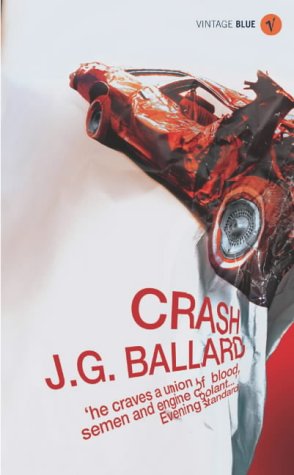
J. G Ballard’s Crash

J. G. Ballard, Crash (© 1973, Vintage Books 2005)

tl;dr: Yuk!

Having seen Crash on Tim Walters’ list of must-read science fiction / fantasy novels about 15 years ago, I got hold of a copy via Bookmooch, and it has been sitting on my To Be Read shelf ever since. I knew a David Cronenberg movie was based on it, and that it was about car accident survivors who share a sexual fetish for cars and car crashes.

Not an attractive proposition. But it’s a slim paperback, so I overrode my reluctance and packed it to read on the plane on my recent trip.

The Vintage Books edition has an Introduction written by J. G. Ballard in 1995, which includes this:

Throughout Crash I have used the car not only as a sexual image, but as a total metaphor for man’s life in today’s society. As such the novel has a political role quite apart from its sexual content, but I would still like to think that Crash is the first pornographic novel based on technology.

If pornography is something that feels you leaving just a bit less than fully human, he succeeds. If it’s something that makes you feel sexy, not so much. I’m a long way from being a connoisseur of porn, but the book this reminded me of was the one in the podcast My Dad Wrote a Porno. It has the same obsession with genitalia and sex-related bodily fluids – which in this book means pretty much all bodily fluids – but it’s not funny, even unintentionally. The patriarchal world view is overwhelming, and the sex is somehow tangled up with, or smeared or squirted on, car dashboards, crumpled metal, and terribly scarred bodies. The book is not for the faint-hearted, and I include myself in that category. In case that makes it sound titillating, I should add that it’s not for the easily ignored either: it goes on and on with unerotic sex scenes that are described in clinical, mechanical language (I won’t inflict examples on you) but still manage to be anatomically/mechanically confusing..

It’s not that I was clutching my pearls. I read the whole thing in the hope that it would deliver on the ‘total metaphor for man’s life’ etc. There’s a whiff of a promise that it would shed light on our society’s widespread fascination with car crashes, or the frisson produced by famous road deaths (Jane Mansfield, Albert Camus and James Dean are mentioned). But no more than a whiff. The opening paragraph foreshadows a near escape by ‘the film actress Elizabeth Taylor’ (whose Cleopatra appeared in the year the book was published), but she pretty much remains an abstraction.

Suffice to say I’m not rushing out to see the movie.


I wrote this blog post on the unceded land of the Gadigal and Wangal clans of the Eora Nation, where the earth has been reshaped over the last century to accommodate the needs of motor vehicles. I acknowledge their Elders past and present, with gratitude for their care of the land over millennia, and hope that the rest of us can learn from them in time.

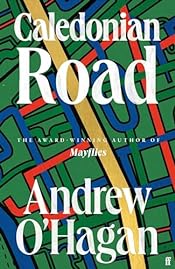
Andrew O’Hagan on Caledonian Road with the book club

Andrew O’Hagan, Caledonian Road (Faber 2024)

Before the meeting: Caledonian Road has a brilliant epigraph from Robert Louis Stevenson’s 1881 essay about ageing, ‘Aes Triplex’:

After a certain distance, every step we take in life we find the ice growing thinner and thinner below our feet, and all around us and behind us we see our contemporaries going through.

This quote struck a powerful chord with me, as the ice is definitely growing thinner below my feet, and I’m seeing my contemporaries ‘going through’ with increasing frequency.

Disappointingly, however, the book isn’t about courage and resilience in the face of ageing. It’s both more ambitious and less engaging than that.

Caledonian Road is a portrait of modern Britain, where criminality and corruption are the order of the day, and complicity is universal. Ranging from a Russian oligarch to a bystander at a backstreet knifing, with a distinguished art critic, a number of parliamentarians and a huge cast of characters in between, no one in the book can claim complete innocence.

The book’s first sentence introduces the main character and hints broadly at what is to happen:

Tall and sharp at fifty-two, Campbell Flynn was a tinderbox in a Savile Row suit, a man who believed his childhood was so far behind him that all its threats had vanished.

Campbell is a successful academic and art critic who dabbles in writing copy for fashion shows. He has written an essay that aims to puncture the complacency of the art world. He’s also dashed off a self-help book called Why Men Cry in Cars for which he plans to hire a handsome young actor to claim authorship and do signing tours. In the year covered Caledonian Road – in four parts named for the seasons, plus a fifth part titled ‘Realisation’ – his plans go (predictably) awry, and his own complacency is shattered. He falls under the spell of a young black student, Milo, who challenges his liberal world view and introduces him to the dubious pleasures of the dark web. Campbell’s comfortable life unravels and all around him and Milo as the outright and criminality of their friends, families and associates is laid bare.

The narrative takes us into many corners of UK society – a private gentlemen’s club, the tiny front parlour of a bereaved working class Scotswoman, a disastrous fashion shoot, a marijuana farm, a lorry full of illegal immigrants, the office of a tabloid newspaper. And weaponised social media is everywhere.

If it was a television series, I’m pretty sure I’d be addicted. As a novel, it’s not my cup of tea. There are many wonderful things in it, but the narrative just doesn’t sing, at least not to me. For instance, this is the opening of Chapter 10, which was a turning point, not in the plot, but in my non-enjoyment:

When he wasn’t in the country or at their mansion in Holland Park, the Duke was often at his old bachelor set at Albany, Piccadilly. His rooms were halfway down the rope-walk, opposite Admiral FitzRoy’s storm barometer, which that day indicated a fair wind. For some time there had been work going on above him, an ‘Oedipal struggle’, the porter said, between the young playboy Ralph Trench and his father, the decorator Hartley Trench, who had made his name, and his family ill, via a lifetime’s association with Sibyl Colefax and the Prince of Wales.

The Duke is one of the book’s main characters, but no one else in that paragraph is ever mentioned again. For an ignorant colonial commoner like me, none of the named places, things or people means anything. Google isn’t much help with Admiral Fitzroy and his storm barometer; I’m guessing the Trenches are inventions; for those in the know there’s probably a witty observation about fashion or the lifestyles of the rich and famous in the mention of Sybil Colefax and the prince. It feels as if Andrew O’Hagan worked hard at getting the details right here. And that’s so for the whole book – details for fashionistas, marijuana growers, people-smugglers and art dealers as much as for the aristocracy. And it feels like work for the reader too, with too little pleasure or enlightenment to show for it.

Andrew O’Hagan spoke with Richard Fidler about Caledonian Road at the Melbourne Writers Festival (here’s a link). He talked an excellent book.

After the meeting: We discussed the book along with Daniel Mason’s North Woods. We found a lot more to talk about in this one.

Someone brought along a book on Joan Eardley, one of whose paintings hangs in Campbell Flynn’s house. We found a painting that most fitted the description in the book, and were reminded of a feature of Flynn’s character that I’ve omitted in the earlier parts of this post: his childhood was in a poor part of Scotland, and he occasionally reflected on the disparity between his present comfort and past deprivation.

I read out the passage about Admiral FitzRoy’s storm barometer. Possibly in response to that, someone said they had read somewhere that London is a character in the book. Maybe so, was my thought, if you already know London.

Someone recognised a syndrome (my word) in Campbell’s relationship with Milo: an ageing academic who feels his grip on the zeitgeist loosening sees the prospect for continuing relevance in latching on to a student and, under the appearance of supporting the student, in effect plagiarises their work. In Campbell’s case, he employs Milo as his research assistant for a significant public lecture and, though like much else in the book this is never quite explicit, Milo in effect writes the lecture for him. When one or two scholars from outside Campbell’s comfortable British liberal arts environment dismiss the lecture as derivative, the narrator leaves it to the reader to judge whether this is just academic snark or whether something substantial is being said. We know that Milo is waging a kind of guerrilla class warfare as a hacker; is he also doing it by messing with Campbell academically?

We argued abut Campbell’s financial worries. Though his psychiatrist wife and he live pretty luxuriously, he considers himself to be in trouble – but won’t tell her about. Some of us believed he really was in trouble. Others thought it was all in his mind. Typically, the narrative voice leaves it up to the reader to figure it out.

I think we generally agreed that there is too much happening in the book. Things just happen, mostly offstage, and the action moves on. Things are generally treated superficially, so that there only a couple of moments, involving minor characters, where real emotion is being captured. In particular, the treatment of the younger characters – Campbell’s DJ son, the profligate son of the Russian oligarch, the Black gang members – is unconvincing.

This is the Book Club where we used to just swap books, with no more than 30 consecutive seconds of discussion allowed on any book. We’ve now met five times and are getting the hang of the Club’s new incarnation. Astonishingly, Trump and Biden hardly got a mention until quite late in the evening, when one who may or may not have inside knowledge predicted that Biden would withdraw from the race on Monday our time. She was right.

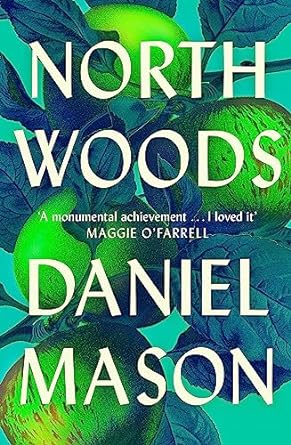
Daniel Mason’s North Woods and the book club

Daniel Mason, North Woods (John Murray 2023)

Before the meeting: If my experience is anything to go by, your heart may sink as you read the first pages of North Woods. It looks as if it’s going to be one of those historical novels written in a strained imitation of late 17th century semi-literate English. But be of good cheer – the passionate young couple who have fled into the forest from a Puritan settlement in Western Massachusetts don’t last long: the book is about the place they flee to. Each chapter moves to a new set of characters, descended from or otherwise related to the previous set, and we move through the decades and centuries up to the indefinite future of the final chapter.

It’s almost, but not quite, a collection of short stories in different modes, set in different time periods. There are ghost stories, stories of unrequited love, a tragic gay story, family sagas, a psychological horror story. There’s a persistent attention to what happens to the woods in question as an area is cleared for an apple orchard, which is turn is partly destroyed then overgrown, as various blights and diseases wipe out some of the splendid native species. Between the chapters there are sections that are presented as found documents: a story written in the margins of a family Bible, a True Crime article from the 1950s, a speech written for a local amateur historical society meeting. There are ballads written by one set of characters (which I found mostly unreadable), and photographs of the woods in its many stages.

Yes, it’s a terrifically inventive work, with US history of the last three hundred years as its backdrop.

But, well, meh!

I’m mostly left cold. It mostly feels like a writerly exercise with no deeper necessity. That would be fine if it was fun, but it’s not fun. What may be meant as magic realism just feels contrived and arbitrary. Lyrical descriptions of natural processes are laboured – more than anything, they made me want to reread Richard Powers’ Overstory (link to my blog post). Because nothing outweighed it, what might have been a niggle at the back of my mind became a constant unease: First Nations people are only glancingly present and mostly consigned to the unknowable past; tribal names are mentioned a number of times with due respect, and a wise Elder makes an appearance in an early chapter, but that’s it. I don’t know that a similar book could be written in Australia, possibly because colonisation is so much more recent here. For this Australian reader, this virtual absence meant the book felt hollow at its heart.

After the meeting: We discussed this book along with Andrew O’Hagan’s Caledonian Road. That book took up most of the discussion time, though it’s probably true that the excellent Indian meal and catch-up conversation took up more than both combined.

I think there was a consensus that the book worked as a collection of short stories. The over-all concept was impressive but didn’t quite come off, and the ghost stories worked least well of all. Someone else mentioned the Richard Powers novel as a comparison that didn’t reflect well on this book. The stories / chapters that received most honourable mentions were a long interstitial piece, the Johnny-Appleseed-like memoir of the man who planted the orchard, and Chapter Three, in which his daughters Alice and Mary are inseparable, until they’re not, with a creepy Gothic twist at the end.


I wrote this blog post on the unceded land of the Gadigal and Wangal clans of the Eora Nation, which has seen many changes in the last 236 years, but has never ceased being cared for by these First Nations people. I am very happy to acknowledge their elders past and present.

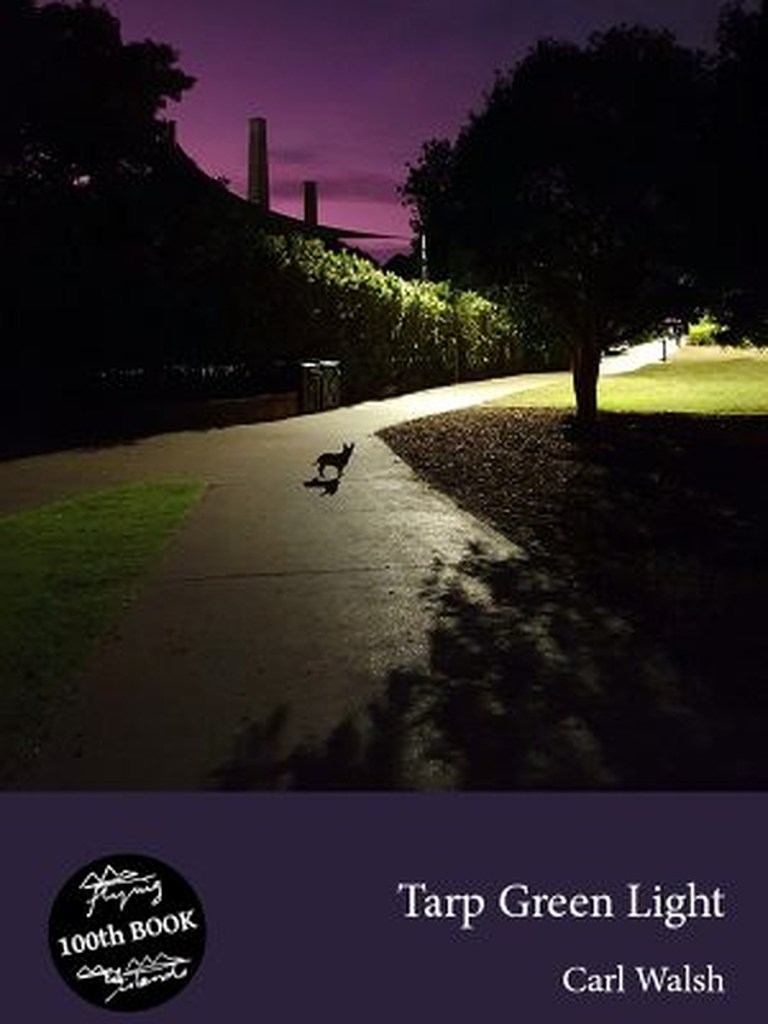
Carl Walsh’s Tarp Green Light, page 77

Carl Walsh, Tarp Green Light (Flying Island Books 2023)

Of recent years the emerging Artist and I have travelled north for a couple of weeks each winter. In last year’s fortnight on Yunbenun (Magnetic Island) I read and subsequently blogged about nine books, eight of which were in Flying Island’s Pocket Poets series.

This year we have come further north, and I’ve read a lot less. Tarp Green Light is the first of four Pocket Poets I’ve read.

The Note on the Author tells us:

Originally a tradie, Carl snuck into uni in his mid-twenties, after two years volunteering in PNG. He’s almost always written poetry – some poems in this book had their genesis in notebooks while backpacking in 1997.

Those backpacking notebooks have borne wonderful fruit. There are fine poems on other subjects – Linnaean categories, the Old Norse alphabet (I think), childhood memories, family history, and more. But it’s the poems that evoke particular places that create the strongest impression. The places include Papua New Guinea, Ireland, rural Australia, a number of European countries, and Japan.

The book’s title comes from one of the PNG poems, ‘Sepik Wara’. The poem is hard to quote from, as it’s laid out with text on either side of a broad winding river of white space, but here’s an attempt:

_________________________ _____________ we eye
rush of black clouds____________ __ _ pooling
in the sky; unfold ______________plastic tarps
to array over_______________________ our heads
as rain sheets________________ down we breathe
the close_______________ air and laugh at each
other__________________ in the tarp green light

At least one poem, ‘Idiot Fruit’, visits the Daintree, where I have recently spent a day:

Is it cassowary plums that lay 
as blue/grey eggs on the ground?

My blogging practice is to focus on page 77 (at least until I turn 78). In books like this, the practice saves me the impossible task of choosing one poem to represent them all. ‘Niseko miso’, on this book’s page 77, is one of the very few prose poems in the book, but in other ways is a fine example of how Carl Walsh can evoke a place::

Niseko miso
The cloudiness of my miso is reflected in
afternoon sky with dark seaweed stretches of
kombu cloud and strips of white tofu. But this sky
is perforated with peaks. Active in their inactivity
– three thousand years just a nap. How old I
am in their years? My head hurts at the maths.
Perhaps I should get Isabelle to calculate it? Some
are wild for ten thousand years. Even resting,
prone to throwing unexpected parties. I glance
at Mt Yōtei, its dark bulk everywhere. Hope it's
content with its sleeping. That Kagu-tsuchi-no-
kami
, the fire-spirit, is happy. I stir my miso – and
the clouds burst with rain.

Like many travel poems, this becomes more enjoyable when you know something about the places it names. A quick bit of browsing told me that Niseko is a ski resort area in Hokkaido; kombu is the kind of seaweed you might find floating in a bowl of miso soup; Mt Yōtei is a volcano, one of the hundred famous mountains of Japan, and popular for backcountry skiing expeditions; and Kagu-tsuchi-no-kami is, as the poem implies, a fire spirit whose rages are to be feared. Mt Yōtei last erupted about 3000 years ago but it is still active.

The poem deftly conjures up a situation: the speaker is drinking miso soup one afternoon in the foothills of Mt Yōtei, probably at a resort of some kind (his mind goes to wild parties as a synonym for volcanic eruption). He may be alone while drinking soup and composing the poem, but he has a female companion, Isabelle, who is probably travelling with him, certainly within easy communication distance.

The speaker idly/playfully notices a similarity between the appearance of the sky and that of his soup: clouds and seaweed allow sky and soup to be synonyms for each other.

Then there’s a but, a word I’m coming to love in poetry as signifying a turn of some kind. Here the speaker notices the major flaw in his synonym: the soup has no equivalent to the mountain peaks that pierce the clouds. The mountains dominate the rest of the poem, prompting thoughts about geological time. The tone is still playful – volcanic activity is described as wild partying, prolonged or brief and unexpected – but there are quiet hints of awe in the presence of the sublime.

In the two sentences before the last one, another dimension of the place of the poem comes into play. These mountains have had stories told about them for millennia. The speaker acknowledges this, by naming the fire spirit Kagu-tsuchi-no-kami, at the same time expressing anxiety about a potential eruption. (Maybe it’s just me but that seems to be a very Australian response, given how very extinct our volcanoes seem to be.)

Then in the last sentence, the poem comes down to earth, and attention returns to the soup and the clouds. There’s a hint of sympathetic magic – did stirring the soup make the rain come? – but the main effect is to pull back from vast, fearsome, mythological thoughts to the present moment, the place where the poem started.


I read this book near the mountains of Yidinji land and finished writing the blog post on Gadigal–Wangal land, where the sky is brilliant blue and the wind is chill. I acknowledge the Elders past and present of both peoples.

Andrew O’Hagan’s Atlantic Ocean

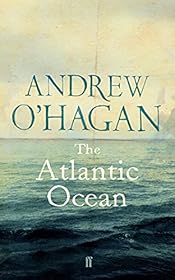
Andrew O’Hagan, The Atlantic Ocean: Essays on Britain and America (Faber 2008)

This book was my gift in a Book Group Kris Kringle years ago, and has been languishing on my top shelf ever since. I was prompted to read it by Caledonian Road, Andrew O’Hagan’s most recent novel – which I’ve just read for my other Book Club (blog post to come after the next meeting).

These 23 essays were first published between March 1993 (‘The Killing of James Bulger’) and February 2008 (‘Brothers’). That’s not so long ago, but the book feels as if it comes from another, ancient era. Michael Jackson was alive. 9/11 (and England’s 7/7), the Iraq War, Hurricane Katrina and George W. Bush were in the headlines. Donald J Trump was barely a reality TV star; Brexit wasn’t a cloud on the horizon; a global pandemic was predicted, but with no sense of urgency.

Most of the essays were first published in the London Review of Books, many of them as book reviews. We are told the month and year of first publication, but not the details, or sometimes even the name, of the books being reviewed. We’re invited to read them as stand-alone essays, and for the most part they succeed – as memoir, literary journalism, social commentary, a general reflections on literature. There are pieces of serious long-form journalism, like ‘On Begging’ (November 1993), in which 25-year-old O’Hagan joins the beggars of London with a tape recorder in his pocket, or ‘Brothers’, the book’s final essay, in which he visits the people left behind by the deaths of two servicemen in the Iraq War, one from each of England and the USA.

Three essays illustrate the range of O’Hagan’s subject matter and the variety of his approaches:

‘The Killing of James Bulger’. In the north of England in 1993, two 10-year-old boys abducted, tortured and killed two-year-old James Bulger. The great Gitta Sereny wrote about the murder, probing the boys’ motives and challenging the vengefulness of the press, the courts, and the crowds that gathered to demand the death sentence. O’Hagan’s essay has a similar impetus but, strikingly, his starting point is to identify with the killers. He describes in unsettling detail the way, as a child in Glasgow, he and a girl friend mistreated a much younger child, and expands from there to the general normalisation of cruelty in his part of Scotland. (Shades of Douglas Sewart’s Shuggie Bain or Jimmy Barnes’s memoir Working CLass Boy. It’s a challengingly personal essay that is shamefully relevant to the place I’m in just now, as Queensland’s Liberal National Party is pushing an ‘Adult crime, adult time’ policy.

‘On the End of British Farming’ (March 2001), one of the longest essays, is a brilliant piece of investigative journalism. O’Hagan visits a number of small farmers, and gives shocking statistics on the economic pressures they are up against. Most shockingly, perhaps, is what happens when he follows up a claim by a Sainsbury representative that the retail chain has an excellent relationship with a dairy farm in Devon. On visiting the ‘farm’, he finds that in order to survive (and then thrive), the couple who run it have got rid of all their cows. Their enterprise is now is in effect a yoghurt and ice cream factory, buying milk at just above the unsustainable going rate from neighbouring farms. The essay sees the source of the problem in the subsidy policies after the Second World War. There is some discussion of the role of the EU (real, but not major, he argues). It’s one of the many moments when I would love to see an update: did Brexit improve things?

‘After Hurricane Katrina’ (October 2005). O’Hagan saw online that two men from another state were driving to New Orleans to help in the aftermath of Hurricane Katrina. He contacted them and asked to travel with them. The essay is a literary equivalent of a fly on the wall documentary: the writer is all but invisible, making no overt judgement, authorial comment or explanation, but allowing the story to unfold mainly through the dialogue of the two men. They are rowdy, spectacularly sexist, uncareful about racism (one of them is African-American), and a weird combination of generosity and self-absorption. It reads a bit like a Carl Hiaasen novel. I could only wish that Caledonian Road had as much exuberant life.

Page 77 occurs in ‘Tony and the Queen’ (November 2006), which is part a reflection on the Stephen Frears/Peter Morgan Movie, The Queen – long since superseded in our minds by the TV series The Crown (also largely written by Peter Morgan). The page happens to include one of the passages where O’Hagan notes the influence of US culture on Britain’s. He is discussing the moment in the film and in real life when the Queen was slow to grieve publically after the death of Lady Diana:

Obviously, the elder royals and their familiars had completely missed out on the Oprah-isation of the universe. If they hadn’t, they might have learned the new first rule of successful leadership: enjoy your inscrutability if you must, but don’t ever stand in the way of a confessional heroine. If stopping Diana was something of a thankless task while she was alive, the effort would come to seem suicidal for the British monarchy in the summer of 1997, after Diana died in that Paris tunnel. William Shakespeare himself could scarcely have imagined, in the days after the crash, a royal household with more out-of-touch advisers than the Windsors had on twenty-four-hour call, each of them sharing a gigantic unawareness of the difference between a pest and a mass phenomenon. But it is said that much of the intransigence was coming from the Queen herself, who, despite all her experience, disported herself that summer like a person lumbering in a dark cave. She was somehow unable to see what the infants and the dogs in the street could see, that the old style was unsuited to the virulent new mood – and that if something had to give, or someone, it was most likely going to be the woman whose head appears ready-severed on Britain’s postage stamps.

An astute observation at the time, and probably accurate about the changing times, but it fails to imagine – and how could it – the powerful impact of the image of that same inscrutable queen sitting alone at the funeral of her husband. Inscrutability itself, evidently, can find favour in the ‘virulent new mood’, and O’Hagan’s ominous hints of decapitation to come (inspired no doubt by Scottish wishful thinking) fell very wide of the mark.


I finished writing this blog post in Ma:Mu country. My father, my siblings and I were born on this country, and I’m very happy to belatedly acknowledge the Ma:Mu Elders past and present who have cared for this prodigally beautiful land for millennia, and continue to do so..


* My blogging practice for some time has been to focus arbitrarily on the page of a book or journal that coincides with my age, which currently is 77.

Journal Catch-up 24

As I have mentioned before, I once had a substantial collection of Meanjins. I parted company with them in the course of moving house, probably forty years ago or so, and I haven’t kept up with Meanjin‘s changing identity since. In 2021 I toyed with the idea of resubscribing, but I may have been daunted by the sheer size of each issue. I have now bitten the bullet.


Esther Anatolitis (ediitor), Meanjin Vol 83 Nº 1 (Autumn 2024)
(links are to the Meanjin website: some but not all of them are available to non-subscribers)

This issue is a doozie!

It’s as engaged with current social and political issues as Overland. There are a number of essays on aspects of the Israeli invasion of Gaza, including Sarah M Saleh’s brilliant argument for the importance of Palestinian solidarity movements to the political wellbeing of Australia as a whole. There’s a concise summary article by father and daughter team Stephen Charles and Lucy Hamilton on the role of lies and disinformation in the Voice referendum. There’s a portrait by Jack Nicholls of eco-warrior CoCo Violet. There’s Amy Remeikis on the significance of the (first) Bruce Lehrmann rape case. And more.

It’s as culturally diverse as Heat in its heyday. Editor Esther Anatolitis (Σταθία Ανατολίτη) interviews Peter Polites. André Dao gives the 2023 State of the (Writing) Nation Oration. And more.

It’s as academically challenging as Southerly. See Dan Disney’s esoteric discussion of a Korean verse form and the fraughtness (impossibility?) of translating it, or imitating it, without subsuming it into the linguistic dominance of the English language; or Ianto Ware’s account of the challenges he fac ed in writing about his mother’s life and death.

First Nations writing has a strong presence. Among other things, ‘Ilkakelheme akngakelheme—resisting assimilation‘, a powerful essay by Theresa Penangke Alice, has pride of place before the contents page, and the new poetry editor is Wiradjuri woman Janine Leane.

I learned a lot – from Renata Grossi about the law concerning wills and what happens when they are contested; from Tom Doig about the long shadow of the 2014 Hazelwood disaster; from Marcus Westbury about the possibilities of something like a Universal Basic Income.

There are memoirs, including a brief snippet by Clare Wright, which starts out from an elaborate piece of costumery in the Powerhouse Museum and takes the reader to an unexpected ugly teenage encounter.

There are book reviews, and poetry. I was delighted to read, ‘Thread‘ a new poem by Eileen Chong. Two very different poems, ‘Oomarri—coming home‘ by Traudl Tan with Kwini Elder Ambrose Mungala Chalarimeri, and ‘Dreaming in Bourke‘ Paul Magee, talk to each other across the pages about the importance of country for First Nations people.

I picked up a couple of new words. My favourite is::

  • pipikism, a term coined by Philip Roth, who defined it as ‘the antitragic force that deconsequentalises everything – farcicalises everything, trivialises everything, superficialises everything’. Naomi Klein revisits the term in Doppelganger, her book reviewed in this Meanjin by Sam Elkin.

I’ll give the last word of this post to Peter Polities, whose words on page 77* in some ways speak to the journal as a whole:

I remember when I was in art school … this guy said to me: ‘I’m not political.’ And I was like: What did you say?!?’ I was just so shocked the first time I heard it, but then by the second time, I was so sarcastic: I said, ‘Yeah, what’s political about making goods for a luxury market?’ So this is what these kids wanted to be: to create work that you hang above a fucking couch for rich people. My interest in art is as a site for intervention, a site for politics, and culture is one of the most political things that we have.


I finished writing this blog post in stunningly beautiful Kuku Yalanji country, to the tune of parrots, curlews and the calls of other birds I don’t recognise.


* My blogging practice for some time has been to focus arbitrarily on the page of a book or journal that coincides with my age.