Category Archives: Books

Claire Messud’s Kant’s Little Prussian Head

Claire Messud, Kant’s Little Prussian Head & Other reasons why I write: An autobiography in essays (W W Norton & Co 2020)

Claire Messud (Wikipedia entry here; her own website here) is primarily a novelist. I haven’t read any of her novels, but this book – a collection of essays of which versions were published between 2002 and 2019 in journals ranging from Vogue to the Kenyon Review – was on offer at our book-swapping Book Club. I’m a bit of a sucker for writers’ writing about writing, and on top of that I was intrigued: Did Kant keep a tiny sculpture of a head on his shelf, and whose head was it?

It turns out this is the first book I’ve read that mentions Covid–19. The introduction, dated April 2020, strikes an optimistic note. Speaking of the climate emergency, life under late capitalism, and the way recent years have been ‘a dark maelstrom’ (which may be code for the Trump presidency), she continues:

This ominous hurtling, the relentless ouroboros that is social media, the destruction of ourselves and our environs – we had come to see it as inevitable, and ourselves as the passive and ineluctable victims of forces beyond our control. Humanity has risked collective despair, than which there is no more certain doom for our planet and ourselves. But even in the past two months, although at the mercy of a ravaging virus, we have discovered that in other ways we aren’t disempowered. Crisis and extremity are by no means to be desired; and their consequences – human and economic both – will be challenging for the foreseeable future. But these extraordinary times have also forced us to slow down, to think collectively, to seek hope, to value the truth, and to celebrate resilience and faith in our fellow human beings.

To find these resources, we may look to the past – to history and to literature – to the vast compendium of recorded human experience, from which we draw wisdom, solace, or, at the least, a sense of recognition.

It might have been harder to hit that note of optimism eight or ten months later in the USA, and harder to assume that the ‘we’ in that passage is universal, or even a majority, but it’s still saying something real.

The book is organised into three parts: ‘Reflections’, which comprises mostly family history, and the self-explanatory ‘Criticism: Books’ and ‘Criticism: Images’. The divide, while clear, isn’t absolute. As Messud says in her Acknowledgments, her ‘family is at the heart of it all’. The three essays on Albert Camus at the start of the second section – on respectively his ‘naive optimism’ during the Algerian War of Independence (1954–1962), a new translation of Camus’ L’Étranger, and Kamel Daoud’s Meursault, which is a response to L’Étranger – take on extra depth and resonance from Messud’s family history. Her father’s family were pied-noirs (Algerian-born French) like Camus, and the first Camus essay begins with a memory of her father as an old man grieving for the country he hadn’t seen since he was a teenager.

I approached the first part cautiously. Other people’s family history provoke one central question: Why should I be interested? Will this family be amusing? Will their stories shed light on my own? Will they open out to some broader understanding of the world? In this case the answer to all three questions is Yes. Claire Messud brings to her stories of her parents and grandparents not only the precise aura of childhood memory, but also an adult grasp of their contexts. She spent a large part of her childhood in the eastern suburbs of Sydney, then moved with her family to Toronto, and from there to the USA. Each move meant a cultural shift, and it’s Kambala Church of England School for Girls in Rose Bay, seen through Messud’s eyes and now ours, that is the weirdest of them:

We had uniforms for summer and for winter. The former was a grey-and-white checked shirtdress, belted, worn with a straw boater banded in grey, with the school crest upon it. The latter was a grey tunic, beneath which we wore white shirts (with Peter Pan collars while at [the junior school] Massie House) and grey-and-gold striped ties (bow ties, with the Peter Pans), and topped by a grey felt hat, again banded with the crest. Grey socks; black oxfords; grey jumpers; grey blazer (with gold piping); grey knickers; grey ribbons (compulsory if your hair touched your collar).

(‘Then’, page 8)

And there’s much more.

The dislocations in the early lives of Messud and her sisters, it turns out, are mild reprises of their parents’ lives. Her father was a pied-noir. His father, a patriotic Frenchman who also loved his native Algeria, took his family to Morocco in 1955. Messud’s father never returned to Algeria, but moved from country to country, and when his guard was down would grieve for the country and language of his childhood. A fierce atheist, when he was dying in a nursing home, he was bullied into taking Communion from a visiting priest, but as the priest was offering the host:

‘Isn’t there someone,’ my father asked me pleadingly, ‘who could do this in French?’

(‘Two Women’, p 45)

Her mother was ‘raised petit-bourgeois and socially aspirant in mid-century Toronto’. The parents met in Oxford, and their first date was at a picnic also attended by Gloria Steinem. Messud’s father’s younger sister, mentally unstable and zealously Catholic (she’s the one who pushed for the deathbed Communion) became part of their life from their marriage in 1957.

The family story is told with generosity to all parties, including the aunt, and extends to the tribulations of Messud’s teenage daughter as she deals with school-age bullying.

Inevitably, some of the essays are less interesting than others: ‘How to be a Better Woman in the Twenty-First Century’ is little more than a listicle, and an account of the author’s two dogs, though funny and heart-rending, is still an essay about dogs.

I’ve been reluctant to read review essays of books I haven’t read ever since Colm Toibìn’s review of On Chesil Beach essentially told the whole plot of that very short book in one full page of the London Review of Books. But I read all the critical essays here. I enjoyed and was enlightened by the one on a book I’ve read – Teju Cole’s Open City (link is to my blog post): I was surprised by a twist at the end; Messud doesn’t mention the twist, but discusses many moments along the way that would have made it less surprising if I’d been paying attention. I’ve seen the movie based on Kazuo Ishiguro’s Never Let Me Go, and her discussion of the book brought back the movie’s power. Essays on Jane Bowles, Italo Svevo, Magda Szabó, Rachel Cusk (this one especially), Saul Friendlander, Yaasmine El Rashidi and Valeria Luiselli are all enticing, giving enough information and context to make one want to rush out and get hold of a copy.

The third section comprises catalogue essays on painters Alice Neel and Marlene Dumas, a review of photographer Sally Mann’s Hold Still, and finally returns to family with a sweet essay on how she and her children love Boston’s Museum of Fine Arts. Living as I do with an Emerging Artist, I read the catalogue essays with relevant books open beside me, and could feel my capacity to appreciate art expanding as I read and looked. These essays are enriched by their inclusion in this book. When Messud writes that Marlene Dumas’ Amends, like each of her paintings, ‘has evolved out of a particular combination of autobiography, politics, culture, and the demands of the medium’, she could be describing the book as a whole or in its parts. In her essay on Sally Mann (which also, by the way, makes a telling contribution to current conversations about whether you can appreciate a work of art created by a person of vile character), she could likewise have been describing these essays, a good bit more accurately than the book’s subtitle, when she wrote:

… this memoir is notably neither confessional nor self regarding. Mann, ever the photographer, stays behind her lens, turning her ‘intensely seeing eye’ on the people and the natural world around her. […] We will know Mann by the outline that she leaves, by what touches her and how.

(‘Sally Mann’, p 287)

I didn’t get the writer-writing-about-writing hit I was expecting. The title essay is the only one that explicitly fits the bill – and the title, incidentally, refers to a line in a Thomas Bernhard novel that Kant’s monumental work shrivels down to a legacy of ‘Kant’s little East Prussian head and to a thoroughly amorphous world of night and fog’: to write is to aim to have at least that much legacy.
Ruby Reads 22:

It’s been a long time since I’ve posted about books read with my granddaughter. Here’s a beginning catch-up.

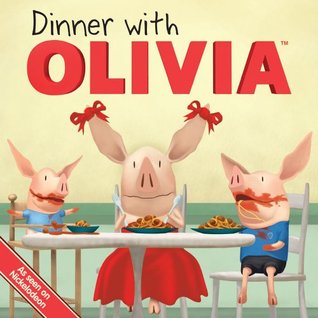
Dinner with Olivia (Simon & Schuster 2009, based on the TV series, adapted by Emily Sollinger, illustrated by Guy Wolek)

Neither Ruby nor her grandparents knew there was a TV series featuring Olivia, and at first I was wary of this knock-off of Ian Falconer’s wonderful books: as befits children’s TV, the illustration style is a lot cruder than Falconer’s New Yorkish elegance. But it turns out the book is lovely. Olivia goes to her posh friend Francine’s place for dinner. At first she is in awe, and mildly ashamed of the messiness of her own family, especially her little brothers. But once she has experienced the rule-bound life of Francine’s family, not to mention the Brussels sprouts, she – and Francine – realise how excellent it is to slurp spaghetti sauce and occasionally have a meatball bounce to the floor.


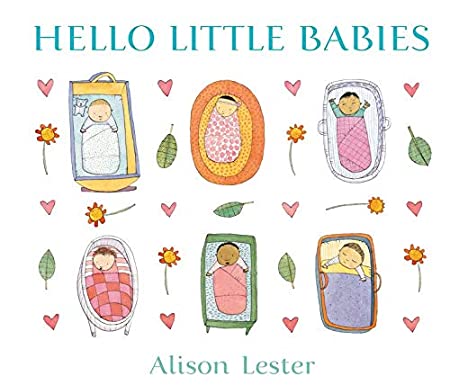
Alison Lester, Hello Little Babies (OUP 1985)

Like Alison Lester’s Clive Eats Alligators, this follows a number of children in different activities. This time the children are babies, of a range of ethnicities. Ruby is besotted with her little brother, and with babies in general – at the museum, the exhibit that held her attention was the diorama of baby dinosaurs hatching from their eggs. An added attraction in this book is that one of the babies is named Ruby.


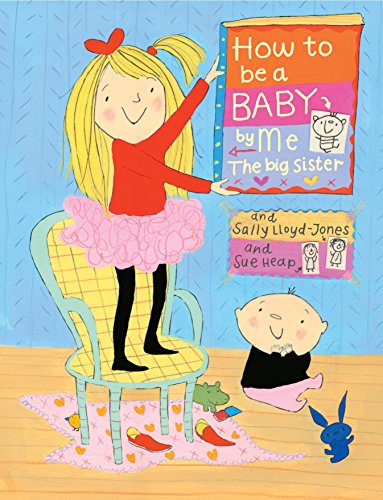
Sally Lloyd-Jones and Sue Heap, How to Be a Baby, by Me, The Big Sister (Schwartz & Wade Books 2007)

Much loved by Ruby, this mocks the narrator’s baby brother for his comparative helplessness. At least, we assume the baby is male, because that’s what Ruby’s baby brother Charlie is. We first read this before he was born. It has become much more popular since he became a reality. I’m not entirely comfortable with the book’s rampant condescension, but I think Ruby can tell it’s joking, and she particularly likes the last pages, where the big sister looks forward to the time when the baby will be as tall as her and able to play with her.


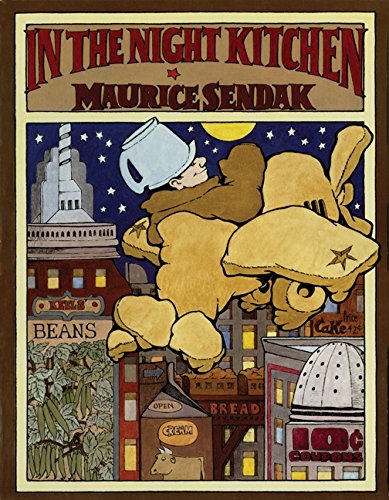
Maurice Sendak, In the Night Kitchen (©1970, HarperCollins Publishers 1988)

Ruby’s not so fond of this. I think there’s too much that she doesn’t quite recognise: the cooks in the kitchen, dough rising, New York skysline, naked boy … And the story line is weird. However, we were driving in the car the other day and she started chanting, ‘Milk in the batter! Milk in the Batter!’ So the magic of Sendak is percolating.


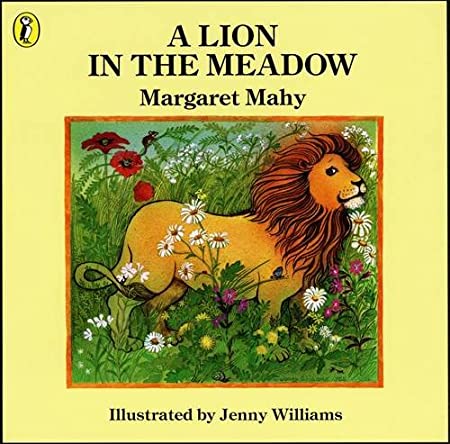
Margaret Mahy (writer) and Jenny Williams (illustrator), A Lion in the Meadow (©1969, re-illustrated edition ©1986, Picture Puffins 1989)

We picked this up at the Addison Road markets. Margaret Mahy is one of the great children’s writers, and Ruby has responded to this book appropriately. Like Sendak’s The Sign on Rosie’s Door, it has a brilliant mother who responds intelligently to her child’s fantasies. The difference is that is this case the child’s fantasy, of ‘a big, roaring, yellow, whiskery lion in the meadow’, turns out to be real, and so does the mother’s counter-fantasy of a dragon in a matchbox who will chase the lion away. Not a word out of place, this is irresistible, and – like the Sendak books – a pleasure to read aloud.


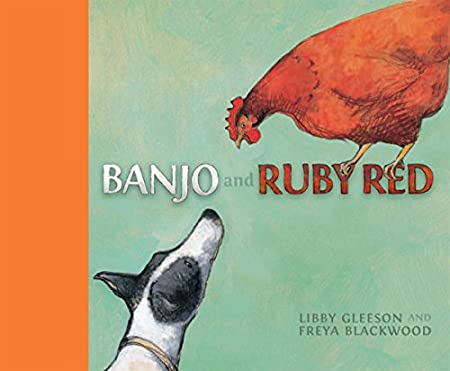
Libby Gleeson (writer) and Freya Blackwood (illustrator), Banjo and Ruby Red (Little Hare 2013)

A dog and a chook overcome initial relationship difficulties to become good friends. What’s not to love? We used to visit some urban chickens when Ruby was much smaller (her word for chicken as ‘babook’, but she eventually decided to go with the consensus). She still talks about the family dog who died some time ago – ‘It’s very sad.’ And relationship difficulties seem to be an issue as she spends more time in childcare. Plus, the chook’s name is Ruby Red. I don’t imagine the Australian farm setting is any more familiar to our inner-city girl than Sendak’s New York skyline, but in this case that doesn’t seem to matter.

This book is also a pleasure to read aloud, for the pathos of a scene where Ruby Red is apparently lifeless as much as for the pages where Banjo does a lot of barking and for the way movement can be traced in great arc across the pages in Freya Blackwood’s illustrations


Hello Little Babies and Banjo and Ruby Red are the first two books I’ve read for the Australian Women Writers Challenge 2021.

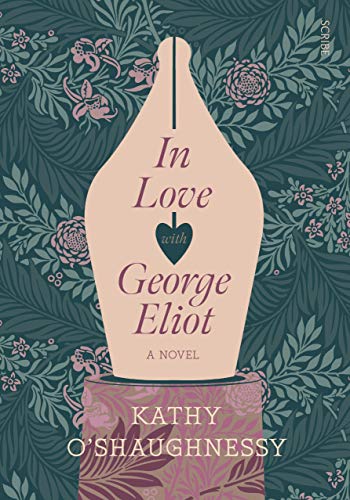
Kathy O’Shaughnessy’s In Love with George Eliot

Kathy O’Shaughnessy, In Love with George Eliot (Scribe 2019)

George Eliot’s Middlemarch keeps turning up at the top of people’s lists of great English novels. I read it as part of the great cultural tsunami that engulfed me as a boy who’d landed at Sydney University in 1967, having come from North Queensland by way of a monastery, and I loved it, though I haven’t retained much more than a vague impression of the shining integrity of its main character Dorothea and her dried up stick of a husband Dr Casaubon. My first recent vicarious re-encounter was a couple of years back on Ta-Nehisi Coates’s blog (now apparently no longer available), when he took his readers through one of Eliot’s long sentences, describing its movements in language he had developed in talking about rap music. I found a nice piece by him in the Atlantic from about the same time: here. Middlemarch is on my To Be Read list, though the tiny type in the copies I’ve seen is pretty discouraging for someone with my eyesight.

When I was given In Love with George Eliot in my Book Group’s Kris Kringle, it seemed a good halfway measure: decent type size, manageable length, written this decade, and promising some kind of George Eliot experience.

The kind of George Eliot experience it offers is not easy to describe. The novel’s main narrative covers the years from Eliot’s arrival in London in 1851 to her death in 1880: the trajectory of her writing career including the agonised gestation of Middlemarch, her years living unmarried with George Henry Lewes, the ensuing scandal and shunning being overcome by her huge fame as a novelist, her late brief marriage to Johnny Cross, which caused almost as much scandal (after her flouting of convention had been accepted, she went and did the conventional thing, though to a man 20 years her junior and too soon after George’s death). In a secondary narrative, a number of EngLit scholars in contemporary London fall in and out of love, take part in mild academic intrigues, organise conferences and write papers about Eliot and her contemporaries. One of these scholars, Kate, is writing a novel about Eliot, ‘but a novel based on fact – biography, letters, diaries.’ In other words, this novel. An author’s note assures us that all the letters quoted, both George Eliot’s and others’ – are from the archives, and so is much of the dialogue.

So it’s a partial biography in which the writer has given herself permission to make stuff up to fill in the gaps. From a reader’s perspective, it’s a partial biography without a lot of paraphernalia or uninteresting detail, but also one that can’t be completely trusted; one that sticks to the known facts with no spectacular flights of fancy, no plunging headlong into the character’s imagined inner life. That is to say, this is just the thing for unscholarly readers who want to know more about George Eliot (real names Mary Ann Evans, Mrs Lewes, Mrs Cross), of whom I am one. But I’m not sure it will do much for readers who are not already interested.

In a way, the book is less about George Eliot herself than, as the title suggests, the people who were and are in love with her.

I knew about George Lewes, but only that he was her partner for many years. The book gives us much more of him: a scholar and writer himself, he was Eliot’s encourager who protected her from negative criticism, building his life around her and her work.

I knew that Eliot was successful in her lifetime. I didn’t know that she was a huge celebrity – on her trip to Venice late in life she is reluctant to leave the hotel for fear of being recognised.

I knew nothing of Edith Simcox, whose passionate love, ‘lover-wise’, for Mrs Lewes, as she wanted to be known, had her kissing her feet and laying her head in her lap. Presumably these details are taken from Simcox’s private diaries published as Autobiography of a Shirtmaker in 1998.

I didn’t know about Johnny Cross, whom Eliot married late in life and who jumped from a hotel window into a canal when visiting Venice with his wife: in the lead-up to this incident the novel shakes off the shackles of the archive a little, and those few pages are alive with Johnny’s weird, unsettled inner life.

Herbert Spencer, Henry James and other literary luminaries of the time have walk-on parts, not as lovers, but filling out the picture.

And then there are the 21st century academics, who in their own ways love her too. Perhaps, too, there’s a reflexive element to the book’s title: it was written in love.

Jeff Lemire’s Ascender Vols One and Two

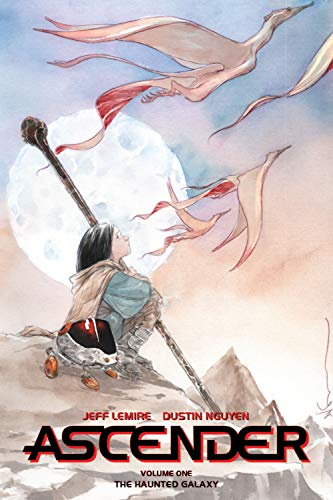
Jeff Lemire Dustin Nguyen (storytellers), Steve Wands (lettering and design) and Will Dennis (editor), Ascender Volume One: The Haunted Galaxy (Image Comics 2019, from issues 1–5 of the comic)
———-, Ascender Volume Two: The Dead Sea (Image Comics 2020, from issues 6–10 of the comic)

At the end of Jeff Lemire and Dustin Nguyen’s Descender series (my blog posts here, here and here), as the world was being destroyed, there was a faint glimmer of hope, and a promise of a sequel to be called Ascender. This is it.

The action begins ten years after Descender ended. The landscape on planet after planet is unrecognisable, and not just because it’s in ruins from the great galactic war of the earlier series. Where that earlier conflict was mostly between humans and machines, there are now no machines to be seen. The world is ruled by a hideous witch known only as Mother, whose agents utter phrases reminiscent of The Handmaid’s Tale or 1984: ‘Mother loves you’, ‘Mother is always watching,’ and the like.

Aligned against her, at the beginning, there is just a little girl named Mila and her father. We soon discover that the father is Andy, who was the human boy companion of Tim-21 the robot-boy hero of Descender. In a series of flashbacks we learn of Mila’s birth and the death by vampire bite of her mother – Effie, who had chosen to become part machine in the earlier series but was aligned with the forces of good. As the story unfolds, we learn that Mother draws her power from the coven of her deceased female ancestors – including her own older sister, whom she murdered. Tim-21’s robot dog Bandit, one of the dozens of charming characters from the earlier series, turns up with his backwards bark (‘Fra! Fra!’), and helps Mila and Andy get out of some very tight corners. And then there’s Telsa, former soldier with the now non-existent NGU (maybe not the good guys, but certainly better than Mother’s lot), currently the captain of a small vessel. The book ends with Andy wounded and bobbing about in the ocean, and Telsa and her Amazonian first mate Helda reluctantly in charge of Mila and Bandit, pursued by Mother’s forces:

‘Now what are we gonna do, Captain?’
‘The only thing we can, Helda …
We find a ship. We get this girl off-planet.
And we never come back.

Volume 2: The Dead Sea continues the process of getting the old gang back together, filling the reader in on the horrors of the past ten years, and giving Mother’s back story. A cracking pace is set, much blood is shed, much of it the blood of ‘vamps’, there are ghosts and sundry monsters, including werewhales, and Mila has definitely become the main protagonist, a small child who draws people to her as protectors and as would-be predators. Mother’s story takes a dramatic lurch forward, there are intense operatic moments involving love and death, and my sense is that we’re poised for some big action in the next volume. (A quick Duck Duck Go reveals that Volume 3 was published in December, so it may well arrive in Sydney in time to be a March birthday gift.)

I’m enjoying this series hugely. Tim-21, the powerful but vulnerable boy robot from Descender may never appear, but his absence accounts for a lot of the emotional heft of the story, and Mila seems to be provoking some of the same emotion.

The credits don’t attribute the story to Jeff Lemire and the art to Dustin Nguyen, that is they are not writer and illustrator but storytelling collaborators: there are many moments where the text doesn’t quite say what’s happening and the images step in – often enough in ways that require the reader to slow down and do some parsing. There have probably been theses written on the notion of comics-literacy. This partnership would be a good place for such a thesis to linger. Nguyen’s watercolours are magical – the muted colours and soft outlines mean that even the most violent and blood-thirsty scenes have a kind of enchantment to them.

Proust Progress Report 17: She’s still gone

Marcel Proust, À la recherche du temps perdu (text established under the direction of Jean-Yves Tadié ©1987–1992): Book 6, Albertine disparue, the last pages of Chapter 1 to the first pages of Chapter 3 (pages 2000–2077)

I’m now well into the sixth and second-last book of À la recherche du temps perdu. This was published posthumously, and I gather that it’s the book that has generated most controversy about the correct text. Even its French title chopped and changed – evidently it was originally La fugitive, but had a name change to avoid confusion with someone else’s book of the same name. I mention this because this month I stumbled over a paragraph that’s in my book but not in C K Moncrieff’s translation or the French edition he worked from. So here’s a little tangential story.
As he struggles to come to terms with the loss of Albertine, Marcel’s grief gradually fades but his jealousy and his obsession with her amorous relations with other women persists. His investigations make it increasingly clear that these relations were not figments of his jealous imagination, and he craves to understand Albertine’s inner life in her Lesbian experiences. This narrative line is developed in painful detail, and goes to unexpectedly creepy places, including long interrogations of Andrée, who has been fancied by both Albertine and Marcel. On the way, Marcel hears of evidence from a blanchisseuse. Basic French vocab tells me that this is a washerwoman, or laundress. However, as blanchisseuses keep being mentioned as women who are available for casual sex I began to wonder if the word had a slang meaning. One online dictionary confirms my suspicion, suggesting that it has been slang for ‘prostitute’. After reading one particularly confronting passage, I went to the English translation to see if C. K. Scott Moncrieff found an equivalent euphemism.
He didn’t. His translation is ‘laundress’.

But here’s the thing. The passage that had sent me to Scott Moncrieff isn’t in his translation at all. I thought this might be a case of quiet censorship. After all, it’s not unheard of for translators to spare their readers bits they think will bore or otherwise alienate them. But then I discovered that this passage isn’t there in the only French version I could find online. So the absence wasn’t about sparing delicate English sensibilities. Maybe Proust thought better of it and took it out, only to have it reinstated by an editor/scholar 70 or so years after first publication. Or he intended to put it in, to push the envelope even further, but died before he could make his intentions clear – to have those intentions understood and implemented 70 or so years later.

In the passage in question, Marcel decides he wants to hear what Albertine would have sounded like when taking her pleasure with another woman, so he has two ‘little laundresses’ demonstrate for him. It’s a good example of Proust’s commitment to complexity, even when he’s being quite, well, pervy: while inviting us to imagine a Lesbian sex scene, he discusses the difficulty of interpreting sounds stripped of context and the impossibility of ever fully understanding another human being. Part of the passage and my attempt at a translation are at the end of his blog post.

Finally, in the last two days’ pages, Marcel has got out of his bedroom and is now in Venice with his mother, appreciating both of them, and once more going on the prowl for beautiful young women.

It’s been strange this month to settle down to a couple of pages of Proust each day, when so much other time has been spent doomscrolling, reading about world events where deep, slow, complex analysis of thoughts and feelings is almost impossible to imagine. Exasperating as Marcel’s relentless self-dissection may sometimes be, it’s immensely reassuring that this too is possible.


Here’s the passage with the ‘two little laundresses’

Dans un maison de passe j’avais fait venir deux petites blanchisseuses d’un quartier où allait souvent Albertine. Sous les caresses de l’une, l’autre commença tout d’un coup à faire entendre ce dont je ne pus distinguer d’abord ce que c’était, car on ne comprend jamais exactement la signification d’un bruit originale, expressif d’une sensation que nous n’éprouvons pas. Si on l’entend d’une pièce voisine et sans rien voir, on peut prendre pour du fou rire ce que la souffrance arrache à un malade qu’on opère sans l’avoir endormi; et quant au bruit qui sort d’une mère à qui on apprend que son enfant vient de mourir, il peut nous sembler, si nous ne savons de quoi il s’agit, aussi difficile de lui appliquer une traduction humaine, qu’au bruit qui s’échappe d’une bête, ou d’une harpe. Il faut un peu de temps pour comprendre que ces deux bruits-là expriment ce que, par analogie avec ce que nous avons nous-mêmes pu ressentir de pourtant bien différent, nous appelons souffrance, et il me fallut du temps aussi pour comprendre que ce bruit-ci exprimait ce que, par analogie également avec ce que j’avais moi-même ressenti de fort différent, j’appelai plaisir; et celui-ci devait être bien fort pour bouleverser à ce point l’être qui le ressentait et tirer de lui ce langage inconnu qui semble désigner et commenter toutes les phases du drame délicieux que vivait la petite femme et que cachait à mes yeux le rideau baissé à tout jamais pour les autres qu’elle-même sur ce qui se passe dans le mystère intime de chaque créature. Ces deux petites ne purent d’ailleurs rien me dire, elles ne savaient pas qui était Albertine.

(page 2018)

My attempt at a translation, resisting the temptation to break his long sentences up:

I had brought to a disorderly house [Scott Moncrieff’s polite term] two little laundresses from a suburb that Albertine used to frequent. Under the caresses of one, the other began to make a sound of which at first I could not make out the nature, as one never understands precisely the meaning of a new sound that expresses a sensation we don’t experience. If you hear it from a neighbouring room without seeing anything, you can hear as mad laughter that which is drawn from a patient being operated on without being put to sleep; and as for the sound that issues from a mother who is told that her child has just died, that might seem, if we don’t know what is happening, as difficult to translate into anything human as the sound that escapes an animal, or a harp. A little time is needed to grasp that those two sounds express what, by analogy with what we ourselves have felt, though quite different, we call suffering, and I also needed time to understand that this noise expressed what, similarly by analogy with what I had myself felt, though very different, I called pleasure; and the pleasure must have been very powerful to throw the person feeling it into such disarray and draw from the person this unknown language which seems to name and annotate all the stages of the delightful drama being lived by the little woman and being hidden from my eyes by the curtain lowered forever for anyone other than herself over what passes in the intimate mystery of each creature. These two little ones could tell me nothing. They didn’t know who Albertine was.

Susanna Clarke’s Piranesi

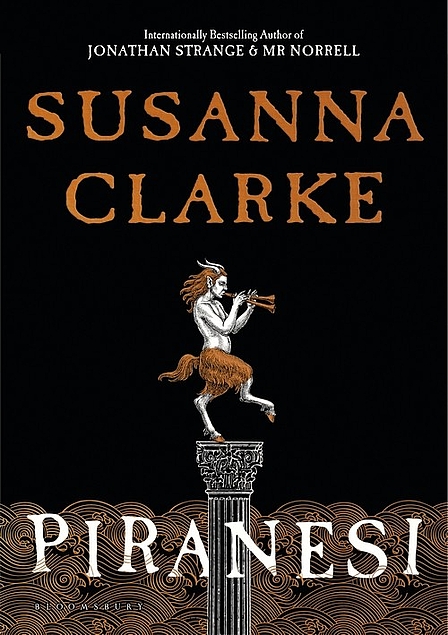
Susanna Clarke, Piranesi (Bloomsbury 2020)

I tend to think of every book I read as a stand-alone experience, but that’s almost certainly nonsense. With Piranesi I have been acutely aware that like it or not I was reading it with other books in mind. I can think of three.

First, and least significantly, there’s David Mitchell’s Utopia Avenue which I’d read immediately before beginning Piranesi (blog post to come in early February). Mitchell is quoted on the back cover of this book: ‘What a world Susanna Clarke conjures into being.’ So I was led to expect something of the interplay of different realities that I loved in Mitchell’s book.

The opening pages of Piranesi, in which the protagonist lives in a labyrinthine House that he perceives to be the whole world, sent my mind hurtling back to the short stories of Jorge Luis Borges. When I was at university in the 1970s, poet Martin Johnston was a huge Borges fan and a super spreader of enthusiasm for his short fictions. I was one of the many infected. More than one Borges story involves a labyrinth – ‘The Library of Babel‘, for example, imagines a universe consisting of a vast library of interconnected hexagonal rooms containing all the books every written. It’s as if Susanna Clarke had become fascinated by a Borgesian image, in which statues, an infinite number of them, line the walls of an infinite number of hallways, vestibules, and rooms. The protagonist-narrator, named Piranesi, though he assures us that is not his real name, writes with a kind of Borgesian abstraction – though where Borges’ narrators are conducting thought experiments (‘what if there was a library that …’), it’s clear from the start that for Piranesi there’s no scholarly or ironic distance.

Entry for the first day of the fifth month in the year the albatross came to the south western halls
When the Moon rose in the Third Northern Hall I went to the Ninth Vestibule to witness the joining of three Tides. This is something that happens only once every eight years.

It’s many years since I read any Borges, but I was immediately in familiar, though eerie, territory.

But this is a novel. One begins to want explanations. We meet a man who Piranesi thinks is the only other living human, whom he calls the Other. (Piranesi’s idiosyncratic use of initial capitals is only part of the general strangeness.) The Other has a shiny object that we suspect is a smart phone, and there are other clues that he has a life outside the House. Piranesi actually overhears a snippet of conversation that sounds to the reader as if it comes from a contemporary street on the other side of an invisible wall, but to Piranesi is meaningless and fails to inspire curiosity. A trajectory is established: Piranesi is going to find out what’s going on …

Progress is slow, and I might have lost confidence altogether if I hadn’t read Joanna Clarke’s first novel, Jonathan Strange and Mr Norrell (2004 – before I started blogging about my reading). This is a vast, slow-moving story of magic in Regency England, not big on thrills and spills, though the Battle of Waterloo, suitably magicked, features. I have a lasting impression of being immersed in a meticulously created world where magic is part of the texture of life. I would have been surprised if in Piranesi the ‘real world’ outside the House wasn’t revealed to be both recognisably mundane and weirdly fantastical.

I got what I was expecting. The explanation of the nature of the House is only slightly more complex and plausible than Dr Who’s ‘timey-wimey stuff‘, but who really ever cares about such explanations – it’s a fantasy novel, for goodness sake! The history that Piranesi gradually uncovers, on the other hand, is full of intellectual intrigue, complex relationships, and general creep-you-out-ness; and the big climax (foreshadowed in the opening lines I quoted above) kept me reading well past bedtime. (Incidentally, ‘timey-wimey stuff’ gets a mention in a document that Piranesi discovers, and which is incomprehensible to him.)

While Piranesi is looking for the truth of his history, readers (this one, anyhow) are hoping the book will unfold something of what it is about that infinite House filled with statues that captured Susanna Clarke’s imagination, and for that matter ours. I don’t want to reduce the book to an allegory: I’m happy for it to be a story about a house full of statues and nasty magic. But I did find myself brooding on echo chambers and half-overheard conversations about Baudrillard. From Wikipedia: ‘Baudrillard claims that our current society has replaced all reality and meaning with symbols and signs, and that human experience is a simulation of reality.’ With that kind of thinking in mind, Piranesi’s struggle stirs in readers’ minds our own struggles to reach past the simulacra, dogmas and fairytales have been given since childhood, to an independent relationship with the real world. At least that’s where it took me, and it was fun being taken.

Lemire & Sorrentino’s Gideon Falls 5

Jeff Lemire (writer), Andrea Sorrentino (artist) and Dave Stewart (colorist), Gideon Falls, Volume 5: Wicked Worlds (Image Comics 2020, from issues 22–26 of the comic)

My younger son and I traditionally give each other comics on Christmas, birthdays, and Father’s Day. Luckily, this most recent aggregation of Gideon Falls monthlies turned up in Kinokuniya a couple of days after I had done my shopping there, so we avioded the embarrassment of giving each other the same book.

I’m not a fan of this series, horror not being my cup of (something a lot less savoury than) tea. But having come this far, there’s no turning back.

This is the second-last volume, and we’ve pretty much reached the depths. At the end of Volume 5 the mysterious Dark Barn was destroyed and our band of heroes thought that would be the end of the evil they were combating, but it turns out that they just set the evil free, and nothing much happens in this volume except to see just how demonic the world has become. It’s a kind of zombie apocalypse with hideous grins.

The saving grace of this book, and of the whole series, is the brilliant artwork. Hardly a single page goes by with a simple linear narrative. As the story flips back and forth between three separate narrative threads (I think there are only three), each in its own time period though all in the same place, the artwork does all it can to heighten the disorientation, but repays close attention. In a spread where the Western story is unfolding, the are tiny insets from the futuristic one. Spectacularly, a spread near the end shows a series of cubes, and on each of the three visible sides of each cube a different story progresses towards the hideously threatening full-page image of the last page, an image that ensures that at the end of this year, like it or not, we’ll be lining up for Volume 5.

End of year lists

The Emerging Artist and I have postponed and possibly cancelled our annual pilgrimage to the Great Ocean Road, but we’ve still put our heads together for our traditional end-of-year list-making.

Best Movies:

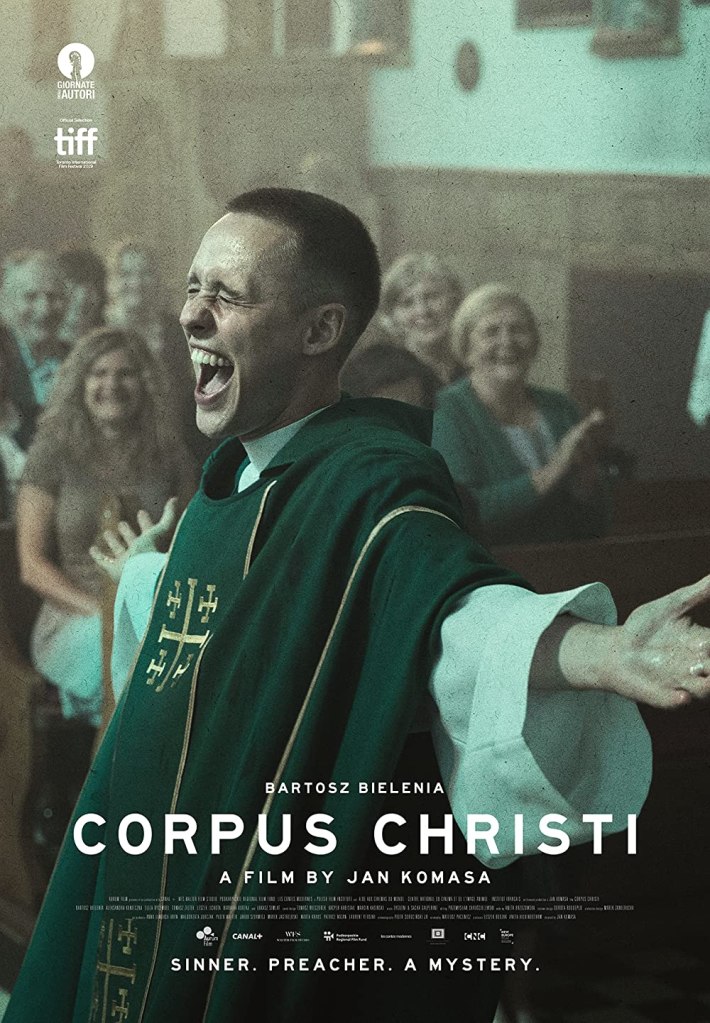
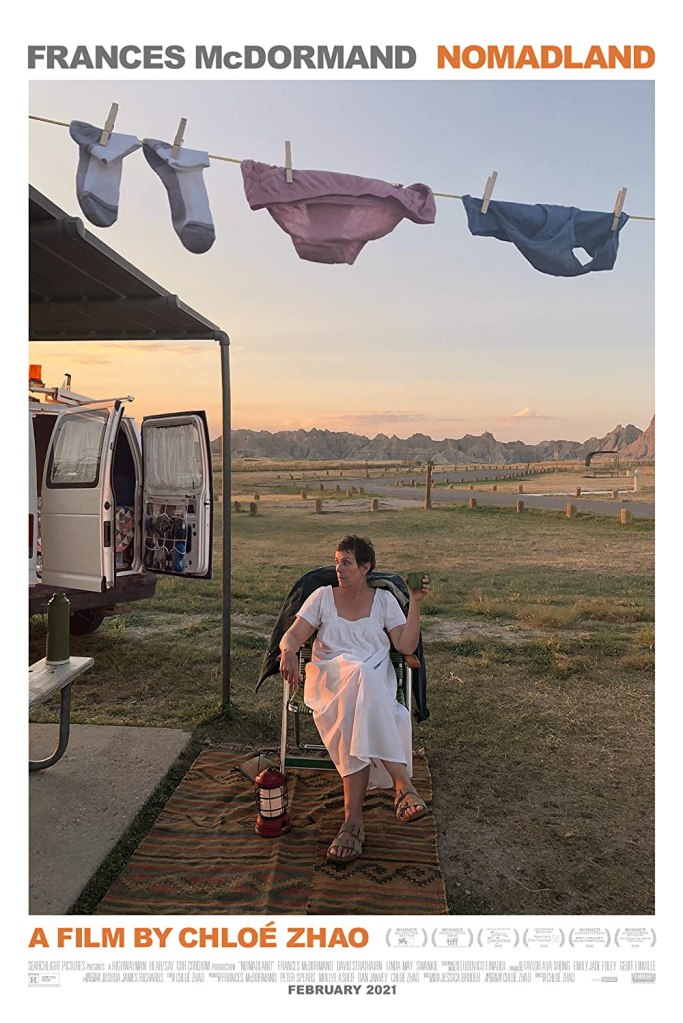
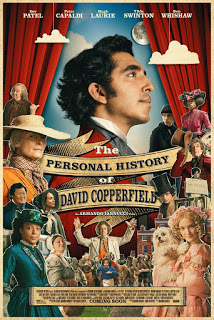
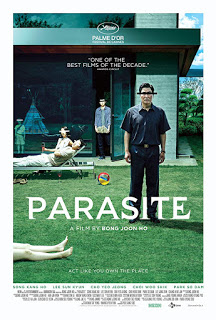
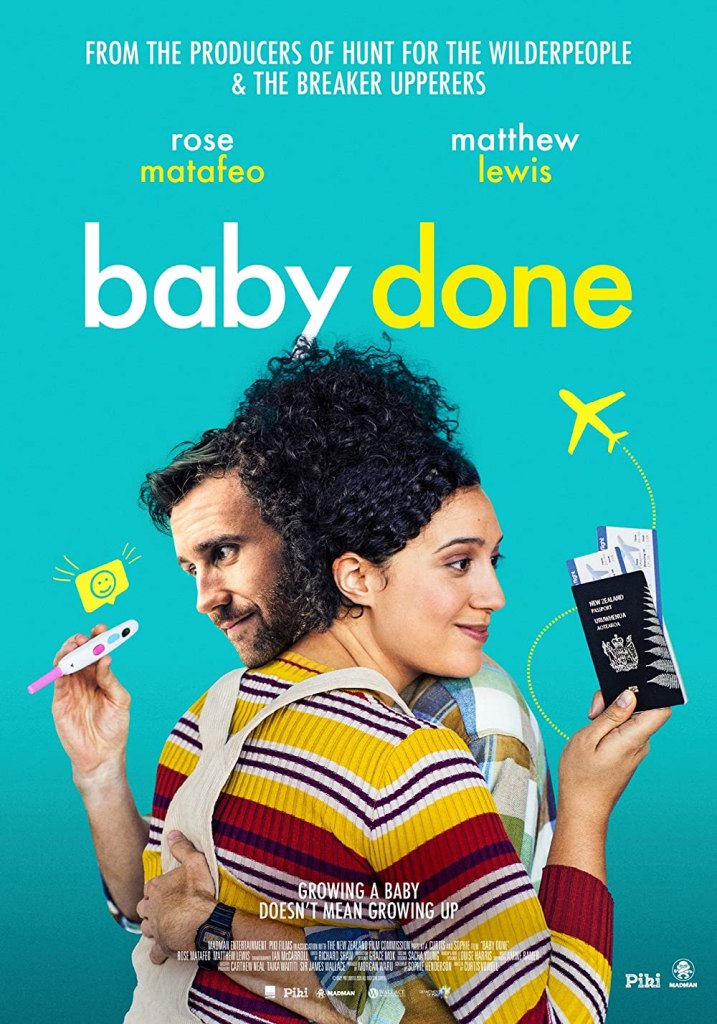
Because of One Thing and Another (as they’re calling it on Wittertainment), we didn’t get to the pictures very much this year, but we watched a lot of movies at home. We saw roughly 70, counting some total turkeys, but not counting the ones we watched for two minutes and then turned off, or the French comedy we walked out of at the cinema, even in our big-screen-deprived condition. There were many brilliant movies but we managed, painfully, to whittle the list down to four that we agreed on. Three of the four we saw in the theatre, sometimes even with other people. They are, in no particular order (and without links, because WordPress wouldn’t let me add them, sorry):

We each chose one more to make five each. I’ll leave you to guess who added which:

And then we agreed on a top five documentaries, two of them from the Sydney Film Festival:

Theatre:

We subscribed to Belvoir Street, but the Virus wrecked out theatre schedule. I think we got to three shows, and though it was wonderful to be there, masked and distanced, nothing blew me away.

Books:

The Emerging Artist read 46 books in hard copy and roughly 20 on her device. Of the hard copy books, a sizeable minority, but still a minority, of 22 were by women (she didn’t keep track of the device-books, but there were probably more women there, she says a little defensively). She has given me a list of her four best books in non-fiction and fiction categories. Here they are then, non-fiction first:

Non-fiction

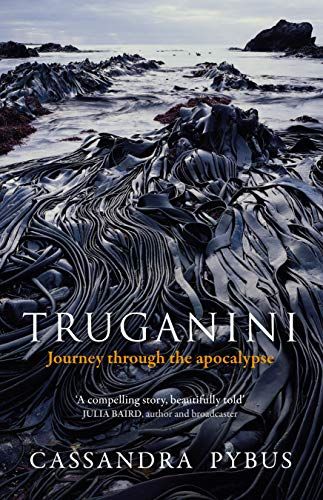
Cassandra Pybus, Truganini: Journey through the Apocalypse (Allen & Unwin 2020)

What remains with me is the sheer doggedness of Truganini’s determination to live and care for her country. She emerges as a woman who maintained her sense of herself and her culture and was adaptable and strategic in her survival. Even though we largely see her through the journals of George Augustus Robinson, Pybus manages to convey the country, the hardships endured and a woman abused but not defeated. 

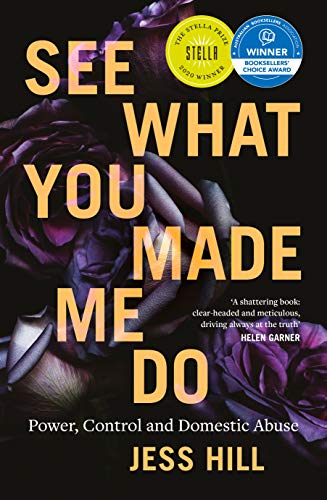
Jess Hill, See What You Made Me Do (Black Inc 2019)

This was hard to read, especially the first few chapters that set out the reality of violence against women in Australia. But I persevered and my understanding of perpetrators grew as well as what might be done to stop the ongoing violence. 

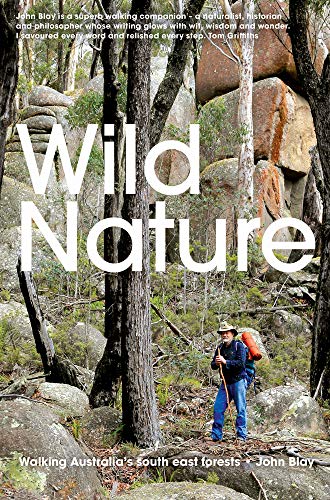
John Blay, Wild Nature: Walking Australia’s South East Forests (NewSouth Publishing 2020)

I haven’t quite finished this, but I’m including it for what I’ve read so far.  It’s a book that incites passion about preserving the south east forests for their sacred sites, for the diversity of plants and living creatures that create the forests and for what they provide to the human spirit. The intense forest wars are detailed but also what it is like to simply follow animal tracts in exploring the diversity of forest life.

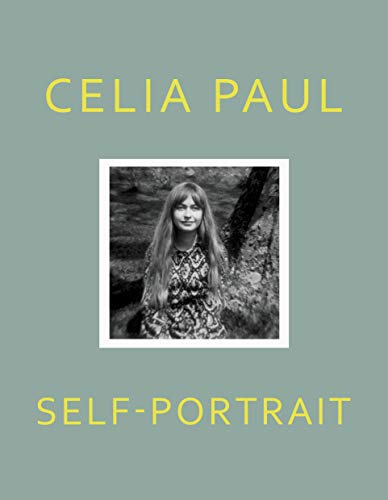
Celia Paul, Self-portrait (Vintage digital 2019)

Celia Paul is an English figurative painter whose work I love. This memoir gives snapshots into how she creates her work, including the dynamic between the artist and the sitter. (Few sitters would endure her requirements, so her mother and sisters do a lot of the heavy lifting.) It also includes her long and tortured relationship with Lucien Freud. 

Fiction

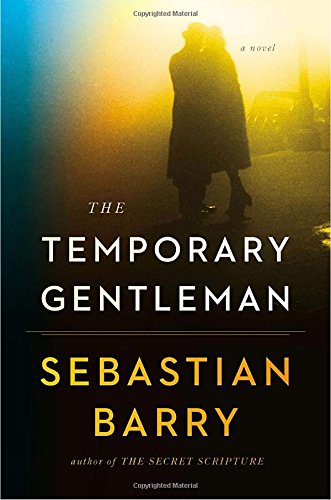
Sebastian Barry, The Temporary Gentleman (Viking 2014)

A sequel to  A Thousand Moons and set in reconstruction era USA, this is beautifully written tale of love and kindness in the face of the horrors of racism post the civil war. Barry makes these characters live off the page and is a joy to read.

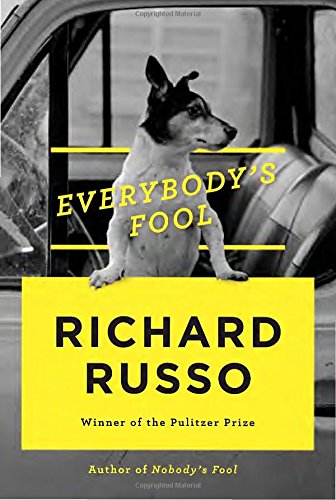
Richard Russo, Everybody’s Fool (Knopf 2016)

Another book set in the USA, but in modern times. It’s set in an economically depressed small town but the overall effect is not bleak. It is funny and moving and a gripping read. 

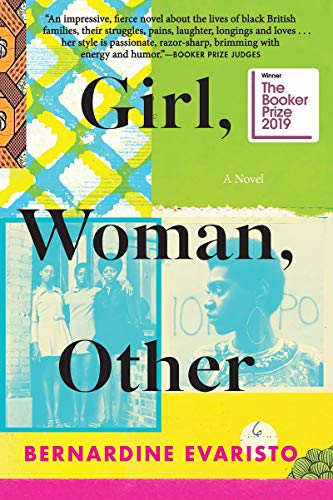
Bernadine Evaristo, Girl, Woman, Other (Hamish Hamilton 2019)

My standout book this year. I love the voices of 12 different women, whose stories touch or interweave with each other as we get a view of being women of colour in England. I went onto read Mr Loverman, an unusual coming out tale. Both books tell their stories with humour and humanity. 

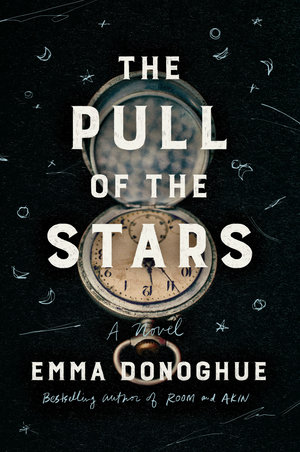
Emma Donoghue, The Pull of the Stars (Little Brown 2020)

I don’t think I’ve ever read descriptions of giving birth like this. Set in the maternity ward of a Dublin hospital in 1918, it gives a visceral account of dealing with an out-of-control pandemic, poverty and giving birth. It also has the backdrop of the aftermath of the war and the fight for Irish independence. 

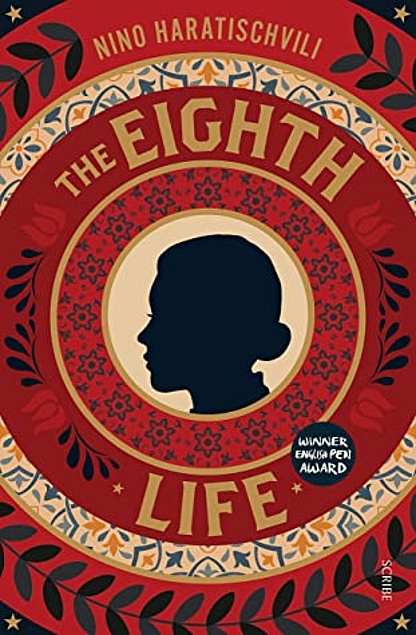
Nino Haratischwili, The Eighth Life (Scribe 2019)

The author is Georgian and writes in German. This is the first translation of her works and I hope more will come. It’s a mammoth family saga that spans the 20th century in Georgia and its relationship to Russia and the west. I knew nothing about Georgian culture so it was a wonderful revelation.  Don’t be daunted by its size – I managed to prop it up to read in bed!

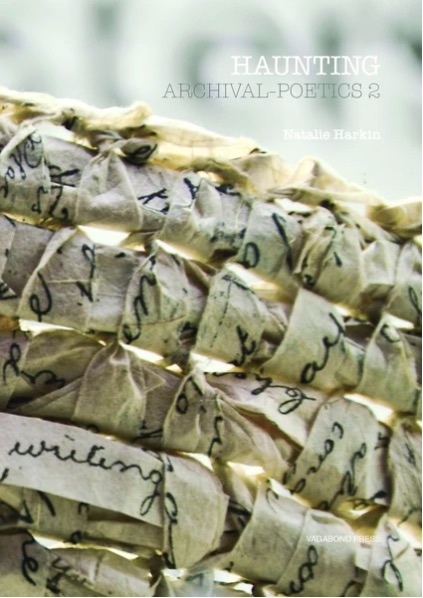
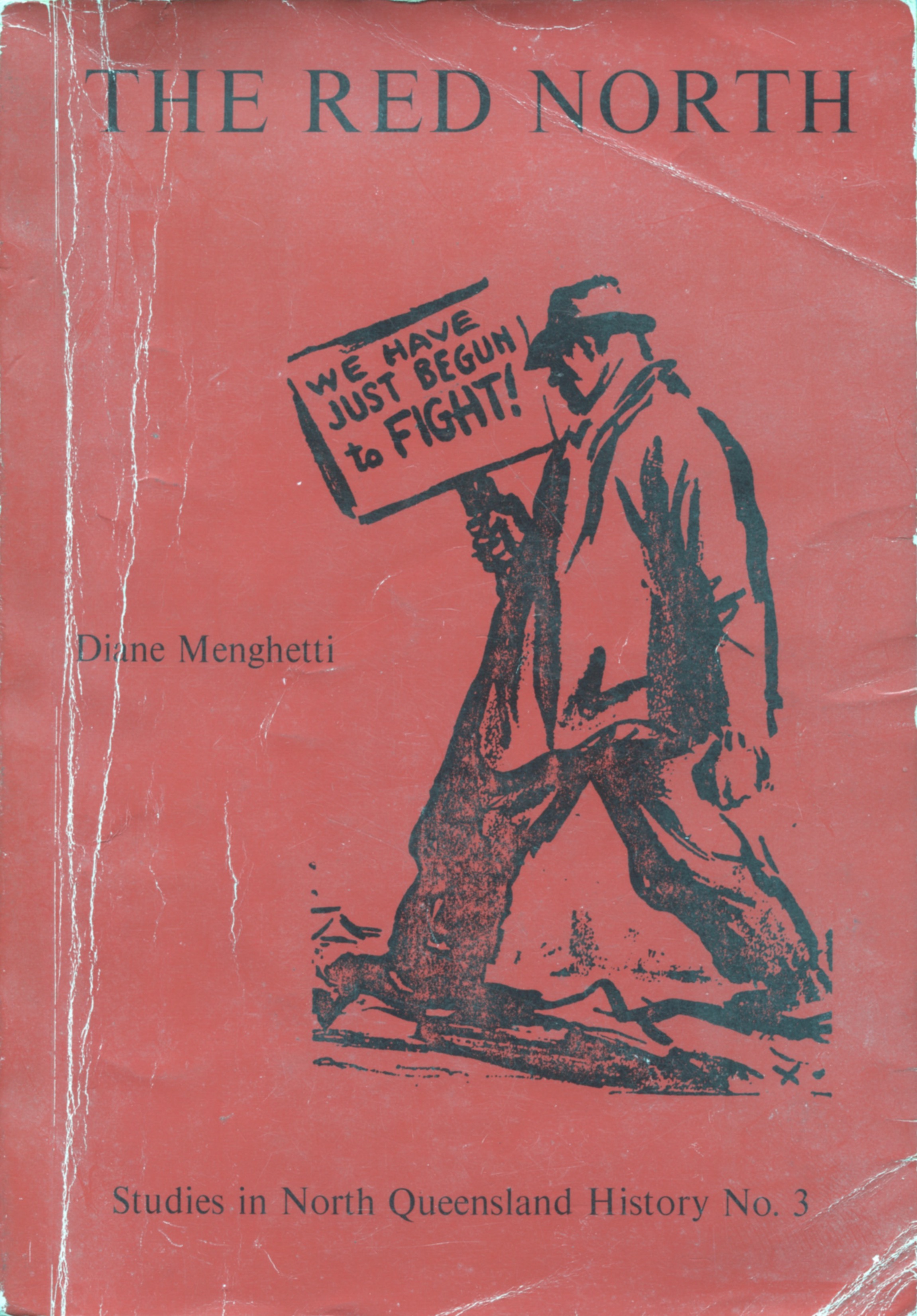
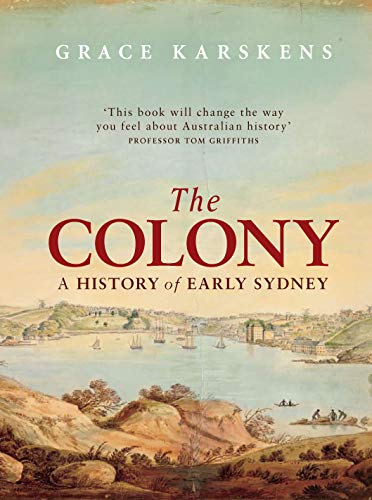
As for me, I read 72 books (counting journals), but don’t know how to pick best books from my year. My weirdest book was Rhoda Lerman’s The Book of the Night. Frankest but non-porny sex scenes were in Ocean Vuong’s On Earth We Were Briefly Gorgeous. Most transformative of my sense of the place I live was Grace Karsken’s The Colony, of my childhood home was Diane Menghetti’s The Red North. Most transporting novel for adults was Hilary Mantel’s The Mirror and the Light; most exhilarating book for children Tohby Riddle’s The Astronaut’s Cat; most beautifully produced book of poetry that delivered brilliantly, Natalie Harkin’s Archival-Poetics; most memorable comic was Jeff Lemire and others’ Black Hammer. Whew! I’ve done a quick gender etcetera breakdown in an earlier post (here).

We saw a lot of great TV, but these lists can’t go on forever. That’s it for 2020. Feel free to name your own Bests and make recommendations in the comments. Stay safe and active in the climate emergency; stay socially close but physically distant until the vaccine has saved us all. That is, Happy New Year!

#aww2020 Challenge Completed

This is my round-up post for the Australian Women Writers Challenge 2020.

The challenge was established in 2012 to raise awareness of Australian women’s writing. I signed up in 2013, and it’s probably fair to say that my reading habits have been transformed and my mind enriched. This year, I read a total of 24 books by Australian women writers, well over the goal of ten that I’d set for myself. Here they are, with links to my blog posts:

4 books for children

6 books of poetry

5 novels for adults

8 memoir/biography/history/essay/creative non-fiction

2 manuals/self-help books

Five of the books were written by First Nations women. The list doesn’t include journals or anthologies.

Now I’ve signing up for another year, at the Franklin level, which means I aim to read and review 10 books by Australian women in 2021.

On a related topic, I’ve done a quick gender check on books I read this year. Counting comics, but not journals, anthologies or picture books (apart from Tohby Riddle’s sublime The Astronaut’s Cat), I read:

  • 31 by women
  • 32 by men

I read 7 books in translation (one each from Arabic, Hebrew, Italian, Korean, French, Swedish and German), and 3 in their original French. In addition to the five books by First Nations women I read one by a First Nations man.

I’ll do a separate post where the Emerging Artist and I pick our favourite books and movies of the year.

Katharine Murphy’s end of certainty

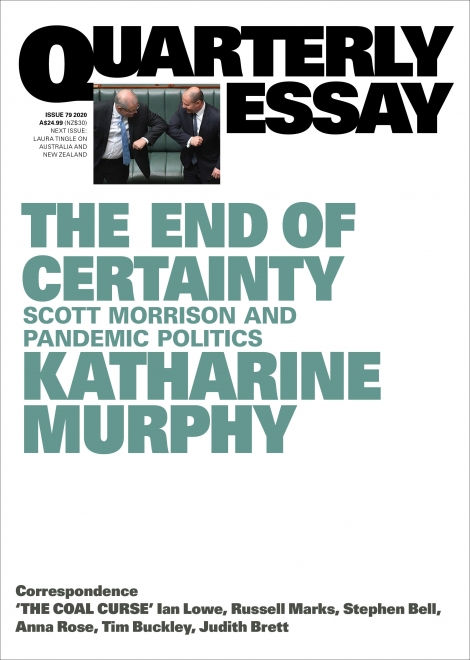
Katharine Murphy, The End of Certainty: Resources, climate and Australia’s future (Quarterly Essay Nº 79, 2020) – and correspondence in Quarterly Essay 80

One of the chaps on the Book Group told us that he was a year behind Scott Morrison at school – I think it was Sydney Boys High. We all fell silent, expecting a revealing anecdote, but all he could come up with was a story about a football team to which both he and the current Prime Minister of Australia belonged being left to fend for themselves in the wilds of Bondi Junction, having illegally partaken of alcohol. The worst my friend could say about Scott Morrison was that he was there.

The derisory nickname Scotty from Marketing didn’t come from nowhere: almost everything we know about the Prime Minister has been generated by his personal publicity machine, including his self-bestowed nickname ScoMo and photos of him at prayer, building a cubby for his daughters or working from home in jacket, shorts and thongs. So even more than for other prominent politicians it was a good idea for Black Ink to commission a Quarterly Essay profile. And who better than Katharine Murphy, political editor of Guardian Australia and a member of the Canberra press gallery for more than 20 years?

Murphy does deliver. But intervening events meant that the account of Morrison’s personality and political modus operandi had to shrink to make room for a detailed narrative of the Covid-19 pandemic in Australia and federal and state governments’ responses to it. As a political journalist, Katharine understands in her bones that a week is a long time, and the essay feels as if it is catching the moment by the tail, getting an account down on paper (or screen) even as the moment becomes something else. It makes for fascinating reading, especially from the vantage of several months into the essay’s future, which is when I’ve read it. Even the correspondence in November’s QE 80 was out-of-date before it left the presses (as in a fair bit of conjecture about the findings of the inquiry into Victorian hotel quarantine – none of it, incidentally, proved way off course by the actual findings).

So, what does Murphy make of Morrison? She has more access than most of us, and he did grant her an interview even in the midst of the pandemic. She acknowledges that he’s a master of controlling the narrative, in particular the narrative that concerns himself (going on what she calls ‘yes mate’ outings on talkback radio rather than granting interviews), and so she has to dig hard for her own independent observations.

Sadly, my post-it-festooned copy of the essay has disappeared along with the backpack I was carrying it about in, so I can’t quote from the essay with any confidence. One of the telling anecdotes that I recall came from Nick Xenophon, who had worked with Morrison to get some piece of legislation through the parliament. Once the thing was done, Xenophon suggested that they meet to have a cup of coffee or similar social interaction. Morrison rejected the invitation, saying something like, ‘I’m purely transactional, mate.’ Murphy argues that since becoming prime minister he has been learning to be a little more relational – that his disastrous handling of the bushfire disasters a year ago may have been a learning experience for him. Tentatively, she holds out the possibility that the man who forced bushfire survivors to shake his hand may do better next time. He’s a manager, a fixer, rather than an ideologue, and that has been Australia’s good luck, as he was able to cooperate with his ideological enemies in responding to the pandemic. The question, back in August, and again in November when the correspondence was written, was how far could that pragmatic non-ideological approach work before everything snapped back to the old battle lines.

The correspondents in QE 80 include other journalists: David Marr and Philip Coorey basically applaud the essay as necessary and well done; David Kelly is much less optimistic about Morrison’s lack of ideology. There are scholars: Damien Freeman of the Australian Catholic University categorises Murphy as a progressive commentator and says she just doesn’t understand ‘the conservative approach to public life’. Social researcher Hugh Mackay engages elegantly rather than argumentatively, suggesting that Murphy’s passing references to her own sense of local community deepening in small ways during the pandemic might usefully have been given greater prominence, as his research indicates that this has been a more general phenomenon. Celeste Liddle, self-described as ‘an Arrente woman living in Melbourne’, ‘a union organiser, social commentator and activist’, is refreshingly blunt, and complex, in her discussion of the Victorian lockdown, and the relationship between Scott Morrison and Premier Dan Andrews.

In her Reply to Correspondents, Katharine Murphy says that it was her first Quarterly Essay, and she found it ‘desperately hard’, but, she says:

the times are important, and I reported honestly, and shared what I saw. I hope the record stands the test of time.

The essay is a reminder of the crucial role played by serious. responsible journalism. If you haven’t read it, I recommend that you do. If you found the backpack with my copy in it, feel free to read the essay before you bring it back to me.


The End of Certainty is the 22nd and last book I’ve read for the 2020 Australian Women Writers Challenge.