
Martin Alexander (editor) Asia Literary Review 28, [Northern] Summer 2015
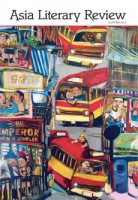
This issue of Asia Literary Review was part of a collaboration with Australia’s Griffith Review. I subscribe to ALR (actually I have a complimentary sub, for which I am grateful) but have only read one or two issues of the GR, which I guess makes me an atypical Australian reader of this joint publication.
Because the ALR is an English-language journal, every issue engages with cultural complexities: inter-generational stories, post-colonial hybridity, expat and emigrant writing, and some translation. In this issue, Australia is the non-Asian pole of much of the interaction. As always, the Asian presence is nothing if not diverse, including writing from or about mainland China, Hong Kong, India, Indonesia, Japan, Kashmir, Malaysia, Myanmar, Nepal, North Korea (a defector), the Philippines, Singapore, Thailand, and Vietnam.
Among the Australian contributors, Omar Musa – rapper from Deniliquin, spoken-worder and author of Here Come the Dogs – strikes a different tone in ‘Supernova’, a sober, reflective story about an older emigrant who has returned to Malaysia and takes part in the political process there; Ellen van Neerven’s ‘Half a Butterfly’ reports on a visit to Goa as part of a cultural exchange between Aboriginal Australian writers and Dalit writers; and Jessie Cole’s ‘The Asian Invasion’ is, among other things, a memoir of her childhood in Hippie Nimbin that challenges the received version of that community as drug-fuelled, self-indulgent and delusional, offering instead a recollections of one that was diverse, open to new experiences and other cultures.
One or two articles seem to be written with Australian readers in mind: Keane Shum’s marvellous ‘Ripple from Hong Kong’ tells a history of that island from the perspective of a Hong-Konger whose people were there long before the Chinese ceded it to Britain; in ‘All for the People, without the People’, André Dao starts from his own experience of voting in Melbourne, complete with sausage sizzle, and goes on to consider what democracy and ‘human rights’ might mean in Vietnam, a familiar subject presented through a personal prism; Miguel Syjuco’s ‘Beating Dickheads’, an argument for mockery as a form of resistance to tyranny, invites Australian readers to consider their own practice of mocking those in power (‘Every nation has its unfair share of dickheads, douchebags, dingleberries and degenerates. But my country, the Philippines, bests most in democratic tomfoolery.’); when Prodita Sabarini’s ‘Let Bygones Be Bygones‘ discusses the great Indonesian silence about the 1965 massacres, her main non-Indonesian reference point is Joshua Oppenheimer’s movies The Act of Killing and The Look of Silence – Oppenheimer is a USer, but his films have made a big splash in festivals here, as, evidently, they have in parts of Indonesia.
I don’t want to give the impression that everything is geared towards Australian readers. Far from it. The pleasure of encountering the unfamiliar, of being an invited eavesdropper, is as strong here as in any other issue. A number of pieces, for instance, discuss the role of humour, which notoriously travels poorly. Apart from ‘Beating Dickheads’, there’s Murong Xuecun unpromisingly titled ‘Chinese Thinking the Age of the Internet’. ‘If President Xi Jinping is clearheaded,’ he writes, ‘he will understand that although he may be able to seal people’s mouths, he can never stop them sniggering.’ Fair enough, one thinks, but the essay becomes really interesting when it gives examples of the subversive humour that the Internet allows to spread:
New English words with Chinese characteristics are popping up: Chinese citizens become shitizens; Chinese democracy begat democrazy; secretaries with Chinese characteristics (especially the female secretaries of high officials) are sexcretaries. Political jokes are also spreading. Here’s one I encountered recently: Xi Jinping went into the Qingfeng Dumpling Shop and asked what the fillings were. The waitress answered, ‘This one is cabbage and pork; this one is pork and cabbage; this one is pork with added cabbage. Which do you want?’ Xi thought about it for a moment and said, ‘They’re all the same, there’s no choice.’ The waitress responded, ‘Aren’t you forgetting, that’s how we chose you?’
You have to love the people who make these jokes, even if you don’t laugh. And though the essay doesn’t mention Ai Wei Wei, it changes the way one sees what some critics describe as his self-promoting poseurdom (and incidentally, I recommend the Ai Wei Wei / Andy Warhol exhibition that’s currently at the National Art Gallery of Victoria).
I also recommend Asia Literary Review. This blog post has barely skimmed the riches of this issue.
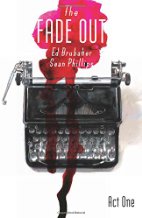
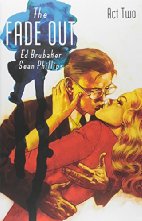 A beautiful woman is murdered in the first couple of pages, and the crime scene is altered to make it look like suicide. Charlie sets out to investigate and uncovers as much corruption, secretiveness and deranged viciousness as Philip Marlowe or Sam Spade could ever have wished for. He also gets beaten up quite a bit and gets involved with the beautiful woman who has replaced the murder victim in the film they’re all makng. He and Gil have a difficult relationship, not helped by Gil’s alcohol intake and his tendency to want to speak truth to power without regard for the consequences. Some real characters appear: Clark Gable knows Charlie from his war days, and Dashiell (‘Sam’) Hammett gives advice on how to flush out a murderer.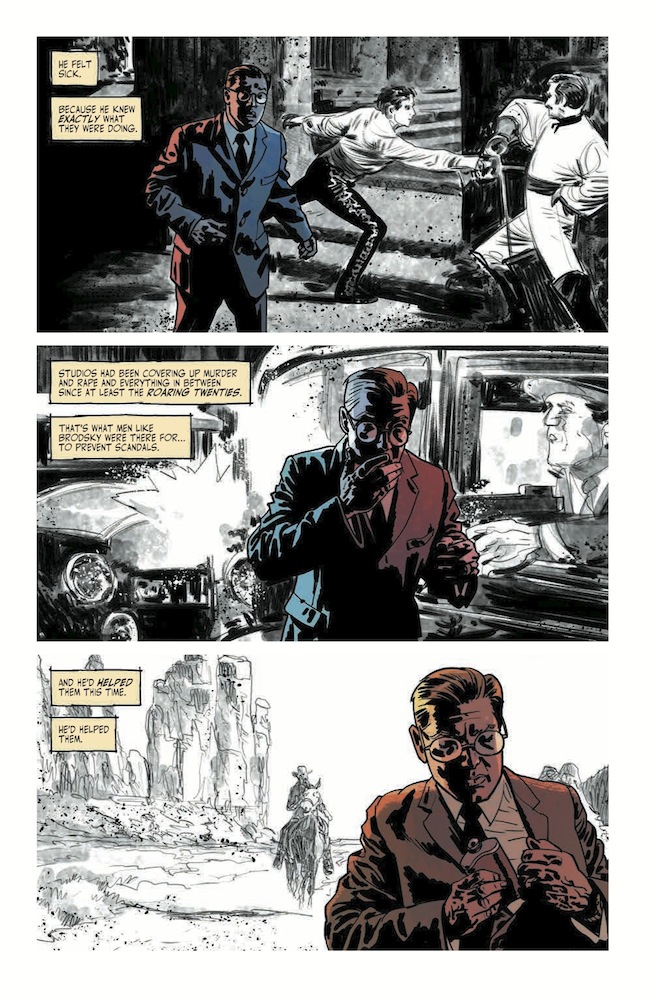
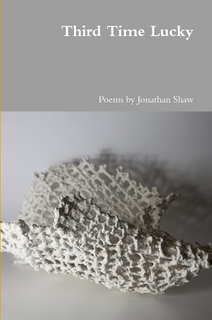 It’s all very well reading stuff online, but for my money you can’t beat the feel of a dead-tree book in your hand. Likewise, I enjoy putting my verses up on the blog, but it’s not the same as having them in an actual book. So in December last year, for the third time I collected verses written during the previous 12 months and got a book together thanks to lulu.com, again with a cover by the Emerging Artist, this time one of her fabulous ceramics. It’s now available from





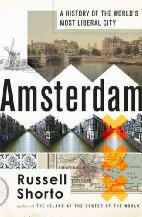

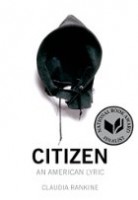

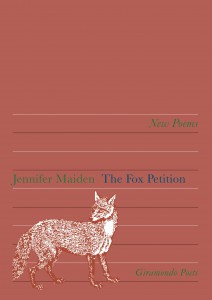


 I heard Adrian Tomine’s most recent book reviewed on the radio, and ever keen to expand my knowledge of fine comics I went off to Kinokuniya in search of the thing itself. But contrary to the rumours a lot of people listen to the ABC, and the last copy of Killing and Dying had sold that morning. The helpful young man in the comics section produces this as the only Adrian Tomine on the shelves. I was reluctant to leave empty handed, so he made a sale. (It being late December and me having gifts to buy, I also bought one or two other things, but perhaps more about them later.)


 Me fail? I fly!
