Category Archives: Books

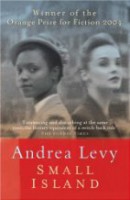
Andrea Levy’s Small Island

Andrea Levy, Small Island (Review 2004)

0755325656This is a completely wonderful book. The main action takes  place in London in 1948. The city is suffering the aftermath of war. Men are still returning from the conflict, and everyone is adjusting to new realities. In particular, men from the Caribbean who have volunteered to defend the ‘Mother Country’ now decide, some of them, to make new lives in England. The story centres on one of them, Gilbert, and his new wife, Hortense, as they come up against what in this book is clearly a shocking betrayal of the promises of the British Empire – white racism.

The other main characters are Queenie, a white woman who befriends Gilbert, and her husband Bernard, who is obnoxiously insular, pompous, racist and sexist. Each chapter is narrated by one of these characters, either in 1948 or ‘Before’: so we get childhood stories from Jamaica and rural England, and war experiences in many part of the globe, all told with a brilliant ear for different englishes. One of the many wonders of the book is that when, well past the half way point, Bernard finally has a series of chapters, we come to sympathise with him: not to like him, except possibly for one moment of unexpected generosity, but at least to feel for him.

Circumstances meant that I read most of Small Island in short bursts. This meant I could notice that while the story, or stories, did keep moving along, there was something to delight on every page. I was reminded of a piece of advice to young writers I read somewhere: Give the reader cool stuff now, and then more cool stuff later. That is to say, it’s no good having a fabulous surprise twist if everything leading up to it is dull. Well, nothing here is dull. Even dull Bernard’s story is gripping. A lot of it is very funny. The Jamaicans encounter racism but it does not define them. Brilliant humour made from the  differences between US and British brands of racism, and in the climactic moments Gilbert delivers a brilliant speech naming the idiocy of white supremacist attitudes.

The final pages are guaranteed to wrench any heart.

About the title: one of the Jamaicans refers disparagingly at one point to the West Indians who come from small islands. Then he realises that Jamaica itself is a small island. And I don’t know if it’s ever made explicit, but there’s a strong implication that Britain is also one, its people as insular in their ways, as resistant to change and outside influence as anyone from St Kitts or Martinique.

Sam de Brito’s Lost Boys and the Book Group

Sam de Brito, The Lost Boys (Picador 2008)

lost boysBefore the meeting: Sam de Brito, a Sydney newspaper columnist and blogger, died in October. I don’t know if any of us in the book group had read his columns or his blog, but we decided to read his only novel, The Lost Boys, to honour his passing. It turns out there’s not much honour in it.

It appears to be about a man who, having spent his teenage years drinking, smoking dope and preoccupied with sex and peer-group status, hasn’t changed much in his thirties and hates himself for it. Mysteriously, given the almost total lack of reflectiveness in any of the characters, he also seems to be a writer. For Sam’s sake, I devoutly hope this isn’t substantially autobiographical. I couldn’t bring myself to read the whole thing. I wanted to lay it aside after ten pages but persevered for 60, and seeing no sign of any change, threw in the towel.

Here’s a sample from the post-schoolboy era:

Andrea just watches as we pass the bong around.
– You don’t smoke, Andrea? I ask.
–Not really, not any more, she says. – When I used to live in Indonesia we smoked so much and the stuff you get there, it really had a kick, let me tell you, but the stuff you get here, it’s full of chemicals, it’s not like what we used to get when I lived in Indo.
Fuck, I guess she wants me to ask her about Indonesia, but I can’t be bothered. I’m pretty ripped, so all I can manage is  – Yeah?
– Oh yeah. Once we had this bag of heads, it was like this big.
She makes the shape of it with her hands. Big bag. I nod. She’s got a story to tell. We let her tell it.
– And we smoked joint after joint after joint. No one smokes cones in Indo. And we must have smoked like half of this bag and we were so off our faces we could barely talk.
She starts laughing at the memory. Chong smiles. I wonder if I’m missing something.
–And then we all had these incredible banana smoothies and the next thing we know its morning. All of us fell asleep, just like that. We were so off our faces.
She laughs again. I wait, then realise that’s the story.
Fuck me, chicks really need to go to storytelling school. The first thing they need to learn is it has to have a point of difference: a funny ending, some sort of killer twist. A joke or line. A piece of wisdom.

To be fair, I’m confident that the reader is meant to recognise the sexism there for what it is. To be equally fair, that doesn’t make it any less yukky (or, given the number of excellent books by women I’ve read recently, any less bitterly ironic). But the reason I quote this passage (from page 39) is that it signals that somewhere in the 360-odd pages ‘some sort of killer twist’, even a ‘piece of wisdom’, might emerge from the bleak hedonism of the narrative.

That signal wasn’t enough to keep me reading. Given that the friends who constitute the lost boys of the title are Christian Brothers old boys, perhaps there is an implied piece of wisdom: don’t send your children to Christian Brothers schools if you want them to have any moral compass or cultural ballast. (I spent two unhappy years in a Christian Brothers school myself, but I don’t endorse that message.)

At the meeting:
It was our last meeting for the year. We each brought a wrapped book from our shelves at home and each took one of them home. In addition to this, one chap, who turned 60 this year, brought a number of scrolled slips of paper on which he had printed short poems that, he said, represented the state of his soul this year. We each chose one and then read them out amidst some hilarity and some reflective chat.

We did discuss the book. Not many had finished it. One of the finishers said that he had started out reading it as thinly fictionalised memoir, but about half way through began to think of it as a moral tale: a warning of the dangers of too much drugs and alcohol. Another had been to the same school, drunk when under-age at the same pub, recognised some of the characters. Another said that the book captured for him the way men who have been friends in adolescent sometimes maintain the friendship even though some have gone on to have successful careers while others remain trapped in their adolescent anomie. From each of these I got a sense of the book as almost a tragic documentation of something that’s all too real, a poignant ‘There but for fortune’.

We met in a restaurant, and though we had booked a separate room, water damage from the recent storms meant there were a number of other tables nearby. This meant that any readings from the book had to be bowdlerised. One memorable passage involving a graphic description of coprophagy read by the professional actor kept its power even when bowdlerised, and made me think that perhaps this book would be better heard in company than read on the page: language which on the page is just revolting becomes when read aloud the verbal equivalent of a scene from a Hollywood gross-out comedy.

Magda Szubanski’s Reckoning & Tim Winton’s Island Home

Magda Szubanski, Reckoning: A Memoir (Text 2015; Bolinda audiobook read by Magda Szubanski)
Tim Winton, Island Home: A Landscape Memoir (Hamish Hamilton 2015; Bolinda audiobook read by David Tredinnick)

9781925240436.jpg We listened to Reckoning on a car trip fromSydney to Brisbane and then part of the way back. It’s hard to imagine a book better suited to such a trip.

Magda Szubanski, a superb comedian as the fat, unloved but ever optimistic Karen in Kath and Kim, and the bustling farmer’s wife in Babe, here comes out as a complex, thoughtful person with quite a lot to say and the ability to say it well. I particularly admire her way with similes. As you’d expect of a celebrity memoir, it gives us the background story on a number of her well-known and much-loved parts, as well as her more obscure commercial and critical failures. Unsurprisingly, it goes into her family history, but though there are elements of celebrity-misery-memoir in the story that emerges of a depressed mother and a rigid, disciplinarian father, the narrative transcends that category to become something much more interesting.

There are many strands. Possibly the most interesting is Magda’s quest to understand her father. She tells us at the start that he was a teenaged assassin, an ally to Jews who put his own life at risk, and a member of the Polish resistance during World War Two. A key element of her own life story is her gradual uncovering of the details and significance of that, and of its implications for how he related to his own children. There’s also her struggle with weight, and the agonising story of her coming to terms with her sexuality, of coming out to her family, and then to the world is a revelation. (That is to say, I vaguely remember that when she came out my response was something like, ‘That’s interesting – Oh look, something shiny!’ For her, it was a major decision: she had to face the possibility that her career and any number of important relationships would go down the drain, and she also had to face head-on the internalised version of the vicious oppression that comes at Lesbians and Gay men.)

Magda Szubanski reads this audio book, and I recommend this as a way of receiving it. Perhaps it would be funnier read on the page: there’s plenty of wit, but Szubanskidoesn’t play for laughs. She does, however, do the voices: her father’s Polish accent (‘Ach, Maggie’), mother’s soft Scottish burr, her own childhood pipe, and any number of show-biz types (her impression of Mark Trevorrow is uncanny).
—-

islandhome.jpgWhen we’d finished Magda’s book, we moved on to Tim Winton’s Island Home. Sadly, we lasted only about 40 minutes into it, and even that was a struggle. The book itself is interesting. Winton writes about the meaning of the land in Australian sensibilities: we have more geography than culture here, he says; the long Aboriginal custodianship of the land has had a very different impact from the ubiquitous naming and taming of Europe, and the last two centuries have not erased that.

The book is interesting, and I hope to read it some time. But my companion and I found David Tredinnick’s reading intolerable. He did that thing of not trusting the words to do the work, but injecting emotion and significant intonations. The effect was to constantly draw attention to the words rather than to what they were trying to say. You could tell that Winton was struggling to articulate something, but it was being read to us as pronouncements of wisdom from on high. I see from Bolinda’s site that David Tredinnick is a frequent reader for them. I hope this performance isn’t typical.

Added later:
aww-badge-2015Reckoning is the twentieth book I’ve read for the 2015 Australian Women Writers Challenge.

November Rhyme #8

Not everything that happened at Gleebooks yesterday morning would fit into fourteen lines:

Rhyme #8: Selling books.
I hauled some books – one case, two boxes,
unloved, unread, or loved but old –
bright-eyed, tail bushy like a fox’s
to where they said, ‘Books bought and sold.’
Alas! The man said, ‘Wilfred Owen?
No poems unless by Leonard Cohen!
Though your books may be a cut above
Dan Brown, Dan Steele or Eat, Pray, Love,
they mostly fail to pass my muster.’
The reject pile grew mighty high.
‘You don’t want this one. Nor do I.
Rooster once, now feather duster.’
He shot them down, my flock of ducks
and bought four books for twenty bucks.

November Rhyme #7

Friday was Sydney’s second hottest November day on record. I went for a walk with two friends from my teenage and young adult years that I’ve recently renewed contact with.

Rhyme # 7: 
Three old men in shorts went walking
out in November’s hottest day –
walking, talking, and some gawking
as we passed by Lady Bay
where brave souls bared all to the weather,
bodies turning slow to leather.
We reached South Head, its ocean breeze,
the Gap, and ancient friendship’s ease.
The times we shared, the years we’ve travelled
different paths, loves won and lost,
lessons learned, and bridges crossed,
the histories that we’ve unravelled:
we talked, and round our old men’s noise
we felt warm ghosts of teenage boys.

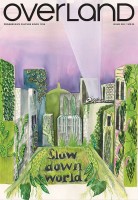
Overland 220 and my November rhyme #6

Jacinda Woodhead (editor), Overland 220 (Winter 2015)

220-cover

Almost a third of this Overland is given over to the winners of the inaugural Overland NUW Fair Australia Prize: two essays, two short stories, a poem and a cartoon.

The prize encourages artists and writers to engage with questions like: How does insecure, casual, precarious work affect a person and their community? What do you think a fair Australia looks like? How can we change Australia together? It’s not surprising, then, that there’s a certain sameness about the winners, but also a refreshingly straightforward sense that capitalism is a) brutal and b) not here forever. These 37 pages are a timely counterpoint to the recent publicity the NUW has been receiving from a Royal Commission.

As for the journal proper: Jacinda Woodhead’s editorial cites Slavoj Žižek (a Slovenian cultural critic – I had to look him up) as naming the four horsemen of the ‘apocalyptic zero-point’ of global capitalism as climate change, biogenetics, system imbalances and ever-increasing social divisions. The first and last of these figure prominently in the  rest of the journal.

The non-fiction sections put attention to a shopping list of pressing issues: misogyny and violence against women, the unsettled state of Europe, climate change, plus the politics of the science fiction ‘community’. It’s all worth reading, though some of it tends to be reporting on what has been written by someone else, and it sometimes feels that it might be better to just read the original. Three pieces stood out for me:

  • Anwen Crawford puts shoe leather into ‘No Place Like Home‘, an excellent piece of journalism about the destruction of the public housing community in the Rocks in Sydney
  • Jennifer Mills takes her fiction-writer’s skill to the abandoned buildings of a once great US city in Detroit, I do mind
  • In A person of very little interest David Lockwood adds his personal story to the growing body of funny but unsettling literature about ASIO’s activities back in the day.

Alison Croggon’s regular column is always a pleasure. This time she riffs on reading as a dangerous drug.

In the fiction section (and yes, Overland still presents its fiction and its poetry in two colour-coded clumps), it’s interesting to see Omar Musa – rapper, spoken word performer and author of the novel Here Come the Dogs – move away from the milieu of disaffected youth in an elliptic story, No breaks.

There’s some really interesting poetry. Two John Tranter ‘terminals‘ (a form that I believe he invented, in which he uses the end-words of other poems) are masterly, but create for me a nagging sense that the poem’s relationship to its ‘original’ is more important than the poem itself. I also enjoyed, and am in awe of, poems by Kate Lilley, Michael Farrell and Fiona Wright.

And now, because it’s November, I need to write a little verse. I went looking for the names of past editors (not as easy as you’d expect), and on the way I found a fabulous recent piece of invective against Overland that managed to include blatant sour grapes, sleazy innuendo, dubious history, straw-man arguments, weird illogicality, and one lovely typo. I won’t link to the invective (a search for ‘Overland’ and ‘cesspit’ will find it), but I’ve included the typo:

Rhyme # 6: On reading Overland No 220
Since 1954, when Stephen
Murray-Smith first sought to avoid
dread humourlessness, dogma, even
orthodoxy, we’ve enjoyed
two-twenty Overlands. The Party,
then the Green Left Literarti
gave the helm to Barrett Reid,
McLaren, Syson, then – new breed –
to Hollier–Wilson, Sparrow, Woodhead:
eight editors in sixty years,
provoke our thinking, laughter, tears
and even action. Here a good Red
is alive and well read. Long
may this voice sing its rebel song.

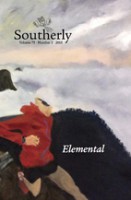
Rhyme #4 and Southerly 75/1

Elizabeth McMahon and David Brooks (editors), Southerly Vol 75 No 1 2015: Elemental (The Journal of the English Association, Sydney, Brandl & Schlesinger)

Rhyme #4: What's in a title (with anagrams)?
Blow the wind southerly, Southerly, southerly,
rattle our windows and slam dunny doors,
blow off the same old stuff, bring on the Otherly,
bust up the torpor that stifles these shores.
The name holds promise that the journal
challenges what seems eternal –
our bow to all that's from the North,
our faith in all it issues forth.
The title tells us what's been hidden:
a home-made tool that truly hoes
this soil, as surely hot it grows.
Shout, lyre! Play something that's forbidden.
The RSL you knew is now
A rusty hole, a sacred cow.
s152

I have a love-hate, or at least an affection-irritation relationship with Southerly.

As one who was educated before what someone in this issue calls ‘the cultural turn’, which I guess refers to the rise of Theory and cultural studies in the academy, I am often left whimpering uncomprehendingly in the dust of the more scholarly work – of which there’s a fair bit in this issue, including at least five examples of reviewers indulging in clever exegesis of a book or other work’s title (hence my rhyme above). On the other hand, there is always something that more than justifies the price of admission.

In this issue, two essays – ‘Oi Kaymeni (“The Burnt Ones”)’ by George Kouvaros and ‘Angry Waves’ by Dael Allison – are wonderful.

Kouvaros’ essay begins with his mother’s reluctance to watch the 1950s movie A Place in the Sun on TV, and fans out to tell the story of her emigration from Cyprus, then to reflect on the role played by Hollywood movies in the lives of people in peasant cultures facing rapid modernisation and sometimes massive dislocation. An excerpt:

Recounting this history helps me to understand the events that shaped my mother’s personality. It also provides an opportunity to clarify two interrelated propositions. The first is that migration is not just about a dispersal of individuals  across continents; it is also about a dispersal of the narrative details that we use to understand the people close to us.

His second proposition, which has to do with a movie’s unchangingness as opposed to that of living people, leads to the realisation that for his mother ’embedded in the film’s story was her own history as  a sixteen or seventeen year old cinemagoer’.

What he writes is specific to his mother’s life, and to the history of Cyprus, but it will resonate richly for anyone of a certain age who loves the movies.

Dael Allison writes about the impact of climate change on Kiribati (pronounced Kiribass – Kiritimati is the Kiribati spelling of Christmas) from the point of view of a westerner who has lived, worked and had friendships there for some years. As you’d expect, the picture is alarming – the brunt of climate change is and will be felt by those who have done least to cause it. Allison’s wealth of detail and observation and quotation brings the situation home sharply. For instance, the recent damage done on Kiribati, unlike that on, say, Vanuatu, is not the result of cyclones, but of tidal events which bring the angry waves of the essay’s title; unlike the damage on Vanuatu it cannot be quickly healed because coral reefs do not regenerate as forests do. There’s no cause for total panic:

Unless there is a massive global catastrophe like a melting Antarctic ice shelf sliding into the sea, Kiribati will not all become unliveable at once. But the process of relocating villages because of inundation, coastal erosion or salt contamination due to wave over-topping of the fragile freshwater lens, has already begun. Projections suggest entire atolls may become uninhabitable in the next generation. Some islanders say they will stay on their land despite that outcome.

There are other treasures: ‘Wyenondable Ashes’, Alice Bishop’s memoir of losing  her family home on Black Saturday 2009; ‘St Thomas’ Churchyard’, in which Roslyn Jolly takes a closer look at the gravestones that dot her local park, formerly a colonial cemetery; ‘A Richer Dust’, where John Stephenson finds resonance between a passage from the Aeneid he happens to be reading and a ‘sentimental conversation’ from a week earlier, and arrives at a sweet elegiac moment.

The poems that stand out for me are Dugald Williamson, ‘Caprice’; Pam Brown, ‘Twelve noon’; Stuart Cooke, ‘Old World’; Laurie Duggan, ‘After a storm, Brisbane’; David Brooks, ‘Choosing to Stay’ and ‘Silver’ (which only a vegan could have written); and Brett Dionysius, ‘American Love Poem’ (not a sonnet, not set in Queensland, but terrific).

Of the short fictions, Moreno Giovannoni’s ‘The Bones of Genesius’ make one look forward to Tales from San Ginese, the book he is writing about his birthplace; and Claire Corbett’s ‘The Trillion Pearl Choker’ is a weird tale of the forces of nature fighting back on the climate change front.

As a rule, I don’t read Southerly‘s reviews of books I haven’t read, of which there are many here. But I did dip this time. Felicity Plunkett introduces her review of a book of criticism with a selection of trenchant quotes from writers ‘writing back’ to the critics; Nicolette Stasko makes me want to read Peter Boyle’s Towns in the Great Desert; Vivian Smith and Chris Wallace-Crabbe’s grey hairs lend distinction to the review pages; Kate Livett draws attention to a timely new edition of Judith Wright’s 1971 account of a battle to save the Barrier reef, The Coral Battleground:

Weirdly, although this battle for the Reef took place from 1969 to 1975, Wright’s text initially reads as if it could be taking place today, with the ridiculous ‘postmodern’ political moves made by Bjelke-Petersen’s government, such as employing an American geologist with no knowledge of biology, let alone marine biology, to do a three-week survey on the Reef.

And now for a little grumpiness. Some of the writers here would do well to read Joseph M Williams’ Style: Lessons in Clarity and Grace. One essay in particular  veered from banal to incoherent to impenetrably technical. I persevered for a while, but threw in the towel when principle appeared as an adjective – just a typo perhaps, but in that context very dispiriting. And what’s with the US spellings throughout – harbor, jewelrymeter (as a measure of distance)? In the absence of a statement that this is policy, it creates the impression that the English Association, Sydney is made up of people who don’t care much about the language.

Doris Lessing’s Ben, in the World and Sonnet #2

Doris Lessing, Ben, in the World (Flamingo 2000)

0006552293

I read quite a lot of Doris Lessing in my late twenties and early 30s. I guess I was reading what Wikipedia calls her Communist phase (the Martha Quest books), with maybe a bit of her psychological phase in The Golden Notebook (of which my main memory is a long passage where the main character mediates on the meaning of tears). I haven’t read any of her science fictional writing – until now.

Ben, in the World defies categorisation. As far as I can tell, it doesn’t even matter that it’s a sequel to another book (The Fifth Child, 1988). It starts from a ‘what if?’ premise: what if a genetic throwback to an earlier species of human was to arrive in our times? how would we cope with this person? and how would the person cope with us?

What Doris Lessing does with these questions is brilliant. Ben, the main character, is physically powerful and capable of inflicting great harm. He is eighteen years old, estranged from his family of origin, and has learned to control his violent impulses, but his weird appearance and different thought processes make him dreadfully vulnerable. When he can earn money he is cheated or robbed. His sexuality makes him simultaneously a subject of pity and terror, and I’m weirdly grateful to feminist Doris Lessing for giving him one woman who understands and doesn’t drive him away.

Ben makes a kind of life for himself thanks to the kindness of people on society’s fringes, people who can understand to some extent his profound difference. But there’s never any doubt that he’s heading for disaster. It’s a miracle of story-telling that when the inevitable happens it’s deeply satisfying, and preceded by an unexpected moment of exhilaration. What might sound from my synopsis like a cerebral exercise becomes a rich tangential celebration of what it is to be human.

And now, because it’s November:

Sonnet 2: After reading Doris Lessing’s
Ben, in the World
‘Just a little bit of finger
bone,’ he said, ‘ can tell the whole
of what a person’s been.’ Let’s linger
on that thought: it’s not the soul,
a spirit that outlives the body
it ignores. No, what that shoddy
view of science cannot own
is: no one can exist alone.
That finger bone stripped by the condors
touched when alive what cheeks, what lips,
or pointed, waggled at what quips,
or painted on a wall what wonders?
The finger’s owner wept what tears
and heard the music of what spheres?

Eka Kurniawan’s Beauty is a Wound in the Book Group

Eka Kurniawan, Beauty is a Wound (2002, translation by Annie Tucker, Text Publishing 2015)

9781925240238A while back, we agreed that the Book Group would stick with short books. So we read Of Mice and Men. Then somehow we settled on Beauty Is a Wound, which weighs in at just short of 500 pages.
Not that I’m complaining. The book more than fills the promise implied in its epigraph from Cervantes [note to self: read Don Quixote]:

Having cleaned his armour and made a full helmet out of a simple headpiece, and having given a name to his horse and decided on one for himself, he realised that the only thing left for him to do was to find a lady to love, for the knight errant without a lady-love was a tree without leaves or fruit, a body without a soul.

The book gives us three quarters of a century of Indonesian history seen largely from the perspective of the ‘lady-loves’ of its variously idealistic (or not) warriors. A multitude of stories involving Dutch colonisers, Japanese invaders, guerrilla resistance, nationalists, Communists, anti-Communists, capitalist thugs – all revolve around the central figure of Dewi Ayu, the most famous whore of the fictional city of Halimunda, and her three beautiful daughters. Tender love, passionate mutual obsession, brutal rape, prostitution, high romance, fraternal and intergenerational incest, borderline necrophilia: these are all there, with World War Two, Indonesian Independence, the 1965 massacre of leftists and the 1975 invasion of East Timor as context. More than once the streets of Halimunda are filled with corpses, and then with the unappeased ghosts of the slaughtered.

Eka Kurniawan has been called Pramoedya Ananta Toer’s successor. The latter’s Buru Quartet was also a panoramic account of recent Indonesian history seen through the lens of one man’s life, but as far as my memory goes those earlier novels were strictly realistic and unsensational – the story of their being written without pen and paper while the author was in prison is much more thrilling than the novels themselves. Beauty Is a Wound, on the other hand, is unlikely to land its author in prison,even though writers about the 1965 massacres were banned from this yeas Ubud Writers Festival, but it provokes a visceral response to the history it treats.

The book’s web of relationships is extraordinarily complex. For my own peace of mind, I attempted a diagram showing the main ones. The diagram doesn’t show the revelations of the final chapter which manages the improbable feat of pulling the many threads together into thematic consistency, but it does contain one or two spoilers if you look at it closely. But here it is, small but embiggable, for anyone who’s interested (dotted lines represent anything from concubinage to one-off rape, while deep unfulfilled love is indicated by a dotted line with a cross):

Beauty Is a Wound Chart

Annie Tucker, the translator, has done an awesome job, creating the sense that we are in a world not quite like ours. Partly, I mean by that, we know we are in a non-Western cultural setting. Some words remain untranslated but explained – such as moksa (in Indian philosophy, freedom from the cycle of death and rebirth) or jailangkung (a Javanese game in which the spirits of the dead are summoned). But more interestingly, the translation allows us to feel that we are not just in a different culture, but in a different reality. When characters return from the dead or avoid death altogether, when there are curses, prophetic insights or hauntings, we feel that we are in a weird waking dream of our own rather than listening in with an ethnographer’s ear.

At the meeting: This was not one of those times when we all had similar responses to the book. We had such an engrossing conversation over  soup and salad that we barely got to discuss the removal of Tony Abbott or his embarrassing Lady Thatcher address.

There were eight of us, though one was only there between dropping his daughter off at soccer training and picking her up – the driving time meant he had just about 40 minutes to eat, drink and opine (all of which he did most elegantly). One hadn’t read the book at all. Another ‘declared at tea’ – reading on the Kindle so couldn’t say what page. One pointed to the fact that he’d read the whole book to prove that he didn’t hate it, though he was, well, flamboyant in his account of it as tediously ‘factual’ in its prose and intolerably sexist in its treatment of the women characters (who are there for purposes of sex and nothing much else)

A number of us had grappled with the possibility that there was some kind of allegorical account of Indonesian history at work. One chap, who had been struck by the fact that the central characters, Dewi Ayu and her daughters. were mainly very passive, suggested a reading in which they represented the soul or the spirit or ‘the people’ of Indonesia, and the treatment that had roused the other chap’s ire signified the damage done to the country by each of the groups that their various rapists, and exploiters belonged to. That made a lot of sense to me.  And the prose style has the matter-of-factness of folktale, which fits that reading.

Someone told us that a number of speakers had been banned from the Ubud Writers Festival yesterday because they were scheduled to speak about the 1965 massacre of leftists. I don’t think Eka Kurniawan was one of them, but the news did shed an interesting light on the book’s unflinching account of the massacre.

Oh, and my chart of the relationships was widely admired, possibly with a slight edge of irony.

Australian Poetry Journal, recent issues

Michael Sharkey (editor),  Australian Poetry Journal, Volume 5, Issue 1 (2015)
Bronwyn Lea (editor),  Australian Poetry Journal, Volume 3, Issue 1 (2013)

apj51

Australian Poetry Journal is a twice yearly publication of Australian Poetry Ltd, which describes itself, surely with a wistful edge, as the peak industry body for poetry in Australia. You don’t have to be a poet to join APL (the poetry industry includes readers), and membership fees cover a subscription to the journal.

This issue is attractively democratic. Award winners with many books on their CVs rub shoulders with people who have had poems published in newspapers and journals. I wouldn’t dream of singling any poems out as ‘the best’ but I do need to give you a taste of some. This is from Judith Beveridge’s ‘Clouds’:

Let blue skies stop their rhetorical grandstanding.
We know they’re filled with the breath of men cocked
and fettled by greed. One by one I call the clouds in.
A cloud for each child hungry, ragged, naked. A cloud

for all exiles whose voices can’t find a single raindrop,
whose eyes are stones that out-weather the past.
A cloud for those in war-ravaged places where shadows
terrorise doorways, and the old live between rubble
and crumbled bread.

Jeff Rich’s ‘Not getting things done’ deals with those to-do lists where some items just got moved from list to list, or projects dreamed of but never begun. The final lines bring it all home beautifully:

Whole careers, projects without plans.
Journeys of recovery and feats of weakness

Pile like chaos in the attic
Awaiting defeat

By distraction and habit and boredom and chance
Four deadly horsemen more real than the rest.

Fay Zwicky’s ‘Boat Song’ responds to the callous feral poetry of a Tony Abbott slogan with child-like rhyming that is anything but infantile. I’ll resist the pull to quote the whole thing:

Remote ideologies send bonnie boats
Like broken-winged birds to our merciful votes.

And we turned them away, yes we turned them away
As we went out to play
In our dead-hearted country, the bounteous place
Where neighbourly love puts a smile on each face.

Apart from the poetry, there are interviews – Paul Magee interviews Samuel Wagan Watson and Josh Mei-Ling Dubrau interviews Julie Chevalier; a personal introduction to Greek poet Tasos Leivaditis by his translator N N Trakakis; a review by Tim Thorne of eleven titles from Ginninderra Press – which expresses gratitude for the publisher’s ‘let a hundred flowers bloom’ policy while being unsparing of the blooms that aren’t up to scratch; a history of another small publisher of poetry, Black Pepper Press, by Margaret Bradstock, who paints a fascinating picture of the critical reception of a number of their books; and three review articles that I found illuminating, especially Bonny Cassidy on Spatial Relations, a two-volume collection of John Kinsella’s prose.

Bonny Cassidy begins her review, ‘It must be said, straight up, that this two-volume publication … is unlikely to attract the recreational reader.’ (And she might have finished it by saying that a smaller, more selective publication may yet bring Kinsella’s prose to a wide and appreciative readership.) I could have said, straight, up that while Australian Poetry Journal might not attract too many recreational readers, any who wander into its pages are likely to be pleasantly surprised.

1apj31Having been pleasantly surprised by Volume 5 No 1, I realised Volume 3 No 1 had been wallflowering on my bookshelf for a year. It turns out to be another treasure trove. I’ll just mention two very funny poems by Anthony Lawrence –  ‘The Pelican’, in which the eponymous bird snatches a Jack Russell puppy, flies off with it

clearly visible through the lit
_____transparent pouch beneath its beak

and swallows it in full view of a horrified human crowd, and ‘Lepidoptera’, in which a gift of butterflies to the speaker’s sister meets with a dreadful fate, with an implied analogy to the frequent fate of poems.

There’s  a section on the poetry of the late Philip Hodgins – an introduction by Anthony Lawrence and then a selection of poems, mostly in some way to do with farming life, and death. A section titled ‘Criticism’ includes, among others, David McCooey on Jennifer Maiden; Martin Duwell – always worth reading – on a book about postwar US poetry; and an essay by Stuart Cooke about stray animals in Central and South America, which I enjoyed but whose title suggests I missed the point: ‘A Poetics of Strays’.