Category Archives: Diary

SWF: History, Memoir, panels

The Sydney Writers Festival is now in full swing. I’ve managed to go to two events in the last two days, both of them excellent.

The first, cheerily titled ‘Swindlers, Doctors and Nationalists’, was held late yesterday afternoon in the Macleay Museum at Sydney University. Anyone who got bored could contemplate the huge object in the front corner of the room, probably the cast of a dinosaur’s skull. But it wasn’t the kind of event where  such distraction was needed. On the contrary, the three historians on the panel pretty much fitted Mark Twain’s famous remark about Australian history in Following the Equator:

It does not read like history, but like the most beautiful lies; and all of a fresh new sort, no mouldy old stale ones. It is full of surprises and adventures, and incongruities, and contradictions, and incredibilities; but they are all true, they all happened.

The panel was elegantly chaired by Jude Philp, senior curator of the Macleay Museum. She asked each of the panellists to introduce their books, then invited each of them to speak in turn to maybe three or four questions, a round on each question. I mention this format, because I’ve been to some deadly panels where the time is divided into blocks, one for each participant, and there’s very little opportunity for interaction. That wasn’t a problem here – possibly it helped that all three historians are in the same History Department. The first two were Penny Russell (Savagery and Civility: A History of Manners in Colonial Australia) and Kirsten McKenzie (A Swindler’s Progress: Nobles and Convicts in the Age of Liberty), both doing the kind of colonial history that an acute filmmaker could make brilliant use of: comedies of manners just waiting to be made (it was widely insisted that the colonies should cleave to English standards of behaviour, but ideas of what those standards were varied dramatically), tales of intrigue, fraud, and idealism.  The third was James Curran, whose book The Unknown Nation, co-written with Stuart Ward, deals with the period in the late 1960s and early 1970s when Australia’s British-based identity had been pulled out from under it and we were hunting around for a new sense of what it means to be Australian.

Then this morning, the fourth day of my festival, at last I reached the Harbour. Wharf 2/3 was humming, and I arrived just in time for a session on Creative Memoir featuring Ali Alizadeh (Iran: My Grandfather) and Rupert Thomson (This Party’s Got To Stop) talking to editor, novelist and blogger Sophie Cunningham. Again, it was excellently done. Sophie had obviously read and enjoyed both books, and other things written by both authors. They each read – well doing the voices – and then she asked a couple of questions that enabled them to talk interestingly about choices they’d made in writing the books, about how the people who feature in them feel about their family linen being aired in public. Did you know that in the UK you’re legally required to get written permission to publish a book in which you give information about someone’s private life, not because of possible libel suits, but as a result of privacy legislation?

I went to this session because I’ve enjoyed Ali Azadeh’s poetry. To judge from the passage he read to us, he is also a prose writer to be savoured.

I’m off to an excellent start. The plan is for tomorrow to be my first full day: at the Wharf by half past nine in the morning, and home from the Town Hall about half past seven at night.

SWF: Inside the Westside Writers Group

One of my highlights from last year’s Sydney Writers Festival was a staged reading in Bankstown Town Hall by members of the Westside Writers Group. Naturally, we trekked west in the rain to see what they were putting on this year.

A big room in Bankstown Youth Development Headquarters had been set up with a couple of sofas, cushions, a standard lamp and a coffee table for the group and seats for the audience in the rest of the room. They proceeded to have a meeting like the ones they’ve been having every fortnight for years: each member of the group read a piece she or he had been working on – some brand new, some reworkings or extensions of things the group had heard before.

It was a risky idea, and could have failed in any number of ways. But it was great. All the writers have been trained in reading to an audience, and as their mode of working is to read to each other rather than circulating printed copies of their work, they have all become skilled listeners. So we were treated to a lovely range of readings, and then some tender but forthright exploration of what made each one tick and where it could be improved. Luke Carman and Michael Mohammad Ahmad were the stand-outs for me, the former with another of his strangely surreal monologues/stories, the latter with a vignette (a word evidently much discussed by the group) of life in a small ethnic community in the western suburbs. Nothing was dull: sestinas by Lachlan Brown, other poems by Fiona Wright, Lina Jabbir and Rebecca Landon, stories by Susie Ahmad, Sam Hogg, Felicity Castagna and Peter Polites (the dark-haired man on the couch in the pic, shaven headed and unrecognisable on the night), and video in the making from Bilal Reda. All this with the delicate, respectful probing and prompting of Ivor Indyk, resident literary guru.

And you know, from where I was sitting none of these young writers seemed at all fazed by having an audience of roughly fifty people watching and listening from the shadows as they exposed the fruits of their imagination to one another’s critical gaze.

Later addition: I can’t believe I forgot to mention that Alexis Wright was there as a special guest, putting her two cents worth into the discussion and reading what may end up as the start of her next book. When she’d finished her reading – an unsettling piece involving a personification of drought, a young woman carrying a not-quite dead swan in her arms – Ivor Indyk challenged the group: ‘Anyone want to take on a Miles Franklin winner?’

NSWPLA dinner

There’s a quote from James Tiptree Jr I’ve been wanting to sneak into my blog for some time. When an editor asked her to write an afterword to her short story, ‘The Milk of Paradise’ she wrote that some authors are ‘walkie-talkie writers … who are named Mailer and Wolfe when they are good’ and went on:

But the rest of us, poor carnivores whose innards meagrely condense into speech. Only at intervals when the moon, perhaps, opens our throats do we clamber up on the rocks and emit our peculiar streams of sound to the sky. Good, bad, we do not know. When it is over we are finished, our glands have changed. Push microphones at us and you get only grumbles about the prevalence of fleas and the scarcity of rabbits.1

That, in short, is why I’ve become a dedicated paying guest at the annual  NSW Premier’s Literary Awards Dinner. I love to see those poor carnivores clamber up onto the podium to be honoured, even the ones who can’t manage any more than ‘Thank you’.

I nearly didn’t go this year, fearing that the dreaded PowerPoint’s incursion, begun at the shortlist announcement, would continue. I was also trying to think like a grown-up about the expense, and then there was the Dîner des Refusés precipitated by the nul prize for a playscript. But here I am again, home from the Art Gallery, out of pocket but flush with the inside dope, even though the on-the-spot tweeters and newspapers (with self-promoting or surprise-upset hooks) have beaten me to publication.

It turned out, no surprise, to be a pleasant evening. The company was convivial, the setting brilliant, the food excellent. There was no PowerPoint as such, but sadly the dinner has become an Event, the creation of Events Organisers, with glossily impersonal results. There was a would-be witty typewriter centrepiece on each table. Two huge television screens told us who was talking to us at any given moment, threatening but thankfully not quite managing to distract us from the mere humans on the stage between them. And the pause between the announcement of each winner’s name and their arrival at the microphone – that is, the time it took them to reach the stage, be photographed kissing the Premier and cross to the mike – was now filled, not just with applause and a buzz of conversation, but with a blast of fanfare from the sound system. I hope someone whispers to the Organisers that this isn’t the Oscars, still less the Logies.

Auntie Sylvia Scott welcomed us to country. As last year, she told us she was an avid reader, and revealed that though Nathan Rees had promised her a pile of books, she never saw any. As she left the stage Carol Mills, Director General of Communities NSW and MC for the evening, promised her a pile this year. She was gracious enough not to look sceptical.

Richard Fidler gave the address. He was funny, and with enough meat to be satisfying, with quotes ranging from Neil Gaiman (about the joys of being a writer), by way of Stalin (writers are the ‘engineers of the soul’) to the unnamed Bush aide (‘probably Karl Rove’) who derided the ‘reality based community’. He advise women in quest of a man to look to their bookshelves – men don’t care so much about appearances, it’s the books that count: ‘Ladies, if we see a copy of a book by Deepak Chopra or Erich von Daniken, we’re out of there.’ He recommended The Moth podcast, and inveighed against Twitter as the ruination of literature – all those writers being witty in 140 characters instead of being at work: ‘Get back to your desks you Gen Y bastards!’ (At that point I saw my Baby Boomer friend misrule discreetly tweeting.)

On to the awards:

The UTS Glenda Adams Prize for new writing: Andrew Croome – Document Z
I started to read this a while back but couldn’t bear to read yet another book on the subject. Perhaps seduced by the sub-Oscaresque music that accompanied him to the mike, Andrew Croome gave a straightforward thank you speech, an example followed by most of the award recipients. In particular he acknowledged his debt to University creative writing courses. The book started out as a PhD – ‘But that doesn’t mean it’s boring.’

The Community Relations Commission Award: Abbas El Zein – Leave to Remain: A Memoir
A lovely book. He said, ‘I never thought I’d shake hands with the Premier and be paid for it,’ introducing another recurring motif of writers responding to Kristina Keneally’s physical presence.

The NSW Premier’s Prize for Literary Scholarship: Philip Mead – Networked Language: Culture and History in Australian Poetry
I hope to read this hefty volume some day. The very tall Philip Mead (nickname ‘Tiny’) commented that it was lovely to stand next to someone of normal height. The Premier leaned over to his mike and said it was lovely to stand next to someone who was taller than her. He went on to thank, among others, independent Australian publishers, who are like tussocks: ‘we do everything we can to destroy them and they keep coming back.’

The Play Award: Controversially not awarded

The Script Writing Award: shared by Jane Campion for Bright Star and Aviva Ziegler for Fairweather Man
Jane is abroad. In accepting the award for her, the film’s producer Jan Chapman threw us the pleasing tidbit that in the absence of any letters from Fanny Bryce to Keats, Jane looked for inspiration on her character to her own teenage daughter. Aviva spoke about the ways writing a documentary is of its nature so much more a collaboration than other forms of writing.

The Kenneth Slessor Prize for poetry: Jordie Albiston – The Sonnet According to ‘M’
I bought the last copy of this on my way home.

At this point in the evening, the main meal was served. I was the only one at my table vulgar enough to want to trade fish for meat. One of my fellow guests was gracious enough to do so. The steak and mushroom and mashed potato was delicious, though it didn’t look a bit like the way my mother used to do it. Then on with the show:

The Ethel Turner Prize for young people:Pamela Rushby – When the Hipchicks Went to War
Pamela Rushby wins the Me fail? I fly! award for the best acceptance speech. She may have been the only recipient who began with the formal ‘Distinguished guests’, but she recovered from that slightly distancing moment by telling us she had pitched the book to publishers as Apocalypse Now meets A Chorus Line. Apart from giving us some little known information about young women who went to the Vietnam War as entertainers, she thanked her family, ‘without whose support the book would have been finished in half the time’.

The Patricia Wrightson Prize for a children’s book: Allan Baillie – Krakatoa Lighthouse
Allan writes with remarkable precision, but he speaks with difficulty – so he can be difficult to follow. I thought he said that on this project his wife had to endure more than most writers’ wives because he’d been carrying on with an orang utan. I probably misheard, but he does have an unsettling sense of humour. He definitely did say that his wife climbed Son of Krakatoa with him.

The Douglas Stewart Prize for non-fiction: Paul McGeough – Kill Khalid: Mossad’s failed Hit … and the Rise of Hammas
‘Madame Premier, Ms Premier?’ ‘Kristine.’ He mainly thanked his editors, and said very little about the book.

The Christina Stead Prize for fiction: J.M. Coetzee – Summertime
Unsurprisingly JMC wasn’t there. Meredith Purnell (?) from Random House read a brief note: ‘Whether I deserve to hold my head up with the esteemed previous winners is something only time will tell.’ So Summertime!

The People’s Choice Award: Cate Kennedy – The World Beneath
‘I can’t believe my luck that all this has come about from just telling stories.’

Book of the Year: Paul McGeough – Kill Khalid
This time, without notes, he spoke about the vulnerability of writers in these late-capitalist times (my term), and daringly drew a parallel with the Taliban, a ragtag collection of warriors holding at bay the great technological firepower of the USA, the closest the evening came to ‘the prevalence of fleas and the scarcity of rabbits’.

The Special Award: The Macquarie PEN Anthology of Australian Literature
This may have been an inevitable award, but it was sad that we didn’t get to honour an ageing lion, who would have responded memorably.

I didn’t realise until this morning how many of the writers receiving awards were born and partly educated outside Australia: Abbas El Zein of course, but also Jane Campion, Aviva Ziegler (I’m guessing from her accent), Allan Baillie, Paul McGeough and J M Coetzee. That’s at least six out of eleven. Does this mean, as a friend of mine insists, that Australians can’t write? I don’t think so. Does it mean anything at all? I don’t know.

The main pleasure of the evening for me, and I suspect others, was catching up with friends. I was sitting with people I didn’t know well, and that was another pleasure, especially as the three people I could talk to most easily were judges who managed to be gloriously indiscreet about some of this year’s processes. It’s often said that literary awards are given to compromise candidates, books that are no one’s favourites but that no one objects to. It seems this was not the case with these awards. There were sharp divisions of opinion over a couple of them, and my impression is some of the uncontroversial decisions had their share of anguish.
——
1From the collection, Meet Me at Infinity, edited by Jeffrey D Smith, 2000, p 238

An acquisition

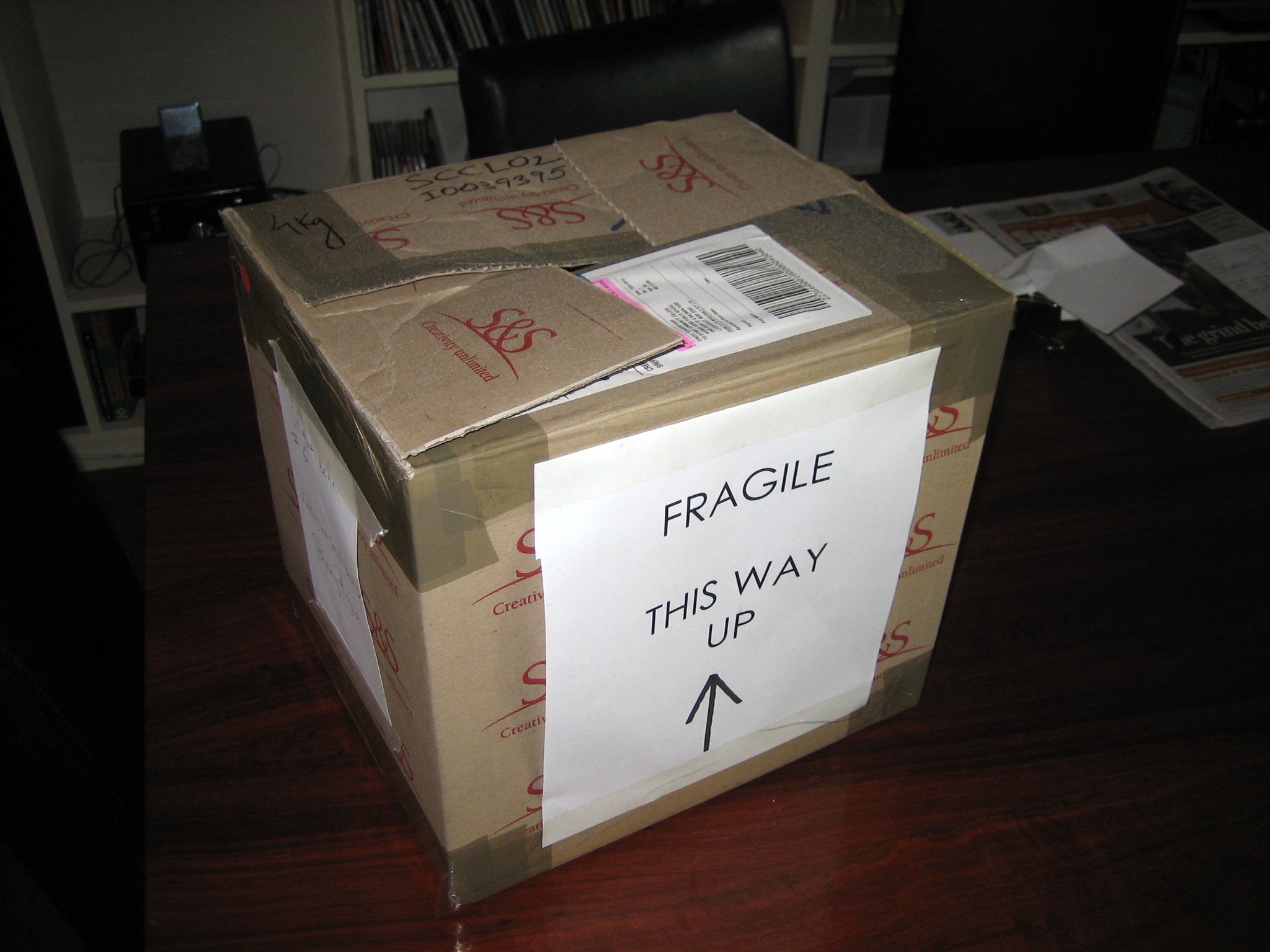
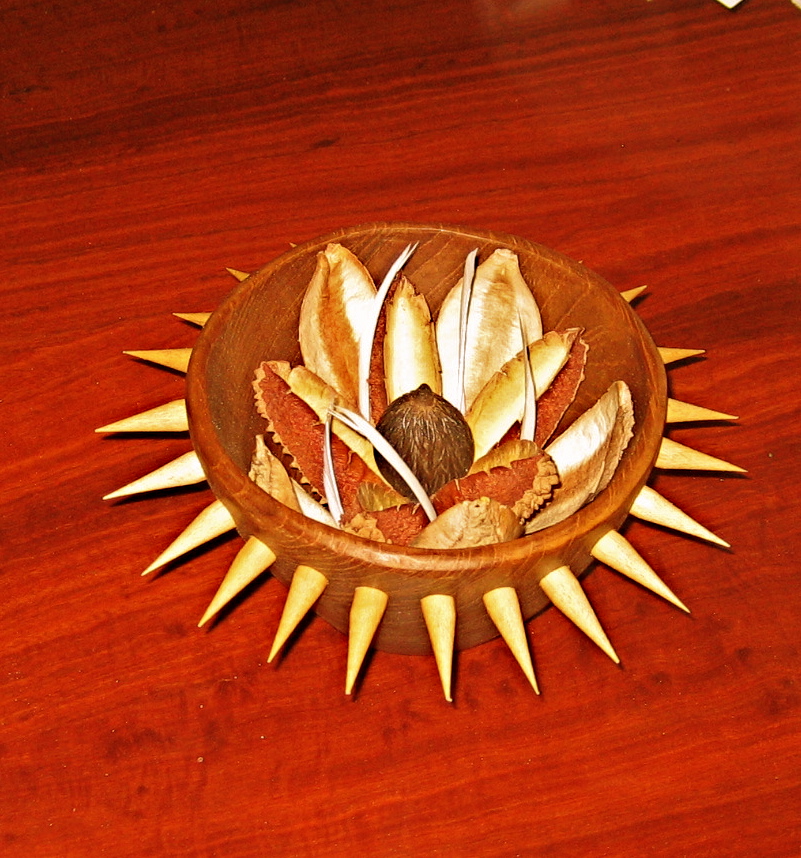
I dropped in at Little Queen Street today to pick up Steven Vella’s small bowl, which we bought a couple of weeks ago.

Here it is nestling in its bed of polystyrene:

Out of the box:

On the wall, though we have yet to find a place where its shadow is as dramatic as in the gallery:

Greg Weight and Western Desert Artists

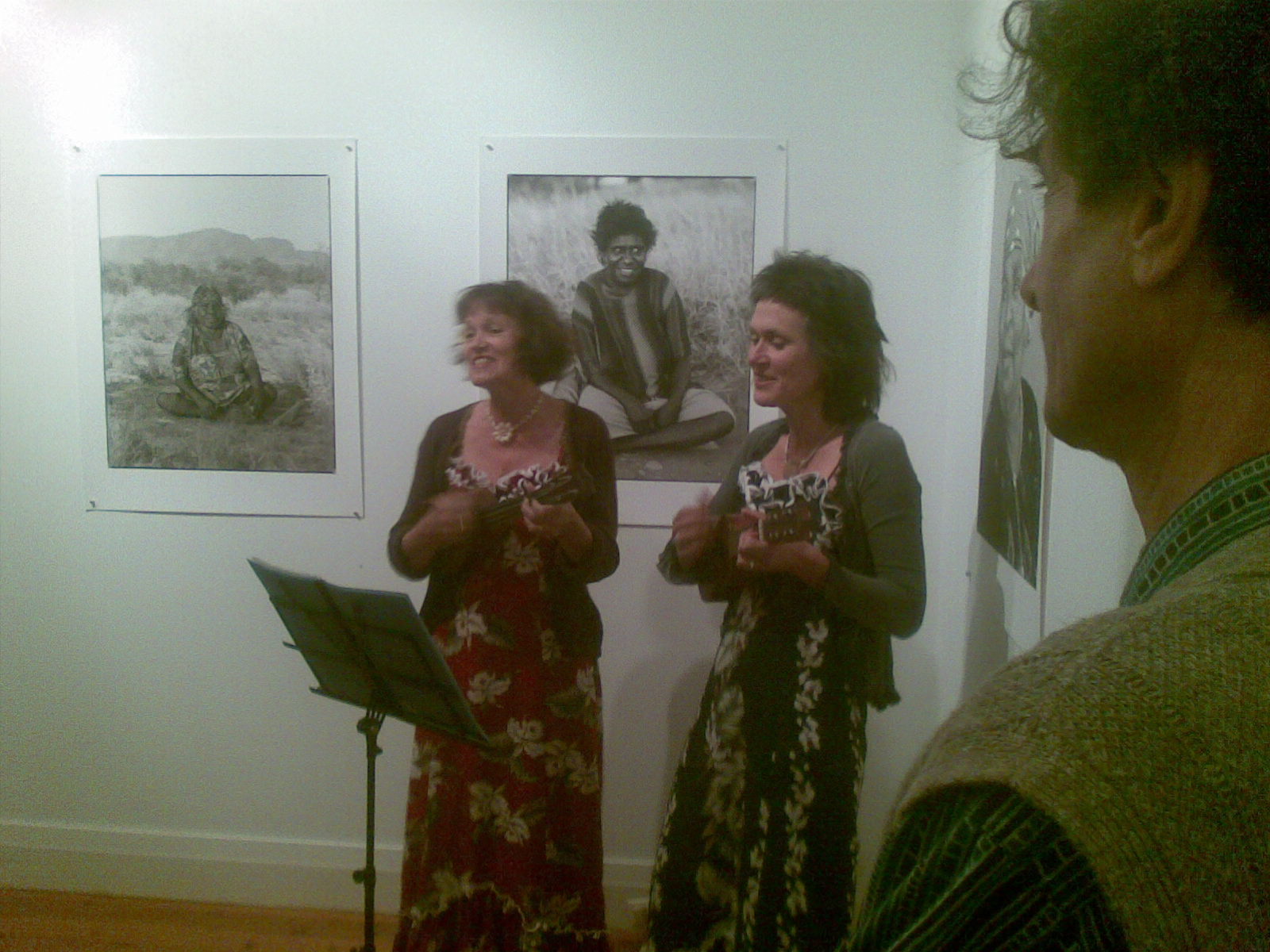
At least one of my regular readers would have loved to be at the Gallery East opening this evening [All turn and look at Will]. Greg Weight’s ‘Artists of the Western Desert’ comprises eleven portraits of Western Desert artists – from Kintore, Haast Bluff, Yuendumu and Alice Springs. The opening was a small, even intimate gathering. I recognised a number of stars of the art world, but someone explained that they were there as neighbours and old friends of Greg and Carol Ruff, his partner and the owner of the gallery, rather than as A-listers.

Long Jack Philipus Tjakamara dominates the gallery’s front window.

In lieu of speeches, Carol Ruff and friend played ukulele and sang – among other things, Carol’s own song ‘Finding Love in CLOVElly’ – and were joined on the bongos by the artist photographer, seen here in the right foreground. The Indigenous artist beaming down from the wall is Yukultjii Napangati, a Pintipu woman who came in out of the desert in 1984 when she was about 14 years old.

The exhibition lasts until 23 May.  If you miss it at Clovelly, you may be able to catch it at the Musée Branly in Paris in the next year or so.

Steven Vella at NG Galleries

It seems decades ago, and it probably is, that my eldest niece was living in Sydney with a number of creative young men. The Art Student and I have just come in from the opening of an exhibition of splendid art created by one of them. Steven Vella’s Garden of Natural Wonders [Do click on the link and scroll along for some of the pieces] is the kind of exhibition that has you looking constantly from the artworks to the catalogue sheet, not to see what the piece is called, though some of the names are revelatory, but to see what materials it’s made from. It’s a gleaner’s equivalent of the treasury of a renaissance church, with bean pods, palm inflorescence, feathers, banksia seed in place of precious stones and metals. The religious dimension of that comparison isn’t too wide of the mark – there’s at least one cross, a couple of stupas, and a wall of ceremonial staffs that remind me of the theatricality of Mediterranean Catholicism. Steven’s North Queensland provenance and his Maltese heritage are both strongly present. But then the room is dominated by ‘Medusa’, which if not for its gorgeous flowing lines could be a homage to the Flying Spaghetti Monster:

But you know, my favourite piece is probably ‘Aunt Bibi’s Salad Bowl’, one of the smaller works, which assembles durian skins and a vintage teak bowl, among other things, to create a weird, spiky, domestic icon. Sadly I can’t find a photo, so if you want to see it you’ll have to go there yourself.

The NG Art Gallery is in Little Queen Street, Chippendale, just around the corner from the White Rabbit Gallery, and the exhibition will be there until 8 May.

Imants Tillers and watercolour

It’s Art Month in Sydney, and because I now live with an art student (yes, I’ve ditched the anxious Consultant and now cohabit with a cheerful Arty Type), we thought we’d better squeeze an art excursion into our busy schedule before the month was over. So yesterday we set out to hear Imants Tillers in conversation with Edmund Capon at the Roslyn Oxley Gallery.

We arrived nearly an hour early, so went for a stroll up the hill looking for diversion. We found it in spades, in the form of an exhibition at the Wagner Gallery of watercolours from the Australian, English and Scottish Watercolour Institutes. We were just in time for a talk and demonstration by Rob Candy, who it turns out leads tours to China for watercolourists (just $4925 for 16 days all included). Sadly we had to leave as he was beginning to pencil in his composition, but we were there long enough to get a delightful glimpse of the international siblinghood of watercolour devotees.

Back at the bottom of the hill, Tillers and Capon’s conversation had already started when we arrived. It was an animated forty minutes or so, ranging over Tillers’ reading (Heidegger, Thomas Bernhard, etc), artists he admired (De Chirico, and many Australian artists none of whom I’d heard of except Emily Kame Kngwarreye), and the work on display. Each of his works comprises a number of small abutting canvases – he doesn’t sign them, but every small canvas has a number on the back, now up to something like 80 000 I think he said. Tillers spoke very interestingly about his use words in his images – quoting Ezra Pound, Tomas Bernhardt, Virgil (though he didn’t mention him, he’s the source of ‘lacrimae rerum / tears of things’, prominent on the canvas next to me). One of the large works is about to be donated to the Art Gallery of NSW, to Capon’s manifest delight: it had been commissioned by a grazier who thought it might help in the protest movement against a wind farm proposed a particularly beautiful part of New South Wales – gifting it to the AGNSW was part of the plan. (Capon: ‘Wind farms are such ugly things.’ Tillers: ‘I think there’s definitely a place for them, but some landscapes should be declared part of the national heritage.’) They discussed the difference that Tillers’ move to Cooma had made to his art – he had discovered that outside the cities Australia has a huge vast landscape. (Capon said that the work had very little sense of place in it, which may be true of Tillers’ earlier work, but I would have thought was dead wrong about these images.) They talked about Appropriation, which apparently was big and shocking in the 80s, though now everyone does it. They wondered why it is so hard for Australian art to take up space in the international arena: Tillers made a bit of a splash in the US in the 80s, he said; Capon lamented that only Indigenous Australians got much of a look-in, not that he begrudged it them. (Tillers: But you have to hand it to Aboriginal artists. Aborigines are 1.5 percent of the population and they have produced this glorious work out of all proportion.)

After the talking we got to look at the work, which is wonderful. Penny said in the car on the way home, apparently a propos of nothing, ‘You don’t hear the word sublime much any more, do you?’ It probably does apply here. The big paintings that most moved me were Blossoming 17 (which quotes Virgil and Pound to great effect)and The Beech Forest. And there are a couple of smaller works that perform breathtaking appropriations from Emily Kame Kngwarreye. The images on the web don’t begin to give an idea of the complex layering, the interplay of text and image, text as image etc, but here’s one of the Emilys.

The text reads:
Around the border in blue: A THROW OF THE DICE / WILL NEVER  / ABOLISH / CHANCE
Bottom right in small yellow letters: FOR YEARS NOW
Scattered over the painting, in large, mostly yellow block letters: I CLOSE MY EYES / THE  PATH OF LUCK  / UTOPIA / ANMATYERRE / ALAWARRE / DELMORE DOWNS / ARRERNTE /ALICE SPRINGS / ENTRY / AS IF

If you get a chance to see this exhibition, whether you live with an art student or not, I recommend you take it. It closes on 1 April.

Dungog

We drove up to Dungog on Saturday – Penny, her brother Chris and I – to visit a nonagenarian second cousin of theirs. We stayed at one of the Dungog Country Apartments, which was inexpensive (by Sydney standards), light and airy, with a roomy kitchen, pleasant furniture, a balcony with a view of the pub, and Norman Lindsay cheek by jowl with Norman Rockwell on the wall.

There was weather, so we didn’t go for the walk we’d planned on Saturday afternoon. And none of the town’s recommended eateries was open, so we ate some huge steaks at ‘the top pub’ (which must make the hotel opposite our apartment the bottom pub) before striding off to the James Theatre, Australia’s oldest still running purpose built cinema, just in time for the evening session of Flickerfest.

Flickerfest has been an annual event at Bondi for 19 years now, but I’ve never been to it. The prospect of several days of short movies just hasn’t had enough drawing power. In fact, just about the only short-film programs I’ve seen have been ones where a friend or offspring had made one of the films. But we were in Dungog, and apart from the trivia quiz at the Menshed and billiards and jukebok at the top pub there wasn’t a lot else on, so we were quite pleased that there is now a travelling, pocket-sized Flickerfest, that Dungog is among the 24 venues it visits around the country, and that Saturday was Dungog’s day.

I’m not a convert to short-film nights. Bring back the days when there was a short before the main feature, I say. In that context, almost any one of the films we saw – the Best of Australian Shorts – would have been perfectly adequate, and some would have been hard acts to follow. One, Miracle Fish by Luke Doolan, was not only nominated for an Academy Award this year but also was shot in the primary school my sons attended, so had a certain holding power (though it was far too long). Maziar Lahooti’s Crossroads stood out for me, partly for a beautiful moment of inarticulate masculinity after a display of heroic competence (that’s the second short film of his I’ve seen and loved), and Dominic Allen’s Two Men, all four minutes of it, is perfect – translating a 160-word piece by Kafka into Aboriginal English and setting it in a remote community with absolute sureness of touch.

The Dungog Film Festival is in May. For four days, as Penny’s second-cousin-once-removed told us on Sunday, black-clad movie lovers turn the main street of Dungog into little Newtown. It might be just the thing for disgruntled ex-Sydney Film Festival goers.

The Australia Pacific Triennial and other Brisbane things

It can’t be! Two full weeks since I blogged! I must have been busy.

On the weekend Penny and I went to Brisbane for my brother’s seventieth birthday party, and had a fabulous time renewing contact with my family: brother and sisters and their spouses, nieces and nephews, grand nephews and nieces, cousins, sundry dogs, as well as a number of my brother’s old friends I hadn’t seen since I was 13, who have grown astonishingly old. The highlight of the party was a video created by two of my brother’s children, featuring many interviews and greetings from Innisfail, and a performance of ‘Don’t Fence Me In’ (a song that featured in one of my brother’s colourful adolescent brushes with the law escapades) in which an extraordinary range of people each sang a single phrase.

On Saturday we went to the Queensland Art Gallery and the Gallery of Modern Art (Qag and Goma) to have a look at the Australia Pacific Triennial. Unlike the National Art Gallery current blockbuster, this fabulous exhibition was easy to get into and there was no admission charge. I say it was a fabulous exhibition, but in fact I only saw a tiny fraction of it. I spent most of my time in the galleries sitting with pen and pad sweating over a writing task with a tight deadline. This was an astonishingly pleasant experience. The galleries are high-ceilinged and full of natural light, and quiet exuberance of the punters made for a buoyant environment.

Really I only saw three pieces. The first was ‘In Flight‘ by Alfredo and Isabel Aqulizan. The artists are immigrants to Australia from the Philippines, this information may have influenced my response to their work: it’s a huge pile of recycling material, that is to say junk, reminiscent of those vast garbage heaps near Manila, but rising from it are not toxic fumes or scavenging birds but a host of model aeroplanes made by young people in a series of workshops before the exhibition. The planes – zappy little plastic creations, shaggy monsters, a couple of balloons, flappable egg-cartons, brightly coloured paddlepop sticks bound into shapes that might be aerodynamic in another universe – adorn the wall near the garbage pile, hang from the ceiling  above it, and then lead the viewer down the nearby corridor to the exit that leads to the main exhibition in the Goma building. Around the base of the pile the creativity continues, as my phone bears witness:

I also spent time in front of Reuben Paterson’s eight-metre-sqare ‘Whakapapa: Get Down on Your Knees‘. The image at the link give you no idea of the effect of the work, especially its effect on little girls. The whole vast surface of the painting is done with glitter, which clearly hit a significant nerve. One little girl in particular – I’d guess she was five or six years old – tried to take a photo. She laughed with delight for a full minute as she tried to get far enough away to fit the whole image into her viewfinder (unsuccessfully, thanks to a facing wall).

And then there was ‘Lightning for Neda‘  by Iranian artist Monir Shahroudy Farmanfarmaian. Again, the link gives only a faint indication of the work itself. It’s an intricate mosaic – or rather six of them, each three metres tall by two metres wide – made of slivers of mirrored glass, not a piece of art that conceals the amount of work that has gone into its making. As I sat pen in hand, I felt I was beginning to know the work by seeing it interact with scores of people, remarkably free of the solemnity that often prevails in galleries, but there was an awful lot of awe just the same. Only one child couldn’t resist touching, and I wished I was her (at least, I wished I was her until her father moved in on her).

It’s a great way to see art: to sit with it while the world goes by, see it reflected in a dozen faces, watch how people respond with their hands and bodies, hear the words it draws from them. Interestingly each of these works, as well as others I saw more cursorily, was accessible to young people. Children seemed to feel at home in these galleries, or on a fun outing, and that’s surely to everyone’s benefit.

Added later:

Here are a couple more photos, these ones taken by Penny (yes the Qag and the Goma allow photos, though not flashes):

This slideshow requires JavaScript.

How women should live their lives

This piece from yesterday’s Herald includes a fairly shocking glimpse of Kevin Rudd unplugged: ‘Rudd rolled his eyes and in a terse voice lacking any sense of irony remarked that [completing a PhD] is the “excuse” that “all” young women are using nowadays to avoid starting families.’

Penny had a strikingly similar encounter yesterday.

I haven’t mentioned this before, but after 37 or so years in the workforce – as an activist for women’s health, childcare, community health, and a consultant on those and similar fields – Penny is taking a year off to do a Graduate Diploma in Fine Art. Yesterday she ran into an older woman, a feminist public intellectual, whom I will call Lilith. When Penny told Lilith what she was doing, Lilith said (in a striking verbal echo of the Prime Minister): ‘In these gloomy times it’s not surprising that so many people are withdrawing from activism.’ She went on, ‘I’ll keep plugging away.’

Usually I’d follow an anecdote like that with a number of one-line comebacks thought of too late. In this case, though, Penny opened her mouth to talk about the work she’s still doing for asylum seekers etc, but Lilith had actually moved away, her assumptions about the role of art untroubled by the evidence.