Category Archives: Travel

Sonnet No 5: Regulations

One thing about visiting New York is the interesting conversations you have with very brief acquaintances. Today’s exercise in rhyme started out from one of them, and got distracted by the BIG signs in places that serve alcohol advising, among other things, that pregnant women should not drink alcohol, and ubiquitous illustrated instructions in the Heimlich manoeuvre. (After I’d done the first draft I realised that a wall poster in a Pain Quotidien showing how to eat a tartine was possibly meant as a parody of the mandatory Heimlich poster: I’m not alone in seeing a gleam of absurdity, even while recognising that lives may be saved by the posters.)

Sonnet No 5: Regulations
When young he drove a horse and carriage
in Central Park. They were good times,
long before the current barrage
of regulation. Now it’s a crime
to take a horse out into traffic.
Though he don’t claim they were seraphic
no one would have done that then
– the horse would suffer! They were men
who didn’t need to the law to tell ’em
right from wrong. Now everywhere
signs say Must Not, Should, No, Beware.
From Bowling Green to outer Pelham
each cafe, subway, park and lawn
will soon instruct us how to yawn.

Brooklyn Yawp, November poem No 4

Last night – 10 November here – I took the Subway to Brooklyn for an event that had caught my eye in Time Out New York: the Brooklyn Poets Yawp. (For the benefit of those who know even less about poetry than I do, Walt Whitman referred to his poetry as his ‘barbaric yawp’.)

The first hour of the Yawp is a poetry workshop led by Jason Koo, poet and poetry teacher who must be doing it for love because he only charges $5 at the door and various categories aren’t asked to pay at all. The second hour is an open mic.

Typically I piked on the open mic, but I stayed for the whole thing and had a great time.

In the workshop Jason invited us to try our hands at seduction poems. We read poems by Marvell, Donne and two modern ports, listened to a number of versions of ‘My Funny Valentine’ and scribbled for 15 minutes. Even though what I wrote wasn’t a sonnet, and believe it or not my November sonnets generally take a lot longer than 15 minutes to write, I was quite pleased with my seduction poem and now will inflict it on you.

But first, I ought to acknowledge how much I enjoyed the open mic hour, not least for the family feeling among the 30 or so people there and Jason’s smooth, genial, kind but not too kind MCing. Not necessarily the best poem but the most daring was a verbatim reading of the text of a Viagra ad currently showing on New York TV.

No 4: Seduction Poem
When did it happen,
this line on your face,
This deep straight line down your cheek?
Did it just appear one day when we weren’t watching?
Is it a line from some future poem?
An elegy?
Let me trace it with a finger
and my lips.
So much has happened when we weren’t watching,
so many messages from after all.
Lips now thinner, hair turned grey,
and where did the thin me go?

What will have happened next?

But should we care?
How does it happen that each time we touch
it’s all new?

Sonnet No 3: Slam night at the Nuyorican Poets Cafe

Running well behind schedule on the sonnets. Sorry, will do better. Meanwhile, I’m not making this up:

Sonnet No 3: Slam Night at the Nuyorican Poets Cafe
We’re in line with a White IT consultant
who boasts two Matisse cut-out tattoos.
Someone’s shot dead in a car – the resultant
crime scene tape, marks the zone for clues.
In the street cops with Glocks are scoping a murder.
In the line a featured spoken-worder
waits. A Black poet says it’s droll
cops are called when words get out of control
in minority mouths. But speak not lightly
of poets and law. Inside the cafe
with wit and charm and rage they say
unsayable things, and say them nightly.
This may be where a new world starts
as words like bullets pierce our hearts.

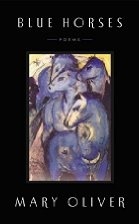
Mary Oliver’s Blue Horses and my No 2 scribble

Mary Oliver, Blue Horses (Penguin 2014)

In his justly-praised eulogy for Gough Whitlam, Noel Pearson repeatedly used the phrase ‘this old man’ as a term of high honour. Like Diana Athill, Dorothy Hewett, Jennifer Maiden and any number of others, Mary Oliver makes me wish passionately that we could say ‘this old woman’ and have it similarly understood to indicate esteem.

This is old-woman poetry. Oliver isn’t out to prove anything. In ‘I don’t want to be demure or respectable’, she says:

I’m not trying to be wise, that would be foolish.
I’m just chattering.

She’s not even out to offer obvious value for money. For $28 you get 78 pages and almost every second page is blank. But every word feels just right. The poems are personal and deeply felt, but nothing personal in a way that would be embarrassing to read on a poster on a bus. Most of them feel as if they have been around forever, or at least should have been. The recurring mode is celebration – of a new love, of connection to living things, of rhyme, of yoga lessons, of life and even of sickness and death, though in their cases it’s more a mature reconciliation than actual celebration. She stops short of being religious, as in ‘Angels’:

I don’t care how many angels can
dance on the head of a pin. It’s
enough to know that for some people
they exist, and that they dance.

Moving on to my own November task, I was struck by the poem ‘The Mangroves’, in which the speaker, who is living ‘in a warm place’ realised she has trouble loving mangroves the way she loves the black oaks and the pines of her cooler home. It’s not Oliver’s doing that oaks and pines are ‘normal’ to mainstream English literature and mangroves are exotic, but the idea of normal is inevitably there, so:

Sonnet No 2: In response to Mary Oliver’s ‘The Mangroves’
It’s fall, November, New York City.
Leaves fall, just like they do in song,
in movies, poems and all those pretty
paintings from Art History. Long
we’ve read bare ruined choirs
follow on bright autumn’s fires.
I’m coming over all Mackellar,
a not-your-field-and-coppice feller.
My heart belongs to smooth angophora,
to leaves that glisten all year round,
to roots four feet above the ground
and messy pneumatophora.
All trees are lovely when you look –
less so those growing by the book.

Travelling with the Art Student

OK, so we’ve been away from home for just over a week, and I don’t think I’ve ever seen so much art in so short a time. Such is life when shared with an Art Student. Here’s a partial list of the artists we’ve seen so far, in Los Angeles and New York, with many more to come.

Continue reading

Blogging from New Caledonia 3

The heavy rain we were staring out last time I wrote was part of something that could have turned into a cyclone. The whole of southern New Caledonia was on orange alert on Tuesday and Wednesday, which meant we were advised to stay under shelter and batten down any available hatches, even though in the still of the night we could see stars. Cyclone Edna didn’t materialise, so we got up early this morning and cleaned our borrowed residence thoroughly, hoping that the proposed trip to the Rivière Bleue park would be on. But the park was closed anyhow, so no trip.

We went to town, bought some little gifts, visited the bookshop to buy some more, made an attempt to go to the Maritime Museum but decided we were happy just strolling by the water. We caught the bus home, then a shuttle out here to spend the night at the Tontoutel Hotel, just across the road from the Tontouta airport, ready for an early departure tomorrow. For the record, the hotel is quite pleasant, a little down at heel perhaps, like an old country hotel in New South Wales, but nowhere near as dire as some indignant TripAdviser reviews would make out. The swimming pool is dry, but the air is full of birdsong, the outdoor chairs are comfortable, the reggae from the bar is unobtrusive, passing children call out ‘Bonjour!’ What do people want?

Despite our plans and attempts to get out of Nouméa having generally come to nothing, we’ve had a good holiday here, spending time in a place where English isn’t the dominant language, where a very large minority of the people are not white, where the trees play a game of ‘Am I what you think I am?’ We’ve had time to read and chat and (me) blog and (the Art Student) paint and draw. We’ve met some lovely people and had our sense of the world expanded.

There have been small moments of drama. On our first night, at the tourist beach of Anse Vata, as we were passing the taxi-hire hut, we heard a dog yelping and a man shouting in French, then some thuds. On the other side of a bamboo fence, we saw a white man kick a dog repeatedly, hard, then pick it up by the scruff of the neck. At this stage we saw the dog – a black Labrador, yelping in great distress. That all took just a few seconds, and the man and the dog were both gone, leaving us and two Melanesian men as the stunned witnesses. We had been planning to hire a water taxi the next day to see the open-air sculpture exhibition on the nearby Ile aux Canards, but there was no way we would give our custom to that establishment, whatever crime the dog had committed. (Alas, the exhibition was over by the time we realised there was another water-taxi hire place a little to the north.) That was our only glimpse of the dark thread of violence that I suppose is inevitable in colonial/postcolonial societies. Other dogs, I should note, seemed happy and pampered, and even an alarmingly diseased looking creature we met on the road out here in la brousse seemed curious rather than frightened or aggressive.

The other small drama was much more benign. At the Baie des Citrons yesterday afternoon, some women were exclaiming and laughing loudly as we strolled past. A beautiful striped sea snake was in the grass near them, and a big, competent-looking man was making moves to deal with it. These snakes are shy, but their venom is very poisonous, so there was good reason to pay attention, though no one was really freaking out. It was a young woman who saved the day by finding a branch long enough to pick the snake up and hold it at a safe, non-striking distance. This is just what she did, before handing the branch to the man, who then flung the snake the 10 metres or so into the lagoon. We all watched in silence for a few moments until the snake, which had been limp until then, began to swim languidly away from the beach.

One final note: apart from being out of the country when Jennifer Maiden won the Victorian Premier’s Literature Prize, we’ve also been away when a Preatures video directed by our firstborn son won Rolling Stone’s 2013 music video of the year. The report on the awards is here. There are only two photos at that URL, and he who is known as the Film Director on this blog is in the lower one: he’s the chap on the end looking very happy and every inch not a rock star. We’re the absolute cliché of proud parents. You can watch the video on YouTube.

Blogging from New Caledonia 2

Today we were meant to be going on a tour of the Parc Provinciale de la Rivière Bleue, which was declared a World Heritage Site just two days ago. As most of our attempts to organise ourselves onto tours have been thwarted, we were both looking forward to the day, despite or perhaps partly because of advice to wear dark clothes because the day involved contact with a lot of dirt.

But it was not to be. The rain came bucketing down in the night and was still bucketing when we were due to be setting off. The Man at Caledonia Tours (MCT, who incidentally speaks excellent English and has a sense of humour that communicates across the language divide) didn’t hold out a lot of hope, but the tour may yet happen before we leave for home on Friday.

In a lull in the downpour this morning, I went for a stroll around the neighbourhood, enjoying the vegetation that is so reminiscent of Queensland, stickybeaking at the houses, trying to remember which way to look when crossing the streets, and getting a stupid amount of enjoyment from the street names: Verlaine ran into Rimbaud; Baudelaire isn’t far from Jules Verne; Mallarmé, where we’re staying, crosses du Bellay and Heredia; and so on. My enjoyment was all the greater because when I had phoned to organise the tour that hasn’t happened, MCT asked where we were so he could pick us up, but said street names were no use because no one in New Caledonia knows them. As it was useless to invoke Symbolist and Renaissance poets, I had to give him the Majestic corner shop and the statue of the petite vierge (Our Lady of the Pacific) to steer by.

Luckily, Sunday was a spectacularly beautiful day. Just as well, because we’d paid a spectacularly large sum to go on a day cruise to the Ilôt Amédée ‘Where the weather is always nicer’, and where the first iron lighthouse to be constructed in France now stands. The weather was indeed very nice, the lighthouse was remarkable (though we didn’t climb it), the all-you-can-eat lunch was delicious. We cringed just a little at the traditional Polynesian dance performance. We saw turtles, a striped snake, large number of charming sea-birds about half the size of seagulls (so much more interesting than the unhappy caged birds at the Parc Forestier). We swam, lay about, people-watched, read our books. The Art Student drew and did watercolours. We met some people who were even nicer than the weather, and who invited us to dinner chez eux last night.

Although our hosts were European – a young Frenchwoman who has been here for two or three years and her Belgian mother and aunt over for a six-month visit – they had explored the local cuisine and treated us to nuts from the Solomon Islands, poingo bananas, and other delicacies, and were able to satisfy our curiosity about much of what we’d seen and heard, and about the political landscape as a vote on independence approaches over the next couple of years. It was fun navigating the language divide, though bilingual skills were much stronger on their side. They confirmed my impression that people here generally tutoient each other – that is, they use the tu form of address that was reserved for children, social inferiors and people you want to insult in the French I learned at school. ‘They’re not being insulting,’ our host said. ‘It’s kind of nice. But I don’t do it.’ They gave us some plump mangoes and drove us the significant distance home. It was such a pleasure to receive such warm hospitality – it’s not as if we’d been finding New Caledonia unwelcoming up to that point, but we now feel that we have been very cordially welcomed.

Now we’re cooped up, staring out at the rain, wondering if it will be possible to go out to dinner, and hoping that tomorrow we’ll visit the Blue River and perhaps see New Caledonia’s distinctive native bird, the kagu, in the wild.

Blogging from New Caledonia 1a

This is really just footnotes to yesterday’s sonnet. If you’re looking for excellent writing about Nouméa from the perspective of a USer who lives here and engages intelligently with the place and people, I recommend Julie Harris’s blog, New Caledonia Today. If you just want just one post, try this one, which shines an interesting and uncomfortable light on relations between Kanaks and European New Caledonians.

But back to my footnoting, largely by way of pics.

The corner of our street – where Mallarmé’s languid faun is about as appropriate as the Lindsay satyr in Sydney’s Botanic Gardens:

Mallarmé

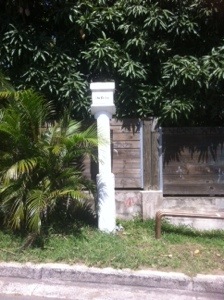
Our nearest bus stop, named with similar incongruity for renaissance man Joachim du Bellay:

du Bellay

The tricouleur, not as ubiquitous as the Stars and Stripes in the US, but enough to let you know you’re in France. And some people find it galling to have the Union Jack in the corner of their flag!

tricouleur

It’s not quite true that the tricouleur is the only flag here. Nouméa has its own city flag, of course, but there is also the Kanak national flag. The link above to the New Caledonia Today blog gives an idea of just how contentious this flag is. Here’s the only one we saw, planted on a rock in the bush across the road from a rather grand statue of Notre Dame du Pacifique. There’s supposed to be a referendum on independence some time this year. Interesting times ahead.

kanak flag

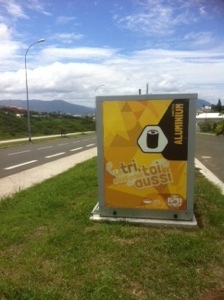
The writing on this bin says, ‘Le tri, c’est pour toi aussi’ – ‘Tri is for you too.’ It’s tri meaning sorting as in triage rather than three as in tricouleur, but the coincidence was too good to pass up.

tri

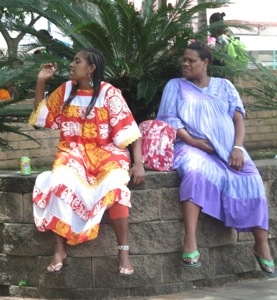
The women of colour, in both senses, are everywhere:

20140131-184410.jpgPhoto by Penny Ryan

20140131-184736.jpgPhoto by Penny Ryan

You can read about the separatist hostage-taking and subsequent deaths in the late 1980s here.

Blogging from New Caledonia

I’m writing this in a house in Portes de Fer, a suburb of Nouméa whose name translates as ‘iron gates’. We’re here for 10 days, on a holiday that was handed to us rather than planned for. A couple of months ago we received an email via homeexchange.com asking if we’d like to swap homes with a New Caledonian family. The dates fitted both our schedules, the cost of travel wasn’t prohibitive, and we knew almost nothin about New Caledonia. So we wrote back accepting, and here we are.

That’s my excuse for not being among the first to report that Jennifer Maiden’s Liquid Nitrogen won the Victorian Premier’s Literary Award, which the press release evidently described as the richest literary prize in Australia. JM commented that in the absence of superannuation it was a very welcome contribution to her finances. Just in case there’s anyone out there relying on my fannish notes to find out such news, I’m telling you now, a couple of days late. John Kinsella has a nice piece on the award in Crikey. Other Australian news, including Tony Abbott’s continuing war with the real world, does reach us, but I’m confident no one depends on this blog for that.

Inspired by the streets around here, which like those in Byron Bay are named after poets, I’m indulging my sonnet fixation:

First Impressions of Noumea, January 2014
With no rough strife at Portes de Fer
we’re lazing in rue Mallarmé,
a stroll uphill from Baudelaire
or down to bus stop du Bellay.
In town we hear no hostile gun
on Austerlitz, la Marne, Verdun.
These tricouleurs the only flags
though tri means sorting garbage bags
and colours won’t be kept to three:
dark skin, bright clothes and humble stance,
the Kanaks say, ‘We’re not in France!’
Some took up arms for Kanaky,
and died, but now if art’s a word
these words of colour will be heard.

My trip to Turkey PS: Rome

We had slightly less than 48 hours in Rome on our way home from Turkey, just long enough to catch up with our dear friend Anny, visit the Maxii gallery and catch the exhibition from the Papal archives that’s on at the Capitoline Museums.

Anny had come down from her home in Florence to have dinner with us on Friday (our plane landed at 7.30 but it was nine o’clock by the time we met her at our hotel, and one in the morning by the time we said goodnight. We met up again to stroll along Via Cola Di Rienzo on Saturday morning, she had to catch the train back north for a Nora Jones concert that night. It was, as Anny said to an Italian friend on her mobile, ‘come si dice, Memory Lane‘. It was also a chance to hear her beautiful, lilting Italian as she did the honours with waiters, bus ticket sellers, and shop assistants.
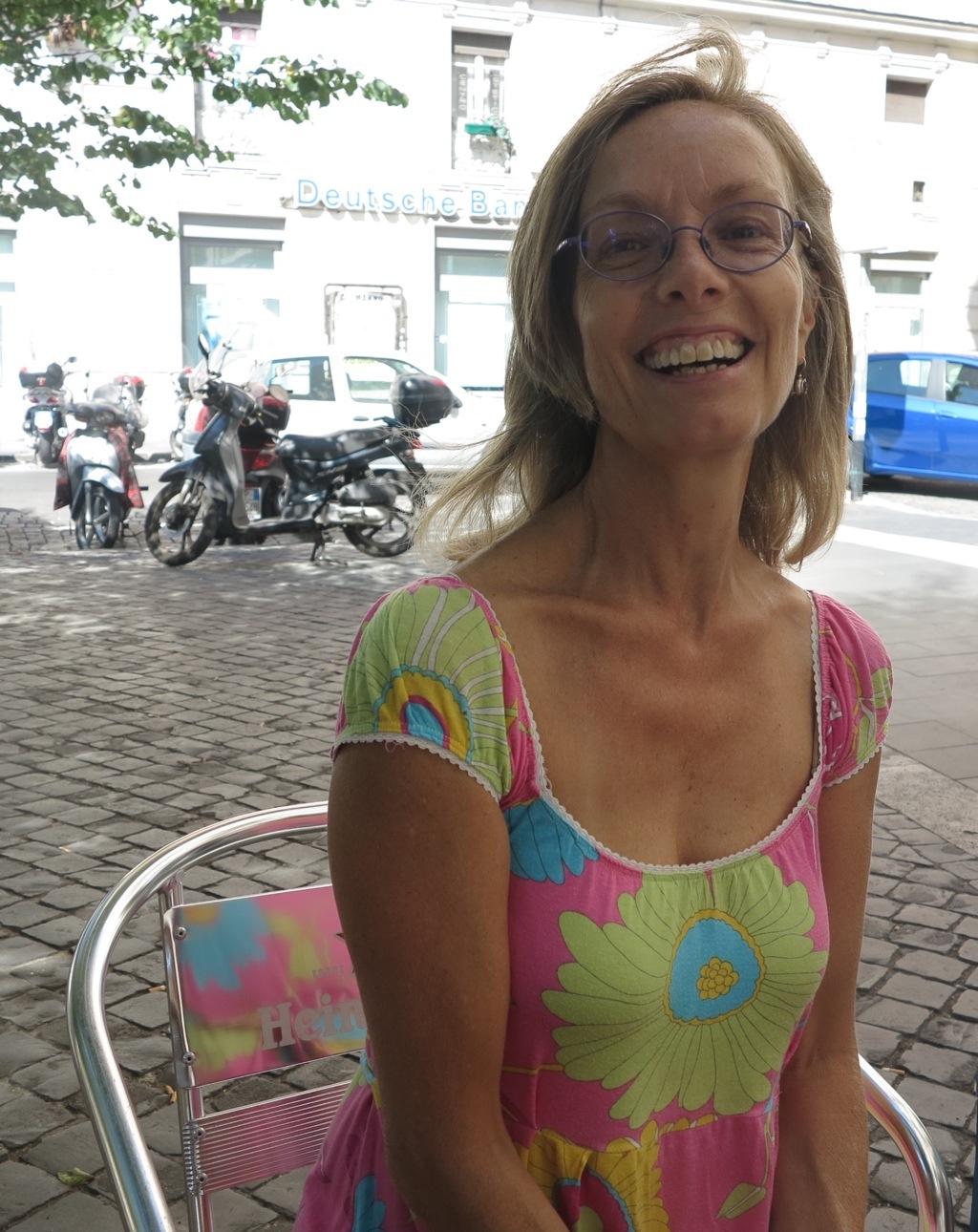
20120715-152409.jpg

Later in the afternoon, on our own again, we made our way to Maxii, a contemporary art museum, where there this wonderful creation loomed outside the main entrance.
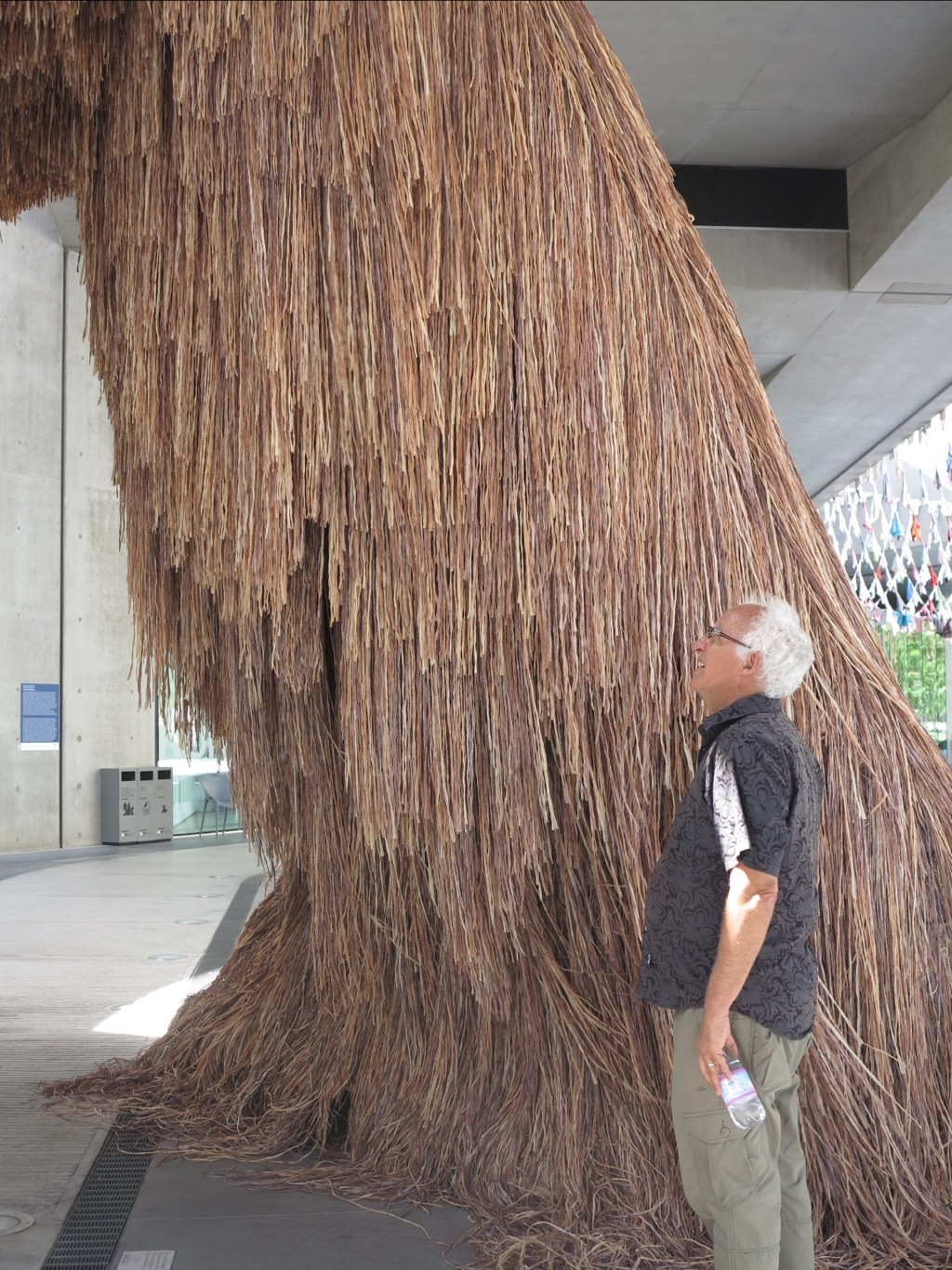
20120715-152507.jpg

Inside, the building was intriguingly maze-like with ramps and mezzanines and bridgeways, but I was unmoved and/or mystified by most of what I saw, the main exception being an exhibition of photographs by Paola de Pietri. These were gorgeous images of landscapes along a European border, of places – according to the curatorial statement – where there had been bitter fighting in the First World War: trenches worn smooth and partly filled with snow, others like scars near the crest of a hill, bunkers that could have been the remains of ancient shepherds’ huts, stony terrain, peaceful meadows. The impact was huge.

There was a beautiful presentation about a competition for young designers to make use of an area at the front of the museum. Each set of finalists discussed their project in larger than life video, while a written account of it scrolled down the wall, and a model and drawings could be perished at leisure. An even larger video showed the massive works involved in constructing the winning project. We ventured out to experience the finished thing. There were many seats made from slotted ply and cement, made to accommodate the human form in a variety of postures indicated by tiny ideograms. Sadly, whichever posture you chose, the seats were intolerably uncomfortable. I gather it’s not the first time a design competition has been won by something totally impractical.
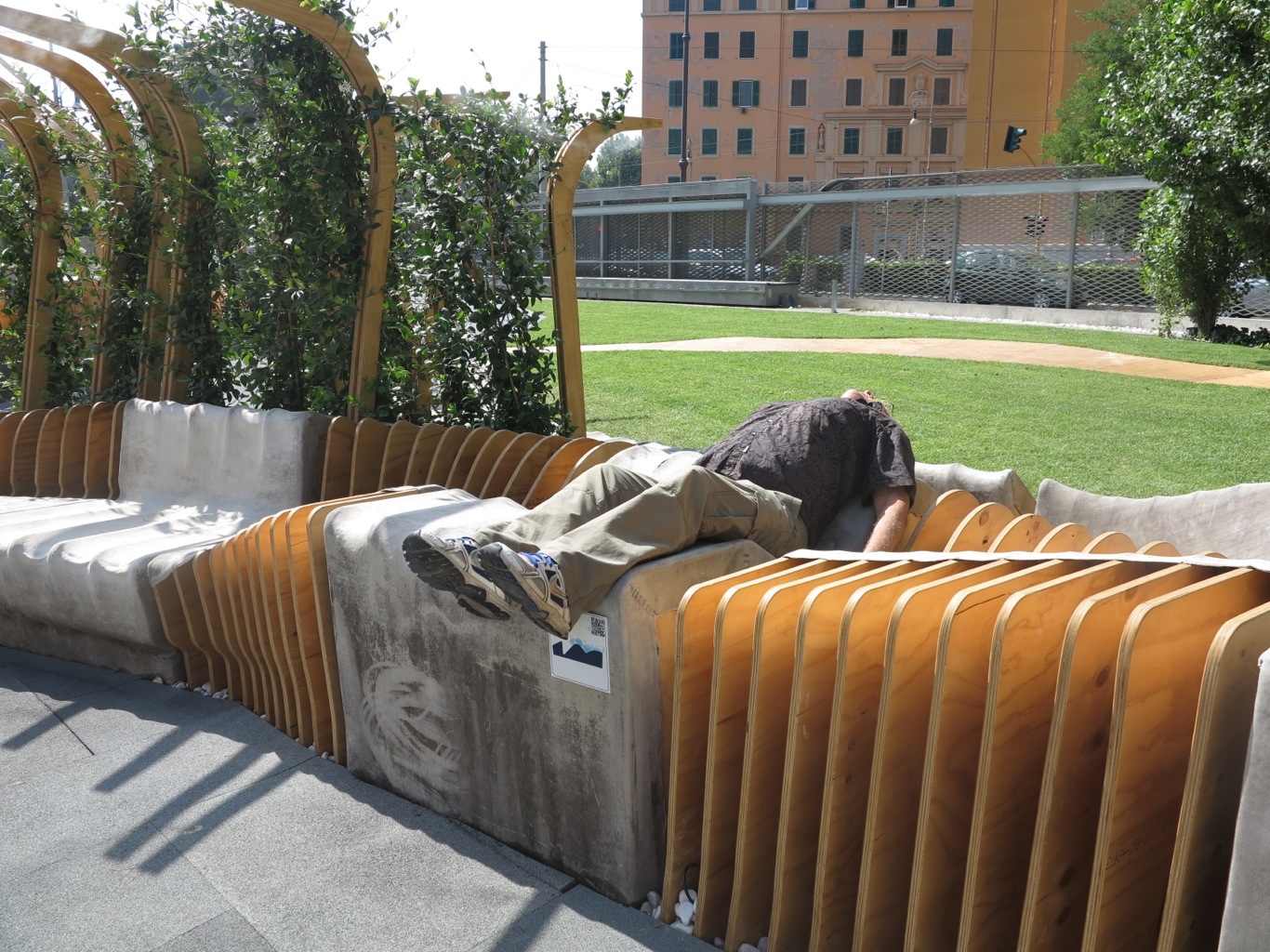
20120715-152527.jpg

This being Rome, we passed the odd antiquity and renaissance grandiosity on the way home.
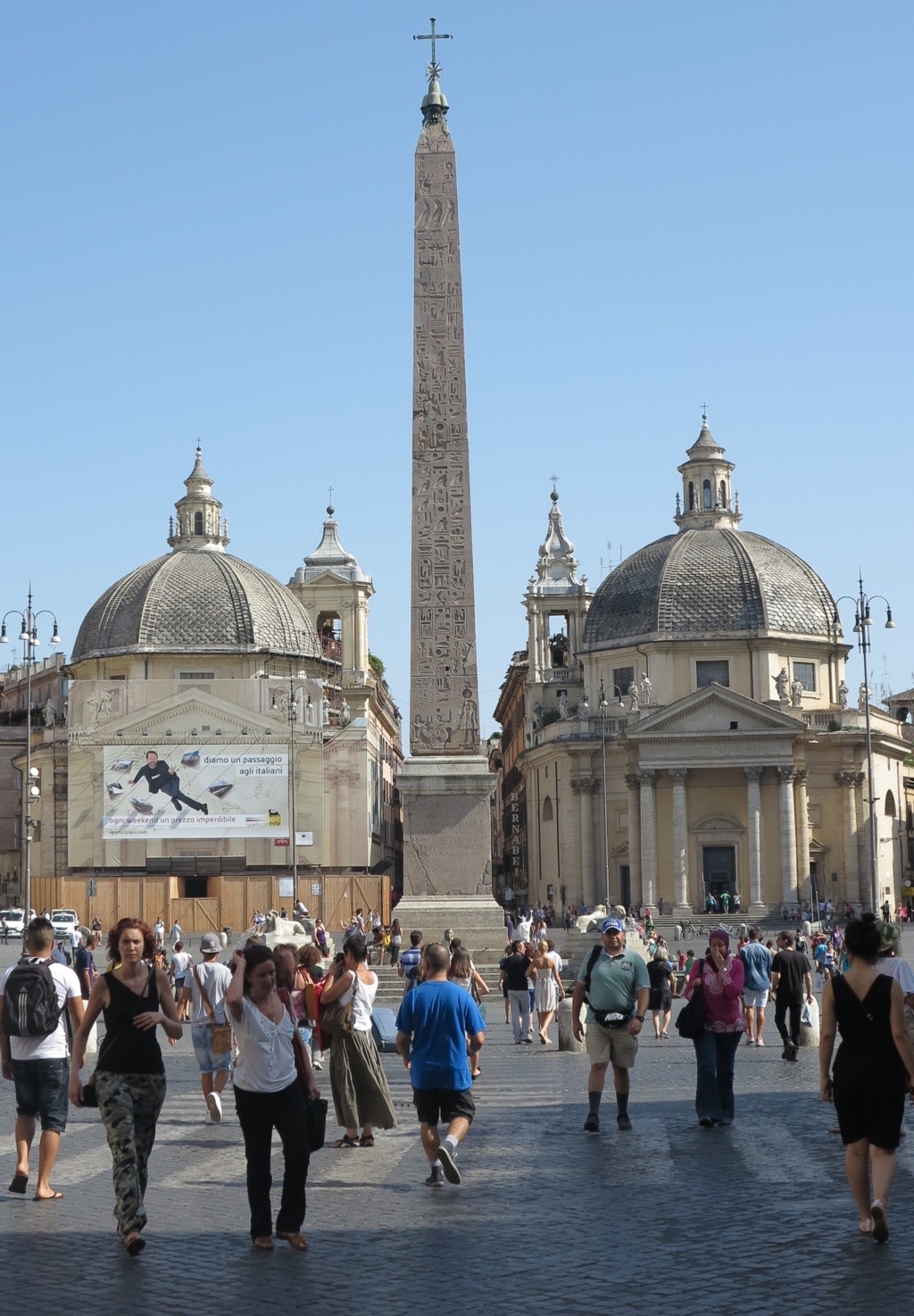
20120715-152438.jpg

At dinner time we walked to a little trattoria around the corner by way of St Peter’s square.

Sunday morning we walked – by way of Piazzo Navona, the statue of Pasquino, Campo Dei Fiori with its looming statue of Giordano Bruno who was burned there, and a caffe where no one could tell us how to get to the Musei Capitolini (‘Non lo so! Sono di San Giovanni, io) – to the Vatican archives exhibition.

Bernadette Soubirous wrote to one pope in a tiny neat handwriting, wishing him a holy life. Voltaire wrote to another congratulating him on his excellent Latin. A couple of popes wrote decrees establishing themselves as the supreme power on earth. A community of Native American Catholics wrote to the pope of their time. A Moroccan ruler wrote asking the pope to appoint a decent man to replace a recently deceased archbishop. More than one decree was issued ending the schism between the Roman Church and the Greek Orthodox Church. All of these documents were filed away in the Vatican archives, and all are among the hundreds of items on display.

There is a huge scroll, of which about four meters are exposed, containing the evidence taken against the Knights Templar. There’s a sizeable piece of paper beseeching the pope of the time to allow Henry VIII’s marriage to his first wife to be annulled, and hanging from the paper on leather thongs are the seals of the members of the House of Lords, at least fifty of them and every one elaborate. Photography was forbidden and there were no postcards. I gnash my teeth.

We had a quick look down on the forum below the Capitoline hill, a quick pasta lunch, a quick moment of respite from the heat at our hotel, then we were off to the airport. I’m typing this on the plane from Frankfurt to Singapore. The holiday is all but over.