Category Archives: LoSoRhyMo

November verse 9: Sauna soliloquy continued

Yesterday’s stanza (November verse 8) covered a tiny part of a one -sided conversation in a sauna in Newtown. Here’s another tiny part, with some inventions and alterations for the sake of rhyme and metre.

November verse 9: Sauna soliloquy (continued)
Newtown: students and their tutors
protest, join the Student Strikes!
Activists on their computers
save the whales by riding bikes.
Feminazi hashtag metoo.
Greens cause fires by burn-off veto.
Sorry, politics! Let's just sweat.
I've got to do five minutes yet.
I've decided not to marry
unless the right one comes along
or better, two – tell me I'm wrong.
Happy, that's me, just like Larry.
Newtown's where I'm born and bred.
I could try Adelaide instead.

November verse 8:

Mostly in a sauna it’s 15 minutes of relative silence. Occasionally someone talks virtually without interruption for the whole time, sometimes with a slightly creepy edge to it..

November verse 8: Monologue in the sauna
My friends these days are all eclectic,
gay, straight, bi and trans,
younger than me. I've a hectic
lifestyle. I raged at a dance
party until three this morning
(I'm here to sweat it out, sauna-ing),
another one till three tonight.
At 50, some say that's not right.
I don't like my own generation,
married, settled, one-track minds:
school and soccer, notes they've signed.
I long for sweet asphyxiation.
And you, you're married? Husband, wife?
Grandchild? What a wasted life.

November Verse 7 & Proust Progress Report 3

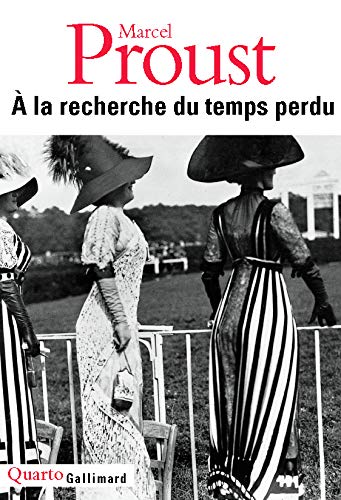
Marcel Proust, À la recherche du temps perdu (text established under the direction of Jean-Yves Tadié ©1987–1992): À l’ombre des jeunes filles en fleurs (1919), première partie, ‘Autour de Mme Swann’

I have a project to read five pages a day of Marcel Proust’s À la recherche du temps perdu until I finish it, probably in a year or two. This month I’ve pretty much kept to my quota, and finished the first part of the second novel. The traditional English title of this volume is Within a Budding Grove, which, at least on the surface, is less enigmatic than the literal translation of the French, In the Shade of the Girls in Flower. The unnamed narrator has a couple of conversations with distinguished men who offer perspectives on his goals to become a writer; he falls in love for the first time and is deeply impressed by the mother of the object of his infatuation. His age is never specified, but my guess is that he progresses in these pages from about 14 to his early 20s.

I was chatting about this project with someone who read À la recherche in English with a friend over 5 years: they met every six weeks or so to discuss the book. She described it as an early masterpiece of queer culture. Well, that’s not true of the part that I’ve read, unless my French is even worse than I think it is. In what I’ve read this month the male narrator recalls his infatuation with Gilberte, the daughter of M Swann and his wife Odette, the cocotte of the first book. There’s just one explicitly sexual moment, but it happens quickly and the narrator, who elsewhere spends pages drawing out the implications of a tiny gesture, moves on quickly saying that he didn’t have time to savour the moment (‘savour’ is my translation for ‘goûter’, rather than ‘analyse’ in the Moncrieff version – which I looked up because I wasn’t sure what had happened). He also mentions, without dwelling on it, that he goes to brothels quite a lot, and he’s pretty fascinated by Odette herself. So heterosexuality seems to be all the go for our sickly, introspective, writerly narrator.

I’m still glad I’m reading it in French. My attention is held at the sentence level, rather than, say, skimming for the story, and at sentence level Proust is captivating. He can be extraordinarily complex, with plenty of inversions that are OK in French but wouldn’t be in English, lots of subjunctives, and and a sometimes bewildering use of pronouns. Yet whenever I’ve taken the time to sort out a sentence, the structure always holds up. Another feature I’ve come to love in an awestruck way is his use of similes. (Maybe I’ll give examples in my next post.) My attitude to the prolonged accounts of emotional twists and turns has changed. I read Swann’s jealous torments over Odette in the first book as comedy. Reading the narrator’s quite similar torment over Gilberte, I found myself remembering what it was like to be in my mid 20s and insecurely in love, and being profoundly glad not to be there any more. That is to say, I’m now invested in these unbelievably privileged, self-regarding characters.

For my seventh November Verse, I set myself the task of versifying a passage from this month’s Proust. One challenge was to find one that would fit into just 14 lines of verse. I settled on this, early in the long demise of the narrator’s relationship with Gilberte:

Le 1er janvier sonna toutes ses heures sans qu’arrivât cette lettre de Gilberte. Et comme j’en reçus quelques-unes de voeux tardifs ou retardés par l’encombrement des courriers à ces dates-là, le 3 et le 4 janvier, j’espérais encore, de moins en moins pourtant. Les jours qui suivirent, je pleurai beaucoup. Certes cela tenait à ce qu’ayant été moins sincère que je ne l’avais cru quand j’avais renoncé à Gilberte, j’avais gardé cet espoir d’une lettre d’elle pour la nouvelle année. Et le voyant épuisé avant que j’eusse eu le temps de me précautionner d’un autre, je souffrais comme un malade qui a vidé sa fiole de morphine sans en avoir sous la main une seconde. 

(page 483)

You can read the Moncrieff translation at this link. Allons-y!

November Verse 7: From Proust
Jan 1 chimed each hour so fleeting.
Gilberte's letter did not show.
Others came with seasons greetings
posted late, delivered slow,
so on Jan 3 I was still hoping,
Jan 4, my hope was downward-sloping.
The next days I wept a lot.*
I know: less sincere than I'd thought
when I'd claimed to have surrendered
my great love. My secret hope
was dashed and gone. I could not cope,
like one in pain or on a bender
who's used up his or her last fix
and now has nothing, nada, nix

* That line may sound very non-Proustian, but – unlike the rest of the stanza – it’s much closer to a literal translation than Moncrieff flowery ‘Upon the days that followed I gazed through a mist of tears.’

Mad, Bad, Dangerous to Know at the Book Group, plus November Verse 6

Colm Tóibín, Mad, Bad, Dangerous to Know: The Fathers of Wilde, Yeats and Joyce (Penguin Random House 2018)

Before the meeting: I was going to say that this book does what it says on the tin – that is, it tells about the three fathers of famous Protestant Irish writers named in the subtitle. But it doesn’t come good on the implication of the main title – which is a slight variation on a phrase used to describe the poet Byron by Lady Caroline Lamb, and which has been used as a title for a number of works since, including a play about Byron by Australian Ron Blair. Neither Byron nor Byronic heroics are to be found in these pages. Nor, really, are any of the three men all that mad, all that bad, or all that dangerous.

Three of the book’s four chapters were given as lectures at a university in Atlanta Georgia in November 2017. I imagine the lectures were riveting. I don’t know this for sure, but it looks to me as if Colm Tóibín has added an introduction and padded out the lectures in a bit of a rush job.

So: there’s plenty of interesting information about the three men and their roles in their sons’ lives and works.

The chapter on William Wilde is framed by Tóibín’s account of a five-hour reading he gave of Oscar Wilde’s De Profundis in the Reading Gaol prison cell where Wilde wrote it. A striking thing about De Profundis, he writes, is that while it honours Wilde’s mother it barely mentions his father. Nonetheless, Tóibín argues, William Wilde was a big influence on Oscar. And a striking picture of the man emerges, gleaned from contemporary accounts and biographies. My takeaway from this chapter, however, is the desire to see Paul Capsis reading from De Profundis in Woolloomooloo – seven of us from the group are planning to do so.

John B Yeats didn’t get on with his famous son. The elder Yeats was a failed artist – he had trouble finishing paintings, and even his masterpiece, a self-portrait he spent years on, remained incomplete at his death. He was an amazing letter-writer, which we know because his correspondents kept his letters, and many of them have been published, and republished. Among the letters he wrote to William, there’s one that Tóibín quotes advising him to turn away from the mystical path he was taking. In his later years, and this is where the chapter comes fully alive, he wrote frank, passionate love letters from New York to Rosa Butts in Ireland, a woman he may or may not have ever had physical intimacy with. She and he had agreed to burn their letters once they had read them: he kept his part of the agreement, but she did us a favour and reneged.

John Stanislaus Joyce had the dubious honour of being written about by two of his sons, Stanislaus and James. Stanislaus’s books, My Brother’s Keeper and The Dublin Diary of Stanislaus Joyce, make it clear that he was a terrible husband and father: drunk, improvident, at times cruel. The main thrust of his chapter is an exploration of how Joyce in his fiction managed to combine ‘the need to be generous with the need to be true to what it had been like in all its variety and fulness, and indeed its pain and misery’. If ever I reread Ulysses my reading will be richer thanks to this chapter.

A key question about a book like this is whether it engages the interest of a reader who doesn’t have a prior commitment to the subject. I’m moderately interested in all three of these writers: not the Wilde of De Profundis so much as the one who wrote The Importance of Being Earnest, who doesn’t really get a look in; the Yeats who wrote ‘The Circus Animals’ Desertion’ and ‘Sailing to Byzantium’; and the Joyce who, as my eldest brother told my father when he was 19 and I was 10, wrote a ‘dirty dirty‘ book called Ulysses. I enjoyed a lot of it, but there’s a lot that I found dull. In particular, the Introduction, which might have offered some basis for general interest, takes the reader on a stroll, pedestrian in both senses, through Dublin streets, telling us how the Wildes, the Yeatses and the Joyces were sometimes neighbours, or not, how their lives intersected (‘Yeats’s grandparents and his father knew Oscar Wilde’s parents’), and how other poets and writers since have lived in or near those places.

I’ve no doubt that Colm Toíbín has a deeply felt interest in these three men. Not a Protestant himself as far as I know, perhaps he is fascinated by the eminence of these Protestant writers and their fathers in mostly-Catholic Ireland. But the book fails to communicate to me why I should be interested. In particular, it may be that Toíbin’s heart just wasn’t in the process of expanding his three lectures to a 205 page book. The lectures were published in the London Review of Books (and are available online here, here and here). I expect they make excellent reading.


After the meeting:

I was nearly two hours late for our meeting. Ice creams were being eaten when I made my entrance. Though there was a feeble attempt to convince me that everyone else had completely loved the book it didn’t take long to elicit an elegant summary of the discussion so far: the book was mostly dull and unengaging with some excellent bits. Most of the discussion had been about people’s relationships with their own fathers and, where possible, sons. I was very sorry to have missed that conversation, though the remnants of it that followed my arrival were terrific: an extraordinary tall traveller’s tale about one chap’s father shouting him and his brother to dubious treats in Bangkok; unspectacular but treasured moments of play; how different generations express affection among males.

About the book: about half of us studied literature in some way at university a long time ago. If the book was marginally interesting to us, it was substantially less so to the others, and fewer than usual bothered to read to the end. One man, who is deeply cultured in other respects, didn’t know the circumstances of Oscar Wilde’s imprisonment, knowledge that Tóibín assumes in his readers; and I’m pretty sure someone said they’d never heard of W B Yeats (though he’s now tempted to seek out Yeats Senior’s letters).


And because it’s November, here are 14 rhyming lines. I went searching on my bookshelves for anything on the fathers of famous Australian writers, and found this little anecdote in Patrick White’s Flaws in the Glass (Jonathan Cape 1981, page 5).

November Verse 6: 
Patrick White, when just a laddy,
felt his penis growing hard.
There's something odd, he told his daddy.
Daddy reddened, hummed and haaed,
and said, 'Step out' – the passing glimmer
of a smile told the young swimmer
all was well. At that same age
a first poet stepped onto the stage
of Paddy's life. Face like a wrinkled,
sooty lemon, driest kind
of gent, the Banjo paid no mind
to Patrick. But those first notes tinkled:
first ripples on great passion's tide
delivered at his father's side.

November verse 5: 11 November 2019

The subjects presenting themselves for versification this November are mostly terribly grim.

November verse 5: 11 November 2019
Remembrance Day, a minute's silence
hands on hearts, a solemn show
of mourning for state-sanctioned violence
in Flanders Field, so long ago.
Tomorrow, we're told, catastrophic
fires will rage. But, philosophic,
poppy-sporting pollies say,
'Honestly, not today'
to talk of climate change. December
will be soon enough, or June,
to do it now you'd be a loon.
In fifty years, will we remember
(those surviving) hand on heart,
who steered this bound-for-hell handcart?

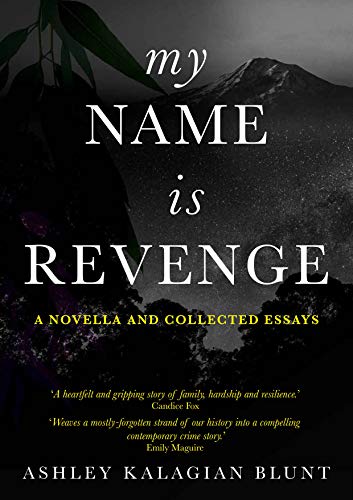
Ashley Kalagian Blunt, My Name is Revenge; November Verse 4

Ashley Kalagian Bunt, My Name is Revenge: A novella and collected essays (Spineless Wonders 2019)

On 17 December 1980, at 9.47 am, two men shot the Turkish consul-general to Sydney and his bodyguard near the consul’s home in Vaucluse. The assassins aimed, fired and vanished.

That’s the opening paragraph of the novella that gives this slim book its title. I had to check in Wikipedia: it turns out that that assassination is not something invented by Ashley Kalagian Blunt. Like the Armenian genocide that inspired it, it is simply not remembered by most of us. What follows that paragraph – a young man whose name, Vrezh, is Armenian for ‘revenge’ feels empowered by news of the assassination and gets involved in a further terrorist plot – is fiction, but fiction fuelled by the historical genocide, and the Turkish government’s century-long insistence that the genocide never happened.

It’s a daring choice in the current climate to write about terrorism from the point of view of a potential terrorist, who has an assassin – Soghomon Tehlirian – as a hero. It’s daring, and stunningly successful: we care about that young man and his family.

The three essays accompanying the novella address aspects of the issues it raises: ‘Writing Violence, Arousing Curiosity’ deals with the genesis of the novella itself; ‘The Crime of Crimes’ sketches the history of genocide, from well before the term was coined in the 20th century; ‘Life After Genocide’ focuses on Kalagian Blunt’s reconnection with her Armenian heritage as a young adult, and how survivors of the genocide have dealt with the history – in particular her great grandfather who as a child witnessed monstrous deeds. The grim subject matter is leavened by a selection of the author’s photographs of Armenian buildings, landscapes and people, including a stunning double spread featuring herself as a baby with her great-grandparents. It’s to the credit of Spineless Wonders that these black and white photos are reproduced with great clarity.

It’s November, and this month I tend to keep reviews to a minimum and write a stanza inspired by the book in question (I have to produce 14 14-line poems this month). But I need to say a little more before breaking into rhyme.

As a settler Australian and a gentile, I’ve felt an obligatory interest in the history of genocide. I have a number of fat books on my To Be Read shelf with titles like Blood and Soil: A World History of Genocide and Extermination from Sparta to Darfur (that one’s by Ben Kiernan 2007). I haven’t even started reading any of them. My Name is Revenge got me through the opening gate, and I recommend it to anyone who feels a similar responsibility to be informed. (It has added several new books to my virtual TBR shelf, including the discouragingly titled Genocide: A World History (Norman M Naimark 2017). Actually, I recommend the book to anyone who appreciates fine writing that comes from a passionately felt source.

Now for my little verse, which opens with Exodus 15:3:

November Verse 4: 
Kill man and woman, babe and suckling,
ox and sheep, camel, ass.

That's God to Saul. Since, we've been buckling
up for slaughter, sword to gas,
musket, spear, scimitar, machete;
harrying, dispersal, cleansing, deadly
soft words for the blood-soaked facts:
whole peoples falling to the axe.
And what comes next? Post-devastation
do gentlefolk take up the land,
priests take survivors by the hand,
declare it's all a fabrication?
The story of the human race
is sometimes awful hard to face.

My Name Is Revenge is the thirty-seventh book I’ve read as part of the 2019 Australian Women Writers Challenge. My copy is a gift from Ashley Galagian Blunt.

November verse 3: Woman with knife

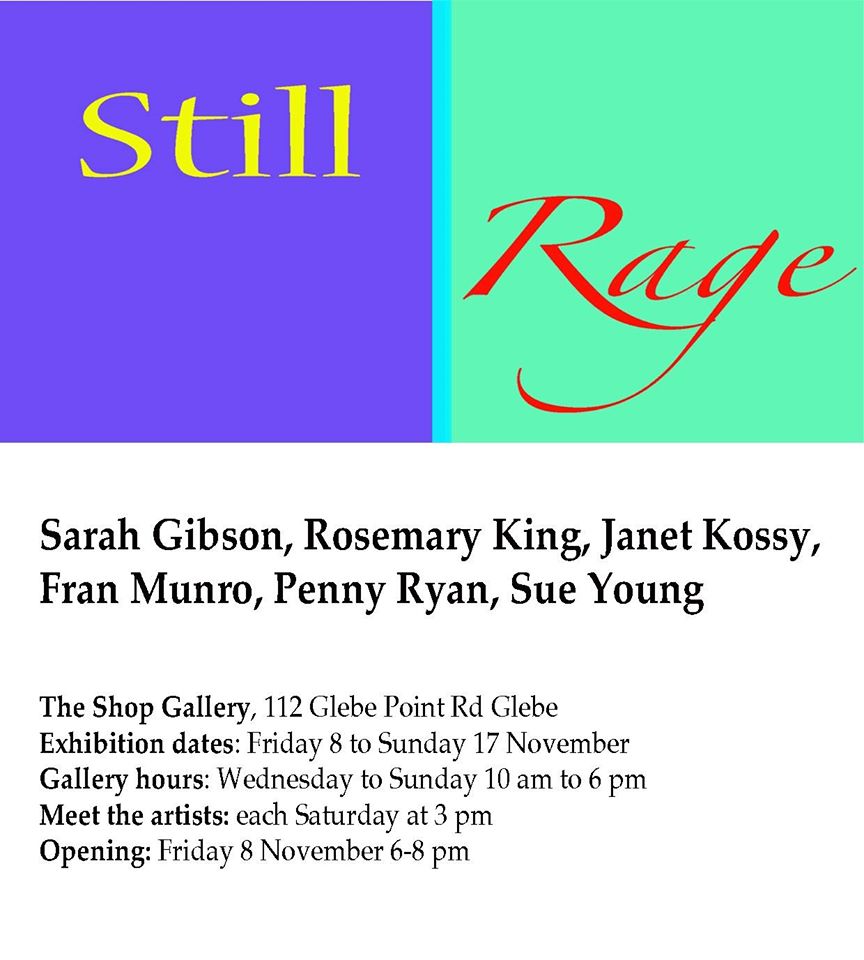
The Emerging Artist and five others have a terrific exhibition currently at The Shop Gallery in Glebe.

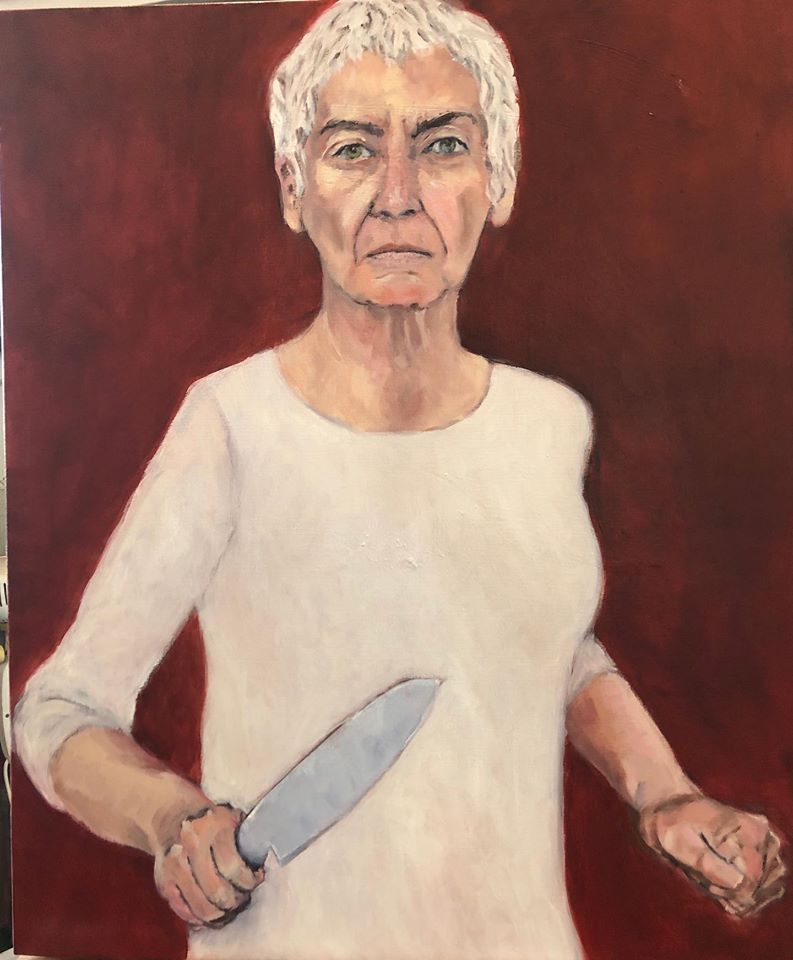
There are raging female monsters, exquisite still lives, images of brightly wrapped babies, orthodox Jews and patriots, a beatific Greta Thunberg, a powerful portrait of a Wiradjuri woman, ceramic cotton-reel pendants with unsettling inscriptions, and three images of a woman with a knife, including this one:

November verse 3: Woman with Knife – Red
She's got a knife and she will use it
if she must. Not so much rage
as weariness has made her lose it.
No choice but to turn the page
on compromise, compliance, meekness,
millennia of other-cheekness.
Her right hand's ready for the fight.
Her left holds hidden treasure tight.
No harpy, lamia, sphinx or gorgon,
no trained assassin, hired gun,
or martial artist out for fun:
a new sound blast, a whole new organ
shakes the floor. How good's that frown?
Good enough to bring you down.

November verse 2: Grandfatherhood

The Emerging Artist and I spend two days a week looking after our granddaughter. How could I not dedicate at least one November Verse to her?

November verse 2: Grandfatherhood
Someone said, 'A grandchild coming?
You'll turn into a love-sick dolt.
Like taxes, death and leaky plumbing,
you can't avoid this lightning bolt.'
I smiled politely, thinking, 'Maybe ...'
Then Rubes was born, a lovely baby
like all babies, sweet enough
but not to shake me by the scruff.
Until at her first birthday picnic
she crawled to me and turned around
and leaned into me.
______________________I was owned.
At two, no longer grand-love sceptic,
I'm Poppa, bound, besotted-wise
to snot nose, scraped knees, solemn eyes.

I didn’t manage to include how much said granddaughter enjoys my kookaburra imitation, and how I’ll do it on repeat demand well beyond hoarseness.

November Verse 1: Jacarandas

The jacarandas are in flower in Sydney. It must be November – though they’ve been out for a couple of weeks now, ominously early.

November is LoSoRhyMo, that is to say Local Sonnet Rhyming Month and I am obliged to produce 14 14-line poems over these 30 days. Rhyming is essential and quantity matters more than quality. The fact that I’m the sole LoSoRhyMo-ist doesn’t render the obligation any less binding. This is the tenth November I’ve taken this on. (If you want to buy previous years’ efforts, check out my publications page.)

So here goes, starting five late, but intending to fill the quota:

Verse 1:  The jacaranda have flowered early, again
Too late, they said, when jacaranda's
bright cloud lit the uni quad,
too late to start revising, and as
now Adani's got the nod
'too late' takes on a darker meaning:
year by year the parks are greening
earlier, the purple haze
of jacaranda too. Our days
are numbered, or at least they're hotter.
Lovely trees push flowers out
too early: bushfires, fish kills, drought
are part of that same picture. What a
great world! Please, no more debate.
If not now when? Next year's too late.

November verse 14:

Just squeezing in my last November poem before December is upon us, I’m starting from a paraphrase of the opening sentences of Edward Said’s On Late Style, which I’m reading for the Book Group. Here’s how Said’s posthumously finished book begins:

The relationship between bodily condition and aesthetic style seems at first to be a subject so irrelevant and perhaps even trivial by comparison with the momentousness of life, morality, medical science, and health, as to be quickly dismissed.

That gives you a taste. The New York Times website gives the whole first chapter, here, if you’re interested to read on. My little verse deals only with the first paragraph, and isn’t exactly a paraphrase of that.

November verse 14: Why the relationship between
bodily condition and aesthetic style is not a
trivial subject
You say: 'So trivial a subject,
the body and aesthetic style's
relationship! Why not reflect
on what's important in your files,
like life, and health, and science and morals
or medicine or the death of corals?'
I say: Of all of us it's true
because we're conscious, me and you,
we're constantly involved in making
something of our little lives, 
and this self-making builds archives,
a base of the great undertaking,
history, which sages tell,
at heart is made by human toil.

I don’t know yet where Said’s argument goes from there, and I apologise in advance for not trying to produce a verse version of the whole book.