Category Archives: Movies

End of year lists 2011

Here are the Art Student’s best five movies for the year, in no particular order. That’s five out of roughly 43 movies we went to. (If you don’t know a movie the title links to  its IMDb page.)

Inside Job: A documentary about the Global Financial Crisis. The most memorable thing is that at the end Obama kept in something like 20 key positions the same people whose advice had led to the policies that brought about the collapse.

Of Gods and Men: The AS knew this was on my list and wouldn’t give me a comment.

Win Win: She liked this for its moral complexity and understatedness.

The Guard: This made her laugh. She liked being seduced by someone who did bad things.

Bill Cunningham New York: She was exhilarated by this and loved it as a model of a kind of integrity that may well be disappearing from the western world.

And mine:
Bill Cunningham New York: See the Art Student’s comment above

Of Gods and Men: Interestingly enough, this is also a study in integrity, and though it’s fiction, it ends with a profound letter written by the actual man it’s based on.

Source Code: An SF Groundhog Day that I found completely delightful.

If a Tree Falls: A Story of the Earth Liberation Front: There seems to be a theme emerging: what I loved about this was that its main character had done bad things with good intentions and took responsibility for his actions. It also cast yet more unflattering light on the US authorities’ response to ‘terrorism’.

Toomelah: I saw this at the Sydney Film Festival, introduced by Ivan Sen in the company of two young actors. Perhaps that’s why I saw it as an ultimately hopeful, though unsparing, look at life in a crushed, neglected and dysfunctional Aboriginal community.

About books, the Art Student claims not to be able to remember back past the last book she read, but she’s happy to have Edmund de Waal’s The Hare with Amber Eyes in her top five books for the year. This year, following the shocking VIDA statistics on gender bias in literary journals, I decided to keep track of whether books I read were by men or women, and a quick count shows, astonishingly that I read 25 books by men and 23 by women. Compulsive honesty has me acknowledge that many of the books by women were very short. the most dubious inclusion being a YouTube video of Harvard Professors reading Margaret Wise Brown’s Goodnight Moon.  My top five, a list that might look quite different if I did it on another day:

Christina Stead, The Man Who Loved Children. What a painful pleasure to re read this! I can’t think of a character I’ve hated more, while being fascinated, than Sam Pollitt.

Francis Webb, Collected Poems and a number of ancillary books.

Charles Dickens, Bleak House. I’m that much less likely to win a game of Humiliation now that I’ve read this. I completely understand why Claire Tomalin read this twice when researching her biography of Dickens – she wasn’t prompted by duty but by pleasure.

Kim Scott’s That Deadman Dance. Phew! We’re into the 21st century. After the necessarily careful correctness of, say, Kate Grenville’s novels about early contact in Sydney, this exuberant, multi-faceted, generous, funny, heartbreaking novel is like a blast of clean air.

Robert Whitaker’s Anatomy of an Epidemic: Magic Bullets, Psychiatric Drugs, and the Astonishing Rise of Mental Illness in America. Whenever I’m asked what my favourite book is I’m tempted to name the one I’m currently reading, but this really is a wonderful book, all the more shocking for the care with which it marshals its evidence and argument. I want to push it into the hands of everyone I know.

Please quarrel with these lists, add your recommendations, etc.

Five audiences

The Art Student doesn’t blog, except by remote control, as in saying to me, ‘You should write on your blog about…’ This is one of those posts.

In the last week, in spite of my otherwise debilitating head cold, we’ve been to five cultural outings. This is a brief review of the audiences. (Distances in brackets are from our house to the theatre.)

1. The Drama Theatre of the Opera House: Nina Conti’s Talk to the Hand (7.9 km)
We got a pretty good look at the front row of this youngish, well-heeled crowd, as Nina and her monkey held them up to ridicule one after another. The foul-mouthed monkey made a series of outrageous remarks, shocking sweet, well-bred Nina. ‘Are you married to her?’ the monkey asked one man, indicating the woman next to him. ‘Sometimes,’ the man said, which I think you’ll agree is a pretty good response. ‘What do you mean, sometimes?’ Nina asked. ‘Well, at other times she’s [insert your own misogynist end to sentence].’ Even the monkey was taken aback, and moved on quickly. The joke was in danger of failing as the audience promised to be even more obnoxious than the monkey. The same man called out further insults about his wife later in the evening. Of course, it would be wrong to tar the whole audience with his brush, but whenever Ms Conti or one of her dummies called for suggestions, the replies were mostly sex- or bum-themed. The show was fabulous, but the audience had a significantly vocal leavening of misogyny and middle-class yobbery.

2. Gleebooks: Gerard Windsor and Giulia Giuffrè in conversation about the latter’s book, Primavera (3.7 km)
The smallest, most serious and most mature of the five audiences. When we arrived, the two performers were mingling with the audience-to-be. Someone asked me, ‘How do you fit in?’ and told me Giulia had commented with pleasure when she saw some strangers arrive. (I probably count as a stranger: I met Giulia a couple of times in the early 70s, but she didn’t remember me.) Someone from Gleebooks  introduced the event in 10 seconds flat (‘perfunctory’ doesn’t begin to cover it), leaving Gerry to say who he was. This only deepened the sense that we were at an intimate gathering – friends, family (Giulia’s 20-something daughter was there, and spoke briefly), colleagues.

3. Seymour Centre: iOTA’s Smoke & Mirrors (3 km)
In many respects similar to the Nina Conti audience, this crowd were hip rather than heeled. An older woman in the front row opposite us kept her face fixed in a scowl the whole time except for one brief smile. She applauded politely at the end of most items, and winced when the stage lights fell on her, as they did often. But the great bulk of the audience applauded enthusiastically not only the songs, acrobatics and magic tricks, but also iOTA’s sexually ambiguous clown-crying-on-the-outside musical performance. When the lyrics got, as they say, explicit, the crowd was unfazed, but when a decorous striptease ended with the unveiling of the stripper’s beard there was no noisy clamour for more intimate exposure. This audience, with nothing to prove, seemed happy to be entertained and challenged.

4. Dendy Cinema Newtown: special advance screening of Sunshine and Oranges (1.6 km)
This was a 6.30 screening for Club Dendy members, of a movie about Margaret Humphries exposing the secretive deportation of 130 000 children from the UK to Australia. There was a lot of silver hair in this packed house and, at least near us, a smattering of English accents. The Art Student thought there was a preponderance of women, not young, but not yet of a certain age, who could have been social workers. I was struck by the number of phone screens that stayed lit up until the last possible moment, by which I mean several seconds after the film began.

5. The Factory: Fear of a Brown Planet Attacks (.7 km)
Another packed house. My guess is that the vast majority of the audience were young Muslim Indians or Pakistanis.Here we were definitely in the minority, as white people and also as people over 40. There were plenty of hijabs and other headscarfs, but I didn’t see any older women in saris or salwar kameez. Aamer Rahman’s performance of a Bollywood song in (I’m guessing) Hindi provoked a lot of recognising laughter. And when Nazeem Hussain, the other half of Fear of a Brown Planet, did a caustic impersonation of a white Australian calling him ‘Zeemo’, ‘Nazzer’ and so on, he had the audience right there with him. Racism was mocked. A child ran about noisily at the back of the large auditorium for most of the show’s second half, and no one got into a state about it. Perhaps the White People were a little more subdued than usual as we left, but my impression is we were among people who not only had been entertained but also had had significant issues named out loud.

All but the first of the events happened within walking distance of our house. It’s as if we live at the junction of different worlds. Ah, city life!

End of Year Lists

The Art Student proposed that I post about my best five books, best five movies and worst three movies for 2010. And hers. Being an obliging fellow, and at the risk of exposing myself as a philistine, here they are. Do nominate your own favourites in the comments.

The five movies most enjoyed in 2010 (in no particular order):

By me:

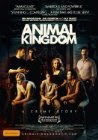
Animal Kingdom, David Michôd’s first feature, so human and yet so vile. (When Jacqui Weaver was being made much of in the US for this performance, Michôd reportedly said to himself, ‘About time.’ To which I cry Amen!)

Made in Dagenham, directed by Nigel Cole, what some people would undoubtedly see as a fundamentalist left feminist feelgood movie – and what’s wrong with getting to feel good about a victory?

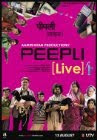
Peepli [Live], directed by Anusha Rizvi & Mahmood Farooqui, a wonderfully ebullient satire on the way the media in India, just like here, makes spectacle out of misery – a comic commentary on P Sainath’s Everyone Loves a Good Drought.

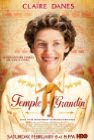
Temple Grandin, made for TV by Mick Jackson, starring Clare Danes as Temple Grandin, the woman with Asperger’s Syndrome who revolutionised the treatment of cattle in US slaughterhouses.

In the Loop, exuberantly enraged, foul mouthed satire directed by Armando Iannucci and starring Peter Capaldi, which I found cathartic.

By the Art Student:

City Island, a genial comedy directed by Raymond De Felitta, starring Andy Garcia, and Julianna Margulies playing a very different character from Alicia in The Good Wife on TV.

The Yes Men Fix the World, featuring culture jammers Andy Bichlbaum and Mike Bonanno, and any number of corporation representatives being taken for a ride.

Me and Orson Welles, directed by Richard Linklater.

Peepli [Live]. At last we agree on one.

Fair Game, the pic about Valerie Plame, directed by Doug Liman.

The film that most cried out for a thumbs down from both of us

Rob Marshall’s Nine. At least they had the good taste to wait until Fellini was dead before defiling his work in this way. The fault lines in our unanimity of taste showed when the Art Student had trouble choosing between this, Inception and Scott Pilgrim vs the World, both of which I enjoyed.

Five favourite books read in 2010

By me:

I listed 121 books in my Reading and Watching blog during 2010. I didn’t finish all of them, but picking five favourites is necessarily pretty arbitrary because so many of them delighted and enlightened me. However, here goes.

China Miéville, The City and the City. Science fictional policier, marvellously taut and convincing us to believe in an impossible world.

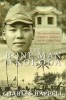
Charles Happell, The Bone Man of Kokoda. Written by an Australian, this tells the story of a Japanese man who fought against and killed Australians in the jungles of New Guinea, and his resolve to honour his comrades who died there.

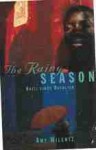
Amy Wilentz, The Rainy Season. I read this in the aftermath of the terrible earthquake in Haiti. It is a very rich introduction to the culture and recent history of the nation created by the first successful black slave revolt of modern times.

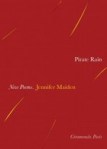
Jennifer Maiden, Pirate Rain. This may not be the best book of poetry published this year. Many people would probably give precedence to Les Murray’s Taller When Prone or Seamus Heaney’s Human Chain. But Jennifer Maiden gets my gong.

Marilynne Robinson, Home. If I ever convert to stern Presbyterian Protestantism, it will be because of this book and its predecessor, Gilead. I love the characters’ unrelenting quest to love with integrity.

By the Art Student, in her own words:
While I have read quite a bit of fiction that I enjoyed, the books that stand out are all non fiction.

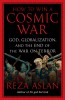
Reza Aslan, How to win a cosmic war. I heard him speak at the Sydney Writers’ Festival this year. The book is a clear and compelling account of the past and current drivers of religious fundamentalism – Islamic, Jewish and Christian. It shows the common threads in religious fundamentalism while focusing on Islamic fundamentalist terrorism. What is interesting is Aslan’s description of the difference between Islamic nationalist groups (which the West should learn to love) and internationalist jihadism. By fighting the former, Aslan argues, we are pushing alienated young western-born Middle Eastern  Muslims into joining the latter and terrorism.

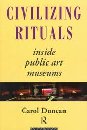
Carol Duncan,  Civilizing Rituals, Inside Public Art Museums. This includes a fascinating account of the development of public art museums after the French Revolution liberated the Louvre. It mainly focuses on the development of public galleries in the USA and England, but links these developments to a popular movement to have art galleries in all major western cities (including Sydney). But most interesting are the struggles about what galleries were and are for, how they should be funded and what they should show. In the USA, private philanthropists were the driving force in establishing galleries, allowing them to build spacious monuments to benefactors. The down side was that those benefactors wanted control beyond death, so that many galleries are filled with replicas of ballrooms and indifferent art that are never to be changed. Duncan’s final chapters critique current public galleries’ approaches to their art and audiences, making it clear why many people find the experience of visiting galleries unsatisfying and alienating.

John Hirst, Sentimental Nation, the Making of the Australian Commonwealth. Federation? Surely the dullest topic in Australian history. But to my surprise this book was a wonderful read about the decades-long fight for federation. Depressingly familiar in some respects (the Murray–Darling debate, immigration, taxes, mining, Commonwealth–state power sharing) it was also a wonderfully inspiring account of democratic processes that gave Australia a constitution. There were three Constitutional Conventions, with 60 men voted from  the colonies to draft, debate and redraft the constitution over 12 weeks each time. Once agreed on, the constitution was subject to two referenda before being passed. Town hall meetings were held in every suburb and town in the country, each meeting often taking four hours while every section of the draft was read aloud,  explained and debated. Hirst makes the back and forth of politics come alive with a contemporary feel.

Patricia Hill, Alice Neel. Alice Neel (1900 to 1984) was a US artist who painted mainly portraits of ordinary working people over from the 1920’s until her death. She was a socialist and worked as part of the Federal Art Project (a New Deal initiative) during the Depression. She only received recognition of her work in the 1970s, partly because portraiture was out of fashion in Modernist American art circles,  partly because of her left-wing views and partly because of her gender. I love her work. Her portraits are often distorted yet capture absolutely a sense of the person and their context. She saw herself as painting ‘definitive pictures with the feel of the era’, pointing to her portrait of her son in a business suit, ‘Richard in the Era of the Corporation’, as a good example.The book is largely Neel’s own words taken from interviews conducted by Hill. An inspiring read for someone at the very beginning of an art career as she approaches 60.

Do tell us your bests of 2010 in the comments

Outnumbered vs Modern Family

In Monday’s Guide (liftout for the Sydney Morning Herald), Jim Schembri’s preview of award winning US family sitcom Modern Family began ‘Really, is there anything funnier on TV at the moment?’

‘Yes,’ we replied in my house, ‘resoundingly yes!’

Not that we don’t enjoy Modern Family, or appreciate the way it’s rejuvenated the US sitcom. But has Jim Schembri seen Outnumbered, which screens over in the corner on ABC 2 just after whatever deep-pocketed advertiser brings us  Modern Family on Ten? Perhaps not, as the Guide doesn’t even give it a synopsis – just ‘8.00 Outnumbered. (PG)’

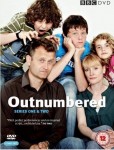
Outnumbered is an English show about a family consisting of two parents and their three young children, plus occasionally the husband’s mother. There’s no diversity of culture or sexual identity, It’s a straight up the middle of the road nuclear family. What makes it shine is that the three young actors – aged 7, 9 and 13 or thereabouts – aren’t working form a memorised script. They’re told what’s going to happen in a scene and then let loose in front of the camera. The adult actors, who are working from a script, then have to deal with whatever lollybombs are thrown their way. And the young are brilliant improvisers, especially the two younger children, playing the characters Ben and Karen. (The older boy is more on his dignity, so doesn’t have quite the same scope.)

You probably need to see it, but favourite moments include an argument between Ben and Karen about who would win in a battle between a fairy and a boy armed with an increasingly alarming arsenal; a bizarre riff on what might be concealed in a big black beard, or Karen’s chat with her mother while she is having nits combed out of her hair: ‘Can I keep a nit as a pet?’ ‘No. Why would you want that?’ ‘I’d talk to it.’ ‘But nits can’t talk.’ ‘Yes they can. They talk nit language.’ ‘Well, you can’t have a nit for a pet.’ ‘Then can I have a giraffe?’ ‘A giraffe is too big.’ ‘What about a lion then?’ ‘Lions are too dangerous.’ ‘Could I have a nit town in my hair?’  and so on.

My single favourite exchange occurred after Karen had wrought havoc by authoritarian rulings at her father’s doubles tennis game after an unwary player suggested she might be the umpire as a way of keeping her entertained. Chatting with her mother that evening she says she wishes girls could grow beards because then they could be ferryboat captains. The mother says she can be one of those without a beard. ‘An ayatollah then,’ says Karen. ‘You’d make a good ayatollah,’ says the mother wearily. Score one for the adult team, or just possibly for the writers. In Modern Family it’s always the writers.

Animal Kingdom

We’re largely giving the Sydney Film Festival a miss this year. Again. We had two disappointing years in a row a while back, and now the Writers’ Festival seems to have filled the need for a bit of festive culture as winter comes on. What’s more, the big hits of each year’s festival mostly turn up in the picture theatres pretty soon anyhow. I do miss the fabulous State Theatre picture palace, especially that moment where a guest director steps out onto the stage and gasps at the sheer OTTness of it all.

Tonight my Movie-Going Companion was otherwise engaged, so I set off to the Palace Theatre in Norton Street, which is palatial only in name, for a 6.45 screening of David Michôd’s Animal Kingdom. At ten past seven, the lights hadn’t dimmed. People in the front rows started a slow clap, but it didn’t develop any steam, though there were mutterings – a movie starting 25 minutes late is a rarity in these fast turnover days. A young man stepped out into the space in front of the screen, walked up to a microphone that was standing there minding its own business and started complaining abut the traffic. ‘I’m in such a state,’ he said. It took me an hour to get here from Bondi. But you don’t really want to know about that.’ He was right of course. But who was he? ‘I really am all jittery. Maybe I should just sit down.’

‘It’s all right,’ called out a woman’s voice from the now darkened auditorium. ‘We’ve all been there. Take a minute to calm down.’

‘Thank you,’ said the man at the mike, who looked a bit like he’d been sent by Central Casting to play a hipster in a Tina Fey sitcom, only with an Australian accent. ‘Thank you. I can feel the sharing.’ And the chance to deploy some benign irony seemed to restore his equilibrium. ‘But really, it took so long to get here, and I don’t just mean the traffic. I finished the first version of the script for this in 2000.’ Now we knew he was David Michôd.

When he left film school and heard that Lantana and other films had taken ten years to get made, he thought those people must have been weird But now he understands. He thought this script was ready to shoot in 2000, and told us to be glad that we weren’t about to watch a movie made from that script. You just keep chiselling away, a bit here, a bit there. You try to get someone to direct it and are gracefully rejected. And then you make it, and expect every screening to be the one where people hate it. ‘Please don’t let this be the one,’ he pleaded in conclusion. ‘Please like it.’

He fuffled around putting the mike away and walked out through the audience.Whether by design or by chance he had charmed us to pieces.

The lights went down, the movie came on without any ads, and there was no point at all trying to reconcile all that self deprecation with the confident story-telling that followed. All the performances were marvellous: the marvels included Ben Mendelsohn better than I’ve ever seen him, and Jacqui Weaver as a personification of the wolf mother: protective of her cubs and heaven help anyone who threatens them.

I came home one satisfied punter.

Dungog

We drove up to Dungog on Saturday – Penny, her brother Chris and I – to visit a nonagenarian second cousin of theirs. We stayed at one of the Dungog Country Apartments, which was inexpensive (by Sydney standards), light and airy, with a roomy kitchen, pleasant furniture, a balcony with a view of the pub, and Norman Lindsay cheek by jowl with Norman Rockwell on the wall.

There was weather, so we didn’t go for the walk we’d planned on Saturday afternoon. And none of the town’s recommended eateries was open, so we ate some huge steaks at ‘the top pub’ (which must make the hotel opposite our apartment the bottom pub) before striding off to the James Theatre, Australia’s oldest still running purpose built cinema, just in time for the evening session of Flickerfest.

Flickerfest has been an annual event at Bondi for 19 years now, but I’ve never been to it. The prospect of several days of short movies just hasn’t had enough drawing power. In fact, just about the only short-film programs I’ve seen have been ones where a friend or offspring had made one of the films. But we were in Dungog, and apart from the trivia quiz at the Menshed and billiards and jukebok at the top pub there wasn’t a lot else on, so we were quite pleased that there is now a travelling, pocket-sized Flickerfest, that Dungog is among the 24 venues it visits around the country, and that Saturday was Dungog’s day.

I’m not a convert to short-film nights. Bring back the days when there was a short before the main feature, I say. In that context, almost any one of the films we saw – the Best of Australian Shorts – would have been perfectly adequate, and some would have been hard acts to follow. One, Miracle Fish by Luke Doolan, was not only nominated for an Academy Award this year but also was shot in the primary school my sons attended, so had a certain holding power (though it was far too long). Maziar Lahooti’s Crossroads stood out for me, partly for a beautiful moment of inarticulate masculinity after a display of heroic competence (that’s the second short film of his I’ve seen and loved), and Dominic Allen’s Two Men, all four minutes of it, is perfect – translating a 160-word piece by Kafka into Aboriginal English and setting it in a remote community with absolute sureness of touch.

The Dungog Film Festival is in May. For four days, as Penny’s second-cousin-once-removed told us on Sunday, black-clad movie lovers turn the main street of Dungog into little Newtown. It might be just the thing for disgruntled ex-Sydney Film Festival goers.

Cromwell & Tucker

In this video Alastair Campbell, former mover and shaker in the British government, talks to fabulous film critic Mark Kermode about the In the Loop character said to be based on him.

I don’t know about you, but I was both amused and chastened.

Here’s a thought. Could it be that Malcolm Tucker in In the Loop and Thomas Cromwell in Wolf Hall are really the same character seen through different lenses?

My Book Group Is Illuminated

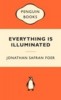
Jonathan Safran Foer, Everything Is Illuminated (2002, Penguin Australia 2008)

I read five pages of this when it was freshly published, and decided it was not for me. It’s rare for me to dismiss a book like that, so I dipped ahead reading a page here, a page there, and found absolutely nothing to change my mind. Then at the December meeting of my Book Group, a number of people were keen to put it on our agenda, and they won the day. So, eventually, I bought a cheap copy (all the libraries’ copies were out) and set to work. By the time the group met last night, I’d finished it, though I did skim the last 20 pages so I’d have time to cook the dinner. There are some very strong bits, as it turns out to be a story of a small Ukrainian village whose entire Jewish population was murdered by German soldiers, counterpointed by a ludic tale of the Jonathan Safran Foer’s forebears’ lives in that village.  I can see why the book received such acclaim, but pretty much the first half is taken up with ha-ha-I’m-being-funny humour and an awful lot of the shtetl story that felt contrived, inconsistent and disrespectful, like Isaaac Bashevis Singer off the rails; the thesaurus-driven voice of the Ukrainian Alex, who narrates the modern-day quest for the village, eventually toned down as it got to the point, but by that time I had endured too much that was weary, stale, flat and unprofitable. My moment-by-moment irritation robbed the narrative of almost all momentum. In the hope that mine was a minority response, I came to the group resolved to listen and learn.

The book found no stout defenders among us. Roughly half hadn’t managed more than 20 pages or so. The man who’d liked it most – we think he was the one who proposed it – had seen and enjoyed the film, and admitted that when he read the book he skimmed the bits that weren’t in the film, which meant all the shtetl stories, all the clever literary bits (some would say these were darlings that should have been murdered), and the worst excesses of the mangled-English narration.

The reason we’d chosen this book is that we wanted to see how it went if we watched a movie of the book under discussion. So after dinner we watched Liev Schreiber’s Everything Is Illuminated. All O knew of the movie beforehand was from glimpses seen in Operation Filmmaker, the achingly funny documentary about an Iraqi intern on the shoot, in which Liev Shreiber and others came across as humane, generous and admirable people who clearly believed in their project. I don’t know that I liked the film all that much: the Elijah Wood character (‘Jonathan Safran Foer’) was too weird, and there were some awful saggy bits. It was fascinating to watch it so soon after reading the book. The ancestral story – roughly half the book – was sheared off. The second of the two revelations at the end was replaced with something much less interesting, less morally complex. A climactic action that almost made sense in the book made no sense at all in the film. And the upbeat ending was despair-inducing. Paradoxically, the film made me appreciate the book much more.

A pleasant evening was had by all, even the two dogs, who managed to bully someone into throwing a ball for them more than once. Next month, not Franny and Zooey or Arctic Dreams or The History of Knowledge or Wildlife, but Peter Temple’s Truth. We wanted a page-turner.

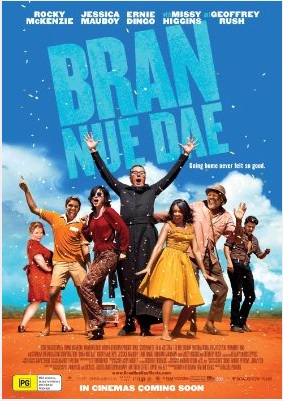
Bran Nue Dae

I usually restrict my blogging about movies to little notices in the feed on my right-hand column, but I’m making an exception for Bran Nue Dae because every review I’ve read has been tepid to ice-cold.

I want to shout from the rooftops: BRAN NUE DAE is FABULOUS.

It’s not a ‘well-made film’ – though it’s very well made. It’s funny, occasionally soppy, often sly and certainly capable of making a middle class white viewer like me interestingly uncomfortable. I mean, what is this movie doing when it has me wanting to sing along with:

There’s nothing I would rather be
than to be an Aborigine
and watch you take my precious land awa-ay.
For nothing gives me greater joy
than to watch you fill each girl and boy
with superficial existential shit.

It’s like David Gumpilil in his one man stage show tricking us into laughing at his humiliating arrest for public urination. The politics are clear, the dire consequences of dispossession are never denied, but we’re not being lectured at. We’re invited in, discomfort and all.

Mind you, I don’t know how it got its PG rating: in the first few minutes there’s a song about condom use that has very explicit lyrics, and Deborah Mailman’s, um, sexually active character is a pretty adult concept, I would have thought.

All the performances are terrific. I loved the choreography (and choreographer David Page’s brief appearance on a group shot at the end). I loved the look of it. I laughed out loud many times. Rachel Perkins has pulled it off.

Yasmin Ahmad

I was on a bus in Connecticut in August when Penny texted me from the airport in Sydney to tell me Yasmin Ahmad had died. Actually, Penny’s text asked if the filmmaker whose blog I followed was named Yasmin, and if so, she had died of a heart attack. I’ve never seen any of her films, unless you count a single extraordinary community service announcement:

But the blog – and its comments section – opened a window for me onto a lively, intelligent, warm, exuberant and sometimes embattled creative milieu in Kuala Lumpur.

The Trash and Treasure segment on today’s Movie Time on Radio National was about Yasmin’s film Gubra. And Peter Mares referred us to links on the Movie Time web site. Naturally, I followed them up, including one to a beautiful Tribute to Yasmin page, on which we get to see her on the set of a short film, Chocolate. Sadly I couldn’t find a version of Chocolate with English subtitles, and the film remains a mystery to me, but The Making of is lovely:

I don’t know if any of her films have been screened here. I hope we do get to see them.