[This post originally appeared in my previous blog on 16 April 2009. I’m restoring it now because I’m writing about The Mushroom Tapes, of which Chloe Hooper is one of the authors.]
Over the Easter break, Penny and I drove to Airey’s Inlet in Victoria to spend a very pleasant couple of days with her brother. The drive there and back, down on Thursday in ten hours and back on Tuesday in twelve, was remarkably hassle-free. As is our custom, I read a book aloud; in an extension of the custom, we also took a Talking Book, because on our last long car trip my voice needed enough resting to create long bookless stretches. As it turned out, the constant application of eucalyptus and honey lollies meant I had much greater stamina this time, and we read the whole of our read-aloud choice, and then listened to half of the talking book in our last couple of hours on the road.
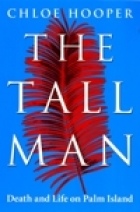
The Tall Man is beautifully written, complex, passionate and about an important topic – so it was a perfect read-aloud. I hadn’t read Chloe Hooper’s article of the same name in the Monthly a while back, and knew only the vague outline of the case: Aboriginal man dies in the cells of horrific injuries; the policeman who arrested him for swearing in the street was the only one alone with him between his arrest in good health and his death a couple of hours later; policeman almost wasn’t even brought to trial, and then was acquitted of any wrongdoing; Aboriginal people who rioted in protest treated to the full force of the law.
A young creative writing student from Melbourne told me that his teacher praised the book for its even-handedness; and I’ve seen it praised elsewhere for not taking sides. In my view such praise is misplaced. Chloe Hooper combines a journalist’s attention to evidence with a novelist’s eye for the telling detail. She is careful to give the process of law its full due and at no stage makes an explicit judgement. Given that Senior Sergeant Hurley, the tall and bulky policeman at the centre of things, wouldn’t talk to her, she does a very good job of conveying a sense of him as a human being – a generous, thoughtful man under incredible pressure of many kinds. But it’s very clear that her sympathies lie with the bereaved Doomadgee family, and it’s very easy for a reader to come to conclusions that are at odds with those of the jury in the final pages.
We stopped reading fairly often to reflect on how the book illuminated or was illuminated by our own recent experiences in Cairns, my niece Paula’s book, my own family’s comparatively tiny brush with the Queensland police force’s culture of violence (I’m talking 50 years ago, when my brother was punched by a policeman who’d arrested him for dangerous driving, and a police enquiry found that it hadn’t happened – that he already had a black eye when he got into the van), the ‘You can’t handle the truth!’ speech by the Jack Nicholson character in A Few Good Men. We noticed the preponderance of Catholics in the story. We ruminated on the validity or otherwise of the north-south divide (northerners dealing with harsh realities, southerners sitting comfortably in judgement) as a way of understanding the world. Terrible subject, terrific book.
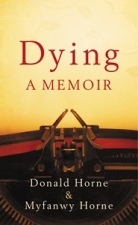
I suppose the same could be said of Dying: terrible subject, terrific book. It’s also a great read-aloud. When Donald Horne knew he was dying of progressive lung disease he decided to keep a journal of his dying, as well as putting together a number of essays on things he wanted to say about cultural matters before he could no longer write. This book is the result, with the addition of an essay by his long-term companion, wife, editor, lover and friend, Myfanwy Horne narrating the time leading up to his death and shortly afterwards. Our journey ended halfway through Myfanwy’s account, so we didn’t hear any of the cultural essays. I intend to get hold of the book and read the rest, because what we did hear was miraculous. The only other of Donald Horne’s books that I’ve read is The Education of Young Donald (1967). I must read more. I hope it’s not too spoilerish to quote the last paragraphs of Donald Horne’s narrative:
When I have done as much as I am physically able on this project, I would like to be allowed to drift off into greater ease. I don’t mean physical ease – that I’m told will come. The kind of ease that I would like would be to drift off into long established habits of contemplation. For example, I can no longer look around the street and look at things, but I can still remember looking. I can’t go for walks, but I can still remember walking. I can’t go into art galleries, but I can still remember paintings. I am almost utterly unable to read seriously, but I can still contemplate the snatches of reading that drift around in my mind.
My final drifting away by a morphine dose, I would want to be among my memories, with Myfanwy, whom I love, holding my hand.
This post first appeared on 25 August 2004. I’ve retrieved it from the earlier version of this blog because I’ve just written a little stanza recording my wildly inaccurate memory of the incident it describes.
In Balmain after work tonight, I witnessed an impromptu performance by Colin Friels.
A traffic cop was strolling along Darling Street checking the parking meters, notebook in hand. I had just seen a woman illegally parked outside Oportos toot her horn to alert her chicken-buying companion, and then back out just as the notebook-bearer was making his shark-like approach.
About ten metres further along, I walked past the talented Mr Friels at the exact moment he spotted danger. He turned to the little girl beside him, say eight years old, and said, in rich theatrical tones that reminded me of The Children’s Hour of the 1950s: ‘Come on. There’s a man with a yellow coat, and he’s going to do dreadful things.’ And the two of them set off in a modified sprint, plastic bags swinging.
As far as I could tell they made it to their car in time – the last I saw of them they were dodging around a large truck that was turning into one of those narrow streets that run off Darling, easily overtaking their public-revenue-collecting nemesis. ‘And no paparazzi in sight,’ I said to the smiling woman who was inserting coins in a meter near me.
[This blog post was originally posted on 6 November 2006 in my now defunct blog Family Life. I’ve retried it here because I’m currently reading and will soon post about Arundhati Roy’s memoir Mother Mary Come to Me.]
Arundhati Roy’s acceptance speech for the Sydney Peace Prize makes interesting reading. The detail she gives on what’s happening in Iraq is heartbreaking. It’s not very long. Here are a couple of bits:
Invaded and occupied Iraq has been made to pay out 200 million dollars in ‘reparations’ for lost profits to corporations like Halliburton, Shell, Mobil, Nestlé, Pepsi, Kentucky Fried Chicken and Toys R Us.
And later:
The real tragedy is that most people in the world are trapped between the horror of a putative peace and the terror of war. Those are the two sheer cliffs we’re hemmed in by. The question is: How do we climb out of this crevasse?
For those who are materially well-off, but morally uncomfortable, the first question you must ask yourself is do you really want to climb out of it? How far are you prepared to go? Has the crevasse become too comfortable?
If you really want to climb out, there’s good news and bad news.
The good news is that the advance party began the climb some time ago. They’re already half way up. Thousands of activists across the world have been hard at work preparing footholds and securing the ropes to make it easier for the rest of us. There isn’t only one path up. There are hundreds of ways of doing it. There are hundreds of battles being fought around the world that need your skills, your minds, your resources. No battle is irrelevant. No victory is too small.
The bad news is that colorful demonstrations, weekend marches and annual trips to the World Social Forum are not enough. There have to be targeted acts of real civil disobedience with real consequences. Maybe we can’t flip a switch and conjure up a revolution. But there are several things we could do. For example, you could make a list of those corporations who have profited from the invasion of Iraq and have offices here in Australia. You could name them, boycott them, occupy their offices and force them out of business.
Those companies again: Shell, Mobil, Nestle, Pepsi, Kentucky Fried Chicken and Toys R Us.
[This was originally posted in my now defunct blog Family Life, on 2 August 2006. I’m retrieving it today because it includes some comments on Kate Grenville’s The Secret River, which recently came in at number 20 in Radio National’s Top 100 Books of the 21st Century.]
Books I bought in July: Robert Charles Wilson, Spin (Tor Books 2005)
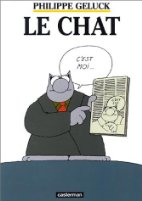
Books read: Poppy Z. Brite,Liquor (Three Rivers Press 2004) and Prime (Three Rivers Press 2005) Marilynne Robinson, Gilead (Virago 2006) Tim Harford, The Undercover Economist (Little Brown 2006) Jared Diamond, Collapse (Penguin 2005) (finished) Kate Grenville, The Secret River (Test 2005) Philippe Geluck, Le Chat (Casterman 2002)
As this month has been spent travelling, I’ve laid aside a couple of books only partly finished, and mostly started on a whole new swag
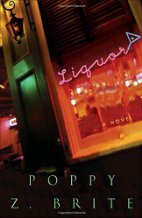
I read Poppy C Brite’s Liquor and most of Gilead on the plane to Europe. It’s hard to think of a greater contrast, one about heavy-drinking chefs in pre-Katrina New Orleans, the other an elegiac look at three generations of austere men of religion. Both of them were infinitely preferable to trying to watch a movie in those circumstances (I gave up when an announcement about duty-free shopping interrupted the opening scene of Candy). Poppy C. Brite’s book strikes me as a thinly disguised love song – love for her city (New Orleans, pronounced with the emphasis on the middle syllable), for the world of restaurant work and I presume for her chef husband, and for lovely bits of the English language. The plot is functional, but that’s not where the interest lies.
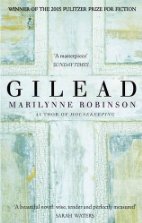
Gilead is also a love letter, with a lot less disguise: it’s in the form of a letter written from a dying man to his seven-year-old son, in the expectation that the son will be an adult by the time he reads it. The narrator is deeply in love with his little son; Marilynne Robinson clearly loves her narrator, probably the last of a line of passionate preachers in the US midwest. He is a man of profound faith, saturated in bible-awareness, but also acquainted with other intellectual traditions. He is writing the boy’s ‘begats’ – that is to say, he tells the story of his own grandfather, a wild, pistol-wielding preacher called by a vision to fight slavery, of his father, an equally single-minded man of peace, and of himself, struggling with a world where his kind of faith is more and more under attack – by secularism on the one hand and television evangelism on the other. It’s a book full of grace and wisdom.
In Amsterdam I moved on to The Undercover Economist. I’d heard Tim Harford speak at the Sydney Writers’ Festival, and been taken as much by his Tin-Tin quiff as by his talking sense about economics. I feel as a result of reading this that I now have a basic grasp of classic market economics, and it was more or less fun to read.
Prime is a sequel to Liquor, and like that book it abounds in glorious descriptions of the joys of cooking and eating. The book gained extra piquancy for me from being read in Ireland, where we had some difficulty finding palatable food (we gave a special award to the lightly spiced salmon patties served up in a posh-looking hotel dining-room and called Thai fish cakes).
In London, I finished Collapse. Again, this was appropriate, not because it’s a great escapist holiday read (it’s anything but), but because it cast a sharp light on the experience of London’s hottest summer days ever: this wasn’t just a frivolous news story about Poms not knowing how to build cool houses; it was a harbinger of major things to come for all of us. It was good to read his chapter on Australia in London as well, because he argues that our persistent identification with British traditions is one of the things preventing us from choosing environmentally sound directions. I was struck by his articulation of one of the key challenges facing the world:
the challenge of deciding which of a society’s deeply held core beliefs are compatible with the society’s survival, and which ones instead have to be given up.
Before leaving the brick of a book behind on the train to Gatwick (to avoid excess baggage charges), I copied out this from his final section, where he talks about what anyone can do about the current crisis:
an individual should not expect to make a difference through a single action, or even through a series of actions that will be completed within three weeks. If you do want to make a difference, plan to commit yourself to a consistent policy of actions over the duration of your life.
I moved on to The Secret River with high expectations. But whereas recent readings, Neal Stephenson’s Baroque Trilogy and Seamus Heaney’s ‘District and Circle’, had both evoked London localities so vividly that I was constantly being reminded of moments from that novel and that poem during my stay there, I was disappointed that this book’s London remained pretty bodiless. Once the hero, Will Thornhill, arrived on the Hawkesbury with his family, however, my disappointment disappeared: there the book’s true subject emerged, and at the same time the physical world became powerfully present:
When Thornhill jumped over the bow the mud gripped his feet. He tried to take a step and it sucked him in deeper. With a huge effort he dragged one foot out and looked for a place to set it down between the spiky mango roots. Lurched forward into even deeper mud, pulled his other leg up with a squelch, feeling the foot stretch against the ankle, and floundered towards the bank. He put his head down and butted blindly through a screen of bushes, bursting out at last onto dry land. Beyond the river-oaks the ground opened onto a flat place covered with tender green growth and studded with yellow daisies.
His own. His own, by virtue of his foot standing on it.
Will’s first real encounter with one of the people he is dispossessing in this moment occurs within pages, and the book becomes as gripping as the Hawkesbury mud – in which I have no doubt Kate Grenville has had her feet stuck.
Le chat was my one book in French, a bande dessinée whose measure I found very hard to take. It consists the Steven-Wright-ish monologues of a large, cool, besuited cat. For example:
Le mot ‘long’ est plus court que le mot ‘court’. C’est dingue, non?
And now I return to Romanesque churches and ancient Cathar towers.
[This was originally posted in my now defunct blog Family Life, on 14 January 2009. I’m retrieving it today because it includes some comments on Christos Tsiolkas’ The Slap, which recently came in at number 37 in Radio National’s Top 100 Books of the 21st Century.]
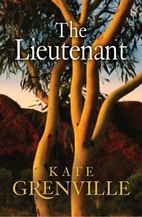
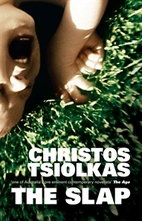
Kate Grenville, The Lieutenant (Text Publishing 2008) Christos Tsiolkas, The Slap (Allen & Unwin 2008)
These were Penny’s and my presents from the Book Club Secret Santa/Kris Kringle in December. They’re both novels we’d been planning to read, both much praised in the press.
The Lieutenant was mine, and I was delighted to receive it. My interest had been piqued by hearing Kate Grenville talk charmingly – and passionately – about it at Gleebooks and then again on the Book Show. I think, though, that when I came to read it, I suffered from having heard too much, and the story remained for too long something I was being told about rather than something that was happening for me as I read. I was disorientated by the policy of renaming historical characters. I suppose the reason for this was to avoid being taken to task by grumpy old historians. You know, if someone were to say, ‘But the evidence is clear that Arthur Phillip was not an authoritarian, culturally blinkered careerist,’ the novelist could reply, ‘But this is a fictional first Governor of New South Wales called Gilbert, not the historical Phillip at all.’ The trouble is, given that the pithy core of the book is an actual document, which Kate Grenville has been careful to tell us provides every word of the conversation between her lieutenant hero and the young Aboriginal woman who befriends him, the novel is clearly meant to be an imagining of the actual early colony, and such arguments would be so much blown smoke.
The result is a kind of roman à clef effect: is Silk actually Watkin Tench? which of the Aboriginal men is Bennelong? etc. Now that I’m dropping in bits of French, I might as well say that there’s also something of the roman à thèse about the book, in the sense that one feels that the characters are there not so much for their own sake as for what they can show us about the meeting of cultures in Port Jackson in 1788. When I wrote in this blog about Kate Grenville’s previous book, I used the word ‘bodiless’. There’s something un-fleshed about this one too. All the same, it’s about one of the most interesting subjects I can imagine: the meeting of two mutually uncomprehending cultures in the form of two people establishing a delicate intimacy, against the odds and ephemeral. That it is tightly based on Lieutenant Dawes’s actual notebook on the Gadigal language gives it enormous moral force. By the end I was weeping.
As I mentioned earlier, The Slap accounted for exactly half of the books in the Secret Santa/Kris Kringle. Clearly, sight unseen, we’d all decided it was worth a read. It would be hard to imagine a greater contrast to The Lieutenant. While we are told that Kate Grenville’s hero has an active sex life, it happens discreetly offstage. The Slap treats us in great detail to any number of sexual encounters, or perhaps I should say events, since ‘encounter’ implies a meeting of some kind. (Actually the sex in this book reminded me my childhood curiosity about characters in books going to the toilet. It’s as if this book decides it’s going to show the sexual things that are usually glossed over, but the result is mostly unconvincing.)
I read the first third or so aloud to Penny on three longish car trips. At a certain point she refused to have me read any more, not just because of the sex and the tediously undifferentiated obscenity of much of the dialogue, but because she just didn’t want to go where the plot was signalling its intention of taking us. I read on, mostly out of a sense of duty, and it turned out the signals were misleading. I can’t say it was a pleasant read, but in the end it was an impressive one.
In case anyone reading this doesn’t know, the story deals with an interwoven group of family and friends in suburban Melbourne. A man slaps a child at a barbecue: the man is Greek, the child’s parents are ‘Skip’ and embedded in victim identities. Though the back cover blurb says that the book is about ‘the slap and its consequences’, I read it more as using the slap as a device that provided a slender unifying narrative thread to the novel’s eight parts, each of which is told from the point of view of a different person who was at the fateful barbecue. A young girl gets plastered with her friends at an end-of-school party; an old man confronts his own mortality at the funeral of an old friend; several marriages are revealed as built on compromise – variously generous, self-sacrificing, resentful. There are lies about sex, half-truthful confessions of infidelity, a shocking betrayal of trust. For me, perhaps the finest thing is the tender–tough revelation of what drives the neurotic and vicious mother of the child who is slapped, so that we move from loathing and despising her to recognising her tragedy. The writing is pretty rough at times, and I think that people who say it’s wonderful to have a book with such a compelling plot for a change haven’t read much children’s or young adult writing.
I’m not rushing out to find all Christos’ other books, but my sense of what it is to be alive, human and suburban Australian has been expanded.
[This was originally posted in my now defunct blog Family Life, on 1 March 2008. I’m retrieving it today because it includes some comments on Geraldine Brooks’ People of the Book, which recently came in at number 89 in Radio National’s Top 100 Books of the 21st Century.]
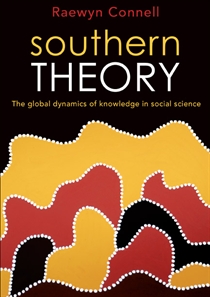
To the qualities I attributed last month to Raewyn Connell, author of Southern Theory, add humility. At several points in the book, she acknowledges her difficulty in understanding one of the texts under discussion, even her inability to do so. But this humility is a long way from an admission of inadequacy; in fact, it’s kind of exemplary, as in: This important material has been ignored by social scientists of the West/North/centre/metropole (SSWNCM); we need to approach it knowing that our grasp of it will be imperfect.
When I was about halfway through the book, reading while walking the dog, I met Raewyn down at the corner postbox. ‘You’ve been my walking companion for the last couple of days,’ I said, ‘and you’re excellent company. Of course,’ I went on, ‘given how much I know about social science theory ,,,’ She finished my sentence, ‘… I could be telling a big pile of whoppers.’ Well, if that’s what she’s doing, she’s certainly doing it with gravitas and grace. Having described the way the SSWNCM have generally managed to ignore the East/South/periphery as a source of theory in the social sciences, she discusses a small number of the thinkers who have been ignored or marginalised – from Africa, Muslim Iran, Latin America, India, Indigenous Australia; and drawing the threads together beautifully without claiming to arrive at a synthesis, she outlines key places where the North can learn from the South.
She mentions that one prominent social scientist of the North Atlantic referred to an earlier version of the argument as a ‘guilt trip’, but it reads to me much more as a judicious and impassioned call for a broadening of horizons, or more precisely an acknowledgement of horizons and of other features of particular locations: that is, one of her central points is that social theory of the Metropole takes place in terra nullius, and recognition of the importance of place is something that the theory from elsewhere has to offer. (She has some beautiful paragraphs on the sandstone country where she and I both live.) Though I’m a social scientist only in the sense that we all are – I live in a society, think about it and try to live well in it and/or in struggle with it – I found the book not just accessible (even on pages that were full of references familiar to the book’s ideal reader and completely unknown to me), but exhilarating.
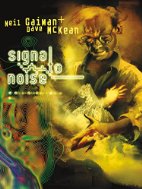
I’m pleased to report that, unlike Mr Punch, the collaboration from Neil Gaiman and Dave McKean that I read before this, Signal to Noise isn’t packaged as a children’s book. Perhaps an account of the death of an artist is more obviously adult than tales of the effect on a young boy of witnessing half-understood scenes of sex and violence. It’s a terrific book.
I’m not generally in love with Dave McKean’s art work, except when he’s working for children – The Day I Swapped My Dad for Two Goldfish and The Wolves in the Walls are both brilliant. His grown-up (as opposed to ‘adult’) work tends to be too fractured, dark and postmodern-incoherent for my taste. I started this book with a sinking feeling, as the first couple of pages are given over to a piece written as well as illustrated by McKean. About this piece the less said by me the better. Then there’s a spread of a series of poems about walls by Gaiman, and suddenly the illustrative style works, as it continues to do for main feature: the moody, hard-to-read images combine with the elegant text to spectacular effect, including a couple of sharply poignant moments (if you’ll excuse the tautology). Neil Gaiman, the new Man in Black, has a lot to say about death.
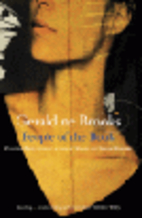
Penny and I had a long car drive in the middle of the month, and as is our custom I read to her for a good bit of the trip both ways. It’s a fun way to travel and a sociable way to read, which we’ve done with books as diverse as Lillian Hellman’s Pentimento, Jared Diamond’s Guns, Germs and Steel, and Clive James’s Falling Towards England. This time we chose People of the Book for our driving entertainment. We made it through the first 110 pages, and it was fun, but I’m not sure I’ll read the rest. When you read a book aloud, you tend to notice things that otherwise you might skim over, and then they start to drag at your attention. For instance, when I reached this bit on page 54 I had to stop to vent a little:
Lola had begun to lead an exhausting double life. Hashomer met two nights a week. On those nights she went to bed early, with her little sister. Sometimes, when she had worked very hard, it took an immense effort of will to keep herself awake, listening to the gentle, even breathing of Dora’s little body next to her. But mostly her anticipation made it easy to feign sleep until her parents’ snores told her it was safe to leave. Then she would creep out, scrambling into her clothes on the landing and hoping no neighbours came out of their doors to notice.
There’s nothing bad about that writing, but did the parents snore in unison? wouldn’t one have started first, and one been louder than the other? (Later in the chapter it turns out that the mother wasn’t asleep at all, so surely she wouldn’t have been snoring?). Why did Lola have to feign sleep when her little sister was already asleep and her parents were in another room? If you walked out at night onto your landing where a young woman was getting dressed, would you ‘notice’ it, with the implication that you might somehow have missed it? These nitpicking questions actually arise, I think, from the passage’s lack of imaginative engagement with the situation. It’s as if the story is being hurried along. And that would be fine, if it was being hurried along to a sharply realised scene. But this kind of thing goes on for page after page: in the debates about Israel among the young Jews of Sarajevo in 1942, you can feel the points being ticked off rather than any kind of life in the disputants (compare, say, the political arguments in that Ken Loach movie about the Spanish Civil War); even in the parts where Hanna the book conservator is going about her business, what fascinates is the wealth of material that Geraldine Brooks has found in her research, and the elegance with which she performs her info dump, rather than any engagement with the characters or the action
I was glad when the sex scene in the first chapter happened during a paragraph break, but then I wondered if the fact that it wasn’t described might be symptomatic of the narration’s failure to engage – to show rather than tell. There are poignant and dramatic moments, and Geraldine Brooks turns a beautiful sentence, but life may be too short for me to read any more of this one. If I’m making a serious mistake, please say so in the comments.
If a book of poetry is like a forest, I often seem to have trouble seeing any given tree for the woods. Some of the individual poems in The Cinnamon Peeler speak to me, and there are any number of memorable lines and images, but generally I feel as if I’m eavesdropping on a discontinuous commentary on things I know nothing about. Ondaatje is originally from Sri Lanka: knowing that, I can tell that the tropical references have childhood resonances. I can guess that he has a son named Skyler (‘Late Movies with Skyler’ is terrific). But for an awful lot of the book I was struggling to make sense of the scraps I was overhearing. Maybe I need to discover poets one poem at a time (with Langston Hughes, for example, it was ‘Mother to Son’; Hopkins, weirdly enough, the sonnet that starts ‘Earnest, earthless, equal, attuneable, vaulty, voluminous … stupendous’), and I may be getting things barse-ackwards here, wanting to have a sense of a whole book when I should be happy to have a dozen poems that speak to me (which I do) and just allow to pass by those that don’t. For the record, the ones I do get tend to celebrate friendship, and are mostly towards the end of the book.
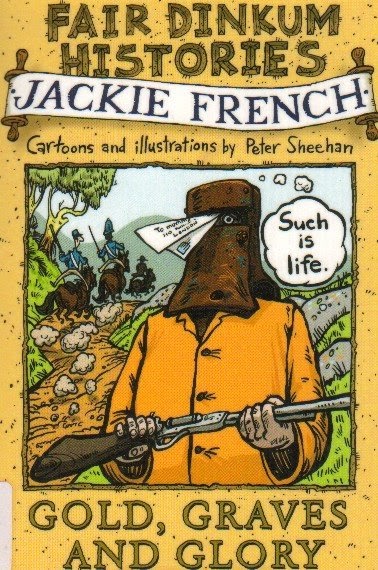
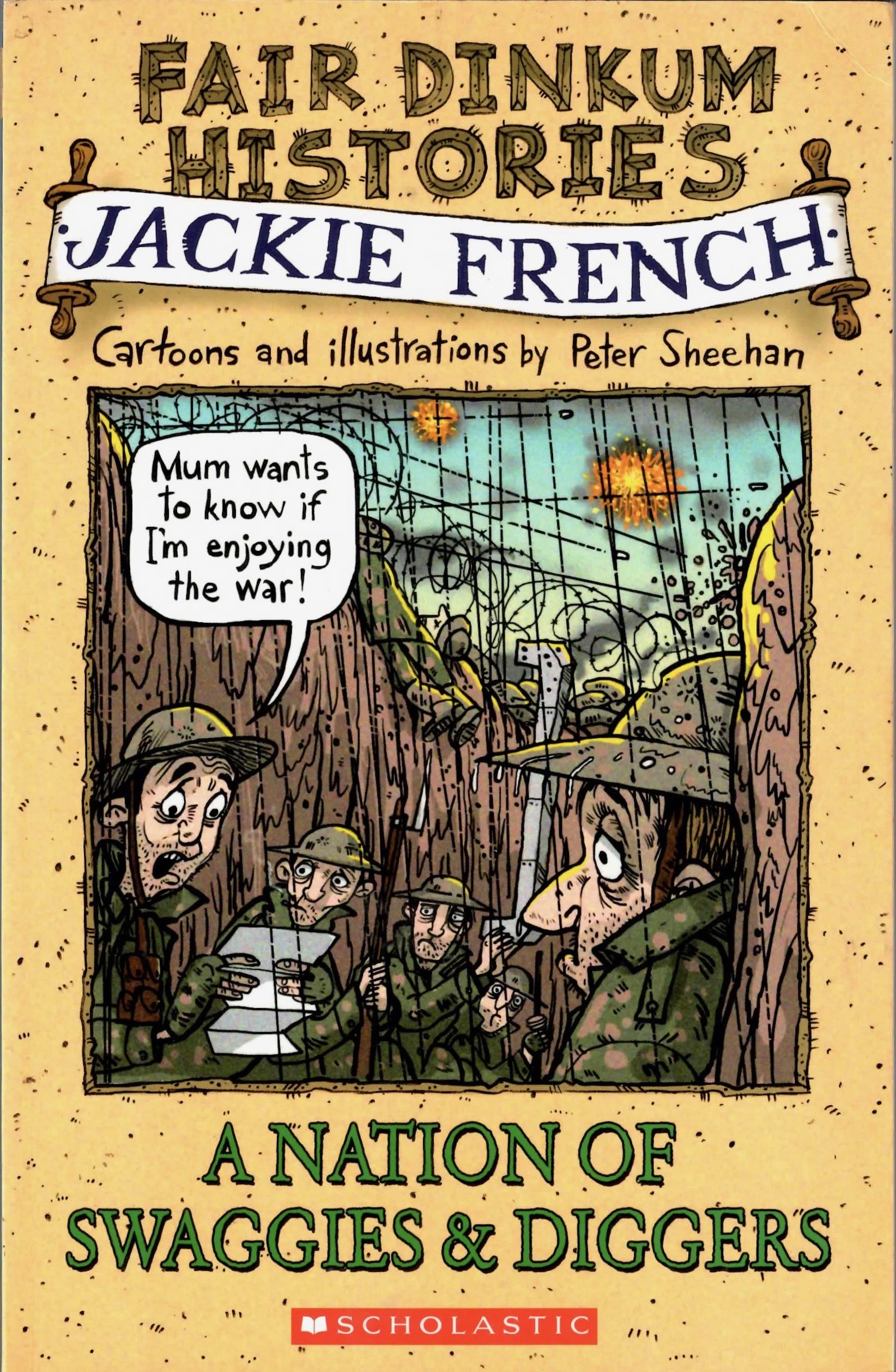
I don’t understand why the Fair Dinkum Histories haven’t been universally greeted with drum rolls and fanfares. These are the fourth and fifth books in the series, and like their predecessors they are lively and unpatronising accounts of parts of Australian history. They provide what the former Prime Minister demanded of history: a narrative thread. I don’t know what he would make of their attention to the dispossession of Aboriginal people, to class and cultural diversity, to the role of women and children, and so on, but they’ll do me.
Gold, Graves and Glory tells the story from 1850 to 1880, and as you’d expect from the title and the cover, is about goldrushes and bushrangers. There’s also quite a bit about explorers. What you might be surprised by are the account of Chinese miners on the goldfields, including the racism they endured, the attention to Aboriginal dispossession, the detail about underpaid ‘Afghan’ camel handlers who accompanied the explorers, and the expansion of the story beyond the south-east of the mainland, including the beginnings of the sugar industry in Queensland. On an idiosyncratically personal note, it was nice to see Edward John Eyre’s Journals of Expeditions of Discovery in the Recommended Reading list – Eyre’s story doesn’t feature in the narrative, so presumably it’s there because Jackie French recognises it’s a good yarn. My aborted MA thesis in the 1970s was to have made that point at great length.
A Nation of Swaggies & Diggers is harder going than any of the others in the series so far: covering the period 1880–1920, it deals with things I remember as being acutely boring in my primary school days – the importance of gold and wool to the developing economy, the conferences leading up to Federation, the Depression of the 90s – and it doesn’t entirely manage to break that childhood curse. The mandatory thumbnail sketches of the first prime ministers don’t help. And even the account of Australians going to war is somehow flat – perhaps because of the unresolved contradiction between horror at what actually happened and the role the glorifying/sentimentalising myth has played.
But even here Jackie French’s text and Peter Sheehan’s cartoons maintain a light tone (the latter mostly with satisfyingly groan-worthy puns) without resorting to bum jokes. The account of how domestic life was changing, complete with recipes, is particularly delightful. And suddenly in the first years of the last century I was recognising things from my own childhood: the mint at the back steps, the lemon tree in the yard, sponge cake and lamingtons, blocks of ice wrapped in hessian for the ice chest. [Full disclosure: my copies of both these books were given to me by Peter Sheehan, who is a friend of mine; and the series was originally commissioned for Scholastic by Margrete Lamond, also a friend.]
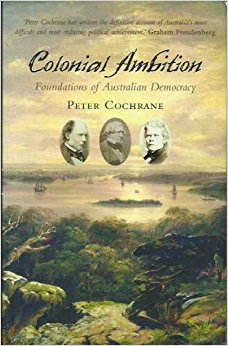
In the Fair Dinkum Histories, the story of the coming of independence and democracy to the Australia colonies is largely a matter of dates, and where the debates can’t be avoided, as in the lead-up to Federation, they are described in a chapter entitled ‘The Great Yack Attack’. And that’s fair enough: compared with exploration, slaughter, discovery of gold, romantic uprisings, and the struggles of Indigenous Australians, Chinese and women, questions of governance don’t obviously rate high on the child-friendly scale. Colonial Ambition was published too late to be useful in Jackie French’s research. Had the timing been different, she might well have found her way to delight child readers with the mid 19th century struggles conducted by a cast of extraordinary characters over the form of government that would prevail in the colonies. Peter Cochrane has certainly achieved that for adult readers.
It’s not bang-bang-kiss-kiss; it’s not bloodshed on a foreign strand; but it’s a great story full of comedy and heroism, big ideas and petty point-scoring, opportunism and integrity, and eloquence, eloquence, eloquence. In those days people didn’t watch sound-bites on the telly after dinner; they wandered up to Macquarie Street to see if here were any good speeches in the Legislative Council. In 1846 more than 3000 people met at Homebush Racecourse to protest against a proposal to reintroduce convict transportation; a year or so later more than 2000 met in the Royal Victoria Theatre in Haymarket to oppose a new constitution being foisted on the colony by Earl Grey. They gathered, they cheered the speakers, they prevailed. In the absence of universal suffrage, the ‘multitude out-of-doors’ did make its voices heard; in the absence of votes for women, a Ladies’ Petition was a significant political event.
The Art Student read this before me, and read great slabs of it aloud. It’s that kind of book: among other characters, it’s got a fiercely eloquent albino dandy, a faux-rustic oligarch with a chip on his shoulder, a dapper Regency blade who is devastated when he kills his wife in a carriage accident, a rocking-horse maker who becomes known as the Father of Federation. The committee advising John w Howard on the inaugural Prime Minister’s History Prize recommended this book for the prize. The then PM only partly accepted the recommendation, and decided the prize should be shared with Les Carlyon’s history of the First World War. One result of this decision is that the two books are placed side by side as alternative foundation narratives: Australia achieved true nationhood when thousands of its young men were slaughtered in a European war (and did some killing of their own), or Australia achieved nationhood through the less glamorous but arduous business of arguing, rallying, orating, lobbying, writing, imagining, organising … thinking. There was very little violence, and though Peter Cochrane uses the metaphor of war and his characters refer frequently to the American War of Independence and the French Revolution, there was no war.
On 30 March 1858 Charles ‘Slippery Charlie’ Cowper introduced a bill to amend the Electoral Law in New South Wales, the bill that was to establish manhood suffrage and make the colony a ‘democracy for men’ (Cochrane’s phrase) and who even remembers that date? ‘The introduction of democracy in New South Wales,’ says Cochrane, ‘ was as matter-of-fact as a handbook for a customs clerk.’ But of course, that quiet moment came as the culmination of years of struggle.
[7 August 2025: I’ve retrieved this post from my old blog because I’m currently reading a book by Geoff Page, and Lawrie & Shirley, reviewed here, is the only other book by him I’ve read since I started blogging]
Gillian Leahy’s movie Our Park has a special place in my heart because the park in question is my local park. But it’s got an even stronger hold on my affections because of its uncomfortable, even gruelling depiction of democracy in action. As they struggle over what use should be made of a little patch of semi-derelict land, people disagree passionately, at times (off camera) come to blows, and (on camera) declare intense animosity for each other. But things are thrashed out. Many points of view are heard. Everyone owns the final result.
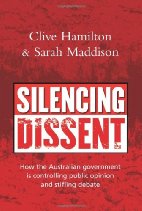
That’s not how democracy works in Prime Minister John w Howard’s Australia. People do get beaten up, of course, mostly off camera and with a legal requirement not to talk about it. But disagreement with the government’s policies doesn’t get much of a look-in. Silencing Dissent is a chilling look at the way dissenting voices have been systematically intimidated, bribed, excluded, marginalised or drowned out over the last decade or so. It lists the democratic institutions that have been undermined: the media, the senate, non-government organisations, intelligence and defence services, the public service, universities. Because it’s a book of essays all making the same point, there’s quite a bit of overlap and repetition, but for slow learners like me that’s all to the good. A young friend of mine is fond of saying that the Coalition are Fascists (he intends the term precisely) and that only cowardice stops people from saying so; the detail accumulated in this book makes him seem less hyperbolic.
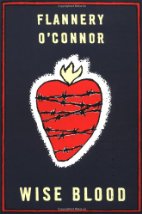
To cheer myself up I moved on to a bit of fiction by Flannery O’Connor. I hope that sentence doesn’t make her turn in her grave, but paradoxically there is something cheering about Wise Blood. It reads to me as if it was written in a trance – as if some twisted angel had dictated it and the young Ms O’Connor just wrote it down, trusting it would amount to something. Most of its characters are all ‘a little bit off their heads’ and some are a big bit off the rails. Hazel Motes, played by Brad Dourif in the John Huston movie which I plan to watch again on DVD soon, is in obsessive revolt against the punitive and repressive Christianity of his childhood, and burns with an evangelical imperative to preach a Church of Christ without Christ (I would have said cacangelical but the word doesn’t seem to exist).
I remember reading a review of the movie that compared Hazel to the Monty Python character who was trying to train ravens to fly underwater. That comparison captures the bleak comedy of the book, but leaves out the appalling sense of waste and, in the end, awe that Hazel inspires. Flannery O’Connor was a Catholic living in the southern US. The characters in this book are all Protestant. Maybe she’s observing them from the other side of a sectarian fence and seeing them as wildly deluded, but the pervasive sense of intractable mystery, of not-knowing, and the lack of overt authorial commentary, makes a sectarian reading seem wide of the mark. I finished the last page with a sense that I’d been taken somewhere dark, weird and scarily believable.
I read Waves as research for work. It reminded me in a roundabout way of an early review of David Williamson’s play The Removalists. As you probably know, in the course of that play, a man – Kenny – is terrorised and beaten up by two policemen. The review I’m thinking of by the late, magisterial H. G. Kippax, found fault with many aspects of the play, including the victimised man being described as a typesetter: according to Kippax, typesetters were not working-class yobbos like Kenny, but quirky individuals who were forever surprising their acquaintances with odd snippets of information. It came with the territory, you see: according to Harry, typesetters read much more widely, if also more shallowly, than normal people who weren’t handling other people’s words for their entire working lives. Like those possibly mythical beings, I often find myself acquiring information about the most unlikely subjects. Waves introduced me to a new world of specialised language: technical language for describing waves and related phenomena (lefties, beachbreaks, righties, peaks and barrels); jargon associated with surfing equipment and practice (coaming, mals, floaters, nosedives, guns); and the argot of the surfing culture, which includes but is not limited to the other two (groms, kahunas, charging and stoked).
The bit I enjoyed most was grand old champion surfer Nat Young’s 1974 encounter with Patrick White (whom Tim Baker describes disarmingly as a ‘gay literary luminary’). After Young is quoted as saying how important The Tree of Man had been to him, we are given this glimpse of Patrick White as filtered through a surfer sensibility:
This unlikely pair discovered they had a connection that went back twenty-five years. ‘He was living down at Werri at that stage, him and his boyfriend, and they were very much in love and they used to spend a lot of time walking on the beach. He said he used to watch surfing and watch waves. Werri, from my childhood, was very important because there was a golf club and it was abandoned and we used to go in and just stay there. And Patrick understood. He said, “Oh, we used to laugh about the way the golf club had turned into a derelict place and the surfers were squatting there on the weekends.” So he knew exactly where my head was at.’
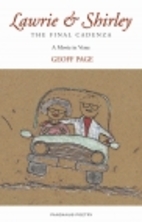
Lawrie & Shirley was a birthday present from my niece Paula.
Somewhere along the line I’ve absorbed, without really noticing it, the notion that poetry should be difficult – if it’s not difficult it’s doggerel; almost: if it rhymes and has a sense of humour, it must be bad. Not that I hold these assertions to be true, but they have insinuated themselves into my brain. But hell, if Lawrie and Shirley is doggerel, then let’s have lots more.
It’s a rhyming narrative, ‘A Movie in Verse’, about a relationship between a man in his early eighties and a woman who’s not a lot younger. Each of its 47 ‘scenes’ opens with screenplay-style directions of the ‘INTERIOR. DAY’ variety, and the story progresses mainly through visuals and dialogue. It’s light, funny, has an unsurprising range of characters (middle-aged children who see their inheritances threatened, disapproving former friends, etc), and manages to feel like an enjoyable romantic comedy, albeit a geriatric one. The great fear that hangs over the characters isn’t death – everyone knows that death isn’t far off – but disability, and more specifically dementia. I wouldn’t say it’s a major focus, but it crops up from time to time. Like this, where Shirley takes Lawrie to visit her aunt Ida in a nursing home – also a nice example of how the jolly dump-de-dum of the tetrameters can tilt over into genuine pathos:
Shirley looks around the room,
trying to locate the smile

she'll recognise as Auntie Ida's.
And finds her after quite a while

away off in a distant corner,
wasting quietly in a chair,

doing absolutely nothing,
no recognition in her stare;

no smile, no words like 'Hello, Shirley';
no formula like 'Hello, dear'.

Shirley stoops to take her hand
and, fighting back a hidden tear,

sighs to Lawrie, close beside her,
'There's no one in there any more.'

Eventually, they turn about
and walk back down the corridor.

Cross-fade to a final shot
of Ida's vacant, lunar face,

a kind of undiscovered planet
staring coldly into space.
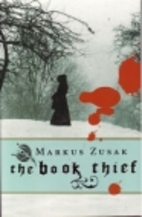
The Book Thief, another birthday present, is a terrific read. I guess it’s a YA title, though some of those famously nervous school libraries might have trouble with the swearing – even though it’s in German, it’s all meticulously translated. The action of the story takes place in a small community near Munich during the Second World War, and is narrated by Death, who doesn’t enjoy his work, is deeply curious about human beings and charmed by them even in the middle of the immense overwork of that period.
Such dark material, but delivered with delicacy, affection and even lightness. Some elements of the presentation might seem irritatingly tricksy to some readers, but they worked fine for me as something like aeration. There are two or three short books, lyrical graphic novels you might call them, within the book, and every now and then a short piece of text is separated from the body and printed in bold type with its own little heading: a key piece of dialogue, some background information on a character, statistics on parts of the war. I read a review somewhere online taking the book to task for trying to exculpate the German people over the murder of the Jews: that’s absolutely not how I read it. These are recognisably human people. They love their children; some take actions, small or huge, against the prevailing Nazis; all of them, willingly or by cruel force of circumstance, are complicit; and all of them suffer. The book has won awards, and it deserved them.
Leonard Cohen’s book is a weirdly mixed bag. There are some memorable serious poems, introspective and embarrassingly honest; and one or two witty throwaways. There are the lyrics of songs, several of which are on his 2004 album, Dear Heather (I’ve just listened to them, and they’re fabulous as songs). But too much of it reads like excerpts from his notebooks – whingeing effusions about being fat, old, failing in love and as a monk, past his prime as poet and singer if he ever had a prime – adorned by innumerable variations on the same gloomy charcoal self-portrait, most of them accompanied by gnomic handwritten annotation. My sense is that if Leonard Cohen wasn’t a celebrity this book wouldn’t have seen the light of day, or at least would have been a much slimmer volume. I suppose we should be grateful that his celebrity status derives largely from his writing! The longing of the book’s title is everywhere, shot through with despair. Frankly, as a preacher in a Peter Cook sketch once said about sex and violence in the movies, we get enough of that at home. When the poem ‘Titles’ asked me:
and now Gentle Reader
in what name
in whose name
do you come
to idle with me
in these luxurious
and dwindling realms
of Aimless Privacy?
I was tempted to reply, ‘G-d alone knows.’ It’s a beautifully produced book, feels good in the hand, and there are some very good things in it. Deeply committed fans will almost certainly love it. I think his editor has let him – and us – down.
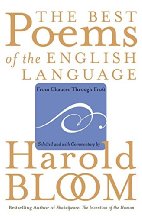
Sporadically I continue my way through the Bloom book: Edward Lear and Lewis Carroll made the cut, and make strange bedfellows indeed with Yeats, Hardy and the guy who wrote ‘Et in Arcadia Ego’ (‘I have been faithful to you, Cynara, in my fashion’). In his commentary, Harold does seem to like letting us know about intimate or passionate relationships poets have with people of the same gender.
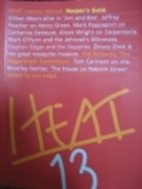
I’ve just started the Heat. Gillian Mears has multiple sclerosis, and some years ago had an unrelated, horrific medical crisis that brought her close to death. When she was securely back from the brink, she bought an old ambulance and set off on a solitary adventure, driving and camping solo for many months. Her account of it is the first article in this issue, and it makes me hope that she has a book in mind: there are Walden-ish moments in the New South Wales bush, House MD-ish urgencies, a beautiful rendering of the way a mind does unexpected things in crisis …
I originally posted the following to the original version of this blog on 22 April 2004. I’m resurrecting it nearly 20 years later because my book group is currently reading another Sebastian Barry novel.
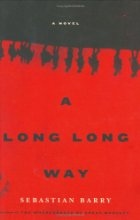
I missed the last meeting of my book group, where they discussed, among other things, Barack Obama’s Audacity of Hope and Stephen Carroll’s The Time We Have Taken. I was saved from the embarrassment of admitting that I hadn’t read either of them by an invitation I couldn’t refuse: to see Zack Snyder’s Watchmen with my sons on the giant iMax screen. But I arrived at last night’s meeting with a clear conscience. I had struggled with the first third or so of A Long Long Way.
There’s a huge field out there of First World War novels, and I know some people can’t get enough of them, but the déjà vu was a bit much for me: from Robert Graves’s Goodbye to All That, which I read an awfully long time ago, to Pat Barker’s Regeneration trilogy, they all tell the same monstrous story. The fact that the cover design of my library copy of A Long Long Way uses the same photograph as one of Pat Barker’s books only added to the turn-off. And then there was Sebastian Barry’s prose: not at all a transparent vehicle for the story, but calling attention to itself by its Irish musicality, asking to be read slowly, even aloud. Here’s a random paragraph from the early pages:
Willie Dunne’s father, in the privacy of his policeman’s quarters in Dublin Castle, was of the opinion that Redmond’s speech was the speech of a scoundrel. Willie’s father was in the Masons though he was a Catholic, and on top of that he was a member of the South Wicklow Lodge. It was King and Country he said a man should go and fight for, never thinking that his son Willie would go as soon as he did.
All that repetition and inversion and balance and general quirkiness is beautiful, but when you start reading a novel that’s written in such prose, on a subject you feel may have been done to death, you’re not necessarily enthusiastic.
Resistance proved futile. The subject, I confess, is huge enough to generate a potentially infinite number of novels, each with its own urgency and richness, its own take on things, its own ability to compel. The First World War may yet turn out to be the war to end wars if we can only learn its lessons. There’s a powerful story, well told here, in the situation of the Irish who fought for the King of England in Flanders while their compatriots were battling the forces of the same king in the streets of Dublin. Worse – and I trust completely that Sebastian Barry didn’t make this up – there were Irish recruits among the army units that fired on the Easter Uprising rebels in 1916. The novel tells the story of Willie Dunne, one of those recruits.
There was no controversy at the group. The book had touched us all. Someone said that books such as this were very important to counter the nationalistic garbage that comes at us in Australia as Anzac day approaches, obscuring the reality of modern wars. One guy arrived late, having read the wrong book, Birdsong by the wrong Sebastian, surname Faulks. Apart from giving rise to much merriment, this threw a different light on my déjà vu response: we would mention some detail from ‘our’ book, and he would exclaim, ‘That’s in this one too!’
As an added extra, someone had recently rediscovered a cache of his childhood reading, and gave each of us a comic from the early 1960s. Here’s mine:
[27 May 2023: This was originally posted to my old blog on 1 November 2007, and not retrieved when I moved to the WordPress platform. I’m republishing it now because Bill McKibben’s name came up at the 2023 Writers’ Festival, and this blog post is where I made a note of my first impressions of his Deep Economy.]
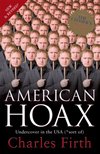
Charles Firth invented five commentators, basing their opinions on top hits on Google, and set out as an experiment to see if they could make it in US public debate. One of them got a lazy, plagiarised, largely nonsensical article attacking Cindy Sheehan published, and others had moderate success in being taken seriously in Internet conversation. It’s a disturbing and intelligent book, but undermined by the author’s apparent commitment to his comedian identity. Clive James objects to being classified as a humorist. He wants his wit and humour to be elements of his essays rather than their purpose: the essays, he says, are serious attempts to communicate ideas. I’d like to see Charles and Clive get together for a quiet chat some time, and Charles come out from behind his relentlessly Chaserian persona.
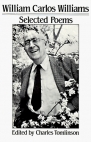
Having acquired a BA (Hons) in the 1970s majoring in Eng Lit without ever reading any William Carlos Williams, I thought it wouldn’t be a crime now to read more than ‘The Red Wheelbarrow’ and ‘This is just to say’ … And indeed the book is an education and a joy. I did go hunting for learned commentary so as to deepen my appreciation of the poetry, and had the perverse pleasure of deciding that in some cases I would trust my own reading over that of the scholar. For instance, in an article on WCW’s most anthologised poem – essentially unparaphraseable eight short lines noting the existence of a red wheelbarrow and some white chickens – I found this:
This is a poem about the tension between regularity and irregularity, and it invokes irregularity on many levels: metrical, sexual, racial. Mouth/vulva, this ‘colored’ object beckons ‘white chickens’, which like the satyrs on Keats’s urn, approach but never touch, except in the palpable rhythms and vowels of the lines, which rise – but then fall again. After the phallic assertion of the emphatic iamb ‘upon’, the poem shifts to falling rhythms, and as the speaker and his Lucy roll forward like the wheel of the barrow (a tumulus or mound over a grave) in the twelve months/feet of the year with its four regular seasons/stanzas in their ‘diurnal course’, the speaker stammers in the long i’s of the final stanza: I . . . I . . . chicken out.
I would have solemnly, if disappointedly, accepted the Freudian reading of the wheelbarrow as a female symbol, but really: ‘upon’ as a phallic assertion! ‘barrow’ as tumulus! racial tension! the fantastical invocation of Keats and Wordsworth! I’m glad I don’t have to earn a living writing things like that. In fact the way I read the poem it’s pretty much a dismissal of that kind of discourse.
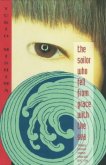
I came to The sailor who fell from grace with the sea with quite a lot of baggage. Yukio Mishima committed ritual suicide when I was 23. This, along with his extreme right-wing politics and his reported preoccupation with body-building put me off. How could someone who was acclaimed as a great writer, a runner-up for the Nobel Prize for Literature, get things so bizarrely wrong? (I was 23, OK?). Thisis his one novel that I know about without looking, and from its perch on my Reproach Shelf (where it has sat unread with War and Peace and Pride and Prejudice) it exuded a kind of sulphurous glamour.
Without all that foreknowledge I might have thought this was a finely executed exercise in genre horror. It’s certainly well written, capturing beautifully the way people – adults and children, men and women – misunderstand each other’s silences. But it’s not an exercise: in this narrative the writer is fairly evidently struggling with his membership of a death-cult of one: mad, repulsive, deeply horrible, but in the end (for him, apparently) irresistible. It strikes me as being an adult version of the drawings young Mary Bell did in the days before she murdered that little boy: a cry for help. Like Mary’s, it went unheard.
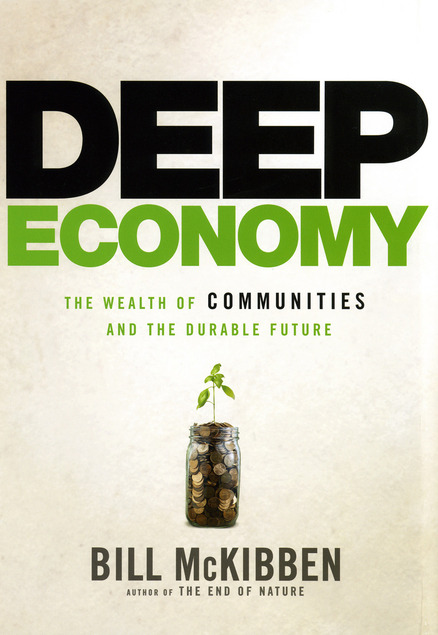
Don’t be put off by the title of Deep Economy. It’s a tremendously readable journey through the hope and terror of our times (not Terror with a capital as in suicide bombs, but lower-case terror as in the world going to hell in a handbasket). Someone once told me of a rule of thumb for comic writers that you need at least three laughs a page to keep up the momentum (a rule which – see above – I wish Charles Firth would ignore). Bill McKibben seems to work to a three-striking-bits-of-information-a-page rule. It was only great self-restraint that stopped me from constantly regaling (or should that be assailing?) companions or passers-by with tidbits.
The subtitle more or less says what the book is about: it challenges the single minded preoccupation with growth as the supreme indicator of economic success, and the ‘hyper individualism’ that that preoccupation involves; and advocates for a durable future as opposed to the likely outcome if things keep moving in the current direction with the current impetus. It’s a passionate, research-based argument for renewed – or brand new – attention to the local: in food production and consumption, and in all other economic activity. It piles up examples of the loss in human terms caused by the ruthless pursuit of economic ‘efficiency’ but it also accumulates a persuasive number of counter-examples, of people forgoing large profits for the sake of the common good.
We assume, because it makes a certain kind of intuitive sense, that industrialised farming is the most productive farming. I mean, if I sit on my porch whittling toothpicks with my Swiss Army knife, I can produce a hundred in a day. If I install a toothpick-whittling machine, I can produce a thousand in an hour. By analogy, a vast Mid-western field filled with high-tech equipment ought to produce more food than someone with a hoe in a small garden. As it turns out, however, this simply isn’t true. If all you are worried about is the greatest yield per acre, then smaller farms produce more food. Which, if you think about it some more, makes sense. If you are one guy on a tractor responsible for thousands of acres, you grow your corn and that’s all you can do: one pass after another with the gargantuan machines across your sea of crop. But if you’re working on ten acres, then you have time to really know the land, and to make it work harder. You can intercrop all kinds of plants: their roots will go to different depths, or they’ll thrive in each other’s shade, or they’ll make use of different nutrients in the soil. You can also walk your fields, over and over, noticing. … Does this sound like hippie nonsense? According to the most recent USDA Census of Agriculture, smaller farms produce far more food per acre, whether you measure in tons, calories or dollars.
It’s very much a US book, and I don’t know how much of the specifics is true of Australia (far too much, I expect); but it also looks at the global picture. It has felt like a lifeline as both major party leaders in the current federal election campaign bang on about upward pressure on interest rates in what is fairly blatantly baby-talk economics. Intuitively, to this uneducated mind the prevailing view that permanent growth is the only way forward looks like a recipe for disaster. Here is a substantial, reasoned, systematic move towards an alternative way of thinking about these things. Not that Bill McKibben is trying to pass himself off as a brilliant innovator; his brilliance lies not only in his throng of memorable stories to flesh out his argument, but also in the mass of telling quotes from an army of researchers, experimenters and thinkers.
I confess that with The Best Australian Poetry 2007 and me it was irritation at first sight. What does it mean to publish ‘best of 2007’ book in September? A quick look up the back of the book reveals that a couple of its poems were first published in 2005 and the rest in 2006.
Ok, that’s my first nitpick out of the way. Then I looked at the list on page 98 of ‘Journals Where the Poems First Appeared’ (the book is subtitled ‘a selection of the best poems from Australia’s literary journals’), and was a bit surprised to see that Quadrant didn’t get a guernsey. But it turns out that there are poems from that venerable right-wing rag, and from the equally venerable left-wing, though less well funded, rag Overland, which also doesn’t rate a mention on page 98.
And there’s more substantial cause for irritation: more than 40 of the book’s 120 pages are devoted to commentary: introductory material by and about the guest editor and the series editors, and then notes from the contributing poets about the poems, which reminded me inevitably of William Carlos Williams’s remark: ‘You should never explain a poem but it sometimes helps nevertheless.’ Some of the poets’ own commentaries here are witty, some are illuminating, but most are plain dull – this is not a criticism of the poets, since the poems themselves are presumably what they wanted to say.
My mounting irritation didn’t put me in a mood to enjoy the forty poems, some of which, it turns out, are very good. Some, of course, left me cold and uncomprehending. Perhaps all the bumph is meant to deal with the all-to-frequent failure of a lot of post-modern poetry to grab the lay reader; sadly, it only adds to the alienation for this one.
Left to my own devices, I wouldn’t have picked up Kickback or Leigh Sales’s Detainee 002 (which I read in September). I’d read enough about both scandals in the newspapers as they were unfolding. But some members of our book club (really a Book Swap) do relish that sort of thing, and recommended these books strongly at our last meeting. I somehow came away with both of them. Caroline Overington’s epigraph, which turns out to be her punchline as well, is a found poem from the utterances of Alexander Downer, who I hope will soon be relieved of the burden of producing such gems:
What you don’t know, you don’t know. And you can’t get to the heart Of what you don’t know.
This is a book about last year’s headlines, but it contains a lot of the news that stays news. It’s largely a blow-by-blow account of shonky dealings – Iraq’s corruption of the UN’s Oil-for-Food program as aided and abetted by a highly reputable Australian company and the subsequent cover-up – involving hundreds of millions of dollars: illegal, immoral, carefully ignored for as long as possible by lily-white John Howard and shameless Alexander Downer (who seem to have people on staff whose job is to make sure they never actually see faxes, emails, cables and other inconvenient communications). This was an excellent follow-up to Deep Economy (which I intend to urge on my co-Book-Clubbers), as an extended case study of collateral damage from a single-minded pursuit of profit. I found myself drawing morals from the story:
For those who sup with the devil, no spoon-handle is long enough
If you have a conflict of interest with the USA, make sure you’re squeaky clean
When top members of your organisation go by nicknames like ‘Slug’, don’t let your guard down
Government organisations that are privatised may not be nastier than long-established capitalist enterprises, they may just be more likely to get caught
Too many Australian journalists take the government at its word too much of the time
Page 2 of the newspaper may contain gems
Not only ladies do protest too much
Seekers after the truth sometimes have vile motives
Seekers after the truth can expect to have vile motives attributed to them
Suppressors of truth sometimes have good intentions
Under the Howard government, the public service tradition of frank and fearless advice has taken a battering.
I read Cairo Jim and the Astragals of Angkor in a day, just after the final episode of The Sopranos was screened here, while Tony Abbott was impersonating an arrogant callus in his final days in office. As a finale, Astragals offers less closure but more certainty than the former, and inspires more hope and more sorrow than the latter.
In Cairo Jim’s world words like ‘flabbergast’ are part of normal speech, alliteration runs as wild as jungle creepers, similes (all more original than any I’m offering here) sprout like hairs in a mole, evil never wins the day but life would be much less interesting if it didn’t try. I think Geoffrey McSkimming may be the one who told me the rule about frequency of laughs I referred to above: and sure enough, even though this is a chase story with the fate of the world hanging in the balance, it’s the laugh lines that provide the momentum. These books have captured and sustained a loyal and ever-expanding following among their intended readership with no boost from awards and little notice in the press – quite an achievement.
[I originally posted this in my old blog on 31 July 2007, but didn’t retrieve it when I moved to the WordPress platform. I’m republishing it now because I’m about to blog about Alexis Wright’s Praiseworthy, and what I wrote about Carpentaria here is true of Praiseworthy as well. Retrieving the post is also a tiny way of having the blog mark Robert Adamson’s death on 16 December last year.]
The Goldfinches of Baghdad includes an elegy for Arkie Whitely, thereby providing a smooth segue from the last book I read in June, Another Country, which is dedicated to her. Bob Adamson’s book is published by a US company. Couldn’t he find an Australian publisher? Or does this give him a crack at a larger readership? Or is it just an an example of globalisation with no subtext at all?
The book is in three sections, of which I expect to reread the first two many times. Maybe it was just a trick of the light, or the music that happened to be playing as I read, but these poems, almost all of them featuring birds, the Hawkesbury River and/or fishing by night, just picked me up and took me with them: the word that comes to my mind for the interplay of real birds, the real river and what the poet’s mind makes of them is ‘charming’, as in having magical force. Without a hint of appropriation of Aboriginal stories or images, it seems to me, Adamson manages to create a sense of sacred involvement with his country.
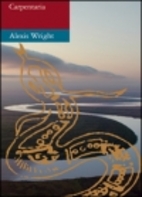
After been immersed, as it were, in whitefella Robert Adamson’s Hawkesbury, it felt quite natural to move on to Carpentaria, which starts with a river. This is from page 2:
Imagine the serpent’s breathing rhythms as the tide flows inland, edging towards the spring waters nestled deep in the gorges of an ancient limestone plateau covered with rattling grasses dried yellow from the prevailing winds. Then with the outward breath, the tide turns and the serpent flows back to its own circulating mass of shallow waters in the giant water basin in the crook of the mainland whose sides separate it from the open sea. To catch this breath in the river you need the patience of one who can spend days doing nothing.
The book is like nothing else I’ve ever read. I suspect that my decades of working as an editor, mainly of things written for children, have set me up for a quite distinctive relationship to it. It matters to me that words are used with their correct meanings (I hate ‘discomfit’ being used to mean ‘make uncomfortable’, for instance), that punctuation and spelling are correct (though I yearn for spelling reform and love George Bernard Shaw’s spelling of ‘fish’ as ‘ghoti’ and, truly, am not a rule-bound comma-curmudgeon), and that writing makes syntactical sense (I cringe when ‘none’ is used with a plural verb, but I acknowledge that no meaning is lost and don’t see it as absolutely incorrect). Mixed metaphors, stock phrases, tautologies, inconsistencies, all are guaranteed to turn me off or – if I’m so empowered – to make me reach for the blue pencil. I think of these attitudes as constituting a passion for the language, and of myself in my small way as a defender of its integrity. Well, Carpentaria is like a grenade lobbed into the middle of that way of reading.
It’s a wonderful book, richly poetic (I defy anyone to read it quickly), passionate, and funny. There are extraordinary, surreal set pieces, a stunningly original cast of characters and a plot full of surprising turns. But the most striking thing about it is the language. Alexis Wright has said that she based the narrator’s voice on a conversation she overheard between two old Aboriginal men in the street in Alice Springs. I don’t doubt it. But this isn’t Aboriginal English, or a literary equivalent of it, as the language of Beasts of No Nation suggests an African English. It’s pretty standard English, but as used by someone coming at it from outside: it contains every one of the things that make my editor’s heart shrink and fingers twitch, with the possible exception of the greengrocer’s comma: a dog lies with its belly belly-up; something has ‘flown the coup’. I had been shocked to read Ivor Indyk, redoubtable editor-in-chief of Giramondo, quoted in the newspaper as saying that the manuscript when he first saw it was ‘woolly’. But I now think he was misquoted, or at least misunderstood. He was most likely referring to the peculiar challenge this book must have posed to any copy editor: what in almost any other manuscript would have been errors to be corrected, in this one are integral elements. Here’s a passage, chosen at random:
Initially, on that eventual morning, on the eleventh hour of the eleventh day of the month of November, when Gordie did not play the remembrance bugle, everyone thought: Alright! Something is astray. Something smells mightily funny to me. Although, at first, everyone had thought very little about it. Perhaps Gordie was sick with the summer flu. Nothing to be done about that. Life went on as usual. Desperance was a normal town where even the bugle player had as much right as everyone else to get sick with influenza and stay home in bed. Normal people knew how to tell the time without depending on a clock, or a signal, and had enough decency, unlike the rest of the country, to stand for a minute’s silence in respect of the fallen on the eleventh hour, even without the bugle of the returned, to remind them.
There are some changes that a competent copy editor would make almost automatically to this: change ‘mightily’ to ‘mighty’, delete the comma between ‘returned’ and ‘to remind them’ (this kind of mis-comma-ing is rampant in the book, often rendering the sense very difficult to determine), change ‘on the eleventh hour’ to ‘at the eleventh hour’. One who had slavishly subjected his or her will to the style manual would ruthlessly make other changes: fix the fragments ‘Although … about it’ and ‘Nothing to be done about that’, amend ‘Alright’ to ‘All right’. Someone with an eye for redundancy and consistency would suggest fixes for the contradiction between what ‘everyone thought’ initially and what ‘everyone had thought’ at first; would query the assertion that ‘normal people’ were ‘unlike the rest of the country’; would circle ‘flu’ and ‘influenza’ and the repeated ‘on the eleventh hour’. This tidying up would make the passage read more smoothly, and make its meaning easier to access, but what it would lose is exactly the thing that is so distinctive about the prose: its outsider quality. The narrator loves language. The words come tumbling out, alliterative, onomatopoeic, idiosyncratic … and in some sense out of control.
In one of her many appearances at the Sydney Writers Festival this year, Inga Clendinnen said that whereas essayists invite the reader to come on a companionable walk with them, writers of fiction are always playing Catch Me If You Can. That may be true of some, even most, novelists: they build worlds which they invite us to enter. Reading Carpentaria, one feels that the author is running as hard as anyone else trying to catch up with her own creation. I mean no disrespect when I say that the book is less a raid on, than a prolonged campaign by, the inarticulate. The language is out of control and refuses to be tied down to the rules of ordinary discourse. It might seem that I’m talking about a trivial aspect of the book, and perhaps I am. But I found it profoundly challenging; it invaded my dreams. And the constantly unnerving play with language is a key part of that challenge.
[Added 7 August 2005: Ivor Indyk was quoted in Thorpe’s Weekly Book Newsletter as saying of Carpentaria:
It was quite an intellectual challenge for me as an editor: there are ungrammatical moments that you wouldn’t want to cut out, even though your training tells you to ‘fix’ them.
Which says elegantly a lot of what I was trying to say.]
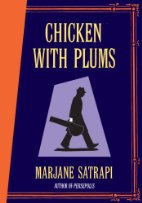
Marjane Satrapi’s stark black and white comic strips provided a brief holiday from Alexis Wright’s tumultuous ride. The plot of Chicken with Plums has been unkindly summarised on LibraryThing: ‘a man without his musical instrument is depressed.’ Which is like ‘old man gets dementia’ as a summary for King Lear. It’s a fine romantic tale about true love lost twice over. I’m glad to see that Satrapi can move on from her powerful autobiographical Persepolis, and tell this touching, complex tale so elegantly. (All the same, I’m eager for the English version of Persepolis, tome trois, in which Marjane goes to Austria.)
I continue to make my meditative way through the Harold Bloom anthology, and I’m mostly enjoying it and getting an education. For someone who has a reputation as being a great upholder of the canon of great writers, he’s remarkably idiosyncratic in his selection of ‘the best poems in the English language’, and in his annotations on the selection. I think I already mentioned that he disparages Edgar Alan Poe, but includes a poem or two because he’s so popular. Well, when he gets on to Ezra Pound, our Harold makes no bones about despising the Fascist anti-Semitic montageur, and he takes eight pages ripping into him, followed by one poem, a translation from mediaeval French, included because Pound is an excellent translator. At least that’s why Harold says he included it; it’s pretty darned obvious that the poem’s there because without it he wouldn’t have been able to include his extended anti-Pound bile. Of course the publisher probably came up with the book’s title: Shorter English and United States Poems I Feel Like Anthologising, with Some Notes on Poets I Hate would have been more accurate, but isn’t as catchy.
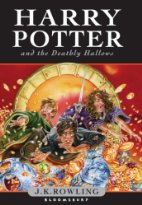
Given Professor Bloom’s feet of clay, I don’t feel any need at all to defend myself against his judgement on the Harry Potter books: ‘Can more than 35 million book buyers, and their offspring, be wrong? Yes, they have been, and will continue to be for as long as they persevere with Potter.’ I did, however, have to overcome other sources of reluctance – I’ve not been totally grabbed by what I’ve read of the saga previously; I had an unpleasant exchange of emails with JKR’s agent nearly a decade ago; and I’m moderately disgusted by the way the press piles onto the Potter bandwagon, heaping lazy and ignorant generalised scorn on the extraordinary wealth of other works written for children. But I joined the 35+ million, and bought the children’s edition at the recommended retail price, of which Gleebooks assures me a certain amount will go to the Fred Hollows Indigenous Literacy Program. I wanted to read for myself HOW IT ENDS. I’m half way through it as I upload this, and so far, I have to say, it’s also like no other book I’ve read – in this case because of the constant sense that I’m not just reading a book but taking part in a major cultural event, being just one of millions of people absorbing these very words at roughly this very time. Having found out ten minutes ago what the Deathly Hallows are, I still want to know what happens next.







 Me fail? I fly!