Category Archives: Retrieved from ‘Family Life’

Books I read in July [2007]

[I originally posted this in my old blog on 31 July 2007, but didn’t retrieve it when I moved to the WordPress platform. I’m republishing it now because I’m about to blog about Alexis Wright’s Praiseworthy, and what I wrote about Carpentaria here is true of Praiseworthy as well. Retrieving the post is also a tiny way of having the blog mark Robert Adamson’s death on 16 December last year.]

Robert Adamson, The Goldfinches of Baghdad (Flood Editions 2006)
Alexis Wright, Carpentaria (Giramondo 2006)
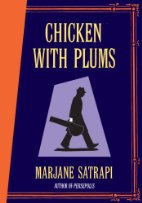
Marjane Satrapi, Chicken with Plums (Jonathan Cape 2006)
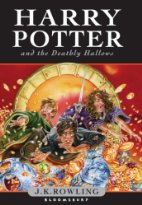
J K Rowling, Harry Potter and the Deathly Hallows (Bloomsbury 2007) (begun)
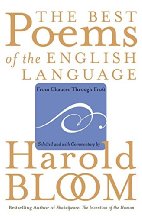
Harold Bloom’s Best Poems (continuing)
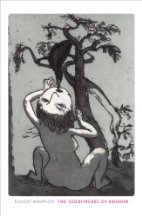
goldfinches

The Goldfinches of Baghdad includes an elegy for Arkie Whitely, thereby providing a smooth segue from the last book I read in June, Another Country, which is dedicated to her. Bob Adamson’s book is published by a US company. Couldn’t he find an Australian publisher? Or does this give him a crack at a larger readership? Or is it just an an example of globalisation with no subtext at all?

The book is in three sections, of which I expect to reread the first two many times. Maybe it was just a trick of the light, or the music that happened to be playing as I read, but these poems, almost all of them featuring birds, the Hawkesbury River and/or fishing by night, just picked me up and took me with them: the word that comes to my mind for the interplay of real birds, the real river and what the poet’s mind makes of them is ‘charming’, as in having magical force. Without a hint of appropriation of Aboriginal stories or images, it seems to me, Adamson manages to create a sense of sacred involvement with his country.
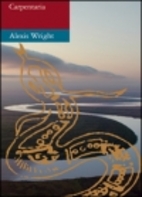
After been immersed, as it were, in whitefella Robert Adamson’s Hawkesbury, it felt quite natural to move on to Carpentaria, which starts with a river. This is from page 2:

Imagine the serpent’s breathing rhythms as the tide flows inland, edging towards the spring waters nestled deep in the gorges of an ancient limestone plateau covered with rattling grasses dried yellow from the prevailing winds. Then with the outward breath, the tide turns and the serpent flows back to its own circulating mass of shallow waters in the giant water basin in the crook of the mainland whose sides separate it from the open sea. To catch this breath in the river you need the patience of one who can spend days doing nothing.

The book is like nothing else I’ve ever read. I suspect that my decades of working as an editor, mainly of things written for children, have set me up for a quite distinctive relationship to it. It matters to me that words are used with their correct meanings (I hate ‘discomfit’ being used to mean ‘make uncomfortable’, for instance), that punctuation and spelling are correct (though I yearn for spelling reform and love George Bernard Shaw’s spelling of ‘fish’ as ‘ghoti’ and, truly, am not a rule-bound comma-curmudgeon), and that writing makes syntactical sense (I cringe when ‘none’ is used with a plural verb, but I acknowledge that no meaning is lost and don’t see it as absolutely incorrect). Mixed metaphors, stock phrases, tautologies, inconsistencies, all are guaranteed to turn me off or – if I’m so empowered – to make me reach for the blue pencil. I think of these attitudes as constituting a passion for the language, and of myself in my small way as a defender of its integrity. Well, Carpentaria is like a grenade lobbed into the middle of that way of reading.

It’s a wonderful book, richly poetic (I defy anyone to read it quickly), passionate, and funny. There are extraordinary, surreal set pieces, a stunningly original cast of characters and a plot full of surprising turns. But the most striking thing about it is the language. Alexis Wright has said that she based the narrator’s voice on a conversation she overheard between two old Aboriginal men in the street in Alice Springs. I don’t doubt it. But this isn’t Aboriginal English, or a literary equivalent of it, as the language of Beasts of No Nation suggests an African English. It’s pretty standard English, but as used by someone coming at it from outside: it contains every one of the things that make my editor’s heart shrink and fingers twitch, with the possible exception of the greengrocer’s comma: a dog lies with its belly belly-up; something has ‘flown the coup’. I had been shocked to read Ivor Indyk, redoubtable editor-in-chief of Giramondo, quoted in the newspaper as saying that the manuscript when he first saw it was ‘woolly’. But I now think he was misquoted, or at least misunderstood. He was most likely referring to the peculiar challenge this book must have posed to any copy editor: what in almost any other manuscript would have been errors to be corrected, in this one are integral elements. Here’s a passage, chosen at random:

Initially, on that eventual morning, on the eleventh hour of the eleventh day of the month of November, when Gordie did not play the remembrance bugle, everyone thought: Alright! Something is astray. Something smells mightily funny to me. Although, at first, everyone had thought very little about it. Perhaps Gordie was sick with the summer flu. Nothing to be done about that. Life went on as usual. Desperance was a normal town where even the bugle player had as much right as everyone else to get sick with influenza and stay home in bed. Normal people knew how to tell the time without depending on a clock, or a signal, and had enough decency, unlike the rest of the country, to stand for a minute’s silence in respect of the fallen on the eleventh hour, even without the bugle of the returned, to remind them.

There are some changes that a competent copy editor would make almost automatically to this: change ‘mightily’ to ‘mighty’, delete the comma between ‘returned’ and ‘to remind them’ (this kind of mis-comma-ing is rampant in the book, often rendering the sense very difficult to determine), change ‘on the eleventh hour’ to ‘at the eleventh hour’. One who had slavishly subjected his or her will to the style manual would ruthlessly make other changes: fix the fragments ‘Although … about it’ and ‘Nothing to be done about that’, amend ‘Alright’ to ‘All right’. Someone with an eye for redundancy and consistency would suggest fixes for the contradiction between what ‘everyone thought’ initially and what ‘everyone had thought’ at first; would query the assertion that ‘normal people’ were ‘unlike the rest of the country’; would circle ‘flu’ and ‘influenza’ and the repeated ‘on the eleventh hour’. This tidying up would make the passage read more smoothly, and make its meaning easier to access, but what it would lose is exactly the thing that is so distinctive about the prose: its outsider quality. The narrator loves language. The words come tumbling out, alliterative, onomatopoeic, idiosyncratic … and in some sense out of control.

In one of her many appearances at the Sydney Writers Festival this year, Inga Clendinnen said that whereas essayists invite the reader to come on a companionable walk with them, writers of fiction are always playing Catch Me If You Can. That may be true of some, even most, novelists: they build worlds which they invite us to enter. Reading Carpentaria, one feels that the author is running as hard as anyone else trying to catch up with her own creation. I mean no disrespect when I say that the book is less a raid on, than a prolonged campaign by, the inarticulate. The language is out of control and refuses to be tied down to the rules of ordinary discourse. It might seem that I’m talking about a trivial aspect of the book, and perhaps I am. But I found it profoundly challenging; it invaded my dreams. And the constantly unnerving play with language is a key part of that challenge.

[Added 7 August 2005:
Ivor Indyk was quoted in Thorpe’s Weekly Book Newsletter as saying of Carpentaria:

It was quite an intellectual challenge for me as an editor: there are ungrammatical moments that you wouldn’t want to cut out, even though your training tells you to ‘fix’ them.

Which says elegantly a lot of what I was trying to say.]
0224080458

Marjane Satrapi’s stark black and white comic strips provided a brief holiday from Alexis Wright’s tumultuous ride. The plot of Chicken with Plums has been unkindly summarised on LibraryThing: ‘a man without his musical instrument is depressed.’ Which is like ‘old man gets dementia’ as a summary for King Lear. It’s a fine romantic tale about true love lost twice over. I’m glad to see that Satrapi can move on from her powerful autobiographical Persepolis, and tell this touching, complex tale so elegantly. (All the same, I’m eager for the English version of Persepolis, tome trois, in which Marjane goes to Austria.)
bloom

I continue to make my meditative way through the Harold Bloom anthology, and I’m mostly enjoying it and getting an education. For someone who has a reputation as being a great upholder of the canon of great writers, he’s remarkably idiosyncratic in his selection of ‘the best poems in the English language’, and in his annotations on the selection. I think I already mentioned that he disparages Edgar Alan Poe, but includes a poem or two because he’s so popular. Well, when he gets on to Ezra Pound, our Harold makes no bones about despising the Fascist anti-Semitic montageur, and he takes eight pages ripping into him, followed by one poem, a translation from mediaeval French, included because Pound is an excellent translator. At least that’s why Harold says he included it; it’s pretty darned obvious that the poem’s there because without it he wouldn’t have been able to include his extended anti-Pound bile. Of course the publisher probably came up with the book’s title: Shorter English and United States Poems I Feel Like Anthologising, with Some Notes on Poets I Hate would have been more accurate, but isn’t as catchy.
0747591059

Given Professor Bloom’s feet of clay, I don’t feel any need at all to defend myself against his judgement on the Harry Potter books: ‘Can more than 35 million book buyers, and their offspring, be wrong? Yes, they have been, and will continue to be for as long as they persevere with Potter.’ I did, however, have to overcome other sources of reluctance – I’ve not been totally grabbed by what I’ve read of the saga previously; I had an unpleasant exchange of emails with JKR’s agent nearly a decade ago; and I’m moderately disgusted by the way the press piles onto the Potter bandwagon, heaping lazy and ignorant generalised scorn on the extraordinary wealth of other works written for children. But I joined the 35+ million, and bought the children’s edition at the recommended retail price, of which Gleebooks assures me a certain amount will go to the Fred Hollows Indigenous Literacy Program. I wanted to read for myself HOW IT ENDS. I’m half way through it as I upload this, and so far, I have to say, it’s also like no other book I’ve read – in this case because of the constant sense that I’m not just reading a book but taking part in a major cultural event, being just one of millions of people absorbing these very words at roughly this very time. Having found out ten minutes ago what the Deathly Hallows are, I still want to know what happens next.

Dinner in the Strangers’ Dining Room

[I originally put up this post in my old blog on 23 May 2005, but didn’t retrieve it when I moved to the WordPress platform. I’m republishing it now mainly because I’m about to write something about Ruby Langford Ginibi’s Haunted by the Past. The post also has a sadly ironic note from John Hughes, and a reminder that the late George Pell was on the nose in some quarters well before the child sexual abuse revelations. It’s also a reminder that the NSW Premier’s Literary Awards used to be presented at a slap-up dinner.]

Tonight the NSW Premier’s Literary Awards were announced at the traditional dinner in the Strangers’ Dining Room in Parliament House. I had been planning to go with my friend Moira, but she was ill, so after some phoning around I found a most satisfactory replacement in my young neighbour and budding writer Jack.

It was a fabulous evening, full of talk – speeches, conversation, argument – and celebrity spotting. Premier Bob Carr sang the praises of his Premier’s Reading Challenge, then undercut this necessary self-promotion by remarking that it was nice to be able to impose one’s values ‘in the nicest Stalinist way’ and going on to riff on the idea of flying banners all over Sydney’s bearing the Stalinist slogan: ‘Life has become better, comrades. Life has become merrier.’

The address for the evening was to be given by Amanda Lohrey, but she had been incapacitated by a fall, and her speech was read to us (with passion) by Susan Ryan. It was an apologia for secular liberal democracy, framed as a response to some remarks by Sydney’s Catholic cardinal George Pell. Where he had said that secular liberal democracy was empty of values, she argued that on the contrary it thrives on diversity and so is full. The speech did have the feel of an essay looking for a place to be aired rather than an address tailor-made for the occasion. But it was excellent to be reminded that the frisson of irritation that remarks like the Cardinal’s inspire in me can be the occasion for careful thought. (The phrase ‘to we liberal democrats’ did occur in the speech as given. I didn’t get hold of a written copy, so I won’t hold that syntactical atrocity against Ms Lohrey: it may have been Ms Ryan hyper-correcting her. I’m sorry to report, though, that I did not detect a shocked collective intake of breath from the audience.)

I was sitting at an awe-inspiring table. Apart from Jack and me and two other ancillary men, there were Nette Hilton, Wendy Michaels, Julie Janson and Ruby Langford Ginibi. Nette, Wendy and Julie were judges. Ruby, it turned out, received the special award, given each year as a kind of lifetime achievement award. I was sitting next to Ruby, and can report that she stays on message: she takes very seriously her calling to educate whitefellas about Aboriginal history, and she was full of information (about the two Aboriginal bowlers who dismissed Don Bradman for a duck; about the rolling back of Aboriginal education under the Howard government; about John Howard’s motives for refusing to apologise for the stolen generations; about the devastating and ongoing consequences of Aboriginal dispossession). She was also very funny, and I got to feel a little special because it fell to me to help her get various things – the envelope containing her speech, her glasses, a little photo album – out of the bag on the back of her wheelchair.

And as for the prizes, I was struck by the humility of most of the recipients. By that I mean that they gave the impression that their subject was more important than they were.

Gillian Cowlishaw, wispy grey-haired author of Blackfellas White fellas and the hidden injuries of race told of a conversation with two Aboriginal women in Burke:

Gillian’s friend: She wants to tape us for her book.
Sister of Gillian’s friend: If she want to tape me she’ll have to f***in’ pay me.
Gillian: If you want me to tape you, you’ll have to f***in’ pay me.
Gillian’s friend: Well, at least she’s learned the language.

Tony Kevin, awarded for A Certain Maritime Incident: the sinking of SIEV X, referred us to the web site on the subject and predicted that one day someone from Australia’s security institutions would break ranks and tell the truth about what happened: and only then would we know if what he has written is true or false. How’s that for humble?

Katherine Thomson, given a prize for her play Harbour, spoke about the waterfront skulduggery of not so long ago, and reminded us, as we hardly need reminding, that our industrial relations troubles are far from over. (I’m remembering the last moments of Bertolt Brecht’s play, The Resistible Rise of Arturo Ui: ‘Although the world stood up and stopped the bastard, the bitch that bore him is in heat again.’) She told a funny story: when she first approached the Maritime Union of Australia to research the play, she went with an open mind and told them so. She was introduced to one group of wharfies like this:

This is Katherine. She’s writing a play about Patrick’s. It’s not necessarily going to be on our side, but that’s OK, because if it isn’t we know where she lives.

John Hughes, gonged for The Idea of Home: autobiographical essays, placed his book in relation to the Demidenko fake, and the way it did the dirty on, among other things, real stories of migration. He attributed his ability to complete it (at the rate of 20 pages a year) to the persistent encouragement he received from other people, especially Ivor Indyk.

Sherryl Clark, recognised for her verse novel for young readers, Farm Kid, used her moment at the mike to remind us of the tragedy unwinding in the country as the current drought continues.

Samuel Wagan Watson, who won the poetry award and the Book of the Year award for  Smoke Encrypted Whispers, was modest in a different way. He said among other things that knowing he’s won the award but not being able to tell anyone made him look constipated to his friends; that writing poetry is a tough game – ‘Before I got published, you know, I used to be white.’

Steven Herrick (please note the spelling – we got it wrong in the magazine recently), receiving his second award, this time for By the River, showed us the medal and said that when he shows his other one to school students, there’s always someone who points out that it’s silver. In trying to convince them that he’s not a loser, he tells them that the premier gave him $15 000 as well as the medal. So, he said, when he leaves, his audience is probably left with the impression that he is a loser and Bob Carr is very rich.

Tim Winton, whose excellent The Turning was the only prize-winning book I’ve read, was brief, said with obviously genuine discomfort that he felt he had robbed the other writers on the shortlist of something, and then thanked many people, including, with a nod towards Amanda Lohrey’s speech, ‘the loyal, dogged, civilian reader’.

And on top of all that, I caught up ever so briefly with a number of friends, and did a little professional fence-mending, possibly some bridge-building. It was a terrific night. Jack said he had a good time too.

Posted: Mon – May 23, 2005 at 05:57 PM

Vale Les Murray

Les Murray died yesterday. On the ABC News last night, David Malouf said,

He could be very funny. He could be very harsh. But we all listened to him, and we all needed to hear what he had to say.

Lisa at ANZ LitLovers LitBlog has posted an excellent summary of his life and career, and I expect that over the next couple of days there will be many learned accounts of his vast contribution to the culture of Australia and the world.

I was going to write a brief personal piece, but then I found in my old blog, Family Life, a 2006 review of the collection of his poetry intended to introduce him to US readers, and realised it said everything I’d want to say now, except how crushingly sad it is that he has died, and that as literary editor of Quadrant he first rejected a poem I submitted with generous marginal comments, and then, also in 2006, accepted a revised version, informing me of the acceptance in a handwritten note on a postcard of a bush shack.

Here’s a slightly altered version of what I wrote in 2006 about Learning Human, beginning with a reference to a review in the New York Times.

The review sees him as aspiring to be the poetic voice of Australia. In so far as he seeks to speak for anyone, I don’t think it’s any nation, but a class, the rural poor, and perhaps another constituency – the non-human world.

Some of Les’s descriptions of the natural world are extraordinary: it’s like walking beneath the trees, sitting and watching the birds, strolling among the cattle. But he’s an incredibly uncomfortable read. You never know when he’s going to lash out at some aspect of the modern world, and I for one often feel I’m being unfairly attacked. I found this time – I’d read most of these poems before – that it helped to take him at his word and think of him as writing from the point of view of someone on the autism spectrum. There’s an odd sense of alienation from other people, of not quite being part of the human race, that underlies his conservative contrarianism: ‘Demo’ comes close to identifying its disdain for political rallies as a neurotic consequence of having been bullied at school; in what can be read as an acknowledgement of his own lack of empathy, the narrator of ‘Suspended Vessels’ turns away from a hot-air-balloon accident where 13 people had a ‘hideous’ death to mutter what seems to be a big-abstract-word equivalent of ‘Serves them right, the spoiled rich kids.’

That is to say, even though I suspect Les Murray, at least when in his poet state, wouldn’t be sorry to see me and my kind wiped from the face of the earth, I am still grateful for what he gives me in his poems. I do feel a personal affection for him. I met him at a Sydney Push party in the 1970s. He was a big man then, and wore a badge, ‘If you’ve got it, flaunt it.’ We were talking about Taoism, and he said to me, words I should have taken to heart, ‘There is no tao for stumbling in the dark. If you had the tao you’d walk.’

I’ve just remembered another part of that conversation. It was early days of the Women’s Liberation movement. Les said, ‘Mine is the only profession where men and women are truly equal.’ Obtuse as ever, I said, ‘You mean translators?’ (He was working as a translator in Canberra at the time.) ‘I mean poets,’ he said and that was prabably the end of the conversation.

Bookblog #68: The joys of non-fiction

[This is reposted from my earlier blog because I want to link to it from a 2020 post. It first appeared on 19 May 2009 – JS]

Bernhard Schlink, Guilt about the Past (UQP 2009)
Theodore Seifert, Snow White: Life Almost Lost (©1983, translation into English, Chiron Publications Illinois 1986)

Pasted Graphic 2

It’s a truism that as men get older we prefer non-fiction to fiction. I hesitate to say that that’s true me in particular, but this collection of lectures by Bernhard Schlink thrills me much more than The Reader did some years ago. The Reader was a bloody good, thought-provoking read. Guilt about the Past strikes sparks from my brain with just about every paragraph.

These essays/lectures deal with the question of collective guilt: is it a legitimate concept, and if so what is to be done about it? Who has the right to forgive? How can a valid reconciliation be achieved between those who inherit a shared history of monstrous deeds in which their forebears were perpetrators and objects respectively? Bernhard Schlink has recent German history in mind and refrains from talking about his subject in universal terms, but what he manages to articulate is powerfully relevant to all manner of situations. He talks in terms of law, and morality where it’s not covered by law. I won’t try to write a proper review here, but recommend that you read the book. It’s short, clear, and lively. Every time I picked it up, as I flicked through the pages looking for my place, sentences would leap out at me. At random:

The notion that the past could be brought into form and order is foreign to the law.

… simply stated, everyone whose relationships have been damaged can reconcile. While forgiveness lifts the burden of guilt from the guilty parties, reconciliation merely makes it a bit lighter.

… understanding does not have only positive connotations.

… my mother was right. If a person does not believe in a forgiving God, then they have to live with their guilt when they can no longer obtain forgiveness from the person they injured.

The book is very readable, but I’ll need to re-read it and meditate on it.

sw021

Snow White: Life Almost Lost, on the other hand, does the meditating for you. It’s a discussion of the fairy story from the point of view of a Jungian therapist. Much wisdom is dispensed about the challenges of the inner life, and the Grimm Brothers’ 1859 version of the tale provides a mostly plausible springboard for it, but Herr Seifert surely sets a record of some kind by taking 32 pages of discussion to get us through the first 45 words of the story – and that’s without any attention to ‘Once upon a time’! The words themselves, in case you need reminding:

Once upon a time in the middle of winter, snowflakes were falling like feathers from heaven; a queen was sitting at a window that had a frame of black ebony, and she was sewing. As she sewed and looked up at the snow, she pricked her finger with the needle.

You’ll have to read the book to discover what profundities about life and death, hope and despair, belief, imagination, love, law and deprivation those words contain – assuming that like me you can’t see these profundities unaided.

My favourite couple of sentences, from much later in the book (remember there is no married couple in the story, until the wedding in its last paragraph):

Even after many years of marriage, going to bed at different times is still a problem for many couples. Every evening they suffer the same irritation: The one has to go now, the other can’t go yet. Each always experiences this as a form of a seeming demand; and without exception the mate is accused. We talk only of what the other did to us; we do not talk of our own lack of readiness to risk corresponding conflict and stand up for our own wishes. Ultimately all these poisoned thoughts suffocate our soul, just as the bodice laces suffocated Snow White.

Leaving aside the incomprehensible phrases, which can probably be laid at the translator’s door, this measures up fabulously against some of the most ingenious of mediaeval biblical hermeneutics. And for all that, and for all the preoccupation with marriage as the one road to a fully human life, I have come away from the book with a much deeper appreciation of the Snow White story.

Posted: Tue – May 19, 2009 at 11:57 AM

NSWPLA Dinner [2009]

[Retrieved from 18 May 2009]

Tonight writers, translators, illustrators, publishers, agents and fans put on their glad rags and turned up for a glittering evening in the Art Gallery. The occasion was the annual NSW Premier’s Literary Awards dinner. This year’s dinner cost $15 more than last year’s.

In previous years the dinner has been organised by staff of the Ministry of Arts. This year it was in the hands of the Department of Arts, Sport and Recreation. The transition was seamless, though there was a slightly awkward moment when the Department’s Director General, who was our MC, said we were doing very well for an arts event and only running half an hour late. There was no hiss of indrawn breath, but I did think it indicated she was much more familiar with sporting events than with arty ones, where my experience has been there is an obsession with punctuality. And at times, as she urged us to resume our seats after a break, her tone was reminiscent of what one would hear over the loudspeaker at, say, a netball tournament. But these were amusing foibles that in no way took away from the pleasure of the evening.

Nathan Rees, more famous for his stint as a garbo and for having inherited a train wreck of a government than for his Eng Lit Hons degree and likeability, gave the impression that he was much happier here than in the bearpit of politics. In his welcome (which followed Aunty Sylvia Scott’s Welcome to Country, in which she said, ‘Your books let me travel’), he spoke of his own passion for books, and told us that some left him cold, surely a mark of a genuine book lover. And he said, interestingly, ‘The examined life is only ever the turn of a page away.’

This was the thirtieth year of the awards, and there was slightly more reminiscence than usual. Neville Wran, the first Premier of the Literary Awards, was there and gave a brief talk on their genesis. Success has many parents, he reminded us, but failure is always an orphan. Of the many people who have claimed m/paternity of these awards, he assured us in his ruined voice, the one who could truly claim parenthood was his wife Jill, who insisted that Sydney should have a writers’ festival distinguished by literary awards. He mentioned the legendary Night of the Bread Rolls in 1985 when the guest speaker Morris West was pelted with bakery products. I’d heard that it was because he droned on. One of my dinner companions was there on that night, and he assured us that it was because the literary types were envious of Morris West’s best-seller status.

Marieke Hardy, of Reasons You Will Hate Me, gave the Address, with a tattoo on each shoulder and a large red flower behind one ear. She spoke of Twitter and quoted Stephen Fry to good effect. In the past, I’ve referred to these dinners as the Oscars of the introverted. Marieke went several steps better and, referring to booklovers out and proud, called it ‘our Mardi Gras’.

As in past years, it’s my pleasure to list the winners with random observations:

The UTS Prize for new writing: Nam Le, The Boat
There’s no short list for this prize, so the announcement was a bit of a surprise. It’s a wonderful book. The award was accepted by Nam Le’s publisher, who read out a short speech Nam had sent him from Italy.

The Gleebooks Prize for an outstanding book of critical writing: David Love, Unfinished Business: Paul Keating’s interrupted revolution
Nathan ‘s script described this as an accessible account of important economic matters. I’m afraid I didn’t understand a word of the brief acceptance speech after the initial ‘This is one for the true believers!’

The Community Relations Commission Award : Eric Richards, Destination Australia: migration to Australia since 1901
Eric Richards spoke of how Australia’s immigration program has been an outstanding success, yet has been and is still a cause of widespread anxiety. He was expecting the book to provoke ‘historical warfare’, but so far there has been none.

The Translation Prize and PEN Trophy: David Colmer
He seems to be a nice man – he translates from Dutch.

The Play Award: Daniel Keene, The Serpent’s Teeth
I saw the STC production of these plays, and was less than impressed by the production, though the plays as written seemed to be marvellous. I approve.

The Script Writing Award: Louis Nowra and Rachel Perkins and Beck Cole, First Australians
In announcing this prize the Premier said, quite rightly, that it was hard to go past this show, but then he went and spoiled the moment by feminising Mr Nowra’s first name. When Rachel Perkins took the mike she pointed out the error. Our Nathan looked suitably abashed, and Louis clearly couldn’t help himself: ‘How long do you plan to stay in government?’ he asked, trying to make it sound good-natured. Ow!

The Kenneth Slessor Prize for a book of poems or for a single poem of substantial length published in book form: LK Holt, Man Wolf Man
Possibly intimidated by the compere’s reminders of the importance of being brief, LK Holt simply thanked her publisher and took her prize. She did stand at the microphone long enough to enable those of us close enough to read the enigmatic tattoo on her left shoulder: ‘MCMLXN’.

The Ethel Turner Prize for a work written for young people of secondary school level: Michelle Cooper, A Brief History of Montmaray
At this stage I began to feel very under-read.

The Patricia Wrightson Prize for a work for children up to secondary school level: Ursula Dubosarsky & Tohby Riddle, The Word Spy
And then I started to feel like an insider again. Tohby and Ursula have both worked at The School Magazine. I read this book in its first incarnations as a series of columns in the magazine, and I was sitting at the same table as both of them – along with two other generations of Ursula’s family and Tohby’s wife Sally. This is the fifth gong Ursula has collected from NSW Premiers. Though it’s no longer a gong.: to mark the 30th anniversary, a new trophy has been created, by Dinosaur Designs: a hefty, transparent, book-shaped objet.

The Douglas Stewart Prize for a prose work other than a work of fiction: Chloe Hooper, The Tall Man: Death and Life on Palm Island
I’ve read this too, and think it deserves any prize anyone chooses to give it.

The Christina Stead Prize for a book of fiction: Joan London,The Good Parents
I haven’t read this, but it’s been very well reviewed in my house. Joan London gave a sweet speech, acknowledging , among other things, her debt to her children.

The People’s Choice Award: Steve Toltz, A Fraction of the Whole
I hadn’t voted, because I’d only read two of the books, and this wasn’t one of the ones I’d read. The same man who had accepted Nam Le’s award accepted this one, but Steve Toltz, who couldn’t be there, hadn’t tweeted him anything to say, so he just looked pleased.

Book of the Year: Nam Le, The Boat
Then the poor guy had to get up for the third time, and gave us the second half of Nam Le’s emailed acceptance speech, in which he thanked his readers, ‘both professional and normal’. As one who used to be a professional reader who is striving for normality, I loved this.

The Special Award: Katharine Brisbane
Katharine was my first employer, when she was Managing Editor at Currency Press, and I couldn’t be more pleased at her receiving this recognition. She adlibbed an elegant speech about the importance of recognising achievement in the arts. She has received a number of awards in her time, she said, but this is the first one to come with money attached. She closed by saying that she too had been there in 1985. ‘We pelted Morris West with bread rolls because he warned us that we had to be prepared for bad things. The Baader Meinhofs were in the news, and he was warning us against terrorism. We thought he was ridiculous, but he was right.’

And then it was all over bar the networking …

… and the journey home. As I was walking back towards the city from the Art Gallery, I drew alongside a rough looking man going in the same direction. He said hello and asked how the evening had gone. ‘We’re homeless, you see, we sleep just beside the porch there.’ We chatted for a couple of minutes. He told me who had won the People’s Choice at the Archibald. I tried to tell him about the Literary Awards, but I think he still thought I’d been at something to do with paintings. As we parted, he said, in an eerie echo of Nathan Rees’s comment about the examined life: ‘People don’t realise it, but you’re always just one step away from the gutter,’ and we wished each other good night and good luck.

Bookblog #62: More UKLG

(Published 6 April 2009, retrieved 29 July 2021.)

Ursula K Le Guin, The Farthest Shore (1972, Bantam 1975)
—, The Left Hand of Darkness (1969, Ace 1975)
—, The Dispossessed (1974, Avon 1985)
—, The Beginning Place (Harper & Row 1980)
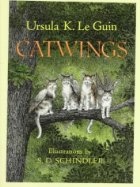
—, Illustrated S D Schindler, Catwings (Orchard Books 1988)

Months ago, I mooched four books by Ursula K Le Guin from BookMooch , and have been reading them semi-assiduousy since. I’ve waited until I’d read them all to do a combined post.

92a

A sufficient interval having passed since reading The Tombs of Atuan, I moved on to the third of the Earthsea books and was not disappointed. It reminded me at some moments of The Voyage of the Dawn Treader, probably because both books feature a ride in a boat that goes on and on and on. There’s no character as irritating as Reepicheep, however, and though the final destination was fairly clearly signalled, I didn’t have the oppressive sense in this book that all was predetermined, as I did in the C S Lewis book. (If you haven’t read VDT, don’t let these remarks put you off. I believe many people found it utterly delightful, and Reepicheep among its finest elements.)

There are really only two characters in this book: Sparrowhawk, now the Archmage of Earthsea, and young Prince Arren who comes to ask Sparrowhawk’s advice on a problem in his home island, and stays to be his companion in seeking out the cause of the problem – much bigger than Arren knew – and in the end overcoming it. The relationship between the two men, old and young, is a thing of great joy. Arren is described early on as falling in love with the old, wise man, and I can’t help lamenting that the moral panic about paedophilia that has corrupted our culture in the last 30 years has made such a description feel risky. I didn’t care very much about the villain: though the final confrontation with him wasn’t written perfunctorily, I read it without any particular commitment. On the other hand, a splendid non-human character makes its first appearance less than ten pages from the end, completely convincing, completely memorable. How does she do that?

Incidentally, the author biog in this book answers the question about the author’s middle initial: the K stands for Kroeber, the name of her anthropologist father and writer mother.

Then I moved on to a couple of adult books, to both of which I brought preconceptions.

22b9

I knew The Left Hand of Darkness had a lot of gender-bending, and I had a subliminal assumption that it was a bit of a women’s liberation tract. It’s not that I expected to be out of sympathy with its sentiments. I just didn’t relish the idea of 300 pages of right-on propaganda from forty years ago.

I needn’t have worried. UKLG is a story teller with a great gift for aphorism (my mooched copy has quite a bit of pencilled underlining of sentences like ‘A profound love between two people involves, after all, the power and chance of doing profound hurt’) and a miraculous capacity for world-building. On the planet Winter, the humans become sexual for only a couple of days each month unless they are pregnant, and there’s no telling whether a given individual will be male or female in any given month. This holds a distorting mirror up to our assumptions about the primacy of gender for human identity, but there’s no preaching, and the reader is not told what to think about it all. The visitor from a planet where sexes are differentiated much as ours are (perhaps he’s actually from Earth) develops a close bond with a member of the other species, and is alone with him (every individual is referred to as him, even when pregnant) for several months – we know that he will be in ‘kemmer’, kind of like oestrus, during their time together, and the sexual tension will be huge. Not only that, but it’s clear that the shape of the book requires that their relationship reach a new level of intimacy. In the hands of a lesser writer this could have led to erotico-bathetic disaster. Not so here. The author plays completely fair; the tension is resolved; intimacy is achieved; nothing is icky.

03a86

If I had subliminally prejudged The Left Hand of Darkness to be 60s feminist polemic, The Dispossessed was filed in my brain under Anarchist Agenda. I may have actually read an excerpt when it first came out, in which there was a lot of exposition about the workings of anarchism on the planet Anarres. As expected, the book was a joyous surprise. The society founded by the followers of the sage Odo is, if anything, more profoundly challenging to our assumptions about human possibilities than the ‘bisexual’ characters of The Left Hand. These are people who learn from babyhood that you can’t own anything, that ‘excess is excrement’. They speak not of ‘my mother’ but of ‘the mother’; they have trouble grasping the concept of class or understanding the function of a state; they refer to the society on their twin planet/moon Urras, from which they are in voluntary exile, as archist and propertarian; and they find institutionalised sexism puzzling:

He knew from Odo’s writings that two hundred years ago the main Urrasti sexual institutions had been ‘marriage’, a partnership authorised and enforced by legal and economic sanctions, and ‘prostitution’, which seemed merely to be a wider term, copulation in the economic mode.

So yes, I guess you could read the book as utopian anarchist propaganda, but it’s much more impressive and engaging than that. The word ‘magisterial’ comes to mind. In Odo, who died two centuries before the action of the book, Le Guin has created a great visionary anarchist. We are given snippets of her life and works; the characters are steeped in them, quote chapter and verse, argue their meaning in a changed context – all in ways that make her a completely believable presence in the society based on her thinking

But the Odonians haven’t got everything right. Shevek, a brilliant temporal physicist (that is, one who deals in the physics of time – Shevek’s general theory of Simultaneity will transform space travel possibilities) can’t get his theoretical work published because the Odonian opposition to ‘egoising’ has congealed into a bureaucratic stymying of creativity, and sometimes wells up into mob hatred of anyone who challenges received ideas. Facing down accusations of treachery – and dodging hurled bricks – he goes to Urras to further his work. Chapters telling of his life up to the point of departure alternate with those narrating his culture shock, seduction and eventual disillusion among the propertarians. The book is still powerful and inspiring after all these years, bodying forth the truism that how things are is not how they have to be forever. I suspect that fans of Ayn Rand would see it as ridiculous fantasy from beginning to end, but then …

09c1ee

What do you do after you’ve written something as profound as The Dispossessed? I hope Ursula Le Guin managed to rest on her laurels for at least a little moment. it may have been a mistake for me to move straight on to another book of hers, away from the ‘Hainish’ world of the last two, because The Beginning Place seemed very pale by comparison. It is fantasy love story rather than political science fiction, and if it wasn’t written in impeccable, musical prose, it would be too long by half for its simple, and predictable, story. But predictable is sometimes just another word for archetypal, and there’s plenty to surprise and delight. Having just intimated a couple of paragraphs back that I was relieved at the absence of a sex scene in The Left Hand of Darkness, I should say that the sex scene in this is handled with a degree of frankness that all the same manages to avoid disrupting the story. We do have this sentence, however, as a warning that sex is dangerous to write about (the characters are fully clothed at this very serious point in the narrative): ‘His desire for her stood up and throbbed against her belly, but his arms held her in a greater longing even than that, one for which life cannot give consummation.’

Catwings

Some time in the middle of my Le Guin Readathon, a friend said she’d read everything by UKLG in her Anarchist youth. I rushed from the room and brought back the first two Catwings books – this book and Catwings Return – which she admitted she hadn’t heard of. When she brought them back a couple of days later she said she’d enjoyed them, but two were enough: no need for Wonderful Alexander and the Catwings and Jane on her Own (neither of which I’ve read, so it seems I agree with her). Before putting them back on the shelf where we keep books for visiting children, I re-read just this one, and found it just as magical as the first time. I believe the idea for this book came to Ms Le Guin while she was standing in a queue at a supermarket, and she drew a sketch of a cat with wings on the back of her shopping list. S D Schindler’s convincingly realistic illustrations are a large part of the book’s charm. This was probably my fifteenth reading, and the last line still brought tears to my eyes.

Again a little while and we will see it

It’s Passion Sunday. The statues in the Catholic churches are swathed in purple (or used to be when I was a frequenter of churches). We’re in the countdown to Easter. If you’ve been following the saga of our corner shop, about to be a cafe, you’ll undoubtedly remember that Easter is the latest of a series of promised opening dates. There’s been definite movement. I don’t know if you can tell from these phone photos, but the balcony with its bullnose awning is coming along well. A stylish grey paint job is under way on the upper outside of the building. We’ve had some heavy rain – who can complain? – but the two or three guys who’ve been up on the scaffolding for weeks now seem to be cheerful about progress. I’m not banking on an Easter rising, but I’ll be surprised if Revolver (as the shop is to be named) fails to be there by the Ascension Thursday. A little while and we won’t see it, but again a little while …

This slideshow requires JavaScript.

Bookblog #61: Voice from the north

[Retrieved from ‘Family Life’ 1 April 2009]

tsp003

Last October I wrote a little blog post about Nicolas José’s address at the NSW Premier’s History Awards, in which he spoke of the Macquarie PEN Anthology of Australian Literature, due for publication in August this year. José talked about Taam Sze Pui’s bilingual memoir, My Life and Work, published in Innisfail in 1925, taking it as an exemplar of the process by which:

As a piece of writing becomes literature, it is read and re-read by different people, discussed, digested, dismembered, recovered, until it enters a continuum of creative experience and expression that joins with where we are now. It speaks and we listen; relationships with other texts are revealed; it is valued for itself and contributes to something larger.

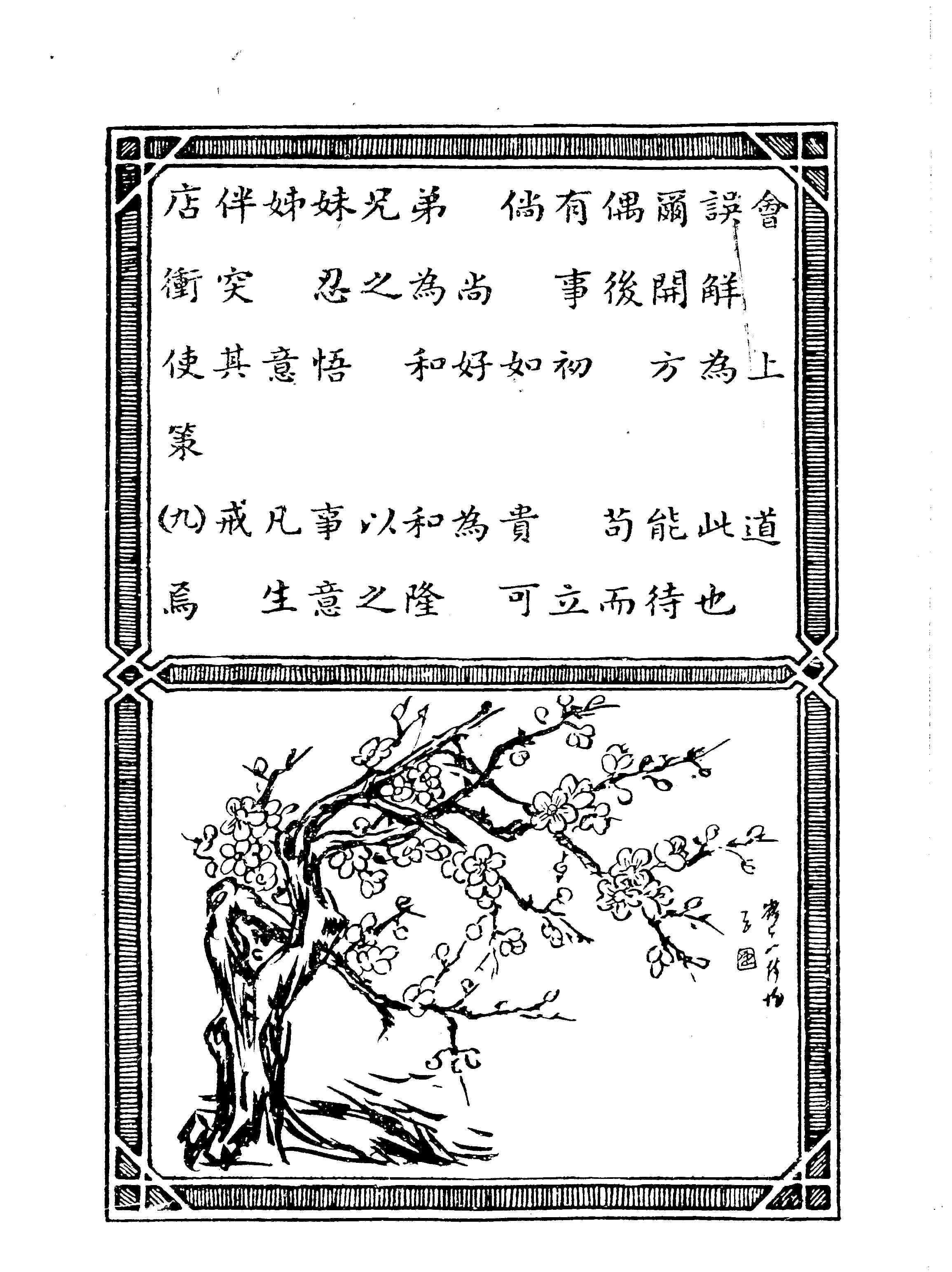
On my recent visit to Cairns I laid hands on a photocopy of Taam Sze Pui’s book in the rooms of the Cairns Historical Society (the helpful woman at Cairns Library had tracked down a solitary copy on the Australian Libraries Network, at the Australian National Library, not much good to me), and read the English in less than half an hour. It’s a modest work, elegant and spare, a kind of combination of Bert Facey good fortune, exhortations to Confucian virtue and sound business sense. There are a number of pages towards the end that are not translated into English, each containing a delicate pen drawing, probably from the author’s own hand, and what I take to be a poem. I photocopied one of them, as well as another untranslated page from the front of the book. I wonder if anyone who comes across this might be able to translate.

tsp2004

Added 3 July 2020: Many thanks to Wang Shu-dong, friend of Jim Kable, regular commenter here, for the following translation of the script in that image. Shu-dong comments that something seems to be missing at the beginning of the final sentence, but offers this translation:

店伴姊妹兄弟, 倘有偶尔误会冲突, 忍之为上。
All people in the store are brothers and sisters. If occasionally misunderstandings and conflicts occur, the best response is tolerance

事后开解,使其意悟,和好如初,方为上策。
After the incident,  we had better let them self-examine and then they will be able to reconcile to each other.

(九)戒凡事以和为贵,苟能此道焉, 生意之隆, 可立而待也
Abandon the perception that harmony is the most important thing. If such a principle  is followed, blooming business can be expected.

Guy Pearse re-visions the quarry

This blog post is retrieved from my earlier blog, Family Life, first posted 31 March 2009. Judith Brett’s Quarterly Essay Nº 78 is in part an update of Guy Pearse’s Nº 33.

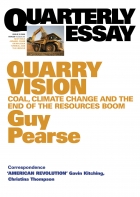
Guy Pearse, Quarry Vision: Coal, climate change and the end of the resources boom (Quarterly Essay Nº 33, 2009)

01d.jpg

This essay made me think of Marshal McLuhan’s famous piece about Edgar Allan Poe’s ‘Descent into the Maelstrom’. In the Poe story, when a mariner’s boat is wrecked in a giant whirlpool, he manages to survive because he stops to observe the way the vortex works. The water spirals slowly swallow all objects, but some of them return to the surface. The mariner clings to one of these recurring objects and survives. McLuhan offers this as a model for how to meet the challenges of a rapidly changing and potentially destructive environment. In Quarry Vision, Guy Pearce doesn’t single out any obvious floaters, but he certainly takes a clear-eyed look into a maelstrom and, to muddle my metaphor beyond salvage, cuts through a world of spin to argue that clinging to coal is not going to save anyone.

I approached the essay expecting that my virtue in reading such a worthy piece would have to be its own sole reward – but in fact it’s a completely engaging essay, full of pleasures, if it’s possible to speak of something as frivolous as pleasure in such a dire context. The essay argues that we have been lied to, or at least deliberately misled, assiduously and at great expense, by representatives of the big carbon emitters and particularly the coal-miners and exporters.

Not one credible piece of economic research suggests that making deep cuts in emissions by 2050 would cause even a temporary recession, let alone ‘crash’ the economy, or ‘cut GDP’, or send energy prices spiralling, or cause whole industries to shut down or flee our shores. Every serious study of the costs finds that deep cuts would delay the trebling of the economy and doubling of real wages by a few years at most later this century. The same analysis finds that acting sooner generates about a quarter of a million jobs more than would delaying, and many of the steps that reduce our exposure to carbon prices save rather than cost money.

However, you’d know none of this from the apocalyptic language that dominates the political debate.

‘Policy,’ he says, and presents evidence, ‘is contaminated by patronage at every turn.’ The Garnaut Report was full of potential loopholes, carve-outs and escape clauses. The Green paper didn’t stop them up and the White Paper, which is what we’re up to now, continued in the same vein:

It was a surrender to the same forces in whose interest John Howard had governed, but with one important difference. The question of whether emission cuts would occur was now gone, because, unlike Howard, Rudd was agreeing to take on obligations commensurate with a 60 per cent reduction by mid-century. The policy agenda had shifted markedly. How deeply and quickly Australia should cut emissions was still contentious, but quantity and timing were no longer the central issues. The big questions now were to do with the quality and morality of Australia’s emission cuts: where the emissions were cut, who made the cuts, how the cost of the cuts was apportioned, and whether the answers to these questions would be made with the short- or long-term interest of the nation in mind.

The answers that Pearse comes up with are dispiriting. He argues in the end for the ‘unthinkable’ proposition that Australia should phase out coal exports over the next couple of decades. If we were to do that, we would be playing an authentic leading role in the ‘Climate Change War’, on the side of humanity, rather than being a significant player on the other side as we now are and will continue to be under current policies.

It’s hard to believe that an essay that cuts through the bull and obfuscation as clearly as this will not have a powerful effect on the course of events. I’ve written to my local member and to the Prime Minister. I think we can expect a huge increase in the vote for the Greens at the next Federal election.

A footnote: Quarterly Essays are edited by Chris Feik, who does a brilliant job. Like many if not most good editors he renders himself almost invisible. I consider him (I’ve just gone Internet hunting and seen that he’s male, and was or still is ‘a young academic’) one of the unsung heroes of our time.

Posted: Tue – March 31, 2009 at 04:28 PM

Dispatch from the corner store

A couple of days ago:

scaffolding

Today:

Broken

You don’t make an omelette without breaking eggs.

Posted: Fri – February 20, 2009 at 07:45 PM