Southerly 75/3

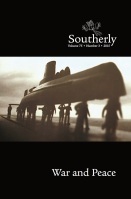
Elizabeth McMahon and David Brooks (editors), Southerly Vol 75 No 3 2015: War and Peace (The Journal of the English Association, Sydney, Brandl & Schlesinger 2016)
Southerly75.3.jpg

In last May’s Quarterly Essay, Blood Year, David Kilkullen quoted Trotsky: ‘You may not be interested in war, but war is interested in you.’

The only war to take an active interest in me (so far) was the US war in Vietnam. I attended fiery Front Lawn meetings at uni, marched in Moratorium rallies, was punched in the head by a policeman and beaten up, incompetently, by a neo-Nazi. My birthdate came up in the conscription lottery, I went to court and was granted conscientious objector status. On Anzac Day this year, I commemorated those times by wearing a white feather along with a sprig of rosemary.

So I’m glad to see that this War and Peace themed issue of Southerly includes a voice from the resistance part of the war story, in ‘Wanted for War’, a short memoir of the 1960s by Michael Hamel-Green. (Hamel-Green is one of many men and women interviewed for Hell No! We Won’t Go, a documentary about draft resistance during the Vietnam War currently being made by Brisbane filmmaker Larry Zetlin. The project has a facebook group. Excerpts from Hamel-Green’s interview are here, here and here.)

Eloquent voices from other perspectives are also represented: ‘Eye into Eye’, a short story by Peter Dickison, formerly an officer in ‘various Special Forces units of the Australian Army’ is a convincing evocation of a terrible incident in Afghanistan and its long aftermath; ‘Iran–Iraq War: Diplomats on the Ground’, a memoir by former Ambassador to Iraq Rory Steele, captures the strangely removed world of diplomats in a time of war; Tessa Lunney’s short story ‘V’ consists of five linked monologues from survivors of World War Two – two Russian soldiers, a woman from Berlin, a British officer, and a Jewish survivor of a death camp; Beth Spencer’s poem ‘The Nine Principles of Breema’ imagines its way into one of Australia’s inhumane and illegal offshore detention camps.

There’s cultural history:

  • Robin Gerster’s ‘Our Ground Zero: Future Wars and the Imagined Destruction of Australia’s Cities’ extends his work about Australia and the nuclear bombing of Hiroshima and Nagasaki in his wonderful book Travels in Atomic Sunshine and in a previous Southerly, this time writing about Australian novels about nuclear devastation in the decades since 1945.
  • Moreno Giovannoni’s ‘When the War Came to San Ginese’ is an excerpt from his forthcoming Tales from San Ginese. It’s at least the second excerpt to appear in Southerly, and I look forward to the book itself.
  • ‘Aileen Palmer: Political Activist and “poet of conscience”‘ is part of Sylvia Martin’s project to salvage the reputation of this heroic woman, up until now known mainly as the ‘tragic daughter’ of Vance and Nettie Palmer. Here she emerges as a rare literary person who actually volunteered to be part of the International Brigade in the Spanish Civil War, to work as nurse and translator. Martin’s biography of Palmer, Ink in her Veins, was published earlier this year. If this essay is any indication, it’s well worth reading.
  • Two articles revisit the story of Anzac. In ‘Writing the Anzac legend: The Moods of Ginger Mick’ Philip Butterss explores CJ Dennis’s role in creating that legend. Ffion Murphy and Richard Nile’s ‘The Naked Anzac: Exposure and Concealment in AB Facey’s A Fortunate Life’ hold that much-loved book up against the historical documents, and discover that Facey misrepresented his childhood suffering and war experience. Neither of these essays is the kind of academic nit-picking those descriptions might suggest: taken together, they deftly challenge what we are being urged to take as a national foundation myth. In particular, Facey’s apparent evasions of the fact that much of the damage he suffered in the trenches was mental and emotional rather than physical are discussed respectfully as an unsuccessful attempt to deal with that damage.

Not all the poems are on theme. Of those that are, apart from Beth Spencer’s poem that I’ve already mentioned, the most telling are Brook Emery’s ‘The Brown Current’, which counterposes scenes from peaceful Bondi with events from conflict zones, Lorraine McGuigan’s ‘Questions’, a lament for a ten-year-old girl suicide bomber, and Anne M Carson’s ‘Of the 2,700: one voice’, which visits the Nazi murders. Off topic, Jordie Albiston’s ‘Δ4’ is a 10-syllables-to-a line joy.

There’s more, including 21 ages of reviews, and a number of scholarly essays. All in all, this is a fabulous issue.
—–
A little note that might not matter to anyone but me: I’ve been puzzled by some of Southerly‘s house style decisions. Why US spelling and punctuation sometimes but not always, for example? This issue has put an end to my puzzlement: a character’s name in one story is spelled ‘Deidre’ 7 times and ‘Deirdre’ 13 times, often the two versions within a single paragraph. So it seems clear that the editorial team regards consistency in such matters as the hobgoblin of little minds. Mind you, the town Grañén is consistently misspelled with an acute accent over the first n, and elsewhere someone makes a ‘complementary’ remark, so perhaps the problem isn’t just disregard for consistency.
Overland 222

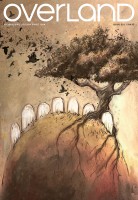
Jacinda Woodhead (editor), Overland 222 (Spring 2015)

overland222.jpgLike most issues of Overland this one includes:

the results of at least one literary competition: Peter Minter asks in his judge’s report on the 2015 Overland Judith Wright Poetry Prize, ‘Isn’t nurturing the penniless avant-garde something we should all embrace?’ As well as the poetry prize, this issue announces the Neilma Sidney Short Story Prize.

the regular columnists: I always enjoy Alison Croggon, who here takes issue with the idea of art as therapy, and Giovanni Tiso, who airs his ambivalence about his preference for old books. Natalie Harkin, a Narungga woman, poet and academic, makes her debut, reflecting on the importance of sharing personal narratives.

at least one intelligently provocative article: Stephanie Convery in Get your hands off my sister sounds a forceful warning against ‘activism centred on an unshakeable faith in women’s accusations of sexual assault’. The whole essay is worth reading, but I was struck by her point that harsher penalties for sexual assault don’t prevent it, but move it to a different location, ie, especially in the USA, to prisons.

• an excerpt from a work in progress: This is usually my least favourite thing in a magazine, especially when not clearly labelled, because the reader tends to be left hanging. Maxine Beneba Clarke’s The current inhabitants of the island is an exception. It’s a sharp stand-alone story of encountering racism in her childhood that make me look forward to her memoir, The Hate Race, later this year.

high level journalism: Antony Loewenstein’s After independence throws light on the state of South Sudan four years after gaining its independence. Loewenstein had been living in Juba, the capital, for most of the year before the anniversary, and what he reports isn’t pretty.

• a literature report: Ben Brooker’s article on vegetarianism and the left cites sources from Marx to Anna Krien, including books with titles like Brutal: Manhood and the Exploitation of Animals and The Sexual Politics of Meat, on the links between vegetarianism and progressive social movements (Marx wasn’t convinced). I met the term ‘carnism’ here for the first time, and learned that vegetarian scholarship is a thing. Incidentally, he mentions Hitler, but not that Hitler was vegetarian.

cultural studies. Dean Brandum and Andrew Nette give a workmanlike account of the Crawfords dramas HomicideDivision 4 and Matlock Police, with emphasis on their function as at times ‘a kind of entertainment auxiliary in the fight against crime’. It’s oddly comforting to see the TV shows one deliberately didn’t watch in one’s 20s become the stuff of cultural history.

debate: Well, not exactly a debate this issue, but Four perspectives on race & racism in Australian poetry by AJ Carruthers, Lia Incognita, Samuel Wagan Watson and Elena Gomez presents four strikingly different takes on their given subject and they do strike some sparks off each other. Racism and neo-orientalism run deep in Australian culture in general and Australian poetry in particular, but it depends where you look. Spoken word, conceptual poetry, radically experimental writing are thriving sites for non-white poets. The ‘narrowly expressive “I-poem”‘ may or may not be part of the problem. Sam Wagan Watson has the best single sentence: ‘There is no clinical evidence to suggest that racism is a by-product of mental illness, although I’ve heard many try to argue the fact.’

fiction: five short stories in this issue, including the Neilma Sidney Prize winner. It’s a grim lot, featuring anti-Muslim nastiness in the suburbs (the prize-winner, by Lauren Foley), a refugee school teacher who (not really a spoiler) kills himself (Ashleigh Synnott), a young, possibly Aboriginal woman entering a situation of sexual exploitation (Jack Latimore), a dystopian future where birds and insects are mechanical (Elizabeth Tan), and a woman who remains painfully silent when her boyfriend jokes about violence against women (Jo Langdon). All good stories, but not a lot of laughs and no real twists in the tail.

poetry: Toby Fitch takes over from Peter Minter as poetry editor with this issue. They judged the poetry prize together, and the three place-getters are the full poetry content, making this in effect a hand-over issue. Apart from writing his own poetry, Toby runs the poetry nights at Sappho’s in Glebe and is poetry reviews editor on Southerly. I look forward to his Overland regime.

Always a good read, usually cover-to-cover.

Eileen Chong’s Painting Red Orchids

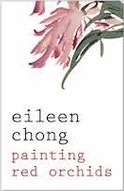
Eileen Chong, Painting Red Orchids (Pitt Street Poetry 2016)

I’m an increasingly unabashed Eileen Chong fan, and I love Painting Red Orchids.

As in her previous books, these poems refer back to the poet’s childhood in Singapore, to the China of her forebears, and also to her present home in Australia; much food is prepared and eaten; there is conversation with other poets living and dead, Chinese and Western; and there are travel poems, this time to suburban Sydney and rural Australia as well as Singapore and Hong Kong.

All of this is given us with generosity and lucidity, and an occasional revelatory jolt. The restraint of classic Chinese poetry is never far away, and a number of poems are explicitly dedicated to great poets of the past.

There are love poems – heartbreak as well as new love. Someone (it might have been Margaret Mahy or Diana Wynn Jones) said that food is the sex of children’s literature. Food doesn’t quite equal sex in Eileen Chong’s poetry, but it comes close and may be even better, more intimate, as in ‘Xiao Long Bao (Little Dragon Dumplings)’, which describes the making of these dumplings and then the look on her lover’s face when he tastes them, and even more so in ‘A Winter’s Night’, in which the speaker, presumed to be of Chinese heritage, prepares Scotch broth for her Scottish-born partner:

This, here, made from my hands,
his memories – we consume spoon after spoon
of history and desire and laugh about the future.

A strand of deep melancholy runs through the book: there’s dementia, death, a relationship break-up, and this (I need to quote the whole poem):

Child
And if he had lived – grown
to fruition in my mother’s womb,
pressing against her bladder
so she would have needed to have emptied
it every hour – I would have been the middle
child. I would have had an older brother
and a younger; I, the singular female.
Instead, there are just the two of us,
brother and sister, circling like moons,
gripped by the gravity of disappointment.

My father would come home and pretend
he’d brought us a puppy. Once, the bag
even barked: but it was only a toy dog.
My mother named this dead brother.
She imagines he might have lived if she
had done this, or had not done that. If
he had lived, I might not have left home
so soon in search of my own arc and orbit.
If my own two had lived, what then? But the dead
remain dead, and I am the last child to arrive.

I love the way this edges up on its real subject. Not that the impact of the speaker’s mother’s miscarriage on their family – the siblings’ enduring sense of someone missing, the mother’s what-ifs, possibly the speaker’s leaving – wasn’t real. And the three lines  about her father’s teasing with pretend dog-gifts could have expanded into poem in its own right. But ‘If my own two had lived’ turns the poem inside out, and we realise that its emotional charge comes from the speaker’s own loss: she can speak of her mother’s bladder and mental processes, not from the perspective of her remembered childhood, but from her own experience as a woman; the barking of the toy dog is freighted with deep grief; the image of circling without a centre is conjured up by the much later loss. The final line, which at first reading I took to answer the question whether the lost brother was older or younger, does do that, but also laments the speaker’s childlessness – not just the last child in that family, but the last in the family line. So much is conveyed, so little said out loud. I think of James McAuley’s ‘Pietà, ‘I cannot tell, / I cannot understand / A thing so dark and deep, / So physical a loss’.

Eileen is currently blogging on the Southerly site. Her interview with herself at that link is well worth reading. Here’s an excerpt:

Do you consider yourself an Australian poet?
This is a question about hybridity. Am I a Singaporean poet? An Asian-Australian poet? An Australian poet? An interesting woman poet? A Chinese poet? A confessional poet? A food poet? I think I might be all of the above, sometimes all at the same time.

AWW2016Painting Red Orchids is the fifth book I’ve read as part of the 2016 Australian Women Writers Challenge.

Open Hearts in Chippendale

The winner of the fourth annual Chippendale New World Art Prize will be announced tomorrow night at the opening of the exhibition of the 41 finalists (thumbnails here). And I’m telling you this because the Emerging Artist is one of the finalists.

Her work, Open Hearts, is the first big day out for her Confined Hearts project (see Squarespace or facebook), in which she is working with a wide variety of people – from Rohingya asylum seekers to a retired children’s magazine editor – to make 1468 ceramic models of the human heart, one for each person in detention on Manus Island or Nauru. As she says, it’s an open question whether the hearts represent the detainees or us.

A small selection of the hearts was part of the recent Life Lines exhibition in the Chrissie Cotter Gallery in Camperdown, looking much better than in these snaps:

wreath  cchearts


In the Chippendale outing, hundreds of the hearts lie in a hollow circle on the floor in front of a cyclone fence, wrapped in little muslin shrouds. Visitors are invited to step into the circle, unwrap a heart and place it in the centre of the circle, then place the white cloth in the fence. Writing a message on the cloth is optional – some of the hearts have been inscribed by their makers.

It was installed this morning. Here’s a sneak preview.

openhearts

The exhibition is on until early July in Kensington Street, Chippendale.

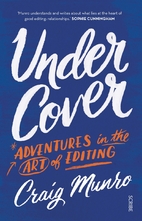
Craig Munro’s Under Cover

Craig Munro, Under Cover: Adventures in the art of editing (Scribe 2015)

undercover.jpg

‘The king died and then the queen died,’ is a story. ‘The king died, and then the queen died of grief,’ is a plot.

That’s from E M Forster’s essay, ‘Aspects of the Novel’. The point he’s making is that plot is about causality rather than mere sequence, that plot engages readers’ imaginations: they have to ‘remember incidents and create connecting threads between them’, and that sustains their interest over the long haul.

A memoir needs some element of plot as well, but perhaps inevitably it will include quite a lot of detail just for the record. Under Cover  has a central theme, announced in a epigraph quoting Beatrice Davis, perhaps the most famous of all Australian book editors: ‘It is essential that authors and editors are capable of being temperamentally in tune, even of becoming friends: to be otherwise would be damaging or disastrous.’ We follow Craig Munro’s editorial career, mainly at University of Queensland Press, as a story of friendships, of what Munro, quoting Melbourne editor Mandy Brett, describes as intense affairs-of-the-mind. And then there’s the broader sweep, the history of the publication of Australian literature as seen through the lens of the part played by the memoirist.

In some ways the backbone of the book is the relationship of Peter Carey with UQP and Munro: Munro was responsible for bringing Carey’s first book to print, and the memoir maps the ups and downs (mainly ups) of Carey’s career against his changing relationship with the publishing house and the editor-become-friend. The small independent publisher discovers and nurtures a writer, who out of economic necessity moves to a better resourced London publishing house. As he becomes more successful, his books are published simultaneously in the US, the UK and Australia, sometimes typeset separately for the different editions: we get to see some of the inner workings of that set-up, including one spectacular error that took years for anyone to notice. (Did you know that if you read an early Australian or UK edition of Oscar and Lucinda you missed out on a whole chapter that was in the US edition and later Australian and UK editions?)

It’s not a kiss and tell memoir. There are no scandals, no grand revelations. But we get personal glimpses of David Malouf, the famously touchy Xavier Herbert, Barbara Hanrahan, Olga Masters in a marvellously magisterial moment, and others. Munro’s account of the infamously disorderly 1985 NSW Premier’s Literary Awards Dinner is just wonderful, names and packdrill included.

Sometimes the fine details on print runs, quotes from Munro’s and others’ reports on manuscript that were to become wildly successful books, and from reviews of those books on first publication, become cumulatively tedious. And really do we care that Peter Carey was mildly sarcastic to a reviewer who described Illywhacker as old-fashioned? But these moments are easily forgiven. The queen doesn’t die of grief, but Australian publishing lives on in spite of adversity. The authors of the recent Productivity Commission Report on book publishing would have done well to read this book.

SWF: My Day 4

Saturday at the Sydney Writers’ Festival the weather held, brilliantly.

My first session was at 11 o’clock: Paul Muldoon: On Seamus Heaney. Advertised as Muldoon discussing Heaney’s poetry, this turned out to be Muldoon reading Heaney. Did I mention earlier that David Malouf described Paul Muldoon’s reading as ‘at the right speed’? It’s such a spot-on observation: he makes every word count, the way Mandela did in his oratory. He read ‘Follower‘, ‘Digging‘, ‘Tollund Man‘, ‘Keeping Going‘, and stopped for questions. A woman in the front row – it may have been Kate Tempest – asked him to read more poems. He read ‘When all the others were away at Mass‘. It was an absolute treat.

Meanwhile, the Emerging Artist went to see First Dog On The Moon Live, which she said was wonderful: from the symptoms of windfarm pathology (all taken from real if somewhat delusional sources) to the grief caused by the death of a pet dog, the Dog is as captivating in person as his cartoons are compulsory reading.

We both went to see Kate Tempest: The Bricks that Built the Houses after lunch. Wow! Michael Williams, her interlocutor, set the ball rolling by reading the first couple of paragraphs of the novel that this session was named for. As he said, he’s not a bad reader. Then he asked Kate to read the same bit. She stood up with the closed book in her hands and gave us the first several pages as a passionate spoken word performance. It was a whole other thing!

For the whole hour, she was not just passionate about her world and about the world, but constantly self-questioning, challenging herself not to fall back on setpieces when talking about her work. Responding to one question she rhapsodised about the joys of freeform rapping; to another who asked what William Blake said to her she quoted half a dozen bits from (I think ) ‘The Proverbs of Hell’. As the session drew to a close and Michael Williams made the standard announcement that her books were on sale at Gleebooks, she interjected, ‘Nothing you can buy will make you whole,’ then explained that she would have to be snappy with any signing because she wanted to get to the session on the Stolen Generations with Ali Cobby Eckermann in half an hour.

We had some quiet time, then queued for The Big Read at half past 4. This lovely event has been downgraded from the main Sydney Theatre stage to the cavernous space known to the Festival as The Loft, with just enough room on the  tiny stage for MC Annette Shun Wah and the five writers. All the same, it was  a great pleasure to be read to by

  • Carmen Aguirre (Chile and Canada), from her memoir Mexican Hooker #1: And My Other Roles Since the Revolution
  • Paul Murray (Ireland), from his novel The Mark and the Void
  • Petina Gappah (Zimbabwe), from her novel The Book of Memory, a reading that included some very sweet singing
  • Marlon James (Jamaica), from A Brief History of Seven Killings and
  • William Boyd (England and France), from Sweet Caress.

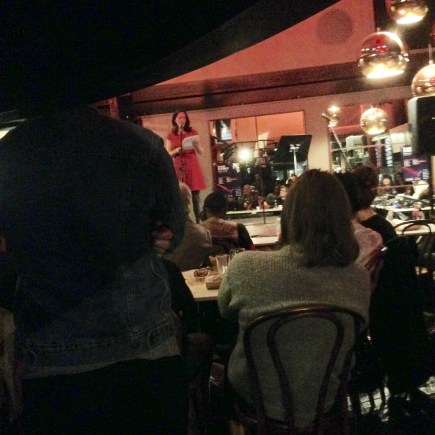
I dashed straight from there to Avant Gaga, to be read to again, this time by poets in the Sydney Dance Lounge. One end of the space was occupied by people eating their dinner, and not doing so in monastic silence. Our crowded end was full of people straining to listen. There weren’t enough chairs for the audience – some sat on the floor, some on the spiral stairs in the middle of the room, one (me) sat on a low table under the stairs and managed to draw blood by bumping into the sprinkler there. Avant Gaga is a monthly event in the back courtyard of Sappho’s bookshop in Glebe, which it goes without saying is a lot more comfortable (unless it’s raining).

I can’t say it was an unadulterated pleasure to be read to in those circumstances, but there was a lot of pleasure. Our MC was Toby Fitch. He kicked things off with a seemingly endless list of entities and activities, real and then increasingly fanciful, that might be represented by the initials SWF. ‘Sesquipedalian’ featured and so did ‘fellatio’. Then, in order, a.j. carruthers, Amanda Stewart, Astrid Lorange, Elena Gomez, joanne burns, Kate Fagan, Kent MacCarter, Lionel Fogarty, Pam Brown and Peter Minter read. Toby Fitch asked our indulgence an read a poem called something like ‘A hundred fully-formed words’, in honour of his infant daughter. Here’s what Astrid Lorange looked like from my vantage point:

avant gaga.jpg

While I was there, the EA went to My Family and Other Obstacles in which Richard Glover hosted three much younger people talk about books about growing up with seriously dysfunctional parents. One of my siblings once said that our birth family was dysfunctional, and I’ve no doubt that my sons at various times would say the same of theirs. After hearing the stories from this session, I’m confident that its participants would be entitled to sneer.

And though the festival continues today, that was it for me. I didn’t mention arriving one day to pass a senior poet wheeling a baby in a stroller, or pretty much looking up from the book I was reading to see someone whose name had been mentioned just a page earlier, or hearing a well respected political essayist exclaiming a common obscenity, or discovering that the Children’s Book Council had scheduled a conference to coincide with the Festival, or the pleasure of having my name spelled correctly on three hot chocolate lids in as many days, or the books I bought. But I don’t have to blog everything.

SWF: My Day 3

Circumstances made me miss Friday morning at the Sydney Writers’ Festival. The Emerging Artist, however, got two sessions under her belt.

10:00–11:00 am: Sri Lanka: This Divided Island. She said this was marvellous. Samanth Subramanian, an Indian Tamil journalist, spoke with Michael Williams from Melbourne’s Wheeler Centre. Quite apart from its main thrust, an account of the recent three-decade war and its aftermath, the conversation helped her think about the ethics of her own current art project, which involves many people making small terracottta hearts.

11:30 am – 12:30 pm: Jonathan Franzen: My Reading Life. The main things she reported was that he enjoyed the famous German sense of humour, and was influenced by a number of women writers.

At 3 o’clock the Emerging Artist went to Migration: A World Without Borders? and pretty much fell in love with Aleksandar Hemon. She bought two of his books, even overcoming her vehement dislike of zombie stories to buy his novel, The Making of Zombie Wars.

At 4:30 she went to hear Starlee Kine: From This American Life to Mystery Show and discovered a new podcast to subscribe to, dealing in ‘mysteries that can’t be solved by Google’.

Meanwhile, apart from sitting and chatting over lunch, my Festival day began at 3 with The New Australian Poetry. Unlike previously, this year’s poetry events are in largish rooms and mostly aren’t free. This one was a book launch – of an issue of the US journal Poetry devoted to Australian poets.

As we queued in the scorching afternoon sun (yes, scorching in mid- May), we were regaled by the booming opinions of a youngish man who had evidently been all over the world (perhaps his time in the US accounted for his LOUDNESS) and wanted the world to know that poetry is held in lower esteem in Australia than anywhere else.

The room was filled to capacity. After brief remarks from Don Share, soft-spoken editor of Poetry, and Robert Adamson, guest editor of this issue, we were read to by Ali Cobby Eckermann, Lionel Fogarty, Lisa Gorton, Michael Farrell and Robbie Coburn. In response to an audience request, some of them read poems by other people that appear in the anthology. Then two poets – Susan Fealy and Petra White – were drafted from the audience. Taking a cue from David Malouf the previous day, I asked if any of them would read the same poem a second time – I named Lionel Fogarty and he obliged.

There were two questions, both from the same person, one for each of the Indigenous poets. Don Share made that’s-a-wrap noises, and we were gathering up our stuff when Lionel Fogarty stepped up to his mic again and called on us to break out of our individualism and think in terms of community.

Ali Cobby Eckermann took a turn at the mic and told us, shockingly, that when she was at an international gathering of poets recently some Syrians had asked her how come she writes war poetry. They recognised in her poetry about Aboriginal Australia striking similarities to their own war-torn lives, and she realised that, however deep and strong the denial, the Australian war of dispossession is still going on.

Don Share rose beautifully to the occasion: ‘The difficulty we have in understanding a poem,’ he said, ‘is the same as the difficulty in hearing another person.’

I went home to deal with various animals, then rejoined the EA in the evening for Magda Szubanski and George Megalogenis: Rated PG (Polish and Greek), an entertaining conversation between two children of immigrants.

SWF: My Day 2

Thursday morning in Marrickville the air was grey with smoke – someone was burning off. At the Sydney Writers’ Festival at Walsh Bay, the air was clearer but there was still plenty of grey, this time on people’s heads and faces, though the festival goers aren’t as homogeneously 60+ as on weekdays in previous years.

If I had to name a theme common to the five sessions I attended today, I’d say it was intergenerational respect and co-operation.


At 10 o’clock Zelda la Grange discussed her memoir Good Morning, Mr Mandela, steered deftly by veteran interlocutor David Leser

As an ‘apolitical’ young Afrikaner who absolutely supported apartheid, la Grange accidentally found herself working for President Nelson Mandela, the man she had seen as her people’s greatest enemy. She told us of her first meeting with him in her early 20s: where she had expected hostility she not only  found a warm handclasp and interested questions about her life, but he spoke to her in Afrikaans, the language of the people who had gaoled him for decades. She burst into tears. He put his free hand in her shoulder and said, ‘Relax, you’re overreacting.’

Over the following weeks and then years, she heard more of his story, shed more tears and felt the bubble of white privilege that had kept her world narrow dissolving. She became his private secretary and, as he grew old and frail, his protector. She said he worked on her heart every day. She called him by the Swahili (I think) word for granddad. He rechristened her Zeldiña.

Since his death in 2013, she treasures their great non-romantic love, and sees it as her mission to keep alive his legacy of respect in public life.


Then on to a spectacular queue for Climate: Knowledge and Hope featuring scientists Tim Flannery and Peter Doherty, wrangled by Bianca Nogrady.

Flannery’s most recent book, Atmosphere of Hope, was written last August, when it seemed Paris would lead to good things. It did produce an agreement, but things are less obviously hopeful now, with news of record temperature increases. Doherty’s is The Knowledge Wars, which I gleaned is about current attacks on scientific knowledge on a number of fronts, beginning perhaps with climate change but extending to areas like vaccination.

Faced with the dire reality of climate change, these two men of a certain age remain ebullient. When Nogrady ventured that hope has a passivity to it – we just shrug our shoulders and hope for the best – Flannery apologised to his mainly older audience and said that many young people, scientists and activists, are less prone to despair than their elders, but see the situation as a challenge which they set about vigorously meeting. Doherty echoed that view.

My other heartening take-home from this session was that where The Australian and the rest of the denialist and reactionary Murdoch press have been very influential on the rest of the media, that dominance is now being challenged by The Conversation, a much more reality based publication which presents the work of academics online in readable form. He urged us to subscribe at theconversation.com/au.


1:30-2:30 pm: NSW Premier’s Awards: Meet the Writers: I was initially disappointed that only two of the NSWPLA winners were on the podium with ‘senior judge’ Ross Grayson Bell but, when the two are Magda Szubanski and Alice Pung, less is more.

Both women are daughters of immigrant fathers who experienced major traumas in their home countries – Poland under the Nazis and Cambodia under Pol Pot respectively. Both have written about their fathers, Magda in Reckoning, her award-winner, and Alice in her earlier memoir My Father’s Daughter. Though Alice spoke a little about her award-winner, Laurinda, most of the conversation revolved around their points of similarity. In both their families, the traumatic experiences of the parents weren’t passed over in silence to protect the children, but were told, often enough, as funny stories or adventures. Alice in particular now finds herself wondering about the wisdom of advice from teachers not to tell students too much detail about the terrible ordeals described in her books.

Neither writer referred to our current government’s cruelty to asylum seekers and refugees or to Peter Dutton’s recent disparagement of some as ‘illiterate and innumerate’. They didn’t have to. This was pointedly so when someone asked Alice Pung how her mother responded to her memoir: ‘My mother’s illiterate. She said she’ll wait for the movie.’


3:00-4:00 pm: Paul Muldoon talked with David Malouf for a wonderfully loose, lucid hour, about the way a poem is a process of discovery for the poet, and for the reader. Apparently distracted by the sounds outside the cavernous room, Muldoon drew our attention to the rhythmic creaking of the wharf’s posts and a distant pneumatic drill then, as if drawing his ideas from these ambient sounds, talked about the dual activity of the poet – construction worker/ maker/ makar, and explorer/ troubadour/ trovatore. The two poets, like the two scientists and the two daughters earlier, had a wonderful rapport. Each time the conversation threatened to slacken, David Malouf (who had introduced himself here as a reader) asked the poet if he would read to us. The poems he chose for us were ‘Hedgehog‘, written when he was a teenager, and ‘Pelt’ from his most recent book. Interestingly, far from patronising his sixteen-year-old self, Paul Muldoon was in awe of him.


4:30-5:30 pm: Tammy and Lesley Williams, Murri mother and daughter who collaborated on the book Not Just Black and White, were brilliant. Lesley led a successful campaign to reclaim wages withheld by the Queensland government from Aboriginal workers last century. She wanted to write a book about it but was daunted by the task as she’d left school at the end of primary school, and also had trouble believing anyone would be interested. Tammy, then a teenager in school, now a successful barrister and Queensland’s Commissioner for Children, helped with both problems. She taped her mother’s spoken account and transcribed it. Just as importantly, she constantly reassured her mother that the story was worth telling. This book tells their story in the form of a conversation.

In question time a young woman thanked the writers because, even though her grandmother had received only $4000 in acknowledgement of a lifetime’s work, the payment made a huge difference.

I had a personal connection too, but not one I wanted to inflict on that gathering. As a white child in north Queensland in the 1950s I was completely unaware that most Aboriginal people were living ‘under the Act’. I don’t know if the Aboriginal couple who worked for my parents, the man with my father on the farm and the woman with my mother a day a week in the house, were subject to the same covert exploitation as Lesley Williams discovered. My ignorance  is given extra point as their names were Mr and Mrs Williams to us kids). I’m ashamed, but hugely grateful to these Williamses for their generosity and valour in putting the story out here for all of us.

I’ve bought the book.


End of my Festival day. [Wipes sweat from brow]

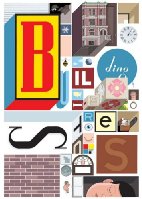
Chris Ware’s Building Stories

Chris Ware, Building Stories (Jonathan Cape 2012)

0224078127.jpg

This is a book that comes as 17 or so separate pieces in a box: little books, bigger books, concertina-folded strips, a board …  It might seem just plain gimmicky at first blush. But no. It turns out to be completely captivating.

The title is a pun: to read this book you have to build its stories, and a good deal of it is tales from a three-story building. Because of the nature of the beast, every reader will encounter the stories in a different sequence. Either I was very lucky, or the sizes and heft of the components tend to guide the reader’s choices, but I felt that I was reading a discontinuous but coherent narrative.

The book I read has five narrative threads, each with a central character: the lonely woman with a partially amputated leg who lives on the top level of an old building in inner Chicago; the unhappily married couple on the floor below her; the old woman who owns the building, and who lives on the ground floor where she has lived her whole life; a bee who is briefly trapped in the house; and the house itself. These stories connect and separate the way the lives of people who live in an apartment building do. Eventually, one of the stories emerges as the central one and the others slip away.  (I imagine that if you read in a different sequence, the life after the building – which to me was a long aftermath – will seem like the main story, with the life in the building as flashback.)

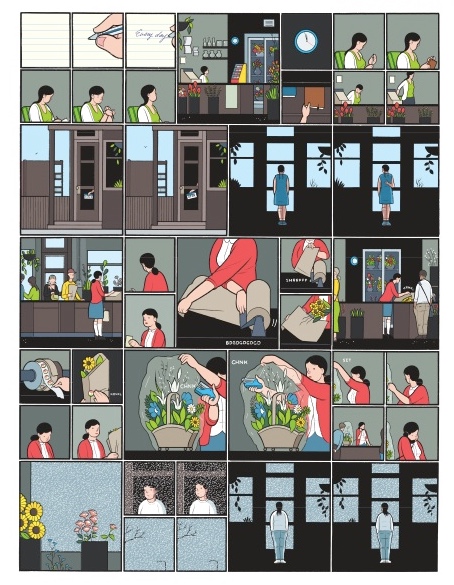
It’s not exactly a cheery read: most of the characters spend most of their time sad, lonely, bored, and generally dissatisfied. Youthful ambitions fail to materialise, youthful mistakes come back to haunt. But the telling is miraculous. Really. Once I got over my initial reluctance to engage with this box of stuff, I was completely gripped. The ending, or rather my ending, is devastating but not as nihilistic as I had feared. Chris Ware’s art is precise and spare to the point of primness, yet communicates meaning through the slightest variation – a flower stem bends slightly from one frame to the next, a facial expression changes subtly. Here’s a sample page, though I don’t know how much you can tell from it. It’s part of a day at work for the woman from the top floor, an aspiring writer and artist who works in a florist’s shop:

bs.jpg

A note on terminology: Generally I dislike the term ‘graphic novel’ because it seems to me to be little more than a way not to call comics ‘comics’. But it’s hard to call Building Stories a comic, because it’s not a comedy by a long shot. I don’t know, call this a grown-up picture book in a box (‘grown-up’ rather than ‘adult’, because although there’s nudity and some sexual activity, including among the bees, there’s nothing particularly erotic about it).


SWF: My Day 1

The Sydney Writers’ Festival is off and running. I’m having a soft entry: just one event yesterday and none today, and  I don’t expect to see Walsh Bay until tomorrow morning.

Yesterday’s talk, Craig Munro: Under Cover, was at the State Library, just next door to the Mitchell Library, scene of last night’s awards ceremony. Craig Munro was in conversation with Rachel Franks from the library, talking about Under Cover, his memoir of three decades working as an editor at University of Queensland Press.

I’m lucky enough to have earned my living as an editor, and I have never found the work less than interesting, whether in the book trade, on a children’s magazine (that was the best!), or in the publications section of a government department. But it’s not glamorous, and I struggle to see why anyone not an editor would be interested to hear one of us talk about it. However, a respectable crowd turned out for this talk, and seemed to like what they got.

What we got was some tips about self editing (‘the most important thing is to create distance from the initial writing’), advice on how to write a pitch for a publisher or agent (spend at least a week honing it), information and opinions about the changing face of publishing (paper books are here to stay; a poetry book is best-seller in Australia if it sells 400 copies), and glimpses of famous authors (David Malouf and the underrated Barbara Hanrahan are the only two writers Munro has dealt with whose manuscripts arrive at the publisher pretty well word perfect).

The best thing about the session was the readings that topped and tailed it. The first told of the author’s first meeting with David Malouf, in which they worked out the name for Malouf’s first novel. The second, with brilliant timing, told the story of the infamous NSW Premier’s Literary Awards Dinner of 1985, at which the book people gathered in the Intercontinental Hotel grew unruly during Morris West’s sermonical Address (the poet Martin Johnston shouting ‘Bullshit!’ at one point), Nadia Wheatley criticised Premier Neville Wran’s housing policy when accepting her award from him, and Wran himself reverted to Parliamentary behaviour and called on someone to put a bun in the mouth of one rowdy interjector. The passage should be read aloud at the start of each Awards evening, to remind us all that slide shows, civility and smiling decorum may not always be preferable to honest ill temper and rowdiness. Craig Munro’s manifest pleasure in reading it to us cast a different light on his own quietly courteous, considered manner.