Gallery

NSWPLA Dinner, a report from the trenchers

Last year a woman premier presented the NSW Premier’s Literary Awards at the Art Gallery. Tonight a non-Labor premier, just as rare a beast in the 10 of these dinners I’ve been to, did it at the Opera Point Marquee, … Continue reading

A launch

Ursula Dubosarsky’s new book, The Golden Day, was launched yesterday with a suitable sense of occasion. I’d spent the morning as an extra in a rap video clip (about which I may blog some other time), but no one at the launch seemed to notice that my usually shiny forehead was sporting a light dusting of make-up.

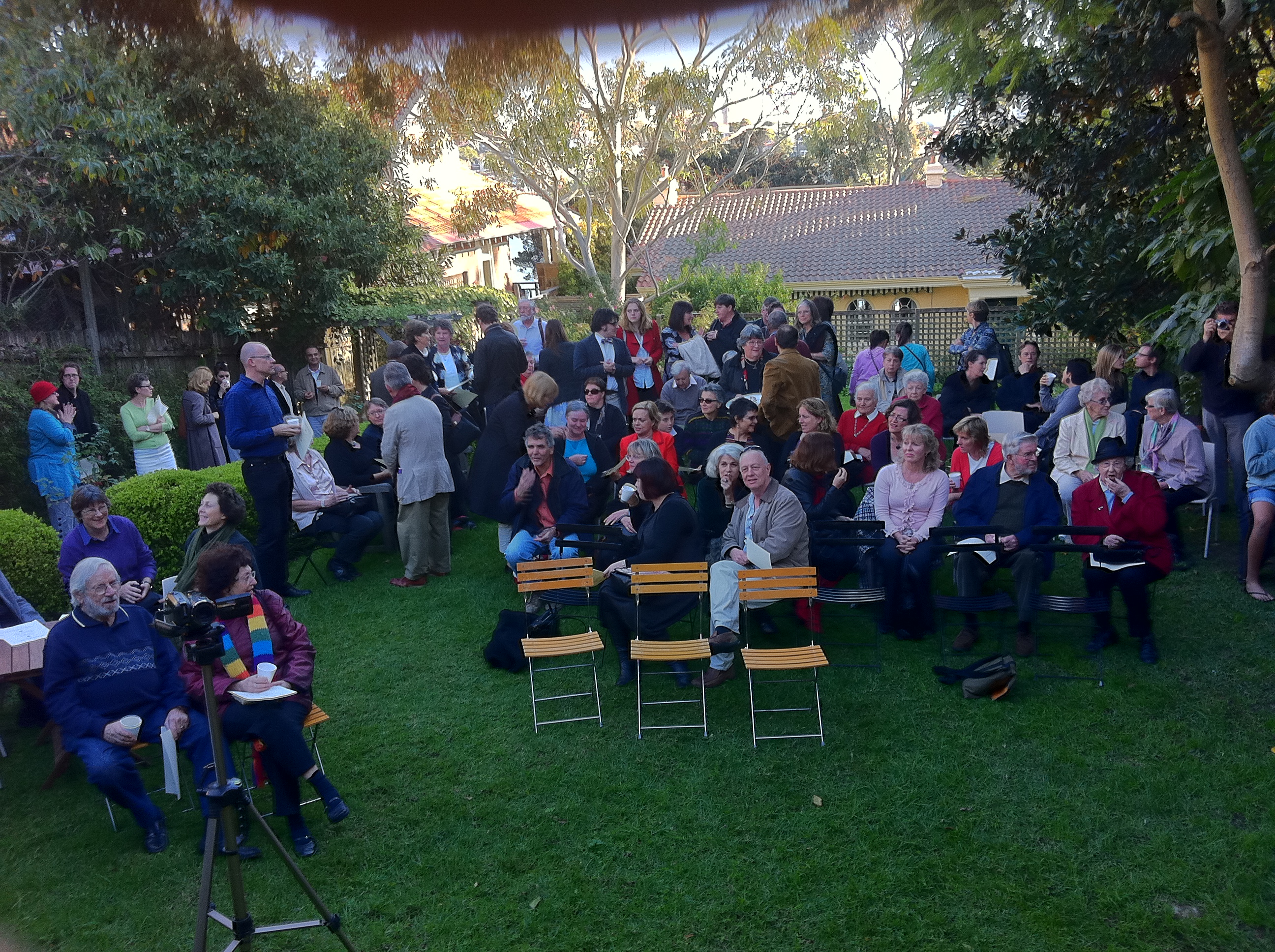
We were at Nutcote Cottage, home of May Gibbs, a lovely site for a launch. The golden light of a fine Sydney autumn afternoon, tiny muffins, cupcakes and Lamington slices would have made the mood celebratory even without a subject. As you see from the pic a new Dubosarsky book draws quite a crowd: from the publishing world, family, writers (not just for children), artists and illustrators, colleagues, Marrickville dwellers, the wife of a former Federal Minister, former students of SCEGGS Darlinghurst and even some of the book’s target audience, that is to say, children.

The Nutcote lawn

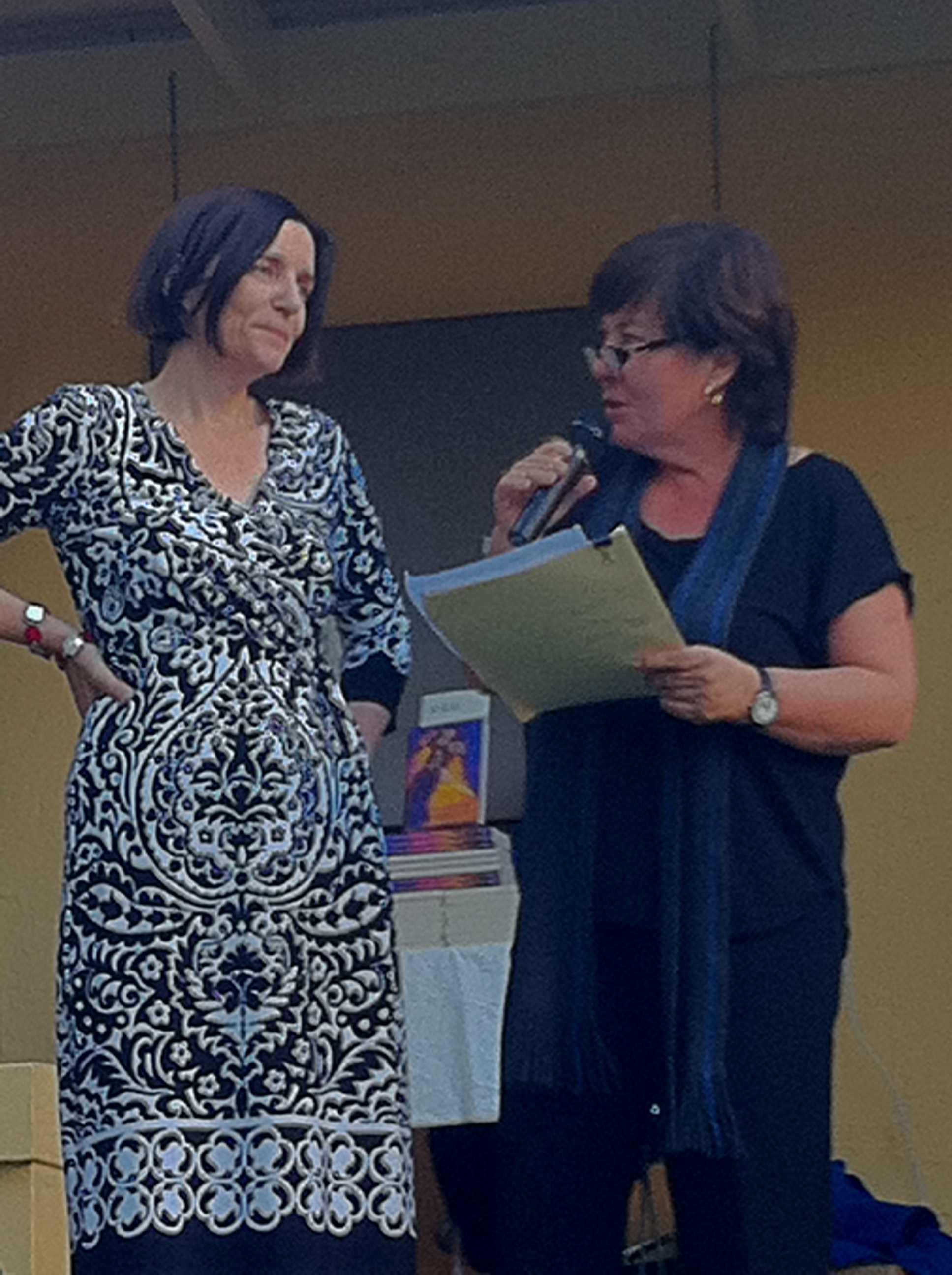
Julie McCrossin presided. Drawing on her experience as radio interviewer and stand-up comedian, she put Ursula through her paces, quizzing her about her inspiration for the book. It’s set in a genteel girls church school in the inner eastern suburbs of Sydney, a school that evidently bears an uncanny resemblance to SCEGGS Darlinghurst, of which both Julie and Ursula are alumnae. Calling on contributions from other Old Girls, they evoked a startling picture of uniformed schoolgirls making their way from the bus stop to the school gates though filthy streets where junkies and prostitutes hung out. One member of the class of ’78 was coaxed by Julie into saying that she didn’t remember much out of the ordinary, apart from an occasional flasher and the naked woman who appeared in a doorway one morning asking her to get help.

‘There are myriad kinds of writers,’ Ursula said, responding to Julie’s pressing her for the meaning of some of the incidents in the book. ‘I’m the kind of writer who lets herself go to the dream.’ I quote this because it rings so very true of Ursula’s work, but also because just a few moments later Julie referred to the ‘ ‘myriad of influences’ she detected in the book (Picnic at Hanging Rock, classical myth, etc), thereby adding a little fuel to the fire of a conversation I’ve been having recently about usage: Ursula the classicist uses ‘myriad’ as I do; Julie the journalist agrees with my journalist friend. (Are you reading this, L–?)

Julie: Might I suggest that there's an underlying theme of sexual awakening? Ursula: Oh, that's what my book's about!

Michael Moore on the killing of OBL

Michael Moore may get a bit too smart-arsey in his movies, but this piece on the killing of Osama Bin Laden is worth reading.

Perhaps there was no way to bring him back alive – I sure as hell wouldn’t want to be in that dark house trying to make that snap decision. But if the execution was ordered in advance, then I say we should be told that now, and we can like it or not like it.

I recommend the whole thing.

Pretty as a picture

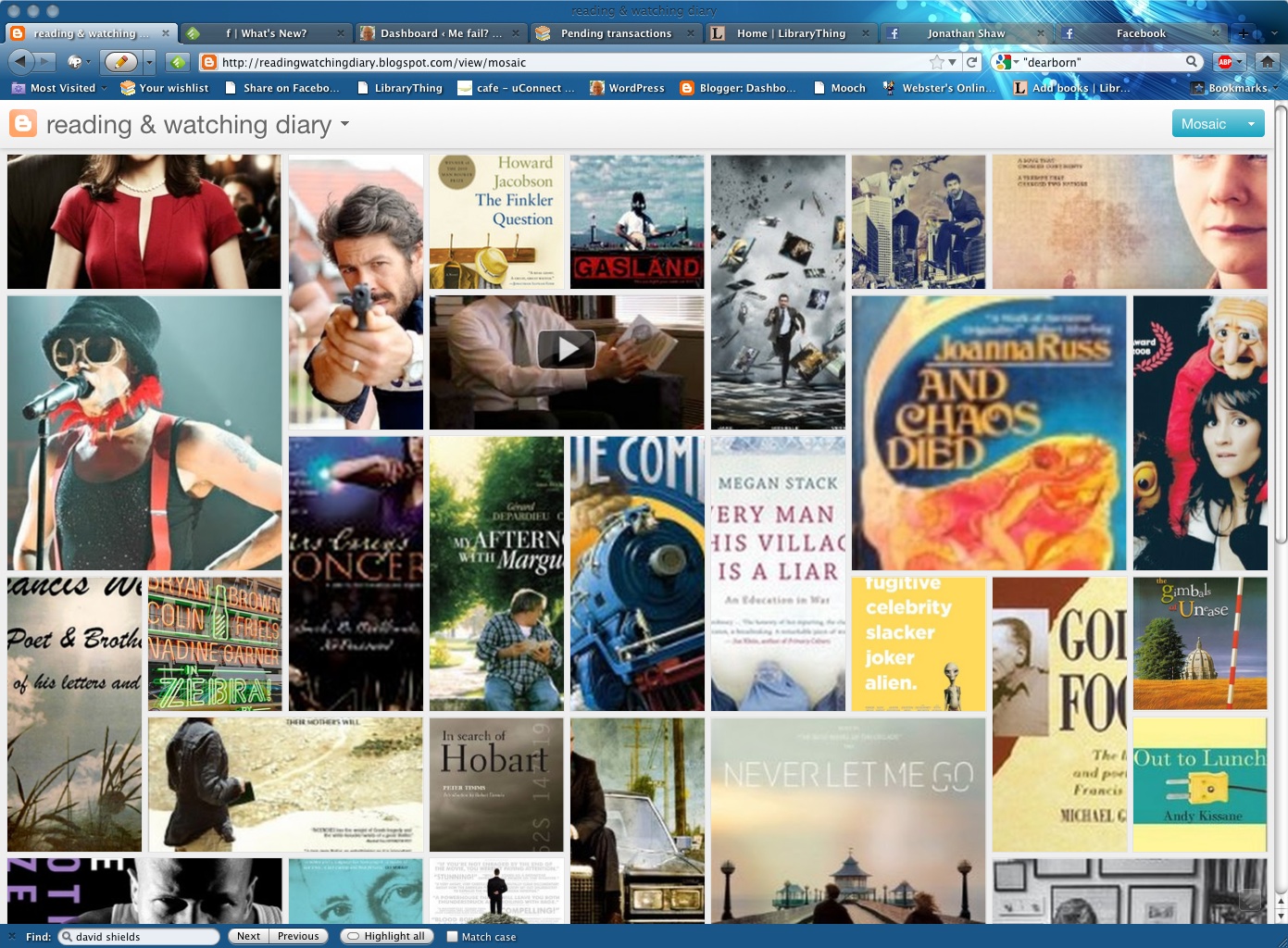
I love the way Blogger can display its blog in a number of ‘views’. In particular, I love the Mosaic view of my ‘Reading and Watching Diary’ blog, which exists mainly so I can have that list of books, movies and so on over in the right hand column of this blog.

Rhyll McMaster at Sappho’s

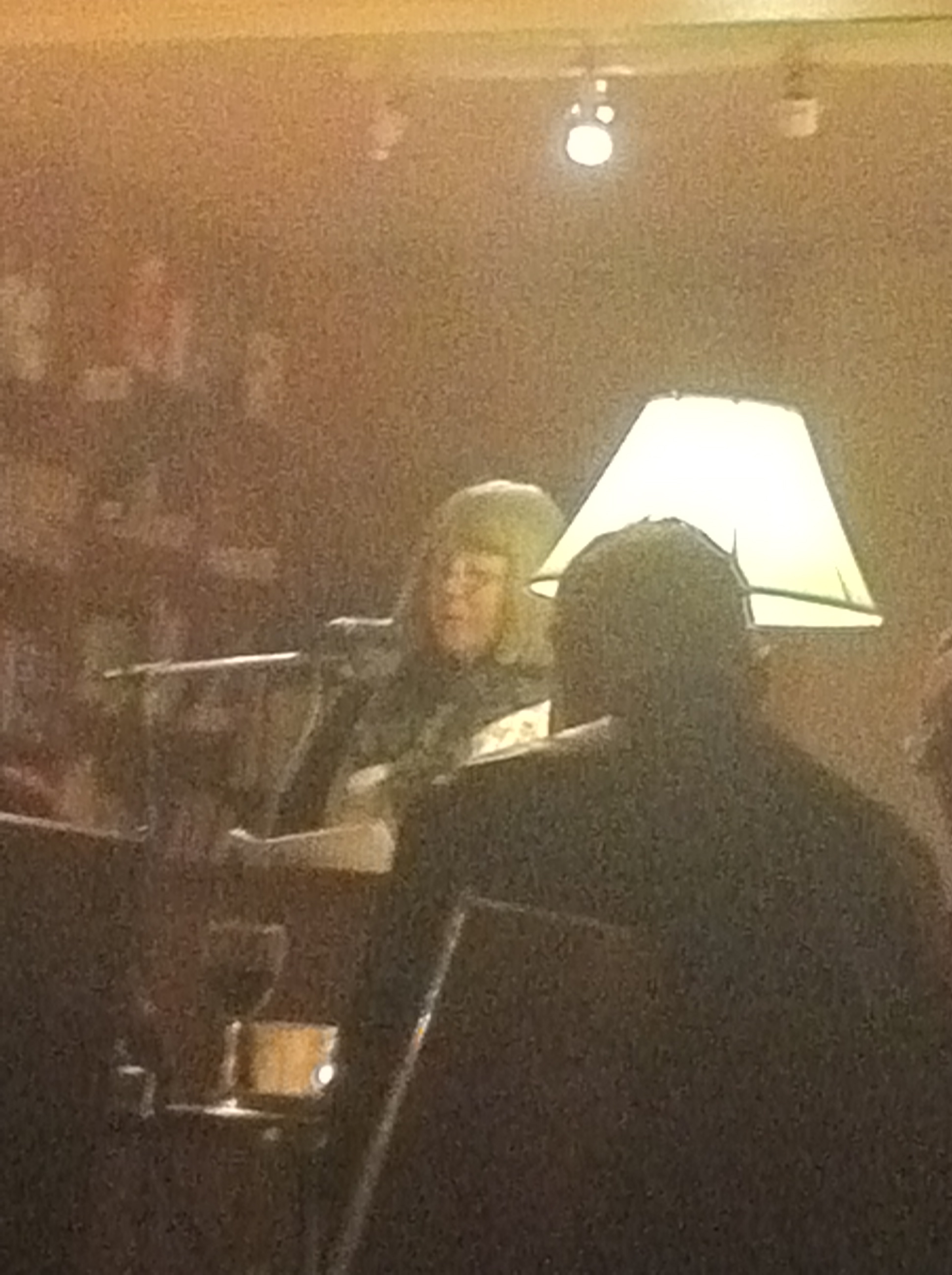
Next door to Gleebooks, Sappho’s Book Shop stages monthly poetry readings. Last night Rhyll McMaster read from her next book – she’s writing poetry again after years engaged one way or another with the novel Feather Man.

No one was smoking in Sappho’s courtyard, but I like the way this phone photo suggests the classic smoke-filled ambience for poetry reading.

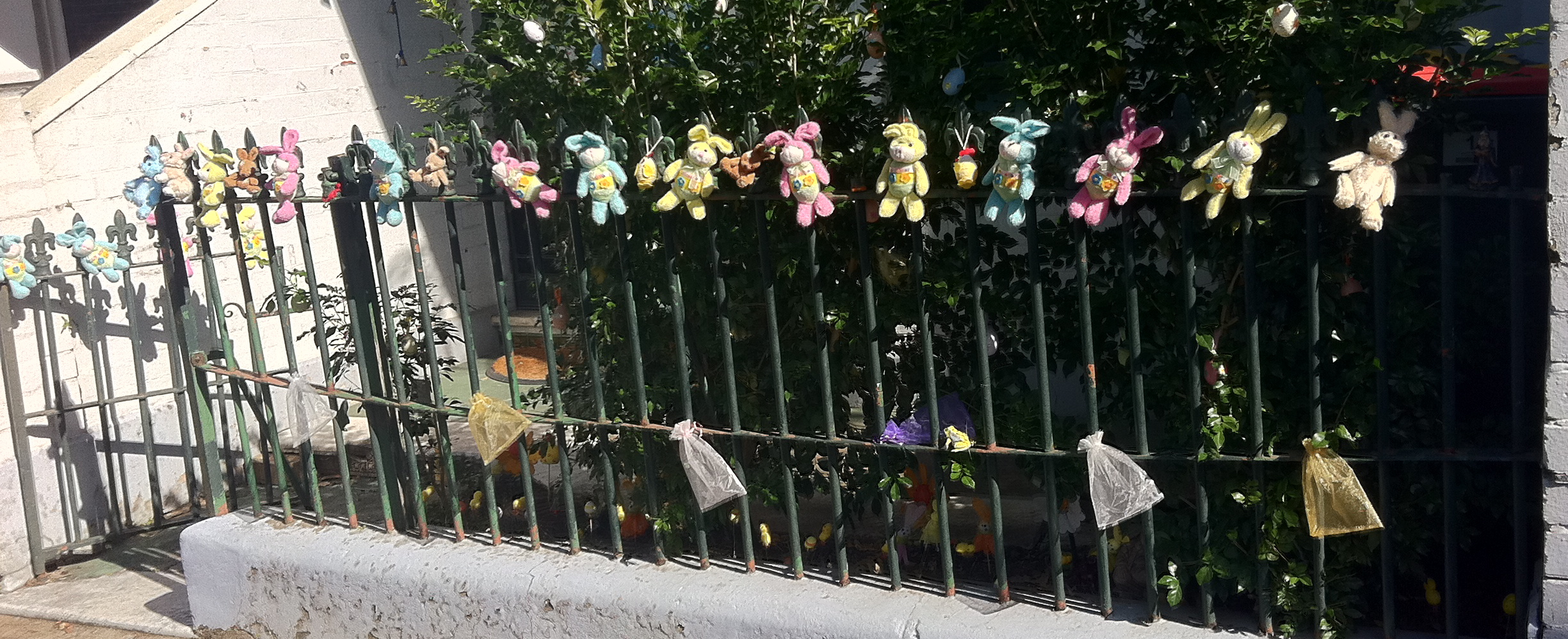
Not the rabbit-proof fence

… although maybe these all got impaled when they tried to get into the property at Easter

Joanna Russ And Chaos Died

Joanna Russ, And Chaos Died (1970,Berkley Books 2009 )

Joanna Russ died on 29 April. This book has been beside my bed for a while now and I decided to read it as my small personal obsequies. It might have been better to reread The Female Man or read How to Suppress Women’s Writing for the first time, these being the books usually seen as marking her place in the history of Science Fiction, but I don’t have copies of either of them. The New York Times obituary doesn’t mention And Chaos Died, which was first published five and 13 years respectively before those books.

A lot of the time it’s hard to tell what’s going on in this book, though it does become slightly less bewildering after the first 20-page section. The main reason for the bewilderment is that the main character, Jai Vedh, having crash-landed on an alien planet, encounters people there who communicate mentally, reading each other’s feelings and thoughts but also perceiving the world at a molecular level and communing with plants (a wise daisy plays a crucial role) and even inanimate objects. When they communicate with ‘visuals’, their words are oddly elliptical, responding to things the others aren’t quite aware they’ve even thought or felt, let alone expressed, and drawing on the others’ vocabularies (‘I’m not used to talking this at all,’ is one of the first sentences he hears spoken). Nothing is explained; the reader, if anything, understands even less than Jai Vedh.

Jai Vedh identifies as homosexual in the early pages, but he becomes sexually and psychically involved with a woman of the planet and soon is telepathing and teleporting with the best of them. He’s captured and taken back to ‘Old Earth’, a late 60s nightmare of overpopulation, pollution, corrupt authoritarian government, and psychedelic licentiousness, where he escapes death many times, befriends a boy who tries to kill him, and so on. Through all this he uses his mental skills without ever gaining complete control of them, so that he often isn’t at all sure whose thoughts and feelings he’s experiencing and has trouble seeing what’s physically in front of his eyes because other aspects of reality, whether microscopic or purely psychic, are claiming his attention – and the prose takes us along with him. It’s hard to pick a representative passage, because the writing keeps changing with Jai Vedh’s level of competence and the mind/mood-altering agents he encounters. But this might give some idea – he’s collapsed into an exhausted sleep on a California beach, and this is his waking up:

He thought he had been taken inside by someone. They were going to fight over his body. He was on the floor or on the sand, sprawled asleep part of a ritual like a piece of wood, the thought: hold him, hold him, hold him, and somebody holding his head and saying (over and over) ‘Sleep, torn man, sleep. Yang only. Sleep, torn man, sleep. Yin only.’ The lights passed over his closed eyes with exaggerated slowness, vanishing off his chin: purple, green, blue, red, yellow, white, with pictures, too, a very old-fashioned and silly piece of stuff. Last year’s. He was lying in a woman’s lap, in some sort of barn with a lot of smoke around and people shuffling. Jingle-bonk. And could not open his eyes. Jingle-jingle-bonk. Foolishness. It occurred to him that he must have been drugged, for the naked woman whose lap he was in had as much mind or as much sex as a puppet, though he could smell her strongly. That is, she had been drugged. (I’ve been drugged!) Although he did not think that he usually thought that way. … There was a small, irritated, hopping-mad part of her mind, too, somewhere; he noted that with interest. He guessed it was the smoke and began to fend it away from him – big, bumbling molecules, as complicated as antique steamships – to let through the little, keen, live ones.

According to Samuel Delaney, The Female Man was written partly as a critique of this novel. You can download the whole book as a PDF.

Five audiences

The Art Student doesn’t blog, except by remote control, as in saying to me, ‘You should write on your blog about…’ This is one of those posts.

In the last week, in spite of my otherwise debilitating head cold, we’ve been to five cultural outings. This is a brief review of the audiences. (Distances in brackets are from our house to the theatre.)

1. The Drama Theatre of the Opera House: Nina Conti’s Talk to the Hand (7.9 km)
We got a pretty good look at the front row of this youngish, well-heeled crowd, as Nina and her monkey held them up to ridicule one after another. The foul-mouthed monkey made a series of outrageous remarks, shocking sweet, well-bred Nina. ‘Are you married to her?’ the monkey asked one man, indicating the woman next to him. ‘Sometimes,’ the man said, which I think you’ll agree is a pretty good response. ‘What do you mean, sometimes?’ Nina asked. ‘Well, at other times she’s [insert your own misogynist end to sentence].’ Even the monkey was taken aback, and moved on quickly. The joke was in danger of failing as the audience promised to be even more obnoxious than the monkey. The same man called out further insults about his wife later in the evening. Of course, it would be wrong to tar the whole audience with his brush, but whenever Ms Conti or one of her dummies called for suggestions, the replies were mostly sex- or bum-themed. The show was fabulous, but the audience had a significantly vocal leavening of misogyny and middle-class yobbery.

2. Gleebooks: Gerard Windsor and Giulia Giuffrè in conversation about the latter’s book, Primavera (3.7 km)
The smallest, most serious and most mature of the five audiences. When we arrived, the two performers were mingling with the audience-to-be. Someone asked me, ‘How do you fit in?’ and told me Giulia had commented with pleasure when she saw some strangers arrive. (I probably count as a stranger: I met Giulia a couple of times in the early 70s, but she didn’t remember me.) Someone from Gleebooks  introduced the event in 10 seconds flat (‘perfunctory’ doesn’t begin to cover it), leaving Gerry to say who he was. This only deepened the sense that we were at an intimate gathering – friends, family (Giulia’s 20-something daughter was there, and spoke briefly), colleagues.

3. Seymour Centre: iOTA’s Smoke & Mirrors (3 km)
In many respects similar to the Nina Conti audience, this crowd were hip rather than heeled. An older woman in the front row opposite us kept her face fixed in a scowl the whole time except for one brief smile. She applauded politely at the end of most items, and winced when the stage lights fell on her, as they did often. But the great bulk of the audience applauded enthusiastically not only the songs, acrobatics and magic tricks, but also iOTA’s sexually ambiguous clown-crying-on-the-outside musical performance. When the lyrics got, as they say, explicit, the crowd was unfazed, but when a decorous striptease ended with the unveiling of the stripper’s beard there was no noisy clamour for more intimate exposure. This audience, with nothing to prove, seemed happy to be entertained and challenged.

4. Dendy Cinema Newtown: special advance screening of Sunshine and Oranges (1.6 km)
This was a 6.30 screening for Club Dendy members, of a movie about Margaret Humphries exposing the secretive deportation of 130 000 children from the UK to Australia. There was a lot of silver hair in this packed house and, at least near us, a smattering of English accents. The Art Student thought there was a preponderance of women, not young, but not yet of a certain age, who could have been social workers. I was struck by the number of phone screens that stayed lit up until the last possible moment, by which I mean several seconds after the film began.

5. The Factory: Fear of a Brown Planet Attacks (.7 km)
Another packed house. My guess is that the vast majority of the audience were young Muslim Indians or Pakistanis.Here we were definitely in the minority, as white people and also as people over 40. There were plenty of hijabs and other headscarfs, but I didn’t see any older women in saris or salwar kameez. Aamer Rahman’s performance of a Bollywood song in (I’m guessing) Hindi provoked a lot of recognising laughter. And when Nazeem Hussain, the other half of Fear of a Brown Planet, did a caustic impersonation of a white Australian calling him ‘Zeemo’, ‘Nazzer’ and so on, he had the audience right there with him. Racism was mocked. A child ran about noisily at the back of the large auditorium for most of the show’s second half, and no one got into a state about it. Perhaps the White People were a little more subdued than usual as we left, but my impression is we were among people who not only had been entertained but also had had significant issues named out loud.

All but the first of the events happened within walking distance of our house. It’s as if we live at the junction of different worlds. Ah, city life!

Megan Stack in the village of liars

Megan Stack, Every Man in This Village is a Liar: An Education in War (Scribe 2010)

Megan Stack was a 25 year old US journalist on assignment in Paris on 11 September 2001. She was sent to Afghanistan after the US invaded, and over the next years she reported for the Los Angeles Times on war and upheaval in Afghanistan, Israel, Iraq and half a dozen other Middle Eastern countries. She’s no slouch as a journalist, as her bio demonstrates. She’s won prizes, been shortlisted for the Pulitzer and is now LA Times bureau chief in Moscow. If you’re looking for a brief, accessible introduction to the 21st century Middle East (at least as it was before the events beginning with the Egyptian Spring) this book probably fits the bill as well as anything. And I suspect we all need regular introductions and re-introductions like this, because of the phenomenon Stack describes in her Prologue:

As Americans we have the gift of detaching ourselves and drifting on; it has saved us over and over again from getting mired in guilt or stuck in the past. Sometimes we are too good at it. Here in the same generation, the wars happening over there, elsewhere, already have the irreality of a dream. […] But the wars are still happening, and they have been happening all along. People died. Promises were broken. Things were destroyed. And as Americans these actions belong to us.

Detachment and moving on are even more rife in Australia. ‘Over there, elsewhere’ is even further away for us. And we can tell ourselves that we’re only bit players after all.

The book is animated by a passionate concern to break through that detachment. It’s a series of personal essays, more personal and more ambitious than a collection of journalistic pieces. Again and again she brings us the reality of war on the ground: not the prurient suspense of The Hurt Locker, the heroics of embedded journalists, or the ever so slightly smug satire of, say, Wag the Dog, but the purple corpse of a baby found in a bombed house in Lebanon, an Iraqi boy shot by US soldiers on his way to the corner shop, US expatriate women living in luxury and fear behind high walls in Saudi Arabia, the appalling realisation that two   university students have disappeared after being seen talking to her, the hardening of an Ammanese interpreter friend against the US when she learns about Abu Ghraib.

This book, in other words, has shit on its shoes and, to push the metaphor, blood on its boots. It stands as a formidable challenge toawful lot of coverage of the Middle East – things like spin about spreading democracy and freedom, ‘balanced’ reporting of the bombing of civilian populations, or cant about collateral damage and rebel strongholds. As just one example, the other day a former CIA operative said on the radio that George W Bush’s one chance to capture Osama Bin Laden, at Tora Bora in December 2001, failed because he entrusted the task to two Afghans who had fought alongside Bin Laden against the Soviets, who were therefore ‘going to be a day late and a dollar short’. Well, maybe. Megan Stack was near Tora Bora at the time, and spoke to both the Afghani warlords involved: she doesn’t claim to know what happened, but she saw how upset they both were at Bin Laden’s escape and heard their frustration at the US military’s handling of the situation. On the evidence the CIA man’s version is conveniently self-exonerating.

The book has one major flaw which I think comes from Stack’s having to work against her training as impersonal, objective reporter. To tell this story, she needs to be present as a character in the story, to convey the emotional reality of  what she witnesses, and the emotional reality of being a witness. To do this, she seems to have felt the need to write in a literary mode, and hardly a page goes by without a strained simile, an adjective that’s working too hard or a dubious epigram. ‘Zaman came out, tall and deliberate, his face sagging from his skull.’ ‘Violence is a reprint of itself, an endless copy.’ ‘The sun had teeth and a hard glare; every blade of grass glowed like a stalk of ice.’ Even the book’s title is an example: it’s meant to evoke the difficulty of determining the truth in a war zone, but it refers to a famous logical puzzle, and sends the reader down a trail of irrelevant associations. In the Epilogue she writes, ‘By now I have given up on pulling poetry out of war.’ If only a great bully of an editor had persuaded her to give it up before the book got into print, this very good, useful book might have been a great one.

Stephen Sondheim Finishing the Hat

Stephen Sondheim, Finishing the Hat: Collected Lyrics (1954-1981), with Attendant Comments, Principles, Heresies, Grudges, Whines, and Anecdotes (Virgin Publishing 2010)

This was a birthday present from the Art Student. We’ve both been Sondheim fans since seeing the fabulous Sydney Theatre Company production of his collaboration with James Lapine, Into the Woods, in 1993. It’s not that I’ve been dying to pore over his lyrics, as I once did (and still occasionally do) over Bob Dylan’s, but the book’s subtitle promises much more than a set of songs drained of their music. And so it transpired: lyrics of songs you’ve never heard or recall only vaguely don’t make riveting reading, but a master craftsman’s unsparing reflections on his work, and that of his colleagues, collaborators, mentors and rivals is another story.

The comments of the subtitle turn out to be illuminating notes on the writing of particular songs and brief accounts the development of thirteen musicals – from Saturday Night in 1954 (not actually produced until 1999) to Merrily We Roll Along in 1981 (to be reshaped into a success for a James Lapine production in 1985). There are three principles: Content Dictates Form, Less Is More, and God Is in the Details, all in the service of Clarity. The heresies, grudges, whines etc, range from classic showbiz anecdotes (Hermione Gingold’s audition for A Little Night Music is my favourite, closely followed by Ingmar Bergman’s praise of her performance) to mini-essays on a score of eminent writers for musical theatre. There’s a list of the cardinal sins of lyric writing, a spirited advocacy of full rhyme, and any number of fascinating insights into the elation, heartbreak and drudgery of working on Broadway.

Approaching 80 when he wrote the book, Sondheim doesn’t mince words. You don’t have to agree with his evaluation of Noel Coward as the master of condescending blather or Lorenz Hart as gifted but lazy to relish his straight talk. Mostly, his frankness remains respectful: he may ‘cringe at the bloodless quaintness of the ballads’ of Gilbert and Sullivan and be baffled when he hears an audience laugh at one of their songs, but he acknowledges their importance in the history of musical theatre, and allows that his failure to enjoy them may reflect a lack in himself. On the subject of ignorant, lazy or arrogant reviewers and critics, though, he gives no quarter. In particular, he writes scathingly about the first production of Burt Shevelove’s The Frogs by academic George Brustein, who is portrayed as arrogant, self-serving, disingenuous and incompetent. (Brustein, incidentally, didn’t do himself any favours by writing an unconvincing alternative account of that production, though he did at least score a point by saying that while revenge may be a dish best served cold, Sondheim, who waited more than 30 years to tell his story, seems to prefer it frozen.)

This, along with the companion volume due out later this year, Look, I Made a Hat, is probably as close to an autobiography as Sondheim will give us. Although there’s almost nothing of his non-professional life, something of a pictorial biography emerges from the charming personal photos scattered among the images of manuscript pages, playbills, rehearsals and productions – beginning with him, aged about 5, serious at the piano in a school rehearsal, and ending with him grey-bearded and beaming at a theatre entrance.

The book ends on a cliffhanger. The Broadway premiere of Merrily We Roll Along was a flop, closing after 16 performances. Sondheim writes:

It was a show I adored and a deep disappointment in its first outing, and it marked an important period in my professional life.

But then I met James Lapine.

INTERMISSION