Not interesting yet …

… but just in case it turns out to be a story later, here’s a photo of me last night:
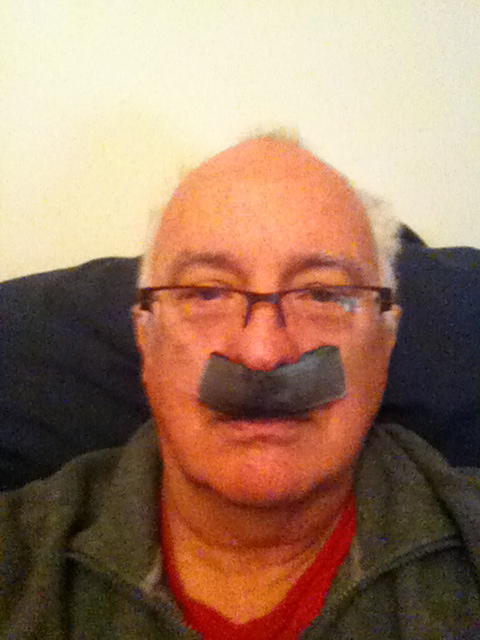
I was home from an outing to the Sydney Day Surgery where very nice ENT surgeon went inside my nose and removed some polyps (which, as seen on a big screen, filmed by fibre-optic telescope, resembled giant slugs that wouldn’t have been out of place in a Doctor Who episode). While he was there, he opened up the entrances to my sinuses (procedure known as Functional Endoscopic Sinus Surgery), straightened my septum, trimmed my turbinates (Seroplasty).

It was a remarkably pleasant experience. Andy, the surgeon, operates on children as well as adults, and his bedside manner couldn’t be better. For example, when I made the decision t0 have the surgery rather than live with recurrent sinus infections and chronic stuffy nose, he said he not only approved the decision, but was personally glad because it’s his favourite procedure. It’s hard to imagine a better way to inspire confidence without undue solemnity.

I had one moment of terror before the event: I heard a male voice introduce himself as ‘the anaesthetist’ to someone in a bed the other side of a curtain from mine, and go on cheerfully, ‘I’ll just wheel you into the other room and give you something to pop you off to sleep and you’ll be right as rain in no time!’ I contemplated calling the whole thing off. But the gods of medicine were smiling on me. A completely different man arrived a little later, introduced himself as John, explained that his colourful headcloth was so as to be less intimidating to the children he’d been anaesthetising earlier, answered my questions about the anaesthetic in a sensible and almost intelligible manner.

The theatre was a cheerful, busy place with plenty of colourful headcloths. I’d been there less than a minute before I became first drowsy and then  … came swimming back into consciousness in another room hearing an interesting conversation about work visas. Then there was an awfully long wait, during which I amused myself composing clerihews of which I remember only one:

Tony Abbott
‘s grab at
being prime minister
is looking more and more sinister.

Some cheese and tomato on biscuits, a glass of lemonade, visits from John and Andy, instructions from the Polish nurse (who was amused rather than offended when I thanked her by saying ‘Spasibo’, which it turns out is Russian, and very different from the Polish ‘Dziekuje’), and the Art Student drove me home.

I have to wash my nose out four times a day, and it’s not all pleasant in there, but so far I haven’t had any pain at all. I’m told my nose will swell up and look horrible in a couple of days. If it’s interesting enough I’ll post another photo.

Normal book blogging will resume shortly.
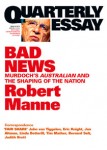
Robert Manne and the Australian

Robert Manne, Bad News: Murdoch’s Australian and the shaping of the nation (Quarterly Essay N0 43, 2011)

These days I keep up with the Murdoch commentariat mainly at second hand, most regularly by way of the delightfully caustic Loon Pond, where someone identifying as lapsed Catholic ‘Dorothy Parker’ from Tamworth holds a satiric mirror up to their venomous name-calling, impassioned defence of the rich and powerful, and self-serving illogic.

I guess everyone knows what kind of beast the Australian is, though it’s striking how reluctant people are to say so in public. On the Book Show just last week, for example, someone said that it was perceived ‘rightly or wrongly’ to be right wing, and Chris Mitchell, editor-in-chief, describes it as centre right. Robert Manne’s essay grasps that nettle and at the same time demonstrates that people have good reason to be cautious in calling a spade a spade in this matter. He has done a careful analysis of a number of case histories: its impassioned promotion of Keith Windschuttle, an amateurish historian with an agenda, to a major player in Australian culture wars; its unremitting support for the invasion of Iraq, and complete failure to acknowledge having got so much wrong; the bullying of Media Watch and the ABC until Australia’s only major non-commercial source of news and opinion was running scared; the bizarre attack on science and reason in its coverage of climate change; its elevation of itself to key political player in first supporting and then campaigning against Kevin Rudd; and, most appallingly of all, its sustained attacks on individual tweeters, one for correctly reporting a negative public comment from a former Australian employee, the other for what was manifestly a joke that would have been cleared up by a simple apology if the Australian hadn’t made it the subject of no fewer than five front page stories.

I had to stop reading every now and then to go out and get some fresh air.

This wouldn’t matter so much in, say, the Green Left Weekly, though I doubt of the GLW would ever be so vicious in attacking someone who wasn’t a high-profile millionaire. But Rupert Murdoch controls a huge percentage of the Australian print media, and the Australian is his heftiest newspaper. I learned in this essay that at some press conferences in Canberra more than half the journalists are from the Australian, that the members of what Robert Manne calls the political class read it without fail, that it is influential out of all proportion to its actual circulation.

People who depend on the Australian for their national and international news in print (and it is after all the only major national newspaper we have) need to read this essay. As always, Manne’s writing is lucid, his tone judicious even at his most combative – and he does get combative. I believe there have been no fewer than eight vigorous replies in the newspaper. I read only one, and if the others distort Manne’s arguments as blatantly as that, it’s all the more important that readers of the Australian read the actual essay.

Strikingly, one line of attack has been to say that Manne is arguing for censorship, for closing down debate. Yet Paul Kelly, the Australian’s editor-at-large, pulled out of a scheduled debate at Melbourne’s Wheeler Centre last week, and no one from the Australian could be found to stand in for him. So actor Max Gillies read the bulk of Kelly’s published response. You can see the Slow TV of the ‘debate’ here. You can read Manne’s ‘deconstruction’ Kelly’s published response on Manne’s blog, here. I have no idea why Kelly and the rest declined a debate, but if my arguments had been taken apart so very deftly I would probably remember a previous engagement too. All the same, it’s a bit rich to accuse someone of wanting to shut down debate and then refuse to engage in a debate with them outside the protective confines of Rupert Murdoch’s flagship. Even more striking is the Australian‘s report on the Australian‘s no-show – at this point I weaken and give you a link: the journalist seems to be suggesting either that this was an excellent prank on the part of Kelly and Co, or that it would have been completely unreasonable to expect Kelly and/or others to actually face the big bully, who threatened to use reason at them.

This must be the most vigorously discussed Quarterly Essay yet. I wonder what editor Chris Feik will do for the correspondence section in the next issue. I imagine he will need to allow some space for the Australian‘s apologists (though they may well decide to ignore that opportunity as well). I hope he will also find space for comment along the lines of Tad Tietze post on the Overland blog, which while appreciating Manne’s careful accumulation of evidence, goes on to offer interesting observations from a left perspective.

360 Killer video

Another video with one of my creative sons behind the camera:

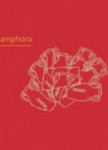
joanne burns’s amphora

joanne burns, amphora (Giramondo 2011)

In the question time at a poetry session of this year’s Sydney Writers’ Festival a member of the audience complained that ‘most modern poetry’ is deliberately obscure, doesn’t use rhyme or rhythm, and is generally not reader-friendly. He might have had Joanne Burns in mind: apart from infrequent commas and an occasional dash or semicolon she mostly eschews punctuation, she rarely writes metric verse (presumably what the questioner meant by ‘rhythm’), she uses big words, makes frequent reference to other poets and (in this book at least) religious arcana, and she often wanders down trails of seemingly random association. But, you know, spend a bit of time with her poems and chances are you’ll come away feeling oddly refreshed.

For example, the third of amphora‘s seven sections, entitled ‘streamers’, is described in a subheading as ‘a series of koannes’. I imagine everyone knows what a koan is – or at least, like me, knows that ‘What is the sound of one hand clapping?’ is one. Almost idly, I went to Google to check my initial assumption that ‘koanne’ was an alternative spelling. Apparently not, said Mr Google. Then I realised that the word was a playful invention, combining the poet’s first name with the zen challenge to the rational mind: so the reader is given fair warning to expect some kind of idiosyncratic almost-sense, not to struggle to make sense, but to let the non-sense play around in one’s brain. Some of them work brilliantly:

you miss the bus
before it arrives how easy
to change the lightbulb

(Incidentally, the lack of punctuation here doesn’t really cause difficulty; it just slows the reading down.)

I found the whole book engaging, but it was the second section, ‘soft hoods of saints’, that spoke to me: a Catholic child’s perspective on stories of the saints nostalgically recalled, overlaid with adult erudition, mashed up with high and low cultural references and approached with a wry, mostly affectionate, probing intelligence. From ‘haggle’:

saints show us who we aren’t. impossible to imitate. our prayers too fast. impatient. saints and their trust in their god. slow and endless. wearing belief like soft hoods. invisible protective. we can only gawk at their images, legenda. in the holy cards many saints are accompanied by floral arrangements. flowers. do saints have flaws. once they are officially saints surely all flaws must hit the floor to be swept away in the giant hagionic broom

This is fun, but something serious is happening as well.

My blog posts about the books I’ve read don’t pretend to be responsible reviews. If you want to read an excellent, exploratory discussion of amphora, I recommend Martin Duwell’s review posted on 1 June this year.

The wolf and honeybee draw near

The Wolf and Honeybee cafe is no longer a promising cloud on the horizon. It’s overhead and looks ready to send the welcome rain to a parched land (well, the land isn’t really parched, but it will be nice to have the cafe open.)

This slideshow requires JavaScript.

Poetica and me

If you have no other pressing engagement at 3 o’clock in the afternoon on 29 October, or on 3 November, or both, you might do worse than listen to Poetica on the ABC. Poetica is broadcast every week at those times, but that particular program will include a reading of one of my poems, and I couldn’t be more thrilled. Beyond that, all I know is that the program is entitled Hearing.

Coetzee on Murray

J M Coetzee has a very fine article in the 29 September issue of the New York Review of Books. Titled ‘The Angry Genius of Les Murray’, it has lots of insight into what makes the poetry so good …

Murray is not a poet of the inner life. Instead he relies on an acute sensitivity to sensory impressions and an extraordinary capacity to articulate them.

… plenty of guidance to new readers on where to start, some lucid explication of the cultural context, and a judicious account of Murray’s troubling bitterness. It ends:

The time has perhaps come for Les Murray to let go of old grudges. Now in his seventies, he has received many public honors and is widely acknowledged to be the leading Australian poet of his generation. His poems are “taught” in schools and universities; scholars write learned articles about them. He claims that he is read more abroad than at home. This may or may not be so. But even if it were true, he would not be the first writer to suffer such a fate; and it’s a better fate than not being read at all. If there are a handful of purists who for political reasons will have nothing to do with him or his works, so much the worse for them—the loss is theirs.

Sylvia Johnson’s Watch Out for Me

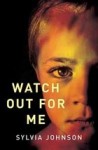
Sylvia Johnson, Watch Out for Me (Allen & Unwin 2011)

Sylvia Johnson has made occasional pseudonymous appearances in the comments section of this blog. A couple of weeks ago she wrote asking if I’d like to read her novel, which she was expecting from the publisher any day. Never one to knock back a freebie or an invitation to be in the in crowd, I said I’d be delighted. The book arrived on my doorstep an hour before I was due to go to the airport for a long flight, so it joined Raimond Gaita’s After Romulus, incongruously I thought, in my carry-on bag.

I guess Watch Out for Me is a genre book – a psychological thriller. The Woods children – Hannah, Richard and their little sister Lizzie – spend a couple of weeks each summer in the 1960s at Bradley’s Head on Sydney Harbour, playing in the park, exploring the disused lighthouse and racketing around the abandoned tunnels with other summer visitors. One year, the Year Everything Changes, their family takes in their cousin Toby, about the same age as Lizzie, who has been traumatised by the erratic behaviour of his mother (shades of After Romulus!) and is timid, careful and eventually traumatised all over again by the teasing games of the young mob. That world of free-range childhood with its exhilarations and terrors is wonderfully evoked, including a tense moment of dawning eroticism in the pitch black of the tunnels. Then something terrible happens in the park, and the children’s dramas are caught up in a bigger, nastier drama.

The summer of 1967 is told from a number of points of view, some of them recalling events four decades later, when the US President is visiting Sydney amid a high security alert. Two other narratives unfold in this other time – in one Lizzie is besieged by an anti-Western mob in a North African town, in the other Hannah and Toby are meet again in Sydney for the first time since that  pivotal summer, and it gradually becomes apparent that something creepy and dangerous is going on around them – something even worse than the brutishness of the US security forces and the strident commentary of the radio shock-jock (who, incidentally, played a disgusting role in the 1967 story). These stories, which turn out to have other links besides the ancient history, unfold to properly scary, operatic climaxes.

And there’s a fourth story, told entirely through clippings from the British press: the story of Jean Charles de Menezes, the Brazilian man who was shot by police in the aftermath of the London Underground bombings in 2005. These clippings add a kick to the book: the Woodses’ story is fiction, and you might read it just for the thrill, but de Menezes’ was killed in the real world, and its presence makes the Woodses’ story seem more pressing. In After Romulus Raimond Gaita says he is convinced that people are moved by his father’s story because they trust that he ‘tried to tell it truthfully and that it is truthful’. I think the press clippings have a similar effect here: they act as a kind of pledge from the author that in her imagined story she is trying to tell something truthfully, that the account she gives us of the world is truthful.

I’m not suggesting an equivalence between this book and anything by Raimond Gaita, but my two plane books did speak to each other seriously, and I think Watch Out for Me succeeds in being persuasively, chillingly truthful.

Raimond Gaita after Romulus

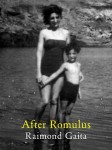
Raimond Gaita, After Romulus (Text 2011)

As the title suggests, this is a follow-up to Raimond Gaita’s Romulus My Father and as the cover suggests this time there’s a focus on his mother.

There’s an essay on the process of turning the book into a film, surely be among the most emotionally charged essays of its kind, made all the more poignant by the author’s repeated, convincing assertions that he works hard at avoiding sentimentality. I can’t imagine a better antidote to the world weariness of Radio National’s Movie Show or the consumerism of Margaret and David. The emotion isn’t anything as trivial as authorial pique. This is about passion: according to Gaita, Richard Roxburgh didn’t want to become a film director, he just wanted to direct this film, and the description of the moment when Gaita finally meets Kodi Smit-McPhee, the actor who plays young Rai in the film, comes like a thunderclap.

But that’s just one of five essays. There are two pieces more or less in the manner of the earlier book. One (‘A Summer-Coloured Humanism’)deals with Hora, his father’s close friend and almost a second father to young Rai, and the other (‘An Unassuageable Longing’, the longest essay and the book’s reason for existing) with Christine, Gaita’s mother, who was seen pretty much from his father’s point of view the first time around. Raimond Gaita probably couldn’t write a shopping list without at least alluding to philosophical profundities, and his writing about these two towering figures from his childhood is richly philosophical. But he saves his main philosophical powder for the other two essays, ‘Character and Its Limits’ and ‘On Truth and Truthfulness in Narrative’, in which he expands on and corrects some of the philosophy raised in Romulus My Father or in responses to it. He reflects on his father’s moral behaviour and sees in it the source of key elements of his own philosophical thought.

‘Philosophy always needs to be read slowly and more than once,’ Gaita writes.’ I would happily read these pieces several times, which is also true of his A Common Humanity and The Philosopher’s Dog. I can’t say that I follow his thinking all the time, but I do trust him. What appeals to me most strongly is the way he roots his philosophising in experience: there’s a deep sense throughout the book of each human being as unique and irreplaceable, and of thinking as embedded in a human life.

Some of the philosophy is hard to grasp, but I found it tantalising rather than annoying. He distinguishes between obligation and moral necessity, between affection and desire, between moral inflexibility and moralism, between sentimentality as the cause of error and as the form of the false. He writes of the importance of serious conversation, of the way people who share a life can fail to understand each other, of the difficult feat of responding  to someone who suffers ‘the utmost degradation’  with ‘compassion that is entirely without condescension’.

I read this on a long plane trip. There was something wonderful about reading his careful, deeply felt ruminations on the importance of honouring a child’s need to love and honour (in this case) his parents, even when they have betrayed his trust, and the harm done by disdaining the parents of such a child while the young man next to me had Will Smith waving a gun around on his laptop and the woman on the other side was alternating between a book of sudokus and Rich Dad, Poor Dad.

Adamson’s Kingfisher’s Soul

[I accidentally posted a beginning draft of this a couple of days ago, and couldn’t make the automatic Twitter feed shut up. Sorry!]

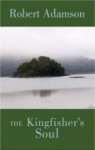
Robert Adamson, The Kingfisher’s Soul (Bloodaxe 2009)

I’ve read many of these poems before, in Mulberry Leaves (Paper Bark Press 2001) and The Goldfinches of Baghdad (Flood Editions 2006). But they all feel new to me. This may be because I’m a lousy reader of poetry. It may also have something to do with this book’s careful ordering of the poems into something like a sequence (most evident in the middle and third of the three sections, the former playing obliquely with the mythic figure of Eurydice, the latter consisting entirely of poems named after birds). And it may have to do with the nature of the poems themselves: bear in mind that I know very little about poetic schools and movements (I wouldn’t know a Black Mountain poem from a New York lunch), so anything I say is sure to be crude and/or naive, but it seems to me that Adamson’s poems flow into one another: edges and boundaries blur, as he and the Hawkesbury River, birds and fish, and other poets and artists, all intermingle in a strangely compelling, elusive oneness.

When he read at Sappho’s recently, Adamson remarked in passing that he generally doesn’t know what his poems are about until he’s finished writing them, and often not even then. I’ve heard a couple of people recently say that a lot of contemporary poetry is like cryptic crosswords – it’s largely a matter of unravelling complex codes etc etc. I don’t think that’s what Adamson is talking about. I don’t have the book with me so can’t give examples (I’m at the airport), but time and again a poem will move from a vivid description of a bird and the speaker’s interaction with it; a metaphoric or even allegorical meaning, sometimes with satirical will be set up; and then it’s as if the poem gives up such ventures as futile and we’re left with the bird, the river, the silent poet.

I recently heard a passage from a recent novel read on the radio, beginning, ‘The Hawkesbury was lovely.’ It’s hard to imagine Adamson writing that sentence, or going on to talk about its golden cliffs as the novelist did. Adamson’s poetry doesn’t describe the Hawkesbury. It lives it. My flight is being called.