Cate Kennedy’s taste of river water

Cate Kennedy, The Taste of River Water (Scribe 2011)

When Cate Kennedy read, marvellously, from this book at the Sydney Writers’ Festival, she described her poems as meditations through narrative, and that’s a nice description. Her poems generally have a narrative thread, whether it’s the story of the woman who wins second prize in a photography competition in ‘8 x 10 colour enlargements $16.50‘ or the moving hand of a baby at the breast in ‘Dawn service’.

Mostly this is no-frills poetry: very little by way of formal rhyme schemes, and even less prosodic adventure – no clever enjambement, uncanny syntax, esoteric allusion. Almost universally, the cadences and imagery are those of conversation, sometimes intensely intimate but always intelligent, generous and emotionally engaged. There’s an attention to fleeting moments, to things easily overlooked: a tight smile, a gesture accidentally caught on camera, a detail from a larger narrative, a parent’s childhood memory, a tiny act of wanton cruelty. These become the subject for meditation, their meanings explored. Many of the poems can be read as reflections on art and communication, though the immediate subjects range from the laying of a brick path to being caught in a rip, and include a locust plague coming to the city, a little girl dancing in a square of sunlight, or the auction of the contents of a deconsecrated church.

What I wasn’t prepared for was that the sixteen poems in the second section of this book constitute what Frank Moorhouse used to call a discontinuous narrative: each poem stands alone, but there are lines, even words (a throat-tightening ‘again’ in ‘Thank you’, for instance) that gain tremendous force from their place in the sequence. Although it’s in many ways a very different beast, I was reminded of Sarah Gibson’s wonderful short lyric film The Hundredth Room.

Cate Kennedy read some of the poems and chatted with Ramona Koval on the Book Show on 19 May. It’s worth a listen, but be warned that the conversation reveals quite a lot about Section 2. Not that there’s a twist to the tale or anything of the sort – but there’s something to be said for letting a narrative reveal itself to you rather than approaching it with foreknowledge.

SWF2011: Sunday

I didn’t get to the Festival on Sunday morning, so missed out on A C Grayling’s session, The Good Book, which the Art Student said was superb. I plan to listen to the podcast. We bought a copy of the book, which describes itself as a secular bible, and the Art Student is threatening to organise a bible reading circle among our atheist friends.

I was back on deck in the afternoon for

2:30: Poems on Pillows
Australian Poetry Ltd, the new ‘peak industry body for poetry’ (I didn’t make that up!) ran a competition in the lead-up to the Festival. People were asked to submit 10-line poems on the theme of Sweet Dreams. Seven poems were selected, printed on postcards and placed on the pillow of every bed in the hotel where Festival guests were staying. At this session the seven winning poems were read to us, six of them by the poets.

My guess is that the audience was mostly friends and relatives of the winners, and losers who had come to see what they’d been beaten by. It turned out I belonged in both categories. My submission, which I’m too embarrassed to reproduce here, played around with  Daisy Bates’s phrase ‘smooth the pillow of the dying race’ and amounted to a little squib about genocide. I’d failed to notice the Sweet Dreams theme and wasn’t surprised when I didn’t make the cut.

I would have been delighted to find any one of winning poems on my pillow, and it wasn’t surprising to hear that at least one distinguished writer was seen addressing his postcard poem to his mother.

Five of the winners are connected in some way with writing for children or young adults: Tricia Dearborn, Bill Condon, Libby Hathorn, Laura Jan Shore and Richard Tipping. I don’t know about the others, Scott Chambers and Josh McMahon. When I pointed this preponderance out during the brief question time, one of the panellists recognised me and replied by drawing attention to me as a benefactor of children’s poets in my past life as editor of the School Magazine, which was good squirmy fun.

4.00: David Hicks and Donna Mulhearn
This was my last Festival event, David Hicks’s first public appearance since the publication of his memoir, in fact since his detention in Guantanamo Bay. He was in conversation with pacifist Donna Mulhearn, who had gone to Iraq as a human shield. She did a very nice job of shepherding him through what must have been a gruelling event, even though the audience was demonstratively sympathetic. She kicked off, for example, by saying she was going to ask him the question that was on the forefront of everybody’s mind: was it true that he had been invited by Channel 7 to appear in Dancing with the Stars? Yes, he said, it was true, and his wife had wanted him to wear the costume to this event, but it’s purple with sequins.

For the most part, things felt very raw. Talk about terror and pity – and shame and rage! Mine, I mean. Hicks said at the start that during those years of being kept incommunicado, thankfully unaware that he had been abandoned by the Australian government, he had learned to detach from his experience, and that was how he was managing this experience. He spoke pretty much in a monotone, but did manage to say he was ‘annoyed’ by the way the press had bought into the lies and distortions told about him. He has never been convicted by a legitimate court of breaking the US or Australian law, and has received no compensation, explanation or apology from either government, not even an acknowledgement of the extraordinarily harsh treatment. The press received his memoir with almost total silence. And Donna Mulhearn told us of something Miranda Devine said in her review that went beyond her normal level of vicious contrarianism to pure evil. The current Labor government, having decried the treatment of Hicks when in opposition, has made no moves in his support in government.

‘This shouldn’t be about me,’ Hicks said. He got passionate describing the sufferings of the people of Kosovo as they were told to him when he went there to join the KLA, and reminding us that people are still being killed in Kashmir. Julia Gillard’s statements about Julian Assange sound very like John Howard’s about Hicks: both seem perfectly content to abandon an Australian citizen to a dangerously extra-legal fate in the US.

One tiny grace note: throughout, Donna Mulhearn pronounced the Gitmo prison’s location as Guantamano Bay. Of course this was inadvertent, but I imagine angels rejoicing at this tiny act of disrespect.

I plan to buy David Hicks’s memoir. It feels like a duty to give the horse’s mouth a go, given all agenda-driven stuff I’ve read about him elsewhere.
——
I haven’t mentioned the absence of PEN Chairs this year. At past Festivals theere has been an empty chair on the stage at some events, representing writers who are imprisoned or harmed by governments. At each session where there was a chair, details about one such writer would be read out. It’s a shame that the tradition was abandoned this year, when Liao Yiwu, invited to appear here, was prevented from attending by the Chinese government. And I haven’t mentioned the busker who sat hunched over a clickety-clackety typewriter offering to type a word portrait for five dollars. I haven’t said much about the weather (glorious), the crowds (big), the volunteers (orange-shirted and everywhere), the app (fabulous), the serendipitous encounters (constant), but I imagine you know the sort of thing.

Now it’s all over bar the reading.

Fireflies

The Sydney Writers’ Festival is over, and Vivid is about to light the town up. In this house we’ve been aware of a Vivid project that looks very interesting, and the Sydney Morning Herald site put up a teaser for it on the weekend:

They buzz like fireflies, light up like fireflies, but forget about calling them insects. Social Firefly is the latest installation to be announced as part of the Vivid festival, and is made up of a smattering of interactive robots flying around the fig tree at the Overseas Passenger Terminal.

The creatures are a collaboration between designers Liam Ryan and Jason McDermott from the firm Arup and Frank Maguire.

They have been programmed to respond to light, and to each other.

‘When light is shone on one of these little creatures, it will react and change the way it is moving and shine light around its immediate neighbourhood,’ McDermott said.

Visitors to the installation will be able to shine torches on the ‘fireflies’ to provoke a response, and see the ripple effect of that on the community in the tree.

Vivid starts of Friday, and Fireflies is scheduled to be switched on at 6 o’clock.

SWF: Saturday

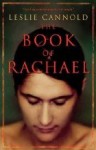
11.30: The Book of Rachael

‘What’s a nice secular Jewish girl like you doing writing a book about Jesus?’

That’s how Irina Dunn kicked off this session in the Bangarra Mezzanine room, swimming in morning light and vibrating to an occasional passing jet ski. Leslie Cannold, the nice secular Jewish girl in question, was there to discuss The Book of Rachael, one of a number of books at the festival to address religious issues from the viewpoint of respectful non-believer.

I’d been keen to attend this session. I love Dory Previn’s song, ‘Did Jesus Have a Baby Sister?’ and a novel about just such a sister has a huge appeal. It turns out that Leslie Cannold has written a number of non-fiction books, to do with abortion and other feminist issues. She was watching a series about the life of Jesus on television, and had a moment when the narrator said that, though Jesus almost certainly had sisters, nothing is known about them. She decided to write an essay bringing those sisters back to history. She headed off, full of resolve, to an institution called something like the Melbourne Theological Library, only to discover that when someone is forgotten it means they are forgotten, that we know nothing about them and never will. She decided to write a novel. Fortunately no one warned her how difficult that would be.

As she was completely ignorant of religion, her research involved reading the entire Bible, both the Hebrew Bible and the Christian Bible, but not too much interpretation of it, though the limited amount she read included daunting texts such as Elisabeth Schüssler-Fiorenza’s In Memory of Her. She drew a parallel with the process in which hints and silences in the official histories must be interpreted to unearth the the histories of subject peoples – ‘women have essentially been a subject people’. The project of telling the story of Jesus’ sister ran into many difficulties, among them being the way Jesus’ story kept drifting into the foreground, as it did a couple of times during the discussion.

Irina Dunn did a lovely job of letting Ms Cannold shine, and supplied a couple of sweet theatrical moments when she tried to discuss elements of the plot, and had to be almost physically restrained. ‘But I never mind if people tell me a book’s plot,’ she said, genuinely astonished that people should object to spoilers. ‘It’s the writing that matters.’

One lovely thing I wrote down:

I love and respect all these characters. I assume they are believers and respect that about them, but I needed to tell their stories in a way that made sense to me, and I don’t believe in miracles.

The book was sold out when I tried to buy itbut I did embarrass myself by approaching Leslie Canold at teh signing table and singing a few bars of Dory Previn to her.

1 pm: The Director’s Notebooks
Former National Gallery of Australia director Betty Churcher chatted with Terence Maloon about her new book about the drawings she did of beloved paintings when she thought ahe was going blind. This was a marvellous session, not least for the unabashed affection these two people showed for each other. To kick things off, Maloon read a passage from early in the book, where Betty describes herself aged eleven being enchanted by a painting (in a serendipitous echo of the spirited intelligence of Leslie Cannold’s Rachael). It was a lovely passage, and when he finished reading, Maloon simply sat and beamed at the writer of it. After a long moment, she said, ‘That was the start of it,’ and the conversation was under way.

4:00: The Big Reading
This is a regular event where a big theatre full of people is read to by an all-star international crew of novelists, with SBS’s Annette Shun Wah as ring mistress.

Kei Miller read from his first novel, The Same Earth. Introducing him, Annette made a teasing reference to the Caribbean accent as impenetrable. In fact he was brilliantly articulated, as much a pleasure for the music of his voice as for the slightly fabulist text.

David Mitchell and Michael Cunningham read from works in progress, the latter explaining that reading published works feels to him like showing a cucumber that won a prize at a county fair several years ago. It didn’t seem to occur to him that this might seem to be disparaging his companions on stage. Still, both WIPs were intriguing.

Téa Obreht, originally from the former Yugoslavia and now living in the US, read from The Tiger’s Wife, a piece that blended vampire elements with tales of the recent Yugoslav wars.

Kader Abdolah, sporting an impressive Mark Twain moustache, was an established novelist in Iran, but now lives in The Netherlands and writes in Dutch. He was the stand out of the session, reading us a short story that was a lightly fictionalised account of his refugee journey – this was both affecting and funny. Then he read the first paragraph from his new book, The House of the Mosque, and held the book up, saying that he had been missing Iran for many years, but had finally been able to go there again, ‘in this book’.

We had an excellent and surprisingly cheap Lebanese meal watching the sunset over Walsh Bay, then walked up George Street to the Town Hall for:

8:00: We (Still) Need to Talk About America
This was the fizzer of the festival for us. Four interesting people on the panel, with an idea that sounded promising: the US sometimes seems scarily incomprehensible from the outside, and this was a chance to hear what it’s like inside. Michael Connelly is a crime novelist who engages with live issues. Téa Obreht is a young novelist who arrived in the US as an immigrant when she was (I think) 12 years old. Daniel Altman is an economist with an interesting résumé. Gail Dines is a sociologist who takes on the influence of porn. It went nowhere. From the front stalls it looked as if Anne Summers mishandled the moderator role, moving doggedly through her list of things that are weird in the US – the cheering of the killing of Bin Laden, the failure to introduce gun laws, disenchantment with Barack Obama, and so on – asking questions that couldn’t help but make the panelists defensive, and jumping in too often to display her knowledge of things USian, in effect clamping on the brakes whenever any momentum seemed to be developing among the panelists. Dines and Altman, sociologist and economist, gamely worked up some edgy sparring, and they both had interesting things to say, but for me the dominant mood was encapsulated in this exchange:

Summers (to Connelly): I saw you smile. You had a thought there.
Connelly: No, I was just waiting for this to pass.

My guess is that the whole thing would have gone better if a moderator had opened with a brief statement to the effect that many things about the US are incomprehensible to outsiders, maybe giving a couple of examples, then having each of the panelists take 5 minutes to respond what it looked like from their vantage point. And trust them to take it somewhere interesting.

Still, we had plenty to talk about in the long wait for a bus.

SWF: Busy Friday

I had tickets for a 10 o’clock session yesterday morning. One of the participants was prevented from being there by the Chinese government, and I was kept away by an act of vandalism (see previous post). There’s a photo of Liao Yiwu on a chair in the Gleebooks shop, but I got my whole body to Walsh Bay in time to spend a little money and queue successfully for

11.30 am: The Fascinator
Delia Falconer, Ashley Hay and Gail Jones have all recently written books set in Sydney. With Jill Eddington in the chair, the three of them – one a lifelong Sydneysider, one here since she was about 20, one a very recent arrival – chatted interestingly. Jill Eddington recommended reading all three in succession because the effect was like three movements in a piece of music. She imagined a movie that might be made of the three of them wandering the Harbour foreshores, going in and out of the Mitchell Library, walking in each other’s footsteps, almost meeting. The conversation that followed was a nice contradiction to the myth that writers are essentially in vicious competition with each other: Ashley Hay, for example, said that when her book was finally with the printer, reading Delia’s, which covered so much of the same territory but from a very different perspective, was like a special reward.

I tore myself away early, just as they were playing with possible readings if the session’s title: were we meant to think of the Harbour as a hat or an evil enchanter from a Margo Lanagan short story, or – the preferred option – both? I left reluctantly so as not to risk missing out on the Francis Webb session at 1 pm. This turned out to be a wise move, and brought a sweet bonus: I was hailed by a friend I hadn’t seen for 40 years, and while I kept one eye on the Webb queue we snatched a quarter of an hour to get reacquainted. When the growing queue vanished into the dark, we promised to follow up on Facebook, and I skedaddled to:

1 pm: The Lost Poetry of Francis Webb
This was in a much bigger venue than other poetry events, and we were told that it could have filled a space twice the size. It was one of a series of events around Australia to celebrate the recent publication of the UWA Collected Poems. The book’s editor, Toby Davidson, has organised and chaired the events, in which local poets read poems by Webb and speak briefly of their connections to him.

Toby D is a young man whose enthusiasm for his subject wouldn’t have shamed a revivalist preacher. He wants us all to read Webb, in solitude and aloud to our friends. He recommends the practice of carrying a book of his poems everywhere with us (which Bob Adamson told us later he actually does). He kicked things off by reading ‘Ball’s Head Again’. He didn’t read badly by any means, but he did demonstrate the difficulty of Webb’s verse and gave us a yardstick by which to judge the other readers.

By any measure they were all brilliant.

Judith Beveridge spoke of the texture of Webb’s language, its compression and richness, and read ‘Images in Winter’ and ‘For My Grandfather’.

Brook Emery quoted a speaker from an earlier session who referred to ‘songs that please the ear and songs that please the heart’ and said he would add ‘songs that please the mind’ – Webb’s poems, he said, are always reaching for meaning. He read ‘Night Swimming’, the first poem by Webb I ever read, when I was 24 or so, and ‘Nessun Dorma’.

Johanna Featherstone, easily the youngest of the poets, struck a blow against the view that Webb is a poet’s poet, read only by scholars and fellow poets. She takes poetry into correctional centres, where prisoners, possibly influenced by knowledge of his time in institutions, believe him. She read ‘The Runner’ and ‘Harry’.

Craig Powell, a psychiatrist in his day job, told a little story of his acquaintance with Webb when in a psych hospital in Melbourne. He read ‘Five Days Old’, prefacing it with the story of its creation: a psychiatrist in England took Webb on an outing, and asked him to hold his little baby for a moment. Powell almost spoiled the moment by asking with a snigger, ‘Who would hand their baby over to a certified chronic schizophrenic?’ But he gave us the poem with sound and heart and head. He also read ‘Hospital Night’.

Robert Adamson talked about the stigma of ‘mental illness’, quoting an eminent poet-critic-media-personality’s description of Webb as ‘the maddy’. When they met, Webb asked Adamson, ‘Are you a Communist?’ ‘Why?’ ‘The long hair.’ He read ‘Bushfire’, ‘Black Cockatoos’ and ‘End of the Picnic’. As a final comment he said that whereas a lot of discussion of Webb’s poetry focuses on his ‘mental illness’, the poetry itself is full of hope and lucidity.

The young Bulgarian woman sitting next to me said she’d loved the poetry, though there were many words she didn’t understand. Me too.

As I was on my way to the next session, I accosted Bob Adamson and said how much I’d loved his reading. He reached into his briefcase and gave me a book! So, dear reader, when someone does something that delights you, make a point of thanking them.

2.30 pm: The Merchants of Doubt
Naomi Oreskes’s eponymous book (can you say that?) is an exploration of the doubt-mongering techniques developed by the Marshall Institute in the US to defend vested interests against the implications of scientific research. They began with the connection between tobacco smoking and cancer, and progressed to a range of environmental issues, reaching some kind of peak with climate change They don’t have to lie (though they do anyway), but they do systematically create disinformation. She was in conversation with Robyn Williams, and they are clearly kindred spirits, science journalists passionately concerned about the current attacks on science.

I won’t try to summarise. Robyn recommended a BBC doco, Science Under Attack. In a neat echo of Adamson’s anecdote, he told of meeting one of the doubt-mongerers at a conference, and being asked of his journalist colleagues, ‘Are they all Communists?’

My main take-home point was that scientists (and, I would add, others) have a deeply held belief that the facts will speak for themselves. But this is manifestly not so on matters with big emotional charges on them.

Not funny, guys! (Updated)

One of my joys in our new house has been to sit at my desk looking out onto the street and observe the reactions of passers-by to Matilda – Matilda being the Art Student’s first ever sculpture, created from copper piping, wire mesh, plaster and ceramic tiles when she was still The Consultant. It was years of work, a joy in the making and a delight to live with. Now, several times a day, I eavesdropped on conversations like, ‘It’s not a real dog, Daddy,’ or  ‘Now we’ll just say hello to Spot and then say hello again on our way back,’ or ‘No, you can’t climb in there with the doggy.’ She has become a small neighbourhood landmark.

So it was a shock this morning when the Art Student headed off to school  this morning and saw that Matilda was gone. A passerby told her she’s seen ‘the dog’ on top of the bus shelter in Enmore Park. Sure enough, there she was:

It was obviously meant to be funny. It may also have been meant as a kind of compliment: instead of lurking in the bushes in a tiny front yard, Matilda was set free to sniff the wind above the street. It took some ingenuity to get her up there – at least two men and probably a ladder. This was planned. Our neighbour who sleeps in his front room said he hadn’t heard a thing in the night. It was stealthy.

It was also callous. Matilda lost an ear and two of her legs were broken. The Art Student was distraught.

I called the Council, the police and the fire brigade. The Council gave me a number and said they’d get back to me. The police said I could ring 131444 and lodge a complaint of malicious damage (it’s not theft because they didn’t keep it), and if they decided to tie up a police officer’;s time with the incident, fingerprints might be taken. The fire brigade said they’d come out in a couple of hours. Then Peter, the guy who’s been transforming our back yard for us, arrived and said he could do it. I held the ladder while he risked life and limb to manhandle the statue back to firm ground.

She’s now safely back home. I have no idea how much of th damage can be repaired, or whether the Art Student will ever again be quite so free about putting her work in the public eye.

Added in the evening: It’s now clear that the sculpture can’t be repaired. The armature is broken in at least five places. An ear is sheared off. Even if the armature was repairable, we no longer have the tiles that made up the mosaic.

Where the dog once stood there’s now a notice:

We’re not holding our breath.

The Book Group, the Finkler Question and the SWF by night

Howard Jacobson, The Finkler Question (Bloomsbury 2010)

This won the Booker Prize last year. Howard Jacobson lectured on Dickens to at least one member of my book group at Sydney University in the 1960s. He’s a guest at this year’s Sydney Writers’ Festival and we’d decided to combine our group meeting with a visit to the festival. Even if three members of the Book Group weren’t gentiles married to Jews, this book, which is broadly speaking about gentile–Jew relationships, would have been a logical choice.

Before the group meeting:
When I’d read to about page 80 I wrote a draft blog entry explaining why I didn’t finish the book. Mainly, I found the central narrative thread, in which a gentile man obsesses over the implications of having been mugged and called a Jew, to be both flimsy and ponderous. That wouldn’t have mattered if it was funny – and after all, much has been made of the Booker going to a comic novel – but I didn’t laugh once. Too often a character is given just enough two-dimensionality to allow the writer to take a satiric pot shot at her/him. There are jokes. Our gentile hero (he’s a serial romantic, Treslove by name, get it?) is in love with a woman who confesses that she’s ‘a bit of an arsonist’, and in the morning he wakes to ‘twin realisations’:

The first was that she had left him. The second was that his sheets were on fire.

Boom-tish! or Clunk! You be the judge.

In that draft I said, with only slight exaggeration, that a two page account of a Google search was the most interesting thing in the book up to that point. I did read on, hoping only for a cute line to quote as the point where the book and I parted company.

It was not to be. The Google search – “Anti-Semitic Incidents” – foreshadows a transition to something much more interesting. The unfunny humour keeps coming, and all but one or two of the characters stay paper thin, but from about the halfway point the book begins ringing the changes in a tantalisingly complex way on themes of Jewish identity and culture, Judaism, anti-Semitism, internalised anti-Semitism, Zionism and anti-Zionism. Viewpoints multiply, transmogrify, collide, dissolve. Just as you think the book is coming to a settled view, a telling incident or a forceful argument challenges that view. It’s not just the familiar ‘two-Jews-three-opinions’ thing, though it includes that. It becomes a dramatisation of intractable complexity.

Raissa Maritain, Russian Jew turned French Catholic philosopher, wrote what could have served as an epigraph to the second half of The Finkler Question: ‘To every argument can be opposed an argument, and thus appears the futility of all argument.’ Or perhaps it wouldn’t serve, as she was talking about faith as superior to reason. Up to a point, the arguments are tested here, not against faith but against the characters’ experiences – of love, loss, betrayal, disappointment, kindness, stupidity, brutality – but the characters are so thin it’s hard to believe the testing is real.

Yet other people, including the Booker judges, have loved the book. I came away feeling that I’d somehow missed the point, much as Treslove does throughout the book.

After the group meeting:
We met at a pizzeria in the wharf precinct. Three of the seven of us came straight from Howard Jacobson at the Sydney Recital Hall. Those three and I had read the book, a third had reached page 225 and was enjoying it. All the others had a much better time with than I did. One said that like me he’d noticed page 79 as the point where things became interesting, but unlike me he’d found what came after that funny in the I’ve-got-to-read-this-to-my-wife way. Others related strongly to Treslove. When I said there was almost nothing to the character they agreed, but saw that as a brilliant depiction of a certain kind of personality: ‘There’s a little Treslove in all of us.’ Someone related strongly to the theme of men of a certain age (he said ‘our age’) looking out for each other when their wives have died. Sex scenes that I found weirdly unfunny and not much else were to other people touchingly intimate. The scenes towards the end that I read as competently introducing some much needed pathos (please note the emotional distance in that way of saying it) made St least one grown man cry.

I found myself conceding that I’d enjoyed more of the book than I’d been willing to admit. But mainly it was interesting to see that the book spoke so personally to the others who had read it. Evidently I was right – I’d somehow missed the point. And the thing is, if I were to reread the book, I expect I’d miss it again. I’m the wrong horse for that course.

Our plan had been to go to the Chaser’s Empty Vessel  show at  nine o’clock, but by the time we got to the venue it was half past, and the person in orange T-shirt told us it was sold out. Some of the others went on to the poetry reading at the Number One Wine Bar. I came home.

SWF 2011: Bombs and Poetry on Thursday

After I uploaded my sketchy report on last night’s SWF event at the Town Hall I searched for #swf2011 on Twitter and saw that everything I’d quoted had been tweeted to the universe within seconds of being uttered. Undaunted, here I am again, lumbering along with my antiquated longwindedness to bring you My Thursday at the Festival Part One: 10 till 2.

10 am: The Poetry of War with Daniel Swift and A C Grayling
Daniel Swift’s grandfather flew in planes that dropped bombs on German cities in World War Two. He failed to return from a bombing mission in 1943 when Daniel’s father was four years old. The book, Bomber County, tells of Daniel and his father visiting the grave. Daniel, by my calculations now 34, wanted this small story to open out into a bigger picture. He sought out and interviewed participants in bombing missions, and people who were in the cities bombed by his grandfather on the nights of his missions All this, plus an exploration of World War Two poetry, which anyone (else) will tell you barely exists, fed into a project of considering the bombing campaign, not to praise the heroism of the men or condemn or defend the atrocity involved, but to try to imagine – resurrect was Swift’s word – the human experience.

A C Grayling , when he’s not busy being the nice one of the current crop of aggressive British atheists, is an ethicist. His book, Among the Dead Cities, deals with the ethics of those same missions. The focus of this session was on Swift’s book, which Grayling clearly loves. They claimed to disagree on the ethical question, but I couldn’t spot any disagreement. The conversation was lovely in many ways, not least for the spectacle of an eminent professor putting his considerable intellectual heft into recommending the work of a much younger man. The air fairly crackled with respect – mutual between the speakers, from both of them to the men who flew on the mission, and during question time to the rambler and the autobiographer.

11.30 am: Antipodes: Poetic Responses
Antipodes is an anthology, edited by Margaret Bradstock, of Aboriginal and non-Aboriginal poets addressing the relationship between Aboriginal Australians and settlers – the survivors of genocide in conversation with the perpetrators, descendants and beneficiaries, as it were. The facilitator, Martin Langford, said it was the first book of its kind, and warned us that some of the sentiments, especially in the early settler poems, might be repugnant to modern readers – the book is meant to be read as whole. In order of appearance we were read to by:

Anna Kerdijk Nicholson, who read a number of poems from Possession. It was good to hear them read, though my impression was that the poet was intimidated by the context. I wouldn’t have objected if she’d explained the universally cryptic titles of her poems, but she just read and then sat down.

Lionel Fogarty: again I was very glad to hear him read, as I have a copy of his New and selected poems : munaldjali, mutuerjaraera but haven’t been able to read very much of it. Now that I’ve seen and heard him I may have a better chance. He read a semi-rap, ‘True Blue, Didjeridoo’, which he and his son wrote when Nicole Kidman was culturally insensitive enough to play a didjeridoo on television.

I don’t know the work of either Margaret Bradstock or Brenda Saunders. They both read well, but I have trouble absorbing non-narrative poetry that I’m hearing for the first time. Ali Cobby Eckermann, a little of whose work I’ve read in anthologies and journals, read us excerpts from an unpublished verse novel, Killing Fields, a massacre story. ‘You’re privileged,’ she said.

Anita Heiss read last. With her brilliant control of tone she had us laughing and devastated from moment to moment. A woman of many talents, she thanked the organiserd for calling the writing in her book I’m Not racist, But poetry. ‘It’s not really poetry,’ she said, ‘but it’s not prose because it doesn’t go to the end of the line.’

I’m not sure what this anthology is. It may be intended for schools. Not that there’s anything wrong with that of course, but it does make me hesitate to rush out and buy it for myself.

1 pm: The Poetry of Three
This was Mark Tredinnick, Kim Cheng Boey and Cate Kennedy. Mark is a nature writer, and the poems that worked best in this context dealt with the nature of a parent-child relationship. I particularly liked ‘House of Thieves’. Kim Cheng, whose work I know only from his readings last year, was again delightfully urbane. Cate’s poems are narratives, and went over like a charm. I plan to buy her book.

Probably the strongest visual image from the Festival is the huge queues, all of which today seemed to have Bob Ellis in them. The queues for poetry were all short, and at each poetry session one of the readers expressed gratitude and surprise that so many people turned up.

SWF 2011: A Good Leader is Hard to Find

The reason I am not a politician is that I want to understand.

That’s what the French political scientist Raymond Aron said when asked why he hadn’t gone into politics. The remark came to mind when I saw the number of politicians and ex-politicians in this year’s Sydney Writers’ Festival line-up. Maybe there’s room for a separate Sydney Politicians’ Festival, or a Sydney Politicians’ and Political Journalists’ Festival.

Whatever misgivings I might have had, I turned up with 1600 or so others at the Town Hall last night to hear Lenore Taylor, Bob Ellis, George Megalogenis, Bob Carr, Barrie Cassidy and Kerry O’Brien chat under the heading, ‘A Good Leader Is Hard to Find’. Kerry O’B was moderator, and the first thing he did, whether deliberately or not, was to reframe the discussion. He announced the title as ‘Good Leadership Is Hard to Find’. I breathed a tiny sigh of relief, as the shift away from the personal made it a bit less likely that we’d be treated to misogyny-flavoured wit at Julia Gillard’s expense.

The composition of the panel – four political journalists, five if you count Bob ‘Sui Generis’ Ellis, and a former politician who was also once a journalist – made it inevitable that the discussion would focus on the relationship between politicians and the media. There seemed to be consensus that we lack effective or convincing leadership in the Australian parliament, that the interplay between the politicians and the relentless 24-hour news cycle is partly to blame, and that the attention both of them pay to opinion polls adds toxin to the brew. Our leaders are so busy feeding the media beast they don’t have time to think. They’re reduced to selling a message rather than advocating a case, performing rather than communicating. Political coverage is dominated by opinion polls, leadership challenges and early election speculation, with not a lot of room forin depth analytic conversation. Gone are the days when the Prime Minister would chat with journalists at the end of a long day and explain his/her thinking about proposed legislation – when Paul Keating would say to Lenore Taylor, ‘Love, this is what you need to know. The discussion was refreshingly free of blame: the way the media works has changed, and neither the politicians nor the journalists have figured out how to deal with the new reality.

There were no revelatory insights, but it was an interesting evening. Ellis and Carr stood out as phrase-makers, Carr describing himself as an amateur historian, Ellis enacting his familiar contrarian persona. For example, Carr:

In a democracy the normal relationship between people and their elected representatives is mistrust and dissatisfaction. It’s the job of the people to be disillusioned. It’s the job of politicians to disillusion.

Ellis, when asked why the ALP doesn’t adopt what he had just described as an obvious strategy

They do research instead of thinking.

It’s not that the others lacked flair, but as working journalists perhaps they were a little more willing to let the facts get in the way of a good story. So after Bob C made his fourth or fifth remark on the theme that things may be bad but they’ve been ever thus, George M said, ‘I’ve followed many election campaigns but this was the first one where the main candidates feared the electorate.’ And when Ellis spoke of the minority government as ushering in a new era of negotiation and persuasion in parliament, Lenore challenged him: ‘And you’ve seen this happen with which piece of legislation?’

The journoes have their own unrealities. George M told us how his faith in the electorate had been restored when ‘they’ decided to choose neither side of politics at the last election, but to have a hung parliament. No one on the panel said, ‘George, you’re talking nonsense. No one made that decision. All the millions of actual deciders chose one or the other. There was no “Neither” option on the ballot paper.’

There was half an hour of questions. Only one person mistook the microphone for a soapbox.

Overland 202

Jeff Sparrow, editor, Overland 202, Autumn 2011

I have one major complaint about this issue of Overland: it won’t be read by enough people. It gets classified, correctly, as of the left, and so there’s an assumption that only people who identify as left-wing should read it. It gets marginalised, when item after item in it deserves the widest readership and engagement. Rather than saying too much, here are a couple of excerpts.

From Guy Rundle’s ‘Open-eyed conspiracy his time doth take‘, a look at the theory and practice (‘praxis’) of Julian Assange and WikiLeaks:

In Assange’s model, the failure of the anti-globalisation movement to challenge the governmental conspiracies that emerged post-September 11 resulted from the very dispersal that they celebrated […] WikiLeaks, in that respect, represents a dialectical development: recognition that a counter-conspiracy,  to  be effective, must decisively reject openness  in favour of an ultra-conspiracy. […]
WikiLeaks’ massive category-shifting leaking is not intended to dissolve governance but to uncouple governance and conspiracy, to make it impossible for governments to fall back on conspiracy as a mode of action.

From Rjurik Davidson ‘s ‘Imagining New Worlds‘ on ‘New Wave’ science fiction of the 1960s and after:

The New Wave [demonstrates] that approaching culture politically (in the broad sense of the term) does not necessarily result in the production of dour and didactic texts. On the contrary, political interventions underpin many of the greatest formal
 revolutions, the most experimental and original work.

From Bob Gosford’s ‘They took our culture – now there is no law‘, one of three pieces on the Northern Territory under the Intervention:

[A] Northern Territory judge who in 2009 considered the effect of the changes to the Emergency Response Act 2007 noted that: ‘the precise mischief that [the section] is intended to remedy is unclear’. He went on to argue that because the legislation precluded consideration of a range of previously acceptable and relevant issues, it ‘distorts [the] well established sentencing principle of proportionality, and may result in … disproportionate sentences’.

From Alexis Wright’s ‘Talking About Tomorrow‘, an open letter to Bob Brown and Rachel Stewart:

I cannot believe that the Intervention can be  justified  when   families  are  leaving their
traditional lands – the lands where they have lived and that they have taken care of for tens of thousands of years – unable to endure the heaviness of government controls over their lives. They are becoming the new gypsies, vilified by residents of Australian towns and cities opposed to having them as neighbours.

She goes on to argue that ‘the only way forward is through treaty-making with individual nations and regions in northern Australia. in particular in the Northern Territory ‘.

From Patricia Gillespie’s ‘[In]Dignity‘, which is largely a graphic account of her elderly mother’s experience with the health system:

From a medical perspective, the treatment for her congestive heart failure – the reason for her admission to hospital – was a success. She was no longer ‘dying’ or ‘drowning’ in fluid. But Marie inherited […] problems such as vitamin deficiencies, suicide ideation, muscular weakness and mobility issues, chronic rash, a bleeding tongue, bedsores and ulcers, which made a mockery of the notion ‘do no harm’.

There are eight wonderful pages of images and pensées from Sean Tan. There’s poetry, including K A Nelson’s ‘Chorus of Crows‘ (winner of the 2010 Overland Judith Wright Poetry Prize, and another angle on the NT Intervention) and  Jennifer Compton’s sweet celebration of the quotidian, ‘I Came Home with the Shopping‘.

Almost teh whole lot is up on line. Have a look.