Mark Haddon’s Spot of Bother

Mark Haddon, A Spot of Bother (Vintage 2007)

This is a Family-Celebration-Goes-Horribly-Wrong comedy, and since we’ve just had a Wedding in the Family it was a timely read for me. Thankfully none of our disasters got beyond impending status, though the heavens came close to opening, the dog could easily have been kidnapped when he stayed behind in the park to cadge barbecued sausages from perfect strangers, and any number of half acknowledged emotional storms were crackling on the far horizon. In this book, as indeed in this whole genre of comedy, the disasters actually happen – the bride’s brother turns up late covered in mud and subsequently snogs his boyfriend in shocked view of the born-again in-laws, her father gives a bizarre speech and then headbutts one of the guests – but everything turns out all right in the end.

What makes the book interesting – compared, say, to Frank Oz’s dire box office success Death at a Funeral (so great a success that there was a remake within five years) – is the way it takes us inside the mind of a man who becomes increasingly irrational as the book progresses. George, father of the bride and disrupter of the wedding reception, is a fairly dull man, recently retired and building a studio so he can pursue his long neglected art hobby. On the first page of the book, he sees a suspicious lesion on his hip and panics. From there on, he progressively loses his grip on reality, helped by a number of the key certainties of life crumbling before his eyes. But this isn’t the The Yellow Wallpaper: eve n when George is suffering the worst, it stays funny. The prose is straightforward and engaging, as you’d expect from an accomplished writer for children, though the sex scenes make it unlikely that this will cross over from adult to child readers as The Curious Incident of the Dog in the Night-Time did.

I found it refreshing to be taken on a journey into (and possibly out of) irrationality that isn’t Gothic, or medicalised, or political, or in other ways portentous. I’m uneasy that the comic treatment may involve the domestication of awful suffering, but it’s never callous. That is to say, this is an enjoyable, light read with some substantial barbs in it.

Dogs on ice

Here’s a dog treat idea that deserves wide currency.

You do need a little equipment: a balloon (one balloon for each dog); some scraps of meat or peanut butter or other substance attractive to dog(s); water.

Chop the meat up fine and force it into the balloon. I used a kitchen funnel. I pushed the meat into the narrow part of the funnel using the handle of a bowl scraper, then kneaded it down the neck of the balloon. It wasn’t too hard.

Fill the balloon with water. It doesn’t need to be very full – I was happy with a diameter of about seven centimetres.

Tie the balloon off, and put it into the freezer for 24 hours or more.

Give to dog(s) when they are in need of entertainment, or just when the weather is unpleasantly hot.

This slideshow requires JavaScript.

The year in review (lazily)

A handy blogging tradition which I got from Pete is to cut and paste the first line of the first post of each month of the year as a way to reflect briefly on 2010 without necessarily engaging the mind. So here goes:

January: I came out of  Wes Anderson’s Fantastic Mr Fox wondering if I oughtn’t reconsider my devotion to the cinema.

February: Thanks to Antony Loewenstein for this, from Winter Soldier testimony in 2008.

March: It can’t be! Two full weeks since I blogged! I must have been busy.

April: We went this morning to what we’re told these days is even more popular with Australians than the beach or the footie – the art gallery.

May: One of my highlights of last year’s Sydney Writers Festival was Alleyway Honour in the Bankstown Town Hall.

June: Dennis Hopper does Rudyard Kipling … on the Johnny Cash show. (via Harriet the Blog)

July: Reading a book while walking is different from walking while wearing earphones.

August: This morning people in my house said to each other, ‘How about that wind?’

September: There are wordy conflagrations in Melbourne around about now that are sending occasional sparks up Sydney way.

October: Today is Arthur Boothroyd’s hundredth birthday.

November: Those who know about such things say the best introduction to Philip K Dick’s fiction is his short stories, especially ‘We Can Remember It for You Wholesale’.

December: This book inspired two of my November blog sonnets, but that’s no reason not to give it a separate entry.

No mention of weddings, buying and selling houses, girlfriend transforming from harried consultant to blithe Art Student, etc etc etc. But there you have it. Happy New Year, all!

LOLdogs (not!)

Our dog Nessie has many virtues and at least as many vices. Here’s a seasonal story in which  the consequences of her vices, though vile enough by any reasonable measure,  are less vile than those of her virtues.

You could argue that the whole thing was the humans’ fault. On Christmas evening, the Art Student and I packed a basket of leftovers from lunch, including most of a roast chicken, and set off for dinner with my sister and her family who are in town for the holiday break and living just down the street. After a pleasant evening, in which the Art Student displayed her Auntie qualities to striking effect, and my sister’s leftovers, including spectacular poached salmon, won the day, we brought most of the chicken home with us. We went straight to bed, absentmindedly leaving the bag of chicken in the basket on the stairs.

Enter evil Nessie.

The next morning, Boxing Day, the chicken bag was on the kitchen floor, completely empty: no bones, no crumbs of stuffing, not even a smear of grease on the lino. We didn’t know which of the dogs was the culprit –  Oscar, the Honeymooners’ foxy Jack Russell, is staying with us while they’re in Thailand – but our dog-walks during the day made the criminal’s identity clear, as Oscar was his usual energetic and regular self Nessie was uninterested in chasing balls and failed to produce anything for our doggy-do bags.

That night when we humans went to bed, we shut doors as usual: the back door so the dogs couldn’t get out to bark at the possum, the front door in case of an unlikely intruder, our bedroom door, and the door that separates the front of the house, where we sleep, from the kitchen area, where the dogs sleep, because Oscar hasn’t quite accepted the principle of Separate Sleeping Quarters. The Art Student, usually a very light sleeper, took some anti-inflammatories for pain she’s been having in her hip. So there’s the setup: many closed doors, two deep sleepers (I don’t need drugs to make me stone deaf when asleep), and a dog with a dangerously overloaded digestive system.

I’ll spare you a description of the state of the kitchen floor the next morning. It was at least as retch-makingly noxious as you can imagine. That was the result of her vice –  and though the ghost of a smell still lingers, there was nothing that carpet foam, scrubbing brushes, newspaper, disinfectant, deodorant and the passage of time couldn’t fix. It was her virtue that caused the serious damage. Unlike A Small Dog That Shall Not Be Named, she recoils from the very idea of crapping or piddling indoors, and had tried desperately to make the back door open: from the evidence she knocked, scratched and bit, presumably in the hope that one of us would appear, godlike, as we normally do to the faintest of her knocks because the door is new and beautifully stained – at least it was. We didn’t hear. And the door is a mess. We didn’t have the heart to beat her severely or even yell at her, but our hearts bleed for the door. Behold just some of the damage:

Preincarnate

Shaun Micallef, Preincarnate: A novella (Hardie Grant 2010)

Shaun Micallef is a comedian who affects a kind of supercilious gaucherie, a little like Stephen Fry without the erudition or the authentic blue-ribbon class credentials. I’ve mainly seen him on television, and been amused, though not enough to make me watch  Talkin Bout Your Generation, the TV game show he MCs, unless by accident.

This book was a Christmas present from a friend who doesn’t watch a lot of television and was enticed by the stylishly witty cover. I gladly accepted it as a challenge to my prejudices. Sadly, I gave up a third of the way through, my prejudices unallayed. There’s quite an interesting plot involving time travel, culminating (I peeked at the last couple of pages) in logically determined absurdities redolent of the climactic scenes of excellent farces. My problem was that the writing was constantly striving to be ‘funny’, interrupting itself with strenuous jokeiness or sketch-comedy interludes. For example, in a seventeenth century context:

Moray wore a parrot hidden under his vest during all his subsequent meetings with the Dutch émigré , and every conversation recorded by the parrot was later transcribed. It was an arduous process. The parrot had a learning difficulty and Moray would often have to trick Leeuwenhoeck into repeating entire conversations, sometimes fifteen or twenty times. eventually, enough evidence was amassed to establish a prima facie case.

It goes on with the parrot shooting himself out of guilt, and none of it moving the plot forward perceptibly. Funny, if you’re in the mood. Otherwise annoying.

Clive James doesn’t like to be thought of a comedian, and has said so in a number of places, including in an interview with Peter Thompson on ABC TV’s Talking Heads:

I’m not really a comedian and I don’t even tell jokes. If I do anything funny it’s because I’ve expressed something real in a very short space. The result is, if you make an article interesting enough on that level … So you’re saying something complex but some of it comes out funny, and you get this reputation as a comedian, then journalistically these two reputations get in each other’s road. ‘He can’t be serious because he’s funny,’ ‘He can’t be funny because he’s serious.’

I hope I’m wrong, but it looks to me as if Shaun Micallef has bought into that journalistic dichotomy, and opted for funniness at the expense of all else.

Andrei Codrescu’s Poetry Lesson

Andrei Codrescu, The Poetry Lesson (Princeton University Press 2010)

Exquisite Corpse is the name of that game where players make up a story together. It’s also the name of an online literary journal. Andrei Codrescu, a poet who recently retired from teaching at the State University of Louisiana, is its editor, and this is his most recent book.

It’s not a book of poetry. Nor is it a book on bow to write poetry, though there are some possibly useful tips such as this list of ‘The Tools of Poetry’:

1. A goatskin notebook for writing down dreams
2. Mont Blanc fountain pen (extra credit if it belonged to Madame Blavatsky)
3. A Chinese coin or a stone in your pocket for rubbing
4. Frequenting places where you can overhear things
5. Tiny recorders, spyglasses, microscopic listening devices
6. A little man at the back of your head
7. The Ghost-Companion
8. Susceptibility to hypnosis
9. Large sheets of homemade paper, a stack a foot thick
10. A subscription to cable TV

The book is a wildly unreliable account of the first lesson for the year in his Introduction to Poetry Writing course, in which he assigns each of his 13 students a ‘Ghost-Companion’ – a poet living or dead whom they are to read and turn to for guidance. This slender narrative frame is fleshed out in any number of ways –  with sex-and-drugs-and-poetry reminiscence, gossip, a touch of postmodern cleverdickery, a hallucinatory moment or two, some surreal invention (at least I assume it’s invention) involving a disused missile silo, reflections on the weird intergenerational activity known as teaching, cranky-old-man observations on technological and other change, a lightning tour (during a pee-break) of his office, which is also the editorial office of Exquisite Corpse, and all manner of intelligent self-indulgence. It’s an oddity that reminds me of nothing more than of Brother Wilbred, my superbly eccentric Grade 8 teacher, who regularly treated us – 40 or so 13 year old boys – to impassioned and not entirely comprehensible rants on non-curricular subjects dear to his heart.

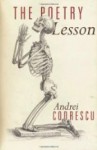
Andrei Codrescu taught for more than 25 years: I imagine many past students will enjoy the book as a comic look at what was happening on the other side of their student–teacher interface. Those of us who haven’t previously heard of Mr Codrescu, who have chosen the book as a replacement for a Christmas present we’ve already read, attracted perhaps by the incongruity between the title and the supplicant skeleton in the cover illustration, can only imagine that insiders’ pleasure, but we still get a privileged glimpse behind the tapestry, and an unexpected, sometimes exhilarating ride.

Happy birthsday

When I was in Rome 30 odd years ago with a toddler, we visited a laundromat in the Campo Dei Fiori every couple of days. ‘Buon giorno!’ the woman in charge would greet us. Then one day, she said instead, ‘Auguri!’ It took a bit of nutting out, but I realised that Easter was approaching, and her greeting was the equivalent of ‘Happy Easter!’ Literally, I’m guessing it means ‘Good wishes!’ No need to mention the festival that gives rise to the wish.

Here in Anglophone Australia we don’t have such a sweetly noncommittal greeting. My doctor, who has a mezuzah fixed to the doorpost of his surgery and wears a yarmulke, wished me a Happy Christmas the other day, and I didn’t know what to say in reply. Then I didn’t know what to say to his receptionist, who didn’t have any obvious signs of religious heritage.

I’ve heard people wish each other Happy Holidays, but that sounds like an awkward transplant from the US. ‘Seasons Greetings’ works fine in print, but it’s weird when spoken. Referring to the solstice just feels prissy and evasive – Christmas may originally have built on a Druidic celebration of the northern winter solstice but it’s part of the Christian tradition in its present forms.

I’ve been ruminating on what Christmas means to me. When I was little it was important to me that there was a baby in the middle of all the celebrations. Christmas was like a birthday, except that presents were given, not just to one special person, but to everyone. Unpacking that thought: if on someone’s birthday we celebrate the fact that they are alive, regardless of anything that they have done or endured since their birth, then at Christmas we celebrate all of us in the same way. And you know, in the crowd competing for attention at the fish market counter this morning, the mood was so amiable and generous, that it doesn’t feel like a stretch to say that the often mentioned  Christmas spirit is actually about something of the sort. Sure, some people see it as a sectarian event or a consumerist orgy, but I think for me its secular meaning is a celebration of our common humanity. The baby Jesus is a symbol of what Quakers call ‘that which is of God within each of us’, a formulation that an atheist like me, stuck for words, will accept as good enough.

When I tried to talk about this at dinner last night, the conversation became heated, so maybe I’m being controversial here. But Happy Christmas to my readers anyhow, and if you don’t celebrate it yourself for whatever reason, I’m still thrilled to share the planet with you and say Hi in the name of our humanity.

The Children’s Bach

Helen Garner, The Children’s Bach (©1984, Penguin Australia 1999)

Having read Thea Astley’s A Kindness Cup because it was on Kerryn Goldsworthy’s What’s What List and been sharply impressed, I decided to follow it up with this, which is also on that list. I am in awe of Helen Garner’s non-fiction, a category which for my present purposes includes the novel The Spare Room, but I’ve read very little of her fiction. Monkey Grip, her first novel, read to me like an elegantly processed diary: it was interesting and impressive, but didn’t entice me to read more. So reading The Children’s Bach involved reversing an earlier virtual decision.

I’m not sure my life is much richer for the reversal. Admittedly life was offering some stiff competition for my attention as I read it, what with the wedding, settlement day on our new house and the imminence of Christmas, but the book failed to enthrall me. About two fifths of the way through I was having trouble keeping track of who was related to whom, so I drew a diagram and was astonished to realise there are only ten characters, of whom three are children, yet I had trouble telling them apart. Dexter is the man who shouts a lot, cheerfully. Vicki is the young woman who has come over from Perth to live with her sister and then moved in with Dexter and his family. Which of the more or less indistinguishable women is Dexter’s partner? Who is Poppy again? When they talk about the little guy with the tatts are they referring to the same man who tells his daughter a bedtime story about the Paradise Cafe? Surely the man who is taking Athena out walking isn’t the same man who came into her house the other night and had sex up against the fridge with young Vicki, with whom she is kind of in loco parentis? Luckily, I drew my little chart of relationships and got it all clear before the main events of the book, which involve extra-marital sex (though I’m not sure any of the characters is married, strictly speaking).

I probably missed a lot. For example, I wasn’t sure if the first of two main sex scenes was actually a sex scene until the dying fall of the last sentence, just before one of the characters said something about having to make some phone calls. But even for as undiscerning a reader as I was, the book delivers a moral jolt. Each of the four characters involved in the sex scenes has a completely different take on what the action means: assumptions are challenged, values questioned, tensions left unresolved. There’s no tragedy, no high romantic drama, no ultimate judgement – just people making their way with each other. And beyond that, I think, a documentary impulse in the writing: it aims to tell us about the lives of a certain group of people – perhaps the ‘friends’ the book is dedicated to –

Epithalamion

At the urging of the Art Student and with the permission of the Groom (and by implication the Bride), here are the sonnets I read at the wedding on Saturday. At least, this is the text I read from – I fluffed at least one line and added an aside to another.

1. When the parents of the groom were young …
We didn’t see the point, we swore.
We said, It’s just a piece of paper.
We said, No church, no state, no law.
Will bind us to this wedding caper.
But times have changed, the point’s now clear
At Ballast Point, assembled here,
This site of grim utility
Now filled with light and poetry.
What better place to make your start?
Mid rings of concrete, iron, grass, stone
Give rings of gold. The way is shown:
Be ballast for each other’s heart,
Give weight to float on even keel,
Be steerable but strong as steel.

2. Love is …
Love is patient, love is kind,
It springs up like a red, red rose,
It can be mad, it’s free and blind –
These things everybody knows.
Today, though – here’s the nitty gritty –
Love bears the names of Liam and Kitty.
No abstract framed in a museum
It lives and breathes in Kitty and Liam.
So raise the roofbeam, shoot a flare,
Bear witness to their wedding vows
And whistle as they take their bows.
Dance a jig, let down your hair.
Life’s as gloriously unpredictable as Sydney weather
May they face its best and worst together.

A wedding in the family

Whew! Getting married is a big deal. I know that now because my younger son did it yesterday.

It was a wonderful event. The ceremony was in the relatively new Ballast Point Park, formerly – as the name suggests – a source of stone for use as ballast, and until recently a site dominated by oil storage tanks. Now parts of the largest tank have been used as a sculpture, an iron crown floating over the park, with a line of Les Murray’s poetry punched into the rusting iron. The park itself is pretty stark so far, dominated by a bare sandstone cliff, but indigenous plants have been planted there and promise that in time it will be a softer, kinder place. It provided us with a fabulous site for a wedding: a grassy lawn enclosed by rock, hacked into circular shape, presumably to accommodate an oil tank. (The only photo at this link shows the exact spot, though you’ll have to imagine the flowered arch and hundred people.)

The reception, at the bride’s parent’s home five minutes down the street, was just as fabulous. It was on a sloping lawn in front of a block of townhouses, right on the edge of the Harbour. We built a symbolic fence of bamboo flares to warn little children (of whom there were four) and people whose judgement might be impaired by alcohol (of whom there were potentially many) of the danger of falling over the edge.

I’m not going to attempt a full report. There were vows, beautifully pragmatic as well as romantic. There were poems, Pound, Shakespeare, Philip Larkin (‘This Be the Verse’!), and some written for the occasion. There were speeches. One running theme was that my son was taking a different path from his parents, who have never married. This theme peaked in the opening line from the Best Man, brother of the groom: ‘Liam and I are bastards.’ If only my mother had lived to hear the accepting laughter that rolled like thunder at that line!  The competitor for best line of the day came from the Best Woman, sister of the bride: ‘I pre-emptively love your children.’

There was loud music but no dancing, except for my little nieces and, according to the photographer, me. There was enough excellent non-alcoholic drink among the beer and wine to save non-drinkers such as me from dehydration.

Today the Art Student and I spent most of the day helping with the clean-up, post-mortemising, attending on the Opening of the Presents. We had tickets for Geoffrey Rush in Diary of a Madman at 5 o’clock at the Belvoir, but we were so done in by our weekend excitement that we gave them away, with hardly a qualm.