Last night we went to hear Peter Harper, Coordinator of Zero Carbon Britain, speak at the Sydney Town Hall. The topic was ‘Zero Carbon by 2030 – Britain’s dream or reality?’ As the advance publicity put it, Zero Carbon Britain is
a plan offering a positive realistic, policy framework to eliminate emissions from fossil fuels within 20 years. Zero Carbon Britain(ZCB) brought together leading UK thinkers, including policy makers, scientists, academics, industry and NGOs to provide political, economic and technological solutions to the urgent challenges raised by climate science.
Governments and businesses seem paralysed and unable to plan for a rapid transition to a low-carbon economy. ZCB shows what can be done by harnessing the voluntary contribution from experts working outside their institutions. The ZCB report, released in June 2010, provides a fully integrated vision of how Britain can respond to the challenges of climate change, resource depletion and global inequity, with the potential for a low-carbon future to enrich society as a whole.
The talk itself was a great mood lifter. First, the setting: it’s hard to be gloomy about the future in the elaborate colonial prettiness of the refurbished Town Hall Foyer. Then the introduction by Robyn Williams, icon of enthusiasm for scientific enquiry: after an obeisance to current ABC pusillanimity with the mantra ‘I’m from the ABC and I have no opinions of my own’, he told us that the Science Show had broadcast three programs on Peter Harper’s base, the Centre for Alternative Technology in Wales, over the years, and generated a lot of interest. The audience was great, producing a supremely lively, smart, on-topic Q & A: as one of my friends said, when an event receives this little much publicity in the mainstream media, the people who know about it are likely to know a lot about the subject.
Peter Harper is a scientist with style. He began and ended with photos of his granddaughter. ‘Why am I doing this?’ he asked at the start. ‘Because of her.’ He went on, ‘I often ask my great-great-great-granddaughter what to do next, and though she hasn’t been born yet, she’s a sharp tongued little hussy and says good things.’ He characterised the ‘leading thinkers’ who had prepared the framework as greenies and geeks, and put his argument for a strategic approach to climate change (as opposed to much frantic activity around short term projects that often turn out to be cul de sacs) with wit, warmth and a lucid slide show.
One of my take-homes is what he called the Canute Principle. For the benefit of those unfamiliar with British lore, he told the story of King Canute ordering the tide not to come in so as to demonstrate to his obsequious courtiers that there are limits to kingly power. The principle: ‘Physical reality trumps political reality.’ That is, there may be any number of political reasons not to act on climate change, or to take short term actions that lead nowhere, but any plan that aims to actually deal with the dangers needs to take account of the physical world. Let me say that again in bold: Physical reality trumps political reality. Isn’t that elegant?
Sydney Ideas is a program of public lectures presented each year by Sydney University. The Art Student* and I have attended sporadically, always to our benefit. Tim Flannery on global warming, Sara Roy on Palestine and Margaret Levi on trade unions and social justice in the US and Australia, for instance, stand out. All of those lectures were at the Seymour Centre, on the edge of the university’s sprawl. This year, the program seems to have migrated across City Road into the grounds of the University itself. On Friday night we went to see US photographer Gregory Crewsdon in the new Law School building. At least it’s new to me, and as I approached it from the west, I was gobsmacked by the way it opens out onto a view of Victoria Park and the city.
This was probably the best attended talk that we’ve been to in the series., possibly because it was co-hosted by the Power Institute and attracted Fine Art students, possibly because Gregory Crewsdon is a celebrity among those students. Certainly, it was a young crowd.
The talk was interesting, with slides of Crewsdon’s work and books on sale in the foyer. His photographs were described in the publicity for the talk as ‘disturbingly beautiful, large-scale, small-town American landscape narratives’. He chatted interestingly about them to an Art Professor and then answered questions. We left half way through the inevitable question using words like eidos and had an animated conversation over dinner about artists and entitlement.
You see, ‘large-scale, small-town’ images require enormous resources in the making. Crewsdon started out with what he called a ‘renegade’ process. Without any kind of permit, but with the cooperation of the local people, he took images from a high crane of people doing odd things: laying turf in the main street, planting flowers like traffic calmers and so on. He moved on to creating works on sound stages, that had David Lynch or Hitchcock–like neurosis hovering in the frame. And then, he took ‘the work’ outside again, and here’s where questions of entitlement came up for us. To create the image he wants, he might need to have a house on fire – the local fire brigade supplies him with a dozen houses they are willing to burn down for his purposes. He needs snow but not enough has fallen, so he brings in a snow machine. To create a single image, he has a huge crew, including a Director of Photography. The ‘renegade’ work involved engagement with a community. Once he had official status and access to more resources (no one said where the money came from, but he is a professor at Yale), the process looks much more like big business – all the paraphernalia of a movie set. The Art Student and I had been listening earlier in the day to Naomi Klein’s TED talk about advanced capitalism’s reckless plundering of resources. It was hard not to see Crewsdon’s artistic process as part of that recklessness: ‘I want this image to show a certain psychological state of alienation, and I’ll do whatever I need to do to make it.’ Carbon footprint? Social impact? Cost–benefit ratio? Not relevant. I remember Richard Wherrett saying decades ago – yes, I am a Baby Boomer – that theatrical productions like Jesus Christ Superstar were of dubious morality because of the human cost of mounting them: more than one person died building the sets of the Sydney production. As far as I know no one has died for a Gregory Crewsdon photograph, but houses have been destroyed in a nation where homelessness is a significant problem. But then, how do you calculate the cultural benefit created?
Sadly, the Art Student, for whom these concerns were most vividly in mind, was too cranky to put them as a question rather than an attack.
—– * She insists that one journalist calling her an artist doesn’t change anything. She’s still a student, and arguably still in kindergarten.
I enjoyed Delia Falconer’s book on Sydney in the Cities series very much, so when this turned up for borrowing at our Book Club, I fell on it with cries of joy.
Alas, after a characteristically elegant foreword by Robert Dessaix, in which he ominously mentions that the author is his partner and describes the book as ‘a concatenation of views of Hobart’, my enthusiasm took a beating. By page 15 the concatenated voices are complaining about the traffic, and before any of the beauties of the city have been evoked we’re treated to argument about town planning and the puncturing of self-serving quotes from government officials such as emanates from local ginger groups in any modern city. A swipe at Kevin Rudd’s ‘working families’ mantra left me feeling not just that I was listening in on local fights, but that the fights were old.
On page 40, in a dip into colonial history, ‘Having staked their claim, the authorities in London promptly put the struggling settlement out of their minds,’ I decided to follow their example and put the book out of mine. It might improve – if you know for sure it does, you know where comment button is.
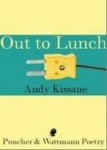
Andy Kissane, Out to Lunch(Puncher & Wattman 2009)
Continuing on my advance reading for the NSW Premier’s Literary Awards: here’s another title from the shortlist.
This book’s cover, featuring an electric plug that looks more North American than Australian, led me to expect some kind of postmodern smart-arsery that would speak to a placeless, hip readership. Then ‘The Earlwood–Bardwell Park Song Cycle’ on the contents page seemed to promise more smart-arsery, this time taking the mickey out of Les Murray’s ‘Taree–Buladelah Holiday Song Cycle’. I was prepared, one way and/or the other, to be alienated, left out in the cold, feeling like I was too just old for this world.
It didn’t happen like that at all. After being tantalised by Anna Kerdijk Nicholson’s poetry and wrestling with Francis Webb’s, I took to Andy Kissane’s like a duck, or perhaps a horse, to water. The first poem, ‘Loaves and Days’, describes a baker at work; the second, ‘Bus Ride with Grey Owl and Dancing Woman’ has a woman dancing on a bus to the music from her Walkman while the poet reads Native American poems at the back of the bus. There are poems about surfing, about the death of friends, about the joys of fatherhood, about visiting friends and family in Melbourne, about adolescent ideals (what does happen to them?). The poems are mostly conversational – no extreme compression of language or dense metaphor, none of the quality I think the blurbs mean when they say poems are permeable or unfenced (something like,’Here are the words, you make the meaning’). Some are pleasantly silly – ‘The Humble Sausage’, for instance is a collection of short pieces having fun with famous lines (‘I wandered lonely as a sausage / Without a slice of bread …’). Some celebrate quotidian joys:
My daughter runs ahead, hair flying out behind her like the tail of a beloved horse – an appaloosa
mare or brindle stallion – her hoofs kicking up sand as she jumps the creek and canters towards the rocks.
As for ‘The Earlwood–Bardwell Park Song Cycle’, there’s nothing smart-arse or mickey-taking about it, though it’s not without humour. In fact, I just checked and found that Les Murray included a section of it in his Best Australian Poems 2005. And it’s deeply deeply rooted in a place that isn’t far from places I know well myself. Let me quote the ending, because it’s lovely, and also because it mentions my new home suburb:
_________________The moon rises over the hills of Marrickville, the moon of workers and mystics, the moon of the tax return and the tax refund, the cadmium yellow moon of homework and tears at bedtime. The moon of the coming election, of palm tree and hoop pine, of all things passed and yet to pass. Swaying peacefully in the water until a fish jumps and the globe breaks, before forming again – the full moon hanging in the dark sky and floating in the dark water.
Paradoxically, the book’s final section, the source of its title, is the one that appealed least to me. The poet has lunch with a series of literary figures – Osip Mandelstam, Atticus Finch, Raskolnikov, and so on – and tells about them in poems with a studiedly dashed-off feel. It’s a nice idea, one that makes me itch to give it a go for my own amusement – just imagine lunch with one of Marilynne Robinson’s patriarchs, or Sam Pollitt, or for that matter Henny Pollitt! But compared to the rest of the book they feel (to me – I may be missing something) so light as to be hardly there at all.
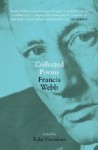
I reach for Francis Webb’s poetry fairly regularly – mainly the same handful of late poems. After listening to pieces about him on the Book Show and Poetica (parts One and Two), both on the ABC, having wept at the superb readings on the latter and been stung by Geoff Page’s describing the poetry as defective on the former, I decided to re-read the whole book. I started out on my 1969 edition, with its copious pencilled annotations by twenty-something me, but about a third of the way in I bought a copy of the new edition and switched to that. One learned person, according to my faint pencil notes, wrote that ‘reading Francis Webb is like wrestling with an angel’. No one would disagree that wrestling is involved: just decoding the syntax can be a challenge in many of these poems, then there are compacted metaphors, elusive rhyme schemes, buried religious references, and an expectation that the reader will be as alarmingly erudite as the poet. Just have a look, say, at the first lines of ‘Stendhal’:
Italy, and a nom de plume – better than in the van
Of France defeated: his clean scarlet brain
Must work in a pure detachment over man
Who was nothing without his D.R.O.s again.
Love, hate, ambition mustered at his bugle,
Sorties of good and evil were in vain.
With watchful eye and towerings of the eagle
He must disarm the priests, immobilize pain.
To which I admit I don’t have much more to say than ‘Huh?’
The angel part is harder to describe – the exciting part, that makes you feel you’ve been through the wringer, but that the world is somehow clearer, richer and more harshly beautiful because of it. He writes about sunsets, fog and wind as if they contain all the deepest struggles of the cosmos.
If you haven’t read any of Webb’s work, I recommend you start with the relatively straightforward ‘Five Days Old’. My mother, no lover of difficult language, wrote to me in a 1972 letter: ‘”Five Days Old” is sweet. I have to concentrate to read poetry so I haven’t read the others yet.’ More ambitiously, you might try the two sequences, Eyre All Alone and Ward Two. (If you’ve got plenty of time, I recommend reading Edward John Eyre’s Journals of Exploration as interesting in itself, but also, as my pencilled notes remind me, because it sheds interesting light on Webb’s poem, which at some points comes close to paraphrasing passages from it.) I’d skip the radio plays about Hitler (Birthday, this one was broadcast on the BBC in 1955), the Holy Grail (The Chalice), the anthropogenic end of the world (The Ghost of the Cock) and the man who invented electroconvulsive therapy (Electric).
One of the things that I loved about Webb’s poetry from the start is that it’s work. You can feel the labour of getting the words down, squeezing meaning onto the page, into the shape of the poem. Even at his most difficult, he is working at communication, never being difficult for its own sake.
Forty years ago I went searching for the first publication of his early poems, and found one or two that hadn’t been collected, and others that had been substantially edited on the way to being collected. The former and one or two of the latter are in the new collection, but my favourite example of revision isn’t. Here are the first three stanzas of ‘The Day of the Statue’, in which fishermen catch an ancient statue in their nets, as they appear in both Collected Poems:
You look for prodigies leaning on the sill of storm,
Or loose in the yellow gap at a candle’s end,
But here was patience: fishermen out on the bay,
Work and silence inching with the minute-hand.
Moored in a lulled spinny of sun and shadow,
With an impotent tremor in the sails, the ketch nosed down
To the long lunge of the swell, rose dripping, gasping
As if with eagerness to suck in air again.
And the men, snug in this casual pediment of time,
Their gestures grouped and restricted and interlocking,
Felt the haul stubborn to their hands, an eye-tooth wrenched
From the iron gums of the sea-bed, shuddering and aching.
Compare the first five stanzas of the version published in the Bulletin on 8 October 1947, when Webb was 22 years old:
You look for prodigies leaning on the sill of a storm Or loitering about the wake of a snuffed-out light; But such things are apt, as you know, on these days of full sunshine To be quietly pocketed or else shoved clean out of sight.
Certainly, three fishermen out on the bay And the shaping of a miracle are rarely aligned, History bells hours only, clock on the walls of speeches: Work and silence tick unnoticed with the second-hand.
Moored to drifting banks of sun and shadow, With an impotent tremor in the sails, the ketch nosed down, plunged to the bowsprit in the swell, rose dripping, gasping As if with eagerness to suck in air again.
And the men grouped snugly in this leeward pediment of time, With their slow gestures of toil, felt a curious lagging in the strands Of their sunken net, as if parallel action under the water Passed on a sort of nerveless shock to the hands.
Your touch on a net-load of fish short-circuits life: The cargo is arteries stabbed in their element and shaking, But this haul yielded stubbornly like an eye-tooth wrenched From the iron jaws of the sea-bed, shuddering and aching.
I love the way he pared those stanzas down, even at the risk of making his meaning harder to grasp. And the revisions towards the end of the poem are even more telling. The last stanza changed from
Beauty comes baleful as a skull, comes riven from the sea:
Well to consider the mortal, the native token
Before you polish, incise – before you replace
What that bronze arm once clutched that time has broken.
to
There were some to roll back the heavy stone of the sea;
There was none to ponder the mortal, the living token.
But later, men polished, incised, established at last
What that raised hand once clutched and years had broken.
With great economy, the resurrection of Christ is invoked, and the contrast between the practicalities of dragging up the statue and understanding it is conveyed as a further piece of narrative rather than in a slightly priggish address from the author.
Ramona Koval said she’d never heard of Francis Webb. That’s a great shame. The Sydney Writers’ Festival has a session on ‘The Lost Poetry of Francis Webb’. I’m assuming that phrase refers to his whole body of work rather than to the handful of previously uncollected poems that begin and end Toby Davidson’s collection. I plan to be there.
The one formerly known as the art student (TOFKATAS) and I are just back from a short weekend in Canberra – overnight in a wotif mystery hotel, and most of the rest of the time at the National Gallery.
The gallery’s new Aboriginal and Torres Strait Islander rooms are just fabulous, and I hope to spend a lot more time in them. From early Papunya boards to the work of urban Aboriginal artists, the collection is dizzyingly rich, and the presentation is superb. And occasionally it got personal. Tony Albert’s ‘Ash on Me‘, for one tiny example, consists of the words ‘Ash on me’ painted on the wall and, as you might not be able to tell from the photograph at the link, decorated with actual ashtrays, most of them with images of Aboriginal faces or figures, some with Australian flora or fauna. It’s a powerful statement in anyone’s terms, but I was grabbed by the throat when I saw this on the S:
In case you can’t see, it’s a kookaburra with the words ‘Innisfail Qld’. It was borne in on me that this was an object from my Innisfail childhood, that ashtrays just like these with cute, noble, comical or otherwise stereotyped Aboriginal figures were an unquestioned part of the world I grew up in. I was implicated.
We also spent time with James Turrell’s ‘skypace’ Within Without, which from the outside looks like an artificial grassy hill with a rock dome rising from the middle of it, approached by a path between expanses of water. Inside, it’s an ochre pyramid with a huge basalt stupa in the middle, surrounded by eerily turquoise water. The space is filled with the sound of water overflowing. You walk across a flat bridge to enter the stupa – around its inside wall is a bench that seats about 20 people. The bench, it turns out, is heated. There’s a large oculus (a word I know from the Pantheon in Rome) in the middle of the roof, and a patch of coloured stone in the middle of the floor. If I hadn’t been introduced to Turrell’s work on Naoshima in Japan a couple of years ago, I might have had a quick look and moved on, because nothing much was happening. But we sat for at least an hour, and watched the oculus as its patch of sky grew deeper and deeper blue until it was pitch black against the whiteness of the inner wall, which we gradually realised has its own light source, and wasn’t somehow trapping light from outside. The sky couldn’t really be as black as it looked to us, I thought, and announced that I was gong to take a stroll around the inside of the triangle. I walked out the door of the stupa and, looking up at the deep blue, starry sky, took a step to the right – up to my calves in now invisible water. Fully shamefaced, I went back to my place on the heated bench, took my shoes and socks off and endured the amiable mockery of what had become a small community of Turrellites.
If you’re in Canberra, I do recommend that you spend time in the Aboriginal and Torres Strait Islander Galleries, and that you let the James Turrell space work on you – but take seriously the signage saying that the work of art does not meet Australian Safety Standards for Buildings.
Anna Kerdijk Nicholson, Possession (5 Islands Press 2010)
I picked this up because it’s shortlisted for the New South Wales Premier’s Literary Awards. I’m pleased to report, however, that I read it without Barry O’Farrell in mind, not even a bit.
The subtitle, ‘Poems about the voyage of Lt James Cook in the Endeavour 1768–1771’ seems to promise a book that’s squarely in the Australian Explorer Poem Tradition (AEPT). Kenneth Slessor’s ‘Five Visions of Captain Cook‘, James McAuley’s Captain Quiros, some of R D Fitzgerald’s poems dealt with sea exploration, and used to be studied at universities, and land exploration has grabbed the attention of many of our poets, notably Francis Webb (in whom I’m currently immersed). The book’s apparatus seems to confirm this promise: the page before the table of contents quotes from the Lords of the Admiralty’s instructions to Cook to ‘proceed to the southward in order to make discovery’ of the fabled Great South Land, and the poems are followed by a seven page chronology, beginning with his birth and ending 56 years after his death, with the death of his widow Elizabeth.
It’s true the book engages with Cook’s voyage of ‘discovery’, but it does so with a postmodern, post-colonial sensibility. There is a sense of overall unity, but no grand narrative, no unifying point of view, certainly not an unambiguous sense of Cook as hero. Unlike the main works of the AEPT, it doesn’t shy away from the less than honorable episodes of the voyage, or from the devastation it brought to many people – peoples, in fact. The 31 poems fall roughly into three kinds: most of them are addressed to Cook, with headers giving place and date, referring to incidents on his voyage (‘You imagine the scent of South Sea fruit on your fingers / and the lustful smells of fresh roast pig and cocoanut.’). A second kind are set in the early 21st century, mainly in Kangaroo Valley in New South Wales, and feature the poet, sometimes but not always with her mind on James Cook. And then there are half a dozen with the page header ‘Extracted from notes on a lost manuscript’, which are generally more elusively reflective: the first of these has the look of a found poem – a dictionary definition of ‘explore’, with etymology, not as dull or as neutral as you might expect.
I’m enjoying the book so far. It’s like a music album, that you need to play a few times before you’ve absorbed it, and maybe you’ll go back to it from time to time and find something new each time. I’m still at the absorbing stage. For example, the acknowledgements page tells us that the titles of individual poems ‘make reference to the poetries of’ five poets. None of the titles rang any bells for me, and Google shed no light, so evidently they aren’t direct quotes from those poets. Maybe one day I’ll come across the references, but for now I’m happy to stay in the dark, for the titles to remain a tease. That dictionary definition poem, for example, is titled ‘Each object we name and place leads us’ – I have no idea whose poetry that makes reference to, but it sits in nice tension with the poem.
This teasing intertextuality – which is echoed in the often oblique relationships between the modern and historical poems – is hardly in line with the cafe poet-in-residence program described in today’s SMH, which aims to ‘demystify the work of poets and deliver it to a broader audience’. But it’s fun – probably even more fun for people who get the references. I look forward to hearing Anna Kerdijk Nicholson read and perhaps talk at the Sydney Writers’ Festival next month.
My brother in law got me to download a wonderful phone app that takes dictation, thereby saving lots of typing. Early the other morning I read a sonnet to it, and got results that would thrill the heart of any post-human poet. I read the same sonnet again, articulating as clearly as I could, though softly, so as not to wake the household. Here’s a conflation of the two results, with some punctuation by me, plus rollovers to remind you of the original if you want:
On Friday night we went to Imara Savage’s production of Tarell Alvin McCraney’s The Brothers Size at the Stables Theatre. Let me say up front that I’ve known Imara since she was a baby, and it’s fair to say I’ve been a fan of her theatrical productions since she was two years old. But I’m perfectly capable of a tactful silence, and this production made me want to shout from the rooftops.
Close to forty years ago, theatre critic Katharine Brisbane observed that drama being produced by African Americans at the time was in some ways strikingly similar to contemporary Australian drama – something to do with coming out from under racism and the legacy of slavery in their case, and a colonial past and the cultural cringe in ours. If she was right the almost complete absence of African American writing from our stages in recent years is our great loss. And even if she was wrong, if this play is any indication it’s been our great loss anyhow.
The play was first performed in 2007 in New York and London. It’s a three-hander: Ogun Size (played by African American Marcus Johnson) has a small car repair company, his younger brother Oshoosi (played by Indigenous Australian Meyne Wyatt) is recently released from gaol, and Elegba (played by Tongan-heritage Anthony Taufa) who befriended Oshoosi in prison, became a brother to him, turns up. The Stables’ tiny stage is completely bare, the walls painted black, with a lighting design that seems to accentuate the darkness. A woman (Marian Lieberman) plays a drum – I don’t know anything about African drumming, but it felt to me that drum’s function was to summon up the action rather than merely to accompany or punctuate it. Once you know who the characters are, you more or less have the plot: Oshoosi is pulled in opposite directions by his two ‘brothers’, with tragic results. But that’s a framework for a wonderful 75 minutes in the theatre. For one thing, the dialogue is richly poetic, rising at times to operatic intensity, and the performances are absolutely up to the challenge. It seems to me that in some Australian productions of US plays, a focus on getting the accents right results in wooden performances – at least that’s my guess at what made Philip Seymour Hoffman’s production of True West at the STC last year so deadly dull in spite of the great talents at work in it. That wasn’t a problem here. As in the Nimrod’s legendary Tooth of Crime in this same theatre in 1972, the accent-work generated a stylistic rhythm, a music that was completely engaging. The bare stage allowed the language to fill the space.
But I’m making it sound like the equivalent of a concert performance of an opera. It wasn’t like that at all. One of the things that made it so powerful was its intense physicality. The director’s note says someone has described the play as a choreo-poem, which might sound wanky to anyone who hadn’t seen it, but isn’t a bad description at all. One of my companions said she couldn’t help wondering who this young woman was, to be able to direct such a testosterone-charged show, yet with such a nuanced take on possibilities for tenderness.
Sometimes, though rarely, shows transfer from the Stables to larger venues, and it seems a shame that the size of the space limits the number of people who see this. On the other hand, it gives a great sense of privilege to see such excellence at such close quarters.
If you can get to it, do. If not, make a note of the names I’ve mentioned. If there’s any justice you’ll be seeing a lot more of all of them.
I happened to be in Glebe this morning, and as I had earned a little bit of money last weekend I allowed myself to yield to the allure of the bookshops.
First, the secondhand poetry shelves of Sappho’s beckoned. There were a number of tempting morsels – enough to make me think that a Sydney poetry lover had recently died or radically downsized. There was a book of Philip Martin’s, inscribed in a shaky hand that suggested he had already embarked on the disease that was eventually to kill him; Adamson’s Waving to Hart Crane signed ‘affectionately Bob’. But the one I bought was a selection of Stevie Smith’s poems. When I worked at Currency Press, our Editor in Chief Phillip Parsons impressed me hugely by reciting the last page of Stevie Smith’s Novel on Yellow Paper, and I became a fan on the spot (of Phillip, yes, but also of Stevie Smith). I recently saw a copy of her slected poems on a friend’s bookshelf – I took it down, and behold it was inscribed on the inside cover as a birthday present to a different close friend – a birthday present from me. The birthday girl later denied all knowledge of having given the book away, so I was left with a nagging sense that one or other of my dear friends was a book thief, a liar or an ingrate. Somehow when I saw this book in Sappho’s today – same selection, different cover – it seemed that buying it would make everything all right again. So I bought it.
Oh I am a cat that likes to
Gallop about doing good.
And then next door to Gleebooks. I’d listened to Poetica’s excellent two part broadcast on France Webb recently, heard Geoff Page deliver a lukewarm account of him on the Book Show (Maybe you need more than one poetry reviewer, Ramona! But I don’t need to say much, as commenter named Junius has given you the rounds of the kitchen on this one.) and been prompted to open up my 1969 Collected Poems. This is one of my favourite books – I mean the actual battered, slightly foxed object on my shelf, which I love because I spent quite a bit of intensive time with it in my mid 20s. I was planning on writing an MA thesis on Webb’s poetry. It didn’t happen, but I did a bit of work that left its traces in the margins of my copy (as well as in a little exercise book in which I pasted photocopies of poems by Webb that had been published but not collected). His explorer poems sent me off to read the published journals of Leichhardt, Sturt, Grey and Edward John Eyre. My book has notes on when and where poems were first published, textual variations and any annotations, and occasionally there’s a commentary from me. For example, in ‘Leichhardt in Theatre’, just before the explorer’s party is attacked by the people whose land they have invaded, the poem goes:
————————————Gilbert, the naturalist,
is planting some precious flowers that he has found,
Cradles them in his hands like diamonds
There’s a pencilled note in the margin:
This indicates he had probably not read the Journal – Gilbert was learning to plat (sic)
Presumably it was Leichhardt who misspelled ‘plait’. I imagine these notes would annoy anyone else, but they fill me with an affection for my younger self.
But back to the visit to Gleebooks. On the display table in the poetry section was the new Collected Poems, published by UWA Publishing and edited by Toby Davidson. I flipped it open and had to buy it. Not only does it include the poems I had found in my postgraduate days, plus more. It also promises to correct errors Webb had noted in the 1969 edition (his notes evidently came to light in the 1980s). Am I doomed to read with both books open – one for the poetry and the other for young Jonathan’s occasional comment?