Every Secret Thing

Marie Munkara, Every Secret Thing (UQP 2009)
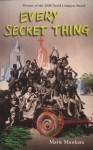
I read this immediately after The Tree of Man. I’ll wait to post about the latter until we’ve discussed it at the Book Group  – enough for now to tell you that it was Edward Said’s notion of counterpoint that prompted me to follow White’s novel with one by an Aboriginal writer.

The books have more in common that you might expect – mainly a contempt for Irish Catholics and selected white middle-class people of whatever religio-ethnic background – but where White’s contempt is accompanied by patrician amusement, attacking from on high, Maria Munkara’s, behind its veneer of cheerfully knockabout calumny, is fuelled by powerful sorrow and rage at the damage done by missionaries.

In fact, scrap the word ‘cheerful’ in that last paragraph. The opening chapters have the form of rough humour as they introduce the people of ‘the Mission’  – the ‘mission mob’ of priest, brothers and nuns and the ‘bush mob’ whom they are out to convert. But from the beginning we are told of endemic sexual abuse and corruption, and  the humour comes with such heavy sarcasm that it’s hard to find it actually funny. For example, when some boys are disobeying the nuns while their parents are standing by, the nuns have an inkling that they may be encountering deliberate resistance rather than incidental lack of cooperation, ‘but they all knew that the bush mob were God-fearing people with a deep and abiding respect for the mission and its papally sanctioned quest to strip them of every vestige of their culture so they would never be defiant now, would they?’ The whites of the Mission are mostly presented in unforgiving caricature – closed-minded, arrogantly confident of their own superiority, sexually predatory (the men) or quietly lustful (the women). The Aboriginal characters aren’t treated much more kindly. They’re rough, pragmatic, disorganised, venal, and only slightly more fleshed out than the non-Aboriginal – but there’s no doubt where the book’s sympathies lie.

The book progresses mainly in a series of skits: the children ask the visiting Bishop curly questions about Christian teachings, the old man of the bush mob helps an anthropologist fill his notebooks with misinformation, a couple of French Hippies arrive in a shipwreck, a cyclone virtually destroys the Mission when the mission mob disregard the warnings of the bush mob, and so on. It takes a while for the narrative gears to mesh, and when they do it’s not so much that the sarcastic caricaturing lets up as that a deeper current asserts itself, and we begin to understand that we are reading about an appalling spiritual tragedy. The moments where the narrative voice tells it straight are incredibly powerful, as at the point when the bush mob have been ‘dying in droves’ from a flu that has only mildly inconvenienced the missionaries, and are persuaded to convert en masse not only to Christianity but also to Western materialism, mainly in the form of cast off clothes. The narrator comes out into the open:

The almighty God that most of the bush mob now believed in was nothing more than the grim reaper of human souls with the mission mob as his helpers and the cast-offs the sad compensation for the relinquishment of their own beliefs. And even though the tenth commandment mentioned that you shouldn’t covet your neighbour’s house or wife or donkey or anything else, the church must have decided that coveting someone’s soul was an entirely different matter. And even though the eighth commandment stated quite clearly that it was very naughty to steal, the mission mob ignored this too and stole the things that were dearest to the bush mob’s heart. They stole their resistance to change and they stole their belief in themselves and they stole their children. Because each black soul that was harvested and each child that was appropriated was another rung higher up the ladder to heaven for Father and his crew and another step closer to salvation from this cesspool of earthly temptation and sin.

In a chapter where a stolen child finds her way back to the community as an adult, the tone lurches from silly farce on a crab hunt to plainspoken desolation when the narrator again intervenes. The final moments of the book are as devastating as you’re likely to read anywhere.

Every Secret Thing won the 2008 David Unaipon Award as a manuscript and then in February this year it won the Northern Territory Book of the Year Award. In an interview on Awaye in February, Marie Munkara said her story had ‘little wisps of truth and huge bits of embellishment’. The book makes no claims to be a historical record, but the truths it tells are a far cry from wispy.

Prime Minister’s Literary Awards short lists

The shortlist for the fourth Prime Minister’s Literary Awards has just been published.

On the Book Show on 12 July, Hilary McPhee said, ‘Once you’ve published someone and like their work, you stick with them and read them and see what they’re doing with themselves.’ That’s true of me in my own small way. So I’m thrilled to see on the children’s and young adults’ lists a number of people whose work graced the pages of The School Magazine during my stewardship.

On the Young Adult Fiction shortlist:
Confessions of a Liar, Thief and Failed Sex God, Bill Condon (32 items in SM, between 1992 and 2005, including poems, stories and plays)
The Museum of Mary Child, Cassandra Golds (incalculable contributions to the magazine as member of editorial staff)

On the Children’s Fiction shortlist:
The Terrible Plop, Ursula Dubosarsky and illustrated by Andrew Joyner (mainly excerpts from Ursula’s books in my time, but after I left she joined editorial staff and Andrew became a regular illustrator)
Star Jumps, Lorraine Marwood (42 poems between 1998 and 2005)
Harry and Hopper, Margaret Wild and illustrated by Freya Blackwood

Thinking about it, I can’t claim to have published Margaret Wild, but she’s an Annandalean, so I’m thrilled to see her there too.

I hope they all win.

There are also awards for general fiction (with names like Malouf and Coetzee shortlisted) and non-fiction (with contenders ranging from the extreme lyricism of Mark Tredinnick to what the judges describe unpromisingly as ‘monumental history’ and ‘prescient analysis’ by John Keane).

Previous decisions on these awards have been eccentric, so the winners are anyone’s bet. I won’t even hazard a guess. Unlike, say, the NSW Premier’s Literary Awards, they’re not arms-length decisions: the judging panels recommend but the Prime Minister decides, and in the first year of the awards, John w Howard did in fact overrule the judges to make sure the Anzac myth got a boost. Let’s see if whoever is Prime Minister when these winners are announced (I can’t find a date on the site) has enough grace to refrain from bending the prize to her (please!) or his ideological agenda.

School Holidays are almost over

School holidays are almost over and the Art Student will soon gone back to her normal routine. It has been lovely having her about the place, but it will be a relief when the holidays are over.

We’ve been up to quite a lot:

• We visited Michael Callaghan’s exhibition The Torture Memo at the Damien Minto Gallery. Text  – phrases from the ‘war on terror’, a mediaeval Arabic poem – side by side in English and Arabic, combine with images  to powerful effect: realistic water pours from a plastic bottle down the middle of the canvas with text on water boarding on either side, and a blown up woodprint showing that form of torture being carried out in the Spanish Inquisition; a hooded figure with vulnerable looking hands the only visible parts of his body against a background of text and splattered blood. Michael’s political posters have been around for at least four decades – it’s great to see this new work in a gallery, as intelligently provocative, and beautiful, as ever. Some of the large works have been bought by the Australian War Memorial.

• We got out of town for a couple of nights, stayed at Bundanoon, the small town on the southern highlands that was celebrating the first anniversary of its decision  to no longer sell bottled water. It was wet and bitterly cold (by Sydney standards – I realise that 0oC is balmy to Alaskans and others), and though the town’s Mid-winter Festival was in full swing, we mainly played Scrabble beside a wood fire, dining at the local Chinese restaurant and the Suffolk Forest pub bistro. We drove the extra ks to Canberra on our full day, to visit the National Portrait Gallery (how a newborn baby must feel, fascinated by human faces, but surrounded by far too many of them to process comfortably) and the Hans Heysen exhibition at the National Art Gallery. It turns out I can’t get enough gum trees, though the Art Student grew weary after the first hundred of so. We both loved the later, stark Flinders Ranges landscapes.

• We popped in on an Elisabeth Cummings exhibition and narrowly avoided buying a small etching – I’m not sure why we avoided it, as we both loved the painting and both thought it was probably a wise investment. And on the same trip to East Sydney we had a look at Euan Macleod’s riveting Antarctic landscapes.

• We strolled around some fetching Victoriana at the Art Gallery of New South Wales, because the A-S had to write an essay about two of the paintings. While we were there we paid good money to see Paths to Abstraction, which included any number of wonderful 19th and 20th century paintings but left me no wiser about abstraction. Between the Nabis and the Cubists, I ran into a friend I hadn’t seen for 30 years – and given that I have a bit of a reputation for vagueness I’m glad to report that I recognised her. We gratified each other by knowing bits of recent news about each other’s family. This alone made the exhibition worth the price of admission.

• I nearly forgot to mention that on the way back from Bundanoon we made a detour down Bong Bong Road at Mittagong to visit what is now The Hermitage but for three and a half years in the mid 1960s was my home when I was in training to be a Marist Brother. We’d intended to drive around the buildings and be on our way, but we bumped into one of my coevals, still a member of the order, who turns out to be Guestmaster (a church title, as he said) of what is now a retreat centre there. He showed us over the place, which of course bears no resemblance at all to the drab, chilblain inducing environment of our youth. Given that most mentions of the Marist Brothers in the mainstream media these days are to do with sexual abuse, it was a real shot in the arm to be spend time with my old friend Paddy, getting a sense of what he and the others who have stayed in the order have been up to. The place is full of ghosts, some of them still living (one of them in a tiny personal hermitage in the middle of a cow paddock), almost all of them benign.

On the home front, the Art Student’s studio has invaded the sitting room: an easels, a cheap mirrors (for self-portayal purposes), linocut gear, scanned images, scraps of paper, tubes of paint, the occasional fellow artist.

Life is good.

Soul Digger

Look at this music video of ‘Soul Digger’, a track from Alba Varden’s debut album.

Directed, rather well I thought, by someone with whom I share quite a lot of DNA.

Capitalism never solves its crisis problems …

… It moves them around geographically.

Have a look at this, a lecture by David Harvey rendered as an ‘Animate’ by RSA, for:

a) brilliant use of cartoon illustration

b) lucidity about the GFC

c) all round coolness.

RSA has similarly animated  lectures by, for example, Barbara Ehrenreich and Jeremy Rifkin, to brilliant effect.

Thanks to Felix Salmon, and before that Making Light’s particles.

From Freecycle

Freecycle is a wonderful system for giving away stuff without leaving it sitting on the nature strip exposed to the weather. Occasionally it’s exploited by secondhand dealers (which I realised after the same person had taken four large pieces of furniture off our hands – I will no longer respond to her emails), and people do post requests for things that may be hanging around unused in other people’s houses –baby clothes, car seats, etc. A Freecycle member named Chris seems to have had some kind of crisis induced by the optimism of some of these requests, and struck back today with this lovely bit of outrageousness. I especially like the opening sentence, a nice reference to the kinds of notes that often accompany requests and offers:

Subject: [freecycle_sc] Wanted :  Lamborghini preferably 2009 model

Only genuine offerers need reply to this email I really don’t want anyone to waste my time.

If you have one up on blocks in the backyard I would be very interested in re registering it and using it for sporadic trips to the nearest ALDI supermarket for the weekly shopping.

I know that this is a really long shot but if you also have roof racks to suit that would be great as I was hoping someone here in freecycle land has a spare jet ski in their garage that they also don’t use any more that I could place on said racks and transport it at breakneck speed to the nearest waterway when I have the urge to use it.

Thanks in advance and happy freecycling

PS . I don’t want to bug you all but some straps to tie down the jet ski would be awesome. and possibly a few dollars toward the first tank of fuel wouldn’t go astray.

This almost made up for Marion being kicked off Master Chef (though Aaron’s dismay at beating her was one of the sweetest things I’ve seen on the box for a long time).

Poetry, dementia

It seems Penny isn’t the only one to find that poetry with strong rhymes goes down well with people with dementia. Harriet the Blog quotes The Orlando Sentinel about the Alzheimer’s Poetry Project:

The Alzheimer’s Poetry Project, founded by New York poet Gary Glazner, is not built on the traditional, stand-at-the-podium-and-read poetry recital. Rather, it uses the simple rhymes typically learned in childhood or whimsical works created on the spot with audience participation. The facilitator moves among the seniors, holding their hands, touching their shoulders, gently prodding them to share their thoughts, reawakening long-ago memories.

‘There was a guy in [one] group, his head was down, he wasn’t participating, and I said the Longfellow poem, “I shot an arrow in the air…”‘ Glazner says, recalling the initial workshop that spawned the project. “And his eyes suddenly popped open, and he said, “It fell to earth, I know not where.” In that instant, he was back with us and was able to participate. It was very powerful.”

The Project’s web site has a book for sale with 75 poems they use.

Reading while walking, episode 732

Reading a book while walking is different from walking while wearing earphones. A little moment from yesterday illustrates:

I was walking the dog home from the Orange Grove markets reading the Patrick White novel that we’ll be discussing at our next Book Group meeting.

A voice from behind me called out, ‘Is that The Tree of Man?’ It was Dancer1, one of the men from the Group, behind the wheel of his car emerging from the side street I’d just crossed. ‘Where are you up to? The flood or the fire?’

‘Finished the flood,’ I called back. ‘Still waiting for the fire.’

‘I’m loving it.’

‘Me too. I was completely bowled over by the first four chapters.’

‘Yes, I kept saying to my wife, “Listen to this bit!”‘

Go on, have a conversation like that with someone listening to their iPod.

—–
1This inaugurates a policy of giving the chaps from the Book Group noms de blog.

Itstorm

It’s a long time since the Art-Student and I have been to a Gleebooks event. Tonight we went to a discussion of a book (pic on the left leaves off the first two letters of its name) about Kevin Rudd’s handling of the Australian branch of the Global Financial Crisis. As we arrived the A-S observed that it was a different crowd –  men were wearing ties, and women were coiffed. That plus the fact that Malcolm Turnbull was chairing the discussion should have warned us to sit next to the aisle instead of right against the wall where early exit was virtually impossible.

As Upstairs at Gleebooks was filling to capacity, Malcolm Turnbull took the microphone to do a bit of a warm-up. He asked how many of us knew the original owner of Gleebooks and when only a couple of us raised a hand he said he’d give us a bit of history. After a couple of disparaging hyperboles about Tony Gallagher’s body, he told is that he had been a teacher at Malcolm’s high school, where he had produced King Lear with young Malcolm in the role of Edgar. End of history lesson, beginning of anecdote about young Malcolm getting into a scrape.

The authors of the book, an economist and a political journalist, joined Turnbull on stage. I can’t say that the conversation that followed was very enlightening. We were told, for instance, that the global financial crisis was brought about by government being too much at the centre of the US economy (it was Turnbull the corporate warrior who said that), that Rudd exaggerated the severity of the crisis (that was Turnbull the politician) and that Rudd deliberately downplayed the severity of the crisis (that was the journalist). I suppose the A-S and I had gone there naively hoping for some kind of insight into what had happened to Kevin Rudd’s government. Instead, it was the kind of crowd where every time one of the panel referred to him as the former prime minister they successfully invited widespread sniggering. The book may be interesting and insightful, and there were indications that at least one of the authors had a more nuanced view than Turnbull’s (in short: ‘Rudd did it all wrong, except overseas. and he should have listened to me’). But the evening left a bad taste in the mouth – and to judge by the questions, there were a number of people in the audience who shared out response.

I’m pleased to report that when a woman asked the panel’s response to her sense that Rudd and Co had deliberated talked up the financial crisis and swine flu to scare her, both the authors disagreed, and even Malcolm could tell that truth ought to take precedence over an opportunity to denigrate a political opponent.

Coming into the Country

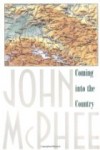
John McPhee, Coming into the Country (Farrar, Straus & Giroux 1977, 1991)

I had no obvious reason to read this book. It’s about Alaska, after all, written more than 30 years ago, originally as three articles spread over eight issues of The New Yorker and dealing with such historical dead ducks as the vote to move the state capital from Juneau to somewhere more accessible1: more than 400 pages of dated journalism about a distant, cold place.  But a discerning friend gave it to me a while back with the implication that it was something I’d enjoy. It turns out he was right.

On a recent Book Show, Philip Gourevitch – himself among other things a writer for The New Yorker – described McPhee as having a ‘wonderfully informative, wonderfully vivid way of conveying knowledge as pleasure rather than as sort of eat-your-vegetables data.’ That’s spot-on: history, politics, geology, geography, climatology, anthropology, zoology – these pages offer a a huge diversity of knowledge for pleasurable absorption. The explorer Roald Amundsen rides into the book as naturally as he rode into the town of Eagle in 1905. The ‘winter bear’ phenomenon, in which a bear gains an armour of ice that makes it invulnerable to spears or even guns (shades of Iorek Byrnison) is mentioned almost in passing. There are helpful hints about how to leave a log cabin in the woods so as to minimise any damage by curious bears – not that you or I will ever need such hints, but reason not the need. The third essay in particular, which gives the book its title and accounts for more than half the pages, explores the intricacies of life in and around the tiny ‘city’ of Eagle, on the Yukon River, near the Canadian border, entirely through McPhee’s relationships with people there, interspersed with forays into history and an occasional string of quotes from the judgemental gossip that thrives there as in any small community. Eagle is divisible into the Christians, the bootleggers, the ‘river people’ (who live, illegally, out in the bush) and the Indians (who mostly live in Eagle Village, a couple of miles down the river). There’s plenty of animosity between these groups, but McPhee seems to have developed strong, trusting relationships in all groups – and the reader is invited to sympathise with them all as well.

Gourevitch said on The Book Show:

Coming into the  Country remains one of the two or three essential books about the nature of Alaska, and by that I mean its character, the people who are there, why they’re there, what it means to be Alaskan, what the state is in America.

I was surprised to read that only a thousand people voted in the 1974 Alaskan gubernatorial elections. Suddenly Sarah Palin’s governorship looks a lot less impressive. Likewise, having shot a moose is less of a feat when you consider that if you live in one of the larger population centres you have to be very well off to be able to afford to go hunting, and we can be fairly sure that the Palins weren’t among the people who choose the extremes of life ‘in the country’, where moose is a staple food.

McPhee evidently lived in Alaska for months if not years on the way to this book, long enough to get to know some of its people well, to learn the peculiarities of language as spoken there, to develop a deep feel for the country, to amass a vast store of fact and anecdote, to ferret out first-person accounts of incidents that had become legendary. This is journalism that’s not so much embedded as immersed.

There’s some wonderful nature writing, combining lyrical description with other perspectives as in this, from a much longer account of Mt McKinley:

The Alaskan Range elevates with a rapidity rare in the world. Its top is about two-thirds as high as the top of the Himalayas, but the Himalayan uplift is broad and extensive. if you were looking toward Mount Everest from forty miles away, you would lift your gaze only slightly to note the highest in a sea of peaks. Forty miles from McKinley you can stand at a bench mark of three hundred and climb with your eyes the other twenty thousand feet. The difference – between your altitude near sea level and the height of that flying white mountain – is much too great to be merely overwhelming. The mountain is a sky of rock, seemingly all above you, looming. Until it takes itself away, you watch it as you might watch a hearth fire or a show in colour of aurorean light. […] The Athapascans are not much impressed that a young Princeton graduate on a prospecting adventure in the Susitna Valley in 1896 happened to learn, on his way out of the wilderness, that William McKinley had become the Republican nominee for President of the United States. In this haphazard way, the mountain got the name it would carry for at least the better part of a century, notwithstanding that it already had a name, for uncounted centuries had had a name, which in translation had been written, variously as The Great one, The Mighty One, The High One. The Indians in their reverence had called it Denali. Toponymically, that was the mountain’s proper name.

Possibly my single favourite passage is about fifty-five-gallon drums:

A fifty-five-gallon steel drum is thirty-four and three-quarters inches high and twenty-three inches in diameter, and is sometimes called the Alaska State Flower. Hundreds of them lie around wherever people have settled. I once considered them ugly. They seemed disappointing, somehow, and I wished they would go away. There is a change that affects what one sees here. Just as on a wilderness trip a change occurs after a time and you cross a line into another world, a change occurs with these drums. Gradually, they become tolerable, and then more and more attractive. Eventually, they almost bloom. Fifty-five-gallon drums are used as rain barrels, roof jacks, bathtubs. fish smokers, dog pots, doghouses. They are testing basins for outboard motors. They are the honeypots of biffies, the floats of rafts. A threat has been made to use one as a bomb. Dick Cook, who despises aircraft of all types, told a helicopter pilot he would shoot at him if he ever came near his home. The pilot has warned Cook that if he so much as points a rifle at the chopper the pilot will fill a fifty-five-gallon drum with water and drop it on the roof of Cook’s cabin. Fifty-five-gallon drums make heat stoves, cookstoves, flower planters, bearproof caches, wood boxes, well casings, watering troughs, culverts, runway markers, water tanks, solar showers. They are used as rollers for moving cabins, rollers to smooth snow or dirt. Sliced on the diagonal, they are the bodies of wheelbarrows. Scavenged everywhere, they are looked upon as gold.

By the time I reached the end I could almost understand what some people find attractive about living in a place that gets to 40 below zero (Farenheit) and stays there for a good part of the year.
—–
1 When the book was first published, the quest for a new capital was still under way, and supplied the backbone for the second essay, ‘What They Were Hunting For’: I had to look up Wikipedia to discover by what chicanery the vote was overturned.

Later: WordPress’s automatic link to possibly related blog posts went to Wickersham’s Conscience,, in which an Alaskan blogger echoes Philip Gourevich’s evaluation:

If you want to try to understand Alaska, its people, its politics and why I live here, this book is the best place to start. This book is a great writer’s greatest book.