A poem I love that you won’t have read

I googled a phrase from this poem and came up with nothing, so I’m putting it up on the web for the world. It’s from Andrew Huntley’s Lyrical Ballast, Ode and Divers Poem, published (along with Martin Johnston’s first book, shadowmass, and Terry Larsen’s Tar Flowers) by Arts Society Publications in (I think) 1970. It was a big hit with student audiences.

An Essay on Criticism
(for Martin Johnston)

Maisie were a critical
Severe she wore her bun
She lecturing on literature be grim.
Arnold he be engineer
He’s reading just for fun –
Maisie meaning all the world to him.

Maisie has her secret
She blush when she bethink:
‘Tide me woe I Arnold loving you.’
But engineer is simple
He silently and blink
So other love the neither lover knew.

He pass around her passage
She walk with head abstruse
But fingernail she clench into a page.
Poor engineering Arnold
What skulking is the use?
She bridges scorn, he building them in rage.

Thus pass they days in likewise
Till one day force his mind –
He burst upon a paper ‘I love you’.
The brain alit in lightning
He search and searching find
A blending rhyme that rhyming ‘Eyes of blue’.

In short he writing poem
His first and only work.
He nameless post to Maisie English Lit.
Her greenly eye she cast up from
The paper with a jerk
She running find her colleagues of the crit:

‘Oh someone be me sending
Such funny little verse
What drivel are this word upon the sheet.’
They look and fog their glasses
It torn to shreds, and worse –
For Arnold pass and hear them in their heat.

His ears start to burning
His soul it next to go
He sneak away before his hair catch flame,
For Maisie she were laughing
At all the love he know
And take apart he’s poem like a game.

Her echo follow Arnold –
He rush where to forget –
Go building bridges on the upper Nile;
And one day – is it accident? –
He fall and getting wet
And getting eaten by a crocodie.

Maisie now professor are
A virgin do I add
She going down ‘The Great Tradition’ way –
She whittles off the authors
She think they mostly bad
And glaring from her pedestal she say:

‘Dismiss dismiss disnissing
Minor minor miss
Discuss disgusted there is only one!’
Her nightmare re-occurring
(She always dreaming this)
She in the campus bookstore getting Donne.

She publish pile of article
She talk and talking talk
She crossing out in pen that mostly red,
She pouring scorn on versicles –
Through literature she stalk –
She only still and silent in her bed.

If moment had y0u faltered
O Maisie long ago
You spy the love that helplessly he send,
You might have found it Arnold
You might have come to know
A poem can be way to make a friend.

I can’t track Andrew down to get his permission. (If you read this, Andrew, please get in touch. Of course I’ll take it down if you want, but I do think it deserves to live.)

Added 22 June 2020: Andrew has given this poem as his contribution to the Recollections page on the website commemorating the 30th anniversary of the death of poet Martin Johnson (at this link).
Leave to remain

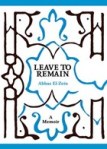
Abbas El-Zein, Leave to Remain (UQP 2009)

9780702236921

There was a piece on the news recently about a conference on Islamophobia. My lay thought on the subject is that the best way to make headway against that polysyllabic malady is to make friends with actual flesh-and-blood Muslims. A probably less efficacious but also less challenging cure might be to read books by Muslim writers. Irfan Yusuf’s Once Were Radicals is a case in point. So is Leave to Remain. Both books are memoirs by Australian Muslims who were born elsewhere, both deal with what it means to be Muslim and ‘of Middle Eastern appearance’ living in Australia; Irfan Yusuf comes from the rough and tumble world of blogdom and doesn’t know when to write ‘my friend and me’ rather than ‘my friend and I’, whereas Abbas El-Zein is a university professor and novelist, parts of whose book have appeared in literary journals. Once Were Radicals did a beautiful job (for me at least) of ‘de-Othering’ Islam – that is to say, I felt that the author had done a brilliant job of bridging the Islamophobia chasm. I approached Leave to Remain expecting something of the same, for a different generation, a different national background (Yusuf left Pakistan for Australia when he was a small child; El-Zein was an adult when he came here from Lebanon).

Paradoxically, even though Abbas El-Zein’s childhood and youth in war-torn Lebanon could hardly have been more different from mine in what someone has called the cotton-wool peace of White Australia, I had much less of a sense of chasms being bridged with this book. Perhaps that’s because Yusuf’s memoir deals largely with his adolescent exploration of Islam, which is still pretty much a closed Book to me; while El-Zein identifies unwaveringly as ‘an adherent … to Enlightenment ideas and practices concerning the secular state, pluralism, science and technology’, close to my own cultural identity.

The book has elements of biography, but is actually a collection of personal essays, each with a stage of the writer’s life as subject and springboard. It’s divided into two parts, of roughly equal length: the first, ‘Origins and Departures’, takes us up to the 32-year-old El-Zein’s arrival in Sydney in 1995, the second, ‘Unhappy Returns’, deals mainly with his return visits to Lebanon and his responses to the wars that have afflicted that part of the world since. I don’t have time to say much more than that there’s some wonderful writing and give some samples.

On his adolescent anti-Americanism (which he repudiates as naive, but records all the same):

As a teenager, I worried about America because I could not understand how it could show off its wealth so casually on screens around the world. Was it not afraid of exposing itself, of being so present in the lives of so many individuals, a presence which was all about America itself? Once, during the war in Beirut, my mother told my teenage sister not to go out with too much jewellery round her neck because the only men she would be likely to attract were robbers. I thought America could benefit from a little talk from my mother. Not that America was likely to grant an audience. America was a blind Narcissus, constantly playing mental images of himself with no hope of seeing himself, let alone anyone else, because he was Narcissus and because he was blind. America could not see. It was made to be seen.

On the War on Terrorism:

A Manichean view of history – in which ‘we’ are indisputably good and ‘they’ are inherently evil – remains the West’s dominant form of expression about terrorism, post–September 11, and barely disguises its racial overtones. It is one of the mysteries of our time that the Soviet nuclear warheads and the IRA campaign on the British mainland, to name two relatively recent threats, did not cause nearly the same ‘existentialist’ panic that a Middle-Aged tribesman has succeeded in inflicting on the West’s collective psyche from his remote hideout in Afghanistan. For all the atrocious deeds of Al Qaeda and European Jihadists in New York, London and Madrid, who does seriously believe that they pose a threat to our existence in the West?

There is a wonderfully comic–grotesque description of his first walk from Redfern Station to Sydney University a few weeks after his arrival in Australia. ‘There was more mutilation around this street than I could live with,’ he writes – and we remember that this is a man who grew up in a civil war. He writes beautifully about his parental anxieties: his little son Ali announces with glee that his name can be found in the word Australia, and a few days later, just as excitedly, that it’s also in Alien. He writes graphic and instructive accounts of religious practices, especially of the Shi-ite festival of Ashura – mentioning in an aside that the public bloodletting that is so alien to Western sensibilities may well have been imported into Islam from the practices of Catholic Spain.

Incidentally, the book was designed, beautifully, by Jenny Grigg, who has been responsible for some of Australia’s most beautiful books (she redesigned The School Magazine ten or so years ago).

His foster parents went to Japan …

… and brought him back this fabulous hoodie.

IMG_3353

Sociopaths in suits

I don’t have anything intelligent, or even probably intelligible, to say about the Productivity Commission’s recommendations about parallel imports of books. Except maybe WRITE TO YOUR LOCAL MEMBER. But I liked this piece from Henry Rosenbloom’s blog:

This is how a civilisation commits suicide these days: it invites sociopaths in suits to dismantle its culture.

It’s that kind of suburb

I’d like to think this little bit of graffiti was done in a spirit of whimsy, but I fear it’s part of a constant battle of signs. The signs on the other side of the battle say obnoxious things like: ‘This is not your dog’s toilet.’

15072009

Not a 68er

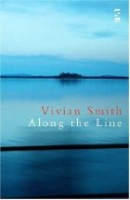
Vivian Smith, Along the Line (Salt Publishing 2006)

Having mentioned the ‘sixty-eighters’ a couple of times on this blog, I poked around on the net to find out what I was talking about. It looks as if the idea of a distinct ‘generation of 68’ among Australian poets can be traced to John Tranter’s 1979 anthology, The New Australian Poetry: the work of twenty-four poets from Australian poetry’s most exciting decade. The notion of a ‘generation’ was challenged almost immediately by, among others, Rae Desmond Jones (‘the … highly successful anthology and the polemical introduction had only marginal relevance to each other’), but it has lived on. More recently, as one might have predicted, the 24 68ers have been portrayed as a mob of up-themselves, cliquish poetry warriors, and – also no surprise – have been defended against those charges. (The article by Alan Wearne on that last link demonstrates nicely that reality is more complex, interesting and benign than the labels might suggest.) When the Tranter anthology came out I was distracted by being a new parent and earning a living and the like, but during the late sixties and early 70s I had been a regular at poetry readings in Sydney (and once, memorably, in Canberra) and can testify that the poetic times were pretty exciting. I have a copy of a 1971 publication, We took their orders and are dead: An anti-war anthology (edited by Shirley Cass, Ros Cheney, David Malouf and Wichael Wilding), which captures some of the feel of the Moratorium Poetry Readings where elder statesmen of Aust verse like AD Hope shared a stage with as yet un-labelled 68ers like John Tranter or Vicki Viidikas and quite a few in-betweeners like, say, David Campbell. (The 68ers themselves, of course, are now either dead or approaching elder status.)

All of which is a convoluted lead-in to Along the Line, which I bought a while ago as my contribution to Salt Publishing’s Just One Book campaign. If memory serves, Vivian Smith read at those long-ago Moratorium readings. He’s certainly got a poem in the anti-war anthology. But he’s not a 68er – and not just because John Tranter didn’t include him. The poems in this book have a quiet formality that shows none of the influences or impulses  that besotted the young ones in those heady days. The poems don’t spread across the page like spider webs catching and displaying apparently random flies of perception. They aren’t Chinese boxes or monkey puzzles. Neither the Ramones nor Bob Dylan are referred to even once. Iambic pentameters rule and straightforward subjects dominate: there are many arrivals in Sydney, the poet’s home, and at least as many returns to Hobart, where he grew up; there are poems about poetry, poets and painters, depression, friends alive and dead. I used the word ‘quiet’ , and that is the overwhelming effect: quiet reminiscence, quiet elegy, quiet observation, quiet wit, even, in ‘Deathbed Sketch’, some quiet philippic. Something of a quiet achiever, then, and reading him is a quiet pleasure.

Incidentally, ‘Return to Hobart’, the poem that appeared in the 1971 anti-war anthology makes another appearance here, unchanged except for much improved editing, which makes me realise that this is not a collection of new poems, but some kind of unspecified retrospective, which accounts for a sense of temporal dislocation –  the poet’s daughter is a little girl on one page, for instance, and quite grown up a couple of pages later, and all those comings and goings between Sydney, Hobart and the rest of the world don’t have any discernible sequence.

Rather than say more about the poetry, let me declare an interest. Vivian Smith was the supervisor of my aborted MA thesis in the mid 1970s. Of course it wasn’t his doing that the thesis came to nought, though I wish I’d got my facsimile copy of Edward John Eyre’s Journals of Expeditions back from him before leaving the university. (Vivian, if you chance to read this and happen by some miracle to have those books still in your possession, I love your poems, please drop me a line …)

I have a vivid memory of a Year 3 elective in which Dr Smith gave a series of lectures to a tiny scattering of students. He was a quiet, unassertive lecturer, poles apart from, say, David Malouf, who lectured us with passionate brilliance on the Jacobean playwrights. At about the third lecture, there may have been only three of us in the audience – me up the front dutifully taking notes, and two older women (they must have been at least 28), one of whom has since gone on to wield power and influence in the ABC and elsewhere, the other to do impressive work as a journalist and writer, leaning together like grumpy conspirators. As Dr Smith was discussing the two main kinds of poetry being written in England during the post-war years, open and closed poetry if I recall correctly, the future journalist interrupted his flow:

‘Excuse me, but aren’t these generalisations almost completely meaningless?’

She had a point. Dr Smith responded quietly, modestly, and not at all defensively, ‘Yes, but they provide a structure that allows me to talk about the poetry.’

And he continued with the lecture, of which I remember nothing else. (Maybe I should be explicit here: I’m not suggesting that the poetry in this book is ‘completely meaningless’: rather that it isn’t out to impress, or seduce, or dazzle, but offers itself as a mind at work and play, take it or leave it.)

Niece on John Button long list

The long list has been announced for the John Button Prize for ‘Australia’s best piece of writing on politics and public policy in the past year’. I’ve read a number of the essays and books that made the cut, but the one that’s relevant to today’s nepotistic agenda  is Paula Shaw’s Seven Seasons in Aurukun.

The judges – Bob Carr, Kerry O’Brien, Morag Fraser, Judith Brett and J.M. Coetzee – don’t look corruptible, otherwise I’d urge all four of my readers to try to influence them by any means necessary. They meet at the end of July to choose a short list of six, and the winner will be announced on 28 August.

Carn the Shaws!

How not to reach the masses

Yesterday afternoon, in our customary sybaritic manner, Penny and I trotted off to a public lecture at the University of New South Wales: Deborah Cameron on the Myth of Mars and Venus. Since I blogged about the book on Thursday, and the lecture covered the same material, I won’t say much about the lecture here, except that I was fascinated to observe the way DC compressed the substance of the book to fit a one-hour time slot and reshaped it to fit her mainly academic audience. On the one hand (sadly) she left out most of the more colourful examples; on the other, with the help of a handout, she gave us a map of modernist and postmodernist takes on gender and language and of current challenges to the latter. One of the challenges she’s all in favour of, and in some ways amounted to the point of her book: it’s all very well to discuss linguistic diversity, but you have to include the concept of power as well. The other, which didn’t feature in the book, is the challenge from the recent renewal of arguments that differences between women and men are biologically based. ‘It’s no good,’ she said, ‘saying, “Oh not that old thing again. I thought we got rid of that in the 70s.” We have to engage with it. We may even learn something from it.’ In response to a question about the politics behind the resurgence of biological psychology, she was refreshingly blunt: “It’s the new academically respectable face of sexism.”

I was glad I’d read the book beforehand, because it equiped me to understand a lot of what got said during the Q& A at the end about gender as performance rather than something that simply exists in the real world. ‘I am completely free to decide how I speak, but I have no control over how I will be understood.’

There were 32 people there. I counted. About five men. Also sandwiches, red cordial, teabags and biscuits.

This morning, DC’s comments about the necessity of engaging seemed relevant to this spectacle:

IMG_3350

It’s Saturday morning, when this locality comes alive because of the Orange Grove Markets across the street. A coffee shop is doing a roaring trade jus a couple of metres from where I was standing to take the photo. People are  everywhere, and in a buying mood. But even when the Feminist Bookshop opens at 10.30, two hours or so after serious activity starts, its shop front is hardly inviting. Even if the permanent bars on window aren’t as paranoid as they seem, surely the frosting can only be read as deliberate discouragement of casual shoppers. Of course, there’s no reason a feminist bookshop has to court customers. But wouldn’t an invitation to engagement be a better look?

Truth in advertising?

29052009

As typos go, I thought this was fabulous.

Mars & Venus, Shmars & Shmenus

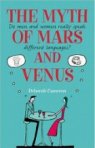
0199214476 Everybody loves a good smackdown, especially when it’s delivered judiciously, with careful marshalling of evidence and argument. The Myth of Mars and Venus is such a smackdown to the noxious theses of John (Men are from Mars, Women are from Venus) Gray and his ilk.

Deborah Cameron, currently visiting Australia and speaking at the Uni of NSW tomorrow afternoon, is a linguistics scholar (according to the jacket flap she is actually Rupert Murdoch Professor of Language and Communication at Oxford University, a title that might itself spawn a learned paper or two). And she casts an unfriendly eye on the agenda-driven cherrypicking, or worse inventing, of research results that lead to all those fabulous scenarios about women and men being hard-wired to use language differently, coming from different cultures, etc.

I recommend the book to anyone who has been made to feel not quite man enough, not quite woman enough, ot trapped in a role because of intransigent and immutable biological inheritance, to anyone who has run some of their writing through the gender genie and wondered what was wrong with them (rather than what was wrong with the GG, as Deborah Cameron points out would be a more sensible response). I also recommend it to anyone who wants to read fabulous snippets of research into the language of adolescents in US cities, in a traditional New Guinea village, in 19th century Japan.

That is to say, this is a debunking book of the best kind: it puts sound research in the place of shonky, restores one’s faith inhuman beings, and has fun on the way.

The book in brief:

The genius of the myth of Mars and Venus is to acknowledge eth problems and conflicts many people are now experiencing as a result of social change, while explaining those problems and conflicts in a way that implies they have nothing to do with social change. They are as old as humanity (quite literally in some versions of the myth) and their root cause is the irreducible natural difference between the sexes.  … The belief that [these problems] are timeless, natural and inevitable stops us thinking about what social arrangements might work better than our present ones in a society that can no longer be run on the old assumptions about what men and women can do.