Books I read in October [2007]

[27 May 2023: This was originally posted to my old blog on 1 November 2007, and not retrieved when I moved to the WordPress platform. I’m republishing it now because Bill McKibben’s name came up at the 2023 Writers’ Festival, and this blog post is where I made a note of my first impressions of his Deep Economy.]

Charles Firth, American Hoax (2nd edition, Picador 2007)
William Carlos WIlliams, Selected Poems (edited by Charles Tomlinson, New Directions 1985)
Yukio Mishima, The sailor who fell from grace with the sea (translated John Nathan 1965, Vintage 1994)
Bill McKibben, Deep Economy: The wealth of communities and the durable future (Henry Holt 2007)
John Tranter, editor, The Best Australian Poetry 2007 (UQP 2007)
Caroline Overington, Kickback: Inside the Australian Wheat Board scandal (Allen & Unwin 2007)
Geoffrey McSkimming, Cairo Jim and the Astragals of Angkor (Hachette Children’s Books 2007)
26435 PanMac_AmericanHoax.indd

Charles Firth invented five commentators, basing their opinions on top hits on Google, and set out as an experiment to see if they could make it in US public debate. One of them got a lazy, plagiarised, largely nonsensical article attacking Cindy Sheehan published, and others had moderate success in being taken seriously in Internet conversation. It’s a disturbing and intelligent book, but undermined by the author’s apparent commitment to his comedian identity. Clive James objects to being classified as a humorist. He wants his wit and humour to be elements of his essays rather than their purpose: the essays, he says, are serious attempts to communicate ideas. I’d like to see Charles and Clive get together for a quiet chat some time, and Charles come out from behind his relentlessly Chaserian persona.


1822730-m

Having acquired a BA (Hons) in the 1970s majoring in Eng Lit without ever reading any William Carlos Williams, I thought it wouldn’t be a crime now to read more than ‘The Red Wheelbarrow’ and ‘This is just to say’ … And indeed the book is an education and a joy. I did go hunting for learned commentary so as to deepen my appreciation of the poetry, and had the perverse pleasure of deciding that in some cases I would trust my own reading over that of the scholar. For instance, in an article on WCW’s most anthologised poem – essentially unparaphraseable eight short lines noting the existence of a red wheelbarrow and some white chickens – I found this:

This is a poem about the tension between regularity and irregularity, and it invokes irregularity on many levels: metrical, sexual, racial. Mouth/vulva, this ‘colored’ object beckons ‘white chickens’, which like the satyrs on Keats’s urn, approach but never touch, except in the palpable rhythms and vowels of the lines, which rise – but then fall again. After the phallic assertion of the emphatic iamb ‘upon’, the poem shifts to falling rhythms, and as the speaker and his Lucy roll forward like the wheel of the barrow (a tumulus or mound over a grave) in the twelve months/feet of the year with its four regular seasons/stanzas in their ‘diurnal course’, the speaker stammers in the long i’s of the final stanza: I . . . I . . . chicken out.

I would have solemnly, if disappointedly, accepted the Freudian reading of the wheelbarrow as a female symbol, but really: ‘upon’ as a phallic assertion! ‘barrow’ as tumulus! racial tension! the fantastical invocation of Keats and Wordsworth! I’m glad I don’t have to earn a living writing things like that. In fact the way I read the poem it’s pretty much a dismissal of that kind of discourse.

0679750150

I came to The sailor who fell from grace with the sea with quite a lot of baggage. Yukio Mishima committed ritual suicide when I was 23. This, along with his extreme right-wing politics and his reported preoccupation with body-building put me off. How could someone who was acclaimed as a great writer, a runner-up for the Nobel Prize for Literature, get things so bizarrely wrong? (I was 23, OK?). This is his one novel that I know about without looking, and from its perch on my Reproach Shelf (where it has sat unread with War and Peace and Pride and Prejudice) it exuded a kind of sulphurous glamour.

Without all that foreknowledge I might have thought this was a finely executed exercise in genre horror. It’s certainly well written, capturing beautifully the way people – adults and children, men and women – misunderstand each other’s silences. But it’s not an exercise: in this narrative the writer is fairly evidently struggling with his membership of a death-cult of one: mad, repulsive, deeply horrible, but in the end (for him, apparently) irresistible. It strikes me as being an adult version of the drawings young Mary Bell did in the days before she murdered that little boy: a cry for help. Like Mary’s, it went unheard.

deep

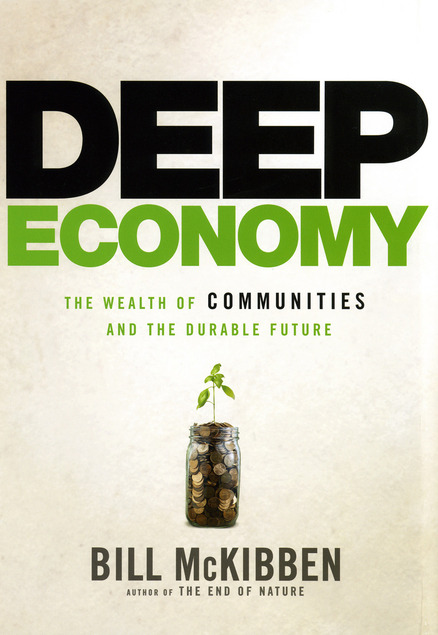
Don’t be put off by the title of Deep Economy. It’s a tremendously readable journey through the hope and terror of our times (not Terror with a capital as in suicide bombs, but lower-case terror as in the world going to hell in a handbasket). Someone once told me of a rule of thumb for comic writers that you need at least three laughs a page to keep up the momentum (a rule which – see above – I wish Charles Firth would ignore). Bill McKibben seems to work to a three-striking-bits-of-information-a-page rule. It was only great self-restraint that stopped me from constantly regaling (or should that be assailing?) companions or passers-by with tidbits.

The subtitle more or less says what the book is about: it challenges the single minded preoccupation with growth as the supreme indicator of economic success, and the ‘hyper individualism’ that that preoccupation involves; and advocates for a durable future as opposed to the likely outcome if things keep moving in the current direction with the current impetus. It’s a passionate, research-based argument for renewed – or brand new – attention to the local: in food production and consumption, and in all other economic activity. It piles up examples of the loss in human terms caused by the ruthless pursuit of economic ‘efficiency’ but it also accumulates a persuasive number of counter-examples, of people forgoing large profits for the sake of the common good.

We assume, because it makes a certain kind of intuitive sense, that industrialised farming is the most productive farming. I mean, if I sit on my porch whittling toothpicks with my Swiss Army knife, I can produce a hundred in a day. If I install a toothpick-whittling machine, I can produce a thousand in an hour. By analogy, a vast Mid-western field filled with high-tech equipment ought to produce more food than someone with a hoe in a small garden. As it turns out, however, this simply isn’t true. If all you are worried about is the greatest yield per acre, then smaller farms produce more food. Which, if you think about it some more, makes sense. If you are one guy on a tractor responsible for thousands of acres, you grow your corn and that’s all you can do: one pass after another with the gargantuan machines across your sea of crop. But if you’re working on ten acres, then you have time to really know the land, and to make it work harder. You can intercrop all kinds of plants: their roots will go to different depths, or they’ll thrive in each other’s shade, or they’ll make use of different nutrients in the soil. You can also walk your fields, over and over, noticing. … Does this sound like hippie nonsense? According to the most recent USDA Census of Agriculture, smaller farms produce far more food per acre, whether you measure in tons, calories or dollars.

It’s very much a US book, and I don’t know how much of the specifics is true of Australia (far too much, I expect); but it also looks at the global picture. It has felt like a lifeline as both major party leaders in the current federal election campaign bang on about upward pressure on interest rates in what is fairly blatantly baby-talk economics. Intuitively, to this uneducated mind the prevailing view that permanent growth is the only way forward looks like a recipe for disaster. Here is a substantial, reasoned, systematic move towards an alternative way of thinking about these things. Not that Bill McKibben is trying to pass himself off as a brilliant innovator; his brilliance lies not only in his throng of memorable stories to flesh out his argument, but also in the mass of telling quotes from an army of researchers, experimenters and thinkers.

4531778-m

I confess that with The Best Australian Poetry 2007 and me it was irritation at first sight. What does it mean to publish ‘best of 2007’ book in September? A quick look up the back of the book reveals that a couple of its poems were first published in 2005 and the rest in 2006.

Ok, that’s my first nitpick out of the way. Then I looked at the list on page 98 of ‘Journals Where the Poems First Appeared’ (the book is subtitled ‘a selection of the best poems from Australia’s literary journals’), and was a bit surprised to see that Quadrant didn’t get a guernsey. But it turns out that there are poems from that venerable right-wing rag, and from the equally venerable left-wing, though less well funded, rag Overland, which also doesn’t rate a mention on page 98.

And there’s more substantial cause for irritation: more than 40 of the book’s 120 pages are devoted to commentary: introductory material by and about the guest editor and the series editors, and then notes from the contributing poets about the poems, which reminded me inevitably of William Carlos Williams’s remark: ‘You should never explain a poem but it sometimes helps nevertheless.’ Some of the poets’ own commentaries here are witty, some are illuminating, but most are plain dull – this is not a criticism of the poets, since the poems themselves are presumably what they wanted to say.

My mounting irritation didn’t  put me in a mood to enjoy the forty poems, some of which, it turns out, are very good. Some, of course, left me cold and uncomprehending. Perhaps all the bumph is meant to deal with the all-to-frequent failure of a lot of post-modern poetry to grab the lay reader; sadly, it only adds to the alienation for this one.

4433196-m

Left to my own devices, I wouldn’t have picked up Kickback or Leigh Sales’s Detainee 002 (which I read in September). I’d read enough about both scandals in the newspapers as they were unfolding. But some members of our book club (really a Book Swap) do relish that sort of thing, and recommended these books strongly at our last meeting. I somehow came away with both of them. Caroline Overington’s epigraph, which turns out to be her punchline as well, is a found poem from the utterances of Alexander Downer, who I hope will soon be relieved of the burden of producing such gems:

What you don’t know, you don’t know.
And you can’t get to the heart
Of what you don’t know.

This is a book about last year’s headlines, but it contains a lot of the news that stays news. It’s largely a blow-by-blow account of shonky dealings – Iraq’s corruption of the UN’s Oil-for-Food program as aided and abetted by a highly reputable Australian company and the subsequent cover-up – involving hundreds of millions of dollars: illegal, immoral, carefully ignored for as long as possible by lily-white John Howard and shameless Alexander Downer (who seem to have people on staff whose job is to make sure they never actually see faxes, emails, cables and other inconvenient communications). This was an excellent follow-up to Deep Economy (which I intend to urge on my co-Book-Clubbers), as an extended case study of collateral damage from a single-minded pursuit of profit. I found myself drawing morals from the story:

  • For those who sup with the devil, no spoon-handle is long enough
  • If you have a conflict of interest with the USA, make sure you’re squeaky clean
  • When top members of your organisation go by nicknames like ‘Slug’, don’t let your guard down
  • Government organisations that are privatised may not be nastier than long-established capitalist enterprises, they may just be more likely to get caught
  • Too many Australian journalists take the government at its word too much of the time
  • Page 2 of the newspaper may contain gems
  • Not only ladies do protest too much
  • Seekers after the truth sometimes have vile motives
  • Seekers after the truth can expect to have vile motives attributed to them
  • Suppressors of truth sometimes have good intentions
  • Under the Howard government, the public service tradition of frank and fearless advice has taken a battering.
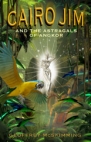
4545460-m

I read Cairo Jim and the Astragals of Angkor in a day, just after the final episode of The Sopranos was screened here, while Tony Abbott was impersonating an arrogant callus in his final days in office. As a finale, Astragals offers less closure but more certainty than the former, and inspires more hope and more sorrow than the latter.

In Cairo Jim’s world words like ‘flabbergast’ are part of normal speech, alliteration runs as wild as jungle creepers, similes (all more original than any I’m offering here) sprout like hairs in a mole, evil never wins the day but life would be much less interesting if it didn’t try. I think Geoffrey McSkimming may be the one who told me the rule about frequency of laughs I referred to above: and sure enough, even though this is a chase story with the fate of the world hanging in the balance, it’s the laugh lines that provide the momentum. These books have captured and sustained a loyal and ever-expanding following among their intended readership with no boost from awards and little notice in the press – quite an achievement.

SWF 2023: My second day

After a day on grandparent duty, we made our weary, head-cold-heavy but cheerfully expectant way to Carriageworks for:

8 pm: Shehan Karunatilaka: The Seven Moons of Maali Almeida

The Emerging Artist loved The Seven Moons of Maali Almeida, which won the 2022 Booker Prize and which the Festival program describes as an ‘epic, searing and darkly funny satire’. Shehan Karunatilaka was in conversation with Michael Williams, former acting director of the Festival, current editor of Melbourne’s The Monthly, and one of my favourite SWF interlocutors.

Michael Williams kicked the session off with a joke about the smell of a room full of book people. When that fell a little flat – very flat, actually – he followed it up by saying the SWF was Nerd Christmas, which went over much better, all the more because this was a Melbourne person who didn’t indulge in tiresome inter-city comparisons.

The session was everything I could have hoped for. Shehan Karunatilaka was urbane, witty, serious about his work but not at all self important.

The book, I gather, is about a recently dead war photographer at the end of the Sri Lankan conflict in the 1980s. It’s a ghost story, in which the ghost investigates his own death while dealing with the bureaucratic system of the afterlife.

Karunatilaka gave a number of different origin stories for the book. He wanted to write about something other than cricket (he mentioned his cricket novel, Chinaman, quite a bit), and thought that the complex ‘squabbling’ and blame-laying at the end of Sri Lanka’s long and devastating civil war was a good subject. A good way of resolving the squabbles would be to ask the ghosts of those who had died in the war.

On the other hand, he just wanted to write a ghost story, not something political. In fact, an early draft was a horror-slasher set on a bus. The book is genre rather than magical realism.

‘Why does this beautiful island go from catastrophe to catastrophe?’ The malign presence of ghosts seemed a plausible explanation.

There was much more: the rules for ghosts; the reason for making his protagonist a war photographer; the book’s relationship to a real-life journalist who disappeared during the war; whether as a ‘cis het normative man’ he would write a gay character if he were starting the novel today.

I have to mention the audience questions. There were five, all of them interesting.

  • Asked about his influences, he named a number of South Asian writers as well as westerners including Kurt Vonnegut, then told us about Carl Muller
  • The questioner said that Shehan’s identifying as heterosexual was a great disappointment to the gay men in the audience, and asked how much of himself was in the character. He said that one of the joys of fiction is that it lets you inhabit different people, but of course you also draw on yourself
  • Asked about the book’s reception by religious people in Sri Lanka, he said it hadn’t been an issue. His afterlife was sufficiently nonspecific not to offend, but the earlier questioner’s mention of The Satanic Verses had him worried
  • A young woman who sad she was a writer passionately concerned about Sri Lanka asked him how he did it. His reply began, ‘I wake up at 4 o’clock every morning.’
  • The final question could have been a classic of the genre. Told we needed her to be very brief, the questioner read from her phone a brief essay explaining that she’d only just started reading the book but saw it as an obituary for the casualties of war. A question followed but I didn’t make a note

Oh, I should mention that had been allocated excellent seats, four rows from the front, in the middle of the row

Sydney Writers’ Festival 2023: My first day

At the end of one of the cool, cloudless autumn days that makes you love Gadigal-Wangal land in the Sydney Basin, we headed to the Carriageworks for the Sydney Writer’s Festival. We took our seats in Bay 17 and remembered too late that if you allow the booking office to give you the ‘best available seats’, they’ll put you right up the front on the very end of a row, so you risk a stiff neck from watching everything in profile. Next year I’ll remember! My grumpiness evaporated when the show started.

6.30 Opening Night Address
(link is to the SWF website blurb on the event, as I plan to link event titles for the rest of the Festival)

After a huge, loud ad for the City of Sydney, Uncle Michael West did an eloquent welcome to Country, pointing out that the Carriageworks was once an important source of employment for Aboriginal people who came to Redfern from far and wide.

Then we had a number of necessary speakers, who all managed their curtain-raiser status with grace. Brooke Webb, the festival’s CEO, thanked its many partners. John Graham, the NSW Minister for the Arts, by his mere presence demonstrated that the ALP values art and literature more than the other side of politics, and in a well crafted speech managed to quote appositely from Frank Moorhouse, Sarah Holland-Batt, and Shehan Karunatilaka (who we’re going to hear tomorrow night). Edward Federman, Executive Chair of ARA, the construction company that is the festival’s principal partner, won my heart by talking about bringing his granddaughter to Children’s Day ten years ago, and every year since. Ann Mossop, Artistic Director, was mercifully brief and introduced the speakers.

As has been the custom recently, the address was a multivocal affair. Four writers were invited to address the theme, ‘How the Past Shapes the Future’.

Bernadine Evaristo, author of Girl, Woman, Other and Mr Loverman (links to my blog posts), began with a quote from Oscar Wilde: ‘The one duty we owe to history is to rewrite it.’ She then said a lot of things that need to be said again and again – about the way the ruling class and the dominant culture tell a narrative, inculcate a timeline that negates the experience of women, conquered peoples, etc. She spoke mainly of England, and had fun with the notion that Cheddar Man, the earliest human remains found in England, has recently been discovered to have black skin: the great grandfather of England and possibly of Europe was Black. Now, she said, the marginalised are moving the centre towards them. We need to know and honour multiple timelines.

Alexis Wright currently looms large in my reading life with her mammoth novel Praiseworthy. I won’t try to summarise her talk. She began by saying that she has tried to write about living in the all times. Aboriginal culture doesn’t have linear time in the way western culture does. ‘We live in the eternal clock of country.’ ‘We cannot step out of or apart from the pulse of country.’ She spoke with wonderful gravitas, sometimes stumbling over her words, as she tried to communicate across a great cultural divide. My companion observed on the way home that not so long ago when white people spoke as allies to Aboriginal people the discourse was about alleviating the harshness with which these oppressed people were treated. Now, thanks to Alexis Wright and other people doing this mammoth labour, we white people are coming to understand that we have a lot to learn from First Nations people – a lot we need to learn.

Benjamin Law, creator of The Family Law and author of the Quarterly Essay Moral Panic 101, had a hard act to follow. He managed it with wit and charm and intelligence. Ten years ago he was thrilled to be invited to his first Sydney Writers’ Festival. When a volunteer asked him how he was enjoying the festival, he said how delighted he was. The volunteer said, ‘Enjoy it while it lasts. It won’t last forever.’ Ten years later, he knows he belongs here, knows he belongs in writers’ rooms for TV shows, and when he encounters shocking (to me) dismissiveness of his presence as a token non-white, he takes comfort from that volunteer’s words. Things are changing. This stuff won’t last forever.

Madison Godfrey (pronouns they/them) put a similarly personal spin on the Past-Future theme. They read a medley of poems from their second book, Dress Rehearsal, asking us to imagine them as a young emo in the first poems, and as an older emo (not so old from my perspective) in the later ones. There was a memorable image of wanting to press one’s face into the tattoo on a loved one’s back like an old woman smelling a mango before putting it in her shopping basket. And they finished up with a glorious ode to their kneecaps – at one stage inviting the audience to join in on a kind of refrain.

The place was buzzing as we all headed out into the brisk night air.

2023 NSW Premier’s Literary Awards night

Tonight, the New South Wales Premier’s Literature Awards were announced at an event livestreamed from the State Library of NSW. I missed the start but got to see two of Debra Dank’s four acceptance speeches, and Sara Mansour and Bilal Hafda accepting the Special Award on behalf of Bankstown Poetry Slam (Bilal’s hands were a joy to watch). It’s been a while since a Premier has actually presented the awards – Chris Minns may be the first to do it since Christina Keneally in 2011. The recording is on YouTube, and I can think of worse ways to spend a couple of hours if you’re interested in Australian literary culture.

The winners (with links to the judges’ comments):

UTS Glenda Adam’s Award for New Writing: We Come With This Place, DEBRA DANK (Echo Publishing)

Indigenous Writers’ Prize: We Come With This Place, DEBRA DANK (Echo Publishing)

Multicultural NSW Award: The Eulogy, JACKIE BAILEY (Hardie Grant)

Nick Enright Prize for Playwriting: Whitefella Yella Tree, DYLAN VAN DEN BERG (Griffin Theatre Company/ Currency Press)

Betty Roland Prize for Scriptwriting: Blaze, DEL KATHRYN BARTON and HUNA AMWEERO (Causeway Films)

NSW Premier’s Translation Prize: People from Bloomington, BUDI DARMA, translated from Indonesian by TIFFANY TSAO (Penguin Classics)

Ethel Turner Prize for Young People’s Literature: The Upwelling, LYSTRA ROSE (Hachette Australia)

Patricia Wrightson Prize for Children’s Literature: The First Scientists: Deadly Inventions and Innovations from Australia’s First Peoples, COREY TUTT and BLAK DOUGLAS (Hardie Grant)

Kenneth Slessor Prize for Poetry: The Singer and Other Poems, KIM CHENG BOEY (Cordite Books)

Douglas Stewart Prize for Non-fiction: We Come With This Place, DEBRA DANK (Echo Publishing)

Christina Stead Prize for Fiction: Women I Know, KATERINA GIBSON (Scribner)

The People’s Choice Award: Every Version of You, GRACE CHAN (Affirm Press)

The Special Award: Bankstown Poetry Slam

Book of the Year: We Come With This Place, DEBRA DANK (Echo Publishing)

The evening ended with a bunch of flowers to Jane McCredie, Senior Judge, to mark her final year in that role.

I have read exactly none of the winning books, plays or TV shows, but I am a huge fan of the Bankstown Poetry Slam and couldn’t be more delighted by that award.

Books I read in July [2007]

[I originally posted this in my old blog on 31 July 2007, but didn’t retrieve it when I moved to the WordPress platform. I’m republishing it now because I’m about to blog about Alexis Wright’s Praiseworthy, and what I wrote about Carpentaria here is true of Praiseworthy as well. Retrieving the post is also a tiny way of having the blog mark Robert Adamson’s death on 16 December last year.]

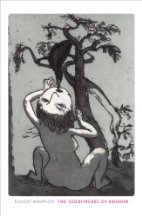
Robert Adamson, The Goldfinches of Baghdad (Flood Editions 2006)
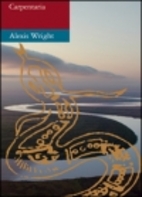
Alexis Wright, Carpentaria (Giramondo 2006)
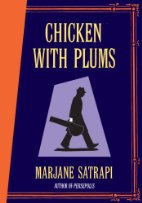
Marjane Satrapi, Chicken with Plums (Jonathan Cape 2006)
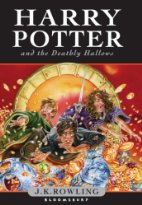
J K Rowling, Harry Potter and the Deathly Hallows (Bloomsbury 2007) (begun)
Harold Bloom’s Best Poems (continuing)

goldfinches

The Goldfinches of Baghdad includes an elegy for Arkie Whitely, thereby providing a smooth segue from the last book I read in June, Another Country, which is dedicated to her. Bob Adamson’s book is published by a US company. Couldn’t he find an Australian publisher? Or does this give him a crack at a larger readership? Or is it just an an example of globalisation with no subtext at all?

The book is in three sections, of which I expect to reread the first two many times. Maybe it was just a trick of the light, or the music that happened to be playing as I read, but these poems, almost all of them featuring birds, the Hawkesbury River and/or fishing by night, just picked me up and took me with them: the word that comes to my mind for the interplay of real birds, the real river and what the poet’s mind makes of them is ‘charming’, as in having magical force. Without a hint of appropriation of Aboriginal stories or images, it seems to me, Adamson manages to create a sense of sacred involvement with his country.

After been immersed, as it were, in whitefella Robert Adamson’s Hawkesbury, it felt quite natural to move on to Carpentaria, which starts with a river. This is from page 2:

Imagine the serpent’s breathing rhythms as the tide flows inland, edging towards the spring waters nestled deep in the gorges of an ancient limestone plateau covered with rattling grasses dried yellow from the prevailing winds. Then with the outward breath, the tide turns and the serpent flows back to its own circulating mass of shallow waters in the giant water basin in the crook of the mainland whose sides separate it from the open sea. To catch this breath in the river you need the patience of one who can spend days doing nothing.

The book is like nothing else I’ve ever read. I suspect that my decades of working as an editor, mainly of things written for children, have set me up for a quite distinctive relationship to it. It matters to me that words are used with their correct meanings (I hate ‘discomfit’ being used to mean ‘make uncomfortable’, for instance), that punctuation and spelling are correct (though I yearn for spelling reform and love George Bernard Shaw’s spelling of ‘fish’ as ‘ghoti’ and, truly, am not a rule-bound comma-curmudgeon), and that writing makes syntactical sense (I cringe when ‘none’ is used with a plural verb, but I acknowledge that no meaning is lost and don’t see it as absolutely incorrect). Mixed metaphors, stock phrases, tautologies, inconsistencies, all are guaranteed to turn me off or – if I’m so empowered – to make me reach for the blue pencil. I think of these attitudes as constituting a passion for the language, and of myself in my small way as a defender of its integrity. Well, Carpentaria is like a grenade lobbed into the middle of that way of reading.

It’s a wonderful book, richly poetic (I defy anyone to read it quickly), passionate, and funny. There are extraordinary, surreal set pieces, a stunningly original cast of characters and a plot full of surprising turns. But the most striking thing about it is the language. Alexis Wright has said that she based the narrator’s voice on a conversation she overheard between two old Aboriginal men in the street in Alice Springs. I don’t doubt it. But this isn’t Aboriginal English, or a literary equivalent of it, as the language of Beasts of No Nation suggests an African English. It’s pretty standard English, but as used by someone coming at it from outside: it contains every one of the things that make my editor’s heart shrink and fingers twitch, with the possible exception of the greengrocer’s comma: a dog lies with its belly belly-up; something has ‘flown the coup’. I had been shocked to read Ivor Indyk, redoubtable editor-in-chief of Giramondo, quoted in the newspaper as saying that the manuscript when he first saw it was ‘woolly’. But I now think he was misquoted, or at least misunderstood. He was most likely referring to the peculiar challenge this book must have posed to any copy editor: what in almost any other manuscript would have been errors to be corrected, in this one are integral elements. Here’s a passage, chosen at random:

Initially, on that eventual morning, on the eleventh hour of the eleventh day of the month of November, when Gordie did not play the remembrance bugle, everyone thought: Alright! Something is astray. Something smells mightily funny to me. Although, at first, everyone had thought very little about it. Perhaps Gordie was sick with the summer flu. Nothing to be done about that. Life went on as usual. Desperance was a normal town where even the bugle player had as much right as everyone else to get sick with influenza and stay home in bed. Normal people knew how to tell the time without depending on a clock, or a signal, and had enough decency, unlike the rest of the country, to stand for a minute’s silence in respect of the fallen on the eleventh hour, even without the bugle of the returned, to remind them.

There are some changes that a competent copy editor would make almost automatically to this: change ‘mightily’ to ‘mighty’, delete the comma between ‘returned’ and ‘to remind them’ (this kind of mis-comma-ing is rampant in the book, often rendering the sense very difficult to determine), change ‘on the eleventh hour’ to ‘at the eleventh hour’. One who had slavishly subjected his or her will to the style manual would ruthlessly make other changes: fix the fragments ‘Although … about it’ and ‘Nothing to be done about that’, amend ‘Alright’ to ‘All right’. Someone with an eye for redundancy and consistency would suggest fixes for the contradiction between what ‘everyone thought’ initially and what ‘everyone had thought’ at first; would query the assertion that ‘normal people’ were ‘unlike the rest of the country’; would circle ‘flu’ and ‘influenza’ and the repeated ‘on the eleventh hour’. This tidying up would make the passage read more smoothly, and make its meaning easier to access, but what it would lose is exactly the thing that is so distinctive about the prose: its outsider quality. The narrator loves language. The words come tumbling out, alliterative, onomatopoeic, idiosyncratic … and in some sense out of control.

In one of her many appearances at the Sydney Writers Festival this year, Inga Clendinnen said that whereas essayists invite the reader to come on a companionable walk with them, writers of fiction are always playing Catch Me If You Can. That may be true of some, even most, novelists: they build worlds which they invite us to enter. Reading Carpentaria, one feels that the author is running as hard as anyone else trying to catch up with her own creation. I mean no disrespect when I say that the book is less a raid on, than a prolonged campaign by, the inarticulate. The language is out of control and refuses to be tied down to the rules of ordinary discourse. It might seem that I’m talking about a trivial aspect of the book, and perhaps I am. But I found it profoundly challenging; it invaded my dreams. And the constantly unnerving play with language is a key part of that challenge.

[Added 7 August 2005:
Ivor Indyk was quoted in Thorpe’s Weekly Book Newsletter as saying of Carpentaria:

It was quite an intellectual challenge for me as an editor: there are ungrammatical moments that you wouldn’t want to cut out, even though your training tells you to ‘fix’ them.

Which says elegantly a lot of what I was trying to say.]

0224080458

Marjane Satrapi’s stark black and white comic strips provided a brief holiday from Alexis Wright’s tumultuous ride. The plot of Chicken with Plums has been unkindly summarised on LibraryThing: ‘a man without his musical instrument is depressed.’ Which is like ‘old man gets dementia’ as a summary for King Lear. It’s a fine romantic tale about true love lost twice over. I’m glad to see that Satrapi can move on from her powerful autobiographical Persepolis, and tell this touching, complex tale so elegantly. (All the same, I’m eager for the English version of Persepolis, tome trois, in which Marjane goes to Austria.)

bloom

I continue to make my meditative way through the Harold Bloom anthology, and I’m mostly enjoying it and getting an education. For someone who has a reputation as being a great upholder of the canon of great writers, he’s remarkably idiosyncratic in his selection of ‘the best poems in the English language’, and in his annotations on the selection. I think I already mentioned that he disparages Edgar Alan Poe, but includes a poem or two because he’s so popular. Well, when he gets on to Ezra Pound, our Harold makes no bones about despising the Fascist anti-Semitic montageur, and he takes eight pages ripping into him, followed by one poem, a translation from mediaeval French, included because Pound is an excellent translator. At least that’s why Harold says he included it; it’s pretty darned obvious that the poem’s there because without it he wouldn’t have been able to include his extended anti-Pound bile. Of course the publisher probably came up with the book’s title: Shorter English and United States Poems I Feel Like Anthologising, with Some Notes on Poets I Hate would have been more accurate, but isn’t as catchy.

0747591059

Given Professor Bloom’s feet of clay, I don’t feel any need at all to defend myself against his judgement on the Harry Potter books: ‘Can more than 35 million book buyers, and their offspring, be wrong? Yes, they have been, and will continue to be for as long as they persevere with Potter.’ I did, however, have to overcome other sources of reluctance – I’ve not been totally grabbed by what I’ve read of the saga previously; I had an unpleasant exchange of emails with JKR’s agent nearly a decade ago; and I’m moderately disgusted by the way the press piles onto the Potter bandwagon, heaping lazy and ignorant generalised scorn on the extraordinary wealth of other works written for children. But I joined the 35+ million, and bought the children’s edition at the recommended retail price, of which Gleebooks assures me a certain amount will go to the Fred Hollows Indigenous Literacy Program. I wanted to read for myself HOW IT ENDS. I’m half way through it as I upload this, and so far, I have to say, it’s also like no other book I’ve read – in this case because of the constant sense that I’m not just reading a book but taking part in a major cultural event, being just one of millions of people absorbing these very words at roughly this very time. Having found out ten minutes ago what the Deathly Hallows are, I still want to know what happens next.

Journal Catch-up 19

I’m almost caught up on my journal-reading. This isn’t a result of my diligence, but of the difficulties besetting literary journals just now. Heat has been appearing like clockwork, but the Summer 2022 edition of Overland arrived in my mailbox in mid Autumn 2023, and Southerly and the Australian Poetry Journal and Anthology – to which I subscribe – haven’t published hard-copy issues for two years.

Here are two almost-current issues, blogged with attention to page 76 as per my arbitrary blog policy.


Alexandra Christie (editor), Heat Series 3 Nº 7 (Giramondo 2023)

From the Heat website:

The first issue of HEAT was published in July 1996, in the wake of the Demidenko Affair, in which an Australian author of English background posed as Ukrainian in order to gain credibility for her Holocaust-inspired novel. The anger provoked by this hoax accounts in large part for the magazine’s name, and a commitment to the publication of genuinely diverse writing.

The third series is different from the first two in many ways, but it continues to make a rich contribution to Australian literary culture through its commitment to writing from non-British backgrounds. This issue includes translations from Chinese, Spanish, French and Ukrainian, as well as work by two non-Anglo Australians – П.O. and Eda Gunaydin. Five poems by Melbourne poet Gareth Morgan may make him an exception, though a man in one of his poems says, ‘He must be fresh off the boat,’ which seems to imply a non-Anglo appearance.

I most enjoyed Eda Gunaydin’s ‘Fuck Up’, a comic tale of two young Anglo men who set up a Go Fund Me for an imaginary anti-Islamophobia conference, whose scheme goes awry when they find themselves actually trying to organise the conference. Two stories by Zhu Yue (translated from Chinese by Jianan Qian and Alyssia Asquith) reminded me of Jorge Luis Borges; Andriy Lyubka ‘Roasted Uganda’ (translated by Yulia Lyubka and Kate Tsurkan), a letter from the war in Ukraine, is available to read on the Heat website.

Noémie Lefebvre’s ‘Les non-dupes errent and other ghosts’ (translated by Sophie Lewis), which begins on page 76, overcame my codgerly resistance to stories that invoke French Theorists: the narrator is stuck in the middle of writing a tragedy, pondering the futility of literature given the state of the world and remembering her mother’s anorexia as she prepares to eat some toast – as one does – when Lacan (no first name) turns up and they have a weirdly obscure, but funny and resonant conversation.


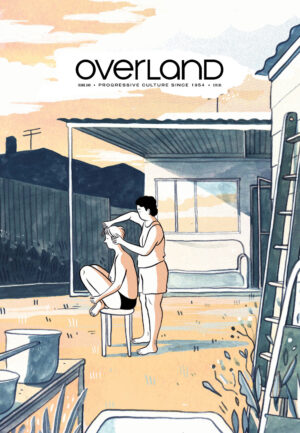
Evelyn Araluen and Jonathan Dunk (editors), Overland 249 (Summer 2022)
(Some of the content – less than in the past – is online at the revamped Overland website, and I’ve included links)

Apart from its usual excellent content this issue of Overland brought tears to my eyes with a letter to ‘the Overland family’ from the editors committing themselves to the MEAA’s Freelance Charter, which among other things means not passing on the effects of funding challenges to their contributors. I’m an MEAA member, book editors’ section. They’ve just guaranteed that I’ll keep subscribing for the foreseeable.

The issue kicks off with an excoriation of Heather Rose’s Bruny, which almost makes me want to read the novel to see if Elias Grieg, the excoriator, might have failed to notice that the narrative was deeply ironic. But I can resist. There are also interesting articles on forced adoption (by EJ Clarence), brain tumour as experienced by an environmental activist (Bonnie Etherington), and language liberation (Natalia Figueroa Barroso).

Of the generous array of poems, I most enjoyed Ouyang Yu’s uncharacteristically upbeat ‘To Richard Ouyang’, a meditation on the naming of his bicultural son.

There are five short stories, including one (by Avi Leibovitch) that features a talking cat, another (by Tim Loveday) that features small dogs in a bushfire (and mentions in passing a horrific practice in commercial dog-breeding), a family drama (by Rob Johnson) told from a child’s point of view (‘it was like a movie and I wasn’t part of it’). I enjoyed all of them. Fortuitously the one beginning on page 76, ‘Black Spring’ by Hossein Asgari, is perhaps the most interesting.

The protagonist of ‘Black Spring’ is a university teacher who has moved back in with his parents during the pandemic. It begins:

He pushes his chair back and stretches his limbs, turning himself into a multiplication sign before taking his glasses off and rubbing his eyes. He knows how they must look: red, irritated, thirsty for a few artificial tears. Has he just snapped at a student? In an online class which was recorded? God damn it! He slams his laptop shut, opens his desk drawer, picks up his eyedrops, and walks to the window. His father still squats where he’s been for the last hour, under the shade of the fig tree, a garden trowel in his hand.

The family relationships reveal themselves – the father is in early stages of dementia, the mother has health issues, the pandemic brings its own problems, it’s not easy working from home when it’s also your parents’ home, and so on. It reads as a Melbourne story, like most of Overland‘s contents, with mild hints of non-Anglo culture in the father’s habit of sucking on sugar cubes, or the mother’s offer of a choice between dates and dark chocolate with a cup of tea. Then there’s a deft reveal, first with the mention of an Imam influencing the water supply, and then with a place name, that the story is unfolding in Iran. No big deal is made of the reveal, and the story continues – a sweet, understated piece of anti-Othering.


Heat 8 has already landed (and been reviewed by Lisa at ANZ LitLovers LitBlog). The good things just keep coming.

Middlemarch: Final progress report

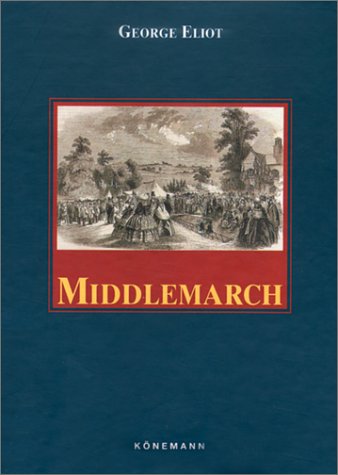
George Eliot, Middlemarch: A study of provincial life (George Eliot, 1871–1872; Könemann 1997), chapter 73 to end

I had lunch last week with a friend from university days, who remembered me going on about Middlemarch back then. Apparently I was very keen on Casaubon’s doomed project, the Key to All Mythologies. My friend assured me that my keenness was ironic, but maybe in his heart of hearts the young me feared he had a lot in common with Casaubon.

As I read the book this time, two things stood out for me that I’m pretty sure I took for granted in 1968 (yes, it’s been that long!).

First, the main characters are very young, and the narrator speaks with the gravity of experience. In 1968 I read a contemporary review that, from memory, began by saying that reading George Eliot’s prose was like lifting the heavy lid of a sarcophagus. I was at a loss to understand what the reviewer meant, but this time around the narrator’s world-weariness is clear as a bell, along with her deep affection for, and possibly even envy of, the young characters.

Second, there’s a serious concern with money. Dorothea can be virtuous because she inherited a small fortune from her mother, and she inherits a further substantial fortune when Casaubon dies. Part of her virtue for most of the novel consists of a commitment to use her wealth well: she sets out to be a decent landlord, but never considers that her wealth is created by the labour of the people she means to be kind to. (Marx was still working on Das Kapital when Middlemarch was published, but George Eliot had almost certainly read Les misérables.) Lydgate comes from gentry, but is determined to make his own way as a doctor and scientist. Rosamond is all about wanting affluence without worrying where it comes from. Fred gets into serious trouble by gambling, and finds his way to responsible work.

These two strands come together brilliantly in the climactic scene at the end of Chapter 83. Dorothea and Will have just declared their love for each other, all doubts as to the other’s integrity dissolved, and they have faced the apparent impossibility of marriage because of the terms of Casaubon’s will:

‘Oh, I cannot bear it – my heart will break,’ said Dorothea, starting from her seat, the flood of her young passion bearing down all the obstructions which had kept her silent – the great tears rising and falling in an instant: ‘I don’t mind about poverty – I hate my wealth.’

(Page 923)

It’s been stated explicitly much earlier that Dorothea could renounce what she has inherited from Casaubon, but only now does she see that as a real option. ‘I hate my wealth’ – the wealth is a kind of prison from which she can escape.

But the word ‘young’ is crucial here. The narrator and the reader know not to take her outburst literally. Will takes her in his arms and, looking into his eyes, she says ‘in a sobbing childlike way’:

‘We could live quite well on my own fortune – it is too much – seven hundred a-year – I want so little – no new clothes – and I will learn what everything costs.’

(Page 924)

So, she doesn’t really hate her wealth as such, only the part of it that constrains her. She’s hardly opting for poverty. The narrator sees that, and so do we, but we can still appreciate the moral leap she is making. And that wonderful final clause, so clearly the cry of a young person – ‘I will learn what everything costs’ – sends echoes back through the whole book. Fred has had to learn the cost of his gambling; Lydgate the cost of marrying unwisely; Rosamond, however briefly, the cost of dalliance. Even some of the older generations learn what things cost – notably Mr Bulstrode whose sins find him out.

I’l miss the world of Middlemarch. I’ll wait a couple of weeks before I plunge into my next slow-read project, in no hurry to have George Eliot’s voice fade from the front of my mind. I’ll give her the last word, from the beginning of the ‘Finale’:

Marriage, which has been the bourne of so many narratives, is still a great beginning, as it was to Adam and Eve, who kept their honeymoon in Eden, but had their first little one among the thorns and thistles of the wilderness. It is still the beginning of the home epic – the gradual conquest or irremediable loss of that complete union which makes the advancing years a climax, and age the harvest of sweet memories in common.

(Page 945)

That’s from Mary Ann Evans, towards the end of a book dedicated ‘To my dear husband’, to whom – scandalously – she was happily not married.

The Book Group and Percival Everett’s Trees

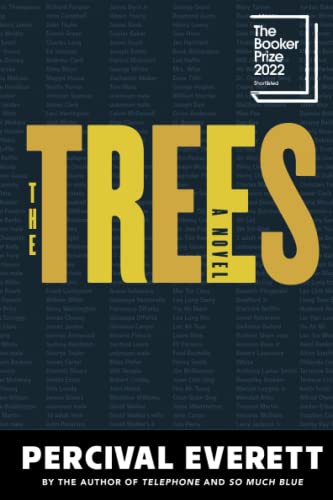
Percival Everett, The Trees: A novel (Graywolf Press 2021)

Before the meeting: This is another excellent book I wouldn’t have read but for my wonderful book group.

The book moves disconcertingly from genre to genre. After a bit of hayseed comedy, it develops into one of those murder mysteries where wisecracking out-of-town detectives arrive to help resentful local cops with an apparently insoluble case. Then there’s some social satire as the detectives, who are both African-American, make fun of the racism endemic in the small town. It’s all good TV detective show fun with an anti-racist bent.

Then the corpses multiply, each murder scene featuring a dead and mutilated White person paired with a long-dead Black person whose clenched fist holds the other’s severed testicles. It could be a highly implausible serial-killer yarn, or a revenge ghost story about racist violence in the USA (against Chinese people as well as African Americans, as the narrative makes unnervingly clear). A magic realist parable, perhaps, in which the murder scenes eerily evoke, and partly reverse, iconic images of lynchings? Or a tale of witchcraft? Certainly one key character identifies as a witch, but then she is also an amateur archivist who has accumulated records of thousands of lynchings from 1913 to the present. Or maybe, as the plot widens, it’s a zombie apocalypse, one whose allegorical meaning lies right on the surface. And Donald Trump makes an appearance. In the end, it’s a genre mash-up that manages – perilously – to stay coherent.

It’s all – to quote Quentin Tarantino from another context – ‘so much fun’. But it doesn’t lose sight of the monstrous historical reality. For example, one chapter consists of a ten-page list of names, in the manner of a spread in Claudia Rankine’s brilliant book, Citizen (my blog post here), and reminding me of Nana Kwama Adjei-Brenyah’s short story ‘The Finkelstein 5’, in which Black vigilantes kill random white people while shouting the names of Black people who have been murdered (my blog post about Friday Black, the book the story appears in, here).

A book that plays around like this with form and genre, that preaches a little, chills a lot and leaves a lot of questions unanswered, has to work brilliantly at the scene level and even the sentence level. This one does. I could give lots of examples, but take the moment at about the one-quarter mark, when the detectives, Ed and Jim, visit the juke joint on the edge of town.

The narrator doesn’t say so, but everyone in the joint is Black. Apart from one character who passes for White and another who is revealed to be Black late in the book, this is Ed and Jim’s first encounter with the town’s Black people. (In classic movie structure the one-quarter mark is the second turning point, often involving a change of location.) When they walk in, everything stops:

Jim and Ed stared back at the staring faces.
‘Yes, we’re cops,’ Jim said loudly. ‘And we don’t like it either. Everybody carry on. Have fun. Break the law, if you like.’
A couple of people laughed, then others. There was the sound of someone breaking a rack at the pool table in back. The dancing and chatting started up again.

(Page 75)

Maybe you have to enjoy writers like Elmore Leonard to be tickled by moments like this. I do and I am. You almost don’t notice that what is being described is a tacit alliance, or at least deep mutual understanding, among the Black characters, whether they’re cops, people relaxing at a bar, or possibly murderers.

What happens as Ed and Jim question the bartenders continues on that note. The bartenders express no sorrow for the racist White men who have been killed, but it’s different with the photograph of the Black corpse whose face has been beaten in. This corpse has appeared at the first murder scene, disappeared, turned up at the second murder scene, and disappeared again. Soon after this scene he will be identified [rest of this sentence whited out, but you can select it with your cursor if you don’t mind spoilers], mistakenly but with great thematic impact, with Emmett Till, whose murder sparked outrage in 1955. At this stage, most of the townspeople, Black and White, believe that this ancient corpse is somehow the murderer.

Jim pulled the picture from his pocket. ‘This is kind of hard to look at, but tell me if you recognise this man.’
The man cringed at the sight. ‘Ain’t nobody gonna recognise him. What the fuck happened?’
Jim shrugged. ‘If this man is alive, we want to find him before that cracker sheriff and his deputies do.’
‘How can that man be alive?’ the bartender asked.
Jim shrugged again.
‘Franklin, come here and look at this.’
The other bartender came over. Jim held up the photo for him to see. ‘Lord, have mercy. What’s that?’
‘That’s a human being,’ Ed said. ‘Somebody did that to another human being. Do you recognise him?’
The second man shook his head. ‘He must be dead. Is he dead?’
‘On and off,’ Jim said.
The man offered a puzzled look.
‘We don’t know,’ Ed said.

(Page 76)

‘Somebody did that to another human being’ lands like a well placed rock in the middle of the hard-boiled humour. It’s a sentence that is to gather force like a snowball in an avalanche. An awful lot of the writing in this book is as impeccable as that.

Why The Trees? Trees don’t feature in the book much at all. But a character sings the Billie Holiday classic (written by Abel Meeropol / Lewis Allan):

Southern trees bear strange fruit
Blood on the leaves and blood at the root
Black bodies swinging in the southern breeze
Strange fruit hanging from the poplar trees

Pastoral scene of the gallant south
The bulging eyes and the twisted mouth
Scent of magnolias, sweet and fresh
Then the sudden smell of burning flesh

Here is fruit for the crows to pluck
For the rain to gather, for the wind to suck
For the sun to rot, for the trees to drop
Here is a strange and bitter crop

Nearer to the meeting (spoiler): On Friday 28 April news broke that Carolyn Bryant Donham, the woman whose accusation led to a notorious racist murder, had died. Percival Everett got there just before Real Life: in the novel Carolyn Bryant, aka Granny C, is the third person to die in the presence of the small Black corpse. It’s unlikely that the Real Life Carolyn Bryant even heard of this book, but the timing!

After the meeting: Tragically I came down with a heavy cold (not Covid) on the morning of the meeting, and spared them all the risk of infection. It’s now a couple of days later and the customary brief account of the evening hasn’t materialised, so all I can say in this section of my blog post is: a) one chap beforehand said he could barely read for tears of laughter, until the book went dark and the laughter dried up; b) on the night itself, the conversation turned – as it does – to identity politics, including pronouns (several of us have gender non-conforming family members or friends); and c) they all had a good time while I stayed home nursing a stuffy nose.

Philip K Dick, Flow My Tears, the Policeman Said

Philip K Dick, Flow My Tears, the Policeman Said (1974, Gollancz SF Masterworks edition 2001)

I have a shelf full of science fiction and fantasy books that I acquired through BookMooch after finding a list of titles recommended as essential reading in the genre. Every now and then I actually read one of those books.

Flow My Tears, the Policeman Said was on that shelf.

I had previously read just one Philip K Dick novel, Do Androids Dream of Electric Sheep? (my blog post here), which was the basis of the movie Blade Runner; and I’d seen at least two other brilliant movies based on his work: Total Recall and Minority Report. So I was expecting a dystopian future, a surveillance state, psychological dislocation and the kind of philosophical rumination that can be hard to tell apart from quasi-psychotic, drug-induced meandering. My expectations were filled to overflowing. The book is like a weird waking dream, put together without much care for logical coherence, and at the same time it feels somehow deeply personal. It’s also masterly story-telling.

Jason Taverner is the phenomenally successful host of a weekly TV show. He’s a six, a genetically engineered superior human, handsome, charismatic and super-smart. Without warning he finds himself in a seedy hotel room, stripped of his identity – all records of him have disappeared from the data banks, there’s no trace of his TV show, and none of his associates recognise him or have any memory of him. Somehow he has to somehow acquire forged ID papers to avoid being picked up by the pols or nats and sent to an FLC (forced labour camp).

The story progresses through a series of encounters with women: his long-term partner in the TV show who is also a six; a woman he has seduced and dumped who unleashes an alien creature on him that (we believe) precipitates his crisis; a disturbed teenaged girl who forges his documents and tries to blackmail him into having sex with her; a spectacular, drugged out dominating woman who lures him into her mansion with disastrous results; a quiet ceramicist who is impressed to be meeting a celebrity. There’s a lot of drugs, a weird death, plenty of sexual titillation (see below), and a final bonkers explanation of what has been happening that an early reviewer described as ‘a major flaw in an otherwise superb novel’, but which I loved. Take your pick.

The book was published in 1974 and set in 1988, so the book’s near future is our fairly remote past, and readers in 2023 have the extra pleasure of clocking how wrong Dick’s predictions were. People fly around the city in self-flying quibbles and flipflaps but have to find a public phone to make a call. They read the news on foldable newspapers. The 70s protest movements have led to the Second Civil War in the USA; the surviving students now live underground beneath the ruins of universities and risk being captured and sent to forced labour camps if caught outside looking for food. The USA is a police state, and everyone is apparently on drugs of one kind or another.

Also dated is a creepy sexual element that seems to function mainly to assert Dick’s status as a pulp writer. Police surprise a middle-aged man in bed with a boy who has a blank expression, and though they are disgusted by the evidence of child sexual assault it is revealed to us that the age of consent has been lowered to 13. There are regular references to pornography and phone network orgies (as close as the book comes to predicting the internet). Two of the main characters are brother and sister who live in an incestuous love-hate relationship and have a son who is away in boarding school. And so on.

While the sexy stuff might assert the book’s pulp status, there’s also a strand of references to ‘high culture’. The book’s title, as the main example, comes from the 16th century lute song ‘Flow My Tears’:

Each chapter begins with a couple of lines from the song, so that it becomes in effect a sound track, a melancholy, orderly counterpoint to the characters’ panic and disorder. Sadly I didn’t look it up until I started writing this blog post, so it didn’t work that way for me.

Taverner’s progress is marked by his encounters with women. Meanwhile he is pursued by men, chief among them Police General Felix Buckman, who listens to classical music, and whose tears flow when he decides to seal Taverner’s fate. He has one of the weirdest scenes in the book, when he stops his quibble at a refuelling station and, out of the blue, has an intimate (but not sexual) moment with a Black stranger, which Dick later said was a mystical reference to a scene from the Christian Bible (Acts 4:27–38) – which he hadn’t read.

Having said that the book seems not to care for logical coherence, I should give you an example of the writing, which is always measured, even flat. Here is the moment, about a third of the way into the book, when Buckman makes his first appearance. His personality is revealed to us deftly – his easy authority, his cultural sophistication, his kindness. At the same time, details of the book’s world are filled in effortlessly, including the presumably intentionally comic bodily reference in ‘sphincter’ and the unintentionally jarring distinction between an ‘officer’ and a ‘female officer’:

Early in the grey of evening, before the cement sidewalks bloomed with nighttime activity, Police General Felix Buckman landed his opulent official quibble on the roof of the Los Angeles Police Academy building. He sat for a time, reading page-one articles on the sole evening newspaper, then, folding the paper up carefully, he placed it on the back seat of the quibble, opened the locked door, and stepped out.
No activity below him. One shift had begun to trail off; the next had not quite begun to arrive.
He liked this time: the great building, in these moments, seemed to belong to him. ‘And leaves the world to darkness and to me,’ he thought, recalling a line from Thomas Gray’s ‘Elegy’. A longcherished favourite of his, in fact from boyhood.
With his rank key he opened the building’s express descent sphincter, dropped rapidly by chute to his own level, fourteen. Where he had worked most of his adult life.
Desks without people, rows of them. Except that at the far end of the major room one officer still sat painstakingly writing a report. And, at the coffee machine, a female officer drinking from a Dixie cup.
‘Good evening,’ Buckman said to her. He did not know her, but it did not matter: she – and everyone else in the building – knew him.
‘Good evening, Mr. Buckman.’ She drew herself upright, as if at attention.
‘Be tired,’ Buckman said.
‘Pardon, sir?’
‘Go home.’

(Page 77)

Magdalena Ball’s Bobish

Magdalena Ball, Bobish (Puncher & Wattmann 2023)

If you are poetry-shy or poetry-curious, Bobish maybe just the book you’re looking for. ‘Bobish’ is a version of the Yiddish word for grandmother – Bobish is a life story in verse of Magdalena Ball’s great-grandmother. It’s made up of short, self-contained poems that form a straightforward narrative thread.

The heroine, whose name became Rebecca Lieberman, left Russia in 1907, leaving her parents, her family and the world she knew. with many other Ashkenazi Jews from from the Pale of Settlement she ended up in New York City, where she worked for a time in the garment industry – including being home sick from the Triangle Shirtwaist factory on the day in 1911 when 140 workers – mostly young women – were killed in a fire. The book follows her life through a violent marriage, the two world wars, motherhood, old age, and the legacy she has left her descendants.

Everyone should have a great-granddaughter who will honour their life in this way: seeking the facts and filling the gaps with humility, empathy and grace.

I can’t think of a better way to tell you about this book than to show you a single poem. Here’s ‘Potatoes’ from pages 75–76. It’s in ‘Fish Smoker’, the third of the book’s six sections, in which Rebecca meets a fish smoker who ‘smelled of home / whispering the mother-tongue in her ear’, and marries him. ‘Potatoes’ conveys the corrosive effects of poverty and terrible working conditions. It doesn’t aim for high drama, and there’s none of the playfulness that shines in other poems, but perhaps it will give you an idea of how the verse form can evoke a scene, suggest emotion, invite the reader’s heart into the story.

Potatoes
Some days it was only barley broth. Some days 
a few bits of squashed herring
brought home from the bottom
of the barrel, his legs purple
from standing in ice water all day.

She arrived at the apartment before him, her hands 
shaking as she cut up what food she could find, 
cabbage mostly, purchased cheap from
the vegetable peddler, fit only for stewing.

If there was bread, it was so hard 
she needed a hammer to break it.

Dizzy, hair spilling from her combs 
she would tuck it behind the ears 
ignoring the migraine that began in the morning 
at the sewing machine, all day at the machine 
with no breaks, fingers throbbing.

It was not the life she'd dreamt of, curled 
under a thin blanket during the Russian winter.
The streets here were not paved with gold, after all.

Tomorrow there might be windows that opened 
hot running water, a proper flushing toilet, 
potatoes. These were her new dreams.

She tried, without success, to sweep away 
the grime that encrusted the floor 
to wash the smells of rotting cabbage 
and smoked fish from her clothing.

The scent followed her to work, where her 
sewing machine kept going until the bell rang 
and she never drank water because the door 
to the toilet was broken and the toilet was so dirty 
she feared becoming ill by using it.

She bent over, her young back hunched as she
leaned into the machine trying to forget the pain 
that followed her like a faithful dog 
the rest of her life, and she got used to it.

She never told him about the way her body 
continuously hurt, carried her pain silently 
into the shared space 
no one wanted to call home.

The last poem in the book, ‘What Remains’, begins with a question and answer:

How far back can you go?
You can never go back.

This answer is obviously true if we’re talking about time, and in reference to the migrant experience, as in this poem, it’s heartbreakingly true. I was going to say that in this book Magdalena Ball has done a mammoth job of going back in imagination to Rebecca’s life. Then I realised that ‘What Remains’ has a different way of seeing what has happened in the book. It hasn’t so much gone back in time as captured what remains. Here are its final lines, the final lines of the book:

Magic is a gift not held 
solely in fading photographs.

It lingers, like your voice 
humming a Yiddish song 
winding through the double 
helix of your children, filling the air 
everywhere.

I’m grateful to the author for my copy of Bobish.