Tag Archives: art

You heard about it here first

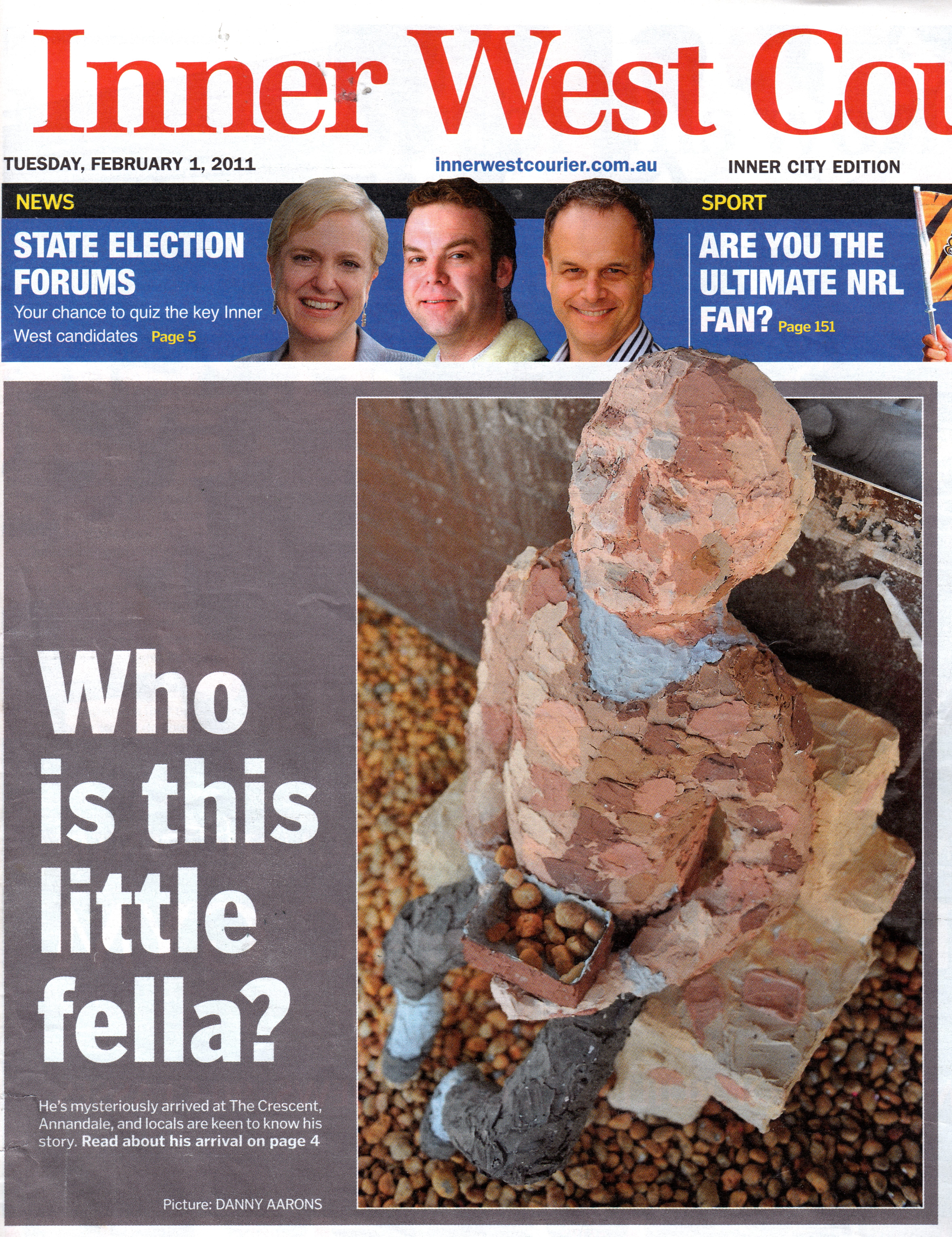
The Inner West Courier has noticed the little man:

Longtime resident David Lawrence tends to the roadside garden regularly and is mystified as to who placed the statue there.

‘It can be put down as a true Annandale mystery,’ Mr Lawrence said. ‘He seems to be collecting something, maybe it’s part of a bigger theme, who knows.

He said locals have largely welcomed the new addition, and would like to know who created the work of public art.

Well, as regular readers of this blog know, it’s an open secret. It’s nice to see it become a mystery.

Later addition: Two things have happened in the hours since I posted that.

The Art Student identified herself as the sculptor on the Inner West Courier site (over my objection that by doing so she was depriving the Inner West readers of the pleasure of a mystery).

We found a copy of the paper and discovered that the front page photo is much more impressive than the one reproduced on the web (both by Danny Aarons). Here’s part of the front page, for those unfortunate enough not to have the Inner West Courier delivered to their door.

After a year …

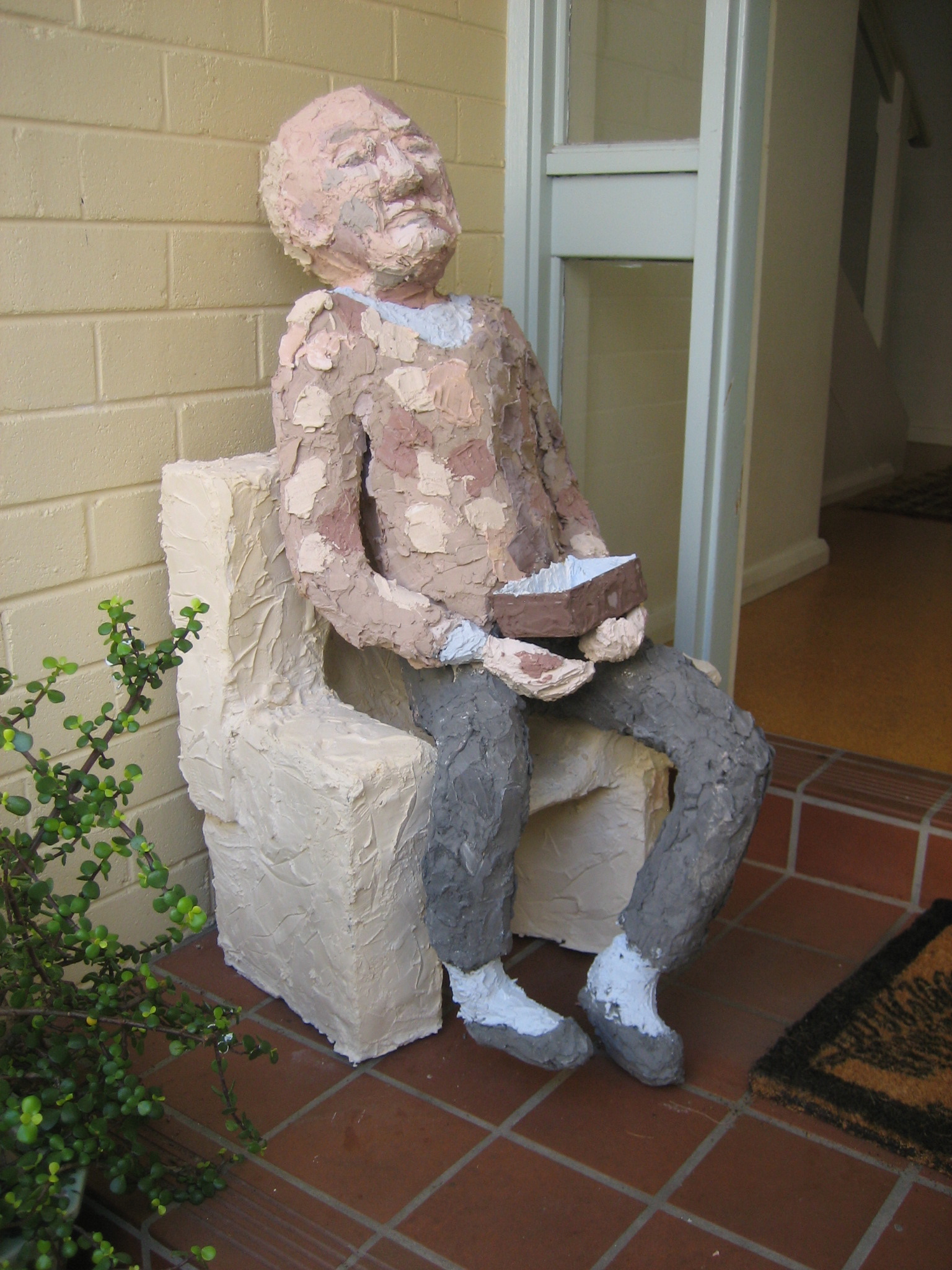
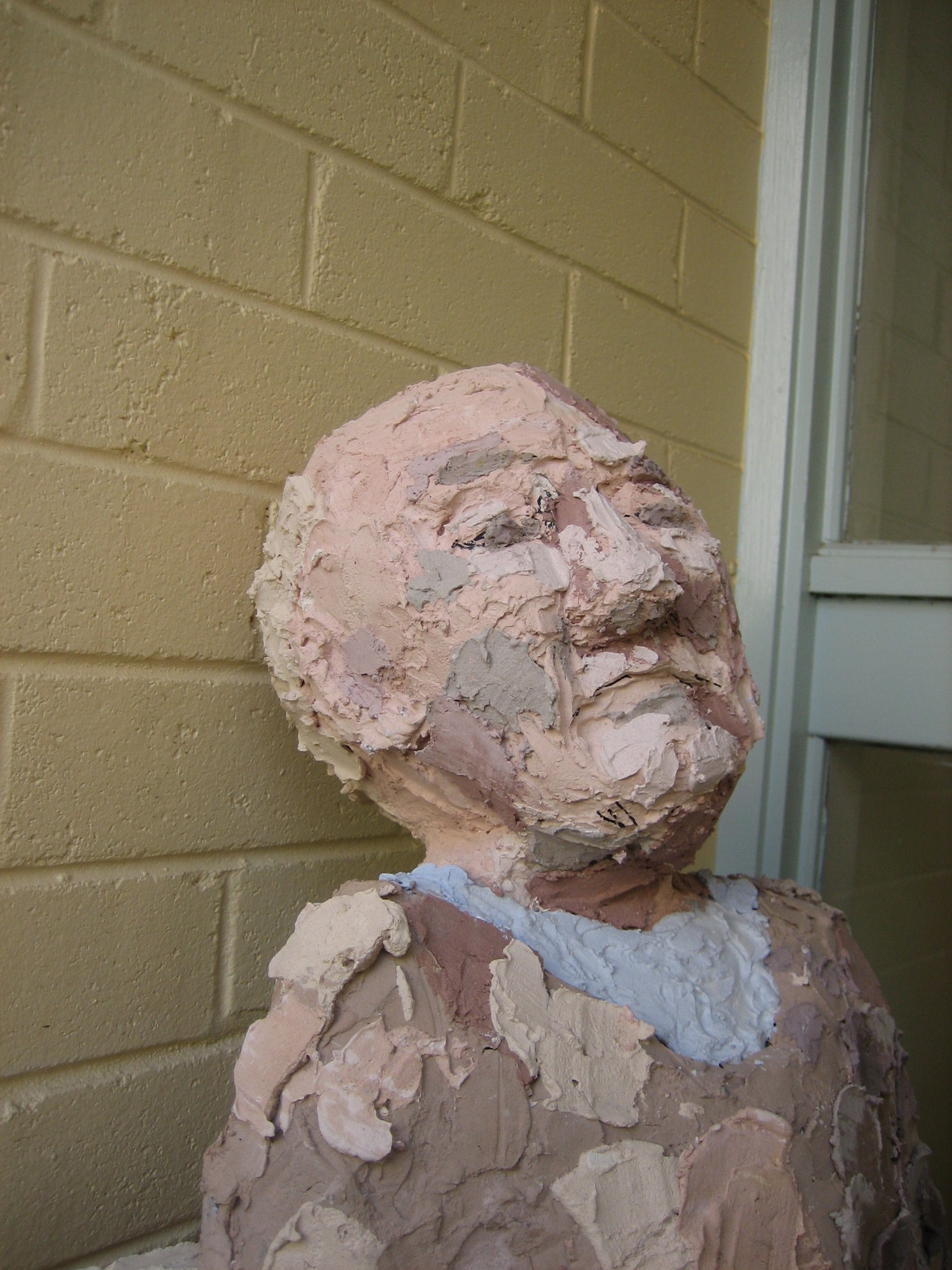
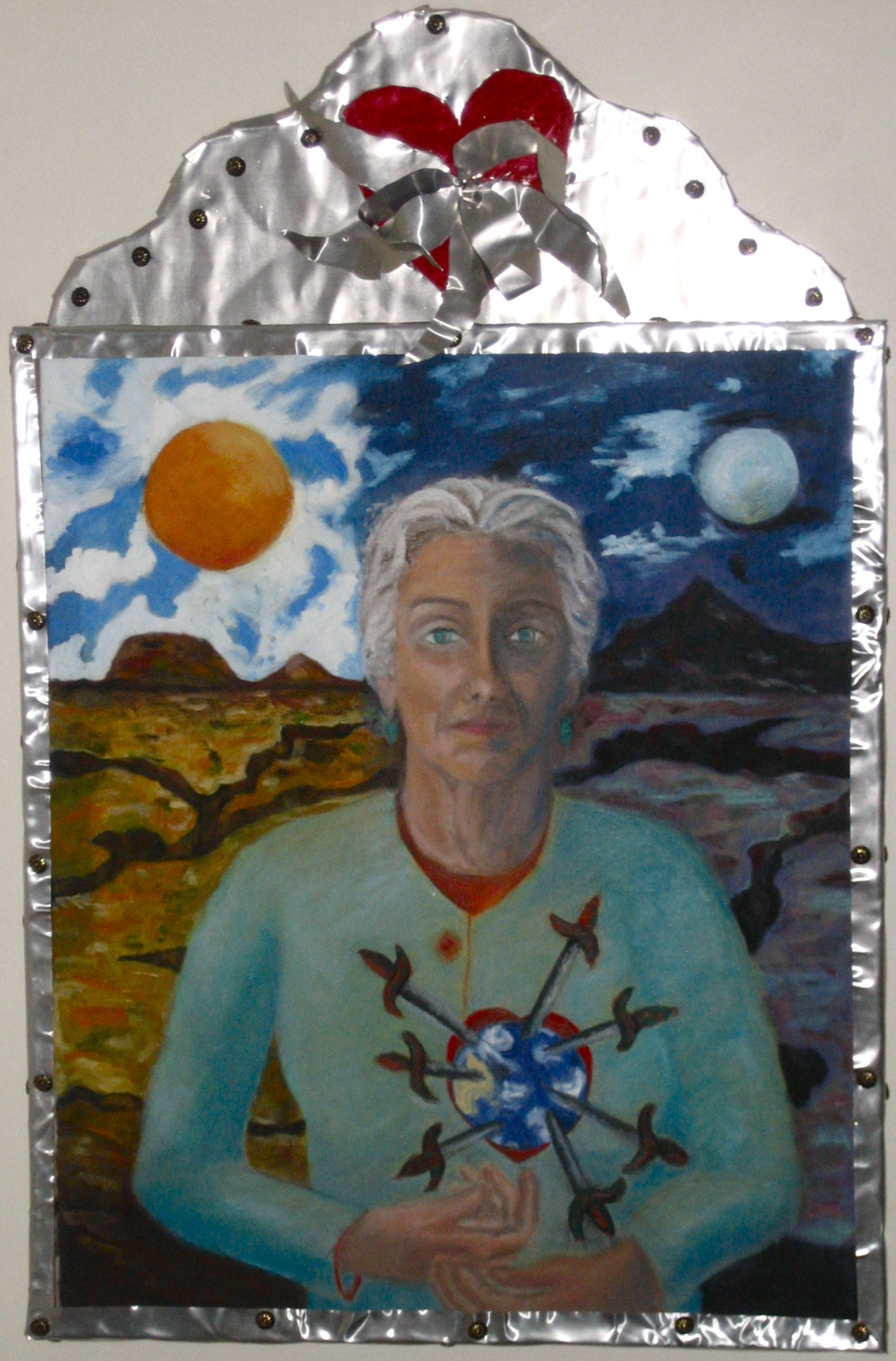
After a year as an Art Student, the woman who wishes her older son would make cheerful movies has created these, among other things:

It's a little startling to come upon this plaster chap at the front door ...


... called 'Locked In', and modelled on a resident in Mollie's dementia ward ...


... and a little disturbing to have this Penny-as-Frida on the bedroom wall.

LoSoRhyMo 4: Sculpture by the Sea

Sculpture by the Sea deserves more than 14 lines but it’s LoSoRhyMo (Local Sonnet Rhyming Month) in this house so an ekphrastic sonnet is all you’re going to get from me. You could pop over to Richard Tulloch on the Road for some lovely images, wittily presented (where I’ve just seen a comment expecting a sonnet from me – no pressure of course).

Sonnet 4: Sculpture by the Sea
We walk among these waking dreams
from Bondi’s cliffs to Tamarama –
dreams hewn from wood, stone, bronze, from streams
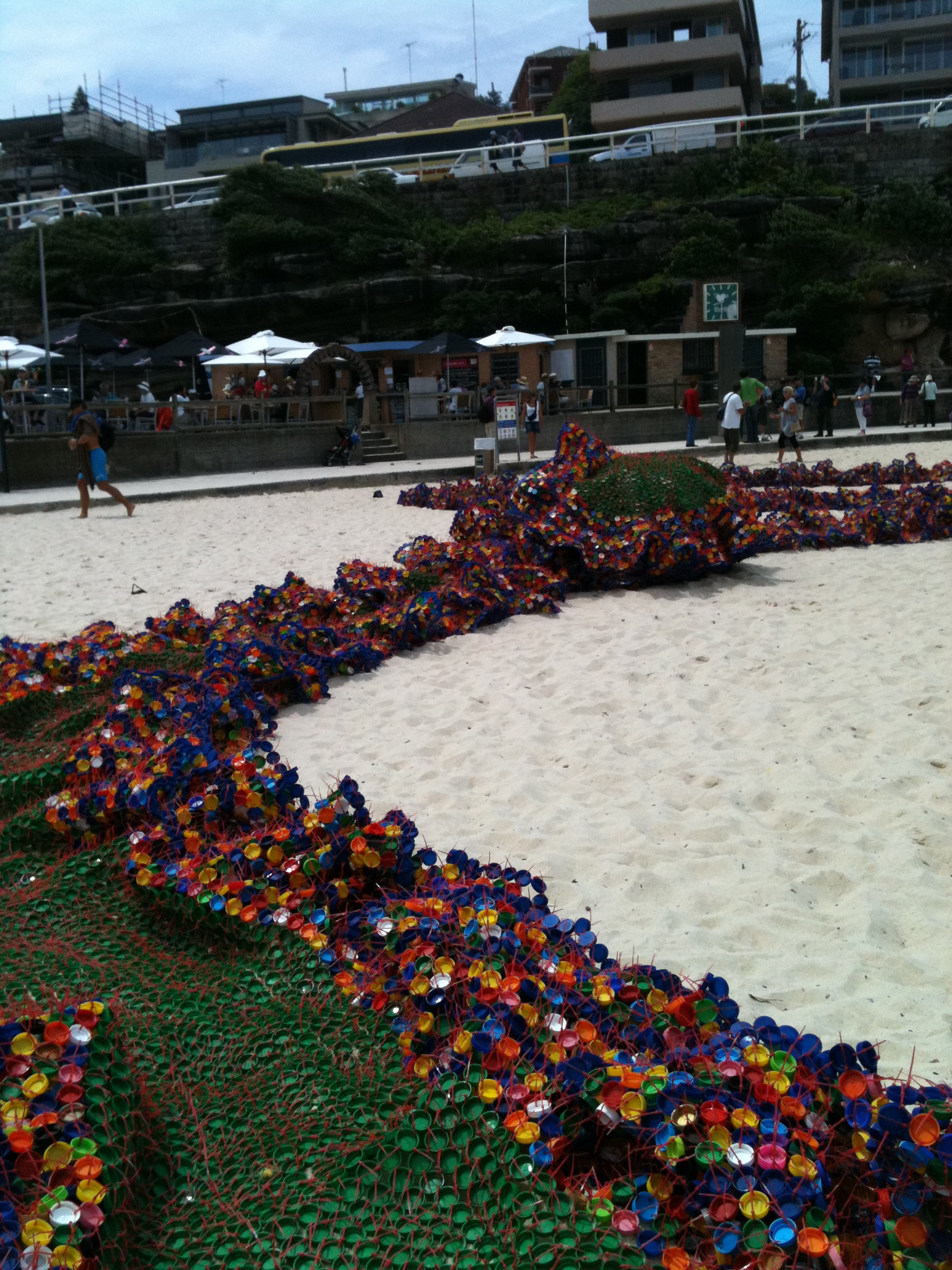
of plastic, garbage given glamour.
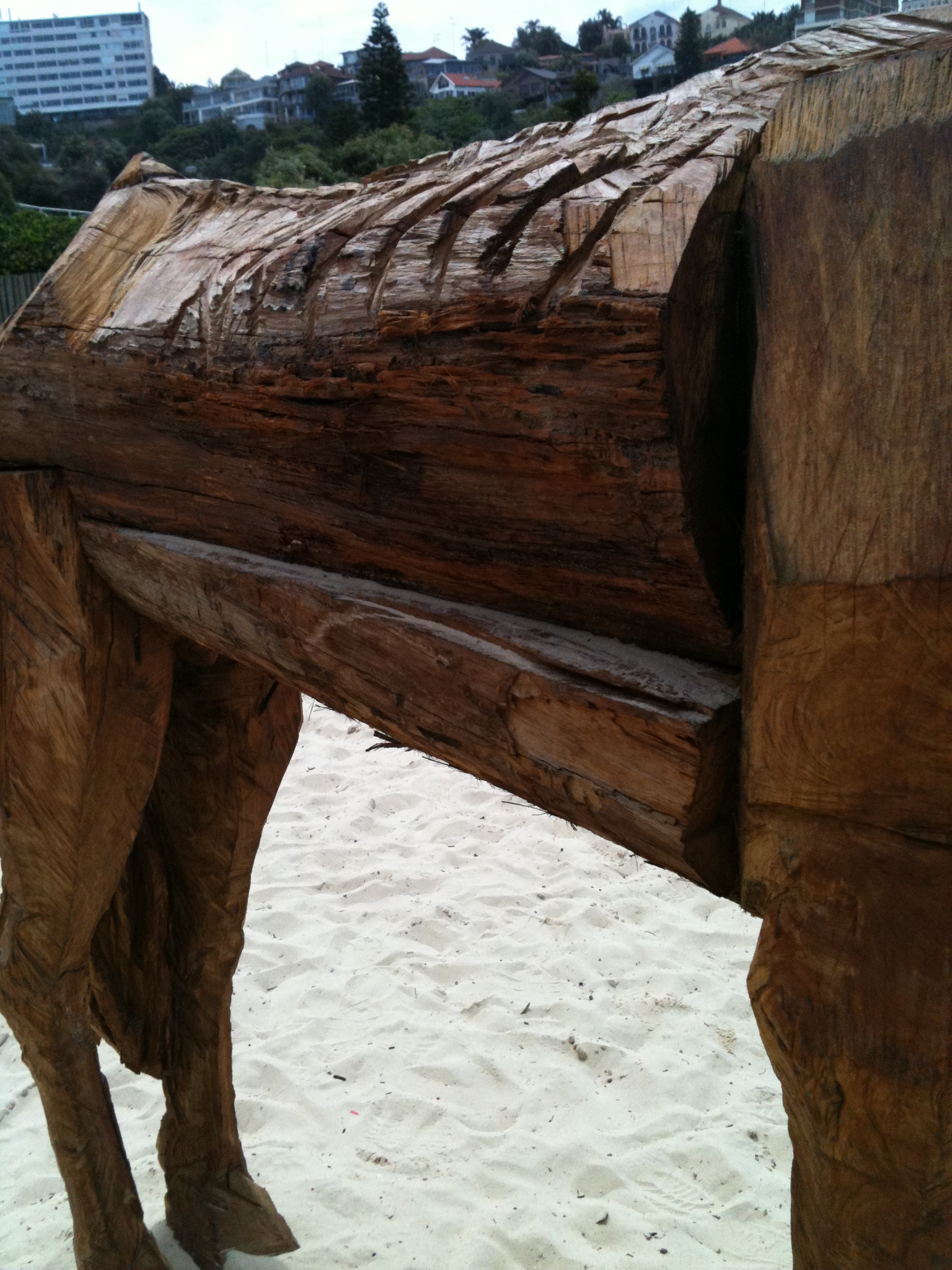
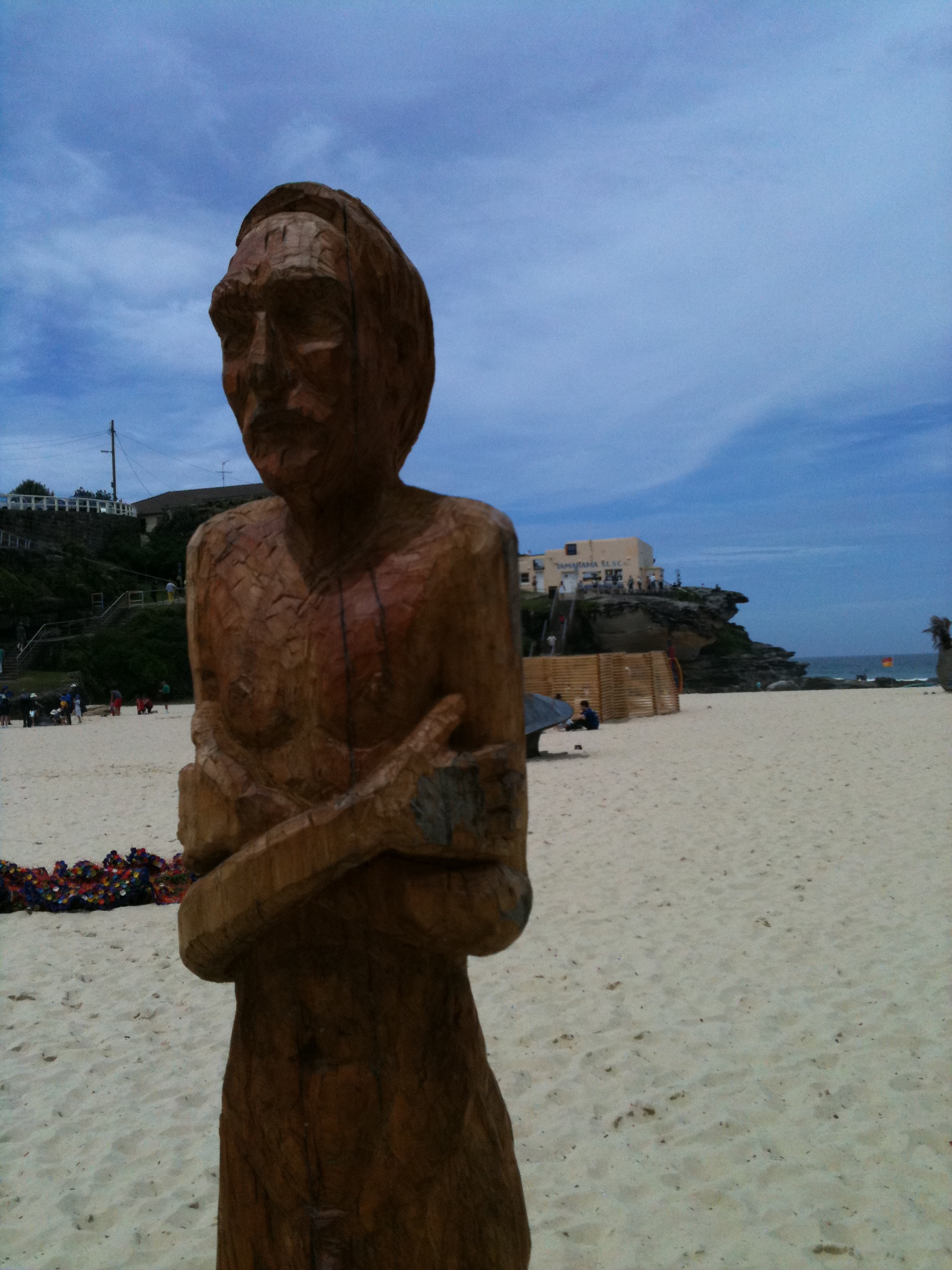
Weird weed things weep; a stringybark
man meets an old horse on some dark
grief-stricken shore; a corrugated
iron pair look up with bated
iron breath; a steel key
rolls turf back like a sardine can;
smooth abstract beauty from Japan.
These dream things teach our eyes and we
look round: two shags pose grace to grace,
the shelf below’s awash with lace.

If you’re interested, the handful of sculptures singled out for mention are:

  • Jennifer Orchard’s ‘Weeping Weeds’, a gathering of her ceramic Plantpeople and Plantanimals
  • Stephen King’s “Hello Mate” which got my vote for the People’s Choice Award, pics snapped by the Art Student below
  • Hannah Kidd’s ‘The Sky Is Falling’
  • Mimi Dennett’s ‘The Irresistible Force
  • Any number of Japanese sculptures, but perhaps especially Keizo Ushio’s ‘Oushei Zokei  2010 Circle’ and Toshio Iezumi’s ‘M.100901’, also snapped by the Art Student, below.

Sculpture by the Sea  finishes this weekend. Do go!

Happy hundredth birthday, Arthur Boothroyd!

Today is Arthur Boothroyd’s hundredth birthday. Yesterday he came home from hospital, where he had been because of a chest infection. I posted about Arthur a couple of years ago. Here’s part of what I said then:

Yesterday afternoon Penny and I were walking the dog when we met Arthur coming the other way. Arthur lives three doors down from us. He’s in his early 90s and dealing with encroaching dementia and increasing frailty, but regularly walks to the park and back. When you encounter him on one of these walks he will make conversation from a small supply of stock phrases — about the weather, how lovely the park is, and not a lot else. Yesterday, his mode of progress along the footpath made me fear for his safety: he was tottering, as if the only thing that stopped him from falling forward with each step was act of putting out a foot for the next step. We stopped to say hello, and he put both hands on Penny’s shoulders, leaning in close to her. She asked if he needed help to get home, but he pooh-poohed the idea, even while prolonging the contact for the purpose, it seemed to me, of catching his breath and keeping his balance. After a little while, he asked, ‘Do I know you?’
…..
[Arthur] had been, in the 1950s and 60s, the main illustrator for The Australian Women’s Weekly: in those years, the AWW published short stories and historical features, and as often as not it was Arthur who provided the pictorial elements. He also illustrated a number of children’s books then and into the 90s. I googled him – “Arthur Boothroyd” minus everything that brings up a British audiologist of the same name — and discovered only a handful of references: the most common is to the booklet published to mark the opening of the Sydney Opera House, which he illustrated.

It’s not that Arthur is forgotten, or that he is without honour among the confraternity of illustrators. I mentioned him to a children’s illustrator the other day, just his first name, and she said, ‘Do you mean Arthur Boothroyd? I admired his work so much when I was starting out. He was what I wanted to be!’ He is known and loved by long-term Annandale dwellers. More than one person in our block cooks meals for him. But of all the people, both children and adults, whose visual imagining of Australian landscapes and histories were profoundly influenced by his Women’s Weekly work and his children’s books, how many have even heard of him? A select few artists become household names and get headlines when a work is sold for a million dollars. The great majority fade away, and their work too fades. I think the least we can do is let them lean on us in the street to keep their balance and regain their breath.

Happy birthday, Arthur!

A Puppet Show for George Street

Wednesday night, Yuendemu at Gleebooks. Last night Java on George Street. Or close enough to justify the alliteration.

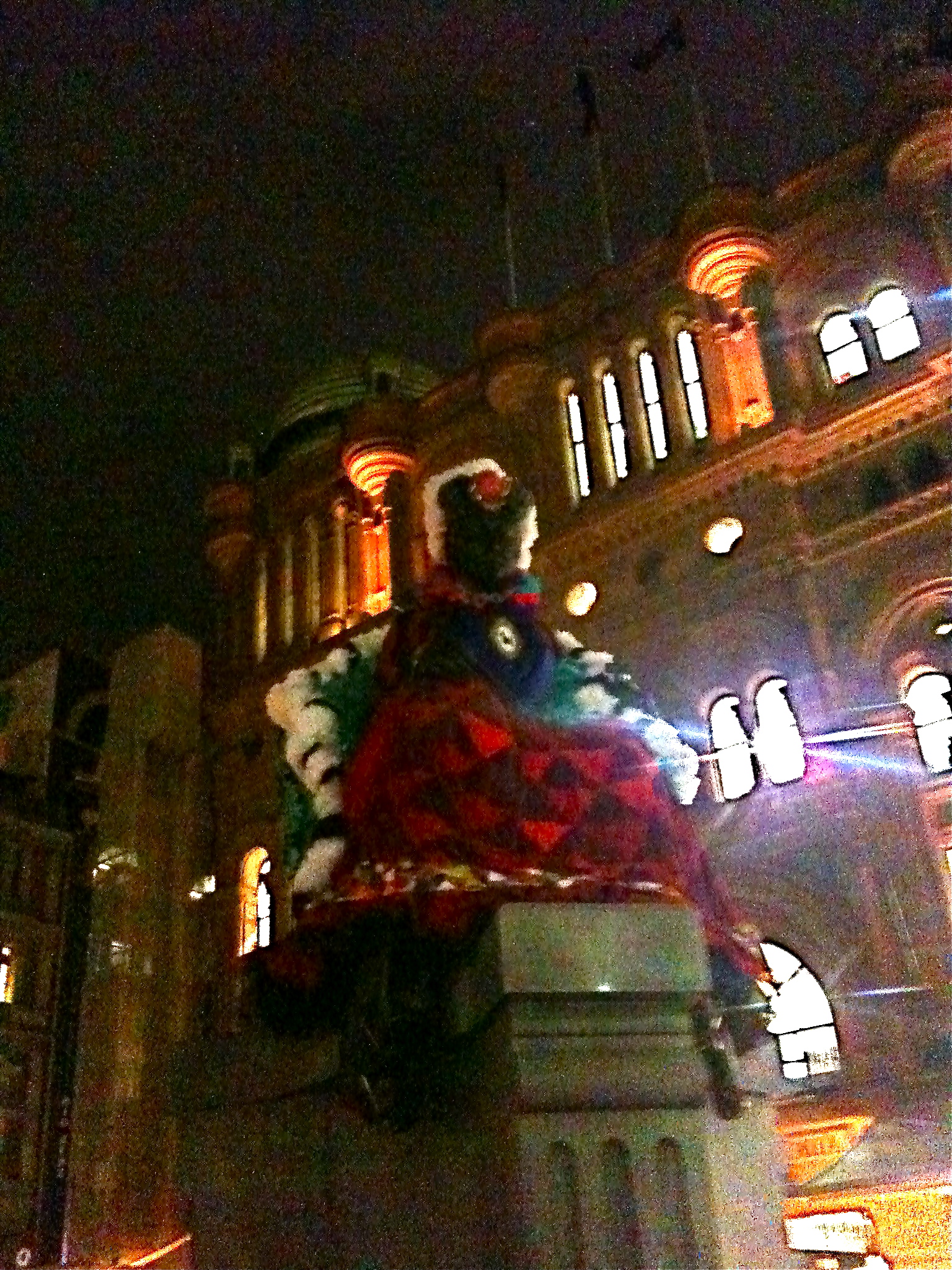
It’s Art and About time in Sydney, and among other things our civic sculptures are dressed for the occasion. Here’s Queen Victoria near the QVB, taken on my iPhone and then manipulated out of almost total blackness on iPhoto. She’s wearing a bright red quilted skirt, a white fuzzy bonnet, and, among other things, a huge cameo brooch with a dog on it slung round her neck.

Queen Victoria

Around the corner from the Queen, a number of exhibitions opened in the artist-run Gaffa Gallery last night. The one that had drawn us, and turned out to be the most interesting, was a solo exhibition by our young friend and neighbour Jesse Cox. (All but one of the others were photographic shows, with a lot of photoshopping, and about equal amounts of restrained elegance and garishly exuberant montage.)

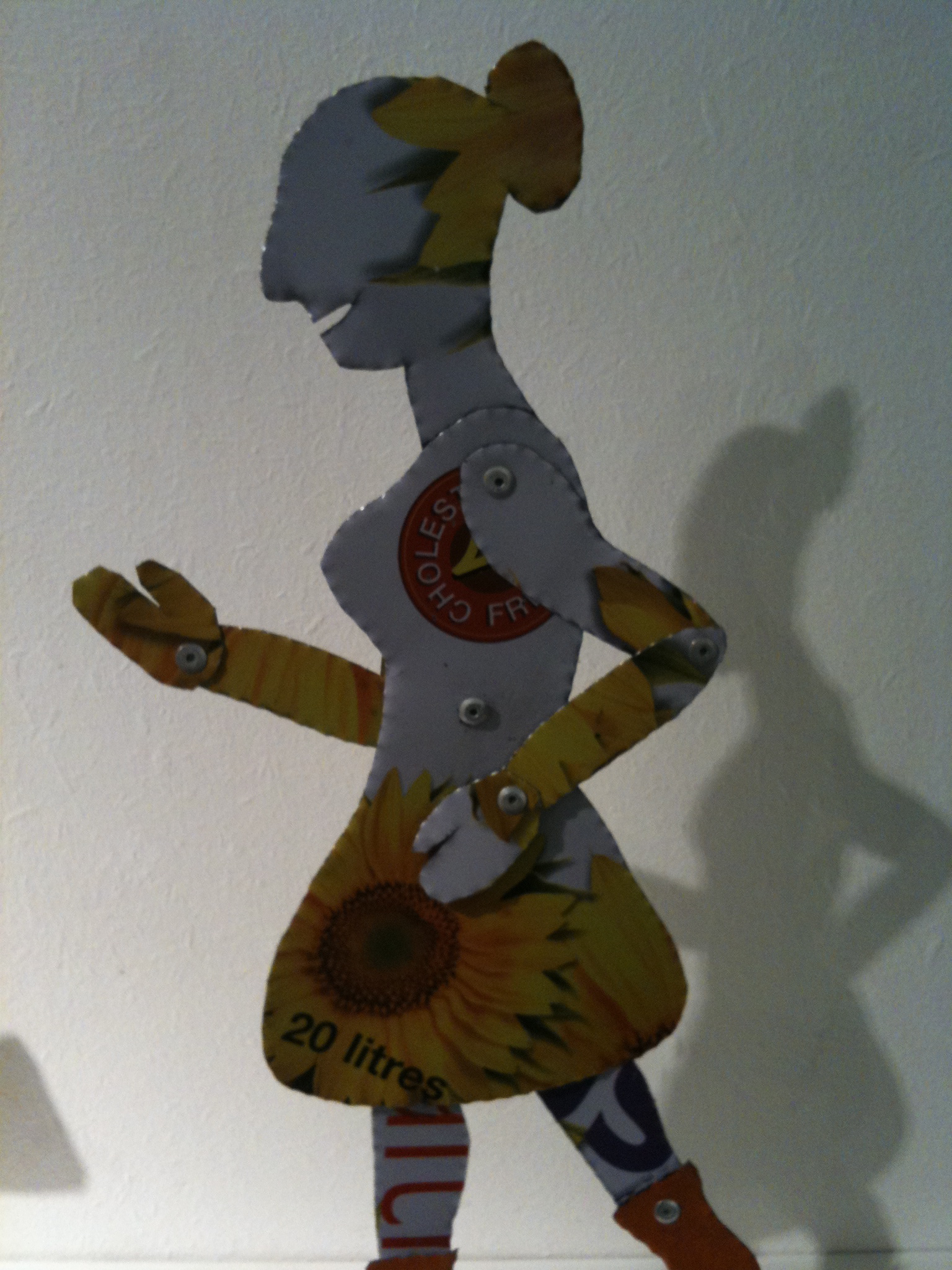
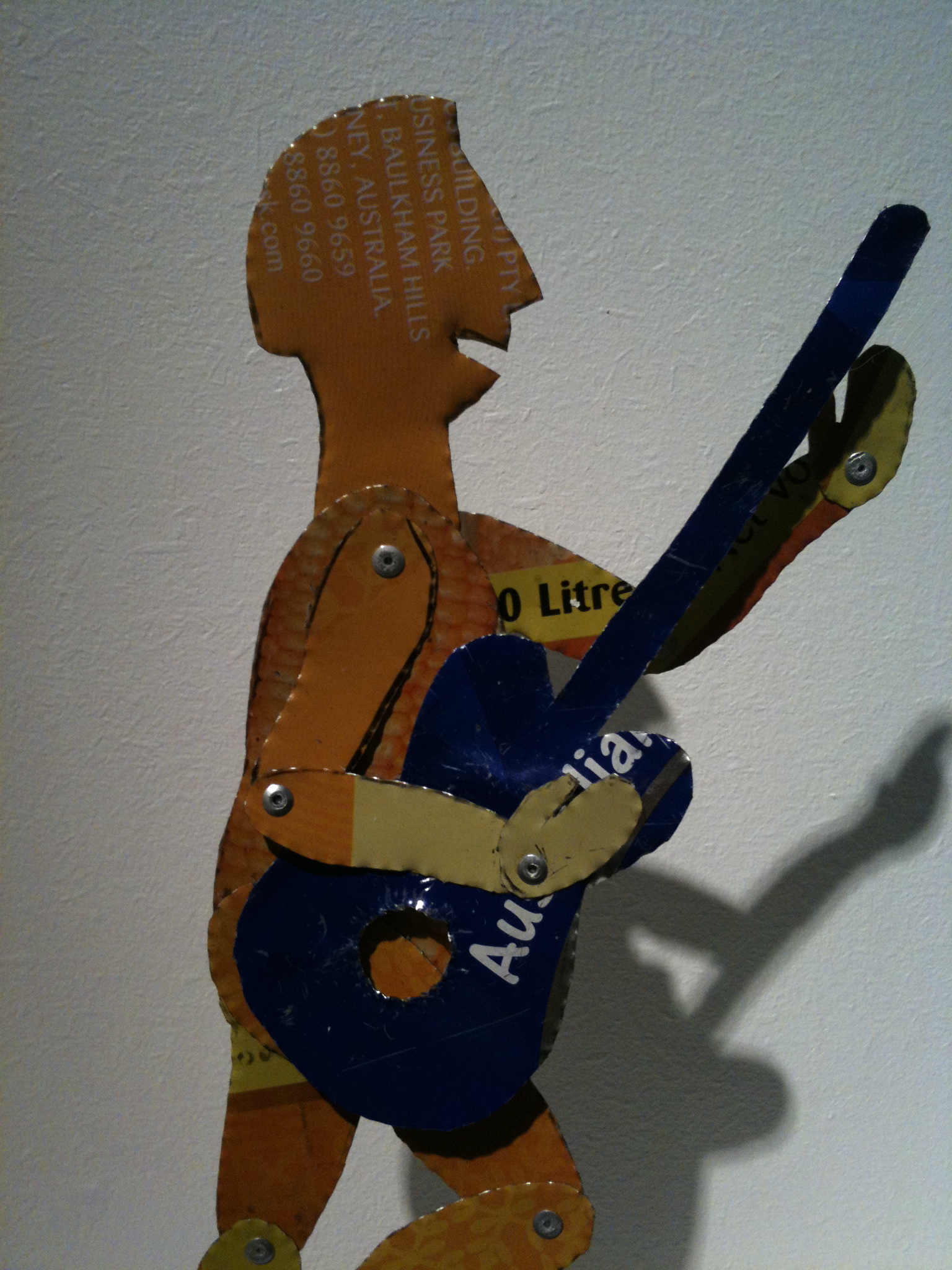
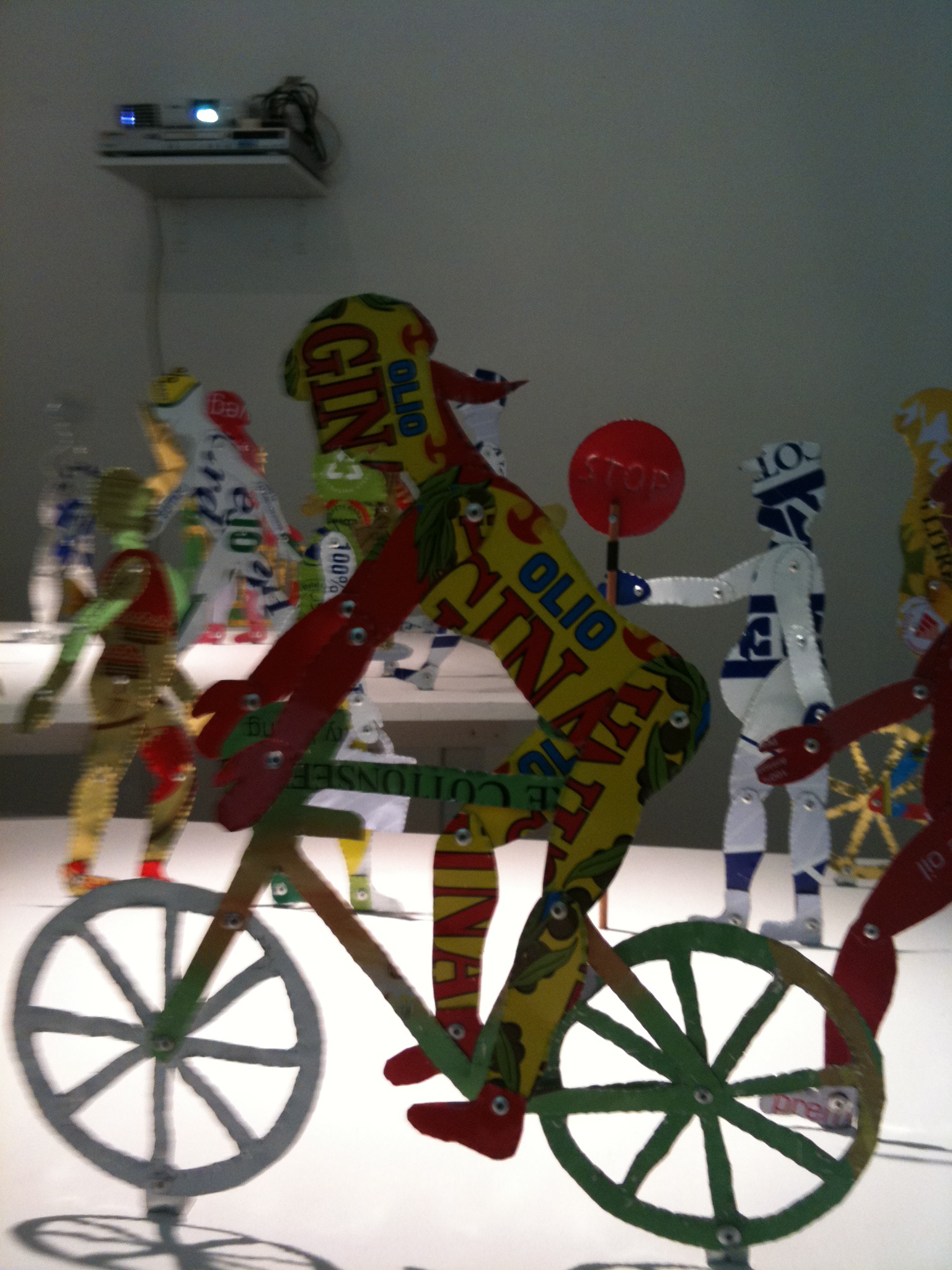
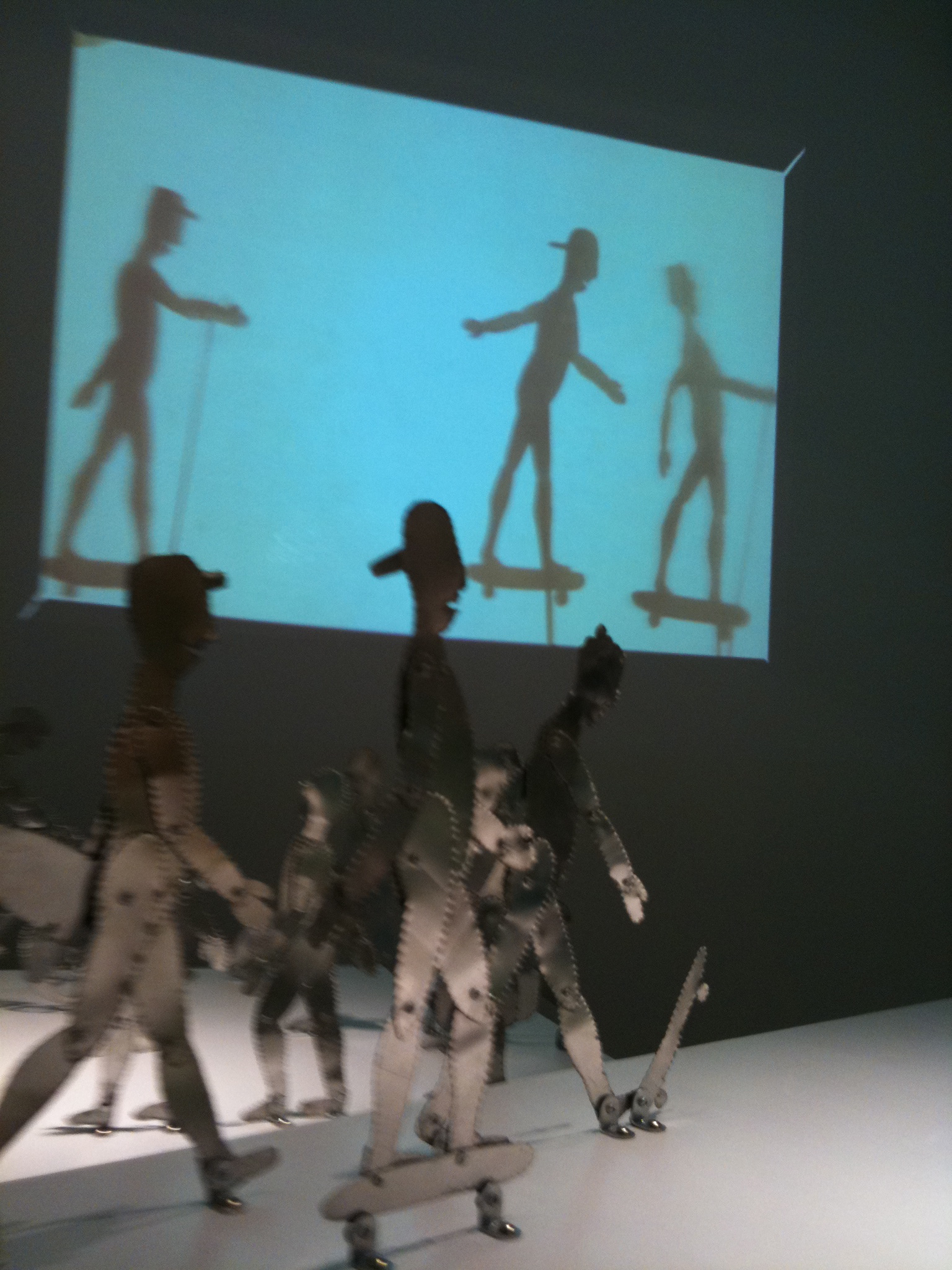
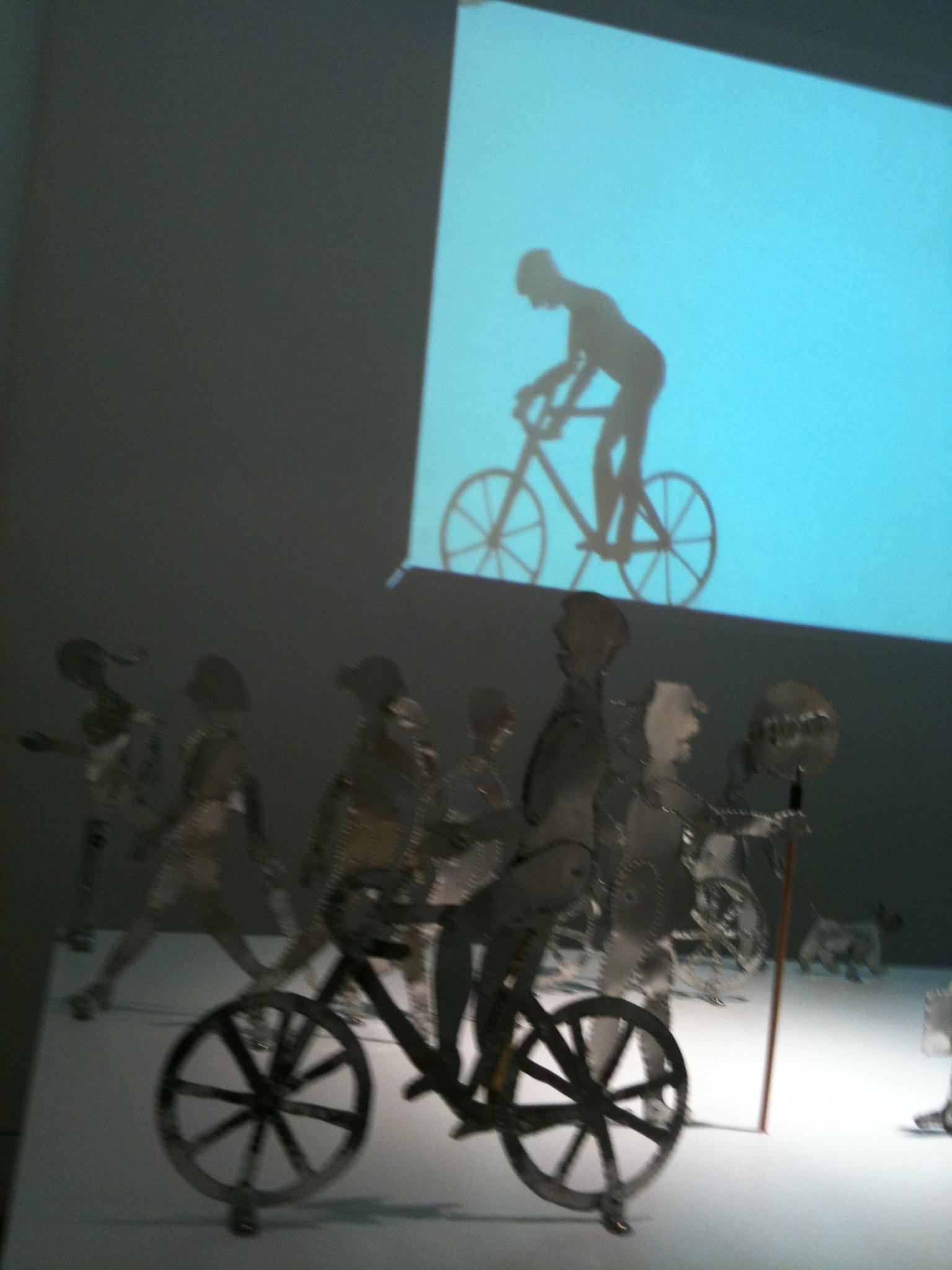
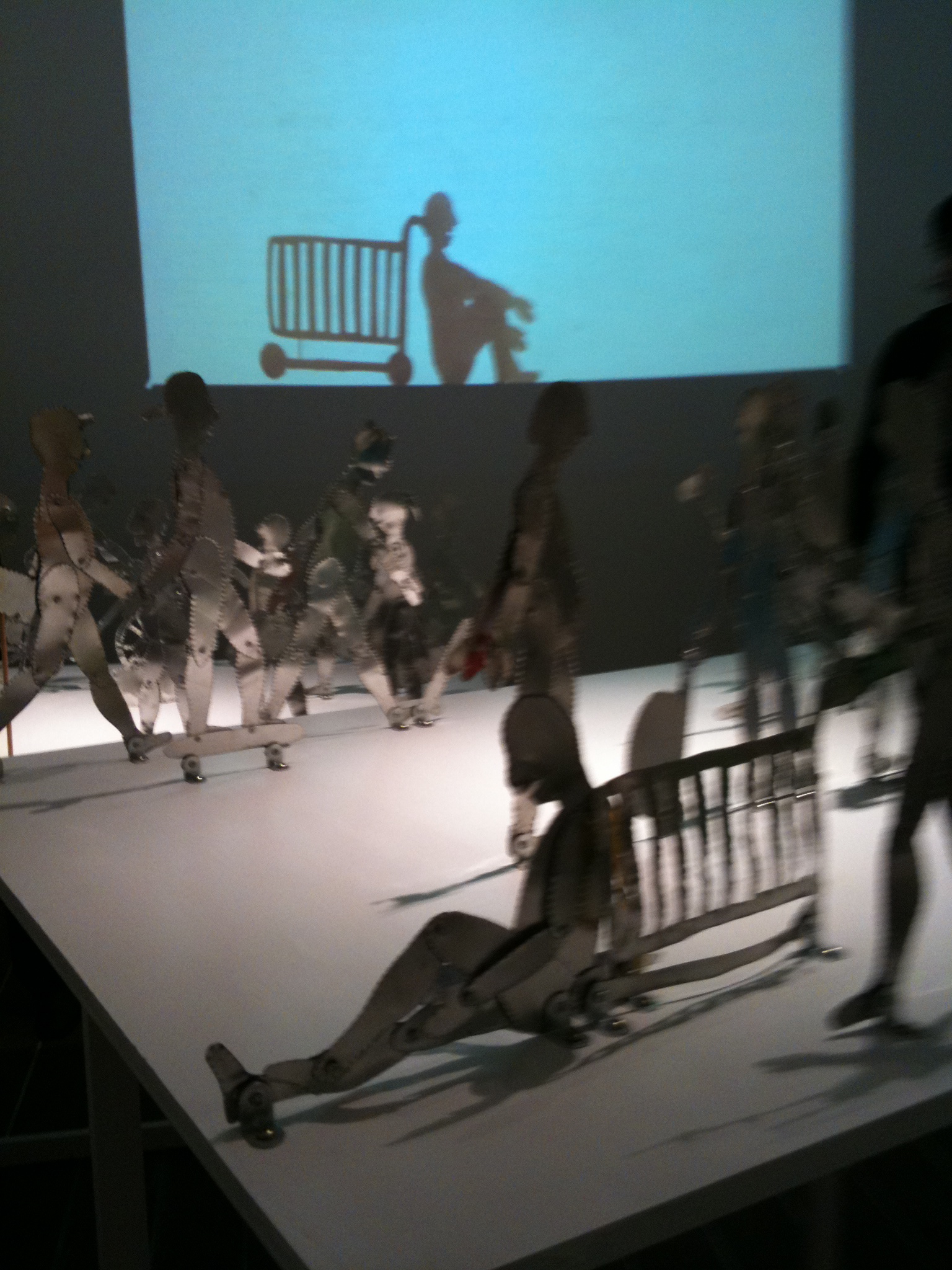
Jesse’s exhibition, A Puppet Show for George Street, is two rooms full of shadow puppets made from used oil drums scavenged from nearby restaurants. There are bicyclists, figures carrying briefcases, umbrellas, mobile phones, walking dogs, riding skateboards, wheeling shopping trolleys – two-dimensional figures cut from old tin with rivets at the joints. There’s some appealing verbal wit – the fat man walking a dog has ‘Cholesterol” printed all over him; one of the kissing lovers has a Heart Foundation tick on his chest. But the main charm is the way it refers to Javan Wayang Kulit.

As someone said, as we watched the video loop of the puppets in action, we half expected that at any moment a dragon would appear.

The other non-photographic exhibition is ‘PARK/PARK‘, a record of an event on Park(ing) Day earlier this year. According to the Park(ing) Day web site, it is ‘an annual, worldwide event that inspires city dwellers everywhere to transform metered parking spots into temporary parks for the public good’. This particular transformation involved a cardboard cut-out car and similar tree – the artists sat in the car until the meter expired, sipping tea.

All four exhibitions are open until 5 October. Art and About is all over town until 24 October.

School Holidays are almost over

School holidays are almost over and the Art Student will soon gone back to her normal routine. It has been lovely having her about the place, but it will be a relief when the holidays are over.

We’ve been up to quite a lot:

• We visited Michael Callaghan’s exhibition The Torture Memo at the Damien Minto Gallery. Text  – phrases from the ‘war on terror’, a mediaeval Arabic poem – side by side in English and Arabic, combine with images  to powerful effect: realistic water pours from a plastic bottle down the middle of the canvas with text on water boarding on either side, and a blown up woodprint showing that form of torture being carried out in the Spanish Inquisition; a hooded figure with vulnerable looking hands the only visible parts of his body against a background of text and splattered blood. Michael’s political posters have been around for at least four decades – it’s great to see this new work in a gallery, as intelligently provocative, and beautiful, as ever. Some of the large works have been bought by the Australian War Memorial.

• We got out of town for a couple of nights, stayed at Bundanoon, the small town on the southern highlands that was celebrating the first anniversary of its decision  to no longer sell bottled water. It was wet and bitterly cold (by Sydney standards – I realise that 0oC is balmy to Alaskans and others), and though the town’s Mid-winter Festival was in full swing, we mainly played Scrabble beside a wood fire, dining at the local Chinese restaurant and the Suffolk Forest pub bistro. We drove the extra ks to Canberra on our full day, to visit the National Portrait Gallery (how a newborn baby must feel, fascinated by human faces, but surrounded by far too many of them to process comfortably) and the Hans Heysen exhibition at the National Art Gallery. It turns out I can’t get enough gum trees, though the Art Student grew weary after the first hundred of so. We both loved the later, stark Flinders Ranges landscapes.

• We popped in on an Elisabeth Cummings exhibition and narrowly avoided buying a small etching – I’m not sure why we avoided it, as we both loved the painting and both thought it was probably a wise investment. And on the same trip to East Sydney we had a look at Euan Macleod’s riveting Antarctic landscapes.

• We strolled around some fetching Victoriana at the Art Gallery of New South Wales, because the A-S had to write an essay about two of the paintings. While we were there we paid good money to see Paths to Abstraction, which included any number of wonderful 19th and 20th century paintings but left me no wiser about abstraction. Between the Nabis and the Cubists, I ran into a friend I hadn’t seen for 30 years – and given that I have a bit of a reputation for vagueness I’m glad to report that I recognised her. We gratified each other by knowing bits of recent news about each other’s family. This alone made the exhibition worth the price of admission.

• I nearly forgot to mention that on the way back from Bundanoon we made a detour down Bong Bong Road at Mittagong to visit what is now The Hermitage but for three and a half years in the mid 1960s was my home when I was in training to be a Marist Brother. We’d intended to drive around the buildings and be on our way, but we bumped into one of my coevals, still a member of the order, who turns out to be Guestmaster (a church title, as he said) of what is now a retreat centre there. He showed us over the place, which of course bears no resemblance at all to the drab, chilblain inducing environment of our youth. Given that most mentions of the Marist Brothers in the mainstream media these days are to do with sexual abuse, it was a real shot in the arm to be spend time with my old friend Paddy, getting a sense of what he and the others who have stayed in the order have been up to. The place is full of ghosts, some of them still living (one of them in a tiny personal hermitage in the middle of a cow paddock), almost all of them benign.

On the home front, the Art Student’s studio has invaded the sitting room: an easels, a cheap mirrors (for self-portayal purposes), linocut gear, scanned images, scraps of paper, tubes of paint, the occasional fellow artist.

Life is good.

Sydney Biennale

Today the Art Student and I popped into town with a visiting Melburnian friend to stroll around the MCA for a couple of stimulating hours. It was our second excursion to the Biennale. We went out to Cockatoo Island a couple of weeks ago, but I didn’t make the time to blog about that, and to judge by the program we missed some of the most interesting things out there. We did see Cai Guo-Qiang’s Exploding Cars, walk on the shanty town rooftops of Kadia Attia’s Kasbah, and chortle uneasily at Shen Shaomin’s Summit. Today we were greeted at the door by two of Shen Shaomin’s bonsai works, which at first glance deliver much less punch than the realistic corpses of Communist leaders in Summit, but after we’d seen half a dozen of his tortured trees, even without being able to read the ideograms describing how they had been manipulated, we treated them with due respect.

The  walls of the first large room at the MCA are covered with big colour photographs, a hundred pairs of which one is a domestic space and the other a person standing back to camera. I imagine there are people who are capable of standing in this room and spotting the unifying motif. I looked up the program and told my companions and one or two other people – no one complained about the spoiler. (If you want to know more, you can click here.) The artists, Sun Yuan and Peng Yu, created the memorable Old People’s Home, which we saw in Tokyo last year.

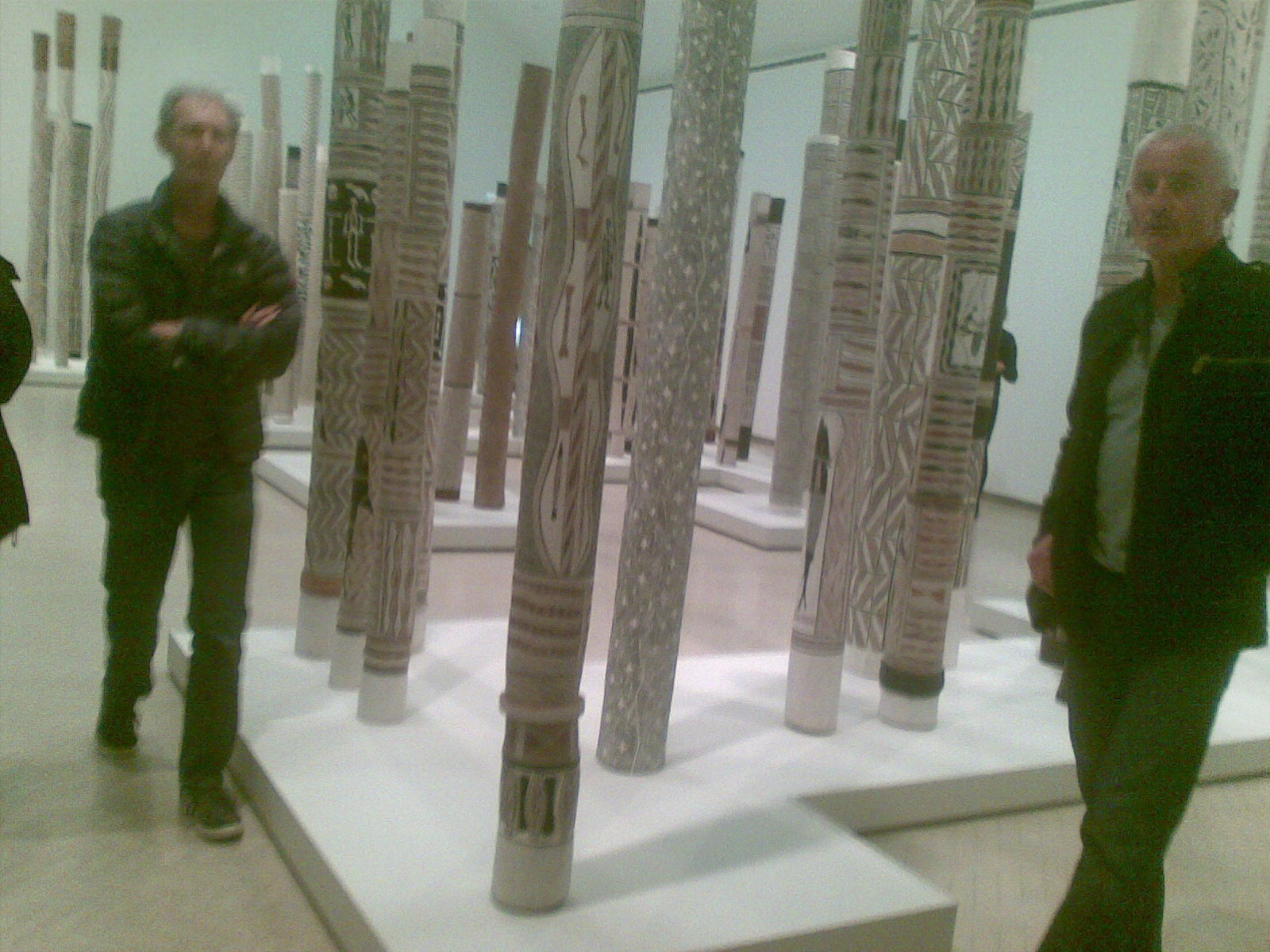
There’s far too much in this exhibition for one visit, or one blog entry. I was struck by the amount of Indigenous art – from Australia, of course, but also from New Guinea, the Arctic, the Americas and Europe. One large room on the top floor is devoted to 110 larrakitj (memorial poles) by 41 Yolngu artists from East Arnhem Land, and it’s a knockout. There’s brilliant trompe l’oeil, wonderful sculptural play, images reminiscent of the Mexican Día de los Muertos, shimmer to make your eyes water. A place to just stand and stare. I took my one phone photo there. It might give you some idea.

I tend to skip video installations in art galleries, and I saw at least two pieces today that confirmed my expectations of amateurish sound recording / acting / design, and did less than nothing for me. But Bill Viola’s Incarnation is totally magical. Two naked people walk towards the camera in slowmo, and it turns out that the graininess of the image is caused by a veil of water falling between us and them. They walk through the veil and are suddenly clear and in full colour. After a long moment, they turn around, go back through the water, and walk away until they vanish into the granularity of the screen. Araya Rasdjarmrearnsook’s video triptych is a delight of a different order. On each of three screens a life sized print of a famous nineteenth century European painting is set up in the open air in front of a group of Thai peasants, who sit with their backs to the camera and chat among themselves, mostly about the painting. We get subtitles. The naked woman sitting with clothed men in Manet’s Déjeuner sur l’herbe provoked quite a bit of anthropological speculation: ‘I suppose it’s cooler to go like that in hot weather’ ‘Is it a funeral custom?’ etc. Millet’s Gleaners and Van Gogh’s Midday Sleep were less mysterious, but there was much discussion of the exact nature of the crops and activities in each picture, the weather and the state of the fields. Not for these peasants our cringing sense of inadequacy when confronted with what we’ve been told is Great Art.

There was a lot else. Angela Ellsworth’s Seer Bonnets, beautiful to the eye, are made of pearl headed pins, thousands of them, all viciously pointing inwards to where the wearer’s head will be.  Louise Bourgeois has made fascinating sculptures from old clothes. Salla Tykkå’s video Victoria spends 10 minutes watching a waterlily bloom and grow, possibly in a greenhouse in Kew Gardens in London.

We had lunch in Glebe, and drove our friend to the airport less sure that Sydney is Philistine-ville. Then I realised I’d lost my wallet and will now draw up a list of all the cards I need to replace.

An acquisition

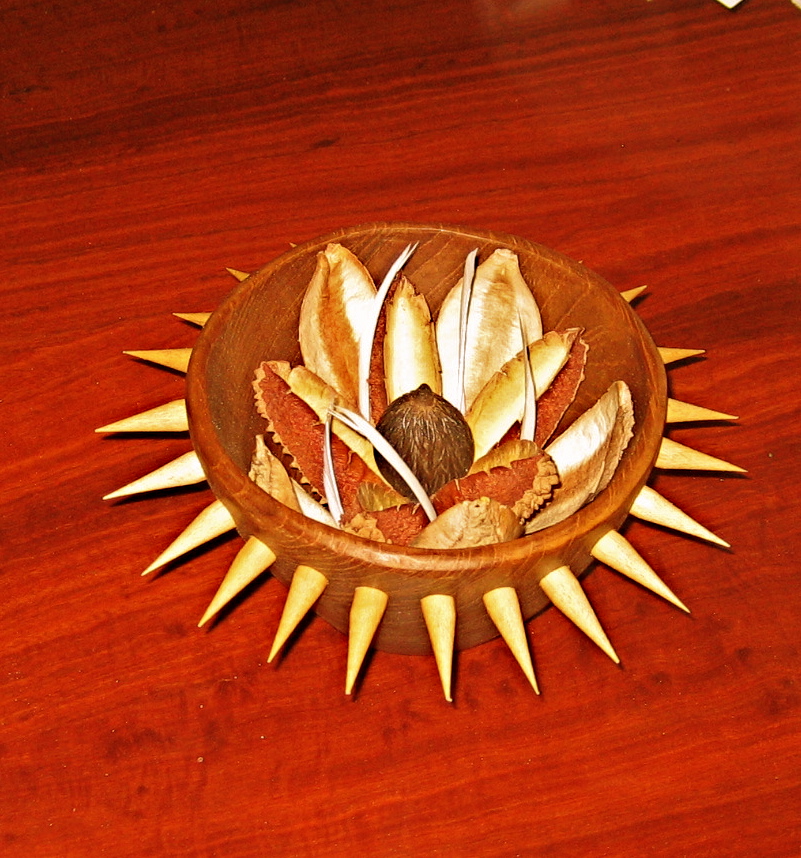
I dropped in at Little Queen Street today to pick up Steven Vella’s small bowl, which we bought a couple of weeks ago.

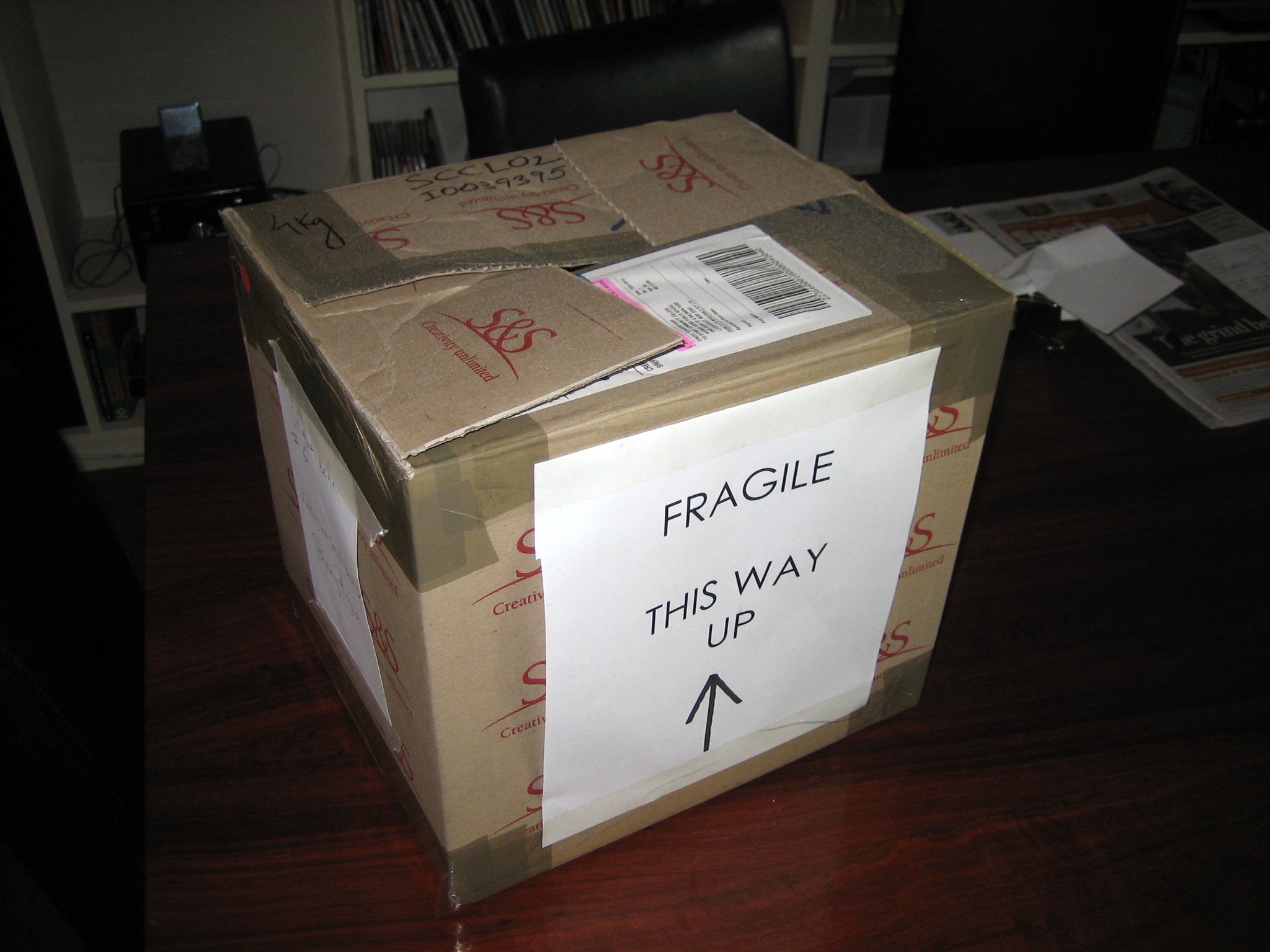
Here it is nestling in its bed of polystyrene:

Out of the box:

On the wall, though we have yet to find a place where its shadow is as dramatic as in the gallery:

Greg Weight and Western Desert Artists

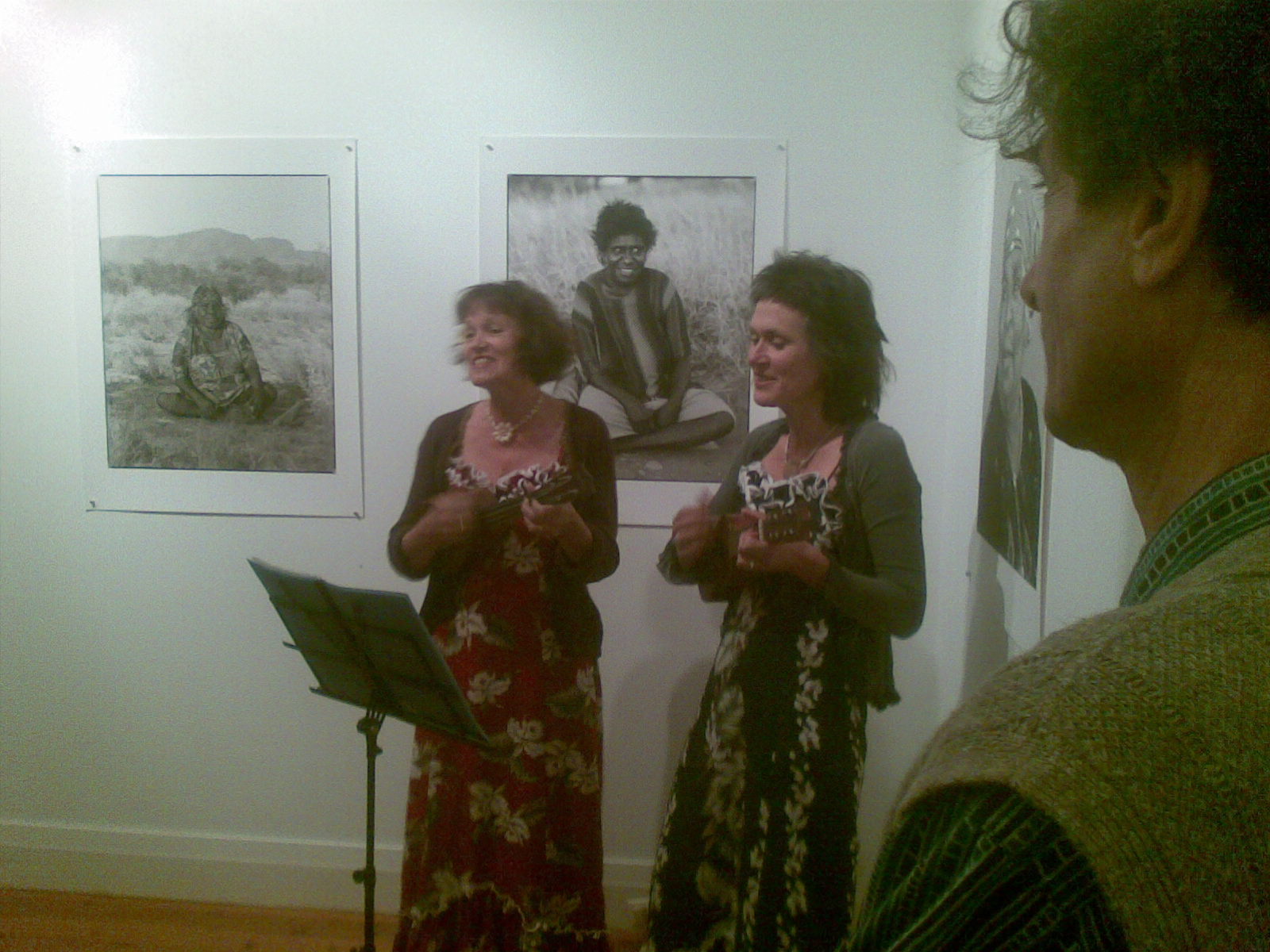
At least one of my regular readers would have loved to be at the Gallery East opening this evening [All turn and look at Will]. Greg Weight’s ‘Artists of the Western Desert’ comprises eleven portraits of Western Desert artists – from Kintore, Haast Bluff, Yuendumu and Alice Springs. The opening was a small, even intimate gathering. I recognised a number of stars of the art world, but someone explained that they were there as neighbours and old friends of Greg and Carol Ruff, his partner and the owner of the gallery, rather than as A-listers.

Long Jack Philipus Tjakamara dominates the gallery’s front window.

In lieu of speeches, Carol Ruff and friend played ukulele and sang – among other things, Carol’s own song ‘Finding Love in CLOVElly’ – and were joined on the bongos by the artist photographer, seen here in the right foreground. The Indigenous artist beaming down from the wall is Yukultjii Napangati, a Pintipu woman who came in out of the desert in 1984 when she was about 14 years old.

The exhibition lasts until 23 May.  If you miss it at Clovelly, you may be able to catch it at the Musée Branly in Paris in the next year or so.

Steven Vella at NG Galleries

It seems decades ago, and it probably is, that my eldest niece was living in Sydney with a number of creative young men. The Art Student and I have just come in from the opening of an exhibition of splendid art created by one of them. Steven Vella’s Garden of Natural Wonders [Do click on the link and scroll along for some of the pieces] is the kind of exhibition that has you looking constantly from the artworks to the catalogue sheet, not to see what the piece is called, though some of the names are revelatory, but to see what materials it’s made from. It’s a gleaner’s equivalent of the treasury of a renaissance church, with bean pods, palm inflorescence, feathers, banksia seed in place of precious stones and metals. The religious dimension of that comparison isn’t too wide of the mark – there’s at least one cross, a couple of stupas, and a wall of ceremonial staffs that remind me of the theatricality of Mediterranean Catholicism. Steven’s North Queensland provenance and his Maltese heritage are both strongly present. But then the room is dominated by ‘Medusa’, which if not for its gorgeous flowing lines could be a homage to the Flying Spaghetti Monster:

But you know, my favourite piece is probably ‘Aunt Bibi’s Salad Bowl’, one of the smaller works, which assembles durian skins and a vintage teak bowl, among other things, to create a weird, spiky, domestic icon. Sadly I can’t find a photo, so if you want to see it you’ll have to go there yourself.

The NG Art Gallery is in Little Queen Street, Chippendale, just around the corner from the White Rabbit Gallery, and the exhibition will be there until 8 May.