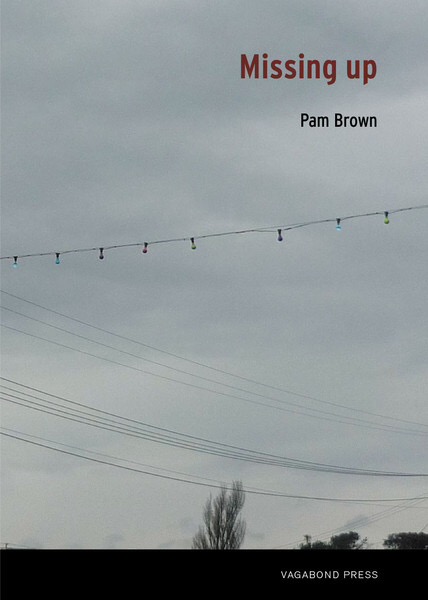
This is my mandatory round-up post about the Australian Women Writers’ Challenge 2016. I undertook to read 10 books by Australian women writers. I read 14, which ranged from revelatory and richly entertaining to definitely meant for readers who aren’t me. Here they are. I’ve tried to be clever with the lay-out. My apologies if it shows up on your screen as a jumble.
My general gender stats: This year I read 39 books by men and 31 by women.This includes at least five (the Y: The Last Man series) that were jointly written by a man and a woman.
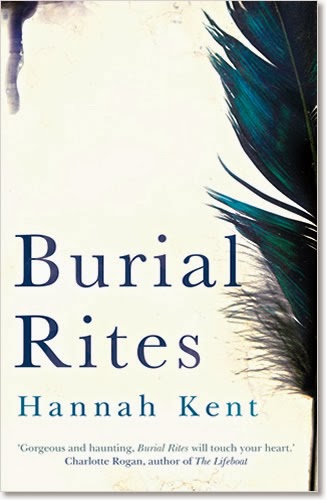
Before the meeting: This book is based on the real story of the last woman to be executed in Iceland, an event that happened in 1830. My knowledge of Iceland, which comes mainly from photographs of stark, beautiful, treeless landscapes and Grímur Hákonarson’s movie Rams, led me to expect that any novel set there would be grim. So a novel culminating an execution could only be more so.
Grim or not, I loved it. I’ve raved about it to people met in the park, and barely restrained myself from reading bits aloud to the Emerging Artist (now known as the Heart Lady, but that’s another story).
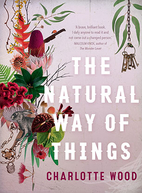
At the beginning Agnes, convicted of brutally murdering her employer, is being transferred from one place of imprisonment to another. She is filthy, malodorous and barely able to speak. (Interestingly, her condition at the beginning of the novel bears a striking resemblance to that of the women towards the end of Charlottte Wood’s The Natural Way of Things, which I imagine was being written at the same time as this.) While awaiting execution, she is sent as a cost-saving measure to live with the family of a local official who lives near the planned place of execution.
The main narrative follows Agnes’ developing relationships with members of the host family: father, mother and two young adult daughters. At first the family are convincingly and reasonably horrified that they will have to share their house with this monster, though right from their first encounter the mother of the household is even more horrified at the way Agnes has been treated. A young trainee clergyman is assigned to attend to Agnes’ spiritual needs. Against the advice and instructions of his superiors, he refrains from preaching sternly at her and instead encourages her to talk to him. Because of the size of their dwelling and the bitter Icelandic winter, the family hear much of what passes between them, and we learn her story along with them. As you’d expect from the set-up, in the process they come to see her not as a monster but as a fellow human – more a servant than a prisoner.
All of that is beautifully done, though the story Agnes tells, a story of love betrayed, is less compelling than the circumstances of its telling. And then there is the narration told direct to the reader from Agnes’ point of view. This is where we learn Agnes’ inner story – the erotic experiences that she can’t speak of, and her emotional life. In these sections Hannah Kent’s writing, never less than elegant elsewhere, is rich and poetic without being hi-falultin, so that I for one was completely drawn in. I don’t remember ever being so caught up by a deft use of similes. Here’s a passage from fairly early on, when Agnes has begun to work again, trusted to use a scythe:
I let my body fall into a rhythm. I sway back and forth and let gravity bring the scythe down and through the grass, until I rock steadily. Until I feel that I am not moving myself, and that the sun is driving me. Until I am a puppet of the wind, and of the scythe, and of the long, slow strokes that propel my body forward. Until I couldn’t stop if I wanted to.
It’s a good feeling, not quite being in control. Of being gently swung back and forth, until I forget what it is to be still. Like being with Natan in the first months when my heartbeat shuddered through me and I could have died, I was so happy to be desired.
The book’s power has something to do with the strong sense of a particular time and place. The world-building, to borrow a term from SF/F discourse, is extraordinarily convincing. In her acknowledgements, Hannah Kent says she set out to write a ‘dark love letter to Iceland’. She has succeeded in spades.
The meeting: As it was the last meeting of the year, we ate at the new (to most of us) Tramsheds in Glebe, and gave each other gift-wrapped books from our shelves. As always in restaurants, the background noise was a dampener in general conversation. But we all enjoyed the book. Someone compared it unfavourably to Halldór Laxness’s Independent People, saying that at times Burial Rites broke free of its early 19th Century Icelandic setting and resorted to tropes from 20th century romance fiction. Specifically, if I understood him correctly, Agnes’s internalised sense of the master–servant relationship vanished too easily and was replaced by an anachronistic expectation of romantic love and fidelity. In general we could see what he meant. Likewise, we all agreed when someone said that it was obvious what was going to happen from the very beginning: the family would soften towards Agnes, and her story as it emerged would reveal either innocence or major extenuating circumstances. Neither of these criticisms dampened the general enthusiasm for the book.
There were some mostly audible, goosebump-inducing readings of passages our Post-it warrior had marked.
Then we cheerfully turned away from the spartan, claustrophobic and bitterly cold world of the novel and enjoyed a meat-heavy meal in a flash new restaurant whose menu names the farms that provide the animals they serve up to their customers.
The verse, my last for this November:
November Verse 14: The Book Group Chooses What to Read Next
 Ben stands and says he must be going:
 'Shall we decide the next book now?'
 'No time for all the to and fro-ing
 before you leave,' says Ian. That's how
 just seven of us made the vital
 choice of our next Book Group title.
 Not Watson's Bush, that's far too long,
 not more Houellebecq, that's just wrong.
 No to Solnits, Coetzee, Gorton.
 Steve says, 'How about Don Juan?
 I mean Quixote. That's a yarn
 I'd like to read.' That one caught on.
 And after complex back and forth
 we lit on Shakespeare's Henry Fourth.
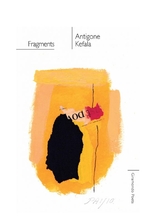
The final issue of Ivor Indyk’s literary journal Heat, published an astonishing 6 years ago, included an interview of Antigone Kefala by Amanda Simons. The conversation ranges widely, from Kefala’s ‘scribbling’ in her childhood home in Romania before World War 2, over the role her mother played in her creative life, to the critical isolation that comes from being classified as an ‘ethnic’ writer. She says this about poetry:
It is a medium that has its own directions. It comes when it wants to come, doesn’t come when it doesn’t want to come. You can never force it, you have to wait for it.
Fragments is a collection of 61 poems that feel absolutely unforced in that way, almost as if each poem catches an unbidden thought, or dream, or observation, or burst of emotion, and finds a precise form of words for it. If they are fragments of some greater unity, the book is not concerned to find that unity, or to explain contexts, but invites us to focus on each fragment in its own right. Take the first poem:
The Voice
At the sound
I turned
my veins full of ice
that travelled
at high speed
releasing fire.
This return
the past attacking
unexpectedly
in the familiar streets.
The speaker hears a voice from her past. Perhaps it’s associated with a terrible memory, or it might remind her of the voice of a loved one who has died. The poem isn’t interested in the specifics, nor in what happened next. Did the speaker approach the owner of the voice, did she go about her day as if nothing had happened or was she shaken to the core? The poem doesn’t go anywhere near these questions. It focuses tightly on the moment of hearing, and renders it with wonderful precision and complexity: there are the explicit images of ice and fire, and possibly an implied reference to the kinds of warfare that turns city streets into war zones. It’s not ‘difficult’ poetry, but it rewards you for time spent in its company.
The poems, only a handful of them much longer than the first, are divided into five sections. Here’s my guess at their organising principles:
a thematic introduction: poems of memory and loss, dream renderings, observations of social life, dark love poems
evocations of places, mainly Australian, including a scene from the movie Wake in Fright
poems of grief, loss and impending loss
dreams and visions, surrealism and metaphysics
social poems – quick character sketches, satirical jabs, laments, a little politics.
In the Heat interview, Antigone Kefala observes that ‘we ethnics are constantly being compared to other ethnics, but not to Australian writers’, and asks if her interviewer has ever seen a comparison between her work and that of Les Murray. Well, perhaps with that quote working at the back of my mind, I found myself making just such a comparison. Here’s her poem ‘Weapons’ – I hope it’s OK to quote it in full:
Weapons
Ruins
corpses in the sun
men moving cautiously
in the abandoned streets
close to the scarred walls.
Men on top of houses, hills,
coming from dark undergrounds,
men holding on, hugging
these metal erections
firing them
a spray of semen
rushing with velocity
to breed another race of killers.
The evocation of the battle-zone is followed by what at first looks like crude, even trite feminist anti-war rhetoric – the gun as phallic symbol – which becomes almost shockingly explicit with the ‘spray of semen’, and then is brought home in the powerful last line: this isn’t just emotive rhetoric, there’s a strong idea here.
The poem reminded me of Les Murray’s ‘I wrote a Little Haiku‘, which similarly compares bullets to semen. In Murray’s poem, the molten bullets drip from a burning farm rail, and he sees the drip as ‘the size of wasted semen / it had annulled before’. It’s the visual image that counts: one’s response is to admire the poet’s mental agility in seeing such a comparison: the notion that the bullets had ‘annulled’ real semen when they were fired in the past – that is, they had killed young men and so prevented them from fathering children – is almost a melancholy afterthought. In Kefala, the visual image matters, but the force of the poem is in its idea. We’re not invited to admire her cleverness, so much as to dwell on what she has unearthed.
Oddly, the comparisons that came to mind most strongly as I read this book are with Bob Dylan and Leonard Cohen, both of whom have grappled with ageing in their recent work – Dylan’s ‘Mississippi’ for example, or Cohen’s heartbreaking ‘I’m Leaving the Table’. Kefala too brings a ruthless eye to the experience of ageing, and at the same time, like those two writers (in other ways very different from her), conveys a deep joy in living and creating. I love the bitter-sweet final lines of the book’s last poem, ‘Metro Cellist’:
we were floating on sound.
The earth was singing,
singing in an exuberance
of youth.
Fragments is the thirteenth book I’ve read as part of the 2016 Australian Women Writers Challenge. I am grateful to Giramondo for my free copy.
—–
As my regular readers will know, I have a self-imposed task of writing fourteen 14-line verses each November and putting them up on my blog. I was going to let this post go by to avoid putting any of my verse on the same page as Antigone Kefala’s infinitely superior work, but then I read her saying in the Heat interview that she could not write a sonnet: ‘You know how writers do exercises in terms of poetic forms; I have never been able to do that.’ Perhaps one day I’ll outgrow my attachment to the form of the Onegin stanza, but for now, here’s one more, an attempt to explain the joys of this attachment:
November Verse 11:
A turn of phrase, a half idea:
that’s enough for my first lines.
The path ahead is far from clear
but through mind’s muddle somehow shines
an argument. Then, as I’m seeking
rhymes and scans, the sense starts leaking
into somewhere unforeseen
and who knows what line eight will mean?
Six lines to go, and now I’m counting.
So much that I wish I’d said,
not on the page, still in my head!
Its all a mess. The panic’s mounting.
With luck I end my little song
as if I meant it all along.
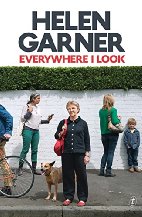
I’ve recently been surprised to hear a number of people refer to Helen Garner as ‘one of our great writers’. My surprise doesn’t come from disagreement. It’s just that hers isn’t writing that invites one to bow down in the presence of greatness. She’s less a Great Dane (or Grande Dame) making magisterial pronouncements than a terrier who keeps on at her subject until it yields some truth, her truth. She passes judgement often enough, and definitely enough, but not dogmatically, and not looking for a stoush either, but ready in case one comes along. A striking feature of Sotiris Dounoukos’ movie of Joe Cinque’s Consolation is the absence of the book’s persistent questioning – so when the end titles announce that, against the strongly implied judgement of the previous 90 minutes, one of the real-world characters was exonerated by a real-world jury, one tends to simply distrust the movie. When the book calls that verdict into question, you can disagree, but you can’t honestly dismiss it out of hand: the judgement has been honestly, and I would say humbly, worked for. (Perhaps its relevant that some of the harshest critics of Garner’s The First Stone refused to read it, or so I’ve been told.)
One of the pieces in this collection is titled ‘While Not Writing a Book’. That could have been a working title for the collection as a whole. It and a couple of others, including ‘Before Whatever Else Happens’, are presented as excerpts from the writer’s diaries/notebooks: overheard snippets, chance encounters, family moments, brief reflections. Another writer might have called them flash fictions or prose poems. Other pieces are more sustained: the product of a week locked away with CDs of Russell Crowe movies; reviews; sketches from the courts; wonderful pieces on her friendships with Jacob Rosenberg, Tim Winton and Elizabeth Jolly; glimpses of family life with grandchildren and, once, a dog; a revisit to her relationship with her mother; reflections on the ukulele, the ballet, suburban life; and more, enough to keep her readers interested between This House of Grief and whatever big thing may happen next.
Everywhere she looks and listens, from conversations about farting with small children to a teenager who has bashed her newborn baby to death, Garner finds stuff for her mind to grapple with, and she knows how to communicate the grappling with grace and vigour.
And now, because it’s November, a versification of one of the diary entries (see page 85 for the original):
Verse 3: At a conference
Supreme Court Judge and Helen Garner
chatted over tea and dip.
‘My home,’ the judge said to the yarner,
‘was once the scene of Monkey Grip,
your novel, and we’re renovating.’
‘My novel, and some devastating
and elating life. But how
do those old rooms look to you now.’
He listed them: ‘… and one so dinky
my daughter’s desk was there before.
It’s soon a bathroom, nothing more.’
‘The one with wooden shutters?’ Inky
flash from hippie days divine:
‘That tiny room was [humbly] mine.’
The host of a Radio National books program regularly disparages family histories. ‘We’re just not interested,’ he says. But he’s wrong. Not because all or even most family histories are gems, but because Sturgeon’s revelation –’Ninety percent of everything is crap’ – is as valid here as it is for comics or science fiction. It’s just wrong to disparage a whole genre on the basis of even a large number of poor examples.
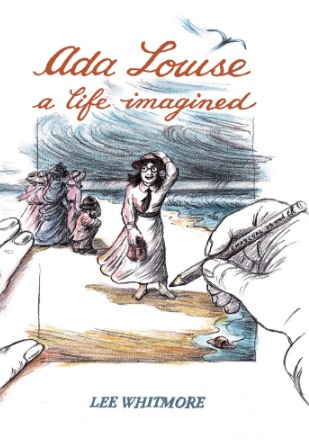
Ada Louise isn’t just a family history, it’s also a comic, so it also belongs to a medium often targeted by literary snobbishness. Come to think of it, it’s in a third outsider category as well: it’s self-published. At least, I can’t find any reference to Susan Lane Studio on the internet. The copy I read belongs to a friend, and is number 65 of a limited edition of 100 copies.
The good news is that Ada Louise is definitely in the non-crap ten percent of all three categories.
When Lee Whitmore was about eight years old her maternal grandmother came to live with her family. The grandmother – Ada Louise – was very old and frail and not at all interested in the children. ‘Very occasionally there was a glint of amusement in her eyes,’ an introduction tells us, ‘but mostly she just looked wistful, even sad.’ In what Whitmore’s website describes as a ‘loose series of episodic moments strung together on a time line’ the book sets out to answer the questions that puzzled the young girl: ‘What was it that had made my grandmother this way? What had happened in her life?’
We first see Ada Louise as a tiny figure in a two-page drawing of ‘British settlement Invercargill’, New Zealand in 1885. A speech bubble in the bottom right corner of the townscape reads, ‘Hurry home, Ada,’ and on the next spread the fourteen year old Ada runs with her violin case through a windy yard towards her front door. In the following pages she is absorbed into the cheerful chaos of her many-sistered life, and in the course of the book’s nearly 600 page s her story emerges in a discontinuous way that creates a sense that these are family stories, legends almost, rendered into a coherent whole.
We follow Ada’s fortunes and those of her sisters as they mature, marry, become variously rich and poor and have children of their own. These affectionately realised characters deal with scandal, frustrated ambition, betrayal, heartbreak and almost Shakespearean restoration. There’s also some Micawberish comedy.
The book’s seven chapters follow Ada and her family from New Zealand to Melbourne (when she is 30, in 1901), to Sydney six years later. The cities and suburbs of the action are lovingly created: a church in Darlinghurst, a Prahran mansion, inner-city Sydney streetscapes, Flinders Street Station,Waverley Cemetery; trams, trains, early cars, and the ocean in its many moods.There are cucumber sandwiches, family singsongs around the piano
The comics medium is beautifully suited to this project. From the family tree at the beginning to the hand-lettered postscript, Whitmore is intimately present, not just in her words, but in the movements of her hand recorded in the richly crosshatched charcoal drawings. You can see examples on her website. Here’s the spread introducing Chapter 2:
tl;dr: This book would make a brilliant gift for a teenager (what the book trade calls a young adult) who loves reading. And part of the money you spend on it will go to the Indigenous Literary Fund. Also: I tell my own story.
Judith Ridge has been a tireless worker in the field of children’s literature for decades, organising, promoting, debating, judging, studying, editing, writing, teaching, networking – oh, and reading. This is her first book. Characteristically of Judith’s commitment to young people and literature, it’s a labour of love: she and the contributing authors have agreed that all royalties from the book will go to the extremely worthy Indigenous Literary Foundation. Also characteristic of her, it’s a showcase for other people.
It’s a showcase in the first place for the 31 writers, mostly of YA fiction, mostly from Australia and New Zealand, who were invited to write about a book that ‘made’ them. The invitation allowed for wide interpretation. As Judith says in her foreword, she was asking what book
made them fall in love, or made them understand something for the first time? Made them think. Made them laugh. Made them angry. Made them feel safe. Made them feel challenged in ways they never knew they could be, emotionally, intellectually, politically. Made them readers, made them writers – made them the person they are today.
Readers get to know a little more about writers whose work they know and love – in my case Markus Zusak, Shaun Tan (who couldn’t confine himself to anything like one book, but in effect gives a whole reading list of sophisticated picture books and comics, as well as having line drawings throughout the book), Benjamin Law, Alison Croggon, Ursula Dubosarsky (the only verse contribution) and Simon French (one of two pieces that brought tears to my eyes). And we are introduced to new writers we may be interested in – in my case all the rest. To name half a dozen:
Will Kostakis, who writes about a book he put down after reading six pages and decided to write his own story
Queenie Chan, who writes of the joys of manga, telling part of her story in comic frames
Ambellin Kwaymullina, one of the Aboriginal contributors, author of a dystopian series of books, who writes eloquently about the non-written stories that ‘made’ her
the late Mal Peet, who tells a wonderful story about turning up at a Moby-Dick tutorial at university with the Classics Illustrated comic
Kate Constable, whose piece featuring Tom’s Midnight Garden is a lovely essay on how a reader’s circumstances affect how she reads.
Jaclyn Moriarty, who explains beautifully what Roald Dahl can do for his young readers.
As well as the contributors, the book is also a showcase for the 200 or so novels, series, picture books, comics, plays and poetry anthologies that rate a mention, ranging from Homer and Melville to Dr Seuss and Archie comics. In a neat bit of mise-en-abîme, some of the contributors wrote books that some of the others say ‘made’ them. No one mentions Harry Potter.
Something the book does for me that it’s unlikely to do for most of its intended readership – the difference being that I’ve been reading for half a century longer than any teenager – is make me wonder how I would answer the book’s question.
The rest of this post is today’s version of the book that made me. —– I was a compulsive reader as a child. I remember lying with my mother on her bed after lunch and watching the words as she read to me – from among other things a Hans Christian Andersen collection – correcting her if she got a word wrong. I loved Donald Duck (though not so much Mickey Mouse) and Superman (rather than Batman) and Classics Illustrated comics. I had Kingsley’s Heroes and Arthur Mee’s Children’s Encyclopedia at home, Enid Blyton, W E Johns and Richmal Compton from the town library, the Queensland Reader and Bible Stories at school. I had to be told not to read at the table during meals. I read in bed at night by the faint light from two rooms away (our North Queensland house wasn’t big on internal doors). When I reached double figures I took on the likes of Great Expectations, Ivanhoe and The Murder of Roger Ackroyd.
The worlds of books fascinated me. They had snow. A child could look out his bedroom window and talk to another child sitting at her window in the house next door: my nearest neighbours were a sugarcane paddock and a cow yard away. Moss grew on the south side of trees in books: in the tropics the sun comes from either the north or the south, depending on the time of year, and moss grows anywhere it can in the rainforest. In books it can be broad daylight at nine o’clock at night and no one has heard of bandicoots, or cane toads, or sensitive weed, or cane fires, or pomelos, or bagasse, all of which were ordinary parts of my life.
I’d like to be able to write about the wonderful moment when I picked up a book and found my childhood world reflected there. But no, that didn’t happen – and still hasn’t, really. When an aunt started giving me Australian books for birthday presents – Ash Road, I remember, and Simon Black in the Antarctic, both by Ivan Southall – the worlds I found in them were only slightly less other. They weren’t exactly foreign, they just didn’t show the world as I experienced it, where it would rain heavily for days on end, where houses were on stilts, where we guzzled mangoes on our back veranda and where Aboriginal people came occasionally to use our phone to call for a taxi. I grew up feeling that books were never about the real world, but were completely made up – either that or the world of my actual experience was somehow invalid.
What comes to mind when I ask myself if there is one book that set me on a literary path is not a book at all, but an after-dinner talk.
One Sunday a month was Holy Name Sunday in our church. Members of the Holy Name Society, all men, would sit together in Mass, away from their families, and at one point they would all stand and make the church ring with a rousing anthem:
We stand for God and for his glory,
The Lord supreme and God of all.
Against his foes we raise his standard.
Around the Cross we hear his call.
____Strengthen our faith, Redeemer,
____Guard us when danger is nigh.
____To thee we pledge our lives and service.
____For God we'll live, for God we'll die.
____To thee we pledge our lives and service.
____For God we'll live, for God we'll die.
I was totally in awe of the display of full-throated masculinity. And when I was thirteen I was allowed to join the Society. (Girls joined the Children of Mary and wore pale blue cloaks, which was cool, but boys got to bellow in church.)
I was only in the Society for a year and don’t remember doing anything apart from singing on Sundays, but I did attend that year’s annual dinner. It must have been exciting to be there as one of the men, no longer a boy, but that’s not what I remember. What I do remember is that as we were finishing dessert, someone tapped a glass with a spoon and introduced the speaker, Vince Moran. He wasn’t a family friend, but I had seen him around – Innisfail was a small enough town.
His talk wasn’t an inspirational address. Basically, he told three jokes. What was exhilarating for me was the way he told them: not one after the other, but intertwined. He got to a certain point in his main story line, which had something to do with a cat who was a great tennis fan, then went off on a digression, then from that digression onto another digression, and circuitously back, jumping from one story to another in what seemed random moves, until, just when it seemed the whole thing had become hopelessly muddled, he brought all three strands home with three punchlines in quick succession. The cat, I remember, lost all interest in tennis when he found out what racquet strings were made of.
For all my countless hours of reading, and though I knew from the ABC Children’s Hour that it was a good thing to remember the names of the people who wrote books, this was the first time I realised that stories were made by people – by people who eat food, and go to the toilet, and have to tie their shoelaces like the rest of us. An ordinary man standing at the front of the room had just presented us with a fiction he had crafted himself. (I think he was the same Vincent Moran who wrote for Homicide in the 70s and The Flying Doctors in the 80s.) I don’t think I quite got as far as realising that Charles Dickens and Agatha Christie and Enid Blyton were also mere mortals (I’m not sure I’ve fully internalised that reality even yet), but a door swung open in my mind. Books might not reflect my world, but people who lived in my world could make them.
I won’t count The Book that Made Me in my tally for the 2016 Australian Women Writers Challenge, but the editor and by my count more than half the contributors are Australian women, so I’m adding the logo here.
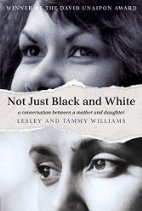
This is a superb memoir. If the title sounds a bit preachy, don’t be misled. It’s a page turner, a romance, a tale of multi-faceted heroism with plenty of grief, rage and laughing out loud, and some totally – I do mean totally! – unexpected plot twists.
The two authors are mother and daughter. Lesley Williams was born in the mid 1940s and grew up in Cherbourg Aboriginal Settlement in Queensland, 170 kilometres north-west of Brisbane, where Aboriginal people were referred to as ‘inmates’ and every aspect of their lives was regulated by the authorities. Hers is the last generation to have grown up ‘under the Act’ – that is The Aboriginals Protection and the Restriction of the Sale of Opium Act of 1897 and its successors: people couldn’t travel or marry without formal permission, and any money they earned was held ‘in safe keeping’ by the government. When she was fifteen, Lesley was assigned to work as a domestic servant in distant homes; she wasn’t informed of the conditions of her employment and received only ‘pocket money’ directly. A timid girl who lived in fear of white authorities, she grew up, with help from Aboriginal and white friends and allies, to spearhead a campaign for justice for Aboriginal workers that eventually led to a compensation package of $55.4 million dollars.
Meanwhile, she had three children who she was determined would have better lives than hers. Tammy, the youngest, started out ghost writing this book, but became its second authorial voice when they realised how their lives were intertwined. Tammy’s story doesn’t have quite the same extraordinary journey from one era to another, but it’s full of surprises of its own. Spoiler alert: Michael Jackson plays a significant role and José Ayala Lasso, UN High Commissioner for Human Rights, has a walk-on part.
Both women are great story-tellers. The success of the campaign to recover the stolen wages is almost an afterthought to these two wonderful yarns.
I was about a third of the way into this book when ABC’s 4 Corners aired those heart-stopping scenes of the mistreatment of Aboriginal boys in custody in the Northern Territory. And you know, grim though those scenes were, the government’s treatment of Aboriginal people in Queensland into the 1960s, which Lesley Williams recounts with extraordinary calm and clarity, was just as violent and demeaning in its own way. As with current events in Nauru and Manus, there was no shocking footage, and for most Australians out of sight was out of mind. This book, and other like it, make a huge contribution to our understanding of Australia’s history
Not Just Black and White is the eighth book I’ve read as part of the 2016 Australian Women Writers Challenge. It won the 2014 David Unaipon Award for Unpublished Indigenous Writing. I’ll be surprised if it doesn’t get more gongs now that it’s published.
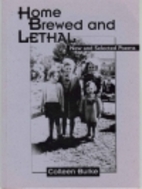
This is the seventh of eleven published books of poetry by Colleen Z Burke (her writing name acquired the ‘Z’not long after it was published). It includes a generous selection from the earlier books including one that I’ve blogged about (here), plus 25 new poems.
Many of the earlier poems are also included in Burke’s memoir, The Waves Turn. One of the later ones – the prose poem ‘A doll on a stick’ – is a tightened and tidied version of a passage from the memoir, leading me to conclude that the memoir, published this year, was written in the mid 1970swas reworked and integrated into the memoir, which Colleen started in the late 1990s*. Most of the poetry in this book makes no bones about its autobiographical nature: memories of a Catholic girlhood, reconnection with an Irish heritage, defiant feminist rage, marital woes, then – taking up where the memoir ends – the joys and burdens of motherhood, the flavours of inner-city living, environmental and Aboriginal politics and history and, like a punch in the guts, half a dozen poems written in the heat of bereavement:
What fools are we
to think that we can plan
and plot and shape our lives
and choose to go or stay. To
love or not. What fools indeed.
When death is on our shoulder
day and night waiting ..
The book, and life, continues after the death of Burke’s husband, and many of the poems gain added resonance from being read as part of an overarching narrative. For example, one of the new poems, ‘Back to life’, ostensibly about the refreshing effect of the bush, has these lines:
I breathe
again
slowly
back to life.
Another of the new poems, ‘Between the lines’, comes close to describing what is perhaps the strongest feature of Burke’s poetry. Addressing the leftist poet Len Fox, who died in 2004 and was in his early 90s when this books was published, she says of his poems:
____________when I thought
I had them sussed – they bent
twisted or even
smiled between
the lines
[…]
Yet basically
it’s the lack of bullshit
I liked the most about
your poems
I think it’s fair to say that Colleen Z Burke’s poetry aspires to, and generally reaches, a bullshit-free zone. No traditional forms, no high rhetoric, no decorative figures, but straight talk that nevertheless bends and twists and even smiles between the lines.
Colleen Z Burke is a Sydney poet whose work, as David Brooks says in his introduction to her Home Brewed and Lethal (1997), ‘has not received the attention and awards it’s deserved’. She is a poet of place, particularly inner-city Sydney and the Blue Mountains; a poet of domestic life, feminist and fiercely maternal; a historical poet, exploring the stories of working class Australians and her Irish heritage. I’ve blogged about a couple of her books (here and here) and our paths have crossed in a number of contexts. The word that comes to mind is ‘staunch’. The Waves Turn tells the story of her first three decades.
Colleen was born in the early 1940s into a tight working-class Irish Catholic community in Bondi, not a hundred miles or many years from the world of Ruth Park’s The Harp in the South. She was educated by the Sisters of St Joseph, whose treatment of their young charges in Colleen’s day would not have helped the cause of their founder Mary MacKillop’s canonisation half a century later. Leaving school at 15 to help with the family finances, she landed a public service job, but was already snatching moments to write poems and read widely. With a friend she dared to venture into Sydney’s bohemian milieu, but remained enough her mother’s daughter not to plunge into their pre-feminist sex and drugs lifestyle. From there it was small dramatic step into the thriving folk music scene, where she was courted by singer Declan Affley, whom she eventually married, and began to discover her deep connections to Ireland.
Declan’s personality dominates the second two thirds of the memoir, as they negotiate their relationship, travel together to North Queensland, to Melbourne and to Ireland and England, struggling to earn enough money to live on (mostly it’s Colleen who earns while Declan’s work as a musician is paid pathetically), joining causes, and making music. In an extraordinary range of contexts, almost in the shadows, Colleen finds a place for her typewriter and works away at her poetry. This was before the days of creative writing courses, and it was a lonely enterprise, requiring a heroic determination to hold to her own course against all expectations – from bohemians and folkies as much as from Catholics – that she would make a man the centre of her life.
In 1975, which is as far as the book takes us, Colleen was in her early 30s. She had finally gained a university degree, the first in her family to do so. Her mother had died, her first book, Go Down Singing, had been published in the feminist Khasmik Poets Series, and half a dozen of her poems were included in Kate Jennings’s landmark anthology of Australian women poets, Mother I’m Rooted. We know from occasional mentions that she will have children, and from her poetry that Declan will die young and unexpectedly, that there will be more hardship, so it feels as if the book just stops rather than coming to an end point. The final sentence reads:
And as waves turn I’m unsure what the future holds but look forward with anticipation.
Where some memoirs read like novels that claim to be factual, The Waves Turn is more like a careful accumulation of facts in which a story can be discerned. The image of an archaeological dig comes to mind: Colleen Z Burke has delved patiently into the layers of memory, brushed the dirt from the innumerable artefacts she found there, labelled them and arranged them chronologically. Sometimes, in talking about the folk scene for example, memory has almost certainly been helped by festival programs or similar documentation.
There were places where I found the accumulation of detail fascinating, such as the points of similarity between Colleen’s childhood and my North Queensland Catholic childhood half a decade later: the same bottles of milk curdling in the sun at school (why?), the same ‘worms’ made by Vegemite in biscuits with holes (which I read just the other day will soon cease to exist), the same songs of Irish nostalgia. In my 20s, I followed in some of Colleen’s paths: to the edges of the Push and the folk music scene, to protest against the US and Australian war in Vietnam, to the ferment of women’s liberation, to the stacks of Fisher Library at Sydney University (though in that case I was there half a decade before her) … the list goes on. There’s pleasure in recognising the names of people, streets and buildings, in being reminded of forgotten rituals (Oh, that’s right, on Friday nights people would ask, ‘Where’s the party?’). I don’t know how it would be for someone who hadn’t been there. They might do a lot of head-scratching (as with the passing reference to some Catholics not buying Sanitarium breakfast cereals) and skipping (as with the list of performers at numerous folk-music events).
An edition of the book that included footnotes on all the musicians and big personalities mentioned would be spectacular. I recognised only a handful, but if the ones I didn’t recognise were as interesting as that handful, each list of names in this book is a flag pointing to a trove of stories.
We do get the stories of Colleen and Declan, or rather many of their stories.
For example, Declan Affley is perhaps the only good thing in Tony Richardson’s 1970 movie Ned Kelly. (In a nostalgic moment, I recently downloaded ‘The Wild Colonial Boy‘ from the soundtrack – Mick Jagger reduces it to passionless rinkydink, but Affley’s tin whistle fights to give the song heart, and wins.) The book takes us behind the scenes, not to juicy celebrity gossip, but to how the film gave economic relief to Affley and Colleen, and how, having the rarity of a decent amount of money, they splurged on luxuries.
More than fifty poems are scattered through the book, many of them dealing with events or places that have just been described in prose. So, not just in general but very specifically, the memoir gives a valuable insight into the relationship of the poetry to the life, into things that can only be said in poetry. For example, towards the end of the book, Colleen is employed on a survey to assess the health and welfare needs of people in the suburb of Glebe. In prose:
The health/welfare survey had its limitations, all surveys do, but talking to people in the open-ended section, I gleaned interesting information about their lives. The diverse community included students, transients, pensioners, professionals and more affluent residents in wealthier parts of Glebe Point. We interviewed people from the Glebe Estate in houses owned by the Catholic Church. The Glebe Estate wasn’t bought by the Federal Labor government’s Department of Urban and Regional Affairs, under the radical leadership of Tom Uren, until late 1974.
And so on. In typing that out, I’m reminded of something that nagged at me, though it might be of no significance to most readers. Feakle Press clearly operates on a shoestring, with little money for professional copy-editing, and my blue-pencil finger twitches to fact-check and clarify. In this paragraph, for example: the Glebe Estate was owned by the Anglicans, not the Catholics; will readers from elsewhere understand the reference to Glebe Point (perhaps ‘more affluent residents who lived close to the water at Glebe Point’ would cover it)? is the government purchase relevant, or a distracting complication? But these editorial questions are beside the point here. Colleen then gives us her poem, ‘The questionnaire’, which I hope she won’t mind me reproducing in full:
The questionnaire
walking through Glebe
these summery days
of nearly autumn of nearly autumnI move
through street shadows
of paperthin _ March trees ________to arrive _____________ anywhere.
Knock on doors ___________opened
by young people ____________eager
as spring to answer ____________ _anything.
But older rustier men __mostly nod their heads
like old clocks __listening somewhere else
and pensioners ___________warm as sunlight ___________caught in old brick walls
look at my papers ____________ my well-chosen words
then shut their doors kindly.
And clutching empty questions
I run home
through thin pools
of March trees __________ singing
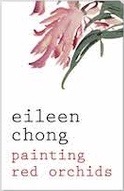
I’m an increasingly unabashed Eileen Chong fan, and I love Painting Red Orchids.
As in her previous books, these poems refer back to the poet’s childhood in Singapore, to the China of her forebears, and also to her present home in Australia; much food is prepared and eaten; there is conversation with other poets living and dead, Chinese and Western; and there are travel poems, this time to suburban Sydney and rural Australia as well as Singapore and Hong Kong.
All of this is given us with generosity and lucidity, and an occasional revelatory jolt. The restraint of classic Chinese poetry is never far away, and a number of poems are explicitly dedicated to great poets of the past.
There are love poems – heartbreak as well as new love. Someone (it might have been Margaret Mahy or Diana Wynn Jones) said that food is the sex of children’s literature. Food doesn’t quite equal sex in Eileen Chong’s poetry, but it comes close and may be even better, more intimate, as in ‘Xiao Long Bao (Little Dragon Dumplings)’, which describes the making of these dumplings and then the look on her lover’s face when he tastes them, and even more so in ‘A Winter’s Night’, in which the speaker, presumed to be of Chinese heritage, prepares Scotch broth for her Scottish-born partner:
This, here, made from my hands,
his memories – we consume spoon after spoon
of history and desire and laugh about the future.
A strand of deep melancholy runs through the book: there’s dementia, death, a relationship break-up, and this (I need to quote the whole poem):
Child
And if he had lived – grown
to fruition in my mother’s womb,
pressing against her bladder
so she would have needed to have emptied
it every hour – I would have been the middle
child. I would have had an older brother
and a younger; I, the singular female.
Instead, there are just the two of us,
brother and sister, circling like moons,
gripped by the gravity of disappointment.
My father would come home and pretend
he’d brought us a puppy. Once, the bag
even barked: but it was only a toy dog.
My mother named this dead brother.
She imagines he might have lived if she
had done this, or had not done that. If
he had lived, I might not have left home
so soon in search of my own arc and orbit.
If my own two had lived, what then? But the dead
remain dead, and I am the last child to arrive.
I love the way this edges up on its real subject. Not that the impact of the speaker’s mother’s miscarriage on their family – the siblings’ enduring sense of someone missing, the mother’s what-ifs, possibly the speaker’s leaving – wasn’t real. And the three lines about her father’s teasing with pretend dog-gifts could have expanded into poem in its own right. But ‘If my own two had lived’ turns the poem inside out, and we realise that its emotional charge comes from the speaker’s own loss: she can speak of her mother’s bladder and mental processes, not from the perspective of her remembered childhood, but from her own experience as a woman; the barking of the toy dog is freighted with deep grief; the image of circling without a centre is conjured up by the much later loss. The final line, which at first reading I took to answer the question whether the lost brother was older or younger, does do that, but also laments the speaker’s childlessness – not just the last child in that family, but the last in the family line. So much is conveyed, so little said out loud. I think of James McAuley’s ‘Pietà, ‘I cannot tell, / I cannot understand / A thing so dark and deep, / So physical a loss’.
Eileen is currently blogging on the Southerly site. Her interview with herself at that link is well worth reading. Here’s an excerpt:
Do you consider yourself an Australian poet? This is a question about hybridity. Am I a Singaporean poet? An Asian-Australian poet? An Australian poet? An interesting woman poet? A Chinese poet? A confessional poet? A food poet? I think I might be all of the above, sometimes all at the same time.






 Me fail? I fly!