Tag Archives: Caitlin Mailing

Dombóvár, the anthology

Hunter Writers’Centre, Dombóvár: Newcastle Poetry Prize Anthology 2024 (Hunter Writers’ Centre 2024)

On its web page, the Newcastle Poetry Prize describes itself as the most prestigious poetry competition in Australia. Few people would disagree.

The Hunter Writers’ Centre has coordinated the prize since 2002, and it publishes an anthology every year that includes the prize winning poem, the runners up, a number of subsidiary prize winners and a selection of other submissions.

As the 2024 judges Caitlin Maling and Peter Boyle, each with their own impressive list of prizes, point out, a distinctive feature of the prize is that poems up to 200 lines are accepted. And most of the poems in this anthology are of substantial length – the shortest is 27 lines. The anthology is a rare opportunity to read a selection of longer poems from a wide range of Australian poets.

As my regular readers know, I read quite a lot of poetry, if not enough to call myself a critic. I was happy to read poems here by people whose work I respond to:

  • Mark Tredinnick, whose ‘A Godwit Sonnet Cycle’ won the Hunter Writers’ Centre Member Award
  • B. R. Dionysius, whose three-line stanzas in ‘Fishbone Ferns’ give us scenes from life on the Darling Downs – ‘it can be quite WW1 out on the downs, bodies / hung up on barbed wire, left to rot as a sign to / others – don’t try it, don’t cross into no man’s.’
  • Brendan Ryan, with another of his wonderful cow poems, ‘The snaking accuracy of cow trails’
  • Kathryn Lomer, with ‘Hyaenia song’, a narrative poem set in Ethiopia.

And there’s the immediate reason that I bought a copy, Christopher (Kit) Kelen’s ‘Dombóvár’, which won the prize and gave its name to the anthology. I don’t envy the judges their task, but they’ve chosen well with ‘Dombóvár’, which evokes the small Hungarian town that Kit Kelen’s family come from (at least that’s how I read the poem).

I can’t do better than quote the judges (a PDF of their report is available at this link, and is worth reading in full):

‘Dombóvár’ skilfully integrates thoughtful reflection on important issues, humour, inventiveness and an engaging partly colloquial tone. This evocation of small town rural Hungary carries echoes of the moral ambiguities and violence of settler societies like Australia. Throughout the poem there is the suggestion of a larger, potentially national, narrative, but the reader is left to work through the weave themselves … With great skill the poem breaks standard idioms and expected word choices to produce a clipped, very tight effect that intensifies the reader’s experience. ‘Dombóvár’ uses the form of a poem sequence to powerful effect, shaping a masterful poem that can be read on multiple levels.

this is the land of forgive ourselves
for all we've done, will do

There’s lots more in the anthology. To be true to my page 78* practice, I’ll mention ‘The Keeper of the Field’ by Mal McKimmie (pages 74–80). It’s one of several sonnet sequences in the anthology, and a quick web search informs me that it’s far from being the only one written by Mal McKimmie.

The sequence is prefaced by a quote from the Bhagavad Gita, and I’m guessing that the ideas it explores are related to Hinduism: the field is (crudely speaking) the mind, and it is populated by sheep (ideas? poems?). The sonnets circle around the notion of an empty field – mind empty of thought, perhaps. In the two sonnets on page 78, the sequence moves forward to the notion that all fields (all minds?) are connected – we are not the isolated individuals that we think we are in the West. That might sound abstract and difficult, but the poems are remarkably lucid. Here, ripped from its context, is one of the two on page 78 to give you a taste:

Did I say this field has a fence? Well, it 
doesn't anymore. It seems the fence came
down, was taken down, or disappeared
with the sheep, as if they were interdependent
(I faintly recall a lyric passing
through here, singing something along these lines).
Given the absence of a fence, where is
the distinction between this field and another?
Do I tend a disappearing border?

Leaves of grass, field to field, lean in sympathy,
mirror each other; flowers too; even
weeds copy their kin; creepers creep towards
each other; and roots, well, roots have always known:
nothing is alone, nothing under the sun.

if the poem is exploring ideas from Hinduism, it manages to remind us that the quintessential North American poet Walt Whitman was in similar territory – his poem ‘Song of Myself’ includes lines like ‘For every atom belonging to me as good belongs to you.’ And recent science about tree roots supplies the poem with a beautiful metaphor for interconnectedness.
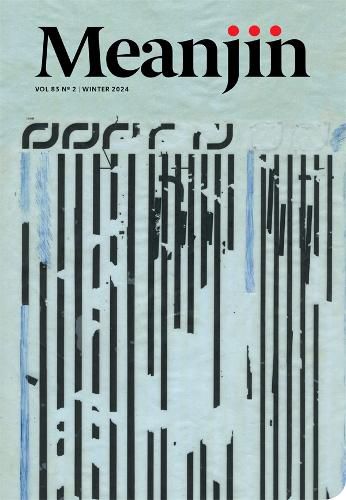
Journal Catch-up 26: Meanjin Winter 2024, and November verse 6

Esther Anatolitis (ediitor), Meanjin Vol 83 Nº 2 (Winter 2024)
(links are to the Meanjin website: some but not all of them are available to non-subscribers)

This Meanjin is incredibly rich and varied. I’ve carried it in my backpack for weeks, mostly reading a single article or story at a time when on public transport, in waiting rooms or queues, or occasionally – as in the days before podcasts – while walking. I have learned about:

Click on any link in that list, and you may find something instructive, challenging, entertaining or all three.

As the child of a farmer in North Queensland, where Mamu land has never been ceded and sugarcane monoculture has not been kind to the land, I was particularly moved by Katherine Wilson’s brief memoir about regenerative farming and collaboration with traditional owners, ‘Our Bog Paddock’s Understory‘.

I also want to mention ‘We, small heroes‘ by Micaela Sahhar, a short reflection on what it means in the current era that Palestinian culture has hospitality as a core value.

Of the four excellent pieces of fiction, Katerina Gibson’s ‘Something Dormant‘ stands out as a complex story of young, unrequited love remembered, with an environmental twist.

One of the joys of this Meanjin is the way its nine poems are spread throughout, so each one comes as a pleasant surprise among the prose. Having just this morning read an editorial on ‘eco-poetry’ in the Guardian (poetry ‘cannot ignore global heating’), I’ll single out Caitlin Maling’s ‘Ordinary Disaster‘, a chillingly affectless account of a mass dying of fish among coral in Western Australia.

It’s my blogging custom to focus on page 77. In November, I try to include a verse stanza in each blog post. Page 77 in this issue is part of a fascinating interview with architecture critic Naomi Stead (link here). The phrase that gives me my opening line comes from this paragraph:

I don’t want to be the schoolmarm, but if people understand more about the built environment – how it’s procured, how it comes into being, how it’s not an accident, how there’s almost nothing in our cities that is not deliberately designed – then they can begin to see the role that they themselves could play. I mean we should expect more, we should demand more of our cities and buildings and built environment, but we can only do that with a degree of knowledge and education about how this came to be, and what could be.

Rather than enlarge on Professor Stead’s point, my little verse follows where the phrase takes it. That and the plane that flew over our flat as I typed the first full stop.

November verse 6: We should demand more of our cities
We should demand more of our cities.
Not more aircraft overhead.
No more oh-dears, what-a-pities –
Packer's Pecker, Jeff's Shed.
Perhaps less civil inattention,
less of what's too gross to mention,
neighbours partying till four,
Mormons knocking on the door.

Demand more? Let me try. O Sydney,
Demand more? Let me try.
O Sydney,
give me silence, show me stars,
let me breathe air free from tars.
So many things I'd have you give me.
Make your waters clear again,
and some day soon please change your name

I wrote this blog post on Gade / Wane, not far from Warrane, which some people want to give its name to the whole of Sydney. I acknowledge the Gadigal and Wangal Elders past present and emerging, and gratrefully acknowldge their care for this land for millennia.

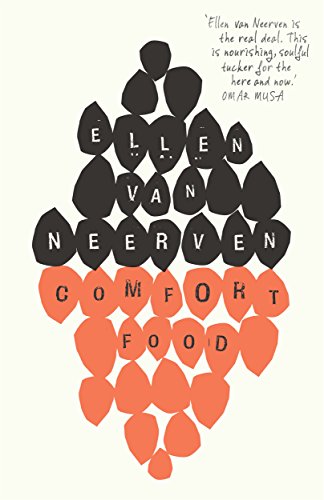
Ellen van Neerven’s Comfort Food

Ellen van Neerven, Comfort Food (UQP 2016)

tl;dr: This is a terrific book. If you want a proper, thoughtful, well-informed review, you could read ‘Caitlin Mailing Reviews Ellen van Neerven’ in the Cordite Poetry Review, 22 August 2016, link here.

A poem by Ellen van Neerven made headlines late in 2017 when it appeared in the NSW Higher School Certificate exam. That it was there without the poet’s prior knowledge or consent isn’t what made the news – evidently that’s just standard practice. The headlines came from massive social-media trolling by students, all of it disgusting, much of it explicitly racist, and some of it threatening violence.

The poem was ‘Mango’, which appears on page 19 of Comfort Food. I’ve gotta say if that sweet reminiscence from when the writer was eight years old inspires you to make death threats, then you’re not a happy camper. I hope those adolescent cyber-haters have found a way past their exam-triggered, genocide-flavoured rage to seek out this book and sit with it a while.

What they would find is a generous, richly varied collection of short poems in which van Neerven wrangles into words some of what it means to be a particular First Nations person in Australia. van Neerven is a Yugambeh woman from south-east Queensland, living – according to my reading of the poems – in inner-city Melbourne, and that simple statement contains enough complexity for any number of poems.

The book is in six untitled sections of uneven length. Food is a strong motif, from chips to kangaroo tails in a wide range of situations, not all of them comforting or comfortable by a long shot (though the old use of ‘comfort’ to mean ‘strengthening’ is somewhere there). The poems do keep coming back to food, and the effect is to assert the poet’s survival and to remind the reader of what we have in common, even when hard matters of racism and genocide are being canvassed.

If you want a considered review of the whole book, I recommend Caitlin Mailing’s review in the Cordite Poetry Review (link here) or Kylie Thompson’s in Westerly (link here). When I started writing about it I couldn’t get past the first poem, ‘Whole Lot’, so I’m not going to even try.

‘Whole Lot’ is a response to Emily Kame Kngwarreye’s monumental painting Big Yam Dreaming (there’s a photo, and the poem, at this link, but this is a painting that cries out to be seen in person, and the poem differs in minor but significant ways from the one in the book). The poem’s title is taken from the artist’s reply when asked what the painting was about: ‘Whole lot, that’s whole lot.’ (I’m grateful for a note at the back of the book, without which I might have been baffled at first reading of the poem and not returned to it.)

The poem captures an experience of standing in front of that painting, of letting it work on the viewer. Let me walk you through my reading of it, stanza by stanza. Feel free to skip my commentary and just read the poem itself. First, a hint for readers who are intimidated by poetry: think of the line-endings as full stops, or at least commas. Here goes:

Whole Lot

family, earth
dingo, eagle
fire, food
Whole Lot
it’s all of those things

These opening lines reflects on what ‘Whole Lot’ means for the speaker. These are not the elements that Emily Kame Kngwarreye named in the rest of her reply I didn’t quote above – she spoke of her Dreaming, yams, lizards, emus. This is not an explication of the painting. It’s a response to it.

what we eat comes from our roots
if we stop sharing there will be nothing 

At a literal level, the painting represents a yam’s complex root system, which gives rise to this fairly abstract reflection. I read ‘we’ here as referring to all of humanity. The book’s food theme is introduced. The second line of this couplet follows logically from the first because of the implied metaphor: our spirits are nourished by contact with our roots, and we make that contact by sharing. But then:

we start with black
let it get hold of you
look at the stars
or are you afraid to?

Here, ‘we’ are the people who are looking at the painting with the poem’s speaker. Our attention shifts to the painting’s black background, beyond the complex interconnection of yam roots, as a place to start seeing it, surrendering to it. But ‘we’ is also all humanity, and ‘black’ could be a reference to our African origins, or the darkness of the womb, or, as the next line narrows it down, the blackness of the night sky, so that the painting’s complex lines are now constellations. You almost don’t notice the shift from ‘we’ to ‘you’ in the second line. Maybe here the painting is speaking to the viewer, including me/us, the poem’s reader/s.

The fourth line evokes for me a whole tradition in European literature where the night sky, the space behind the stars, is the subject of existential dread: Blaise Pascal, grim 17th century Christian, wrote, ‘Le silence éternel de ces espaces infinies m’effraie / The eternal silence of these infinite spaces frightens me’; Kenneth Slessor, in his poem ‘Stars’, spoke of ‘Infinity’s trap-door, eternal and merciless.’ But here, rather than a statement, it’s a question about fear, asked of ‘you’, and I don’t think it’s the same fear as Pascal and Slessor were taking about: it’s not so much fear of infinite emptiness and silence, of nothingness, as a fear of facing an underlying and possibly sustaining reality.

the day shows
country spread open
a map of all that was and will be
don’t forget it
I’m tracing it to remember
don’t be scared

Underground, the night sky, and now a map of the land in daylight. A painting like Big Yam Dreaming can sustain multiple readings. In this stanza the painting speaks to us, offering – I’ll use the word because it’s in the book’s title – comfort. It’s not comfort as a gentle soothing, but a promise of knowledge that will fortify, a solid sense of totality that you can hold in memory. The painting is not just a decorative object, but a source of strength.

In this stanza ‘I’ appears for the first time. There are no capital letters in the whole poem except for ‘Whole Lot’, ‘I’, and later ‘Mibunn’. It may be idiosyncratic of me but I think of John Henry Newman writing in his Apologia Pro Vita Sua that there were ‘two luminous beings, myself and my Creator’. In this poem there are just three capitalised beings: the speaker, the painting and Mibunn. In this stanza, though, I’m not sure if ‘I’ is the painting or its viewer.

we are not here until we sit here
we sit in silence and we are open
there are different kinds of time
I hope you'll understand

What a brilliant description of sitting in front of a great work of art and letting it work on you.

sing it
I want this to be here
when I leave again
I’ve been leaving a lot of times
it doesn’t mean I want to
there is no easy way to cry
tell them I’ll be back soon
when I come back and sit here
I want to still see Mibunn
powering through the sky

On first reading I thought this was somehow about death and reincarnation. And you may read it like that. But my mind has settled on a reading at the level of a relationship with a painting. That shifty ‘I’ has settled on being the painting’s viewer. And there is no more ‘we’: the poem is now intensely personal, having left generalisations behind. After the stillness of the previous stanza, this one begins with elation – what comes next is to be sung. I will leave the painting reluctantly, as I have many times before, but it’s important to me that it’s still here, and I will return to it.

In the last two lines of this stanza, the speaker’s Indigenous identity comes into play explicitly for the first time. I had to look up ‘Mibunn’: it’s the wedge tail eagle, a totem of the Yugambeh people, harking back to the eagle in the first stanza. Somehow, Big Yam Dreaming by a great Anmatyerre artist from the Northern Territory can speak to a Yugambeh poet from south-east Queensland through a painting in a gallery in Melbourne, remind her of deep cultural truths. As a settler Australian reader of the poem, I feel welcomed to read/listen without feeling that I’m eavesdropping.

let me tell you with my skin
under the earth we will find
Whole Lot
it’s all of those things

Here it’s the poet speaking to her reader. I hear her as saying that her encounter with the painting has deepened her sense of connection to her Yugambeh cultural roots. ‘with my skin’ refers to her bla(c)kness, ‘under the earth’ to the subject of the painting, and the poem ends with a direct quote from the artist.

Enjoying a poem is one thing. Saying why is another thing altogether. This poem has pulled me in, and kept me there for any number of readings over the last weeks. Maybe it’s that it establishes such a solid ground of shared humanity at a deep level – a level I associate with religious intensity – before moving to specifically Indigenous experience, where I can’t follow, but it’s there for me to witness. That’s the best I can manage for now.


Comfort Food is the thirteenth book I’ve read for the Australian Women Writers Challenge.


This review is a contribution to Indigenous Literature Week hosted by Lisa at ANZ LitLovers blog.